Matthew 28
People in this chapter
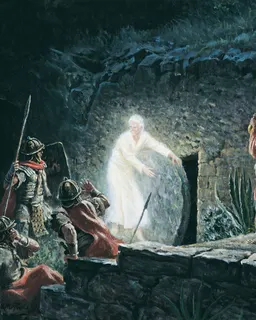
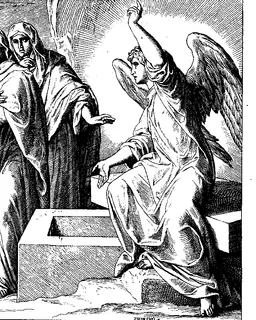
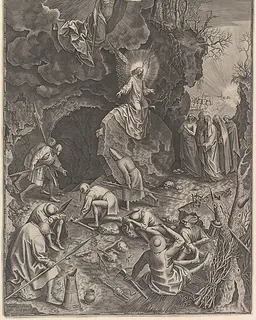
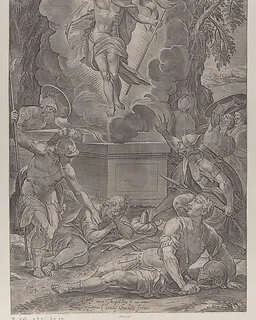
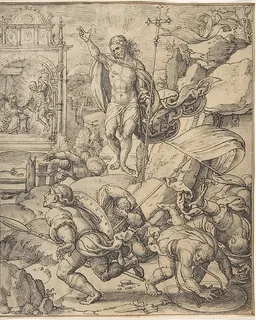
Matthew has carried his readers through the cross and the sealed, guarded tomb, and now the last chapter opens at first light: In the end of the sabbath, as it began to dawn toward the first day of the week, came Mary Magdalene and the other Mary to see the sepulchre (v. 1). What follows is told with restraint and awe. Behold, there was a great earthquake: for the angel of the Lord descended from heaven, and came and rolled back the stone from the door, and sat upon it (v. 2).
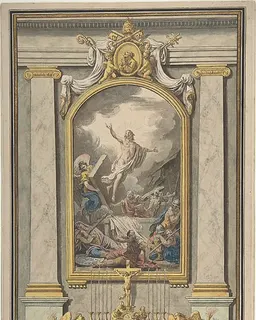
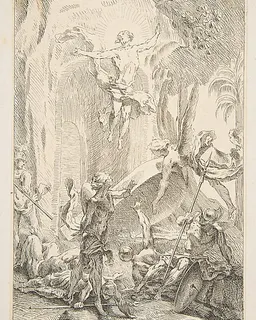
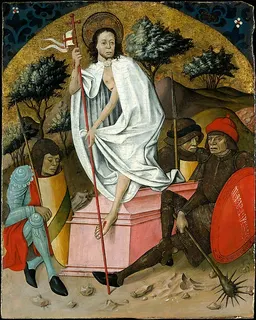
His countenance is like lightning, his raiment white as snow, and the soldiers set to guard the dead shake for fear and become as dead men (vv. 3-4). The grave that human power had locked and watched is opened by heaven, and the announcement is made to the women: He is not here: for he is risen, as he said (v. 6).1
Tap any highlighted phrase to jump to the commentary that unpacks it.
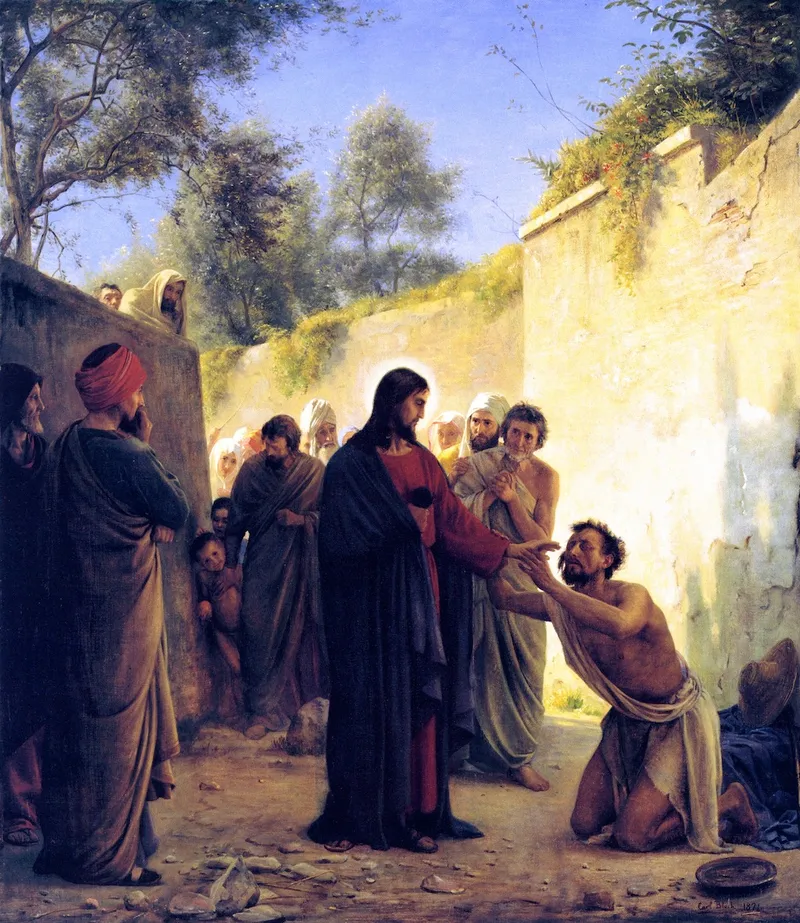
Matthew 28:1-8He Is Not Here: For He Is Risen
1In the end of the sabbath, as it began to dawn toward the first day of the week, came Mary Magdalene and the other Mary to see the sepulchre. 2And, behold, there was a great earthquake: for the angel of the Lord descended from heaven, and came and rolled back the stone from the door, and sat upon it. 3His countenance was like lightning, and his raiment white as snow: 4And for fear of him the keepers did shake, and became as dead men. 5And the angel answered and said unto the women, Fear not ye: for I know that ye seek Jesus, which was crucified. 6He is not here: for he is risen, as he said. Come, see the place where the Lord lay. 7And go quickly, and tell his disciples that he is risen from the dead; and, behold, he goeth before you into Galilee; there shall ye see him: lo, I have told you. 8And they departed quickly from the sepulchre with fear and great joy; and did run to bring his disciples word.
The chapter opens in the grey light before sunrise, with two women on a errand of grief: as it began to dawn toward the first day of the week, came Mary Magdalene and the other Mary to see the sepulchre (v. 1). They are not expecting a resurrection; they come to a grave. And then heaven breaks in: behold, there was a great earthquake: for the angel of the Lord descended from heaven, and came and rolled back the stone from the door, and sat upon it (v. 2).
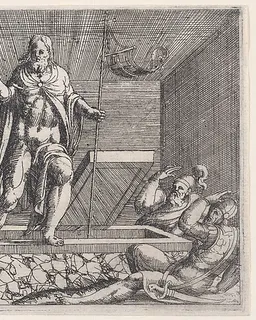
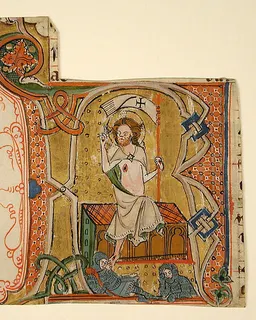
Every detail matters. An earthquake had shaken the earth at the moment of the cross; another shakes it now at the opening of the tomb - the ground itself answering both the death and the rising of the Lord. The Gospels are plain that He is already risen before the women arrive. The stone is rolled back so that witnesses can see in - that the tomb is empty, that the body is gone. And the angel sat upon it. The great stone that human hands had set to seal the dead becomes a seat; the seal of death is now a throne for an angel of light.
The whole picture announces that a power greater than the grave has been at work here.1
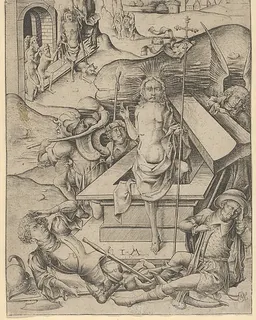
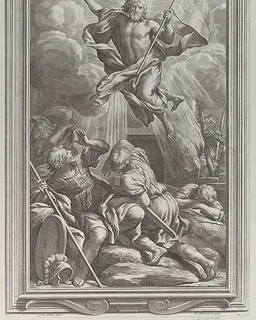
Matthew alone records what the guards saw, and the irony is sharp: His countenance was like lightning, and his raiment white as snow: and for fear of him the keepers did shake, and became as dead men (vv. 3-4). Pilate had given the chief priests a watch of trained soldiers and a sealed stone to make the tomb sure against any tampering. Here the full apparatus of imperial security collapses in an instant. The men set to guard the dead became as dead men - the living fall like corpses while the One they were guarding rises to life.
There could hardly be a sharper picture of how powerless human strength is before the act of God. The same heavenly glory that terrifies the soldiers into a death-like swoon will, in the next breath, gently steady the frightened women. The difference lies in the hearts before him: to those who came seeking Jesus, the blaze of glory carries the word Fear not; to those set against Him, it is sheer terror. The blinding glory and the helpless guards together say what the chapter will say from beginning to end - this is no theft, no plot, no mistake, but the unmistakable working of heaven.
The angel turns from the fallen guards to the trembling women with words of extraordinary tenderness: Fear not ye: for I know that ye seek Jesus, which was crucified (v. 5). He does not soften the horror of what was done - he names Jesus which was crucified, the wounds and the shame fully owned - yet that crucified One is the very subject of the announcement that follows. Then comes the sentence on which everything turns: He is not here: for he is risen, as he said. Come, see the place where the Lord lay (v. 6).
Notice the appeal to evidence and to memory both. Come, see - the empty place is open to inspection, a fact to be looked at and verified. And as he said - this is no surprise to anyone who had listened; Jesus had told them plainly He would be killed and rise the third day. The angel sends the women as the first messengers of the news: go quickly, and tell his disciples that he is risen from the dead (v. 7).
And they go - with fear and great joy (v. 8), the two feelings braided together, awe at what God has done and joy at what it means, running to carry word to the men who do not yet know.
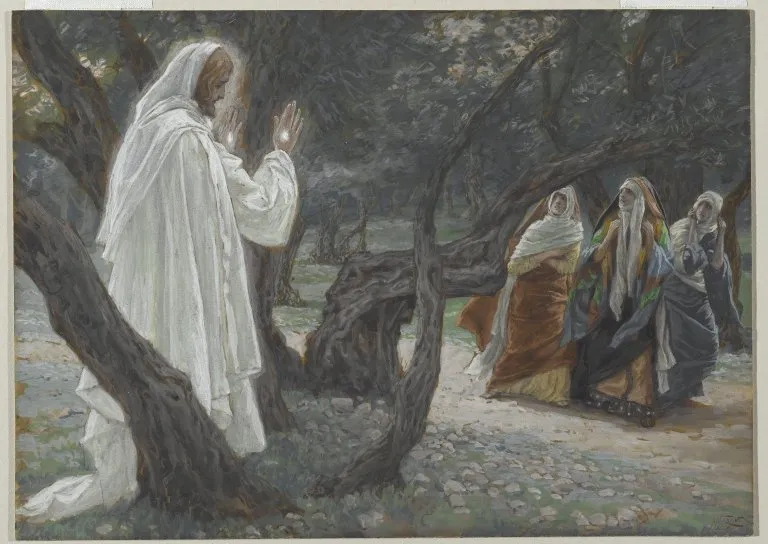
Matthew 28:9-15They Held Him by the Feet, and Worshipped Him
9And as they went to tell his disciples, behold, Jesus met them, saying, All hail. And they came and held him by the feet, and worshipped him. 10Then said Jesus unto them, Be not afraid: go tell my brethren that they go into Galilee, and there shall they see me. 11Now when they were going, behold, some of the watch came into the city, and shewed unto the chief priests all the things that were done. 12And when they were assembled with the elders, and had taken counsel, they gave large money unto the soldiers, 13Saying, Say ye, His disciples came by night, and stole him away while we slept. 14And if this come to the governor’s ears, we will persuade him, and secure you. 15So they took the money, and did as they were taught: and this saying is commonly reported among the Jews until this day.
The women obey the angel and run, and on the road the messengers meet the One the message is about: as they went to tell his disciples, behold, Jesus met them, saying, All hail (v. 9). The greeting is ordinary - the common word of welcome, “rejoice,” “greetings” - and that ordinariness is part of the wonder. The risen Lord does not appear in unapproachable splendour now, as the angel had appeared to the guards; He comes to His own with a warm, familiar word.
Their response, however, is anything but ordinary: they came and held him by the feet, and worshipped him. They take hold of His feet - the most concrete, bodily detail imaginable - and at the same instant they fall down in worship. The two acts together are the heart of the resurrection witness: He is real enough to be grasped and holy enough to be adored. Then His first words to them echo the angel's and add something precious of His own: Be not afraid: go tell my brethren that they go into Galilee, and there shall they see me (v. 10).
After the men had forsaken Him and fled, after Peter had denied Him, the risen Lord calls them my brethren. The resurrection comes with restoration. He still owns them as family.
Matthew now sets a dark scene beside the bright one, and the contrast is the point. While the women run with the truth, some of the watch came into the city, and shewed unto the chief priests all the things that were done (v. 11). The guards report the facts - the earthquake, the angel, the opened tomb - to the very men who had demanded the tomb be sealed. And the response of those men is chilling in its calculation: when they were assembled with the elders, and had taken counsel, they gave large money unto the soldiers, saying, Say ye, His disciples came by night, and stole him away while we slept (vv. 12-13).
Notice that no one disputes the empty tomb. The body is gone; that is not in question. The only question is what story will be told about it - and they buy a lie to bury the truth their own guards have just reported. And what a self-defeating lie it is: if the soldiers were asleep, how could they testify to what happened? Sleeping witnesses see nothing. The fabricated story collapses the moment it is examined, yet they prefer it to the alternative, because the alternative would require them to bow.
They even arrange to shield the soldiers from Pilate's discipline: if this come to the governor's ears, we will persuade him, and secure you (v. 14). Truth is reported, weighed, and then deliberately suppressed with cash.
The soldiers take the bribe: So they took the money, and did as they were taught: and this saying is commonly reported among the Jews until this day (v. 15). The little phrase until this day is quietly important. Matthew is telling his first readers that the very rumour they may have heard - that the disciples stole the body - can be traced back to a paid cover-up by men who knew better. Far from embarrassing the resurrection, the existence of the “stolen body” story actually testifies to the empty tomb: even the opponents of the resurrection had to explain away an empty grave, because no one could produce a body.
The two responses in this passage stand as a permanent picture of how people meet the risen Christ. The same facts that send the women to their knees in worship send the priests to their purses for a bribe. Both the women and the guards witnessed the work of God; the difference lies in the will. Some, confronted with the living Lord, hold His feet and worship; others, confronted with the same truth, spend whatever it costs to keep from kneeling.
The resurrection forces a decision; it leaves no one neutral.
Matthew 28:16-20All Power Is Given Unto Me · Lo, I Am With You Alway
16Then the eleven disciples went away into Galilee, into a mountain where Jesus had appointed them. 17And when they saw him, they worshipped him: but some doubted. 18And Jesus came and spake unto them, saying, All power is given unto me in heaven and in earth. 19Go ye therefore, and teach all nations, baptizing them in the name of the Father, and of the Son, and of the Holy Ghost: 20Teaching them to observe all things whatsoever I have commanded you: and, lo, I am with you alway, even unto the end of the world. Amen.
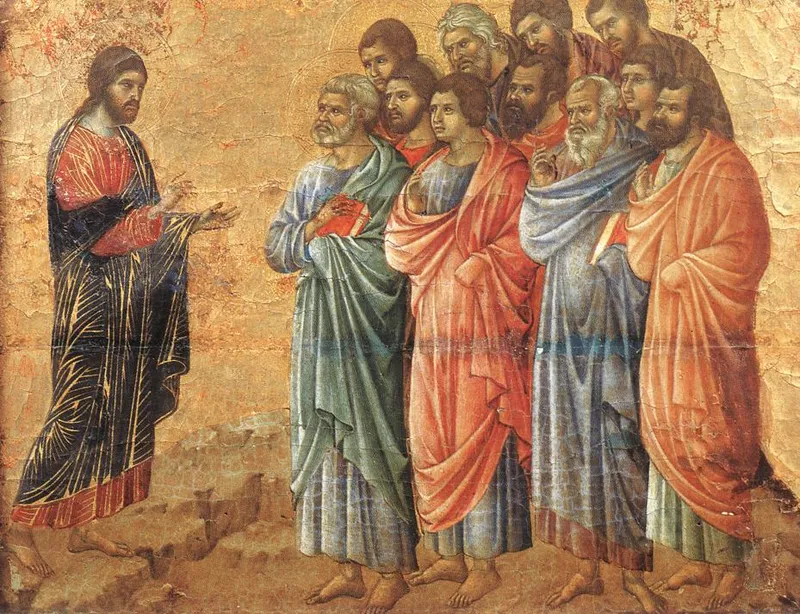
The Gospel comes to its summit on a mountain, as so much in Matthew has: Then the eleven disciples went away into Galilee, into a mountain where Jesus had appointed them (v. 16). It was on a mountain that the great teaching was given, on a mountain that He was transfigured, and on a mountain now that He sends them out. They are the eleven - the number itself a quiet wound, the gap where Judas had been - ordinary men, recently scattered, gathering where He told them.
And Matthew records their response with striking honesty: when they saw him, they worshipped him: but some doubted (v. 17). He does not airbrush the scene into unanimous triumph. Some worship; some waver. The Greek behind doubted suggests hesitation, a wavering between two minds, more than settled unbelief - the very human pull of a heart that wants to believe something almost too large to take in. What matters is what Jesus does next: He does not wait for the doubt to resolve before He speaks, and He does not withhold the commission from a less-than-perfect band.
Jesus came and spake unto them - He closes the distance Himself. The mission of the church is launched by worshippers who still waver, met and sent by the risen Lord.
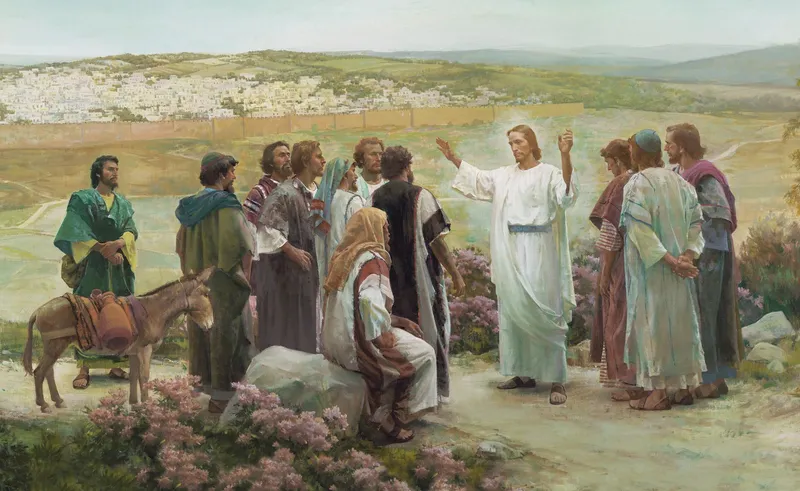
Everything that follows rests on the claim Jesus makes first: All power is given unto me in heaven and in earth (v. 18). Before a single command, an announcement of authority - and an absolute one. Not power over a region, a people, or a sphere, but over heaven and earth, the whole created order, things visible and invisible. The word given is important: this is authority received, the Father's answer to the Son's obedience unto death.
The One who emptied Himself and was crucified is the One to whom all dominion is now handed. And the little word therefore that opens the next verse hangs the entire mission on this. Eleven wavering men go because all power in heaven and earth belongs to the One who sends them. The greatness of the task (all nations) is matched and overmatched by the greatness of His authority (all power). This is why the commission is backed by the throne of the universe.
The same authority that opened the tomb stands behind every step the church takes into the world.
The command itself is one sustained sentence built around a single imperative: Go ye therefore, and teach all nations, baptizing them… teaching them to observe all things whatsoever I have commanded you (vv. 19-20). The heart of it is to make disciples, to make learners and followers of Jesus, and the going, the baptizing, and the teaching are how that one work is done. The scope is breathtaking: all nations. The ministry that had been largely confined within Israel is now flung open to the ends of the earth, to every people on the globe.
Baptism marks the new disciples publicly as belonging to God; and the teaching does not stop at conversion but reaches to all things whatsoever I have commanded you - the whole shape of the obedient life Jesus taught, lived out in practice. Discipleship here is comprehensive and lifelong: it begins with coming to Christ and continues in learning to observe - to keep, to do - everything He commanded. The church is sent to make followers of Jesus in every nation under heaven.1
Research trail
Sources & further study
These references support the historical, linguistic, manuscript, and contextual notes in this chapter. Scripture remains the primary text; external sources are provided so readers can inspect the research directly.
- Matthew 28 - Translators' NotesThe NET Bible's detailed footnotes on Matthew 28 - the timing of the visit at dawn on the first day (v. 1), the description of the angel and the terror of the guards (vv. 2-4), the bribing of the soldiers and the report circulated until this day (vv. 11-15), and the threefold name in the baptismal command of verse 19.
- Matthew 28 · Greek interlinear & word studyThe Greek text of Matthew 28 word by word, with parsing and lexical entries - useful for egerthe (v. 6, “he is risen,” literally “he was raised”), for exousia (v. 18, the “power” or authority given to the risen Lord), and for matheteusate (v. 19, the command behind “teach all nations,” to make disciples).
- Matthew 28 ↔ Daniel 7 · Genesis 12 · 1 Corinthians 15Traces the threads gathered into Matthew 28 - the dominion given to the Son of man over all people, nations, and languages (Dan. 7:13-14) behind all power… in heaven and in earth (v. 18), the promise that all families of the earth would be blessed (Gen. 12:3) behind the sending to all nations (v. 19), and the resurrection as the firstfruits of those who sleep (1 Cor. 15).
Where this echoes in Scripture
He Is Not Here: For He Is Risen
- Matthew 16:21From that time forth began Jesus to shew unto his disciples, how that he must... be killed, and be raised again the third day.The angel's as he said (v. 6) - Jesus had foretold this rising plainly and more than once.
- 1 Corinthians 15:3-4Christ died for our sins according to the scriptures; and that he was buried, and that he rose again the third day.The gospel in its earliest form - the death, burial, and rising announced at the empty tomb in verse 6.
- Acts 2:24Whom God hath raised up, having loosed the pains of death: because it was not possible that he should be holden of it.The rising of verse 6 preached - death could not hold the One God raised up.
- Psalm 16:10For thou wilt not leave my soul in hell; neither wilt thou suffer thine Holy One to see corruption.The ancient hope the empty tomb fulfils - the Holy One not abandoned to the grave.
- Isaiah 25:8He will swallow up death in victory; and the Lord GOD will wipe away tears from off all faces.The promise behind the great joy of verse 8 - death itself undone.
They Held Him by the Feet, and Worshipped Him
- John 20:27-28Reach hither thy finger... and be not faithless, but believing. And Thomas answered... My Lord and my God.The same twofold witness as verse 9 - the risen Christ truly touchable, and rightly called Lord and God.
- Philippians 2:9-11God... given him a name which is above every name: that at the name of Jesus every knee should bow.The worship the women give in verse 9 - the homage due to the exalted Lord from all creation.
- Revelation 1:18I am he that liveth, and was dead; and, behold, I am alive for evermore... and have the keys of hell and of death.The risen One whose feet are held (v. 9) - the crucified now alive for evermore.
- Hebrews 2:11For both he that sanctifieth and they who are sanctified are all of one: for which cause he is not ashamed to call them brethren.The grace of verse 10 - the risen Lord owning failed disciples as my brethren.
- John 12:10-11But the chief priests consulted that they might put Lazarus also to death; because... many of the Jews... believed on Jesus.The same hardness as verses 11-15 - suppressing the evidence and turning away from its plain meaning.
All Power Is Given Unto Me · Lo, I Am With You Alway
- Daniel 7:13-14there was given him dominion, and glory, and a kingdom, that all people, nations, and languages, should serve him.The vision behind all power… in heaven and in earth (v. 18) - universal dominion given to the Son of man.
- Ephesians 1:20-22set him at his own right hand in the heavenly places, far above all principality, and power... and hath put all things under his feet.The authority of verse 18 - the risen Christ enthroned over all things.
- Acts 1:8ye shall be witnesses unto me both in Jerusalem... and unto the uttermost part of the earth.The reach of the commission in verse 19 - the gospel carried to all nations, to the ends of the earth.
- Genesis 12:3and in thee shall all families of the earth be blessed.The ancient promise fulfilled in teach all nations (v. 19) - blessing for every family of the earth.
- Matthew 1:23they shall call his name Emmanuel, which being interpreted is, God with us.The opening of the Gospel answered by its close - God with us (1:23) becomes I am with you alway (v. 20).