Matthew 16
People in this chapter
The Pharisees and Sadducees - parties that agreed on almost nothing - come together to one purpose: tempting Jesus, they ask Him for a sign from heaven (v. 1). He answers that they can read the evening and morning sky to forecast the weather, yet cannot discern the signs of the times standing in front of them. The only sign a wicked and adulterous generation will be given is the sign of the prophet Jonas (v. 4) - the prophet swallowed and then delivered up after three days.
Crossing the lake, Jesus warns the disciples to beware of the leaven of the Pharisees and of the Sadducees; they think He means bread, until they understand He means the doctrine of these teachers - the false teaching that spreads quietly until it works through the whole.1
Tap any highlighted phrase to jump to the commentary that unpacks it.
Matthew 16:1-12The Sign of Jonas
1The Pharisees also with the Sadducees came, and tempting desired him that he would shew them a sign from heaven. 2He answered and said unto them, When it is evening, ye say, It will be fair weather: for the sky is red. 3And in the morning, It will be foul weather to day: for the sky is red and lowring. O ye hypocrites, ye can discern the face of the sky; but can ye not discern the signs of the times? 4A wicked and adulterous generation seeketh after a sign; and there shall no sign be given unto it, but the sign of the prophet Jonas. And he left them, and departed. 5And when his disciples were come to the other side, they had forgotten to take bread. 6Then Jesus said unto them, Take heed and beware of the leaven of the Pharisees and of the Sadducees. 7And they reasoned among themselves, saying, It is because we have taken no bread. 8Which when Jesus perceived, he said unto them, O ye of little faith, why reason ye among yourselves, because ye have brought no bread? 9Do ye not yet understand, neither remember the five loaves of the five thousand, and how many baskets ye took up? 10Neither the seven loaves of the four thousand, and how many baskets ye took up? 11How is it that ye do not understand that I spake it not to you concerning bread, that ye should beware of the leaven of the Pharisees and of the Sadducees? 12Then understood they how that he bade them not beware of the leaven of bread, but of the doctrine of the Pharisees and of the Sadducees.
The Pharisees and the Sadducees are an unlikely pair. The Pharisees guarded the traditions and the resurrection of the dead; the Sadducees held the temple and denied that resurrection altogether. They agreed on almost nothing - except their opposition to Jesus, which now unites them. They come, the text says plainly, tempting Him: their request for a sign from heaven is not honest seeking but a trap, a demand for proof on their own terms (v. 1).
Jesus answers with a homely picture: these men can read the sky - the sky is red at evening means fair weather, red and lowring at morning means a storm - and forecast the day with confidence. Yet the same men cannot discern the signs of the times (v. 3). The Messiah Himself stands before them, His works plain to see, and they call for a sign. The failure is not in the evidence but in the eyes.
O ye hypocrites, He calls them - skilled at reading clouds, blind to the One the clouds were made by.1
To a generation that demands a sign, Jesus gives one - but not the kind they wanted: there shall no sign be given unto it, but the sign of the prophet Jonas (v. 4). Earlier in this Gospel He had said what that sign means: as Jonas was three days and three nights in the whale's belly; so shall the Son of man be three days and three nights in the heart of the earth (Matt. 12:40).
The sign is not a spectacle in the sky on command; it is His death and His rising. Jonah was swallowed by the deep and given up alive on the third day, and the prophet's deliverance became a preaching that turned a whole city. The pattern points straight to Christ: the one decisive proof a hardened generation will be given is an empty tomb. And there is a quiet finality to the scene - he left them, and departed. When men ask not to be persuaded but to entrap, even Jesus, having spoken the truth, does not linger to argue.
He leaves them with the one sign that will outlast all their arguments.2
Crossing to the other side, the disciples realize they have forgotten bread, and so when Jesus says, Take heed and beware of the leaven of the Pharisees and of the Sadducees (v. 6), they hear it as a rebuke about provisions. Leaven was a fitting image. A small piece of fermented dough, worked into a fresh batch, spreads silently through the whole until every part is changed - you cannot see it move, but nothing it touches stays the same.
That hidden, total, permeating action is what Jesus warns against. Mark hears it slightly differently, naming also the leaven of Herod; here Matthew tells us exactly what Jesus meant. The danger is not in any loaf but in a way of thinking - the skepticism of the Sadducees that explained the supernatural away, and the tradition-heavy religion of the Pharisees that buried the word of God under the commandments of men. Both were corrupting the people quietly, a little at a time, the way leaven works through a lump.
Jesus presses the disciples until the picture clears: do they not remember the five loaves that fed five thousand, the seven that fed four thousand, the baskets of fragments left over (vv. 9-10)? The One who multiplied bread is not anxious about a missing loaf, and they should not be either - O ye of little faith. He spake it not to you concerning bread (v. 11). And then Matthew gives us the plain interpretation: then understood they how that he bade them not beware of the leaven of bread, but of the doctrine of the Pharisees and of the Sadducees (v. 12).
The leaven is doctrine - teaching. This is the chapter telling us, before it ever reaches Peter's confession, that what a person is taught about God matters enormously, because false teaching does not announce itself; it spreads quietly and works through the whole. The disciples are about to be asked the most important question they will ever answer - Whom say ye that I am? - and Jesus has just warned them that the wrong answers, the leavened ones, are already in the air around them, sounding reasonable, taught by respected men.3
Matthew 16:13-20Thou Art the Christ, the Son of the Living God
13When Jesus came into the coasts of Caesarea Philippi, he asked his disciples, saying, Whom do men say that I the Son of man am? 14And they said, Some say that thou art John the Baptist: some, Elias; and others, Jeremias, or one of the prophets. 15He saith unto them, But whom say ye that I am? 16And Simon Peter answered and said, Thou art the Christ, the Son of the living God. 17And Jesus answered and said unto him, Blessed art thou, Simon Barjona: for flesh and blood hath not revealed it unto thee, but my Father which is in heaven. 18And I say also unto thee, That thou art Peter, and upon this rock I will build my church; and the gates of hell shall not prevail against it. 19And I will give unto thee the keys of the kingdom of heaven: and whatsoever thou shalt bind on earth shall be bound in heaven: and whatsoever thou shalt loose on earth shall be loosed in heaven. 20Then charged he his disciples that they should tell no man that he was Jesus the Christ.
The place matters. Jesus brings the question to the coasts of Caesarea Philippi (v. 13), a region at the foot of Mount Hermon famous for its shrines - a grotto to the god Pan, temples to the old powers, and a sanctuary built to honor Caesar himself, who claimed the title son of god. In that crowded marketplace of competing deities and lordly claims, Jesus asks who He is. He begins wide: Whom do men say that I the Son of man am? The disciples report the talk of the crowds - John the Baptist raised, Elijah returned, Jeremiah, one of the prophets (v. 14).
Every answer is respectful; every answer is too small. Each one files Jesus among the great messengers of God while missing that He is more than a messenger. The opinions of men can be reverent and still fall short of the truth. So Jesus turns from the crowd's rumor to a question that cannot be answered at second hand: But whom say ye that I am? (v. 15). The pronoun lands with weight - ye. It is no longer about what people are saying.
It is the question every soul must finally answer in the first person.
Simon Peter answers for them all, and his answer is the high point toward which Matthew has been building: Thou art the Christ, the Son of the living God (v. 16). Both halves are enormous. The Christ - the Anointed One, the Messiah promised through the prophets, the King of David's line in whom all the covenant hopes converge. And the Son of the living God - not merely the nation's long-awaited deliverer, but One who stands in a relation to God that the prophets did not share.
Set against the dead idols of Caesarea Philippi, the title rings: He is the Son of the living God. Peter does not arrive at this by sorting the evidence and weighing the options, and Jesus says so at once: Blessed art thou, Simon Barjona: for flesh and blood hath not revealed it unto thee, but my Father which is in heaven (v. 17). The confession is true, and it is a gift - the Father drawing back the veil and granting the disciple to see who Jesus truly is.
This is the bedrock the whole chapter rests on, and the whole faith: the right answer to whom say ye that I am, given not by human cleverness but by the One in heaven.
Take seriously what Jesus says about how Peter came to his confession: flesh and blood hath not revealed it unto thee, but my Father which is in heaven (v. 17). Flesh and blood is the Bible's phrase for human capacity left to itself - reasoning, observation, the wisdom we generate on our own. And Jesus says that is not where this truth came from. No amount of watching the miracles, no clever deduction, no human teacher delivered it; the Father in heaven revealed it.
This is a pattern that runs all through Scripture and is worth pausing on. The deepest truths about who Jesus is are not finally achieved by the mind; they are given, opened to the heart by God. That does not make Peter passive - he answered, he spoke, he confessed aloud - but it means the seeing behind the speaking was a mercy. Which is why no one need feel disqualified from this confession for lack of learning, and why no one can boast in it as a private accomplishment.
The same Father who opened Peter's eyes opens the eyes of every person who comes to see and say, Thou art the Christ. When the truth lands, the right response is not pride but worship.
On the heels of the confession comes the famous saying: And I say also unto thee, That thou art Peter, and upon this rock I will build my church; and the gates of hell shall not prevail against it (v. 18). There is unmistakable wordplay in the Greek, and it should be heard plainly: the disciple is named Petros, a stone, and Jesus speaks of building upon the petra, the rock or bedrock. The names ring against each other - Peter… rock. What stands out, and what the whole passage keeps in view, is twofold.
First, the confession: this entire exchange hangs on the truth Peter has just spoken - Thou art the Christ, the Son of the living God - the truth the Father revealed, the truth that has been the bedrock of the people of God ever since. Second, and decisively, the builder: I will build my church. The church is Christ's own - my church - and He is the one who builds it. It is not raised by human strength or held together by human loyalty; the Lord Himself constructs it.
And He gives it a promise: the gates of hell shall not prevail against it. The grave - death itself, the gates through which all flesh passes - will not overpower the people Christ is building, because the One building them is the One who will defeat death three days hence. Let the wordplay stand as Jesus made it, and keep the weight where He put it: on the confessed Christ and the church He Himself builds.
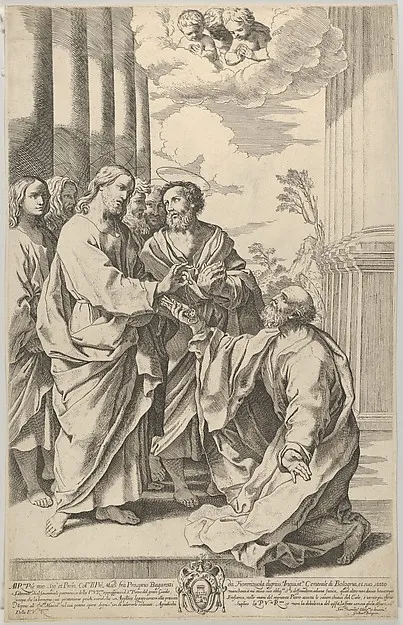
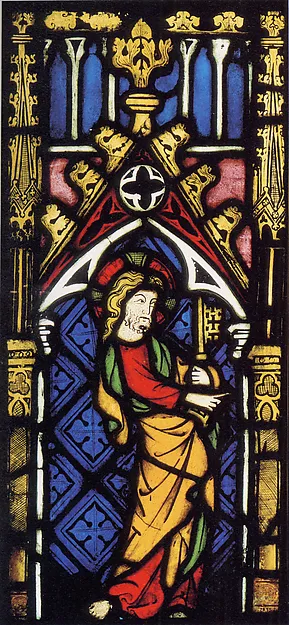
To this Jesus adds a further word: And I will give unto thee the keys of the kingdom of heaven: and whatsoever thou shalt bind on earth shall be bound in heaven: and whatsoever thou shalt loose on earth shall be loosed in heaven (v. 19). Keys are the sign of a steward's trust - the authority to open and to shut, to admit and to exclude, given by a master to a servant set over his house.
The picture reaches back to Isaiah, where the LORD lays the key of the house of David upon His servant's shoulder, so that he shall open, and none shall shut; and he shall shut, and none shall open (Isa. 22:22). The language of binding and loosing was familiar in Jesus' day for the authority to declare what is permitted and what is forbidden, to open the door of the kingdom by the message entrusted to the church.
We watch Peter use these very keys in Acts - opening the door of the gospel to the crowds at Pentecost, and then to the Gentiles in the house of Cornelius. The authority is real, and it is a trust: it belongs to the kingdom and serves the King. What the church binds and looses on earth, it does as steward of heaven's own purposes, in line with the confession that gives it its standing.3
Matthew 16:21-28Let Him Take Up His Cross
21From that time forth began Jesus to shew unto his disciples, how that he must go unto Jerusalem, and suffer many things of the elders and chief priests and scribes, and be killed, and be raised again the third day. 22Then Peter took him, and began to rebuke him, saying, Be it far from thee, Lord: this shall not be unto thee. 23But he turned, and said unto Peter, Get thee behind me, Satan: thou art an offence unto me: for thou savourest not the things that be of God, but those that be of men. 24Then said Jesus unto his disciples, If any man will come after me, let him deny himself, and take up his cross, and follow me. 25For whosoever will save his life shall lose it: and whosoever will lose his life for my sake shall find it. 26For what is a man profited, if he shall gain the whole world, and lose his own soul? or what shall a man give in exchange for his soul? 27For the Son of man shall come in the glory of his Father with his angels; and then he shall reward every man according to his works. 28Verily I say unto you, There be some standing here, which shall not taste of death, till they see the Son of man coming in his kingdom.
A new movement opens with a deliberate marker: From that time forth began Jesus to shew unto his disciples (v. 21). The confession is in place - they have seen who He is - and only now does He begin to tell them what He came to do. And it is not what they expected of the Christ. He must go to Jerusalem, suffer many things from the elders and chief priests and scribes, be killed, and be raised again the third day. Everything hangs on that small word must. This is no accident waiting to befall Him, no plan gone wrong; it is a necessity, the appointed path the Son has come to walk.
The suffering will come from the very leaders of His own people, the keepers of temple and law. He will be killed - the word is stark and unsoftened. But the sentence does not end in a grave: and be raised again the third day. The cross and the resurrection are spoken in one breath, as they always must be. From the moment the disciples confess Him rightly, Jesus sets their faces toward the thing that will make them stumble - that the Christ they have just hailed is going to Jerusalem to die.
Peter cannot bear it. The same disciple who moments ago spoke the Father's revelation now took him, and began to rebuke him, saying, Be it far from thee, Lord: this shall not be unto thee (v. 22). His instinct is understandable, even tender - he loves his Master and recoils from the thought of His suffering. But it is exactly wrong. Peter has the right Christ and the wrong cross; he wants a Messiah of triumph without a Messiah of suffering, glory without the grave.
And the One who had just called him blessed now turns and gives him the sharpest rebuke in the Gospels: Get thee behind me, Satan: thou art an offence unto me: for thou savourest not the things that be of God, but those that be of men (v. 23). The word offence means a stumbling-block, a stone laid in the path to trip the traveler - a bitter irony for the man just named a stone.
The lesson is sobering and freeing at once: a person can confess Christ truly and, in the next breath, set his mind against the very heart of Christ's mission. To resist the cross - to want a Savior who saves without suffering - is to think the thoughts of men, and to stand, however lovingly, on the enemy's side of the road.
There is a startling echo to notice. Long before, in the wilderness, the tempter had offered Jesus exactly this - all the kingdoms of the world, and the glory of them (Matt. 4:8-9), a crown with no cross, dominion without death - and Jesus had answered, Get thee hence, Satan. Now the same offer comes again, this time from the lips of His own beloved disciple, and He answers with nearly the same words: Get thee behind me, Satan. The temptation to skip the cross is the oldest temptation there is, and it can wear the face of love and good intentions.
Thou savourest not the things that be of God, but those that be of men - the word savour means to set the mind on, to relish, to be inclined toward. Peter's thinking is running on a human track: avoid pain, secure the win, protect the one you love. God's purpose runs on another track entirely - a salvation purchased through suffering, life given through death. Jesus does not cast Peter away; He puts him back in his place, behind Him, a follower again rather than an obstacle in the road.
The disciple's task is not to redirect the Lord but to walk where He leads - even when the road runs toward a cross.
Having set His own face toward the cross, Jesus turns and makes the cross the shape of discipleship itself: If any man will come after me, let him deny himself, and take up his cross, and follow me (v. 24). Every word counts. If any man will come after me - the call is open to anyone, but it has terms. Let him deny himself - not deny himself some thing, a pleasure here or a comfort there, but deny himself, renounce the throne of his own life, hand over the right to rule his own existence.
And take up his cross - to those who first heard it, the cross was no metaphor or ornament; it was the beam a condemned man carried to his own execution, the most shameful death the age could devise. To take up a cross was to walk as a man already sentenced, dead to his old claims. And follow me - the cross-bearing is not a grim end in itself but a following, walking the very road the Lord walks, in His steps and toward His destination.
This is the cross-shaped life: a daily dying to self that follows the crucified Lord. And it is the only following there is. There is no coming after a crucified Christ except by way of a cross.
Then Jesus lays bare the great reversal at the center of the kingdom: For whosoever will save his life shall lose it: and whosoever will lose his life for my sake shall find it (v. 25). The world's arithmetic says grasp your life, guard it, spend it on yourself, and you will have it. Jesus says the opposite is true. The life clutched tightly slips away; the life poured out for His sake is the life truly found.
This is not a riddle but the deepest law of how things actually are. The self curved inward upon its own preservation withers; the self given away for Christ and for others comes alive. The paradox is everywhere in His teaching - the seed must fall into the ground and die to bear fruit (John 12:24-25) - and it follows directly from the cross. The Lord who is going to Jerusalem to lose His life and find it again on the third day calls His people onto the same road.
For my sake is the hinge: this is not reckless self-destruction but life surrendered to Him, for His sake and His kingdom. What looks like loss is the way to the only gain that lasts.
Jesus presses the reversal home with a question no one can dodge: For what is a man profited, if he shall gain the whole world, and lose his own soul? or what shall a man give in exchange for his soul? (v. 26). Picture the most total success imaginable - the whole world gained, every prize and pleasure and power a human heart could chase, all of it won. And set against that gain a single loss: the soul. Jesus says the trade is ruin.
The soul outweighs the world, because the world is passing and the soul is not; the world cannot be carried past the grave and the soul goes on. And once it is lost, no price can buy it back - what shall a man give in exchange for his soul? There is no currency for that purchase; nothing in all the gained world is worth as much as the thing it cost. Then He gives the reason it all matters so terribly: the Son of man shall come in the glory of his Father with his angels; and then he shall reward every man according to his works (v. 27).
The One now bound for a cross will return in glory as judge, and every life will be weighed before Him. And He closes with a word of nearness - there be some standing here, which shall not taste of death, till they see the Son of man coming in his kingdom (v. 28) - a promise that the kingdom is not only future and far off; its power was about to break in, and some standing there would see it.1
Research trail
Sources & further study
These references support the historical, linguistic, manuscript, and contextual notes in this chapter. Scripture remains the primary text; external sources are provided so readers can inspect the research directly.
- Matthew 16 - Translators' NotesThe NET Bible's detailed footnotes on Matthew 16 - the demand for a sign (vv. 1-4), the meaning of leaven as teaching (vv. 6-12), the much-discussed saying about the rock and the keys (vv. 18-19), and the force of the first passion prediction in verse 21.
- Matthew 16 ↔ Jonah · Daniel 7 · the Synoptic parallelsTraces the threads tying Matthew 16 to the rest of Scripture - the sign of Jonas (v. 4) read against Jonah 1-2, the Son of man (vv. 13, 27) against Daniel 7:13-14, and Peter's confession and the cross-call set beside the parallel scenes in Mark 8 and Luke 9.
- Matthew 16 · Greek interlinear + lexiconThe Greek text of Matthew 16 word by word with parsing and lexical entries - useful for ho Christos (v. 16, “the Christ,” the Anointed One), for the wordplay of Petros and petra (v. 18), for ekklesia (v. 18, the “church” or assembly), and for the strong dei (“must”) of verse 21.
Where this echoes in Scripture
The Sign of Jonas
- Matthew 12:39-40as Jonas was three days and three nights in the whale's belly; so shall the Son of man be three days and three nights in the heart of the earth.Jesus' own reading of the sign of Jonas in verse 4 - His death and resurrection.
- Jonah 1:17Now the LORD had prepared a great fish to swallow up Jonah. And Jonah was in the belly of the fish three days and three nights.The sign itself (v. 4) - the prophet swallowed by the deep and given up alive on the third day.
- 1 Corinthians 5:6-7Know ye not that a little leaven leaveneth the whole lump?The image of verses 6 and 12 - a small corruption that works silently through the whole.
- Luke 12:1Beware ye of the leaven of the Pharisees, which is hypocrisy.The same warning as verses 6-12 - the leaven named as the hidden corruption of false religion.
- John 2:19-21Destroy this temple, and in three days I will raise it up... he spake of the temple of his body.The resurrection foreshadowed by the sign of Jonas (v. 4) - raised on the third day.
Thou Art the Christ, the Son of the Living God
- John 20:31these are written, that ye might believe that Jesus is the Christ, the Son of God; and that believing ye might have life through his name.Peter's confession (v. 16) as the very purpose of the Gospel - believing, and so having life.
- 1 Corinthians 3:11For other foundation can no man lay than that is laid, which is Jesus Christ.The foundation of the church Christ builds (v. 18) named by the apostle - Jesus Christ Himself.
- Ephesians 2:20built upon the foundation of the apostles and prophets, Jesus Christ himself being the chief corner stone.The church of verse 18 - founded on the confessed Christ, the cornerstone the prophets foresaw.
- Isaiah 22:22and the key of the house of David will I lay upon his shoulder; so he shall open, and none shall shut.The keys of verse 19 - the steward's trust to open and to shut, given by the master of the house.
- 1 John 4:15Whosoever shall confess that Jesus is the Son of God, God dwelleth in him, and he in God.The confession of verse 16 made the dividing line of all faith - God dwelling in those who confess the Son.
Let Him Take Up His Cross
- Matthew 20:28the Son of man came not to be ministered unto, but to minister, and to give his life a ransom for many.The purpose behind the must of verse 21 - His death given as a ransom for many.
- Matthew 4:8-10the devil... sheweth him all the kingdoms of the world... Then saith Jesus unto him, Get thee hence, Satan.The earlier offer of a crown without a cross - answered with the same words Jesus gives Peter in verse 23.
- John 12:24-25Except a corn of wheat fall into the ground and die, it abideth alone... He that loveth his life shall lose it.The reversal of verse 25 - life found by being lost, the seed that dies to bear fruit.
- 1 Peter 1:18-19ye were not redeemed with corruptible things... but with the precious blood of Christ.The price of the soul in verse 26 - bought back not with the world's currency but with Christ's blood.
- Galatians 2:20I am crucified with Christ: nevertheless I live; yet not I, but Christ liveth in me.The cross-shaped life of verse 24 lived out - the self denied, Christ living in the believer.