Matthew 15
People in this chapter
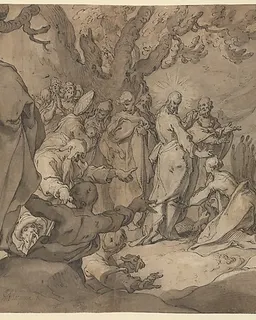
The scribes and Pharisees who confront Jesus here have come all the way from Jerusalem, and their question sounds like a charge: Why do thy disciples transgress the tradition of the elders? for they wash not their hands when they eat bread (vv. 1-2). At issue is not hygiene but a body of oral rules built up around the written Law - the tradition of the elders - which had hardened, in their hands, into something that could be set above the commandment of God itself.
Jesus does not defend His disciples' manners. He goes for the root, showing how one of their traditions, the vow called Corban, was being used to cancel the plain duty to honour father and mother, and then He turns Isaiah's ancient indictment on them: This people draweth nigh unto me with their mouth… but their heart is far from me; but in vain they do worship me, teaching for doctrines the commandments of men (vv. 8-9).1
Tap any highlighted phrase to jump to the commentary that unpacks it.
Matthew 15:1-9In Vain They Do Worship Me
1Then came to Jesus scribes and Pharisees, which were of Jerusalem, saying, 2Why do thy disciples transgress the tradition of the elders? for they wash not their hands when they eat bread. 3But he answered and said unto them, Why do ye also transgress the commandment of God by your tradition? 4For God commanded, saying, Honour thy father and mother: and, He that curseth father or mother, let him die the death. 5But ye say, Whosoever shall say to his father or his mother, It is a gift, by whatsoever thou mightest be profited by me; 6And honour not his father or his mother, he shall be free. Thus have ye made the commandment of God of none effect by your tradition. 7Ye hypocrites, well did Esaias prophesy of you, saying, 8This people draweth nigh unto me with their mouth, and honoureth me with their lips; but their heart is far from me. 9But in vain they do worship me, teaching for doctrines the commandments of men.
The challenge that opens the chapter has traveled a long way to reach Jesus: Then came to Jesus scribes and Pharisees, which were of Jerusalem (v. 1). These are not local critics but a delegation from the capital, and their question is really an accusation: Why do thy disciples transgress the tradition of the elders? for they wash not their hands when they eat bread (v. 2). The point at issue is not cleanliness in any ordinary sense.
The tradition of the elders was a large body of oral rules that had grown up around the written Law of Moses, meant at first to guard it - a hedge around the commandment so that a person would stop well short of actually breaking it. Ceremonial hand-washing before eating was one such rule. The trouble was not that such customs existed; it was what they had come to weigh. Jesus answers a question with a sharper question: Why do ye also transgress the commandment of God by your tradition? (v. 3).
The word also lands hard. They had accused His disciples of setting aside a human tradition; He charges them with setting aside the commandment of God - and by the very traditions they were defending. The order of authority has been quietly inverted, and Jesus means to turn it right side up.1
Then Jesus gives the precise example, and it is devastating in its plainness. For God commanded, saying, Honour thy father and mother (v. 4) - one of the ten words from Sinai, as basic a duty as exists, and one carrying the weight of life and death. To honour parents included caring for them in old age, supplying their need. But a tradition had grown up that let a person declare his property Corban, a gift devoted to God: Whosoever shall say to his father or his mother, It is a gift, by whatsoever thou mightest be profited by me; And honour not his father or his mother, he shall be free (vv. 5-6).
By pronouncing that word over what he owned, a man could put his resources formally out of reach - and then plead that he was no longer obligated to use them for his parents' support. A rule that sounded pious - a gift to God! - had become a device for evading the fifth commandment. Jesus names exactly what that does: Thus have ye made the commandment of God of none effect by your tradition (v. 6). Of none effect - void, cancelled, emptied of force.
This is the danger He is exposing, and it is worth sitting with rather than rushing past: a tradition of men, sincerely held, had been allowed to overrule a clear word of God, and to do it under the cover of religion. The lesson is not that custom is worthless; it is that nothing - however old, however respected - may be set above what God Himself has commanded.2
Jesus seals the indictment by reaching back seven centuries for Isaiah's words and laying them over the men in front of Him: Ye hypocrites, well did Esaias prophesy of you, saying, This people draweth nigh unto me with their mouth, and honoureth me with their lips; but their heart is far from me. But in vain they do worship me, teaching for doctrines the commandments of men (vv. 7-9). The word hypocrite in this world meant an actor, one who speaks lines from behind a mask.
That is the picture Isaiah drew and Jesus presses: worshippers whose mouths and lips are full of God while their hearts have wandered off somewhere else. The diagnosis is exact - the problem is not that they worship too little but that their worship has come unhooked from the heart, and so it is in vain. And He names the mechanism by which it happened: teaching for doctrines the commandments of men. When human rules are elevated to the level of divine command, religion can grow loud and busy and still be hollow at the center.
This is the thread that ties the whole opening together: the quarrel over washing was never really about hands. It was about hearts that had drifted from God while the outward forms went on as if nothing were wrong.3
Matthew 15:10-20That Which Cometh Out of the Heart
10And he called the multitude, and said unto them, Hear, and understand: 11Not that which goeth into the mouth defileth a man; but that which cometh out of the mouth, this defileth a man. 12Then came his disciples, and said unto him, Knowest thou that the Pharisees were offended, after they heard this saying? 13But he answered and said, Every plant, which my heavenly Father hath not planted, shall be rooted up. 14Let them alone: they be blind leaders of the blind. And if the blind lead the blind, both shall fall into the ditch. 15Then answered Peter and said unto him, Declare unto us this parable. 16And Jesus said, Are ye also yet without understanding? 17Do not ye yet understand, that whatsoever entereth in at the mouth goeth into the belly, and is cast out into the draught? 18But those things which proceed out of the mouth come forth from the heart; and they defile the man. 19For out of the heart proceed evil thoughts, murders, adulteries, fornications, thefts, false witness, blasphemies: 20These are the things which defile a man: but to eat with unwashen hands defileth not a man.
Jesus now turns from the delegation to the listening crowd, with a summons to attend closely: Hear, and understand (v. 10). Then comes the saying that overturns the whole purity dispute: Not that which goeth into the mouth defileth a man; but that which cometh out of the mouth, this defileth a man (v. 11). It is a startling reversal of the assumption behind the morning's quarrel. The scribes were anxious about what passed into a person from outside - food taken with unwashed hands.
Jesus says defilement runs the other direction: it comes out. The disciples are immediately worried about the offense this has caused: Knowest thou that the Pharisees were offended, after they heard this saying? (v. 12). Jesus is unmoved, and His reply is sober: Every plant, which my heavenly Father hath not planted, shall be rooted up (v. 13). A teaching that did not come from God - however well established - has no permanence; it will not stand.
Let them alone, He says, they be blind leaders of the blind. And if the blind lead the blind, both shall fall into the ditch (v. 14). It is a grave and sad image: teachers who cannot see, guiding others who cannot see, all of them headed for the same fall. Jesus will not soften the truth to spare the offense, because the stakes - a whole people misled about what really defiles - are too high.
Peter asks Him to declare unto us this parable (v. 15), and Jesus, with a touch of patient surprise - Are ye also yet without understanding? (v. 16) - explains it plainly. Food runs its natural course: whatsoever entereth in at the mouth goeth into the belly, and is cast out into the draught (v. 17). It touches the body and passes through; it never reaches the moral center of a person at all. But the things that truly defile come from somewhere deeper: those things which proceed out of the mouth come forth from the heart; and they defile the man (v. 18).
Then He opens the heart and names what He finds there, and the list is sobering: For out of the heart proceed evil thoughts, murders, adulteries, fornications, thefts, false witness, blasphemies (v. 19). Notice where each of these begins. Murder, adultery, theft, perjury, slander - these are not caught from the outside like a stain on the hands; they are born within, in the heart, before they ever reach the hand or the tongue. These are the things which defile a man, He concludes; but to eat with unwashen hands defileth not a man (v. 20).
The verdict is complete. The Pharisees had located uncleanness in the wrong place entirely - on the surface, in the touch of food - when all along the real defilement was welling up from inside. And this is the quietly devastating turn: if the trouble is in the heart, then no amount of external scrubbing can reach it. The problem is not on the hands. It is in the man.2
Matthew 15:21-28Great Is Thy Faith
21Then Jesus went thence, and departed into the coasts of Tyre and Sidon. 22And, behold, a woman of Canaan came out of the same coasts, and cried unto him, saying, Have mercy on me, O Lord, thou son of David; my daughter is grievously vexed with a devil. 23But he answered her not a word. And his disciples came and besought him, saying, Send her away; for she crieth after us. 24But he answered and said, I am not sent but unto the lost sheep of the house of Israel. 25Then came she and worshipped him, saying, Lord, help me. 26But he answered and said, It is not meet to take the children’s bread, and to cast it to dogs. 27And she said, Truth, Lord: yet the dogs eat of the crumbs which fall from their masters’ table. 28Then Jesus answered and said unto her, O woman, great is thy faith: be it unto thee even as thou wilt. And her daughter was made whole from that very hour.
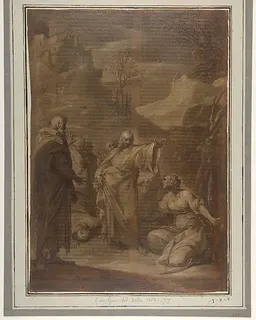
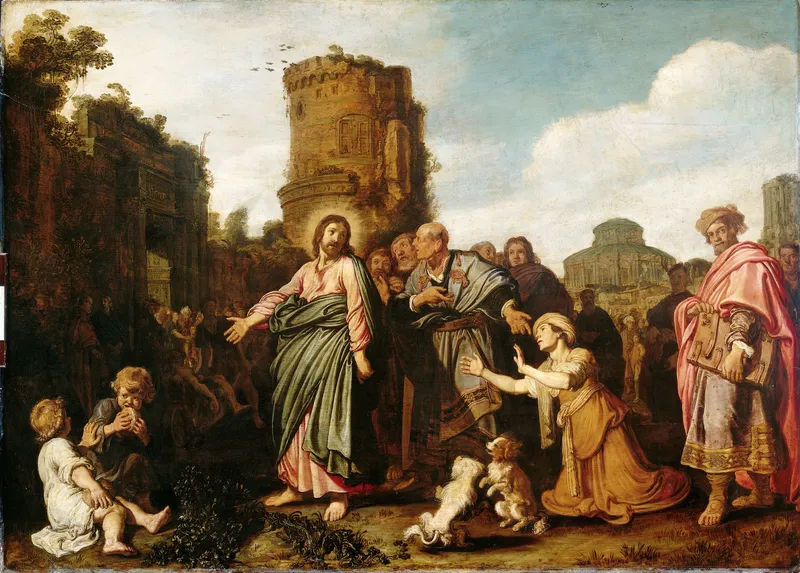
Jesus withdraws northward, into the coasts of Tyre and Sidon (v. 21) - Gentile territory, outside the land of Israel. And there a woman comes to Him whom the narrative deliberately marks as an outsider: a woman of Canaan (v. 22). The name reaches back to the old peoples of the land, those furthest from Israel's covenant. Yet hear what she cries: Have mercy on me, O Lord, thou Son of David; my daughter is grievously vexed with a devil. A Canaanite woman addresses Jesus by a title of Israel's own hope - Son of David, the Messiah - and casts her daughter's torment upon His mercy.
What follows can feel hard, and it should be read carefully, for Jesus is doing something with this woman, not against her. First, he answered her not a word (v. 23). The silence is not cold dismissal; it is the beginning of a drawing-out. The disciples want her gone - Send her away; for she crieth after us - and Jesus states the order of His mission as it then stood: I am not sent but unto the lost sheep of the house of Israel (v. 24).
The gospel comes to Israel first; that is the appointed sequence. But she does not retreat. Then came she and worshipped him, saying, Lord, help me (v. 25). Three words, stripped of everything but need and trust. She falls at His feet, and the whole weight of her plea rests on who He is and what He can do.1
Now comes the saying that has troubled tender readers, and it must be heard rightly: It is not meet to take the children's bread, and to cast it to dogs (v. 26). Several things keep this from being the insult it can sound like. The image is of a household - children at the table, and the household dogs near it; the very word Jesus uses is the gentler one, the little dogs that belong inside the home, not wild scavengers in the street.
The children are Israel, the first to be fed; the bread is the blessing of the Messiah. Jesus is voicing the difficulty she faces - the apparent order of things - and holding it out to her, almost inviting her to press past it. And she does, with one of the most remarkable answers in all the Gospels: Truth, Lord: yet the dogs eat of the crumbs which fall from their masters' table (v. 27). She does not argue with the order; she accepts it - Truth, Lord - and then turns it into the very ground of her hope.
If she is, as it were, only a little dog under the table, well then: even the little dogs are fed; even the crumbs that fall from such a table as His are more than enough for her need. There is no resentment in it, no demand of rights. There is humility that does not let go, and faith that finds in the smallest mercy of Christ an ocean. She asks not for the children's loaf but only for a crumb - and knows that a crumb from His table will heal her daughter.2
Jesus' response is joy. O woman, great is thy faith: be it unto thee even as thou wilt. And her daughter was made whole from that very hour (v. 28). The whole exchange, it turns out, was leading here - not to her humiliation but to this open declaration. He had drawn her faith out into the light, tested it, let it press through silence and apparent refusal, and now He crowns it. And the marvel is striking: this is one of only two people in the Gospels whose faith Jesus calls great, and both are Gentiles - this Canaanite mother, and the Roman centurion of whom He said, I have not found so great faith, no, not in Israel (Matt. 8:10).
The contrast with the opening of the chapter could not be sharper. The scribes and Pharisees, insiders with every advantage, drew near with their lips while their hearts were far off; here an outsider with no standing at all draws near with her whole heart and is told her faith is great. Be it unto thee even as thou wilt - the very thing she came for, granted in full, and her daughter healed at that hour.
The door has been opened, and it is faith, not lineage, that opens it.
Matthew 15:29-39They Glorified the God of Israel
29And Jesus departed from thence, and came nigh unto the sea of Galilee; and went up into a mountain, and sat down there. 30And great multitudes came unto him, having with them those that were lame, blind, dumb, maimed, and many others, and cast them down at Jesus’ feet; and he healed them: 31Insomuch that the multitude wondered, when they saw the dumb to speak, the maimed to be whole, the lame to walk, and the blind to see: and they glorified the God of Israel. 32Then Jesus called his disciples unto him, and said, I have compassion on the multitude, because they continue with me now three days, and have nothing to eat: and I will not send them away fasting, lest they faint in the way. 33And his disciples say unto him, Whence should we have so much bread in the wilderness, as to fill so great a multitude? 34And Jesus saith unto them, How many loaves have ye? And they said, Seven, and a few little fishes. 35And he commanded the multitude to sit down on the ground. 36And he took the seven loaves and the fishes, and gave thanks, and brake them, and gave to his disciples, and the disciples to the multitude. 37And they did all eat, and were filled: and they took up of the broken meat that was left seven baskets full. 38And they that did eat were four thousand men, beside women and children. 39And he sent away the multitude, and took ship, and came into the coasts of Magdala.
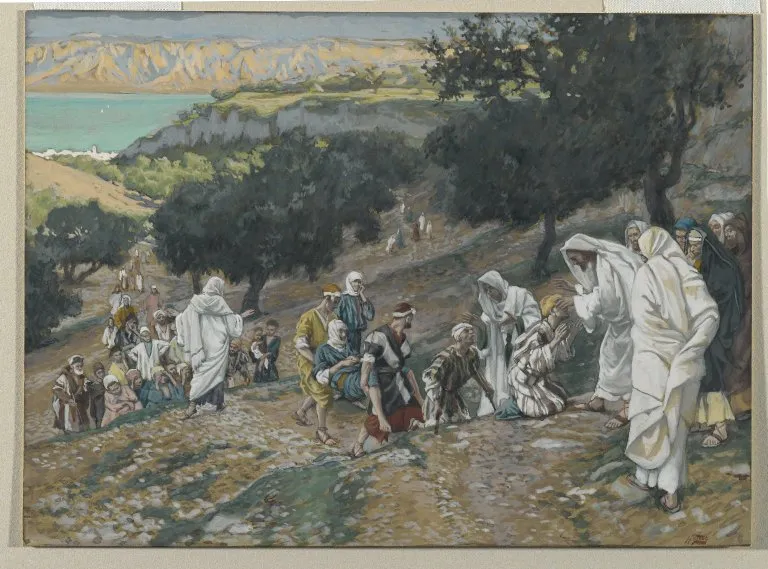
Jesus comes back to the sea of Galilee, goes up on a mountainside, and sits - the posture of a teacher, but here the throne of a healer. And great multitudes came unto him, having with them those that were lame, blind, dumb, maimed, and many others, and cast them down at Jesus' feet; and he healed them (v. 30). The verbs are vivid: the crowds cast them down at His feet - a tumble of broken bodies laid at the only place there was hope - and He healed them, one and all.
The result is wonder breaking into worship: Insomuch that the multitude wondered, when they saw the dumb to speak, the maimed to be whole, the lame to walk, and the blind to see: and they glorified the God of Israel (v. 31). That last phrase is worth noticing. They glorified the God of Israel - the form of words an outsider would use, suggesting that here, in the region near Gentile country, the crowds were largely not Israelites themselves.
The very healings that drew Israel's wonder elsewhere are here drawing the praise of those outside Israel - another quiet sign, after the Canaanite woman, that the mercy of God is reaching beyond its first borders. The picture of verse 30, with every kind of affliction brought and every one healed, reads like a glimpse of the prophets' promise: then the eyes of the blind shall be opened… then shall the lame man leap as an hart, and the tongue of the dumb sing (Isa. 35:5-6).
What moves Jesus next is named outright: I have compassion on the multitude, because they continue with me now three days, and have nothing to eat: and I will not send them away fasting, lest they faint in the way (v. 32). The need is plain and bodily - hungry people, far from home, who would collapse on the road - and His response begins not with a plan but with compassion. The disciples see only the impossibility: Whence should we have so much bread in the wilderness, as to fill so great a multitude? (v. 33).
It is a striking question, given that they had already watched Him feed an even larger crowd; the human heart forgets the last mercy when the next need looms. Jesus does not rebuke them. He simply asks what is at hand: How many loaves have ye? And they said, Seven, and a few little fishes (v. 34). Then He does what He always does with a little brought to Him: He has the crowd sit, and he took the seven loaves and the fishes, and gave thanks, and brake them, and gave to his disciples, and the disciples to the multitude (v. 36).
The sequence - took, gave thanks, brake, gave - is the same shape His hands will make at the last supper. And they did all eat, and were filled: and they took up of the broken meat that was left seven baskets full (v. 37). Four thousand men, besides women and children, fed to the full from seven loaves - and more gathered afterward than they began with. The seven baskets of surplus preach the lesson: what Christ blesses does not merely suffice; it overflows.1
Research trail
Sources & further study
These references support the historical, linguistic, manuscript, and contextual notes in this chapter. Scripture remains the primary text; external sources are provided so readers can inspect the research directly.
- Matthew 15 - Translators' NotesThe NET Bible's detailed footnotes on Matthew 15 - the meaning of the vow rendered “a gift” (Corban) in verses 5-6, the force of “it is not meet” and the diminutive word for “dogs” in verse 26, and the difference between the baskets in verse 37 and those in the feeding of the five thousand.
- Matthew 15 · Greek interlinear + lexiconThe Greek text of Matthew 15 word by word, with parsing and lexical links - useful for matēn (v. 9, the “in vain” of hollow worship), for kardia (the “heart” from which defilement proceeds, vv. 18-19), and for megalē…hē pistis (v. 28, the “great… faith” Jesus marvels at).
- Matthew 15 ↔ Isaiah 29 · Mark 7 · the GospelsTraces the threads tying Matthew 15 to the rest of Scripture - Jesus' quotation of Isaiah 29:13 in verses 8-9, the close parallel account in Mark 7, and the feeding of the four thousand (vv. 32-39) read alongside the feeding of the five thousand and the wilderness bread of Israel.
Where this echoes in Scripture
In Vain They Do Worship Me
- Isaiah 29:13this people draw near me with their mouth, and with their lips do honour me, but have removed their heart far from me.The very words Jesus quotes in verses 8-9 - Isaiah's indictment of worship that is all lips and no heart.
- Mark 7:9-13Full well ye reject the commandment of God, that ye may keep your own tradition... making the word of God of none effect through your tradition.The parallel account, spelling out the same Corban example Jesus gives in verses 5-6.
- Exodus 20:12Honour thy father and thy mother: that thy days may be long upon the land which the LORD thy God giveth thee.The commandment Jesus says their tradition made void (v. 4) - one of the ten words from Sinai.
- John 4:23-24the true worshippers shall worship the Father in spirit and in truth... they that worship him must worship him in spirit and in truth.The answer to the hollow worship of verses 8-9 - worship that is more than lips, offered from the heart.
- 1 Samuel 16:7the LORD seeth not as man seeth; for man looketh on the outward appearance, but the LORD looketh on the heart.The principle underneath the whole section - God weighs the heart, not the outward form.
That Which Cometh Out of the Heart
- Jeremiah 17:9The heart is deceitful above all things, and desperately wicked: who can know it?The diagnosis underneath verses 18-19 - the heart, not the hands, as the source of defilement.
- Ezekiel 36:26A new heart also will I give you, and a new spirit will I put within you... and I will give you an heart of flesh.The cure that matches the wound - a remade heart, since defilement rises from within (v. 19).
- Proverbs 4:23Keep thy heart with all diligence; for out of it are the issues of life.The same truth as verse 18 - the heart is the wellspring from which a whole life flows.
- Matthew 5:8Blessed are the pure in heart: for they shall see God.The blessing falls where Jesus locates the trouble (v. 19) - on the heart, not the outward form.
- Psalm 51:10Create in me a clean heart, O God; and renew a right spirit within me.The prayer the whole section drives toward - for a clean heart, which only God can make.
Great Is Thy Faith
- Matthew 8:10-11I have not found so great faith, no, not in Israel... many shall come from the east and west, and shall sit down... in the kingdom of heaven.The only other faith Jesus calls great (v. 28) - also a Gentile's, also a sign of the door opening to the nations.
- Mark 7:24-30For this saying go thy way; the devil is gone out of thy daughter.The parallel account of the same Syrophenician woman of verses 21-28.
- Romans 1:16the gospel of Christ... to the Jew first, and also to the Greek.The order Jesus names in verse 24 - the gospel to Israel first, then reaching the nations.
- Ephesians 2:13-14ye who sometimes were far off are made nigh by the blood of Christ. For he is our peace, who hath made both one.Where the open door of verse 28 leads - the wall between Jew and Gentile broken down.
- Luke 18:1-8men ought always to pray, and not to faint... shall not God avenge his own elect, which cry day and night unto him?The persistence the woman models (vv. 22-27) - faith that keeps crying out and does not give up.
They Glorified the God of Israel
- Matthew 9:36he was moved with compassion on them, because they fainted, and were scattered abroad, as sheep having no shepherd.The same compassion that moves Him in verse 32 - the Shepherd's heart toward the hungry crowd.
- John 6:35I am the bread of life: he that cometh to me shall never hunger; and he that believeth on me shall never thirst.Where the feeding of verses 32-38 points - past the bread to the One who satisfies the soul.
- Isaiah 35:5-6Then the eyes of the blind shall be opened... then shall the lame man leap as an hart, and the tongue of the dumb sing.The prophet's promise glimpsed in verses 30-31 - the blind, lame, and dumb made whole.
- Ezekiel 34:15-16I will feed my flock, and I will cause them to lie down... I will seek that which was lost.God's own promise to shepherd and feed His people - fulfilled at the feeding of verse 37.
- Psalm 23:1-2The LORD is my shepherd; I shall not want. He maketh me to lie down in green pastures.The Shepherd who feeds (vv. 32-37) - the crowd made to sit and filled to the full.