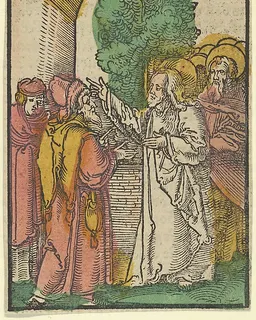
Luke 18
People in this chapter
Luke 18 strings together five scenes - a parable about a widow, a parable about two men praying, an encounter with children, an encounter with a rich man, and the healing of a blind beggar - and under all of them runs one question: how do people actually come to God, and who is received when they do? It opens with a widow and a judge. She has no power, no leverage, no money to bribe with; all she has is persistence, and she uses it - coming, and coming, and coming, until the unjust judge gives her justice simply to be rid of her.
Jesus draws the lesson out in the open: men ought always to pray, and not to faint (v. 1). If even a corrupt judge will yield to a powerless woman's refusal to give up, how much more will the God who loves His own answer those who cry day and night unto him (v. 7)? And then a line that turns the parable on the hearer: when the Son of man cometh, shall he find faith on the earth? (v. 8).1
Tap any highlighted phrase to jump to the commentary that unpacks it.
Luke 18:1-8Men Ought Always to Pray, and Not to Faint
1And he spake a parable unto them to this end, that men ought always to pray, and not to faint; 2Saying, There was in a city a judge, which feared not God, neither regarded man: 3And there was a widow in that city; and she came unto him, saying, Avenge me of mine adversary. 4And he would not for a while: but afterward he said within himself, Though I fear not God, nor regard man; 5Yet because this widow troubleth me, I will avenge her, lest by her continual coming she weary me. 6And the Lord said, Hear what the unjust judge saith. 7And shall not God avenge his own elect, which cry day and night unto him, though he bear long with them? 8I tell you that he will avenge them speedily. Nevertheless when the Son of man cometh, shall he find faith on the earth?
Luke tells us the point of this parable before he tells us the parable - a rare move, and a revealing one: Jesus spake a parable unto them to this end, that men ought always to pray, and not to faint (v. 1). The two phrases sit in deliberate tension. To pray always is to keep at it without stopping; to faint is to lose heart, to grow weary and quit. Jesus knows the great danger in prayer is not that we will ask for the wrong thing but that we will stop asking - that the silence will wear us down until we conclude no one is listening and let the matter drop.
The parable is medicine for exactly that fatigue. It is built for the long stretch when heaven seems closed and the answer does not come, when the temptation is to assume God is indifferent and to give up. Against that, Jesus does not offer a formula or a guarantee of speed. He offers a picture meant to keep a discouraged person on their knees a little longer.1
The cast is sketched in two strokes. The judge feared not God, neither regarded man (v. 2) - a man with no vertical accountability and no horizontal shame, answerable to no one and moved by nothing but his own convenience. Over against him stands a widow (v. 3), and in that world a widow was the very emblem of helplessness: no husband to plead her case, no standing in court, no money to grease a corrupt official's palm.
She has only one asset - she will not go away. She came unto him, and kept coming, until the judge says within himself the most cynical thing in the story: not this is just, but because this widow troubleth me, I will avenge her, lest by her continual coming she weary me (v. 5). He grants her plea purely to make her stop. The justice she receives is real, but its source is shabby - a selfish man buying his own peace.
And that is exactly the contrast Jesus is setting up, because the point is the contrast - how utterly unlike God this judge is.
Jesus draws the lesson by arguing from the lesser to the greater: Hear what the unjust judge saith. And shall not God avenge his own elect, which cry day and night unto him, though he bear long with them? (vv. 6-7). The logic presses hard. If a godless judge, who cares nothing for the widow, will finally grant justice just to be rid of her, how much more will God - who loves His own, who is named the defender of the widow and the fatherless - answer those who cry to Him?
Every term is set in opposition to the judge. He was indifferent; God loves His own elect. The widow was a stranger nagging a stranger; these are God's own people, crying day and night. Jesus then adds the promise: he will avenge them speedily (v. 8). The word does not deny that God may bear long - the text says plainly that He does - but it insists that when His answer comes, it will not be the grudging surrender of a wearied judge; it will be the swift, sure vindication of a Father who has heard all along.
The delay is never neglect.
Luke 18:9-17God Be Merciful to Me a Sinner
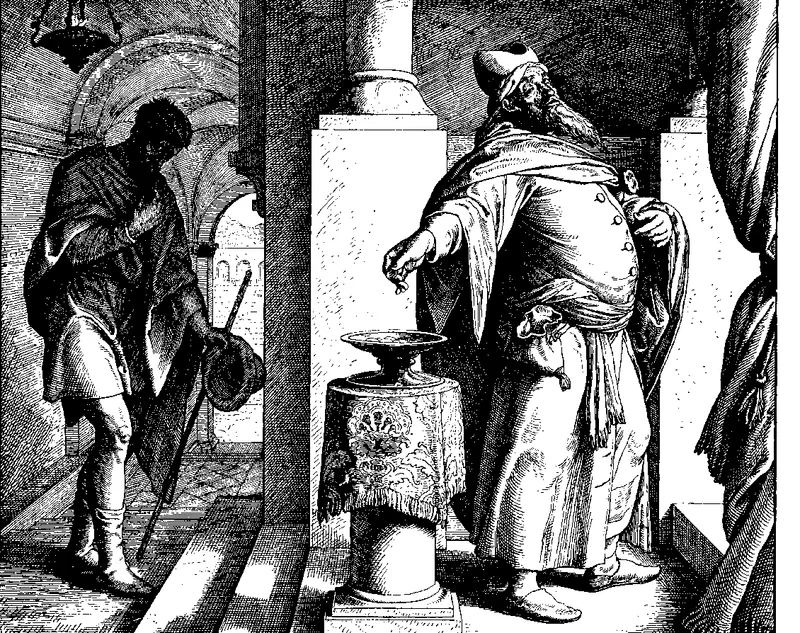
9And he spake this parable unto certain which trusted in themselves that they were righteous, and despised others: 10Two men went up into the temple to pray; the one a Pharisee, and the other a publican. 11The Pharisee stood and prayed thus with himself, God, I thank thee, that I am not as other men are, extortioners, unjust, adulterers, or even as this publican. 12I fast twice in the week, I give tithes of all that I possess. 13And the publican, standing afar off, would not lift up so much as his eyes unto heaven, but smote upon his breast, saying, God be merciful to me a sinner. 14I tell you, this man went down to his house justified rather than the other: for every one that exalteth himself shall be abased; and he that humbleth himself shall be exalted. 15And they brought unto him also infants, that he would touch them: but when his disciples saw it, they rebuked them. 16But Jesus called them unto him, and said, Suffer little children to come unto me, and forbid them not: for of such is the kingdom of God. 17Verily I say unto you, Whosoever shall not receive the kingdom of God as a little child shall in no wise enter therein.
Again Luke names the target before the parable begins: Jesus spoke it unto certain which trusted in themselves that they were righteous, and despised others (v. 9). The two halves of that verse belong together, and they always do. The trust that one is righteous on one's own account almost inevitably curdles into contempt for those who fall short - the moment a person measures their standing by their own performance, other people become the scale they weigh themselves against.
So Jesus sets two men side by side in the same holy place, doing the same holy thing. Two men went up into the temple to pray; the one a Pharisee, and the other a publican (v. 10). To the original hearers these were not ambiguous figures. The Pharisee was the model of devout, disciplined religion; the publican - a tax collector working for the occupying power, grown rich off his own people's losses - was a byword for sellout and sinner.
Everyone listening knew which man was the good one. The parable exists to overturn that certainty.
Listen to how the Pharisee prays: God, I thank thee, that I am not as other men are, extortioners, unjust, adulterers, or even as this publican (v. 11). It begins like thanksgiving and is really an inventory - and notice that every line is about himself. He thanks God, but the subject of nearly every clause is I: what I am not, what I do. I fast twice in the week, I give tithes of all that I possess (v. 12) - and both of these go beyond what the law required; he is, by his own reckoning, an overachiever.
The tragedy is not that the things he claims are false; very likely he does fast and tithe. The tragedy is the use he makes of them. He has turned his obedience into a ledger and his prayer into a recital of the balance, and he has dragged the man behind him into it as a foil: or even as this publican. He came to the temple needing nothing, asking nothing, confessing nothing. He stands in the presence of God and informs God how well he is doing.
A prayer with no request in it, offered by a man who senses no lack, turns out to be a performance with an audience of one, and that one is himself: he prayed thus with himself (v. 11).
Everything about the publican is the opposite. He stands afar off, keeping his distance from the holy place as one who knows he has no right to press near. He would not lift up so much as his eyes unto heaven - the ordinary posture of prayer was to lift the face and the hands, but he cannot; the weight of what he is bends his eyes to the ground. He smote upon his breast, a gesture of raw grief and self-reproach, as if to strike at the very seat of his guilt.
And his whole prayer is seven words: God be merciful to me a sinner (v. 13). There is no list, no defense, no comparison with anyone else - in his own eyes he is not a sinner among many but, as the Greek phrasing has it, the sinner, the one he must answer for. He brings nothing to bargain with and offers nothing in trade. He simply names what he is and casts himself on God's mercy.
Where the Pharisee's prayer was full of himself and empty of need, the publican's is empty of every claim and full of nothing but a plea. He has the mercy of God to hope in - and that, it turns out, is everything.2
Luke sets the next scene right against the parable, and it is no accident. They brought unto him also infants, that he would touch them: but when his disciples saw it, they rebuked them (v. 15). The disciples, like the Pharisee, sort people by their importance, and infants do not rate - they cannot contribute, cannot understand, cannot earn their way into the teacher's notice. Jesus overrules them at once: Suffer little children to come unto me, and forbid them not: for of such is the kingdom of God (v. 16).
And then He turns the children into the very pattern of entry: Whosoever shall not receive the kingdom of God as a little child shall in no wise enter therein (v. 17). The point is childlike emptiness. An infant brings nothing, earns nothing, has no merits to recite and no leverage to bargain with; it can only be received, only be carried, only depend. That is exactly how the publican came - with nothing in his hands.
The kingdom is received as a gift; it is entered by those small enough to take it.
Luke 18:18-30The Things Which Are Impossible With Men Are Possible With God
18And a certain ruler asked him, saying, Good Master, what shall I do to inherit eternal life? 19And Jesus said unto him, Why callest thou me good? none is good, save one, that is, God. 20Thou knowest the commandments, Do not commit adultery, Do not kill, Do not steal, Do not bear false witness, Honour thy father and thy mother. 21And he said, All these have I kept from my youth up. 22Now when Jesus heard these things, he said unto him, Yet lackest thou one thing: sell all that thou hast, and distribute unto the poor, and thou shalt have treasure in heaven: and come, follow me. 23And when he heard this, he was very sorrowful: for he was very rich. 24And when Jesus saw that he was very sorrowful, he said, How hardly shall they that have riches enter into the kingdom of God! 25For it is easier for a camel to go through a needle’s eye, than for a rich man to enter into the kingdom of God. 26And they that heard it said, Who then can be saved? 27And he said, The things which are impossible with men are possible with God. 28Then Peter said, Lo, we have left all, and followed thee. 29And he said unto them, Verily I say unto you, There is no man that hath left house, or parents, or brethren, or wife, or children, for the kingdom of God’s sake, 30Who shall not receive manifold more in this present time, and in the world to come life everlasting.
A ruler comes to Jesus with an earnest and weighty question: Good Master, what shall I do to inherit eternal life? (v. 18). It is a sincere question, and there is much to admire in the man - he is seeking, he is reverent, he comes to the right person. But the shape of the question already carries a hidden assumption: what shall I do? He approaches eternal life as a task to be completed, an achievement to be earned by the right action.
Jesus first probes the word good: Why callest thou me good? none is good, save one, that is, God (v. 19). The reply is not a denial of who Jesus is; it is a door the ruler is invited to walk through. He has used good as a casual courtesy. Jesus presses on it: do you know what you are saying when you call someone good? Goodness in its fullness belongs to God alone - so the easy compliment, taken seriously, raises a question about the One standing in front of him that the ruler does not yet think to ask.
Before the conversation is over, his own assumption that he can do his way into life will be tested to its breaking point.
Jesus points him to the commandments - Do not commit adultery, Do not kill, Do not steal, Do not bear false witness, Honour thy father and thy mother (v. 20) - and the ruler answers without hesitation: All these have I kept from my youth up (v. 21). Whatever we make of that confidence, Jesus does not argue with it. Instead He goes to the one place the man has not examined: Yet lackest thou one thing: sell all that thou hast, and distribute unto the poor, and thou shalt have treasure in heaven: and come, follow me (v. 22).
This is not a general rule that every disciple must liquidate every possession; it is a scalpel laid precisely on this man's heart. Jesus has located the one rival to God in his life, the thing he trusts and will not surrender, and He names it. The call has two halves, and they belong together: let go of the treasure you are clutching, and come, follow me. Jesus is offering Himself in exchange for the wealth - treasure in heaven for treasure on earth, and His own company for the thing the man has loved.
It is an invitation as much as a demand. But the man cannot take it.
The result is one of the saddest sentences in the Gospels: when he heard this, he was very sorrowful: for he was very rich (v. 23). Notice that his sorrow proves Jesus was right. He grieves precisely because he is being asked to give up what he cannot bear to lose - his riches were never simply something he had; they had a grip on him, and at the test it held. He came asking how to gain eternal life and walks away clutching the very thing that stands between him and it.
Jesus watches him go and speaks the lesson: How hardly shall they that have riches enter into the kingdom of God! For it is easier for a camel to go through a needle's eye, than for a rich man to enter into the kingdom of God (vv. 24-25). The image is deliberately impossible - the largest animal anyone in that land knew, and the smallest opening - and the point is not difficulty but impossibility by human effort.
Wealth is dangerous in a particular way: it offers a counterfeit of the security only God can give, and quietly trains the heart to trust what it can see and hold. The ruler is not condemned for having money; he is undone because his money had him.
The watchers are alarmed: Who then can be saved? (v. 26). If a man this devout and this blessed cannot enter, what hope is there for anyone? Their question is exactly the right one, and Jesus' answer reframes the whole conversation: The things which are impossible with men are possible with God (v. 27). All along the ruler had asked what shall I do, and the verdict has come back that no amount of doing can pry a heart loose from its idol or earn a way into the kingdom - that is impossible with men. But what no one can do for himself, God can do.
Then Peter speaks for the Twelve: Lo, we have left all, and followed thee (v. 28) - the very thing the ruler would not do, these men have done. Jesus does not scold the remark; He answers it with a promise of overflowing generosity: There is no man that hath left house, or parents, or brethren, or wife, or children, for the kingdom of God's sake, who shall not receive manifold more in this present time, and in the world to come life everlasting (vv. 29-30).
The ruler clutched his treasure and went away sorrowful; those who let go find they have lost nothing and gained manifold more - in this life and in the life to come.
Luke 18:31-43Jesus, Thou Son of David, Have Mercy on Me
31Then he took unto him the twelve, and said unto them, Behold, we go up to Jerusalem, and all things that are written by the prophets concerning the Son of man shall be accomplished. 32For he shall be delivered unto the Gentiles, and shall be mocked, and spitefully entreated, and spitted on: 33And they shall scourge him, and put him to death: and the third day he shall rise again. 34And they understood none of these things: and this saying was hid from them, neither knew they the things which were spoken. 35And it came to pass, that as he was come nigh unto Jericho, a certain blind man sat by the way side begging: 36And hearing the multitude pass by, he asked what it meant. 37And they told him, that Jesus of Nazareth passeth by. 38And he cried, saying, Jesus, thou son of David, have mercy on me. 39And they which went before rebuked him, that he should hold his peace: but he cried so much the more, Thou son of David, have mercy on me. 40And Jesus stood, and commanded him to be brought unto him: and when he was come near, he asked him, 41Saying, What wilt thou that I shall do unto thee? And he said, Lord, that I may receive my sight. 42And Jesus said unto him, Receive thy sight: thy faith hath saved thee. 43And immediately he received his sight, and followed him, glorifying God: and all the people, when they saw it, gave praise unto God.
For the third time Jesus tells His disciples plainly where the road leads. He draws the Twelve aside and says, Behold, we go up to Jerusalem, and all things that are written by the prophets concerning the Son of man shall be accomplished (v. 31). What is coming is the fulfillment of what the prophets had written long before, and He goes toward it with open eyes. The detail is unsparing: He shall be delivered unto the Gentiles, and shall be mocked, and spitefully entreated, and spitted on: and they shall scourge him, and put him to death (vv. 32-33).
Every clause names a specific humiliation, and He names them all calmly, in advance. But the sentence does not end in the grave: and the third day he shall rise again. The cross is never spoken of by Jesus without the resurrection on the far side of it. And then Luke adds a poignant note: they understood none of these things: and this saying was hid from them (v. 34). The men closest to Him cannot yet take in plain words about His death.
It will take the cross and the empty tomb to open their eyes - which is exactly why Luke sets a blind man next.
The contrast is pointed and surely deliberate. The Twelve have just heard plain words and seen nothing; now a man who cannot see at all perceives more than they do. A blind beggar sits by the Jericho road - the lowest place in the scene, dependent on passersby for his bread - and hearing the crowd, he asks what is happening. Told that Jesus of Nazareth passeth by, he does not waste the moment: And he cried, saying, Jesus, thou Son of David, have mercy on me (v. 38).
That title is a confession. Son of David is a name for the promised King, the Messiah of David's line; the blind man names Jesus as the One Israel had waited for - a recognition the sighted crowd around him has not made. The crowd's response is to silence him: they which went before rebuked him, that he should hold his peace (v. 39). They treat his cry as an interruption, his need as a nuisance - much as the disciples had shooed away the children and the world had despised the publican.
But he will not be hushed. He cried so much the more, Thou Son of David, have mercy on me. His persistence is the widow's persistence; his plea is the publican's plea. The lowly one who keeps crying for mercy and refuses to be quiet is, again, the one who is about to be heard.
Jesus stops. The whole procession halts for one shouting beggar: Jesus stood, and commanded him to be brought unto him (v. 40). Then comes a question that seems almost unnecessary - surely a blind man wants his sight - yet Jesus asks it: What wilt thou that I shall do unto thee? (v. 41). He will have the man name his desire, speak his need out loud, ask. And the man does, simply and directly: Lord, that I may receive my sight. Jesus answers, Receive thy sight: thy faith hath saved thee (v. 42).
The word translated saved means more than physical repair; it is the same word the Gospels use for the salvation of the whole person. What healed him was not the strength of his eyes but the reach of his faith - the faith that cried out, confessed Jesus as the Son of David, and would not be silenced. And the response is immediate and complete: immediately he received his sight, and followed him, glorifying God (v. 43).
Where the rich ruler went away sorrowful, unable to follow, the healed beggar followed him - and the whole crowd that had tried to hush him ends up giving praise to God. The chapter that began with a plea for justice ends with a plea for mercy answered, and a man who could not see now walking in the light, behind Jesus, on the road to Jerusalem.2
Research trail
Sources & further study
These references support the historical, linguistic, manuscript, and contextual notes in this chapter. Scripture remains the primary text; external sources are provided so readers can inspect the research directly.
- Luke 18 - Translators' NotesThe NET Bible's detailed footnotes on Luke 18 - the parable of the persistent widow (vv. 1-8), the temple prayers of the Pharisee and publican (vv. 9-14), the rich ruler's question (vv. 18-30), and the third passion prediction (vv. 31-34).
- Luke 18 · Greek interlinear + lexiconThe Greek text of Luke 18 word by word with parsing and lexicon links - useful for hilaskomai (v. 13, “be merciful,” the language of the mercy seat), for dikaioo (v. 14, “justified,” declared righteous), and for the verb behind the widow's plea to be avenged (vv. 3, 7-8).
- Luke 18 ↔ Psalm 51 · Matthew 19 · Mark 10Traces the threads tying Luke 18 to the rest of Scripture - the publican's cry for mercy (v. 13) read beside the broken and contrite heart of Psalm 51, and the rich ruler and blind beggar set alongside their parallels in Matthew 19 and Mark 10.
Where this echoes in Scripture
Men Ought Always to Pray, and Not to Faint
- Luke 11:9-10Ask, and it shall be given you; seek, and ye shall find; knock, and it shall be opened unto you.The same call to persistent prayer as verses 1-8 - keep asking, keep knocking.
- 1 Thessalonians 5:17Pray without ceasing.The apostolic echo of verse 1 - prayer that does not faint or stop.
- Psalm 68:5A father of the fatherless, and a judge of the widows, is God in his holy habitation.The contrast behind verses 6-7 - God, the defender of the widow, set against the unjust judge.
- Revelation 6:10How long, O Lord, holy and true, dost thou not judge and avenge our blood?The cry of God's elect day and night (v. 7) - waiting for the vindication He has promised.
- Romans 12:12Rejoicing in hope; patient in tribulation; continuing instant in prayer.The posture the parable urges - steady, unfainting prayer through the long wait.
God Be Merciful to Me a Sinner
- Psalm 51:17The sacrifices of God are a broken spirit: a broken and a contrite heart, O God, thou wilt not despise.The broken and contrite heart of the publican (v. 13) - the offering God receives.
- James 4:6God resisteth the proud, but giveth grace unto the humble.The principle of verse 14 in a sentence - the proud abased, the humble exalted.
- Matthew 9:12-13They that be whole need not a physician, but they that are sick... I am not come to call the righteous, but sinners to repentance.The publican, not the Pharisee, is the one Jesus came for - the sick who know their need.
- Isaiah 57:15I dwell in the high and holy place, with him also that is of a contrite and humble spirit.Where God draws near - to the lowly and contrite, as in verses 13-14.
- Mark 10:14-15Suffer the little children to come unto me... whosoever shall not receive the kingdom of God as a little child.The parallel to verses 16-17 - the kingdom received with a child's empty hands.
The Things Which Are Impossible With Men Are Possible With God
- Matthew 19:21-22If thou wilt be perfect, go and sell that thou hast... he went away sorrowful: for he had great possessions.The parallel to verses 22-23 - the same call and the same sorrowful refusal.
- Luke 12:34For where your treasure is, there will your heart be also.The diagnosis behind the ruler's sorrow (v. 23) - his treasure held his heart.
- Genesis 18:14Is any thing too hard for the LORD?The truth of verse 27 spoken from the start - nothing is impossible with God.
- Ephesians 2:8-9By grace are ye saved through faith; and that not of yourselves: it is the gift of God: not of works.Salvation as God's own work, freely given - the answer to verses 26-27.
- Philippians 3:7-8What things were gain to me, those I counted loss for Christ.The trade the ruler could not make (v. 22) - counting all loss to gain Christ.
Jesus, Thou Son of David, Have Mercy on Me
- Isaiah 53:3-5He is despised and rejected of men... he was wounded for our transgressions, he was bruised for our iniquities.The prophets' writings that verse 31 says will be accomplished - the suffering of the Son of man.
- Mark 10:46-52Blind Bartimaeus... began to cry out, and say, Jesus, thou Son of David, have mercy on me.The parallel account of verses 35-43, naming the beggar - the cry for mercy answered.
- Psalm 51:1Have mercy upon me, O God, according to thy lovingkindness.The same plea as the beggar's (v. 38) and the publican's (v. 13) - the cry for mercy.
- Romans 10:13For whosoever shall call upon the name of the Lord shall be saved.The promise the blind man lived out (v. 42) - the cry of faith answered with salvation.
- Luke 19:10For the Son of man is come to seek and to save that which was lost.Why Jesus stops for a blind beggar (v. 40) - He came to save the lost who cry to Him.