Genesis 18
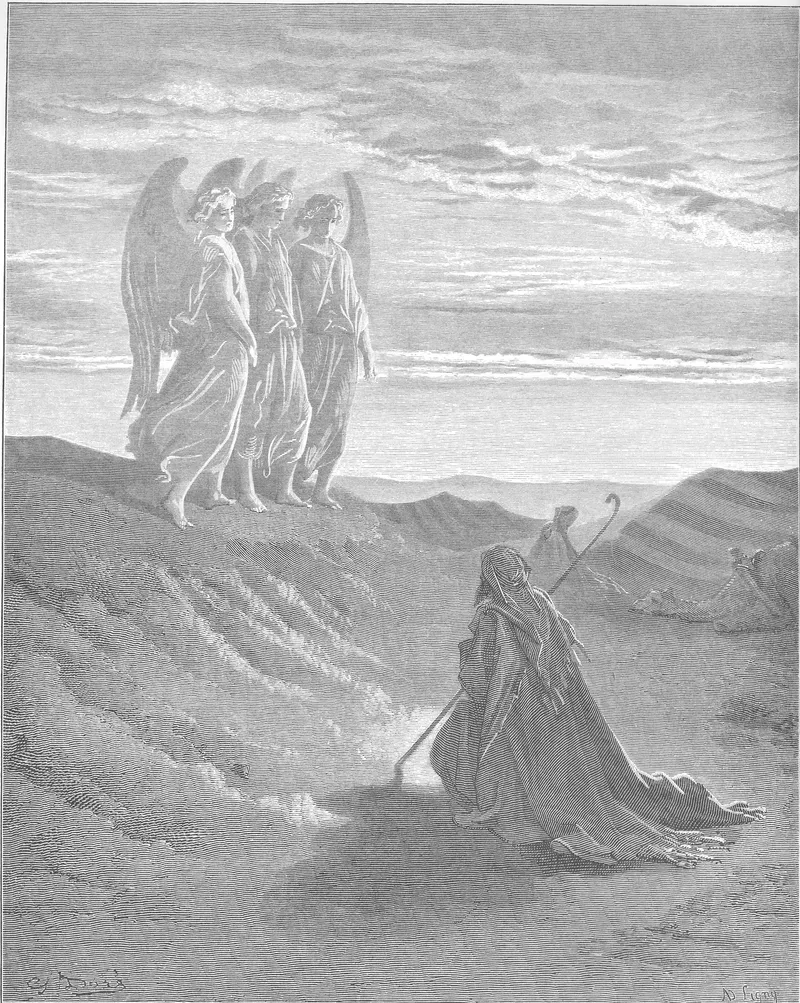
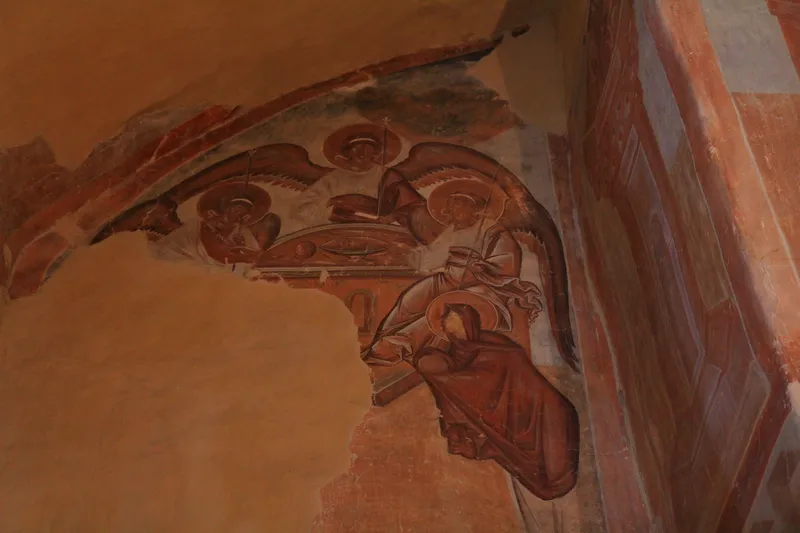
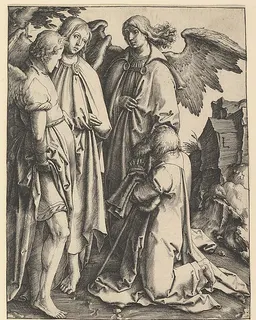
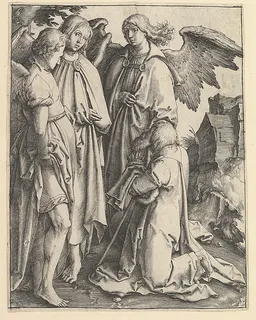
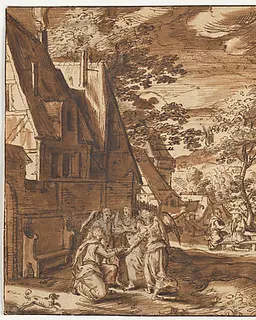
Genesis 18 begins with a sentence that should stop the reader cold: And the LORD appeared unto him in the plains of Mamre: and he sat in the tent door in the heat of the day (v. 1). The God of heaven comes down to a tent door at noon. What follows is one of the most intimate scenes in all of Scripture - not a vision in the night, not a voice from a cloud, but three travelers arriving on foot, and an old man running out to meet them with water and shade and bread. Abraham does not yet name who they are; he simply does what hospitality in his world demanded - he moves first, and he moves fast. The whole first half of the chapter is the warmth of welcome: a calf made tender and good, fresh butter and milk, cakes upon the hearth, and Abraham standing by under the tree while his guests eat.3
Out of that welcome comes a promise with a date on it - Sarah thy wife shall have a son - and Sarah, eavesdropping at the tent door, laughs within herself, because she is past ninety and the thing has been impossible for a quarter of a century. The reply she overhears is the question the chapter turns upon: Is any thing too hard for the LORD? (v. 14). Then the visitors rise and look toward Sodom, and the LORD says something tender and surprising: Shall I hide from Abraham that thing which I do? (v. 17). He will not keep His friend in the dark. Abraham is brought into the counsel of God before the blow falls.
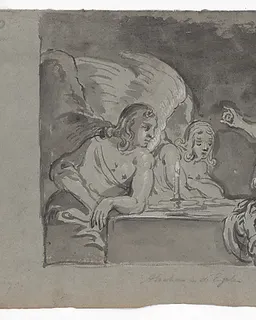
And so the second half of the chapter becomes a prayer - one of the boldest in the Bible. Abraham drew near and began to plead for the guilty city, anchoring his whole appeal in the character of God: Shall not the Judge of all the earth do right? He starts at fifty righteous souls and works his way down - forty-five, forty, thirty, twenty, ten - and at every step the LORD consents, until the last word stands: I will not destroy it for ten's sake (v. 32).2 Hospitality in the first half has become intercession in the second; the man who ran to feed three strangers now stands between heaven and a city, asking for mercy on people who have earned none.
Tap any highlighted phrase to jump to the commentary that unpacks it.
Genesis 18:1-8The LORD Received as a Guest
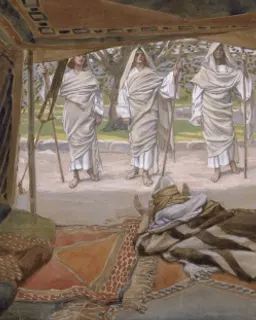
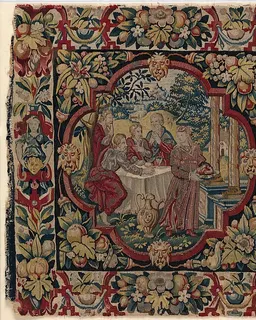
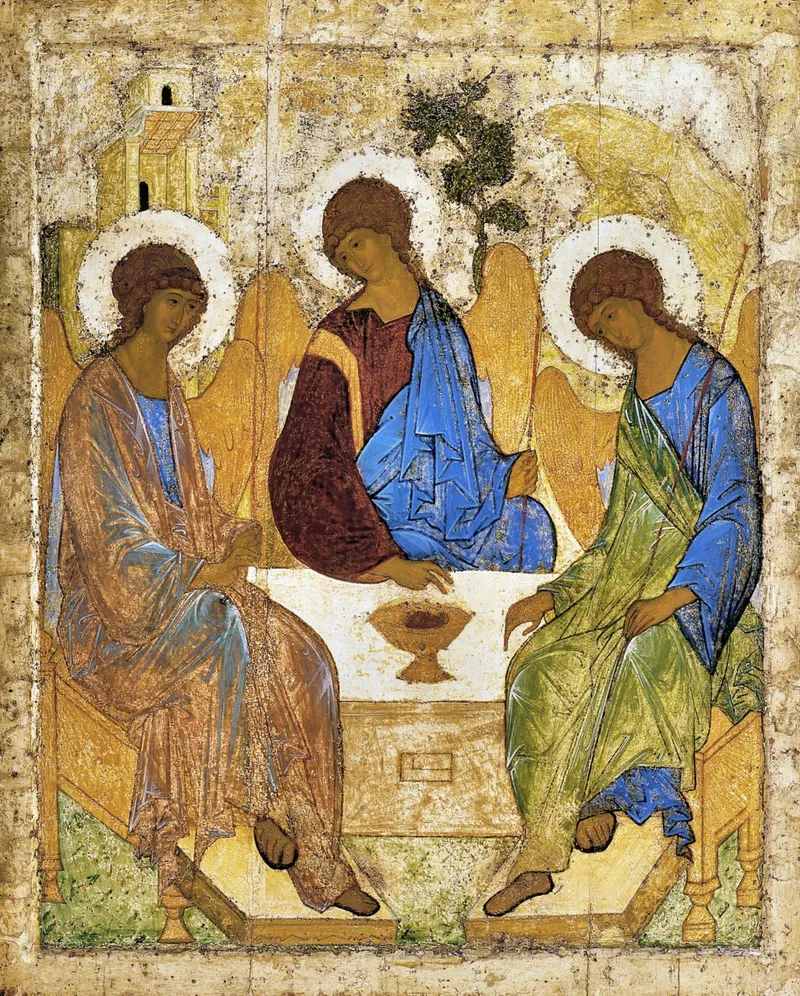
1And the LORD appeared unto him in the plains of Mamre: and he sat in the tent door in the heat of the day; 2And he lift up his eyes and looked, and, lo, three men stood by him: and when he saw them, he ran to meet them from the tent door, and bowed himself toward the ground, 3And said, My Lord, if now I have found favour in thy sight, pass not away, I pray thee, from thy servant: 4Let a little water, I pray you, be fetched, and wash your feet, and rest yourselves under the tree: 5And I will fetch a morsel of bread, and comfort ye your hearts; after that ye shall pass on: for therefore are ye come to your servant. And they said, So do, as thou hast said. 6And Abraham hastened into the tent unto Sarah, and said, Make ready quickly three measures of fine meal, knead it, and make cakes upon the hearth. 7And Abraham ran unto the herd, and fetcht a calf tender and good, and gave it unto a young man; and he hasted to dress it. 8And he took butter, and milk, and the calf which he had dressed, and set it before them; and he stood by them under the tree, and they did eat.
The chapter has already told us the secret in its first line - the LORD appeared unto him - but Abraham, in the moment, sees only what verse 2 records: three men stood by him. He does not know their rank, their errand, or their nature. What he does is immediate and total: when he saw them, he ran to meet them from the tent door, and bowed himself toward the ground. An old man, ninety-nine years old, running in the heat of noon toward strangers. Hospitality in the ancient Near East was not a warm feeling; it was a sacred obligation and a real risk - you took the traveler in, you fed him, you protected him, before you knew anything about him. Abraham's whole posture is one of self-forgetful welcome: he runs, he bows, he calls himself their servant, he begs them not to pass away from him as if their stopping were the favor. The reader, who knows who has come, watches a man unknowingly receive God by receiving strangers - and the New Testament will draw the lesson out plainly: Be not forgetful to entertain strangers: for thereby some have entertained angels unawares (Heb. 13:2).3
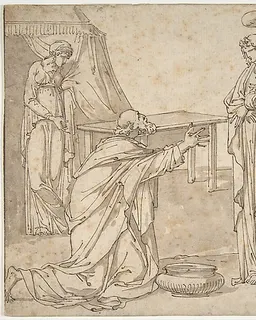
Notice how Abraham frames his offer in verses 4 and 5 - a little water, a morsel of bread, a brief rest under the tree. He makes it sound small, almost nothing, an easy thing to accept. The washing of feet was the lowest service in the household, the task assigned to the least slave, and here the master of the camp offers to see to it himself for travelers he has never met. There is a deliberate humility in the understatement: he promises little and then, as the next verses show, delivers a feast. This is the shape of true generosity - it lowers itself, it calls its great gift a trifle, it serves with its own hands and makes the guest feel he is the one bestowing the kindness by staying. The detail of the washed feet will return, centuries later, on a far more famous evening, when the One whom Abraham unknowingly hosted would kneel with a basin and wash the feet of His own (John 13:5).
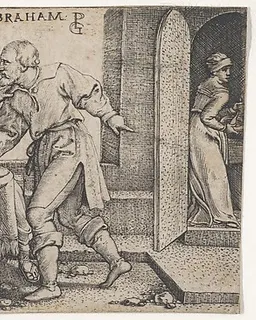
The whole scene runs at a sprint. Read the verbs piling up: Abraham ran to meet them (v. 2); he hastened into the tent (v. 6); he tells Sarah to make ready quickly (v. 6); he ran to the herd (v. 7); the young man hasted to dress the calf (v. 7). Nothing here is slow, grudging, or calculated. Abraham does not weigh whether these strangers are worth a whole calf - in a herding economy, the slaughter of a tender calf for three passing travelers is lavish, costly, far beyond the “morsel of bread” he had promised. He simply moves as fast as an old man can move to give more than was asked. And when the meal is set, he does not recline and eat with them as an equal; verse 8 says he stood by them under the tree, and they did eat. He waits on them like a servant, attentive, ready for the next need. The picture is of joyful, eager, self-spending service - the kind that gives its best without counting the cost and then stands by, glad to have been allowed to give it.
Genesis 18:9-15Is Any Thing Too Hard for the LORD?
9And they said unto him, Where is Sarah thy wife? And he said, Behold, in the tent. 10And he said, I will certainly return unto thee according to the time of life; and, lo, Sarah thy wife shall have a son. And Sarah heard it in the tent door, which was behind him. 11Now Abraham and Sarah were old and well stricken in age; and it ceased to be with Sarah after the manner of women. 12Therefore Sarah laughed within herself, saying, After I am waxed old shall I have pleasure, my lord being old also? 13And the LORD said unto Abraham, Wherefore did Sarah laugh, saying, Shall I of a surety bear a child, which am old? 14Is any thing too hard for the LORD? At the time appointed I will return unto thee, according to the time of life, and Sarah shall have a son. 15Then Sarah denied, saying, I laughed not; for she was afraid. And he said, Nay; but thou didst laugh.
The guest's first words turn the visit from courtesy to covenant: Where is Sarah thy wife? (v. 9). He knows her name - a quiet sign of who this really is. Then comes the promise, and the striking thing about it is that it carries a date: I will certainly return unto thee according to the time of life; and, lo, Sarah thy wife shall have a son (v. 10). The phrase according to the time of life means within the year, in the next spring season - this time, this same time, you will hold a son. For twenty-five years the promise of an heir had hung in the indefinite future, a someday with no calendar. Now it is fixed to a season a person can count to. And the narrator underlines exactly why this is impossible by ordinary reckoning: Now Abraham and Sarah were old and well stricken in age; and it ceased to be with Sarah after the manner of women (v. 11). The door of childbearing is not merely difficult for Sarah; it is shut, and shut long ago. Into that closed door the promise is spoken with a date attached.
It would be easy to read Sarah's laugh as simple unbelief and leave it there, but the text invites more care. She is listening at the tent door, behind the speaker, and the promise lands on a body that has known only barrenness for ninety years. Therefore Sarah laughed within herself, saying, After I am waxed old shall I have pleasure, my lord being old also? (v. 12). Her laugh is private, swallowed, hidden inside - the bitter, astonished laugh of someone who long ago stopped letting herself hope, suddenly handed the very thing she had buried. It is not loud mockery; it is the inward collapse of a heart caught between longing and the long, hard evidence of the years. The LORD's response is not a thunderclap of condemnation but a searching question put to her husband: Wherefore did Sarah laugh? (v. 13) - and the gentleness of the rebuke matters as much as its honesty. He does not pretend the laugh did not happen, and when she denies it out of fear, He simply says, Nay; but thou didst laugh (v. 15). The promise is not withdrawn over a laugh. The God who reads the heart names what is there - and keeps His word anyway.
Genesis 18:16-22Shall I Hide From Abraham?
16And the men rose up from thence, and looked toward Sodom: and Abraham went with them to bring them on the way. 17And the LORD said, Shall I hide from Abraham that thing which I do; 18Seeing that Abraham shall surely become a great and mighty nation, and all the nations of the earth shall be blessed in him? 19For I know him, that he will command his children and his household after him, and they shall keep the way of the LORD, to do justice and judgment; that the LORD may bring upon Abraham that which he hath spoken of him. 20And the LORD said, Because the cry of Sodom and Gomorrah is great, and because their sin is very grievous; 21I will go down now, and see whether they have done altogether according to the cry of it, which is come unto me; and if not, I will know. 22And the men turned their faces from thence, and went toward Sodom: but Abraham stood yet before the LORD.
The meal is over; the visitors rise and look toward Sodom, and Abraham, ever the host, walks with them to bring them on the way (v. 16). And then the narrative lets us overhear the LORD's own deliberation, which is one of the most tender moments in Genesis: Shall I hide from Abraham that thing which I do? (v. 17). It is phrased as a question, but it is really a decision - and the answer is no. God will not keep His friend in the dark about what is coming. This is the intimacy of covenant: Abraham is not merely a recipient of God's commands but a confidant of God's purposes. The reason given reaches back to the promise that has shaped Abraham's whole life: Seeing that Abraham shall surely become a great and mighty nation, and all the nations of the earth shall be blessed in him? (v. 18). The one through whom the nations will be blessed is brought into the counsel about a nation's judgment. He is told before the blow falls - not to spectate, but, as the next section shows, so that he can stand and pray.
Verse 19 gives the heart of why the LORD draws Abraham in, and it turns on a single, weighty word: For I know him. This is not distant, statistical knowledge; it is the language of covenant relationship, the knowing that binds two together. And what God knows of Abraham is striking - not chiefly his faith or his obedience on Moriah, but something quieter and more daily: that he will command his children and his household after him, and they shall keep the way of the LORD, to do justice and judgment. Abraham is entrusted with the secret of Sodom partly because he is the kind of man who will teach his household to do justice and judgment - the very thing Sodom has abandoned. The contrast is deliberate. The chapter is about to weigh a city drowning in injustice, and it pauses first on a household being raised in righteousness. God's great purpose, that the LORD may bring upon Abraham that which he hath spoken of him, runs not only through dramatic moments of faith but through the ordinary, generational work of teaching children to keep the way of the LORD. The blessing of the nations begins at a family altar.
The LORD now names what is at stake: Because the cry of Sodom and Gomorrah is great, and because their sin is very grievous (v. 20). The word translated cry is important - it is the outcry of the oppressed, the scream that rises when the vulnerable are crushed, the same kind of cry that would later go up from Israel under Egypt's lash. Sodom's sin is not a private matter; it has a sound, and that sound has reached heaven. Then comes language that should be read with care: I will go down now, and see whether they have done altogether according to the cry of it, which is come unto me; and if not, I will know (v. 21). This is the speech of a judge who will not condemn on rumor. God does not destroy from a distance or act on hearsay; He comes down, He sees, He establishes the truth of the matter before He acts. The same God who came down to a tent door to bless will come down to a city to judge - and in both, He comes near, He looks, He knows by presence. It is a portrait of justice that is never careless: deliberate, evidenced, and personally weighed before a single sentence falls.3
Genesis 18:23-33Shall Not the Judge of All the Earth Do Right?
23And Abraham drew near, and said, Wilt thou also destroy the righteous with the wicked? 24Peradventure there be fifty righteous within the city: wilt thou also destroy and not spare the place for the fifty righteous that are therein? 25That be far from thee to do after this manner, to slay the righteous with the wicked: and that the righteous should be as the wicked, that be far from thee: Shall not the Judge of all the earth do right? 26And the LORD said, If I find in Sodom fifty righteous within the city, then I will spare all the place for their sakes. 27And Abraham answered and said, Behold now, I have taken upon me to speak unto the Lord, which am but dust and ashes: 28Peradventure there shall lack five of the fifty righteous: wilt thou destroy all the city for lack of five? And he said, If I find there forty and five, I will not destroy it.
Two words open the prayer, and they carry enormous weight: And Abraham drew near (v. 23). He does not retreat from the news of judgment; he steps toward God. And his opening question goes straight to the deepest issue: Wilt thou also destroy the righteous with the wicked? Abraham is not asking God to spare Sodom because Sodom is good - he knows it is not. He is asking whether the innocent must perish alongside the guilty, and his whole appeal rests on the character of God Himself: That be far from thee to do after this manner... Shall not the Judge of all the earth do right? (v. 25). This is not a man lecturing God; it is a man holding God to God's own righteousness, pleading God's nature back to Him. And the LORD's first answer sets the astonishing principle of the whole exchange: If I find in Sodom fifty righteous within the city, then I will spare all the place for their sakes (v. 26). Note the direction of it. The presence of the righteous does not merely save the righteous; it would spare all the place - the wicked included - for their sakes. A few righteous can be the mercy of the many.
What makes Abraham's boldness so moving is that it never tips into presumption. Watch how he holds reverence and persistence together. Even as he presses the question, he says, Behold now, I have taken upon me to speak unto the Lord, which am but dust and ashes (v. 27). He knows exactly who he is and exactly to whom he speaks - a creature of dust addressing the Judge of all the earth - and yet he keeps speaking. This is the posture the whole rest of the prayer sustains: Oh let not the Lord be angry, and I will speak (v. 30); I have taken upon me to speak (v. 31); let not the Lord be angry, and I will speak yet but this once (v. 32). Reverent boldness - humble enough to call himself dust and ashes, bold enough to lower the number again and again. There is no contradiction between the two. True intercession is never casual or entitled; it comes with its face to the ground. But neither is it timid. Abraham models a way of praying that takes both God's holiness and God's mercy with full seriousness - trembling, and yet daring to ask for more.
29And he spake unto him yet again, and said, Peradventure there shall be forty found there. And he said, I will not do it for forty's sake. 30And he said unto him, Oh let not the Lord be angry, and I will speak: Peradventure there shall thirty be found there. And he said, I will not do it, if I find thirty there. 31And he said, Behold now, I have taken upon me to speak unto the Lord: Peradventure there shall be twenty found there. And he said, I will not destroy it for twenty's sake. 32And he said, Oh let not the Lord be angry, and I will speak yet but this once: Peradventure ten shall be found there. And he said, I will not destroy it for ten's sake. 33And the LORD went his way, as soon as he had left communing with Abraham: and Abraham returned unto his place.
The descent is unforgettable: fifty, forty-five, forty, thirty, twenty, ten. Six times Abraham lowers the number, and six times the LORD consents without resistance - I will not do it for forty's sake... I will not destroy it for twenty's sake... I will not destroy it for ten's sake (vv. 29, 31, 32). What stands out is that God never grows impatient with the asking; He never says, “You have gone far enough.” The willingness to spare is not dragged out of Him - it is already in His heart, and Abraham's prayer keeps finding it there. The bargaining is not adversarial, as if Abraham were prying mercy from a reluctant God; it is relational, a friend discovering how wide the mercy of God actually runs. And then the prayer stops at ten. Abraham does not go lower, and the reason is sobering: in a city the size of Sodom, ten righteous was the smallest community that might leaven the whole. As it turned out, even ten could not be found - yet the chapter has already made its point. The threshold of God's mercy is set astonishingly low. He is not scanning the city for reasons to destroy it; He is listening for the smallest reason to spare it.
Further study
- The Hebrew text of Genesis 18 with Rashi, Ibn Ezra, and other classical commentators side by side - useful for the verb pala (v. 14, “too hard” / “too wonderful”), for the title shophet kol-ha'aretz (v. 25, “the Judge of all the earth”), and for the long Jewish tradition reading this chapter as the model of hospitality and of bold intercession.
- Genesis 18 ↔ Luke 1 · Hebrews 7 · Romans 9 · James 2Intertextual BibleTraces the threads tying Genesis 18 to the rest of Scripture - the promise to barren Sarah and the question Is any thing too hard for the LORD? (v. 14) read beside the angel's word to Mary, with God nothing shall be impossible (Luke 1:37); Abraham standing to plead for Sodom (vv. 23-33) read beside the One who ever liveth to make intercession (Heb. 7:25); and Abraham named the Friend of God (Jas. 2:23).
- Genesis 18 - Translators' NotesNET BibleThe NET Bible's detailed footnotes on Genesis 18 - the appearing of the LORD and the three men in verses 1-2, the customs of desert hospitality, the difficult verb behind “too hard” in verse 14, the “outcry” of Sodom in verses 20-21, and the grammar and flow of Abraham's bargaining in verses 23-33.
Where this echoes in Scripture
The LORD Received as a Guest
- Hebrews 13:2Be not forgetful to entertain strangers: for thereby some have entertained angels unawares.The very lesson of verses 2-8 - Abraham received the LORD by receiving strangers he did not yet know.
- James 2:23Abraham believed God... and he was called the Friend of God.The man who stands by his guests under the tree (v. 8) named the friend of the One he hosts.
- Luke 24:28-31he made as though he would have gone further... And it came to pass, as he sat at meat with them... their eyes were opened, and they knew him.The risen Christ received as a traveling guest and known at the table - an echo of the LORD welcomed at Mamre.
- John 1:14And the Word was made flesh, and dwelt among us, (and we beheld his glory...).The nearness of verse 1 deepened - God pitching His tent among His people.
- Genesis 13:18Then Abram removed his tent, and came and dwelt in the plain of Mamre... and built there an altar unto the LORD.The sacred grove where this appearing takes place - Abraham’s own place of worship.
Is Any Thing Too Hard for the LORD?
- Luke 1:37For with God nothing shall be impossible.The angel to Mary echoing verse 14 almost word for word - at the promise of another miraculous birth.
- Genesis 21:1-2And the LORD visited Sarah as he had said... For Sarah... bare Abraham a son in his old age, at the set time of which God had spoken.The promise of verses 10 and 14 kept exactly - the son born at the appointed time.
- Romans 4:19-21being not weak in faith, he considered not his own body now dead... being fully persuaded that, what he had promised, he was able also to perform.The faith that answers the question of verse 14 - God able to do what He has promised.
- Jeremiah 32:17Ah Lord GOD!... there is nothing too hard for thee.The same confession as verse 14, lifted to praise - nothing is too hard for the LORD.
- Hebrews 11:11Through faith also Sara herself received strength to conceive seed... because she judged him faithful who had promised.Sarah’s laugh giving way to faith - the impossible promise of verse 10 received at last.
Shall I Hide From Abraham?
- Amos 3:7Surely the Lord GOD will do nothing, but he revealeth his secret unto his servants the prophets.The principle of verse 17 stated plainly - God discloses His purposes to those He draws near.
- John 15:15Henceforth I call you not servants... but I have called you friends; for all things that I have heard of my Father I have made known unto you.The friendship of verse 17 brought to its fullness - the Lord hiding nothing from His friends.
- Genesis 4:10the voice of thy brother’s blood crieth unto me from the ground.The same outcry as verse 20 - the cry of wrong that rises to God and is heard.
- Exodus 3:7-8I have surely seen the affliction of my people... and have heard their cry... And I am come down to deliver them.The God who hears the cry and comes down to see, as in verses 20-21 - here to deliver.
- Genesis 12:3in thee shall all families of the earth be blessed.The promise quoted in verse 18 - the reason the LORD draws Abraham into His counsel.
Shall Not the Judge of All the Earth Do Right?
- Hebrews 7:25Wherefore he is able also to save them to the uttermost that come unto God by him, seeing he ever liveth to make intercession for them.What Abraham does once in verses 23-33, the great High Priest does without end.
- Ezekiel 22:30And I sought for a man among them, that should make up the hedge, and stand in the gap before me for the land... but I found none.The intercession Abraham offers in verse 23 - standing in the gap to turn away judgment.
- Genesis 19:29God remembered Abraham, and sent Lot out of the midst of the overthrow.The fruit of this prayer - though ten were not found, Abraham’s intercession was not in vain.
- 1 Timothy 2:1I exhort therefore, that, first of all, supplications, prayers, intercessions... be made for all men.The call to do what Abraham did in verses 23-32 - to intercede for others before God.
- James 5:16The effectual fervent prayer of a righteous man availeth much.The power of the persistent prayer Abraham models - intercession that genuinely moves the heart of God.