Jeremiah 32
People in this chapter
The setting of Jeremiah 32 is almost unbearable. The army of Babylon has thrown its siege-works against Jerusalem; the city is starving; and the prophet himself is shut up in the court of the prison (v. 2), jailed by King Zedekiah for refusing to stop saying the city would fall. Into that moment - when every visible sign points to collapse - the LORD gives Jeremiah a strange instruction: buy a field. Not just any field, but family land at Anathoth, the priests' town in Benjamin, ground about to be trampled by the invading army.
His cousin Hanameel arrives with the offer exactly as God had said he would, and Jeremiah knows the word is real. He buys it, weighs out the silver, and signs and seals the deed before witnesses (vv. 6-12).1
Tap any highlighted phrase to jump to the commentary that unpacks it.
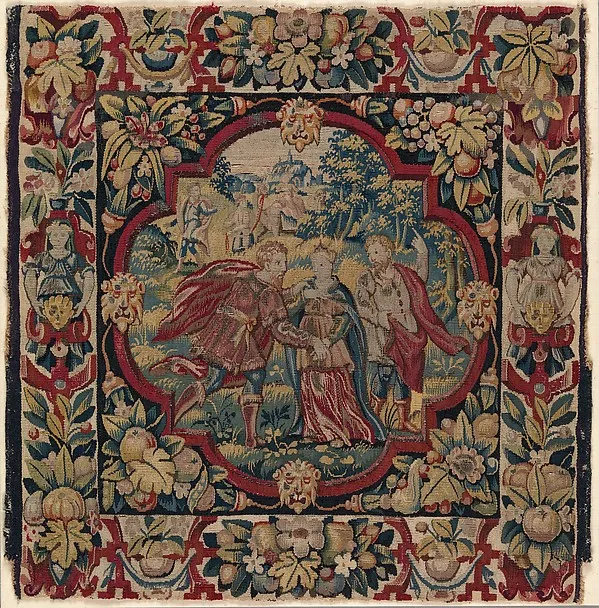
Jeremiah 32:1-15Houses and Fields and Vineyards Shall Be Possessed Again
1The word that came to Jeremiah from the LORD in the tenth year of Zedekiah king of Judah, which was the eighteenth year of Nebuchadrezzar. 2For then the king of Babylon’s army besieged Jerusalem: and Jeremiah the prophet was shut up in the court of the prison, which was in the king of Judah’s house. 3For Zedekiah king of Judah had shut him up, saying, Wherefore dost thou prophesy, and say, Thus saith the LORD, Behold, I will give this city into the hand of the king of Babylon, and he shall take it; 4And Zedekiah king of Judah shall not escape out of the hand of the Chaldeans, but shall surely be delivered into the hand of the king of Babylon, and shall speak with him mouth to mouth, and his eyes shall behold his eyes; 5And he shall lead Zedekiah to Babylon, and there shall he be until I visit him, saith the LORD: though ye fight with the Chaldeans, ye shall not prosper. 6And Jeremiah said, The word of the LORD came unto me, saying, 7Behold, Hanameel the son of Shallum thine uncle shall come unto thee, saying, Buy thee my field that is in Anathoth: for the right of redemption is thine to buy it. 8So Hanameel mine uncle’s son came to me in the court of the prison according to the word of the LORD, and said unto me, Buy my field, I pray thee, that is in Anathoth, which is in the country of Benjamin: for the right of inheritance is thine, and the redemption is thine; buy it for thyself. Then I knew that this was the word of the LORD. 9And I bought the field of Hanameel my uncle’s son, that was in Anathoth, and weighed him the money, even seventeen shekels of silver. 10And I subscribed the evidence, and sealed it, and took witnesses, and weighed him the money in the balances. 11So I took the evidence of the purchase, both that which was sealed according to the law and custom, and that which was open: 12And I gave the evidence of the purchase unto Baruch the son of Neriah, the son of Maaseiah, in the sight of Hanameel mine uncle’s son, and in the presence of the witnesses that subscribed the book of the purchase, before all the Jews that sat in the court of the prison. 13And I charged Baruch before them, saying, 14Thus saith the LORD of hosts, the God of Israel; Take these evidences, this evidence of the purchase, both which is sealed, and this evidence which is open; and put them in an earthen vessel, that they may continue many days. 15For thus saith the LORD of hosts, the God of Israel; Houses and fields and vineyards shall be possessed again in this land.
The chapter opens by fixing the moment with painful precision: the tenth year of Zedekiah… the king of Babylon's army besieged Jerusalem: and Jeremiah the prophet was shut up in the court of the prison (vv. 1-2). This is the end. Nebuchadnezzar's forces ring the walls; within months the city will fall, the temple will burn, and the people will be marched into exile. And the prophet is in custody - not for any crime, but because King Zedekiah could not bear what he kept saying: Wherefore dost thou prophesy… Behold, I will give this city into the hand of the king of Babylon? (v. 3).
Jeremiah had told the plain truth, that resistance was futile and the city was given over, and for telling it he was jailed. So the man God is about to send a message of hope through is a prisoner inside a doomed city. The setting matters, because everything that follows gets its weight from it. Whatever sign of the future God is about to give will be given in the least promising circumstances imaginable - from a cell, under a siege, with the enemy at the gate.1
Into that cell comes a curiously ordinary word: Behold, Hanameel the son of Shallum thine uncle shall come unto thee, saying, Buy thee my field that is in Anathoth (v. 7). And it happens just so - the cousin arrives according to the word of the LORD, and Jeremiah says, Then I knew that this was the word of the LORD (v. 8). The alignment is the first sign: God announced the visit before it came, so Jeremiah could be sure the strange errand was truly His.
Then comes the act itself, told with the slow care of a legal record - I bought the field… and weighed him the money, even seventeen shekels of silver. And I subscribed the evidence, and sealed it, and took witnesses (vv. 9-10). Every step is deliberate and public: the silver weighed in the balances, the deed signed and sealed, the witnesses gathered, the document handed to Baruch before all the Jews that sat in the court of the prison (v. 12).
Jeremiah is not making a shrewd investment; the land is about to be overrun and worthless. He is buying it because God said to - turning a private transaction into a public testimony that everyone in that courtyard would remember.
The point of the whole performance lands in the instruction to Baruch: Take these evidences… and put them in an earthen vessel, that they may continue many days (v. 14). The deeds are sealed up in a clay jar - the way important documents were preserved for the long term - precisely because the days ahead are long and dark. The jar is an act of patience: it assumes a future on the far side of the catastrophe, a day when someone will break the seal and find the title to a field that can finally be claimed.
And then the meaning, held back through all the legal detail, is spoken outright: Houses and fields and vineyards shall be possessed again in this land (v. 15). Ordinary life - homes lived in, fields worked, vineyards planted and harvested - will return to this very ground. The siege is real; the exile is coming; but neither is the last word. By sealing a deed in a jar, Jeremiah preaches resurrection over a land about to die: what is being lost will be given back.1
Jeremiah 32:16-25Ah Lord GOD! There Is Nothing Too Hard for Thee
16Now when I had delivered the evidence of the purchase unto Baruch the son of Neriah, I prayed unto the LORD, saying, 17Ah Lord GOD! behold, thou hast made the heaven and the earth by thy great power and stretched out arm, and there is nothing too hard for thee: 18Thou shewest lovingkindness unto thousands, and recompensest the iniquity of the fathers into the bosom of their children after them: the Great, the Mighty God, the LORD of hosts, is his name, 19Great in counsel, and mighty in work: for thine eyes are open upon all the ways of the sons of men: to give every one according to his ways, and according to the fruit of his doings: 20Which hast set signs and wonders in the land of Egypt, even unto this day, and in Israel, and among other men; and hast made thee a name, as at this day; 21And hast brought forth thy people Israel out of the land of Egypt with signs, and with wonders, and with a strong hand, and with a stretched out arm, and with great terror; 22And hast given them this land, which thou didst swear to their fathers to give them, a land flowing with milk and honey; 23And they came in, and possessed it; but they obeyed not thy voice, neither walked in thy law; they have done nothing of all that thou commandedst them to do: therefore thou hast caused all this evil to come upon them: 24Behold the mounts, they are come unto the city to take it; and the city is given into the hand of the Chaldeans, that fight against it, because of the sword, and of the famine, and of the pestilence: and what thou hast spoken is come to pass; and, behold, thou seest it. 25And thou hast said unto me, O Lord GOD, Buy thee the field for money, and take witnesses; for the city is given into the hand of the Chaldeans.
Having obeyed the strange command, Jeremiah turns to prayer - and where he begins is telling: Ah Lord GOD! behold, thou hast made the heaven and the earth by thy great power and stretched out arm (v. 17). Before he raises a single question, he anchors himself in the largest fact there is - that the LORD made the heaven and the earth. The God he is praying to is the Maker of everything, who brought the world into being by His great power and His stretched out arm. That same outstretched arm, Jeremiah will recall in a moment, is the arm that brought Israel out of Egypt (v. 21); the power that founded the world is the power that redeems a people.
And from that bedrock he draws the conclusion the whole chapter hangs on: there is nothing too hard for thee. It is the right order for prayer - not starting with the size of the problem, but with the size of God. Notice, too, the restraint of the verse: it simply says God made the heaven and the earth, and stands in awe of the power that did it, without pressing to explain the manner of the making.
The wonder is enough. The One who spoke worlds into being is not going to be defeated by a siege.
Jeremiah's prayer moves from God's greatness to Israel's history and then to the raw present. He rehearses the LORD's lovingkindness unto thousands and His justice (vv. 18-19), the signs and wonders in the land of Egypt and the strong hand that brought Israel out (vv. 20-21), the gift of a land flowing with milk and honey (v. 22) - and then the painful turn: they obeyed not thy voice… therefore thou hast caused all this evil to come upon them (v. 23).
He does not flinch from why the siege is happening; he names the people's unfaithfulness honestly. Then he points out the window: Behold the mounts, they are come unto the city to take it (v. 24) - the siege-ramps are heaped against the walls, the sword and famine and pestilence are doing their work, and what thou hast spoken is come to pass. And he ends on the puzzle that prompted the whole prayer: And thou hast said unto me, O Lord GOD, Buy thee the field for money… for the city is given into the hand of the Chaldeans (v. 25).
There is the tension laid bare. You told me to buy a field - and you are handing the city to Babylon. Jeremiah obeyed first and asked afterward; his prayer is the honest bewilderment of a man who has done what God said and now lays the contradiction at God's feet, trusting Him to hold both ends.
Jeremiah 32:26-35Is There Any Thing Too Hard for Me?
26Then came the word of the LORD unto Jeremiah, saying, 27Behold, I am the LORD, the God of all flesh: is there any thing too hard for me? 28Therefore thus saith the LORD; Behold, I will give this city into the hand of the Chaldeans, and into the hand of Nebuchadrezzar king of Babylon, and he shall take it: 29And the Chaldeans, that fight against this city, shall come and set fire on this city, and burn it with the houses, upon whose roofs they have offered incense unto Baal, and poured out drink offerings unto other gods, to provoke me to anger. 30For the children of Israel and the children of Judah have only done evil before me from their youth: for the children of Israel have only provoked me to anger with the work of their hands, saith the LORD. 31For this city hath been to me as a provocation of mine anger and of my fury from the day that they built it even unto this day; that I should remove it from before my face, 32Because of all the evil of the children of Israel and of the children of Judah, which they have done to provoke me to anger, they, their kings, their princes, their priests, and their prophets, and the men of Judah, and the inhabitants of Jerusalem. 33And they have turned unto me the back, and not the face: though I taught them, rising up early and teaching them, yet they have not hearkened to receive instruction. 34But they set their abominations in the house, which is called by my name, to defile it. 35And they built the high places of Baal, which are in the valley of the son of Hinnom, to cause their sons and their daughters to pass through the fire unto Molech; which I commanded them not, neither came it into my mind, that they should do this abomination, to cause Judah to sin.
God answers Jeremiah's prayer with a question built straight out of Jeremiah's own words - Behold, I am the LORD, the God of all flesh: is there any thing too hard for me? (v. 27). Jeremiah had said, there is nothing too hard for thee (v. 17); now God hands the confession back as a question, as if to say: you said it - now believe it where it costs you. The title He takes is vast: the God of all flesh. Not the God of Israel only, but the God of every living thing - of the Chaldeans as much as the Judeans, of the besiegers as well as the besieged.
The empire pressing against the walls is not outside His reach; Babylon itself is a tool in His hand. And the question is not really asking for information. It is doing something to the one who hears it - pressing past every “but” and “how,” calling the hearer to rest in a power that has no limit. The same God who can hand a city to Babylon for its sin can give that city back when His purpose turns to mercy.
Is there any thing too hard for me? The right answer, for Jeremiah and for everyone after him, is to fall silent and trust.
Having raised the unanswerable question, God explains plainly why the judgment is just - and the recital is sobering. He will indeed give the city to the Chaldeans to be burned, upon whose roofs they have offered incense unto Baal, and poured out drink offerings unto other gods (v. 29). The indictment is long and unsparing: the people have only done evil… from their youth (v. 30); the city has been a provocation from the day that they built it (v. 31); the guilt runs through every layer of society - their kings, their princes, their priests, and their prophets (v. 32).
At its heart is one heartbreaking image: they have turned unto me the back, and not the face (v. 33). God had been the patient teacher - though I taught them, rising up early and teaching them - and they answered by turning their backs and refusing to listen. Worse, they filled His own temple with idols (v. 34) and burned their children in the fire to Molech in the valley of Hinnom - an evil so dreadful God says it came it not into my mind that they should do it (v. 35).
This dark catalogue is essential to the chapter, because it shows what God's mercy will have to overcome. The restoration promised next is not owed to a deserving people; it is sheer grace held out to a people who turned their backs.
Jeremiah 32:36-44I Will Make an Everlasting Covenant with Them
36And now therefore thus saith the LORD, the God of Israel, concerning this city, whereof ye say, It shall be delivered into the hand of the king of Babylon by the sword, and by the famine, and by the pestilence; 37Behold, I will gather them out of all countries, whither I have driven them in mine anger, and in my fury, and in great wrath; and I will bring them again unto this place, and I will cause them to dwell safely: 38And they shall be my people, and I will be their God: 39And I will give them one heart, and one way, that they may fear me for ever, for the good of them, and of their children after them: 40And I will make an everlasting covenant with them, that I will not turn away from them, to do them good; but I will put my fear in their hearts, that they shall not depart from me. 41Yea, I will rejoice over them to do them good, and I will plant them in this land assuredly with my whole heart and with my whole soul. 42For thus saith the LORD; Like as I have brought all this great evil upon this people, so will I bring upon them all the good that I have promised them. 43And fields shall be bought in this land, whereof ye say, It is desolate without man or beast; it is given into the hand of the Chaldeans. 44Men shall buy fields for money, and subscribe evidences, and seal them, and take witnesses in the land of Benjamin, and in the places about Jerusalem, and in the cities of Judah, and in the cities of the mountains, and in the cities of the valley, and in the cities of the south: for I will cause their captivity to return, saith the LORD.
After the long catalogue of sin, the word turns - and the turn is breathtaking: And now therefore (v. 36). One might brace for a sentence of doom; instead comes a flood of grace. Behold, I will gather them out of all countries, whither I have driven them, in mine anger… and I will bring them again unto this place, and I will cause them to dwell safely (v. 37). The same God who scattered them in fury will gather them in mercy; the exile He sent, He will reverse.
And the ancient covenant formula sounds again, the heartbeat of the whole Bible: And they shall be my people, and I will be their God (v. 38). This is what the judgment was never able to cancel - God's settled intention to have a people who are truly His. The siege ramps outside the wall are real, and the city will fall; but beyond the fall, God sees a regathered people dwelling in safety on this very ground.
The promise does not pretend the disaster away. It speaks past it - I have driven them… I will bring them again - to a future where the wrath has done its work and only the faithfulness of God remains.
At the heart of the promise is something deeper than a change of address - it is a change of the people themselves: And I will give them one heart, and one way, that they may fear me for ever (v. 39). The problem all along was the heart - the back turned, the ears that would not hear, the bent toward idols. So the remedy goes to the root. God promises to give one heart - an undivided heart, no longer torn between Him and Baal - and one way, a single faithful direction of life.
Then the promise reaches its summit: I will make an everlasting covenant with them, that I will not turn away from them, to do them good; but I will put my fear in their hearts, that they shall not depart from me (v. 40). Notice how both sides of the relationship are secured by God Himself. He will not turn away from them - and He will see to it that they do not depart from Him, by putting His own fear within their hearts.
The faithfulness that the people could never sustain, God undertakes to supply from the inside. And it ends in a line almost too warm to take in: Yea, I will rejoice over them to do them good… with my whole heart and with my whole soul (v. 41). God does not do good to His people grudgingly. He delights in it, with everything in Him.
The chapter ends exactly where it began - with a field being bought - and the symmetry is the point. Like as I have brought all this great evil upon this people, so will I bring upon them all the good that I have promised them (v. 42). The God who proved true in judgment will prove just as true in mercy; the promises of restoration are as certain as the warnings of disaster, because the same faithful God stands behind both.
And then the opening scene is reprinted onto the whole land: And fields shall be bought in this land, whereof ye say, It is desolate without man or beast… Men shall buy fields for money, and subscribe evidences, and seal them, and take witnesses (vv. 43-44). Jeremiah's single purchase in the prison courtyard was the first signature of a coming day when deeds would be signed and sealed all over Benjamin and Judah, in the hill country and the valley and the south.
The lone prophet buying one field under siege becomes the promise of a whole people coming home to buy and build and plant again - for I will cause their captivity to return, saith the LORD. What looked like the most foolish purchase in Judah turns out to be the truest reading of the future.
Research trail
Sources & further study
These references support the historical, linguistic, manuscript, and contextual notes in this chapter. Scripture remains the primary text; external sources are provided so readers can inspect the research directly.
- Jeremiah 32 - Translators' NotesThe NET Bible's detailed footnotes on Jeremiah 32 - the siege setting and the prison where Jeremiah is held (vv. 1-2), the legal mechanics of the redemption and the sealed and open deeds (vv. 7-14), the force of the question in verse 27, and the structure of the restoration promise that closes the chapter (vv. 36-44).
- Jeremiah 32 · Hebrew + classical Jewish commentaryThe Hebrew text of Jeremiah 32 with Rashi, Radak, and other classical commentators side by side - useful for the verb pala (vv. 17, 27, “too hard,” the same root as “wonderful”), for berit olam (v. 40, “an everlasting covenant”), and for the laws of redemption (ge'ullah) that lie behind the field-purchase in verses 7-8.
- Jeremiah 32 ↔ Genesis 18 · Luke 1 · Jeremiah 31 · Hebrews 13Traces the threads tying Jeremiah 32 to the rest of Scripture - is there any thing too hard for the LORD? (v. 27) beside Sarah's promise (Gen. 18:14) and Gabriel's word to Mary, with God nothing shall be impossible (Luke 1:37), and the everlasting covenant with its new heart (vv. 39-40) read alongside the new covenant of Jeremiah 31 and the blood of the everlasting covenant (Heb. 13:20).
Where this echoes in Scripture
Houses and Fields and Vineyards Shall Be Possessed Again
- Leviticus 25:25If thy brother be waxen poor, and hath sold away some of his possession, and if any of his kin come to redeem it, then shall he redeem that which his brother sold.The law of redemption behind verses 7-8 - the kinsman's right and duty to buy back family land.
- Ruth 4:9-10Ye are witnesses this day, that I have bought all that was Elimelech's... to raise up the name of the dead upon his inheritance.A kinsman-redeemer buying back an inheritance before witnesses - the same act Jeremiah performs in verses 9-12.
- Hebrews 11:1Now faith is the substance of things hoped for, the evidence of things not seen.The sealed deed of verse 14 in a sentence - evidence kept of a future not yet seen.
- Romans 4:18Who against hope believed in hope, that he might become the father of many nations.The faith Jeremiah enacts in verses 9-15 - believing the promise against every visible sign.
- Jeremiah 32:43-44And fields shall be bought in this land... Men shall buy fields for money, and subscribe evidences, and seal them.The promise the field-purchase pointed to (v. 15) spelled out at the chapter's close - ordinary life restored to the land.
Ah Lord GOD! There Is Nothing Too Hard for Thee
- Genesis 18:14Is any thing too hard for the LORD? At the time appointed I will return unto thee... and Sarah shall have a son.The same question, the same Hebrew word, at the promise of Isaac - set beside Jeremiah's confession in verse 17.
- Jeremiah 32:27Behold, I am the LORD, the God of all flesh: is there any thing too hard for me?God turning Jeremiah's own words (v. 17) back to him as the answer to the whole prayer.
- Isaiah 40:28the everlasting God, the LORD, the Creator of the ends of the earth, fainteth not, neither is weary.The ground of verse 17 - the Maker of heaven and earth whose power never runs out.
- Psalm 50:15And call upon me in the day of trouble: I will deliver thee, and thou shalt glorify me.What Jeremiah does in verse 16 - bringing the trouble straight to God in prayer.
- Numbers 11:23And the LORD said unto Moses, Is the LORD's hand waxed short? thou shalt see now whether my word shall come to pass.The same challenge as verses 17 and 27 - nothing lies beyond the reach of the LORD's hand.
Is There Any Thing Too Hard for Me?
- Luke 1:37For with God nothing shall be impossible.Gabriel's word to Mary - the question of verse 27 answered at the greatest of all wonders.
- Matthew 19:26With men this is impossible; but with God all things are possible.The truth of verse 27 on the lips of Jesus - nothing, including salvation, is beyond God.
- Numbers 16:22O God, the God of the spirits of all flesh.The title God claims in verse 27 - the God of all flesh, of every living thing.
- 2 Chronicles 36:15And the LORD God of their fathers sent to them by his messengers, rising up betimes, and sending; because he had compassion on his people.God as the patient teacher of verse 33 - rising up early to warn a people who would not hear.
- Jeremiah 7:31And they have built the high places of Tophet... to burn their sons and their daughters in the fire; which I commanded them not, neither came it into my heart.The same abomination named in verse 35 - the sin in the valley of Hinnom that helped seal the judgment.
I Will Make an Everlasting Covenant with Them
- Jeremiah 31:33I will put my law in their inward parts, and write it in their hearts; and will be their God, and they shall be my people.The new covenant just announced - the same promise of a changed heart that crowns this chapter (vv. 39-40).
- Ezekiel 36:26A new heart also will I give you, and a new spirit will I put within you... I will give you an heart of flesh.The “one heart” of verse 39 in another prophet - the stony heart replaced from within.
- Hebrews 13:20that great shepherd of the sheep, through the blood of the everlasting covenant.The everlasting covenant of verse 40 named as sealed in Christ's blood.
- Luke 22:20This cup is the new testament in my blood, which is shed for you.The covenant of verses 38-40 opened - the new testament sealed at the Lord's table.
- Zephaniah 3:17he will rejoice over thee with joy... he will joy over thee with singing.The astonishing note of verse 41 echoed - a God who delights, with his whole heart, to do his people good.