Learn of Christ
BibleStudyArtResources
Get the app
Loading study guide…

Art for this chapter

How artists have pictured Genesis 21

See all 7 →
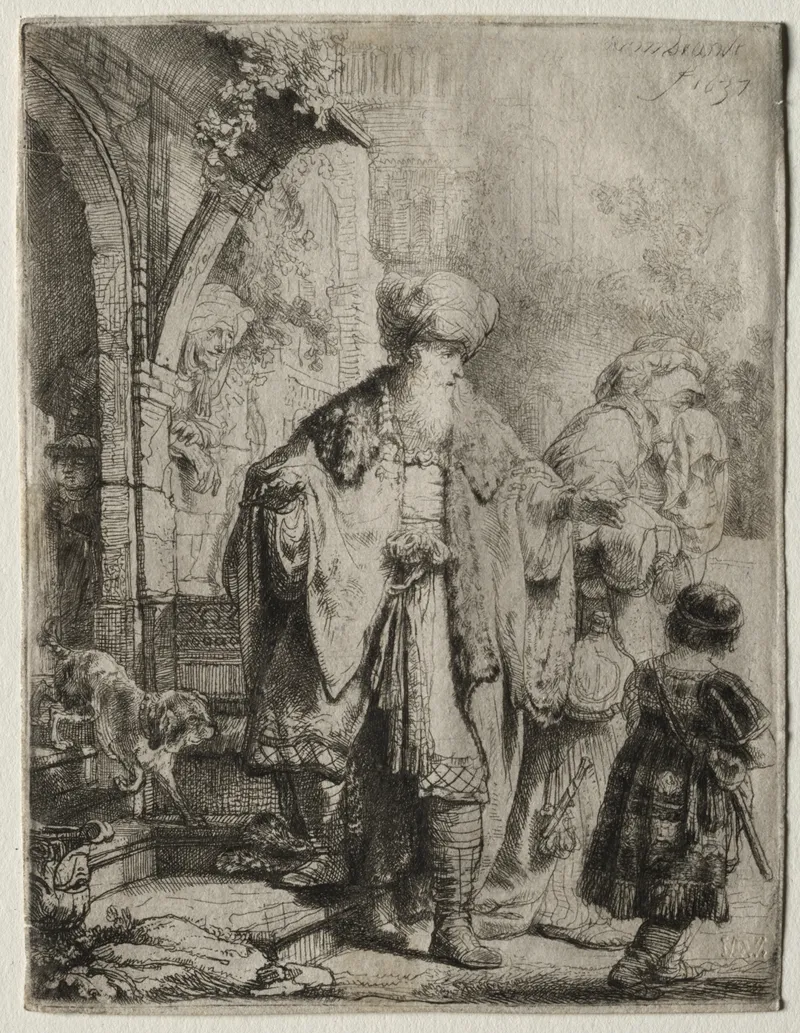
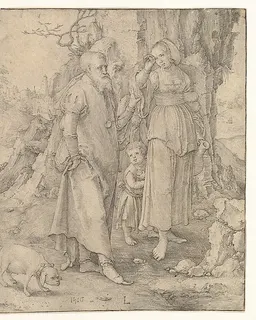
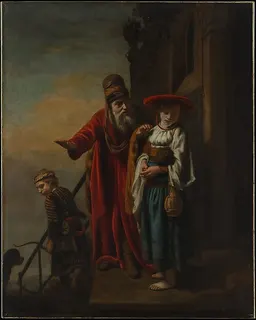
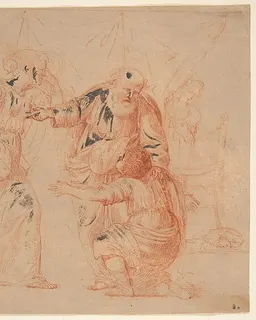
Abraham Casting Out Hagar and Ishmael by Rembrandt van Rijn

Abraham Casting Out Hagar and Ishmael

Rembrandt van Rijn · 1637

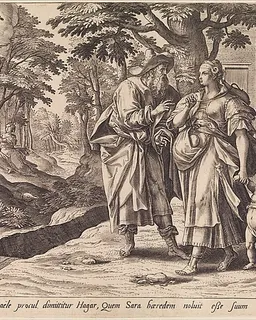
Hagar and the Angel at the Well on the Way to Shur by Ferdinand Bol

Hagar and the Angel at the Well on the Way to Shur

Ferdinand Bol · 1640

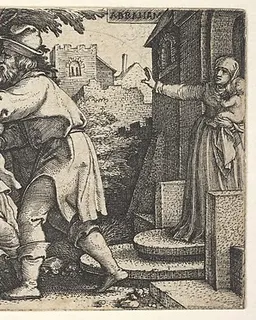
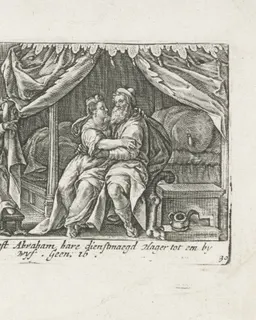
Abraham en Hagar by Crispijn van de Passe

Abraham en Hagar

Crispijn van de Passe · 1700

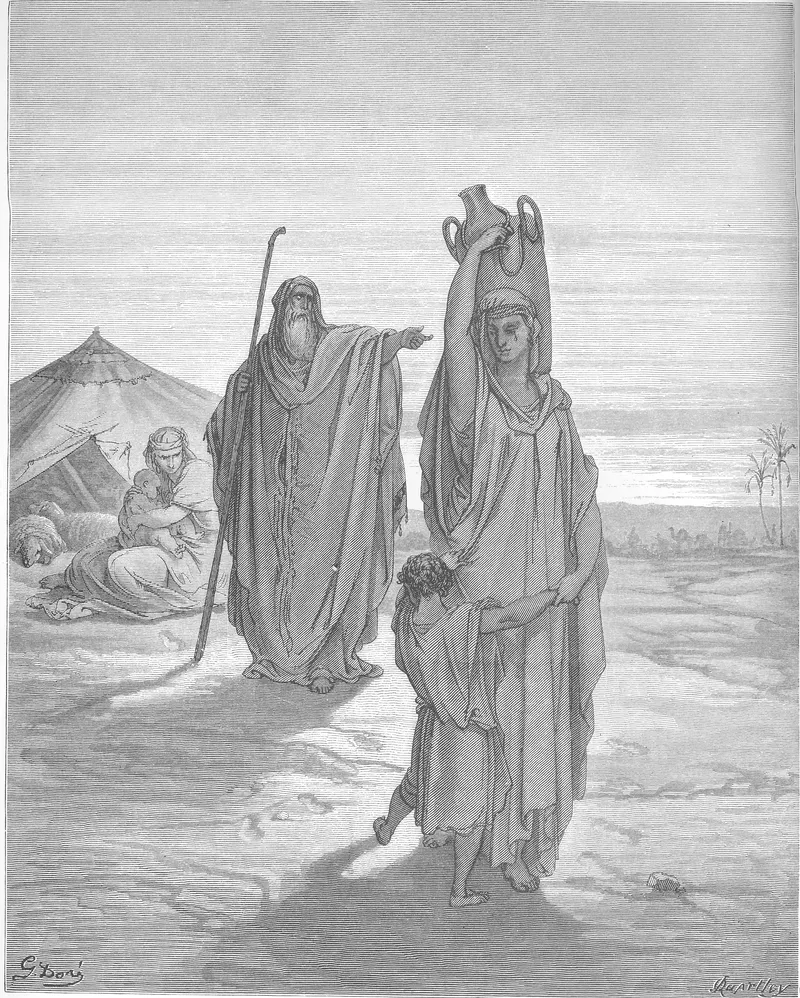
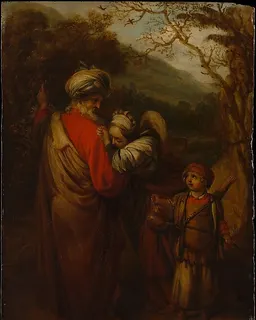
Abraham Sends Hagar and Ishmael Away by Gustave Doré

Abraham Sends Hagar and Ishmael Away

Gustave Doré · 1866

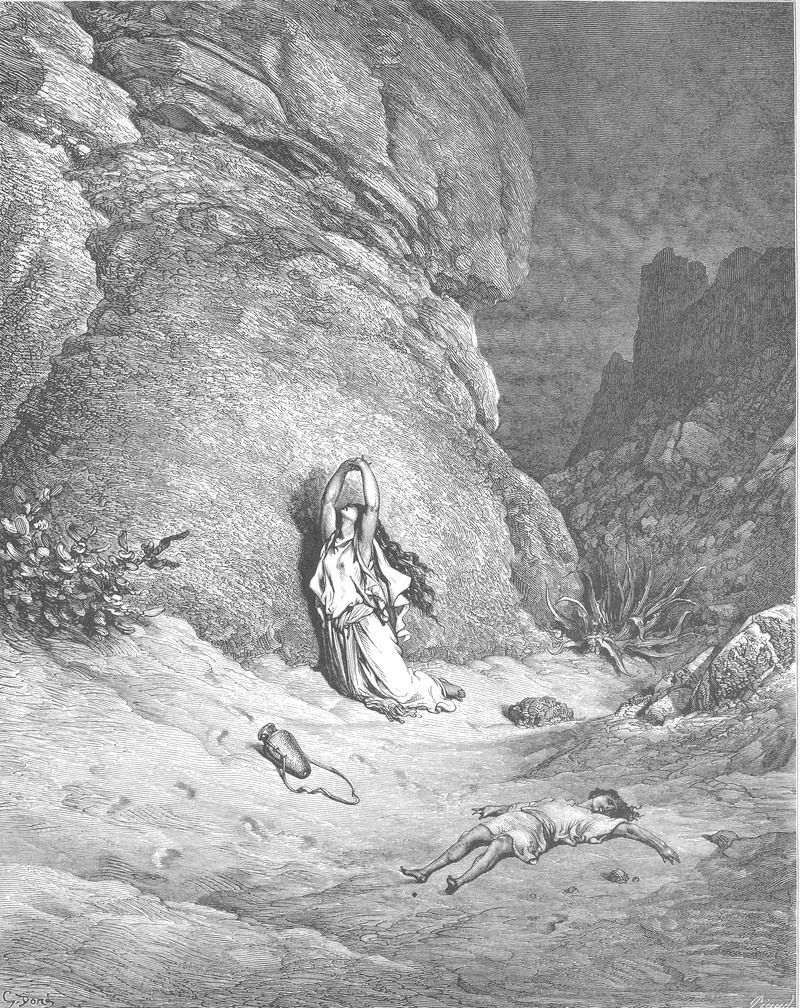
Hagar and Ishmael in the Wilderness by Gustave Doré

Hagar and Ishmael in the Wilderness

Gustave Doré · 1866

Abraham Taking Isaac to Be Sacrificed by Del Parson

Abraham Taking Isaac to Be Sacrificed

Del Parson

Ancient manuscript folios (1)See how this chapter appeared in surviving Latin Bibles
Codex Amiatinus, Genesis 21 (canvas 35) by Master of the Codex Amiatinus (Monkwearmouth-Jarrow scriptorium)

Codex Amiatinus, Genesis 21 (canvas 35)

Master of the Codex Amiatinus (Monkwearmouth-Jarrow scriptorium) · 700

Previous

Genesis

Chapter 21 of 50

Next

Learn of Christ

Free Bible study for everyone. No account. No ads.

Study

  • Read the Bible
  • Study Plans
  • Topics

Learn

  • Questions
  • Blog
  • Resources
  • About

More

  • Privacy
  • Terms

© 2026 Learn of Christ

Made with faith, freely given.

Genesis 21

The long-promised son finally arrives. Sarah, who has been barren for nearly a century, gives birth. The child's name is Isaac - Yitzchak in Hebrew - which means “he laughs.” Sarah had laughed in disbelief when God first promised him (Gen. 18:12); now she laughs again, but this time in joy (Gen. 21:6). The son born of faith, born of God's covenant word when all biology said no, is here.

But Genesis 21 is not a clean happy ending. At Isaac's weaning feast, Sarah sees Ishmael, the son Abraham had made with Hagar, and she demands that both mother and boy be cast out. Abraham is distressed - he loves Ishmael - but God tells him to listen to Sarah. Two sons cannot inherit the same promise. The line of flesh (Ishmael, born of Abraham's attempt to fulfill the covenant by human means) and the line of faith (Isaac, born when it was physically impossible) must be separated. The division is painful for everyone, and the text does not hide that pain.

The casting out is genuinely difficult, and Genesis does not ask us to admire it. But in the desert, where Hagar and Ishmael are left to die, the text asks us to see something: a God who hears the cry of the discarded child. The boy whose name means “God hears” is heard in the very place where he has been thrown away. It is one of Scripture's recurring truths: God sees those no one else sees, and He hears those no one else hears.

Tap any highlighted phrase to jump to the commentary that unpacks it.
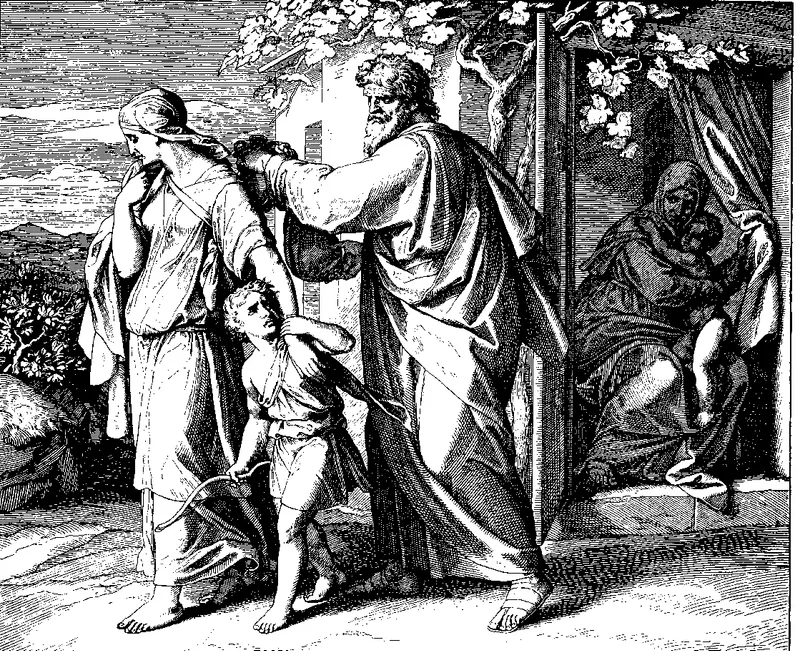
The Expulsion of Hagar and Ishmael
Genesis 21The Expulsion of Hagar and IshmaelJulius Schnorr von Carolsfeld · 1860
· · ·

Genesis 21:1-8Isaac Is Born

Genesis 21:1-4

1And the LORD visited Sarah as he had said, and the LORD did unto Sarah as he had spoken. 2For Sarah conceived, and bare Abraham a son in his old age, at the set time of which God had spoken unto him. 3And Abraham called the name of his son that was born unto him, whom Sarah bare to him, Isaac. 4And Abraham circumcised his son Isaac being eight days old, as God had commanded him.

Isaac arrives, and Sarah's impossible joy fills the narrative. Now we jump forward to his weaning-the child grows.

Genesis 21:5-8

5And Abraham was an hundred years old when his son Isaac was born unto him. 6And Sarah said, God hath made me to laugh; so that all that hear will laugh with me. 7And she said, Who would have said unto Abraham, that Sarah should have given children suck? for I have born him a son in his old age. 8And the child grew, and was weaned: and Abraham made a great feast the same day that Isaac was weaned.

The chapter opens with the simplest sentence in Scripture: “The LORD visited Sarah as he had said.” Every verse up to this point has been God saying it, Abram doubting, Abram trying to help God out, Abram growing old. Now the text turns a corner: and the LORD did. The promise kept. The son born when Sarah was too old to conceive, when Abraham was a hundred. The waiting is over12.

Christ Connection - The Joy of the Impossible
Sarah laughs at the promise; Isaac is born. Paul later tells the story of two sons - one born of flesh, one born of promise - and applies it to the old covenant and the new (Gal. 4:21-31). Isaac is the son of laughter, the son of what God alone could do. He is the type of everyone the gospel is for: those who have waited past the age of trying, who have given up on themselves, and who discover that God was never waiting for them to deserve it. The laughter of Sarah is the laughter of the redeemed: “Blessed is the people that know the joyful sound” (Ps. 89:15).
Every promise you have waited for - every delayed answer, every "no, not yet, not in the way you planned" - is an Isaac waiting to be born. The time when God shows up and does what you stopped believing He would do. If you are in the long wait, Sarah's laughter is a promise that it has an ending. If you are looking back on a prayer God finally answered, that laughter is yours too.

Genesis 21:9-14The Hard Word

Genesis 21:9-14

9And Sarah saw the son of Hagar the Egyptian, which she had born unto Abraham, mocking. 10Wherefore she said unto Abraham, Cast out this bondwoman and her son: for the son of this bondwoman shall not be heir with my son, even with Isaac. 11And the thing was very grievous in Abraham's sight because of his son. 12And God said unto Abraham, Let it not be grievous in thy sight because of the lad, and because of thy bondwoman; in all that Sarah hath said unto thee, hearken unto her voice; for in Isaac shall thy seed be called. 13And also of the son of the bondwoman will I make a nation, because he is thy seed. 14And Abraham rose up early in the morning, and took bread, and a bottle of water, and gave it unto Hagar, putting it on her shoulder, and the child, and sent her away: and she departed, and wandered in the wilderness of Beersheba.

Sarah sees Ishmael mocking - either at the weaning feast or in some other moment. The text does not ask us to sympathize with Sarah's response. She is jealous, protective, and wrong to treat Hagar and Ishmael as disposable. And yet the structure of the covenant is real: two sons cannot inherit the same promise. The line of faith (Isaac) and the line of flesh (Ishmael, made when Abraham tried to help God out) must be divided. Divorce is never clean. Neither is this separation.

The text tells us Abraham is grieved. He loves Ishmael. He has been present for thirteen years. To send him away into the desert with only bread and water is not justice - it is abandonment. Abraham does what Sarah asks, but his heart breaks. The Bible does not ask us to be hard about this moment. It is hard. The text sits with it.

Christ Connection - Two Sons, Two Covenants
Paul reads this chapter in Galatians 4 and sees what the Old Testament saw: Ishmael is the son of the flesh (born when Abraham took matters into his own hands); Isaac is the son of the promise (born by God's word alone). “So then, brethren, we are not children of the bondwoman, but of the free” (Gal. 4:31). The casting out of Hagar and Ishmael is the end of trying to earn the covenant by works. The promise goes to the son born of faith. But note: God does not reject Ishmael. He promises to make him a great nation too. Both lines continue; they simply cannot share the same inheritance.
There are separations in your spiritual life that feel as hard as this one - old ways of thinking that have to go, relationships that cannot continue in the same form, seasons that have to close so new ones can open. The grief is real. You can be right about the boundary and still grieve the loss. Abraham rose up early, gave Hagar bread and water, and the text tells us his heart was broken doing it. That is how you know a boundary is real - it costs you.

Genesis 21:15-21God Hears in the Wilderness

Genesis 21:15-18

15And the water was spent in the bottle, and she cast the child under one of the shrubs. 16And she went, and sat her down over against him a good way off, as it were a bowshot: for she said, Let me not see the death of the child. And she sat over against him, and lift up her voice, and wept. 17And God heard the voice of the lad; and the angel of God called to Hagar out of heaven, and said unto her, What aileth thee, Hagar? fear not; for God hath heard the voice of the lad where he is. 18Arise, lift up the lad, and hold him in thine hand; for I will make him a great nation.

In the moment of despair, when death seems certain, the angel of God speaks: “Fear not; for God hath heard the voice of the lad.” The boy's name-Ishmael, “God hears”-is not just a name. It is a promise kept at the very edge of the grave. The angel tells Hagar to rise, to lift up the boy, because a great nation will come from him. The promise of God extends even to the cast-out, even to the discarded, even in the wilderness.

Genesis 21:19-21

19And God opened her eyes, and she saw a well of water; and she went, and filled the bottle with water, and gave the lad drink. 20And God was with the lad; and he grew, and dwelt in the wilderness, and became an archer. 21And he dwelt in the wilderness of Paran: and his mother took him a wife out of the land of Egypt.

The despair of Hagar is complete. The water is gone, the child is dying, and she cannot bear to watch. She sits at a distance and weeps. She is a woman who has lost everything: not only cast out, but about to lose her son. The text is unflinching about the cruelty of the moment.

Christ Connection - The Well in the Wilderness
John 4 brings the Samaritan woman - another woman cast out, another widow alone - to a well at noon. Jesus says, “If thou knewest the gift of God, and who it is that saith to thee, Give me to drink; thou wouldest have asked of him, and he would have given thee living water” (John 4:10). The well in the wilderness where Hagar sees provision is a type of the well where Jesus offers Himself as living water. Both stories are about a God who finds those no one else sees, who quenches thirst no well can hold. Christ is the well.
The wilderness you are in - where the water is gone and you cannot see a way forward - is not outside God's notice. Your crying is not unheard. God may not rescue you the way you asked for, or on the timeline you set. But He opens eyes. He makes visible what was there all along. The well is there. You are being seen by the only One who can save you.

Genesis 21:22-34The Covenant at Beersheba

Genesis 21:22-27

22And it came to pass at that time, that Abimelech and Phichol the chief captain of his host spake unto Abraham, saying, God is with thee in all that thou doest: 23Now therefore swear unto me here by God that thou wilt not deal falsely with me, nor with my son, nor with my son's son: but according to the kindness that I have done unto thee, thou shalt do unto me, and to the land wherein thou hast sojourned. 24And Abraham said, I will swear. 25And Abraham reproved Abimelech because of a well of water, which Abimelech's servants had violently taken away. 26And Abimelech said, I wot not who hath done this thing: thou didst not tell me, neither yet heard I of it, but to day. 27And Abraham took sheep and oxen, and gave them unto Abimelech; and both of them made a covenant.

Abimelech recognizes that God is with Abraham and wants a binding covenant. The well that Abimelech's servants had taken becomes the occasion for a formal agreement. Abraham offers gifts to seal the oath. But the witness-the true sign of covenant-lies ahead.

Genesis 21:28-30

28And Abraham set seven ewe lambs of the flock by themselves. 29And Abimelech said unto Abraham, What mean these seven ewe lambs which thou hast set by themselves? 30And he said, For these seven ewe lambs shalt thou take of my hand, that they may be a witness unto me, that I have digged this well.

Abimelech proposes peace, and Abraham agrees. A well is dug, a name is spoken--Beersheba marks the place where enemies became allies.

Genesis 21:31-34

31Therefore he called that place Beersheba; because there they sware both of them. 32Thus they made a covenant at Beersheba: and Abimelech rose up, and Phichol the chief captain of his host, and they returned into the land of the Philistines. 33And Abraham planted a grove in Beersheba, and called there on the name of the LORD, the everlasting God. 34And Abraham sojourned in the land of the Philistines many days.

Abraham plants a grove - not a tree but a cluster of trees - a place where others can rest and find shade. He calls on the name of the LORD, the everlasting God (El Olam in Hebrew). After the hard word, the separation, the wilderness, the text brings us to a place of witness and stability. Abraham has seen God provide. He testifies to it by planting a grove and naming the place after what God gave him.

The chapter closes not with closure but with survival and establishment. Abraham plants a grove for the next thirsty traveler. He names a well after the oath it witnessed. He dwells. In your own hard transitions - the ones that grieve you, the wildernesses that seem endless - there comes a time when God brings you to a place where you can plant something, testify to what He did, and make a covenant. Your story becomes a well that waters the next person who is thirsty.

Thought this guide would help someone?

Further study

  1. 1.
    Genesis 21 · Hebrew + Jewish commentarySefaria
    Hebrew text with rabbinic commentary on Isaac's birth, Hagar's vindication, and the separation of two covenant lines.
  2. 2.
    Mari & Nuzi Tablets (Abraham's era)Penn Museum
    Ancient Near Eastern documents on family inheritance, the status of sons born to servants, and covenant relationships.
Genesis · Chapter 21