Genesis 20
Abraham is deep into the most important promise God ever made - that Sarah will bear a son, that his descendants will be like the stars, that through him all the families of the earth will be blessed. And then, facing a foreign king, he does something that exposes a crack running right through the middle of his faith: he tells Sarah to say she is his sister, not his wife. And Abraham said of Sarah his wife, She is my sister: and Abimelech king of Gerar sent, and took Sarah (vv. 1-2). This is not the first time. Years earlier, in Egypt, he played the same half-truth (Gen. 12:10-20). The man who trusted God for a nation cannot, in this moment, trust Him for his own safety. He is afraid - and fear makes him reach for a lie.
What follows is not a story about Abraham's greatness. It is a story about God's. When the patriarch fails, the promise does not, because the promise was never propped up by the patriarch's nerve. God Himself moves to guard Sarah and the line through which the promised seed must come. He comes to a pagan king in a dream and stops the wrong before it can happen - I also withheld thee from sinning against me (v. 6).3 And the chapter turns scandalous in a way it refuses to soften: the foreign king's conscience is cleaner than the patriarch's, and it is the king who has to teach Abraham what ought and ought not to be done.
Two words from this chapter are worth carrying. The first is the king's plea of integrity - clean hands, an undivided heart - which God Himself acknowledges. The second is a word that appears here for the very first time in all of Scripture: Abraham is called a prophet, and the prophet's work is named as prayer - he shall pray for thee, that thou mayest live (v. 7). The chapter ends with that prayer answered: So Abraham prayed unto God: and God healed Abimelech, and his wife, and his maidservants (v. 17).2 A flawed man, a faithful God, a restored wife, and a healed household - that is Genesis 20.
Tap any highlighted phrase to jump to the commentary that unpacks it.
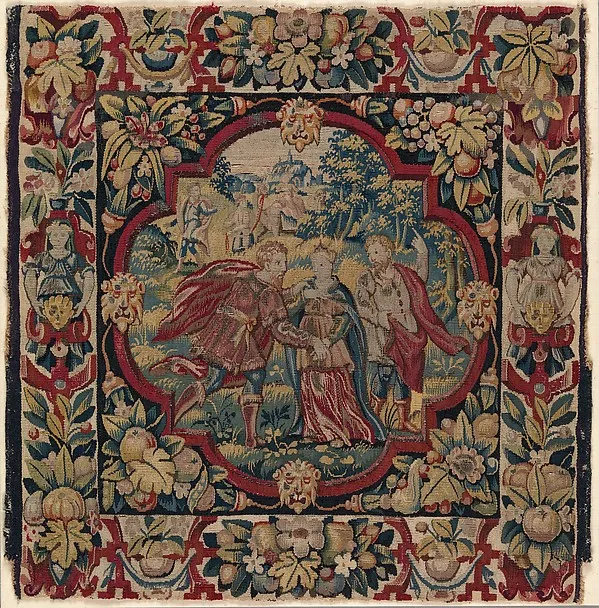
Genesis 20:1-2She Is My Sister
1And Abraham journeyed from thence toward the south country, and dwelled between Kadesh and Shur, and sojourned in Gerar. 2And Abraham said of Sarah his wife, She is my sister: and Abimelech king of Gerar sent, and took Sarah.
The chapter opens with a man on the move. And Abraham journeyed from thence toward the south country, and dwelled between Kadesh and Shur, and sojourned in Gerar (v. 1). He has left the oaks of Mamre after the destruction of Sodom and pushed south into the Negev, settling for a time in the territory of Gerar, a Philistine region on the edge of the promised land. And then, in a single sentence, the man of faith does something hard to watch: And Abraham said of Sarah his wife, She is my sister (v. 2). The text states it with deliberate, exposing precision - it calls her his wife in the very breath in which he calls her his sister, so the reader cannot miss the gap between what is true and what he says. This is not a stranger or a scoundrel. This is the man God called out of Ur, the man to whom the covenant was sworn, the one whom Scripture will name the Friend of God (James 2:23). And he is repeating the exact deception he used years earlier in Egypt (Gen. 12:10-20). Whatever else this chapter is about, it begins by refusing to pretend that great believers do not fail.1
Why would Abraham do this again? The chapter will give us his own answer later - Because I thought, Surely the fear of God is not in this place; and they will slay me for my wife's sake (v. 11). It is fear. Abraham assumes Gerar is a godless place where a man would be killed for a beautiful wife, so he calculates that a half-truth will keep him alive. But notice what the fear costs. To save his own skin, he hands Sarah's safety and honor to a foreign king, and worse, he puts the promise itself in jeopardy - for Sarah is the very woman through whom the promised son must come. The seed of all nations is now inside the household of a pagan king because the bearer of the promise was afraid. Fear has a way of shrinking a person's world down to the next few minutes of self-preservation, until the largest things - a marriage, a calling, a covenant - are spent to buy a moment of safety. The man who could believe God for a nation could not, in this moment, trust Him for himself.
Genesis 20:3-7I Withheld Thee From Sinning
3But God came to Abimelech in a dream by night, and said to him, Behold, thou art but a dead man, for the woman which thou hast taken; for she is a man's wife. 4But Abimelech had not come near her: and he said, Lord, wilt thou slay also a righteous nation? 5Said he not unto me, She is my sister? and she, even she herself said, He is my brother: in the integrity of my heart and innocency of my hands have I done this. 6And God said unto him in a dream, Yea, I know that thou didst this in the integrity of thy heart; for I also withheld thee from sinning against me: therefore suffered I thee not to touch her. 7Now therefore restore the man his wife; for he is a prophet, and he shall pray for thee, and thou shalt live: and if thou restore her not, know thou that thou shalt surely die, thou, and all that are thine.
Notice who God goes to. Not Abraham, the one who lied - God comes to Abimelech, the one who was deceived. But God came to Abimelech in a dream by night, and said to him, Behold, thou art but a dead man, for the woman which thou hast taken; for she is a man's wife (v. 3). The verdict is blunt: a dead man. But the reason is precise - not because Abimelech is wicked, but because she is a man's wife. Some boundaries are not erased by ignorance; to take what belongs to another, even unknowingly, is to stand under a kind of death. And God speaks this warning before any wrong has actually been done, while there is still time to undo it. This is mercy wearing the face of severity. The dream is not God catching Abimelech in sin; it is God stopping him on the very edge of it, in the dark, before he can fall. The God who guards Sarah is the same God who will not let an innocent man stumble blindly into guilt.3
Abimelech's response is striking, and the text means for it to be. But Abimelech had not come near her: and he said, Lord, wilt thou slay also a righteous nation? Said he not unto me, She is my sister? and she, even she herself said, He is my brother: in the integrity of my heart and innocency of my hands have I done this (vv. 4-5). This is a pagan king - and he reasons about God like a man who fears Him. He appeals to God's justice (wilt thou slay also a righteous nation?), he tells the plain truth about what was said to him, and he pleads a clean heart and clean hands. He does not bluster or deny; he lays the facts open and trusts that the God speaking to him is just. There is something quietly devastating here. Abraham had assumed the fear of God is not in this place (v. 11) - yet the very man he wrote off turns out to reason more honestly before God than the patriarch did. The chapter keeps doing this: the outsider behaves better than the insider, and the text will not let us look away from it.
God's answer to the king is one of the most revealing lines in Genesis: Yea, I know that thou didst this in the integrity of thy heart; for I also withheld thee from sinning against me: therefore suffered I thee not to touch her (v. 6). Two things are said at once. First, God grants the king's plea - I know - God Himself testifies to Abimelech's integrity. But second, and more startling, God says the king's innocence is partly God's own doing: I also withheld thee… I suffered thee not to touch her. Behind Abimelech's clean hands stands a restraining hand he never saw. God was holding him back the whole time - ordering circumstances, perhaps the timing, perhaps the king's own conscience - so that the sin Abraham's lie made possible never actually happened. This is grace working invisibly in the life of a man outside the covenant, keeping him from an evil he did not even know he was near. How many sins, the verse makes us wonder, have any of us been kept from by a hand we never noticed?
Genesis 20:8-18Restored, and Healed by Prayer
8Therefore Abimelech rose early in the morning, and called all his servants, and told all these things in their ears: and the men were sore afraid. 9Then Abimelech called Abraham, and said unto him, What hast thou done unto us? and what have I offended thee, that thou hast brought on me and on my kingdom a great sin? thou hast done deeds unto me that ought not to be done. 10And Abimelech said unto Abraham, What sawest thou, that thou hast done this thing? 11And Abraham said, Because I thought, Surely the fear of God is not in this place; and they will slay me for my wife's sake. 12And yet indeed she is my sister; she is the daughter of my father, but not the daughter of my mother; and she became my wife. 13And it came to pass, when God caused me to wander from my father's house, that I said unto her, This is thy kindness which thou shalt shew unto me; at every place whither we shall come, say of me, He is my brother. 14And Abimelech took sheep, and oxen, and menservants, and womenservants, and gave them unto Abraham, and restored him Sarah his wife. 15And Abimelech said, Behold, my land is before thee: dwell where it pleaseth thee. 16And unto Sarah he said, Behold, I have given thy brother a thousand pieces of silver: behold, he is to thee a covering of the eyes, unto all that are with thee, and with all other: thus she was reproved. 17So Abraham prayed unto God: and God healed Abimelech, and his wife, and his maidservants; and they bare children. 18For the LORD had fast closed up all the wombs of the house of Abimelech, because of Sarah Abraham's wife.
The king moves at once. Therefore Abimelech rose early in the morning (v. 8) - no delay, no cover-up - gathers his court, and tells them everything, and the men are sore afraid. Then he turns to Abraham with the question the whole chapter has been waiting for: What hast thou done unto us?… thou hast done deeds unto me that ought not to be done (v. 9). It is a righteous rebuke, and it comes from the wrong mouth - from the pagan, to the prophet. And Abraham's reply, when it comes, is telling: Because I thought, Surely the fear of God is not in this place; and they will slay me for my wife's sake (v. 11). There is no confession in it, no I was wrong. He explains his fear; he justifies his calculation; he blames his assumptions about Gerar. But the assumption was false - the fear of God turned out to be very much in this place, more alive in Abimelech than in Abraham. The deepest exposure in the chapter is right here: the man of faith judged a whole people godless to excuse his own faithlessness, and God let a dream and a king prove him wrong.
Then Abraham reaches for the most slippery kind of defense there is: And yet indeed she is my sister; she is the daughter of my father, but not the daughter of my mother; and she became my wife (v. 12). What he says is, on its face, accurate - Sarah really is his half-sister. But a true fact deployed to sustain a lie does not become honesty; it becomes the most dangerous kind of deception, the kind that can look the accuser in the eye. He had told Abimelech a thing technically true in order to make him believe a thing entirely false - that Sarah was available. And verse 13 lets us see how long he has done it: at every place whither we shall come, say of me, He is my brother. This was not a single panicked moment; it was a standing policy, a habit of self-protection carried from country to country. The most respectable lies are usually the ones woven from threads of truth, and they are the hardest to repent of precisely because the liar can always retreat into the fragment that was accurate.
What Abimelech does next is extraordinary, and it puts Abraham's small calculation to shame. And Abimelech took sheep, and oxen, and menservants, and womenservants, and gave them unto Abraham, and restored him Sarah his wife (v. 14). He returns the wife, and he loads the man who deceived him with wealth and welcome - Behold, my land is before thee: dwell where it pleaseth thee (v. 15). Then he turns to Sarah herself with a public, honor-restoring word: Behold, I have given thy brother a thousand pieces of silver: behold, he is to thee a covering of the eyes, unto all that are with thee, and with all other: thus she was reproved (v. 16). The covering of the eyes is a vindication made visible - a costly, public sign that clears Sarah's name before everyone who might have thought ill of her, putting beyond doubt that she was taken and returned untouched, her honor intact. The deceived king becomes the one who protects the deceiver's wife and clears her name. The chapter's reversal is complete: grace, generosity, and the restoring of honor all flow from the foreigner toward the family of promise.3
The last two verses pull back the curtain on what had been happening unseen. So Abraham prayed unto God: and God healed Abimelech, and his wife, and his maidservants; and they bare children. For the LORD had fast closed up all the wombs of the house of Abimelech, because of Sarah Abraham's wife (vv. 17-18). Now we learn that all through the episode God had been guarding Sarah with a closed womb across the whole household - a barrier of barrenness that made certain no child could be conceived while she was under Abimelech's roof, sealing the purity of the promised line. The God who said I withheld thee (v. 6) had been doing it bodily, in the most intimate way, the whole time. And the closing is lifted only by prayer - Abraham's prayer. Here is verse 7 fulfilled to the letter: the prophet prays, and the household is healed. The man who endangered a marriage by his lie is the man whose intercession restores fruitfulness to the very house he troubled. Note carefully where this falls in the larger story: it is the chapter just before the LORD visited Sarah… and Sarah conceived (Gen. 21:1-2). The same God who opened these foreign wombs through Abraham's prayer is about to open Sarah's - and the promised son is the very next thing on the page.2
Further study
- The Hebrew text of Genesis 20 with Rashi, Ibn Ezra, and other classical commentators side by side - useful for tom (vv. 5-6, the “integrity” of heart Abimelech pleads) and for navi (v. 7, the first appearance of the word “prophet” in Scripture), and for the long Jewish discussion of how a righteous man could repeat the same deception twice.
- Genesis 20 ↔ Genesis 12 · 2 Timothy 2 · Hebrews 7Intertextual BibleTraces the threads tying Genesis 20 to the rest of Scripture - the wife-sister deception repeated from Egypt (Gen. 12:10-20), the faithfulness of God that holds when human faith fails (if we believe not, yet he abideth faithful, 2 Tim. 2:13), and the prophet's healing intercession (v. 7, 17) read beside the One who ever liveth to make intercession (Heb. 7:25).
- Genesis 20 - Translators' NotesNET BibleThe NET Bible's detailed footnotes on Genesis 20 - the geography of Gerar and the Negev (v. 1), God's blunt verdict thou art but a dead man (v. 3), the legal sense of Abimelech's “integrity” and “innocency” (vv. 5-6), the meaning of the “covering of the eyes” given to Sarah (v. 16), and the closing note that the LORD had closed the wombs of the house (v. 18).
Where this echoes in Scripture
She Is My Sister
- Genesis 12:10-13Say, I pray thee, thou art my sister: that it may be well with me for thy sake.The same deception Abraham repeats in verse 2 - first played in Egypt years before.
- 2 Timothy 2:13If we believe not, yet he abideth faithful: he cannot deny himself.The heart of the chapter - God’s faithfulness holds when the believer’s faith fails.
- James 2:23Abraham believed God... and he was called the Friend of God.The man who lies in verse 2 is the same man Scripture names the friend of God - the failure does not cancel the calling.
- Romans 11:29For the gifts and calling of God are without repentance.Why the promise survives Abraham’s failure - God does not take back what He has given and called.
- Luke 22:31-32I have prayed for thee, that thy faith fail not... strengthen thy brethren.The protecting prayer that runs ahead of failure - as God’s guarding hand runs ahead of Abraham’s.
I Withheld Thee From Sinning
- Proverbs 21:1The king’s heart is in the hand of the LORD... he turneth it whithersoever he will.The restraining hand of verse 6 - God ordering even a foreign king’s heart and steps.
- Genesis 31:24Take heed that thou speak not to Jacob either good or bad.God warning another outsider in a dream, just as He warns Abimelech - restraining harm before it falls.
- Psalm 19:13Keep back thy servant also from presumptuous sins; let them not have dominion over me.The prayer for the very mercy Abimelech received - to be withheld from sinning (v. 6).
- Romans 2:14-15the Gentiles... shew the work of the law written in their hearts, their conscience also bearing witness.The conscience God honors in a pagan king (v. 5) - His law at work in those outside the covenant.
- Numbers 21:7Pray unto the LORD... And Moses prayed for the people.The prophet’s defining work named in verse 7 - one who intercedes so that others may live.
Restored, and Healed by Prayer
- Genesis 21:1-2And the LORD visited Sarah as he had said... For Sarah conceived, and bare Abraham a son.The very next scene - the womb God opens after the foreign wombs of verses 17-18, the promise fulfilled.
- Job 42:8-10my servant Job shall pray for you: for him will I accept... And the LORD turned the captivity of Job, when he prayed for his friends.The same pattern as verses 7 and 17 - the wronged servant praying for others, and healing following.
- Hebrews 7:25he ever liveth to make intercession for them.The prophet’s healing prayer (v. 17) brought to its height - the Intercessor who always lives to pray.
- 1 Samuel 12:23God forbid that I should sin against the LORD in ceasing to pray for you.The prophet’s calling first named in verse 7 - intercession as the prophet’s sacred duty.
- Luke 23:34Father, forgive them; for they know not what they do.The intercession of verse 17 perfected - the Prophet praying for those who wrong Him, even as they do it.