
John 4
People in this chapter
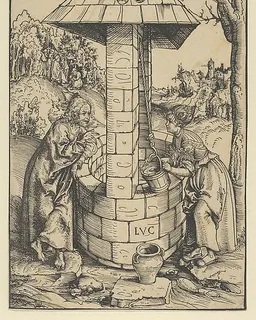
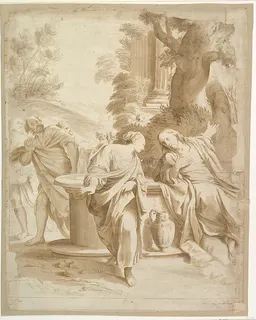
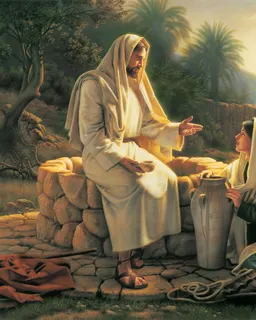
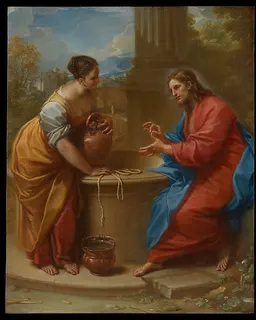
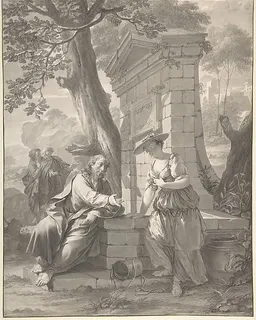
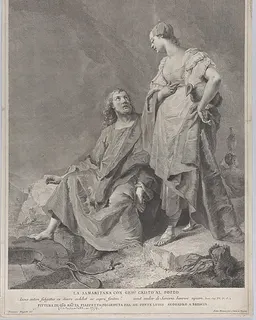
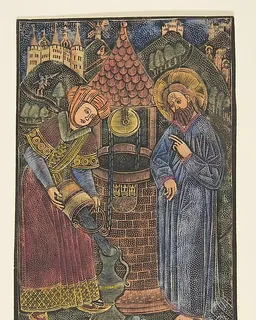
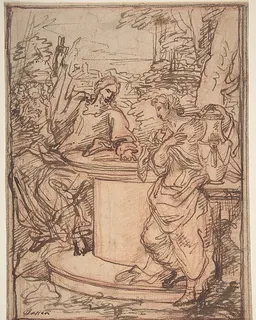
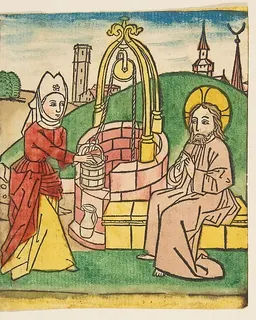
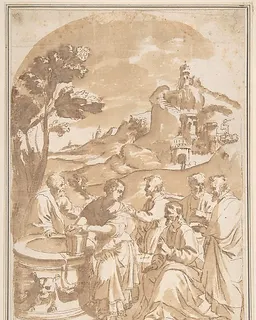
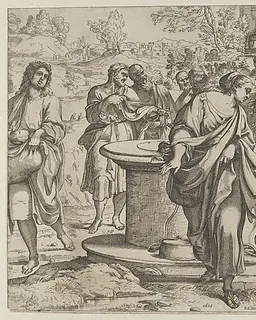
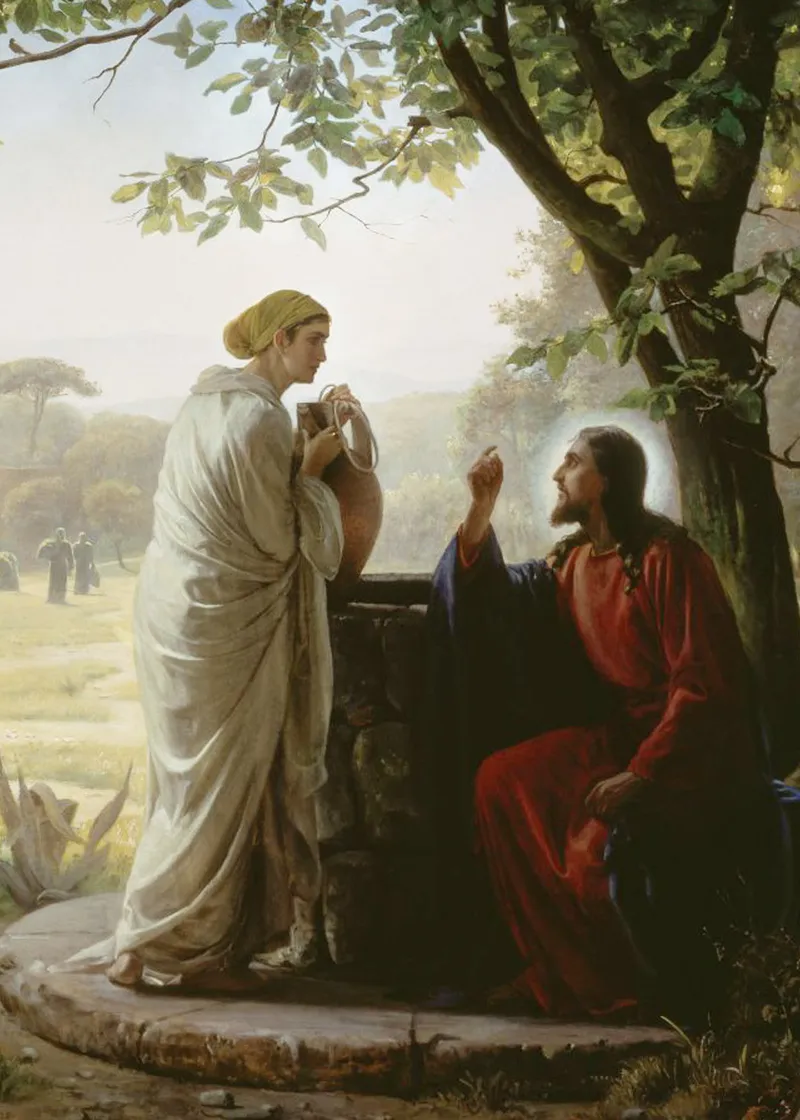
John 4 opens with a small phrase that turns out to carry the whole chapter: he must needs go through Samaria (v. 4). Geographically, that was the short road north from Judea to Galilee; spiritually, the “must” runs deeper, because waiting in Samaria is a single person He means to find. Wearied with the journey, Jesus sits down on Jacob's well about the sixth hour, and a woman of Samaria comes to draw water.
He speaks first, and what He says breaks every protocol at once: Give me to drink (v. 7). She is astonished - How is it that thou, being a Jew, askest drink of me, which am a woman of Samaria? for the Jews have no dealings with the Samaritans (v. 9). The Son of God begins not with a rebuke or a sermon but with a request, making Himself the one in need.1
Tap any highlighted phrase to jump to the commentary that unpacks it.
John 4:1-15Give Me to Drink · The Living Water
3He left Judaea, and departed again into Galilee. 4And he must needs go through Samaria. 5Then cometh he to a city of Samaria, which is called Sychar, near to the parcel of ground that Jacob gave to his son Joseph. 6Now Jacob’s well was there. Jesus therefore, being wearied with his journey, sat thus on the well: and it was about the sixth hour. 7There cometh a woman of Samaria to draw water: Jesus saith unto her, Give me to drink. 9Then saith the woman of Samaria unto him, How is it that thou, being a Jew, askest drink of me, which am a woman of Samaria? for the Jews have no dealings with the Samaritans. 10Jesus answered and said unto her, If thou knewest the gift of God, and who it is that saith to thee, Give me to drink; thou wouldest have asked of him, and he would have given thee living water. 11The woman saith unto him, Sir, thou hast nothing to draw with, and the well is deep: from whence then hast thou that living water? 12Art thou greater than our father Jacob, which gave us the well, and drank thereof himself, and his children, and his cattle? 13Jesus answered and said unto her, Whosoever drinketh of this water shall thirst again: 14But whosoever drinketh of the water that I shall give him shall never thirst; but the water that I shall give him shall be in him a well of water springing up into everlasting life. 15The woman saith unto him, Sir, give me this water, that I thirst not, neither come hither to draw.
The chapter pivots on three small words: he must needs go through Samaria (v. 4). On a map the route is unremarkable - Samaria simply lay between Judea and Galilee, and the road through it was the direct way north. But many Jews of the day would take the longer road east of the Jordan precisely to avoid Samaritan soil, for between the two peoples lay centuries of hard history. The Samaritans were the descendants of those left in the land and of peoples settled there after the fall of the northern kingdom; they kept their own version of the law of Moses, and they worshipped not at Jerusalem but on Mount Gerizim.
The verse itself supplies the blunt summary a few lines later: the Jews have no dealings with the Samaritans (v. 9). So when John says Jesus must needs go through, the necessity is more than geography. The One who came for the lost takes the road His countrymen avoided, and the “must” turns out to be a person waiting at a well. Then comes a detail John never wastes: Jesus therefore, being wearied with his journey, sat thus on the well (v. 6).
The Lord who will offer living water sits down genuinely tired and thirsty in the noonday heat - fully entering the weariness of the road He walks.1
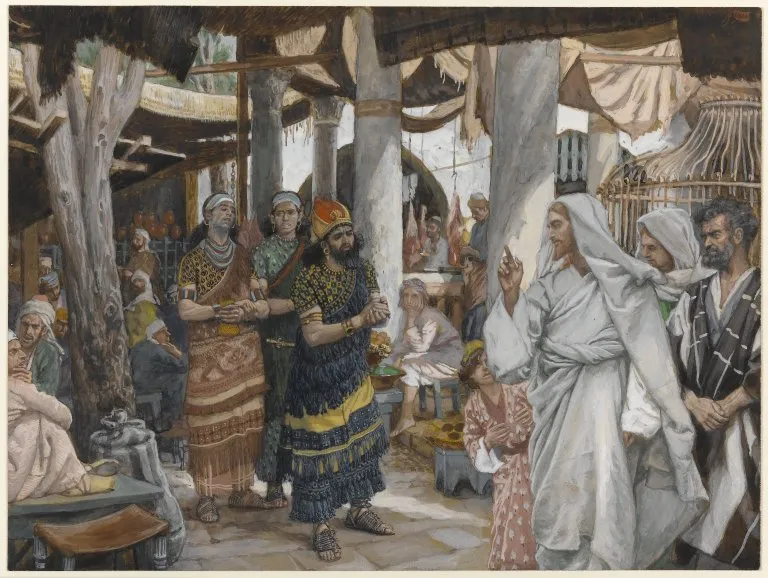
Notice who asks first. There cometh a woman of Samaria to draw water: Jesus saith unto her, Give me to drink (v. 7). The Son of God opens the conversation not with a pronouncement but with a need - He is thirsty, the well is deep, and the only person there with a means to draw is this woman. In a single sentence three walls fall. A respected Jewish teacher does not, as a rule, speak to a woman alone in public; a Jew does not ask a Samaritan for the hospitality of a shared cup; and a man of standing does not put himself in debt to someone the world counted beneath him.
Jesus does all three at once, and her astonishment shows she feels the weight of it: How is it that thou, being a Jew, askest drink of me, which am a woman of Samaria? (v. 9). The strategy of grace here is worth slowing over. He approaches by needing something only she can give, drawing her into a real exchange between equals. The request honours her. And it is from that small, humble opening - a man asking a favour - that the deepest conversation in the Gospels unfolds.
With one sentence Jesus turns the talk from a cup of water to a gift she has not begun to imagine: If thou knewest the gift of God, and who it is that saith to thee, Give me to drink; thou wouldest have asked of him, and he would have given thee living water (v. 10). The phrase living water in ordinary speech meant fresh, running, spring-fed water - the kind that moves and stays clean, as opposed to the still water of a cistern - and the woman hears it on exactly that plain level.
Sir, thou hast nothing to draw with, and the well is deep, she answers, and then, with a touch of local pride, Art thou greater than our father Jacob, which gave us the well? (vv. 11-12). She is standing at the famous well and cannot see past its stones. But Jesus means a deeper kind of water altogether, and He draws the contrast sharply: Whosoever drinketh of this water shall thirst again: but whosoever drinketh of the water that I shall give him shall never thirst; but the water that I shall give him shall be in him a well of water springing up into everlasting life (vv. 13-14).
Jacob's well is real and good, but it sends every drinker back tomorrow, thirsty again. What Jesus gives is not a bucket lowered from outside but a spring set inside - in him - rising of itself, unfailing, reaching all the way up into everlasting life. The prophets had long spoken of God offering water to the thirsty and had grieved over a people who dug themselves broken cisterns, that can hold no water (Jer. 2:13).
Here that ancient offer stands embodied at a Samaritan well, held out to one parched soul.2
John 4:16-26Worship in Spirit and in Truth · I That Speak Unto Thee Am He
16Jesus saith unto her, Go, call thy husband, and come hither. 17The woman answered and said, I have no husband. Jesus said unto her, Thou hast well said, I have no husband: 18For thou hast had five husbands; and he whom thou now hast is not thy husband: in that saidst thou truly. 19The woman saith unto him, Sir, I perceive that thou art a prophet. 20Our fathers worshipped in this mountain; and ye say, that in Jerusalem is the place where men ought to worship. 21Jesus saith unto her, Woman, believe me, the hour cometh, when ye shall neither in this mountain, nor yet at Jerusalem, worship the Father. 22Ye worship ye know not what: we know what we worship: for salvation is of the Jews. 23But the hour cometh, and now is, when the true worshippers shall worship the Father in spirit and in truth: for the Father seeketh such to worship him. 24God is a Spirit: and they that worship him must worship him in spirit and in truth. 25The woman saith unto him, I know that Messias cometh, which is called Christ: when he is come, he will tell us all things. 26Jesus saith unto her, I that speak unto thee am he.
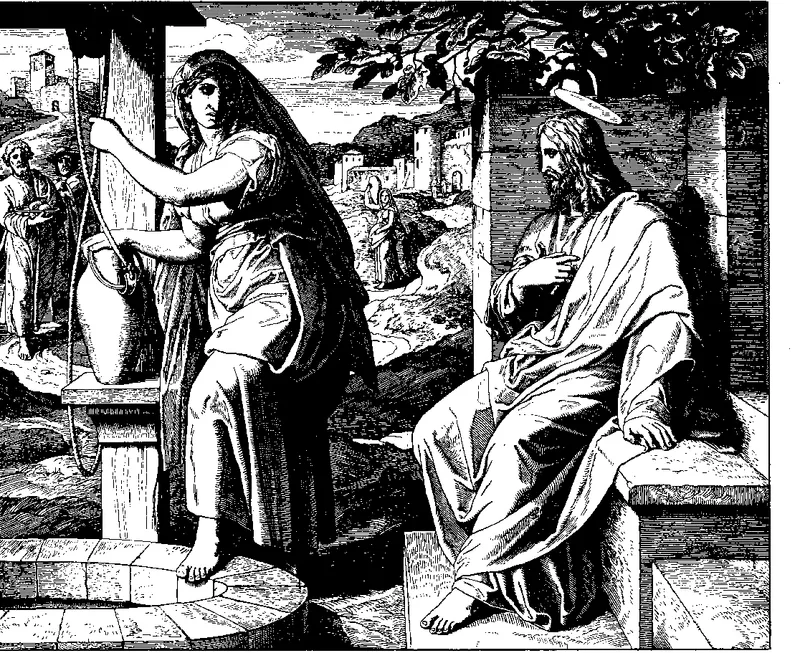
The turn in the conversation comes through a single, searching command: Go, call thy husband, and come hither (v. 16). It sounds like a change of subject; it is in fact the heart of the matter. I have no husband, she answers - truthfully, but with everything left out. Jesus neither lets the evasion stand nor exposes her with contempt: Thou hast well said, I have no husband: for thou hast had five husbands; and he whom thou now hast is not thy husband: in that saidst thou truly (vv. 17-18).
Twice He says she has spoken truly. He names the whole of her tangled history - five marriages behind her, and a present arrangement outside marriage - without a word of scorn and without softening the fact. This is the moment most likely to end the conversation, and it does the opposite. Being fully known does not drive her away; it draws her in. Sir, I perceive that thou art a prophet (v. 19), she says - one who sees what no stranger could see.
There is a quiet pattern in this Gospel: people are not loved by Jesus because they are first cleaned up, and they are not first cleaned up before He will speak with them. He sees the whole truth and keeps offering the living water. The light that exposes her is the same light that has come to save her.
Having found herself in the presence of a prophet, the woman raises the question that had divided her people from the Jews for centuries: Our fathers worshipped in this mountain; and ye say, that in Jerusalem is the place where men ought to worship (v. 20). Which mountain is the right one - Gerizim, where the Samaritans worshipped, or Zion in Jerusalem? It is a real and ancient quarrel, and it is also, perhaps, a way of turning the spotlight off her own life and onto a safer dispute.
Jesus does not dodge it, but He lifts it onto entirely new ground: the hour cometh, when ye shall neither in this mountain, nor yet at Jerusalem, worship the Father (v. 21). He announces that the very framing of the question is about to be left behind. He is candid that the Samaritan worship had gone astray and that God's saving purpose had run through Israel - ye worship ye know not what: we know what we worship: for salvation is of the Jews (v. 22) - but the point He is pressing is not which place but that worship is about to be unbound from place altogether.
An hour is coming, He says, and now is.
Then comes the saying that has shaped how believers everywhere have understood worship ever since: But the hour cometh, and now is, when the true worshippers shall worship the Father in spirit and in truth: for the Father seeketh such to worship him. God is a Spirit: and they that worship him must worship him in spirit and in truth (vv. 23-24). Hold the weight where Jesus puts it. The whole drive of the passage has been to lift worship off of a particular mountain - and the alternative He names is not a different place but a different manner: in spirit and in truth. To worship in spirit is to worship from the inward person, not the mere outward motions of a rite tied to one location; to worship in truth is to worship in reality and honesty, as God truly is and as the worshipper truly is, without pretense.
The line God is a Spirit grounds the whole thing: because of who God is, worship can rise to Him from anywhere a true heart turns toward Him - on a Samaritan hillside, at a foreign well, in any place on earth. And there is a tenderness easy to miss in the middle of it: the Father seeketh such to worship him. God is not a distant deity who must be tracked down at the correct address; He is a Father out looking for worshippers, and He has just been found seeking one at a well at noon.
Worship, Jesus says, is no longer a question of getting to the right mountain. It is a question of the heart turned, in spirit and in truth, toward the Father who is already seeking it.
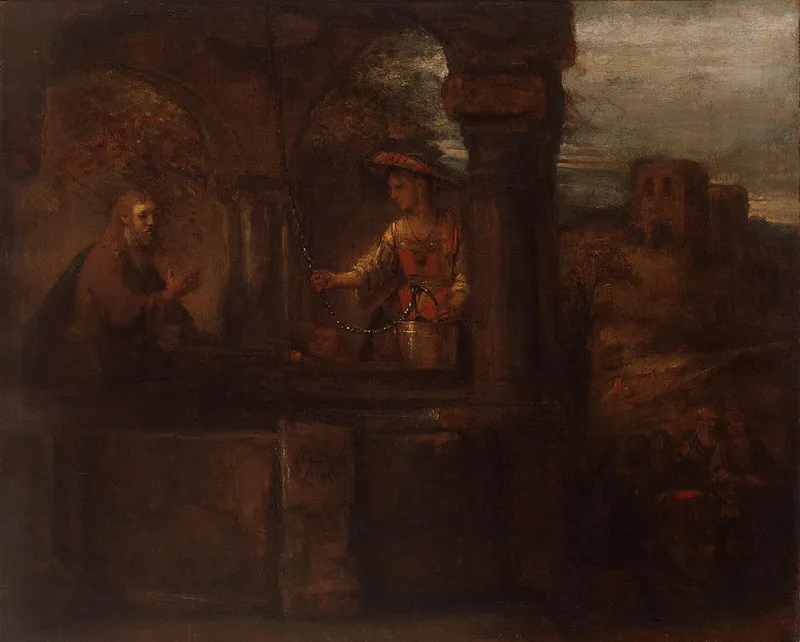
The conversation reaches its summit when the woman, reaching for the one hope her people held in common with the Jews, says: I know that Messias cometh, which is called Christ: when he is come, he will tell us all things (v. 25). The Samaritans, like the Jews, awaited an anointed one who would set things right and make all plain. And Jesus answers her with words He has guarded carefully elsewhere but here gives openly: I that speak unto thee am he (v. 26).
Let the scene register. Not to the council in Jerusalem, not to a crowd at a feast, not to the religious authorities - but to a Samaritan woman, alone at a well, with five husbands behind her and a present arrangement she would rather not name, Jesus declares plainly that He is the Christ. The first person in this Gospel to hear it stated so directly from His own lips is the very person His world counted least likely to deserve it.
There is no condition attached, no demand that she earn the disclosure first. Grace runs ahead of everything, crossing the lines of nation, of gender, of reputation, and lands on the one waiting at the well. He will tell us all things, she had said of the Messiah to come - and the Messiah, already there, was telling her.
John 4:27-38My Meat Is to Do His Will · The Fields White to Harvest
27And upon this came his disciples, and marvelled that he talked with the woman: yet no man said, What seekest thou? or, Why talkest thou with her? 28The woman then left her waterpot, and went her way into the city, and saith to the men, 29Come, see a man, which told me all things that ever I did: is not this the Christ? 30Then they went out of the city, and came unto him. 31In the mean while his disciples prayed him, saying, Master, eat. 32But he said unto them, I have meat to eat that ye know not of. 33Therefore said the disciples one to another, Hath any man brought him ought to eat? 34Jesus saith unto them, My meat is to do the will of him that sent me, and to finish his work. 35Say not ye, There are yet four months, and then cometh harvest? behold, I say unto you, Lift up your eyes, and look on the fields; for they are white already to harvest. 36And he that reapeth receiveth wages, and gathereth fruit unto life eternal: that both he that soweth and he that reapeth may rejoice together. 37And herein is that saying true, One soweth, and another reapeth. 38I sent you to reap that whereon ye bestowed no labour: other men laboured, and ye are entered into their labours.
The disciples return and are quietly scandalized - marvelled that he talked with the woman (v. 27) - though none dares ask why. Their unspoken astonishment is itself a measure of how far Jesus has just reached across the lines of His world. And then a small detail, the kind John drops on purpose: The woman then left her waterpot, and went her way into the city (v. 28). She came for water and forgets the very thing she came for.
The waterpot, the whole reason for the trip, is left at His feet; something has displaced it. Her errand to the town is breathless and brave: Come, see a man, which told me all things that ever I did: is not this the Christ? (v. 29). Look at what carries her testimony. She does not present herself as a teacher; she leads with the very thing that had shamed her - he told me all things that ever I did - now turned into the evidence of who He must be.
The being-known that she might have hidden becomes the heart of her witness. And her invitation is the simplest there is: not an argument, but come, see. She points away from herself to Him and lets the people make the journey she has just made. It is the same word Philip spoke to Nathanael - come and see - the most natural form a true witness takes.
While the town is stirring, the disciples press food on Jesus - Master, eat - and He answers on another level entirely: I have meat to eat that ye know not of (vv. 31-32). They take Him literally, just as the woman first took the living water literally: Hath any man brought him ought to eat? (v. 33). And Jesus opens the saying out: My meat is to do the will of him that sent me, and to finish his work (v. 34).
It is one of the most revealing sentences He ever speaks about Himself. What food is to the body - the thing that sustains, the thing the body craves and runs on - the will of the Father is to Him. He has just been about that work; reaching the woman at the well was not an interruption of His mission but the very nourishment of it. Two purposes are named: to do the will of the One who sent Him, and to finish his work - the same note He will sound from the cross when He cries, It is finished (John 19:30).
The thirsty, weary man of verse 6 turns out to be sustained by something the disciples cannot see: obedience to the Father is His meat and drink. And He is, even now, in the middle of the meal.
Then Jesus lifts the disciples' eyes from the food in their hands to the field around them: Say not ye, There are yet four months, and then cometh harvest? behold, I say unto you, Lift up your eyes, and look on the fields; for they are white already to harvest (v. 35). Almost certainly the woman's townsfolk are at that moment streaming out of the city toward Him - a crowd of Samaritans coming across the fields, the harvest made visible.
The disciples think in the ordinary rhythm of farming: sowing now, reaping in four months, a long wait between. Jesus overturns the timetable. The harvest is not a distant season; it is already, here, white and ready, walking toward Him in the persons of people they had been raised to despise. He fills out the picture with a labourer's wages and a shared joy: he that reapeth receiveth wages, and gathereth fruit unto life eternal: that both he that soweth and he that reapeth may rejoice together (v. 36).
In the work of God's harvest, sower and reaper are partners in one gladness. One soweth, and another reapeth (v. 37): some labour and never see the fruit; others gather what they did not plant. I sent you to reap that whereon ye bestowed no labour: other men laboured, and ye are entered into their labours (v. 38). The lesson lands as much on us as on them. The harvest is urgent and near, not far off; our eyes are forever down at the bread when the fields are white; and no one reaps alone - we always enter into labours that others, seen and unseen, began before us.
John 4:39-42The Saviour of the World
39And many of the Samaritans of that city believed on him for the saying of the woman, which testified, He told me all that ever I did. 40So when the Samaritans were come unto him, they besought him that he would tarry with them: and he abode there two days. 41And many more believed because of his own word; 42And said unto the woman, Now we believe, not because of thy saying: for we have heard him ourselves, and know that this is indeed the Christ, the Saviour of the world.
The first wave of faith in this town rides entirely on a woman's testimony: many of the Samaritans of that city believed on him for the saying of the woman, which testified, He told me all that ever I did (v. 39). It is striking how much John makes of this. The same detail that had been her shame - the exposed history of verses 17-18 - is named again here as the very thing that persuades a town.
He told me all that ever I did: her witness is nothing more polished than the report of having been completely known and not cast off, and it is enough to set many believing. Then the townspeople do what every honest witness most hopes for - they come and see for themselves: So when the Samaritans were come unto him, they besought him that he would tarry with them: and he abode there two days (v. 40).
The despised Samaritans beseech the Jewish teacher to stay, and He does - two days in a town His countrymen would not so much as walk through. The woman's word opened the door; His own presence carried them the rest of the way.
The chapter's confession is given to the townspeople, and they make a point of telling the woman how their faith has grown beyond its first spark: Now we believe, not because of thy saying: for we have heard him ourselves, and know that this is indeed the Christ, the Saviour of the world (v. 42). This is not a slight against her - her testimony brought them - but a description of where real faith always ends up: in a first-hand knowing.
They moved from believing on account of her word to knowing on account of His. And mark the title they reach for. Not “the Christ of the Jews,” not even simply “our Messiah,” but the Saviour of the world. It is the Samaritans - the half-outsiders, the people on the wrong side of every Jewish boundary - who first in this Gospel grasp how wide the salvation is. The woman's own life was the first sign of it: grace had crossed to her across every line.
Now a whole town confesses that the One at their well belongs not to one nation but to the world. What began with a single thirsty woman ends with a community confessing the breadth of the gospel - a small, early foretaste of the day the good news would reach every people on earth.
John 4:43-54Go Thy Way; Thy Son Liveth
43Now after two days he departed thence, and went into Galilee. 44For Jesus himself testified, that a prophet hath no honour in his own country. 45Then when he was come into Galilee, the Galilaeans received him, having seen all the things that he did at Jerusalem at the feast: for they also went unto the feast. 46So Jesus came again into Cana of Galilee, where he made the water wine. And there was a certain nobleman, whose son was sick at Capernaum. 47When he heard that Jesus was come out of Judaea into Galilee, he went unto him, and besought him that he would come down, and heal his son: for he was at the point of death. 48Then said Jesus unto him, Except ye see signs and wonders, ye will not believe. 49The nobleman saith unto him, Sir, come down ere my child die. 50Jesus saith unto him, Go thy way; thy son liveth. And the man believed the word that Jesus had spoken unto him, and he went his way. 51And as he was now going down, his servants met him, and told him, saying, Thy son liveth. 52Then enquired he of them the hour when he began to amend. And they said unto him, Yesterday at the seventh hour the fever left him. 53So the father knew that it was at the same hour, in the which Jesus said unto him, Thy son liveth: and himself believed, and his whole house. 54This is again the second miracle that Jesus did, when he was come out of Judaea into Galilee.
The scene shifts from a Samaritan well to a Galilean town, but the theme holds: faith that takes Jesus at His word. So Jesus came again into Cana of Galilee, where he made the water wine (v. 46) - John reminds us we are back where the first sign was given. And there was a certain nobleman, whose son was sick at Capernaum. The man is someone of rank, likely an officer in Herod's service; and his rank counts for nothing against a dying child.
He has heard that Jesus is in the region, and he comes the roughly twenty miles up from Capernaum to find Him: he went unto him, and besought him that he would come down, and heal his son: for he was at the point of death (v. 47). It is the cry of a desperate father, and it carries an assumption - that Jesus must come down, must be physically present at the bedside, for anything to happen.
The whole episode will gently break that assumption. The contrast with the chapter's opening is quietly deliberate: there a Samaritan woman of no standing, here a Galilean man of high standing; there the need was a thirsting soul, here a dying body; and to both Jesus gives life by His word.
Jesus' first reply sounds almost stern: Except ye see signs and wonders, ye will not believe (v. 48). It is spoken to the man, but the “ye” is plural - a word over the whole crowd's shoulder, and over ours. There is a kind of faith that will only trust God once it has seen the spectacle, that treats the miracle as the price of belief; and Jesus names it for what it is, a thin and demanding thing.
But the father is past arguing about the nature of faith; he simply presses his need: Sir, come down ere my child die (v. 49). And here the man is about to be lifted higher than he knows. He came believing Jesus could heal if He came down to the bedside. Jesus is going to give him something to believe that is harder and greater: a bare word, with no sign attached, spoken twenty miles from the sickbed.
The gentleness underneath the stern saying is that Jesus does not refuse him - He is about to grow this anxious father's faith from “come and do something I can see” into “trust what I have said,” which is the deeper faith of all.
The turning point is one sentence and the man's response to it: Jesus saith unto him, Go thy way; thy son liveth. And the man believed the word that Jesus had spoken unto him, and he went his way (v. 50). Jesus does not come down. He gives no sign, performs no gesture, sends nothing the man can carry but a word: thy son liveth. And the father's faith rises to meet exactly the thing Jesus had just named as lacking - he believes the bare word and turns for home with no proof in hand.
That walk back to Capernaum is itself an act of trust: every mile travelled on nothing but a sentence. Then the confirmation comes to meet him on the road: as he was now going down, his servants met him, and told him, saying, Thy son liveth (v. 51). He asks when the boy turned, and the answer seals it: Yesterday at the seventh hour the fever left him - the very hour Jesus had spoken (vv. 52-53).
The word and the deed match to the hour. And the faith that began with a single trusting word now spreads through a household: himself believed, and his whole house. John marks it as the second miracle that Jesus did, when he was come out of Judaea into Galilee (v. 54) - the chapter that opened with living water for a thirsty soul closes with a living word for a dying child, and life given, in both, by what Jesus says.
Research trail
Sources & further study
These references support the historical, linguistic, manuscript, and contextual notes in this chapter. Scripture remains the primary text; external sources are provided so readers can inspect the research directly.
- John 4 - Translators' NotesThe NET Bible's detailed footnotes on John 4 - the deep enmity behind “the Jews have no dealings with the Samaritans” (v. 9), the wordplay in the “living water” of verses 10-14, the Samaritan-versus-Jerusalem worship dispute of verses 20-24, and the second Cana sign that closes the chapter (vv. 46-54).
- John 4 ↔ John 7 · Revelation 22 · Isaiah 55 · Jeremiah 2Traces the threads tying John 4 to the rest of Scripture - the living water of verses 10-14 read alongside If any man thirst, let him come unto me, and drink (John 7:37-39) and the water of life freely (Rev. 22:17), and behind both the prophets' offer of water to the thirsty (Isa. 55:1) and their lament over the broken cisterns (Jer. 2:13).
- John 4 · Greek interlinearThe Greek text of John 4 word by word, with parsing and Strong's numbers - useful for the phrase hudor zon (vv. 10-11, the “living water” that is running, life-giving water), for en pneumati kai aletheia (vv. 23-24, “in spirit and in truth”), and for the emphatic ego eimi behind “I that speak unto thee am he” in verse 26.
Where this echoes in Scripture
Give Me to Drink · The Living Water
- John 7:37-39If any man thirst, let him come unto me, and drink... (this spake he of the Spirit, which they that believe on him should receive.)John's own reading of the “living water” of verses 10-14 - the Spirit Christ gives the thirsty.
- Isaiah 55:1Ho, every one that thirsteth, come ye to the waters, and he that hath no money; come ye, buy, and eat.The ancient offer of water to the thirsty that Jesus embodies at the well (vv. 10, 14).
- Jeremiah 2:13they have forsaken me the fountain of living waters, and hewed them out cisterns, broken cisterns, that can hold no water.The contrast behind verses 13-14 - the broken cistern that fails against the living fountain that does not.
- Revelation 22:17let him that is athirst come. And whosoever will, let him take the water of life freely.The same well still open at the end of Scripture - the water of life Christ first offered in verse 14.
- Psalm 42:1-2As the hart panteth after the water brooks, so panteth my soul after thee, O God. My soul thirsteth for God.The deeper thirst the living water answers - the soul's longing that no well of Jacob can fill (vv. 13-14).
Worship in Spirit and in Truth · I That Speak Unto Thee Am He
- John 14:6I am the way, the truth, and the life: no man cometh unto the Father, but by me.The “truth” of verses 23-24 given a face - worship in truth is worship through the One who is the truth.
- Philippians 3:3we... worship God in the spirit, and rejoice in Christ Jesus, and have no confidence in the flesh.The worship “in spirit” of verse 24 lived out - not by place or outward form but from the inward person.
- Luke 19:10For the Son of man is come to seek and to save that which was lost.The seeking Father of verse 23 and the self-revealing Son of verse 26 - grace going out to find the lost.
- 1 Timothy 2:5For there is one God, and one mediator between God and men, the man Christ Jesus.The Christ who says “I am he” in verse 26 - the one through whom worship now comes to the Father.
- Acts 8:5Then Philip went down to the city of Samaria, and preached Christ unto them.The harvest in Samaria that this well-side disclosure (v. 26) and the town's faith first opened.
My Meat Is to Do His Will · The Fields White to Harvest
- John 19:30When Jesus therefore had received the vinegar, he said, It is finished: and he bowed his head, and gave up the ghost.The work Jesus calls His meat in verse 34 - the Father's will, carried all the way to the cross and declared finished.
- John 6:38For I came down from heaven, not to do mine own will, but the will of him that sent me.The same food named in verse 34 - the Father's will as the whole reason Jesus came.
- Matthew 9:37-38The harvest truly is plenteous, but the labourers are few; Pray ye therefore the Lord of the harvest, that he will send forth labourers.The harvest Jesus sees as white already in verse 35 - plenteous, urgent, needing labourers sent.
- Acts 1:8ye shall be witnesses unto me both in Jerusalem, and in all Judaea, and in Samaria, and unto the uttermost part of the earth.The commission that sends the reapers to the very field of verses 35-38 - Samaria, and beyond.
- 1 Corinthians 3:6-8I have planted, Apollos watered; but God gave the increase... he that planteth and he that watereth are one.The sower-and-reaper of verses 37-38 - partners in one work, rejoicing together in the increase God gives.
The Saviour of the World
- John 3:16For God so loved the world, that he gave his only begotten Son, that whosoever believeth in him should not perish, but have everlasting life.The love behind the title of verse 42 - a Saviour given for the world, not for one nation.
- 1 John 4:14And we have seen and do testify that the Father sent the Son to be the Saviour of the world.The same confession the Samaritans make in verse 42 - the Son sent to save the world.
- 1 John 2:2And he is the propitiation for our sins: and not for ours only, but also for the sins of the whole world.The breadth the townspeople grasp in verse 42 - salvation reaching beyond any one people.
- Acts 8:5-8Then Philip went down to the city of Samaria, and preached Christ unto them... And there was great joy in that city.The Samaritan harvest of verse 42 gathered in fully - the town's early faith carried forward.
- Revelation 7:9a great multitude... of all nations, and kindreds, and people, and tongues, stood before the throne.The end of the road this Samaritan village steps onto in verse 42 - a Saviour for every nation.
Go Thy Way; Thy Son Liveth
- John 1:3-4All things were made by him; and without him was not any thing made that was made. In him was life.The power behind the bare word of verse 50 - the One in whom is life speaks, and a dying child lives.
- John 20:29Jesus saith unto him... blessed are they that have not seen, and yet have believed.The faith the nobleman shows in verse 50 - believing the word without first seeing the sign.
- Psalm 107:20He sent his word, and healed them, and delivered them from their destructions.The pattern of verses 50-53 - God sending His word, and healing coming with it.
- Matthew 8:8speak the word only, and my servant shall be healed.The same trust in Jesus' word at a distance that the nobleman learns in verse 50.
- John 6:68Lord, to whom shall we go? thou hast the words of eternal life.The word that gives life in verses 50-53 confessed - His are the words of eternal life.