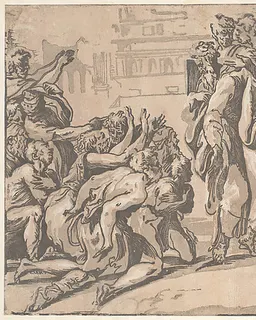
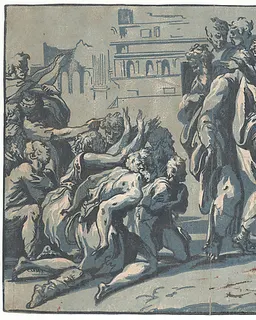
Matthew 8
People in this chapter
The Sermon on the Mount ended with the crowds astonished at his doctrine: for he taught them as one having authority (Matt. 7:28-29). Now Matthew shows that the authority is not only in His words. When he was come down from the mountain, great multitudes followed him (v. 1), and the first thing that happens is a leper kneeling in the road. The man's words are a model of faith and humility at once: Lord, if thou wilt, thou canst make me clean (v. 2).
He does not doubt the power; he submits to the will. And Jesus, instead of recoiling from a man the law required everyone to avoid, put forth his hand, and touched him, saying, I will; be thou clean (v. 3). The leprosy is gone immediately.1
Tap any highlighted phrase to jump to the commentary that unpacks it.
Matthew 8:1-13I Will; Be Thou Clean
1When he was come down from the mountain, great multitudes followed him. 2And, behold, there came a leper and worshipped him, saying, Lord, if thou wilt, thou canst make me clean. 3And Jesus put forth his hand, and touched him, saying, I will; be thou clean. And immediately his leprosy was cleansed. 4And Jesus saith unto him, See thou tell no man; but go thy way, shew thyself to the priest, and offer the gift that Moses commanded, for a testimony unto them.
The man who kneels before Jesus carries the most isolating affliction his world knew. Under the law a leper was ceremonially unclean, put outside the camp, required to cover his lip and cry Unclean, unclean so that everyone would keep their distance (Lev. 13:45-462). He had likely not been touched by another human being in years. And his approach is a small masterpiece of faith. He does not presume; he does not demand.
He says, Lord, if thou wilt, thou canst make me clean (v. 2). The power he takes for granted - thou canst; it is only the will he leaves in Jesus' hands - if thou wilt. This is the shape of true prayer: full confidence in what God is able to do, joined to full surrender to what God chooses to do. He asks not merely to be cured of a disease but to be made clean - restored, brought back inside, fit again for the community and the worship he has been cut off from.
The astonishing thing is the first thing Jesus does. He could have healed with a word from across the road, as He will do for the centurion's servant a few verses later. Instead He put forth his hand, and touched him (v. 3). To touch a leper was, under the law, to contract his uncleanness; the flow ran one way, from the unclean to the clean. But here the flow is reversed. Jesus is not defiled by the touch; the leper is cleansed by it.
Holiness proves stronger than corruption, life stronger than the disease. And the touch itself preaches before the cure does: to a man no one had touched in years, the very contact is a word of grace, telling him he is not beyond reach. Then comes the word that matches the leper's own - the man had said if thou wilt, and Jesus answers I will; be thou clean. The cure is not gradual. Immediately his leprosy was cleansed.
Jesus then sends the healed man to do exactly what the law requires: shew thyself to the priest, and offer the gift that Moses commanded, for a testimony unto them (v. 4). The law of Leviticus 14 laid out a careful rite by which a cleansed leper was examined by the priest and formally readmitted to the community. Jesus does not bypass it; He honors it. The man must be declared clean by the proper authority and restored in the proper way.
And the offering is to stand for a testimony unto them - a witness to the priests themselves that something had happened among them that only God could do. The command to tell no man meanwhile guards against the wrong kind of fame; Jesus will not be made into a wonder-worker mobbed for spectacle. The healing is real and complete, but it is meant to point beyond itself, not to draw a crowd hungry only for marvels.
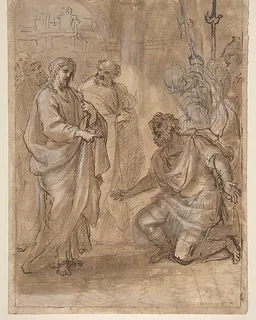
5And when Jesus was entered into Capernaum, there came unto him a centurion, beseeching him, 6And saying, Lord, my servant lieth at home sick of the palsy, grievously tormented. 7And Jesus saith unto him, I will come and heal him. 8The centurion answered and said, Lord, I am not worthy that thou shouldest come under my roof: but speak the word only, and my servant shall be healed. 9For I am a man under authority, having soldiers under me: and I say to this man, Go, and he goeth; and to another, Come, and he cometh; and to my servant, Do this, and he doeth it. 10When Jesus heard it, he marvelled, and said to them that followed, Verily I say unto you, I have not found so great faith, no, not in Israel. 11And I say unto you, That many shall come from the east and west, and shall sit down with Abraham, and Isaac, and Jacob, in the kingdom of heaven. 12But the children of the kingdom shall be cast out into outer darkness: there shall be weeping and gnashing of teeth. 13And Jesus said unto the centurion, Go thy way; and as thou hast believed, so be it done unto thee. And his servant was healed in the selfsame hour.
The second petitioner could hardly be more different from the first. A centurion was an officer of the occupying Roman army, a Gentile, a man Israel had every reason to resent. Yet he comes beseeching Jesus on behalf of a servant lying paralyzed and grievously tormented (vv. 5-6) - already a striking thing, an officer pleading for a slave. When Jesus offers to come to his house, the centurion answers with words the church has never forgotten: Lord, I am not worthy that thou shouldest come under my roof: but speak the word only, and my servant shall be healed (v. 8).
Here is faith stripped to its core: he needs only the word. And he grasps something about Jesus that the religious leaders missed entirely: that Jesus' word carries the kind of authority that does not require His bodily presence to take effect - that He can command a disease the way a commander gives an order, and it will be done.
So, he reasons, must it be with Jesus: let Him but say the word, and sickness itself will obey like a soldier under orders. What the centurion perceives is that Jesus stands within a chain of authority that runs up to God, so that His command has the force of heaven behind it. Jesus marvelled - one of only two places in the Gospels where He marvels - and turns to the crowd: I have not found so great faith, no, not in Israel (v. 10).
The outsider, the foreigner, the soldier of the enemy's army, has seen more truly than the covenant people who had the prophets and the promises.1
The centurion's faith draws from Jesus a saying that flings the doors of the kingdom wide open: many shall come from the east and west, and shall sit down with Abraham, and Isaac, and Jacob, in the kingdom of heaven (v. 11). The picture is a great feast, the patriarchs at the table, and streaming in from every direction - from the east and west - people who were never part of Israel by birth. The promise to Abraham was always that in him all families of the earth would be blessed (Gen. 12:3), and here that promise begins to come visible in a single Roman officer.
But the saying carries a sharp warning alongside the welcome: the children of the kingdom shall be cast out into outer darkness (v. 12). Birthright is no guarantee. To be born inside the covenant and yet refuse the faith of this Gentile is to risk being left outside the very feast the strangers are entering. Belonging to the kingdom is finally a matter of faith. Then Jesus speaks the healing word the centurion asked for: as thou hast believed, so be it done unto thee (v. 13), and the servant is healed in that very hour, at a distance, by the word alone.
Matthew 8:14-17Himself Took Our Infirmities
14And when Jesus was come into Peter’s house, he saw his wife’s mother laid, and sick of a fever. 15And he touched her hand, and the fever left her: and she arose, and ministered unto them. 16When the even was come, they brought unto him many that were possessed with devils: and he cast out the spirits with his word, and healed all that were sick: 17That it might be fulfilled which was spoken by Esaias the prophet, saying, Himself took our infirmities, and bare our sicknesses.
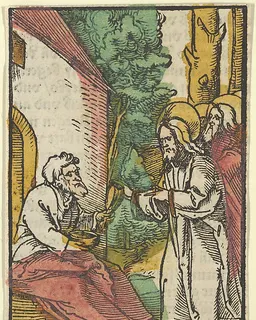
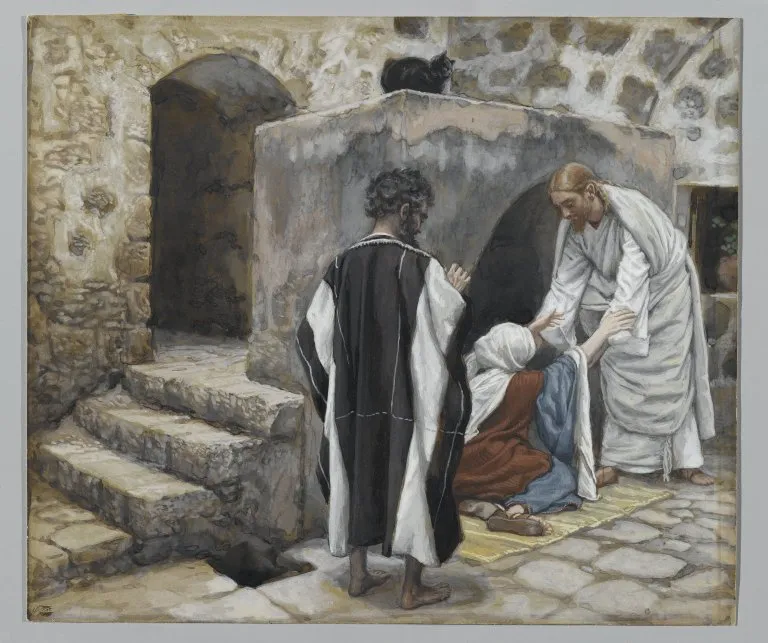
After the public scenes of the leper and the centurion comes a quiet, domestic one. Jesus goes into Peter's own house and finds Peter's mother-in-law laid, and sick of a fever (v. 14). There is no plea recorded this time, no negotiation, no crowd - only a sick woman in a bed and Jesus seeing her. He touched her hand, and the fever left her (v. 15). The same gentle gesture that cleansed the leper now lifts a fever; the touch of Jesus is becoming a refrain.
And the result is told in a single telling phrase: she arose, and ministered unto them. The healing is so complete and so immediate that she is at once up and serving, strong enough to wait on her guests. There is a quiet picture of the whole point of healing here. She is restored to usefulness - raised up in order to serve. The grace that touches us is meant to set us back on our feet and back to our calling.
What Christ heals, He heals for a purpose.
As the day ends the scene widens again: When the even was come, they brought unto him many that were possessed with devils: and he cast out the spirits with his word, and healed all that were sick (v. 16). It is the Sabbath sun going down, when carrying the sick was permitted again, and the whole town seems to converge on Peter's door. Notice the sweep of it - many, and then all; not one who came was turned away or left unhealed.
And notice again the means: He cast out the spirits with his word. No incantation, no struggle, no elaborate rite - a word, and it is done, exactly as the centurion had believed it would be. The authority that commanded one disease across a distance now empties a town of its afflictions in an evening. Matthew is piling up the evidence, scene upon scene, of an authority that meets every kind of brokenness - leprosy, paralysis, fever, demonic torment, sickness of every sort - and is sufficient for all of it.
Then Matthew does something he does at the great turning points of his Gospel: he stops the narrative to tell us what it means, reaching back to the prophets. The healings happened, he says, that it might be fulfilled which was spoken by Esaias the prophet, saying, Himself took our infirmities, and bare our sicknesses (v. 17). The words are from Isaiah 53, the song of the suffering Servant.3 By quoting it here, over a day of healing, Matthew binds the two together: the Servant who would carry our sicknesses is the One whose hands have just been emptying a town of disease.
But the verbs are heavier than mere curing - He took and He bare. The Servant does not only remove our burdens from the outside; He takes them up, carries them, makes them His own. The healings of Capernaum are real, and they are also a sign pointing past themselves. They show in the body what He came to do in the soul - and they point toward the place where the taking and bearing would cost Him everything.
Matthew 8:18-27What Manner of Man Is This?
18Now when Jesus saw great multitudes about him, he gave commandment to depart unto the other side. 19And a certain scribe came, and said unto him, Master, I will follow thee whithersoever thou goest. 20And Jesus saith unto him, The foxes have holes, and the birds of the air have nests; but the Son of man hath not where to lay his head. 21And another of his disciples said unto him, Lord, suffer me first to go and bury my father. 22But Jesus said unto him, Follow me; and let the dead bury their dead.
Between the healings and the storm Matthew sets two short exchanges about what it costs to follow. A scribe - a trained, respectable man - volunteers with great confidence: Master, I will follow thee whithersoever thou goest (v. 19). Jesus does not flatter the offer; He tells him the plain truth about the road he is signing up for: The foxes have holes, and the birds of the air have nests; but the Son of man hath not where to lay his head (v. 20).
Even the wild creatures have a den and a roost; the Lord of all has no settled home. To follow Him is to follow a homeless wanderer who is on His way to a cross, not a rising teacher whose movement will bring comfort and standing. Jesus will not recruit a disciple under false pretenses. He lets the man count the cost with open eyes - the very thing He elsewhere commands every would-be follower to do before they begin.
The second exchange is harder, and it must be read carefully, for it is easily misheard. A disciple asks, Lord, suffer me first to go and bury my father (v. 21), and Jesus answers, Follow me; and let the dead bury their dead (v. 22). This is not contempt for family duty - honoring father and mother is the LORD's own commandment, and Jesus sharply rebuked those who used religion as an excuse to neglect their parents (Matt. 15:4-6).
The key is the little word first: the man wants to put something ahead of the call. Many take the phrase to mean that the man's father had not yet died - that he was asking to postpone following until some indefinite future when family obligations were finally settled and he was free.2 The saying then turns on a vivid contrast: let those who are spiritually dead tend to the ordinary affairs of the dead, but the one who has heard the call of life must follow now.
Jesus is not abolishing the duties of family; He is claiming the highest place. Discipleship cannot be slotted in behind everything else as one obligation among many. The One who is Lord must be Lord first, or He is not followed at all.
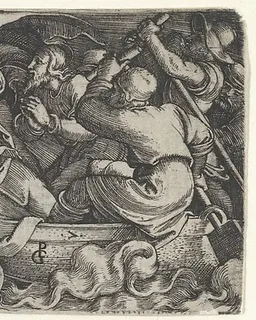
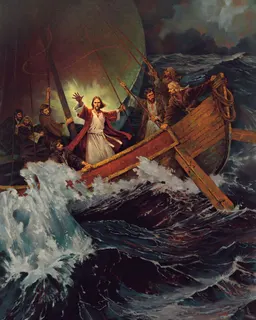
23And when he was entered into a ship, his disciples followed him. 24And, behold, there arose a great tempest in the sea, insomuch that the ship was covered with the waves: but he was asleep. 25And his disciples came to him, and awoke him, saying, Lord, save us: we perish. 26And he saith unto them, Why are ye fearful, O ye of little faith? Then he arose, and rebuked the winds and the sea; and there was a great calm. 27But the men marvelled, saying, What manner of man is this, that even the winds and the sea obey him!
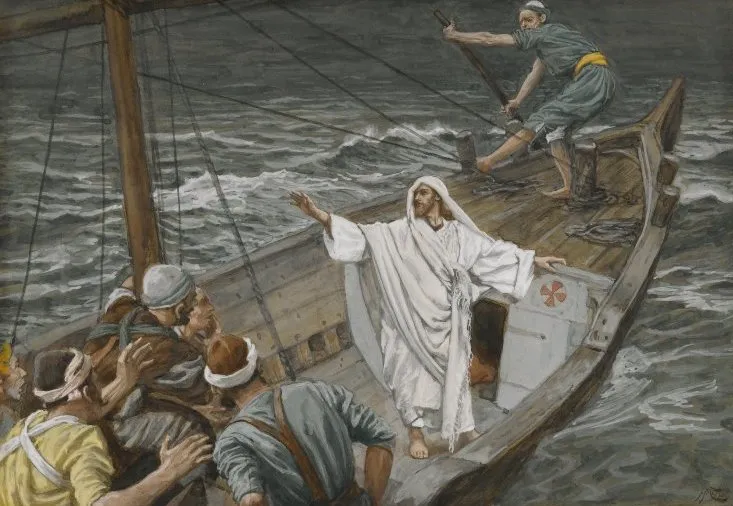
They put out onto the lake, and a sudden, violent storm comes down - a great tempest… insomuch that the ship was covered with the waves (v. 24). The Sea of Galilee is notorious for these squalls, and several of the disciples were fishermen who knew its moods; for them to be terrified, the danger was real and the boat was foundering. And through it all, he was asleep. The detail is human and unforgettable: Jesus is so worn from the day's labor that the pitch and roar of the storm do not wake Him.
The disciples do: Lord, save us: we perish (v. 25). Their cry is half faith and half panic - they turn to the right person, but they are sure they are about to drown. Jesus answers first with a question that goes to the root: Why are ye fearful, O ye of little faith? They had the Lord of all asleep in their own boat; their fear was not unreasonable on the surface, but it had forgotten who was with them.
Then He arose, and rebuked the winds and the sea; and there was a great calm. He speaks to the storm as He spoke to the demon and the disease - with a word of command - and the chaos goes instantly, utterly still.
The aftermath is as important as the miracle. The disciples are not simply relieved; they are unsettled into a deeper fear, and they ask the question the whole chapter has been driving toward: What manner of man is this, that even the winds and the sea obey him! (v. 27). It is exactly the right question. They have seen Him heal and cast out spirits, but the sea is another order of thing - the great untameable force, the deep that no human voice can command.
In the Scriptures of Israel, the One who rules the raging sea and stills its waves is the LORD Himself: Thou rulest the raging of the sea: when the waves thereof arise, thou stillest them (Ps. 89:9). For the storm to fall silent at this man's rebuke is to push the disciples up against a conclusion almost too large to hold. They do not yet have words for it. But the question they cannot answer is the question Matthew is pressing on the reader, and the rest of the Gospel will answer it.
Matthew 8:28-34What Have We to Do with Thee, Thou Son of God?
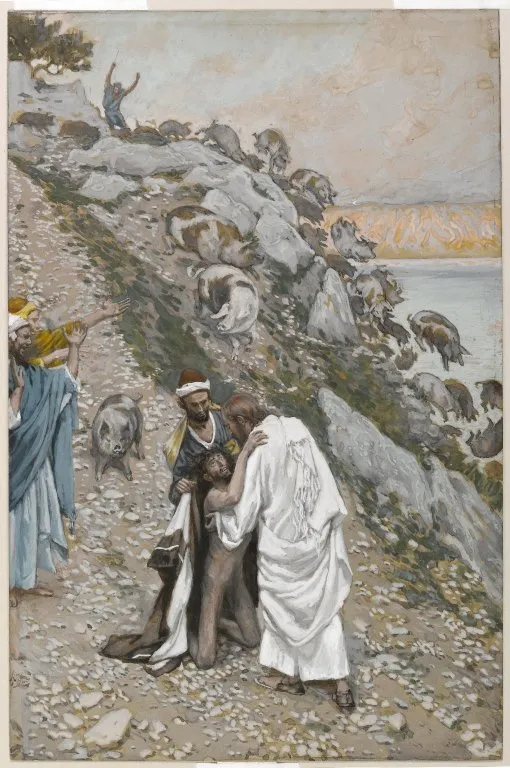
28And when he was come to the other side into the country of the Gergesenes, there met him two possessed with devils, coming out of the tombs, exceeding fierce, so that no man might pass by that way. 29And, behold, they cried out, saying, What have we to do with thee, Jesus, thou Son of God? art thou come hither to torment us before the time? 30And there was a good way off from them an herd of many swine feeding. 31So the devils besought him, saying, If thou cast us out, suffer us to go away into the herd of swine. 32And he said unto them, Go. And when they were come out, they went into the herd of swine: and, behold, the whole herd of swine ran violently down a steep place into the sea, and perished in the waters. 33And they that kept them fled, and went their ways into the city, and told every thing, and what was befallen to the possessed of the devils. 34And, behold, the whole city came out to meet Jesus: and when they saw him, they besought him that he would depart out of their coasts.
The boat reaches the far shore, into the country east of the lake, and is met by a scene of pure desolation: two possessed with devils, coming out of the tombs, exceeding fierce, so that no man might pass by that way (v. 28). Everything about the picture speaks of death and ruin. The men live among the tombs, dwelling with the dead; they are violent beyond control; they have made a whole stretch of road impassable, cutting their region off the way leprosy cut off the leper.
This is what the powers of darkness do to a human life when they are given mastery - they drive a person out of community, out of his right mind, out among the graves, into a living death. And it is into this very place, the haunt of the unclean and the dead, that Jesus deliberately crosses the lake. He does not avoid the region; He goes straight to it. The Lord who touched the leper and stilled the deep now walks up to the place no one dared pass.
The moment Jesus arrives, the spirits cry out, and what they say is remarkable: What have we to do with thee, Jesus, thou Son of God? art thou come hither to torment us before the time? (v. 29). The demons recognize Him instantly and name Him truly - thou Son of God - a confession the disciples in the boat were still struggling toward. The powers of darkness are under no illusion about who He is. They also know how the story ends.
Their question about being tormented before the time betrays it: they know there is an appointed time of judgment coming, and they know they are headed for it; their only question is whether the sentence is being carried out early. This is no contest between equal powers. The spirits do not threaten or resist; they plead. They are creatures who know their Judge has arrived, and the most they can do is beg. James will later put it starkly: the devils also believe, and tremble (Jas. 2:19) - and here they tremble before the One they cannot help but recognize.
The spirits make a strange request: If thou cast us out, suffer us to go away into the herd of swine (v. 31). Jesus answers with one word - Go - and the herd, some two thousand by Mark's account, stampedes violently down a steep place into the sea, and perished in the waters (v. 32). The destructive bent of the spirits is laid bare: given any object, they drive it to ruin and death, exactly as they had been driving the two men toward death among the tombs.
The deliverance of the men is shown by the destruction of the swine; what had been tearing two human beings apart is cast out and comes to nothing in the deep. And the contrast with the men is the whole point. Mark and Luke complete the picture - the delivered man is found sitting… clothed, and in his right mind (Mark 5:15). Where the powers leave only death and ruin, Christ leaves a human being restored: clothed, calm, sane, back among the living.
The same authority that cleansed the leper and stilled the storm has now reached the deepest captivity of all and set the prisoners free.
The ending is one of the saddest lines in the Gospels. Word reaches the town, and the whole city came out to meet Jesus: and when they saw him, they besought him that he would depart out of their coasts (v. 34). They had a power among them that could break every chain that bound a man and restore the most ruined life in the region - and they asked Him to leave. Why? Mark tells us they were afraid, and Matthew has just told us of the swine; very possibly the loss of the herd weighed more with them than the rescue of two men.
Whatever the precise reason, the verse exposes a terrible possibility: a person, or a whole town, can meet the saving power of God and want nothing so much as to be rid of it - because His presence costs something, disturbs something, will not leave things as they were. And the most sobering word in the verse is the one that follows: He went. Jesus does not force Himself on those who beg Him to go.
He had crossed a sea to come; when they asked Him to leave, He got back into the boat. The door He stands at, He knocks upon - He does not break it down.
Research trail
Sources & further study
These references support the historical, linguistic, manuscript, and contextual notes in this chapter. Scripture remains the primary text; external sources are provided so readers can inspect the research directly.
- Matthew 8 · Greek interlinear + word studiesThe Greek text of Matthew 8 word by word, with parsing and lexical links - useful for thel&omac; (v. 3, the “I will” of Jesus' willing word), for exousia (v. 9, the “authority” the centurion understands), and for potapos (v. 27, the astonished “what manner of man”).
- Matthew 8 - Translators' NotesThe NET Bible's detailed footnotes on Matthew 8 - the cleansing of the leper and the law of Leviticus 14 behind verse 4, the Greek behind the centurion's “speak the word only” (v. 8), the meaning of “let the dead bury their dead” (v. 22), and the textual question over “Gergesenes” in verse 28.
- Matthew 8 ↔ Isaiah 53 · Psalm 107 · Leviticus 13-14Traces the threads tying Matthew 8 to the rest of Scripture - the evening healings (v. 16) read against the Servant who hath borne our griefs (Isa. 53:4) which Matthew quotes outright in verse 17, and the stilling of the sea (vv. 26-27) read beside he maketh the storm a calm (Ps. 107:29).
Where this echoes in Scripture
I Will; Be Thou Clean
- Leviticus 13:45-46his clothes shall be rent... and shall cry, Unclean, unclean... he shall dwell alone; without the camp shall his habitation be.The isolation of the leper (v. 2) - the law that cut him off, and that Jesus' touch undoes.
- Isaiah 53:4Surely he hath borne our griefs, and carried our sorrows.The Servant who bears what is ours without being stained - the pattern of the cleansing touch in verse 3.
- Genesis 12:3in thee shall all families of the earth be blessed.The promise behind verse 11 - the nations streaming to Abraham's table, begun in a Gentile's faith.
- Luke 7:2-9I have not found so great faith, no, not in Israel.Luke's fuller account of the same centurion - the faith Jesus marvels at in verse 10.
- Matthew 28:19Go ye therefore, and teach all nations, baptizing them...The in-gathering of verse 11 made the church's commission - the kingdom thrown open to every people.
Himself Took Our Infirmities
- Isaiah 53:4-5Surely he hath borne our griefs, and carried our sorrows... and with his stripes we are healed.The Servant song Matthew quotes in verse 17 - the One who takes and bears what is ours.
- 1 Peter 2:24Who his own self bare our sins in his own body on the tree... by whose stripes ye were healed.The deeper sickness behind the healings of verse 16 - sin borne all the way to the cross.
- Matthew 9:35And Jesus went about all the cities and villages... healing every sickness and every disease among the people.The same ministry as verse 16 - an authority sufficient for every affliction brought to Him.
- Psalm 103:3Who forgiveth all thine iniquities; who healeth all thy diseases.Forgiveness and healing joined as one work of God - the two layers Matthew binds together in verse 17.
- Mark 1:29-34they brought unto him all that were diseased... And he healed many.Mark's account of the same evening at Peter's house (vv. 14-16).
What Manner of Man Is This?
- Psalm 107:28-29Then they cry unto the LORD in their trouble... He maketh the storm a calm, so that the waves thereof are still.The LORD who stills the sea for crying sailors - the act Jesus performs in verses 26-27.
- Psalm 89:9Thou rulest the raging of the sea: when the waves thereof arise, thou stillest them.The mastery over the sea that belongs to God alone - the answer to the question of verse 27.
- Luke 9:57-62Lord, I will follow thee whithersoever thou goest... No man, having put his hand to the plough, and looking back, is fit for the kingdom of God.The cost of following spelled out further - the same exchanges as verses 19-22.
- Job 38:8-11Hitherto shalt thou come, but no further: and here shall thy proud waves be stayed.The Creator who set the bounds of the sea - the authority at work in the rebuke of verse 26.
- Genesis 1:9Let the waters under the heaven be gathered together unto one place, and let the dry land appear.The word that ordered the waters at the first - the same word that commands them in verse 26.
What Have We to Do with Thee, Thou Son of God?
- Mark 5:1-17they... see him that was possessed with the devil... sitting, and clothed, and in his right mind: and they were afraid.The fuller account of verses 28-34 - the delivered man restored, and the town's fear.
- Colossians 2:15And having spoiled principalities and powers, he made a shew of them openly, triumphing over them in it.The full victory foreshadowed in verse 29 - the powers stripped and led in His triumph at the cross.
- 1 John 3:8For this purpose the Son of God was manifested, that he might destroy the works of the devil.Why He crossed the lake to the tombs - the purpose at work in the deliverance of verses 28-32.
- James 2:19thou believest that there is one God; thou doest well: the devils also believe, and tremble.The demons' accurate confession in verse 29 - belief that trembles but does not submit.
- Revelation 3:20Behold, I stand at the door, and knock: if any man hear my voice, and open the door, I will come in.The Lord who departs when asked to (v. 34) - He knocks, but does not force the door.