Luke 7
People in this chapter
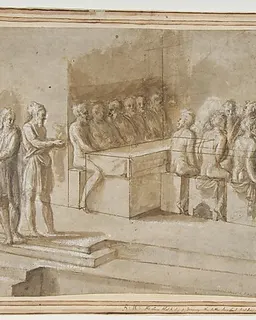
After the long block of teaching that ends the Sermon on the Plain, Luke sets down four scenes that let Jesus' deeds do the talking. The first unfolds at Capernaum, where a certain centurion's servant, who was dear unto him, was sick, and ready to die (v. 2). The centurion - a commander of Roman soldiers, and a Gentile - does not presume to approach directly. He sends the elders of the Jews to plead for him, and they vouch for him warmly: he loveth our nation, and he hath built us a synagogue (v. 5).
Jesus goes with them. But before He arrives, the man sends friends with a second message that turns the whole story: Lord, trouble not thyself: for I am not worthy that thou shouldest enter under my roof… but say in a word, and my servant shall be healed (vv. 6-7).1
Tap any highlighted phrase to jump to the commentary that unpacks it.
Luke 7:1-10I Have Not Found So Great Faith
1Now when he had ended all his sayings in the audience of the people, he entered into Capernaum. 2And a certain centurion’s servant, who was dear unto him, was sick, and ready to die. 3And when he heard of Jesus, he sent unto him the elders of the Jews, beseeching him that he would come and heal his servant. 4And when they came to Jesus, they besought him instantly, saying, That he was worthy for whom he should do this: 5For he loveth our nation, and he hath built us a synagogue. 6Then Jesus went with them. And when he was now not far from the house, the centurion sent friends to him, saying unto him, Lord, trouble not thyself: for I am not worthy that thou shouldest enter under my roof: 7Wherefore neither thought I myself worthy to come unto thee: but say in a word, and my servant shall be healed. 8For I also am a man set under authority, having under me soldiers, and I say unto one, Go, and he goeth; and to another, Come, and he cometh; and to my servant, Do this, and he doeth it. 9When Jesus heard these things, he marvelled at him, and turned him about, and said unto the people that followed him, I say unto you, I have not found so great faith, no, not in Israel. 10And they that were sent, returning to the house, found the servant whole that had been sick.
Luke is careful to tell us exactly who this man is, because everything turns on it. He is a centurion - an officer of Rome, commanding perhaps a hundred soldiers - and therefore a Gentile and, in the eyes of many, an agent of the foreign power occupying the land. Yet the very people we might expect to resent him plead for him: the elders of the Jews come to Jesus and vouch for him, he loveth our nation, and he hath built us a synagogue (vv. 3-5).
Here is an outsider who has loved his way into the affection of the town. And the occasion of his approach is tender - a servant, who was dear unto him, was sick, and ready to die (v. 2). A man with power over many is bending all of it toward saving one household member he loves. The scene is set with deliberate care so that what Jesus says at its end will land with full weight: the great faith of the chapter is about to be found in the last person the religious world would have looked to.1
The elders argue that the centurion is worthy (v. 4) - he has earned this, they say, by his love and his generosity. But the centurion himself says the opposite. As Jesus draws near, he sends friends out with a message that overturns the elders' whole case: Lord, trouble not thyself: for I am not worthy that thou shouldest enter under my roof: wherefore neither thought I myself worthy to come unto thee (vv. 6-7).
The man the town calls deserving calls himself undeserving. This is the texture of real faith: it does not come pleading its own merits. It comes empty-handed, conscious of the distance between itself and the One it asks. The centurion does not bargain from strength; he confesses unworthiness and asks anyway. And that confession, far from disqualifying him, is the soil in which the faith Jesus praises actually grows. The closer a person draws to genuine holiness, the less he speaks of what he is owed.
He reasons that Jesus stands over sickness and death the way he himself stands over his men - and therefore a word from Jesus, spoken at a distance, is as good as His hand laid on the boy. There is humility in this too: he assumes Jesus need not be troubled to come, because Jesus' authority is not bounded by a doorway. Say in a word (v. 7), he asks. He grasps something about who Jesus is that the experts had missed - that the One speaking commands the very forces that were killing his servant.
Then comes one of the few moments in the Gospels where Jesus is said to marvel. When Jesus heard these things, he marvelled at him, and turned him about, and said unto the people that followed him, I say unto you, I have not found so great faith, no, not in Israel (v. 9). The word is striking: the One at whom crowds marvel here marvels Himself - at faith. And the verdict is deliberately scandalous.
He declares He has not found faith this great anywhere in Israel, among the covenant people who had the Scriptures and the prophets and the promises. The outsider has outrun the insiders. Notice too what Jesus does not require: He never enters the house, never touches the servant, never even speaks a healing formula that the narrative records. He simply honors the faith, and they that were sent, returning to the house, found the servant whole (v. 10).
The word was enough, exactly as the centurion had believed.
Luke 7:11-17Young Man, I Say Unto Thee, Arise
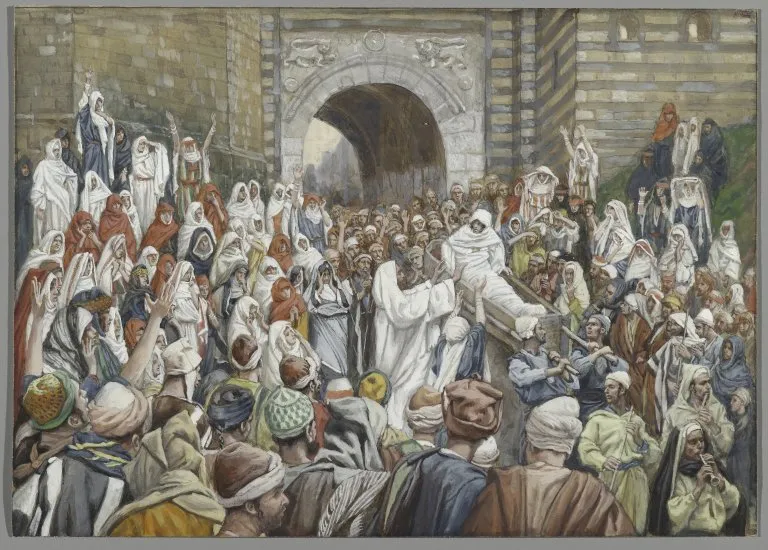
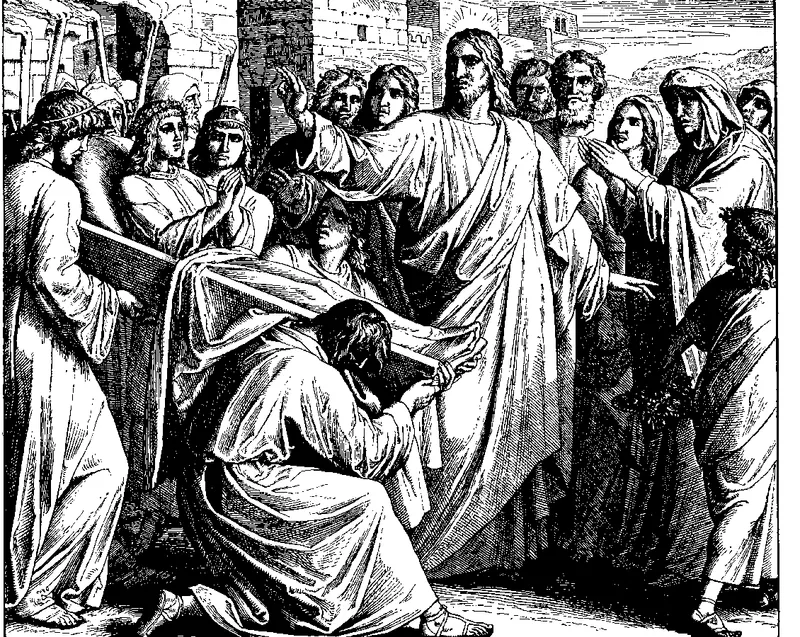
11And it came to pass the day after, that he went into a city called Nain; and many of his disciples went with him, and much people. 12Now when he came nigh to the gate of the city, behold, there was a dead man carried out, the only son of his mother, and she was a widow: and much people of the city was with her. 13And when the Lord saw her, he had compassion on her, and said unto her, Weep not. 14And he came and touched the bier: and they that bare him stood still. And he said, Young man, I say unto thee, Arise. 15And he that was dead sat up, and began to speak. And he delivered him to his mother. 16And there came a fear on all: and they glorified God, saying, That a great prophet is risen up among us; and, That God hath visited his people. 17And this rumour of him went forth throughout all Judaea, and throughout all the region round about.
Two crowds meet at the gate of Nain, and they could not be more opposite. One follows Jesus - many of his disciples… and much people (v. 11), a procession of life and hope moving toward the town. The other is a funeral coming out: a dead man carried out, the only son of his mother, and she was a widow (v. 12). Luke piles the griefs one on another. The dead is not just anyone but an only son; the bereaved is not just any mother but a widow. In that world the loss is total.
She had already buried her husband; now her one son, her sole support and her last living tie to a future, is being carried to the grave. Beyond the tears there is destitution waiting - a widow without a son had no one to provide for her, no standing, no security. Into this collision of life's procession and death's, the Lord steps. And it is worth noticing that no one asks Him to. The centurion sent and pleaded; here there is no request at all.
What happens next begins entirely with Jesus.
Luke names what moves Him, and it is the hinge of the whole scene: when the Lord saw her, he had compassion on her, and said unto her, Weep not (v. 13). Notice that His eye goes first not to the dead son but to the living mother - he saw her. The miracle that follows is, at its root, mercy for a weeping woman. This is also the first time in this Gospel Luke calls Jesus simply the Lord in the narrative, and he places the title exactly where it shows the Lord's heart bending toward grief.
Weep not is the kind of word that would be cruel from anyone unable to change the cause of the weeping - but He is about to remove the cause. He does not lecture her on the resurrection or call for faith as a precondition; He is simply moved, and He acts. Here is the disposition the whole chapter keeps uncovering: a Lord whose first response to human sorrow is not detachment but a mercy felt so deeply that it must do something about it.
Then He does what the law would call unthinkable: he came and touched the bier (v. 14). To touch the dead, or what bore the dead, was to take their uncleanness onto oneself. But where contact with death defiles everyone else, here the current runs the other way - life flows out of Him and into the corpse. The bearers stood still, the procession freezes, and into that silence He speaks to a dead man as though he could hear: Young man, I say unto thee, Arise. The word I carries the authority the centurion had recognized; He commands death as plainly as the officer commanded his men.
And he that was dead sat up, and began to speak (v. 15). The detail is exquisite - the proof of true life is the living voice. And the closing line is pure tenderness: he delivered him to his mother. The whole miracle had her in view from the start; it ends by placing her son back in her arms. And there came a fear on all… saying, That a great prophet is risen up among us; and, That God hath visited his people (v. 16).
Luke 7:18-35Tell John What Things Ye Have Seen
18And the disciples of John shewed him of all these things. 19And John calling unto him two of his disciples sent them to Jesus, saying, Art thou he that should come? or look we for another? 20When the men were come unto him, they said, John Baptist hath sent us unto thee, saying, Art thou he that should come? or look we for another? 21And in that same hour he cured many of their infirmities and plagues, and of evil spirits; and unto many that were blind he gave sight. 22Then Jesus answering said unto them, Go your way, and tell John what things ye have seen and heard; how that the blind see, the lame walk, the lepers are cleansed, the deaf hear, the dead are raised, to the poor the gospel is preached. 23And blessed is he, whosoever shall not be offended in me. 24And when the messengers of John were departed, he began to speak unto the people concerning John, What went ye out into the wilderness for to see? A reed shaken with the wind? 25But what went ye out for to see? A man clothed in soft raiment? Behold, they which are gorgeously apparelled, and live delicately, are in kings’ courts. 26But what went ye out for to see? A prophet? Yea, I say unto you, and much more than a prophet. 27This is he, of whom it is written, Behold, I send my messenger before thy face, which shall prepare thy way before thee. 28For I say unto you, Among those that are born of women there is not a greater prophet than John the Baptist: but he that is least in the kingdom of God is greater than he. 29And all the people that heard him, and the publicans, justified God, being baptized with the baptism of John. 30But the Pharisees and lawyers rejected the counsel of God against themselves, being not baptized of him. 31And the Lord said, Whereunto then shall I liken the men of this generation? and to what are they like? 32They are like unto children sitting in the marketplace, and calling one to another, and saying, We have piped unto you, and ye have not danced; we have mourned to you, and ye have not wept. 33For John the Baptist came neither eating bread nor drinking wine; and ye say, He hath a devil. 34The Son of man is come eating and drinking; and ye say, Behold a gluttonous man, and a winebibber, a friend of publicans and sinners! 35But wisdom is justified of all her children.
The man who had pointed to Jesus and cried Behold the Lamb of God now sends from prison a question that sounds like doubt: Art thou he that should come? or look we for another? (v. 19). It is worth handling gently. John is in Herod's dungeon, and the deliverance he had announced - the axe at the root, the fire, the winnowing - does not seem to be arriving the way he expected. The reports reaching him are of healings and forgiveness, not of judgment falling.
So the forerunner asks for confirmation. The honesty of it is instructive: John does not nurse his uncertainty in silence; he brings it straight to Jesus. Faith under strain is not always serene, and Scripture does not hide that even the greatest of the prophets sent, from a hard place, to ask again. This is the question of a real man in a real prison wanting to be told, once more, that he had not been wrong.
Jesus does not answer with a bare yes. First, Luke tells us, in that same hour he cured many… and unto many that were blind he gave sight (v. 21) - He lets John's messengers watch the works happen in front of them. Then He sends them back with a description that is really a quotation: Go your way, and tell John what things ye have seen and heard; how that the blind see, the lame walk, the lepers are cleansed, the deaf hear, the dead are raised, to the poor the gospel is preached (v. 22).
Every clause is lifted from Isaiah's portrait of the day God Himself comes to save (Isa. 35:5-6; 61:1). Jesus is telling John, in the prophet's own words, look at the works - this is the very thing Isaiah said would happen when the Lord arrived. But notice what He leaves out of Isaiah's lines: the day of vengeance. Perhaps that is why He adds, blessed is he, whosoever shall not be offended in me (v. 23) - a gentle word to a man whose only stumbling-block was that Jesus was not doing the part John expected yet.
The Messiah comes first to heal and to preach good news to the poor; the rest will come in its time.
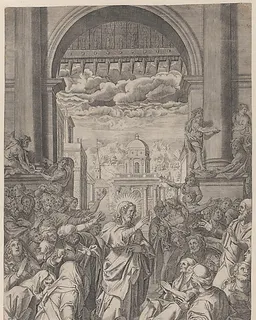
The moment John's messengers leave, Jesus turns to the crowd and defends the man who had just questioned Him - lest anyone think the question had lowered John in His eyes. What went ye out into the wilderness for to see? A reed shaken with the wind? (v. 24). The images mount: not a reed swaying with every breeze, not a courtier in soft raiment lounging in kings' courts (v. 25). John was the opposite of all that - unbending, plain, untamed.
A prophet? Yea… and much more than a prophet (v. 26). Then Jesus gives the reason: John is the one Malachi foretold, Behold, I send my messenger before thy face, which shall prepare thy way before thee (v. 27). What makes John more than a prophet is not that he predicted the Messiah from afar but that he stood at the threshold and announced Him as present. Among those that are born of women there is not a greater prophet than John the Baptist (v. 28) - the highest tribute Jesus pays any human being.
And yet, He adds, he that is least in the kingdom of God is greater than he; so glorious is the kingdom now breaking in that its least member stands on the far side of a threshold John only pointed to.1
Luke then steps back and shows two responses to the whole work of God in John and Jesus. The common people and even the publicans - the despised tax-gatherers - had received John's baptism and so justified God (v. 29); they owned that God was right. But the religious leaders rejected the counsel of God against themselves, being not baptized of him (v. 30) - a sobering line, that one can refuse God's purpose and harm no one so much as oneself.
Jesus exposes the perversity of that rejection with a parable of sulking children: We have piped unto you, and ye have not danced; we have mourned to you, and ye have not wept (v. 32). Nothing satisfies them. John came austere, fasting, and they said he hath a devil; the Son of man came feasting and welcoming sinners, and they sneered, a gluttonous man, and a winebibber (vv. 33-34). The complaint was never really about John's diet or Jesus' table; it was a heart unwilling to be moved by either.
But wisdom is justified of all her children (v. 35): the wisdom of God's ways is proved right by those who actually receive it and bear its fruit, however the critics carp.
Luke 7:36-50Thy Faith Hath Saved Thee; Go in Peace
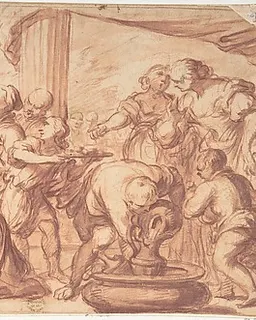
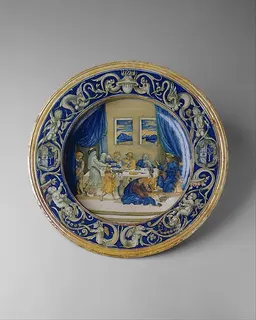
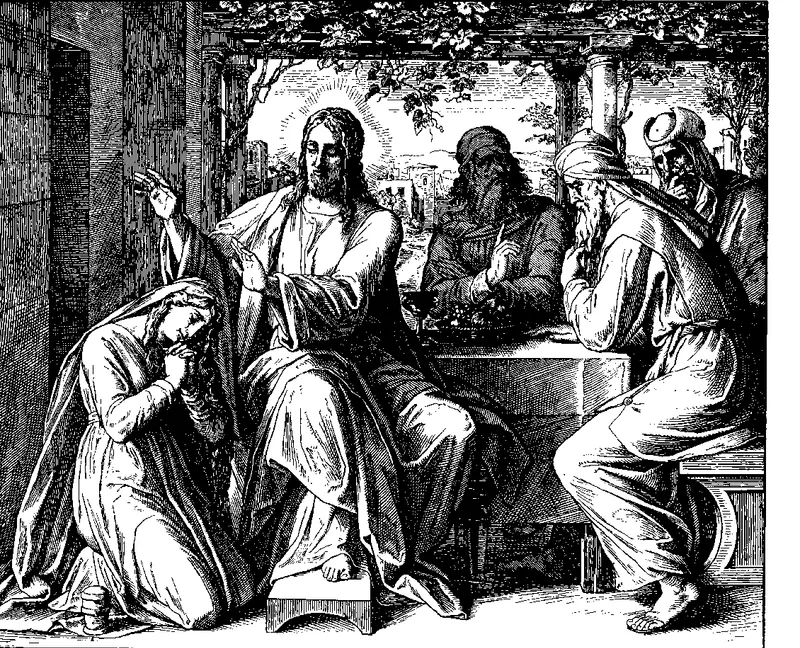
36And one of the Pharisees desired him that he would eat with him. And he went into the Pharisee’s house, and sat down to meat. 37And, behold, a woman in the city, which was a sinner, when she knew that Jesus sat at meat in the Pharisee’s house, brought an alabaster box of ointment, 38And stood at his feet behind him weeping, and began to wash his feet with tears, and did wipe them with the hairs of her head, and kissed his feet, and anointed them with the ointment. 39Now when the Pharisee which had bidden him saw it, he spake within himself, saying, This man, if he were a prophet, would have known who and what manner of woman this is that toucheth him: for she is a sinner. 40And Jesus answering said unto him, Simon, I have somewhat to say unto thee. And he saith, Master, say on. 41There was a certain creditor which had two debtors: the one owed five hundred pence, and the other fifty. 42And when they had nothing to pay, he frankly forgave them both. Tell me therefore, which of them will love him most? 43Simon answered and said, I suppose that he, to whom he forgave most. And he said unto him, Thou hast rightly judged. 44And he turned to the woman, and said unto Simon, Seest thou this woman? I entered into thine house, thou gavest me no water for my feet: but she hath washed my feet with tears, and wiped them with the hairs of her head. 45Thou gavest me no kiss: but this woman since the time I came in hath not ceased to kiss my feet. 46My head with oil thou didst not anoint: but this woman hath anointed my feet with ointment. 47Wherefore I say unto thee, Her sins, which are many, are forgiven; for she loved much: but to whom little is forgiven, the same loveth little. 48And he said unto her, Thy sins are forgiven. 49And they that sat at meat with him began to say within themselves, Who is this that forgiveth sins also? 50And he said to the woman, Thy faith hath saved thee; go in peace.
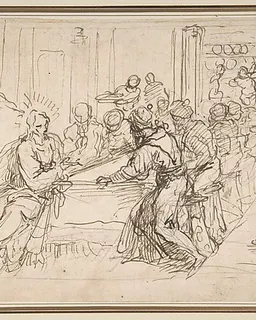
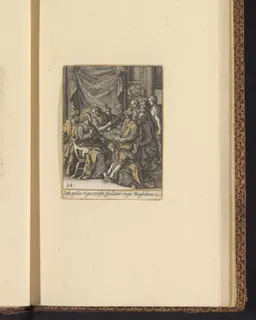
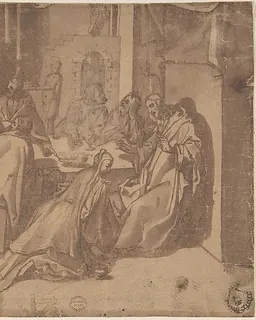
The scene shifts to a meal in a Pharisee's house, and an uninvited guest interrupts it. A woman in the city, which was a sinner (v. 37) - her reputation is the first thing Luke gives us, the thing everyone in the room already knew - learns that Jesus is reclining at table there, and she comes in with an alabaster box of ointment. What she does is overwhelming and wordless: she stands at His feet weeping, wets His feet with her tears, wipes them with the hairs of her head, kisses them, and anoints them with the ointment (v. 38).
Every gesture costs her something. To loose her hair in public was itself a shame; to weep openly, to kiss the feet of a guest, to pour out costly perfume - this is a person past caring how it looks, emptied of self-protection. She does not explain herself or ask for anything. The tears, the hair, the kisses, the ointment say it all. And the very lavishness of it is the clue to what has already happened to her, which Jesus is about to make plain.
Simon says nothing aloud, but Luke lets us hear his thoughts: This man, if he were a prophet, would have known who and what manner of woman this is that toucheth him: for she is a sinner (v. 39). The irony is thick. Simon doubts Jesus is a prophet because He lets a sinner touch Him - and Jesus proves He is more than a prophet by reading the thought Simon never spoke and answering it directly: Simon, I have somewhat to say unto thee (v. 40).
Underneath Simon's reasoning lies a whole theory of holiness: that a holy man keeps his distance from sinners, that contact contaminates, that the woman's touch is a defilement. It is the same instinct that recoiled at the bier and the leper. But Jesus has been overturning it all through the chapter. His holiness is not the kind that must be quarantined from sin; it is the kind that draws sinners in and makes them clean.
Simon's cold correctness has no room for what is happening at Jesus' feet - and that, not the woman, is the real problem in the room.
Jesus answers with a small, clear parable. There was a certain creditor which had two debtors: the one owed five hundred pence, and the other fifty. And when they had nothing to pay, he frankly forgave them both (vv. 41-42). The word frankly means freely, as a gift - neither debtor could pay anything, and both debts were simply cancelled. Then the question: which of them will love him most? Simon, perhaps sensing the trap closing, answers cautiously and rightly: I suppose that he, to whom he forgave most. The logic is plain and it is the key to the whole episode.
Both debtors are forgiven; the one forgiven the larger debt loves the more. Love, in the parable, is the response to being forgiven - it comes after the cancellation, never before it, and it is proportioned to the size of the debt released. Notice what the parable does not say: it does not say either debtor earned the cancellation by loving the creditor first. The forgiveness is free, and the love flows out of it. Keep that order; everything Jesus says next depends on reading it the right way round.1
Now Jesus turns to the woman and reads the room back to Simon line by line. Seest thou this woman? - for Simon had seen only a sinner. The host had skipped every ordinary courtesy: no water for the feet, no kiss of welcome, no oil for the head (vv. 44-46). The woman, uninvited, had supplied all three lavishly - tears for water, unceasing kisses, costly ointment. Then the famous verdict: Her sins, which are many, are forgiven; for she loved much: but to whom little is forgiven, the same loveth little (v. 47).
Read in the light of the parable just told, the little word for does not mean her love bought her forgiveness - that would reverse the very order the two debtors illustrate, where the cancellation comes first and the love after. It means her great love is the evidence that great forgiveness has already reached her, as smoke shows there has been fire. The flood of her devotion proves she has been forgiven much; Simon's cool reserve betrays a man who senses little debt and therefore feels little love.
Her tears are not the price of pardon. They are what pardon, once received, pours out.
Research trail
Sources & further study
These references support the historical, linguistic, manuscript, and contextual notes in this chapter. Scripture remains the primary text; external sources are provided so readers can inspect the research directly.
- Luke 7 - Translators' NotesThe NET Bible's detailed footnotes on Luke 7 - the standing of a centurion and the force of the elders' plea (vv. 2-5), the funeral customs behind the scene at Nain (vv. 11-14), the meaning of the two debtors' sums (v. 41), and the much-discussed clause “for she loved much” in verse 47.
- Luke 7 · Greek interlinear + lexiconThe Greek text of Luke 7 word by word, with parsing and lexicon links - useful for esplanchnisthē (v. 13, “had compassion,” from splagchnizomai, mercy felt in the gut), for sesōken (v. 50, “hath saved,” from sōzō, to make whole and to deliver), and for the verbs of forgiveness in verses 47-48.
- Luke 7 ↔ Isaiah 35 & 61 · Malachi 3 · 1 Kings 17Traces the threads tying Luke 7 to the rest of Scripture - Jesus' answer to John (v. 22) drawn from Isaiah's portrait of the day God comes to save (Isa. 35:5-6; 61:1); the messenger of verse 27 from Malachi 3:1; and the raising at Nain (vv. 11-15) read beside Elijah and the widow's son at Zarephath (1 Kings 17:17-24).
Where this echoes in Scripture
I Have Not Found So Great Faith
- Matthew 8:11-12many shall come from the east and west, and shall sit down with Abraham, and Isaac, and Jacob, in the kingdom of heaven.The horizon opened by the centurion's faith (v. 9) - a kingdom drawing in the nations.
- Acts 10:34-35God is no respecter of persons: but in every nation he that feareth him, and worketh righteousness, is accepted with him.The lesson of verse 9 preached at another centurion's house - faith honored in every nation.
- Psalm 107:20He sent his word, and healed them, and delivered them from their destructions.The centurion's confidence in verse 7 - the LORD heals by His word.
- Romans 10:17So then faith cometh by hearing, and hearing by the word of God.The faith Jesus calls great (v. 9) is faith that rests on the word, as the centurion's did.
- Isaiah 57:15I dwell in the high and holy place, with him also that is of a contrite and humble spirit.Why the man who said “I am not worthy” (v. 6) is the one God draws near to.
Young Man, I Say Unto Thee, Arise
- 1 Kings 17:22-24the soul of the child came into him again, and he revived... Now by this I know that thou art a man of God.Elijah raising a widow's only son - the scene behind the crowd's cry in verse 16, yet Elijah prayed where Jesus commands.
- Luke 1:68, 78Blessed be the Lord God of Israel; for he hath visited and redeemed his people... the dayspring from on high hath visited us.The very word the crowd uses in verse 16 - God's promised visitation, sung at Jesus' birth.
- John 11:25I am the resurrection, and the life: he that believeth in me, though he were dead, yet shall he live.The authority spoken at Nain (v. 14) named in full - the Lord who is Himself the life.
- Psalm 146:9The LORD preserveth the strangers; he relieveth the fatherless and widow.The widow's God (vv. 12-13) doing exactly what the psalm promised - relieving the widow.
- John 5:28-29all that are in the graves shall hear his voice, And shall come forth.The voice that raised the young man (v. 14) is the voice the dead will all one day hear.
Tell John What Things Ye Have Seen
- Isaiah 35:5-6Then the eyes of the blind shall be opened... then shall the lame man leap as an hart, and the tongue of the dumb sing.The exact works Jesus lists in verse 22 - Isaiah's sign that God has come to save.
- Isaiah 61:1he hath sent me to bind up the brokenhearted... to preach good tidings unto the meek.The last clause of verse 22 - good news to the poor, the Anointed's appointed work.
- Malachi 3:1Behold, I will send my messenger, and he shall prepare the way before me.The prophecy Jesus applies to John in verse 27 - the messenger who goes before the Lord.
- John 10:25the works that I do in my Father's name, they bear witness of me.The principle behind Jesus' answer to John (v. 22) - the works themselves testify who He is.
- Luke 1:17he shall go before him in the spirit and power of Elias... to make ready a people prepared for the Lord.John's calling, foretold before his birth - the greatness Jesus affirms in verses 27-28.
Thy Faith Hath Saved Thee; Go in Peace
- 1 John 4:19We love him, because he first loved us.The order the parable teaches (vv. 41-42) - love is the response to grace, never its price.
- Romans 5:8God commendeth his love toward us, in that, while we were yet sinners, Christ died for us.Why the woman's debt could be “frankly forgiven” (v. 42) - grace reaching sinners before they love.
- Luke 5:20-21Man, thy sins are forgiven thee... Who is this which speaketh blasphemies? Who can forgive sins, but God alone?The same astonishment as verse 49 - the question of who Jesus must be to forgive sins.
- Psalm 32:1Blessed is he whose transgression is forgiven, whose sin is covered.The blessing the woman receives in verses 47-48 - the joy of sin forgiven.
- Luke 8:48Daughter, be of good comfort: thy faith hath made thee whole; go in peace.The very words of verse 50 spoken again - faith that lays hold of Christ and is made whole.