Luke 8
People in this chapter
Luke 8 opens by naming the company that travelled with Jesus as He went throughout every city and village, preaching and shewing the glad tidings of the kingdom of God (v. 1). The twelve were with Him - and so were certain women, which had been healed of evil spirits and infirmities: Mary called Magdalene, out of whom went seven devils, and Joanna the wife of Chuza Herod's steward, and Susanna, and many others, which ministered unto him of their substance (vv. 2-3).
It is a quiet, easily-missed detail with a great deal in it: women whose lives Jesus had restored now sustained His ministry out of their own means, and Luke remembers their names. From this travelling band Jesus turns to a great crowd and tells the parable of the sower - a man scatters seed on four kinds of ground, and only the good ground bears. Then, in private, He gives the key: The seed is the word of God (v. 11), and the four soils are four kinds of hearer.1
Tap any highlighted phrase to jump to the commentary that unpacks it.
Luke 8:1-15A Sower Went Out to Sow
1And it came to pass afterward, that he went throughout every city and village, preaching and shewing the glad tidings of the kingdom of God: and the twelve were with him, 2And certain women, which had been healed of evil spirits and infirmities, Mary called Magdalene, out of whom went seven devils, 3And Joanna the wife of Chuza Herod’s steward, and Susanna, and many others, which ministered unto him of their substance. 4And when much people were gathered together, and were come to him out of every city, he spake by a parable: 5A sower went out to sow his seed: and as he sowed, some fell by the way side; and it was trodden down, and the fowls of the air devoured it. 6And some fell upon a rock; and as soon as it was sprung up, it withered away, because it lacked moisture. 7And some fell among thorns; and the thorns sprang up with it, and choked it. 8And other fell on good ground, and sprang up, and bare fruit an hundredfold. And when he had said these things, he cried, He that hath ears to hear, let him hear.
Before the parables begin, Luke pauses on the company that travelled with Jesus, and it is worth slowing down for. The twelve were with Him - but so were certain women, which had been healed of evil spirits and infirmities (v. 2): Mary called Magdalene, out of whom went seven devils, and Joanna the wife of Chuza Herod's steward, and Susanna, and many others, which ministered unto him of their substance (vv. 2-3). Three things stand out.
First, Luke remembers their names - Mary, Joanna, Susanna - the way he records the names of the apostles; these were not anonymous helpers but known disciples. Second, their service grew directly out of their rescue: women whose lives Jesus had restored from torment and sickness now poured those restored lives back into His mission. And third, they ministered unto him of their substance - they sustained the work of Jesus out of their own resources, their own money and means.
The kingdom Jesus preached was carried, in part, on the quiet generosity of people who had been healed and could not do otherwise. It is the first picture of fruitfulness in the chapter, set down before the parable that will explain it: grace received, becoming grace given.1
Then, before a great crowd gathered out of every city, Jesus tells the parable of the sower (vv. 4-8). The picture is drawn from the everyday world His hearers knew: a farmer walking a field, flinging seed by hand across ground not yet plowed, so the seed fell wherever it fell. Some landed on the way side, the hard path beaten through the field, and was trodden down and eaten by birds. Some fell upon a rock - thin soil over hidden stone - sprang up fast, and withered away, because it lacked moisture. Some fell among thorns that grew up with it and choked it.
And some fell on good ground and bore fruit an hundredfold. Three of the four places end in loss; only the fourth bears, and it bears extravagantly. The parable does not explain itself out loud. It ends with a riddle hung in the air: He that hath ears to hear, let him hear (v. 8). The plain farming scene, the doubled call to attention, the deliberate withholding of the meaning - all of it tells the crowd that this is about far more than farming, and that the hearing it asks for is the very thing it is about.
9And his disciples asked him, saying, What might this parable be? 10And he said, Unto you it is given to know the mysteries of the kingdom of God: but to others in parables; that seeing they might not see, and hearing they might not understand. 11Now the parable is this: The seed is the word of God. 12Those by the way side are they that hear; then cometh the devil, and taketh away the word out of their hearts, lest they should believe and be saved. 13They on the rock are they, which, when they hear, receive the word with joy; and these have no root, which for a while believe, and in time of temptation fall away. 14And that which fell among thorns are they, which, when they have heard, go forth, and are choked with cares and riches and pleasures of this life, and bring no fruit to perfection. 15But that on the good ground are they, which in an honest and good heart, having heard the word, keep it, and bring forth fruit with patience.
When the disciples ask the parable's meaning, Jesus first speaks a hard word about why He teaches in parables at all: Unto you it is given to know the mysteries of the kingdom of God: but to others in parables; that seeing they might not see, and hearing they might not understand (v. 10). The point is not that God hides truth from people who long for it - the disciples are given the mystery precisely because they came and asked - but that a parable opens to the one who draws near and stays closed to the one who will not.
Then He unlocks it: The seed is the word of God (v. 11), and the four soils are four ways a heart receives that word. The way side is the heart packed hard, where the word never sinks in before the devil takes it away (v. 12). The rock is the heart of quick, shallow joy that has no root, so that in time of temptation it falls away (v. 13). The thorns are the most searching, for nothing here is openly wicked: the word is heard, but cares and riches and pleasures of this life crowd in and choke it until it brings no fruit to perfection (v. 14).
Worry, wealth, and pleasure - ordinary, respectable things - can strangle a life as surely as open rebellion. Most of us recognize ourselves not in the hard path or the rock but in the thorns.
Luke's description of the good ground is fuller than the other Gospels', and every phrase rewards attention: they, which in an honest and good heart, having heard the word, keep it, and bring forth fruit with patience (v. 15). Notice what the good soil actually is. It is not a person born without struggle, nor a heart that has done some great work to deserve the seed. It is an honest and good heart - an open, sincere heart that does not fence the word out - and it does three plain things the other soils fail to do.
It has heard the word: really attended, let it land. It will keep it: hold the word fast, guard it, refuse to let the birds or the thorns take it. And it will bring forth fruit with patience. That last phrase is Luke's alone, and it is a mercy. The fruit does not appear overnight; it comes with patience, over time, through seasons of waiting and even of testing. The good ground is not the soil that produces instantly but the soil that holds the word and keeps holding it until, in God's time, the harvest comes.
The whole parable narrows to a question every listener must answer: not “am I clever enough?” but “will I receive the word with an honest heart, keep it, and let it bear fruit in me, however long that takes?”
Luke 8:16-21Take Heed How Ye Hear
16No man, when he hath lighted a candle, covereth it with a vessel, or putteth it under a bed; but setteth it on a candlestick, that they which enter in may see the light. 17For nothing is secret, that shall not be made manifest; neither any thing hid, that shall not be known and come abroad. 18Take heed therefore how ye hear: for whosoever hath, to him shall be given; and whosoever hath not, from him shall be taken even that which he seemeth to have. 19Then came to him his mother and his brethren, and could not come at him for the press. 20And it was told him by certain which said, Thy mother and thy brethren stand without, desiring to see thee. 21And he answered and said unto them, My mother and my brethren are these which hear the word of God, and do it.
Straight on the heels of the sower comes a short saying about a lamp, and it belongs with what went before: No man, when he hath lighted a candle, covereth it with a vessel, or putteth it under a bed; but setteth it on a candlestick, that they which enter in may see the light (v. 16). It is a small picture with an obvious point - you do not light a lamp in order to smother it; a lamp exists to be set up where it gives light.
And the word just sown is that light. The mystery of the kingdom given to the disciples is not given to be hidden or hoarded but to be set on a stand and to shine. Then Jesus widens it into a promise that is both bracing and comforting: nothing is secret, that shall not be made manifest; neither any thing hid, that shall not be known and come abroad (v. 17). For now the kingdom comes quietly, in parables and small beginnings, easy to overlook.
But its hiddenness is temporary. What God has planted in obscurity He intends to bring fully into the light; the present concealment is the seed underground, not the seed lost. Nothing true will stay hidden forever; everything will finally be seen for what it is.
Then the saying turns on the listener with a command that is the hinge of the whole chapter: Take heed therefore how ye hear (v. 18). Mark records nearly the same scene as take heed what ye hear; Luke sharpens it to how - not only the content you take in, but the manner in which you receive it. How you hear is never neutral. It sets something in motion: whosoever hath, to him shall be given; and whosoever hath not, from him shall be taken even that which he seemeth to have (v. 18).
The saying sounds severe until you see it is simply the law of every living thing. A muscle used grows; a muscle unused wastes. Attention given to the word deepens and is rewarded with more; attention withheld dries up until even the little a person seemeth to have slips away. There is a sober edge in that phrase - that which he seemeth to have - for it is possible to imagine oneself rich in understanding while holding the word at arm's length, and to lose even the appearance of it.
The remedy is not to try harder to feel something; it is to bring a larger, more honest measure to what you hear. The sower has shown that the difference between the soils is reception; this verse turns that into a charge: take heed how you receive.
Luke sets the arrival of Jesus' family right here, and the placement is deliberate. Then came to him his mother and his brethren, and could not come at him for the press (v. 19), and word is passed to Him that they stand outside, desiring to see thee (v. 20). His answer is startling and tender at once: My mother and my brethren are these which hear the word of God, and do it (v. 21).
This is no slight to His mother, who herself was the supreme example of one who heard the word of God and kept it - be it unto me according to thy word - and treasured His words in her heart. Jesus is not pushing His family away; He is opening the family outward. He takes the closest, most binding human bond there is - mother, brother - and says that the truest kinship to Him is formed not only by blood but by hearing the word of God, and doing it. Notice how exactly that phrase matches the good ground of verse 15: the soil that hears the word and keeps it is here named His own family.
And notice the two verbs together - hear and do. It is not enough to listen; the word received must work its way out into a life that does it. To anyone in the crowd with no standing, no lineage, no claim on Him, this is an open door: hear the word and do it, and you are reckoned His own.
Luke 8:22-25Where Is Your Faith?
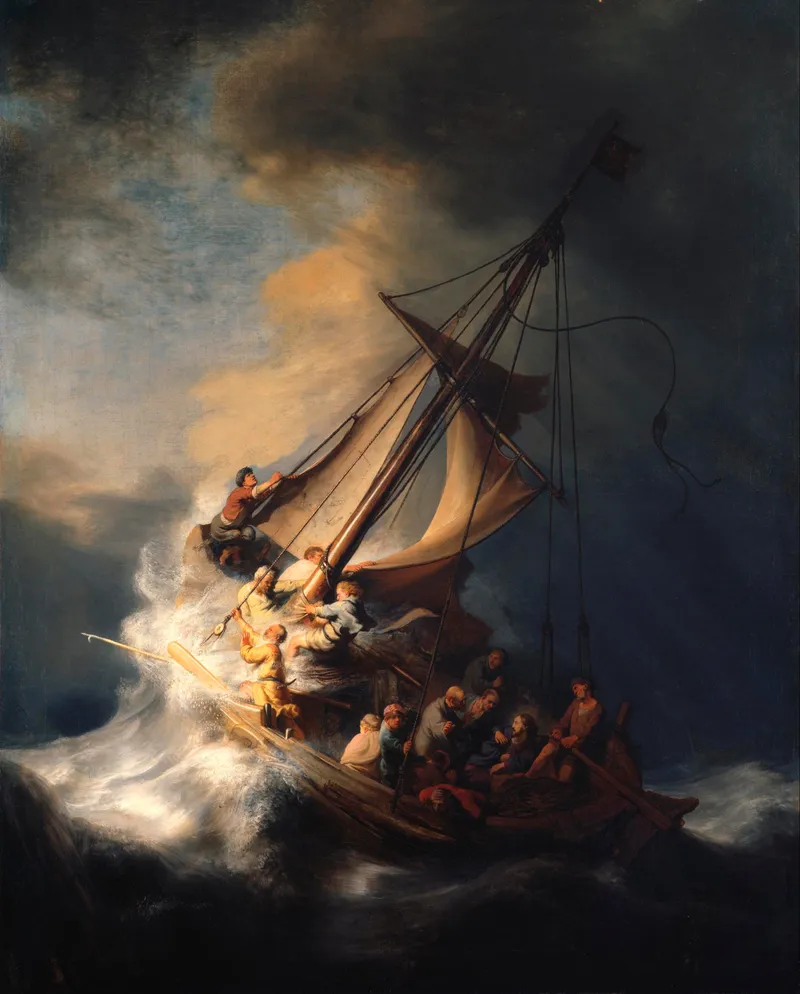
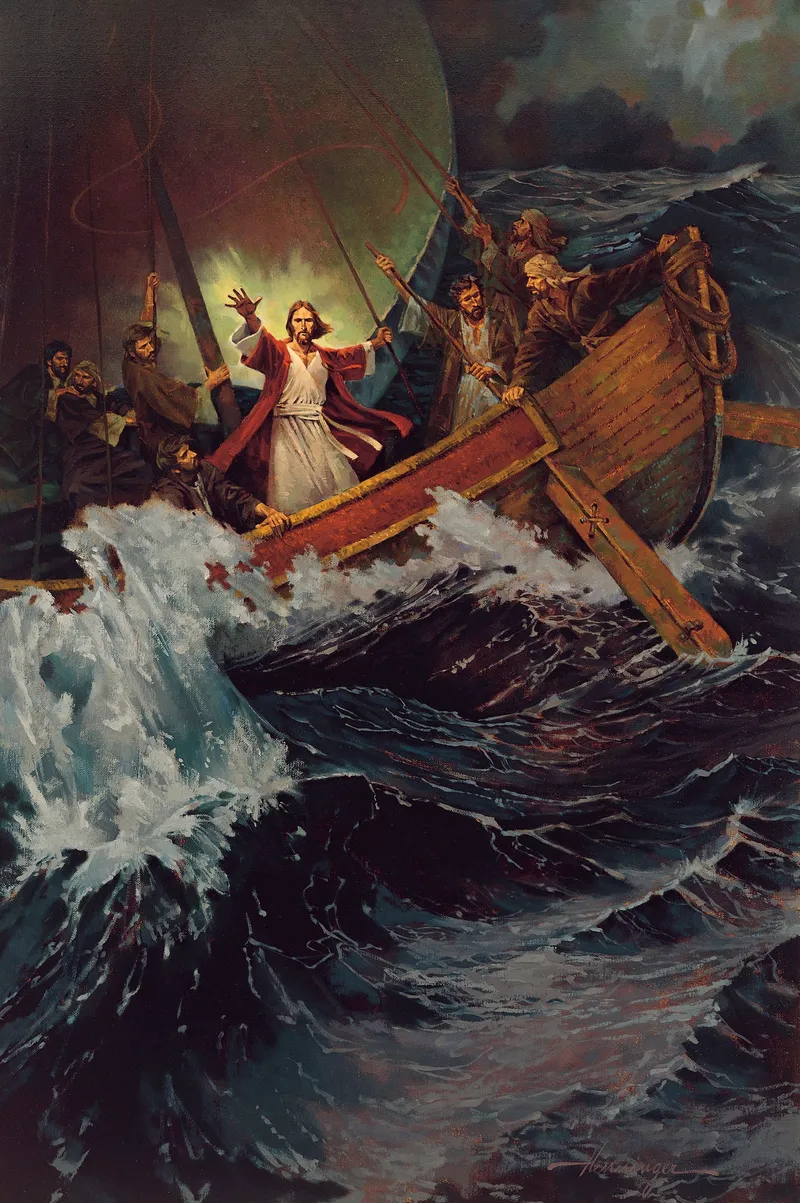
22Now it came to pass on a certain day, that he went into a ship with his disciples: and he said unto them, Let us go over unto the other side of the lake. And they launched forth. 23But as they sailed he fell asleep: and there came down a storm of wind on the lake; and they were filled with water, and were in jeopardy. 24And they came to him, and awoke him, saying, Master, master, we perish. Then he arose, and rebuked the wind and the raging of the water: and they ceased, and there was a calm. 25And he said unto them, Where is your faith? And they being afraid wondered, saying one to another, What manner of man is this! for he commandeth even the winds and water, and they obey him.
The teaching now becomes a test on the water. On a certain day Jesus says, Let us go over unto the other side of the lake (v. 22), and they launch out - and almost at once the day turns dangerous. As they sailed he fell asleep, and there came down a storm of wind on the lake; and they were filled with water, and were in jeopardy (v. 23). Luke does not soften the danger: the boat is taking on water, the men are in jeopardy - in real peril of their lives - and several of these disciples were fishermen who knew this lake and knew when they were in trouble.
And Jesus is asleep. The detail is almost startling: the deep, untroubled rest of a man at perfect peace while the storm rages and the water rises. They wake Him with a cry that is part plea, part panic: Master, master, we perish (v. 24). The doubled Master, master is the sound of terror - the urgency of men who are sure they are about to drown. It is the cry the human heart still makes in deep water, when the trouble is real and rising and the One we hoped would help seems, for all the world, to be asleep.
Jesus does not argue with their panic; He stands and addresses the storm itself. He arose, and rebuked the wind and the raging of the water: and they ceased, and there was a calm (v. 24). Two things are remarkable. First, He speaks to the wind and the water as a master speaks to something under His authority - He rebukes them, the way one rebukes a thing that has overstepped. Second, the result is instant and total: not the gradual easing of a storm spending itself, but a calm the moment He speaks.
Wind does not drop like that, and heaving water does not flatten like that, on their own; the suddenness is the miracle. Then, only after the calm, comes the question that gives the whole chapter its name: Where is your faith? (v. 25). It is not a rebuke for being frightened in a sinking boat; it is a probe into where their trust went when the water rose. They had watched Him teach and heal with authority; the One who could do such things was in the boat with them.
Their terror was not unreasonable about the storm - it was unreasonable about Him. And their response is the right one, even though it comes wrapped in a deeper fear: they being afraid wondered, saying one to another, What manner of man is this! for he commandeth even the winds and water, and they obey him. Their first fear was of the storm; this second fear is the awe that rises when you realize the One in the boat is greater than the sea.2
Luke 8:26-39What Have I to Do with Thee
26And they arrived at the country of the Gadarenes, which is over against Galilee. 27And when he went forth to land, there met him out of the city a certain man, which had devils long time, and ware no clothes, neither abode in any house, but in the tombs. 28When he saw Jesus, he cried out, and fell down before him, and with a loud voice said, What have I to do with thee, Jesus, thou Son of God most high? I beseech thee, torment me not. 29(For he had commanded the unclean spirit to come out of the man. For oftentimes it had caught him: and he was kept bound with chains and in fetters; and he brake the bands, and was driven of the devil into the wilderness.) 30And Jesus asked him, saying, What is thy name? And he said, Legion: because many devils were entered into him. 31And they besought him that he would not command them to go out into the deep. 32And there was there an herd of many swine feeding on the mountain: and they besought him that he would suffer them to enter into them. And he suffered them. 33Then went the devils out of the man, and entered into the swine: and the herd ran violently down a steep place into the lake, and were choked.
They cross to the country of the Gadarenes, which is over against Galilee (v. 26), and Jesus has barely stepped ashore when He is met by a human life in utter ruin. Luke draws the man in the bleakest terms Scripture has: a man who had devils long time, and ware no clothes, neither abode in any house, but in the tombs (v. 27). Every phrase deepens the picture. Long time - this is no recent affliction but a settled, chronic bondage.
Ware no clothes - stripped of the most basic dignity and decency. Neither abode in any house, but in the tombs - cut off from the houses of the living, dwelling in the place of the dead. And his torment was past all human remedy: oftentimes it had caught him: and he was kept bound with chains and in fetters; and he brake the bands (v. 29). The town had tried - they had reached for the strongest thing they had, iron - and the iron failed; he shattered every restraint, and was driven of the devil into the wilderness. This is the case Luke sets before us: the most isolated, most degraded, most hopeless person imaginable, the one everyone had written off.
Whatever this scene will say about the reach of Jesus, it says it about this man first.
And the scene turns on a single startling movement: the man no one could approach runs to Jesus and falls before Him. When he saw Jesus, he cried out, and fell down before him, and with a loud voice said, What have I to do with thee, Jesus, thou Son of God most high? I beseech thee, torment me not (v. 28). The recognition is total and unwilling. The unclean spirits know exactly who Jesus is - Son of God most high - long before the crowds or even the disciples have said as much, and they know themselves utterly outmatched, begging not to be tormented.
Then Jesus asks the name, and the answer reveals the scale of the bondage: Legion: because many devils were entered into him (v. 30). A Roman legion numbered in the thousands; the word names a host of spirits occupying one man - which is why no chain, no village, no human strength had been able to reclaim him. Yet for all their number they are utterly at His disposal. They beg not to be sent into the deep (v. 31), then beg to enter the herd of swine, and Jesus suffers them - and the herd ran violently down a steep place into the lake, and were choked (v. 33).
What the spirits do to the swine is exactly what they had been doing to the man: driving toward destruction. The contrast is the whole point. Set loose, they ruin and drown; restrained by Christ, they could not keep their hold on one tormented soul.3
34When they that fed them saw what was done, they fled, and went and told it in the city and in the country. 35Then they went out to see what was done; and came to Jesus, and found the man, out of whom the devils were departed, sitting at the feet of Jesus, clothed, and in his right mind: and they were afraid. 36They also which saw it told them by what means he that was possessed of the devils was healed. 37Then the whole multitude of the country of the Gadarenes round about besought him to depart from them; for they were taken with great fear: and he went up into the ship, and returned back again. 38Now the man out of whom the devils were departed besought him that he might be with him: but Jesus sent him away, saying, 39Return to thine own house, and shew how great things God hath done unto thee. And he went his way, and published throughout the whole city how great things Jesus had done unto him.
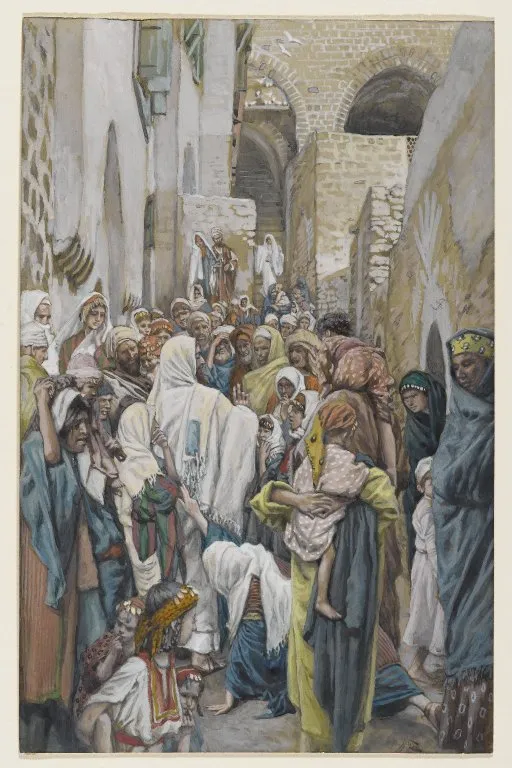
The herdsmen flee and spread the news, and the townspeople come out to see - and what they find is the gospel in a single image: the man, out of whom the devils were departed, sitting at the feet of Jesus, clothed, and in his right mind (v. 35). Set every word beside what came before. He had been driven into the wilderness, restless and wild; now he is sitting, at rest, and at the feet of Jesus - the posture of a disciple.
He had worn no clothes, beyond shame; now he is clothed. He had cried out with a loud voice, his mind a battlefield of a thousand voices; now he is in his right mind - calm, coherent, himself again. This is what the deliverance of Christ looks like when it is finished: not merely the silencing of symptoms, but a whole person handed back to himself and seated at the feet of his Deliverer. And then one of the strangest reactions in the Gospels: they were afraid, and the whole multitude… besought him to depart from them (vv. 35, 37).
They had watched a man no one could save restored before their eyes - and they asked the Savior to leave. Luke lets the reason stand: they had also heard the cost of the miracle, the drowned swine, and faced with a power that healed a man but disrupted their settled arrangements, they chose the arrangements. People can witness undeniable mercy and still prefer the world they can manage to the Lord they cannot control. And Jesus, sobering to see, grants the request - He does not force Himself on a town that asks Him to go.
But the scene does not end in rejection. The healed man, watching Jesus prepare to leave, besought him that he might be with him (v. 38) - the most natural longing in the world, to stay near the One who gave him his life back. And here Jesus does something He elsewhere in the Gospels is reluctant to allow: He sends this man to speak. Return to thine own house, and shew how great things God hath done unto thee (v. 39).
The man wanted to follow; Jesus gives him a harder and higher calling - to go back to the very people who knew him at his worst, and to be a living witness among them. And he does exactly that: he went his way, and published throughout the whole city how great things Jesus had done unto him. Notice the quiet exchange in those two verses. Jesus says, shew how great things God hath done unto thee; the man goes and publishes what Jesus had done for him - the two are, to Luke, the same telling.
The first preacher in that Gentile region is a man who, hours before, could not string two sane words together. His whole message is his own story: how great things God hath done unto thee. Mercy received becomes mercy proclaimed.
Luke 8:40-56Thy Faith Hath Made Thee Whole
40And it came to pass, that, when Jesus was returned, the people gladly received him: for they were all waiting for him. 41And, behold, there came a man named Jairus, and he was a ruler of the synagogue: and he fell down at Jesus’ feet, and besought him that he would come into his house: 42For he had one only daughter, about twelve years of age, and she lay a dying. But as he went the people thronged him. 43And a woman having an issue of blood twelve years, which had spent all her living upon physicians, neither could be healed of any, 44Came behind him, and touched the border of his garment: and immediately her issue of blood stanched. 45And Jesus said, Who touched me? When all denied, Peter and they that were with him said, Master, the multitude throng thee and press thee, and sayest thou, Who touched me? 46And Jesus said, Somebody hath touched me: for I perceive that virtue is gone out of me. 47And when the woman saw that she was not hid, she came trembling, and falling down before him, she declared unto him before all the people for what cause she had touched him, and how she was healed immediately. 48And he said unto her, Daughter, be of good comfort: thy faith hath made thee whole; go in peace.
Back across the lake, where the people gladly received him (v. 40), two desperate people come to Jesus, and Luke folds one story inside the other. First a man of standing: there came a man named Jairus, and he was a ruler of the synagogue: and he fell down at Jesus' feet (v. 41). Luke wants us to feel the weight of that. A ruler of the synagogue was a respected official, the kind of man others fell before, not the kind who fell in the dirt before a wandering teacher.
Yet here he is on the ground, because his world has narrowed to one terrible fact: he had one only daughter, about twelve years of age, and she lay a dying (v. 42). Grief has stripped away his rank. And as Jesus goes with him, the crowd thronged him, and into that crush slips the second story - a woman whose history Luke tells in a single breathless line: having an issue of blood twelve years, which had spent all her living upon physicians, neither could be healed of any (v. 43).
Twelve years - the very span of the little girl's whole life - of an affliction that under the law left her ritually unclean, which meant twelve years cut off from worship, from the touch of others, from the ordinary closeness of community life. She has spent everything chasing a cure and is no better. So she comes the only way a woman in her condition could come - hidden, from behind, in the anonymity of the crowd.
She came behind him, and touched the border of his garment: and immediately her issue of blood stanched (v. 44). It is faith stripped to its barest essential - not a worked-out theology, not a public confession, just a desperate certainty that contact with this man, even the hem of His robe, will be enough. Twelve years undone in an instant, the moment faith touched Him. But Jesus will not let the healing stay a secret transaction.
Who touched me? He asks (v. 45). The disciples think the question absurd - the whole crowd is pressing against Him - but Jesus knows the difference between the jostle of a crowd and the touch of faith: Somebody hath touched me: for I perceive that virtue is gone out of me (v. 46). Many were thronging Him; one had touched Him, and He felt it. So the woman, who had wanted nothing more than to slip away unseen, comes: trembling, and falling down before him, she declared unto him before all the people… how she was healed immediately (v. 47).
She had come to take healing in secret; she ends up giving the whole story face to face. And Jesus gives her something better than an anonymous cure. He gives her His eyes, His word, and a name: Daughter, be of good comfort: thy faith hath made thee whole; go in peace (v. 48). The woman cut off for twelve years, who came expecting at best to escape unnoticed, is not merely healed but claimed - called Daughter, brought into a family.1
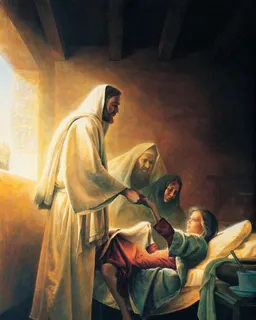
49While he yet spake, there cometh one from the ruler of the synagogue’s house, saying to him, Thy daughter is dead; trouble not the Master. 50But when Jesus heard it, he answered him, saying, Fear not: believe only, and she shall be made whole. 51And when he came into the house, he suffered no man to go in, save Peter, and James, and John, and the father and the mother of the maiden. 52And all wept, and bewailed her: but he said, Weep not; she is not dead, but sleepeth. 53And they laughed him to scorn, knowing that she was dead. 54And he put them all out, and took her by the hand, and called, saying, Maid, arise. 55And her spirit came again, and she arose straightway: and he commanded to give her meat. 56And her parents were astonished: but he charged them that they should tell no man what was done.
The delay over the woman has cost Jairus what feels like everything. While he yet spake, there cometh one from the ruler of the synagogue's house, saying to him, Thy daughter is dead; trouble not the Master (v. 49). The message is final and hopeless: the girl is gone; healing was one thing while she lived, but death has ended it; do not bother the teacher now. We can only imagine what those words did to a father who had just watched Jesus stop for someone else while his daughter slipped away.
And before the grief can settle into despair, Jesus speaks across the messenger's word: Fear not: believe only, and she shall be made whole (v. 50). It is the steadying center of the whole chapter, and it gathers up everything that has gone before. The crowd says dead; Jesus says believe. He does not deny the news or minimize the grief; He calls Jairus to keep trusting past the point where trust seems pointless - to believe not less now that the worst has come, but still, and only. The same faith the woman showed reaching for His hem, the same faith Jesus had looked for in the storm - Where is your faith? - He now asks of a father standing at the edge of a grave.
Believe only. Faith here is not a feeling of certainty Jairus must manufacture; it is simply continuing to trust the One who has never yet met a limit He could not cross.
At the house Jesus takes only the inner circle and the parents into the room (v. 51), where the mourning is already in full voice: all wept, and bewailed her. Into that grief He says a thing that sounds, to every ear present, like denial or madness: Weep not; she is not dead, but sleepeth (v. 52). And they laughed him to scorn, knowing that she was dead (v. 53). The mockery is itself a witness - these people knew death when they saw it; the child was truly dead, and they laughed at the suggestion otherwise.
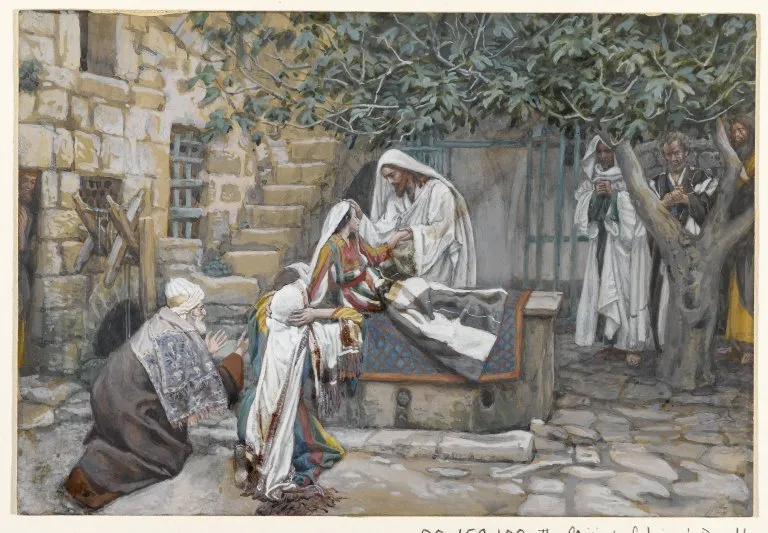
But Jesus is not saying the girl never died. He is renaming death from the far side of it. For the One about to raise her, death is no more permanent than sleep; it is a state from which she can be woken. He put them all out, the scoffers with their settled certainty, and took her by the hand, and called, saying, Maid, arise (v. 54). First the hand: He takes hold of a dead child, the ultimate uncleanness under the law, and instead of defilement passing to Him, life passes to her.
Then the gentle word - Maid, arise - the kind of plain, homely call a parent might use to wake a child in the morning, exactly fitting His naming of death as sleep. And her spirit came again, and she arose straightway (v. 55). She does not merely stir; she rises at once, fully alive. And then a final touch that is pure Jesus: he commanded to give her meat. The same authority that conquered death now thinks of a child's hunger.
The Lord who raises the dead also remembers that a twelve-year-old needs her supper.
Research trail
Sources & further study
These references support the historical, linguistic, manuscript, and contextual notes in this chapter. Scripture remains the primary text; external sources are provided so readers can inspect the research directly.
- Luke 8 - Translators' NotesThe NET Bible's detailed footnotes on Luke 8 - the women who supported the ministry of their own means (vv. 2-3), the four soils of the parable (vv. 5-15), the rebuke addressed to the wind and water in verse 24, and the place names and textual questions around the country of the Gadarenes in verse 26.
- Luke 8 ↔ Mark 4 & 5 · Matthew 8, 9 & 13 · Psalm 107Traces the threads tying Luke 8 to the rest of Scripture - the same four scenes in Mark 4-5 and Matthew 8-9, the sower in Matthew 13, and the stilling of the storm (v. 24) read beside He maketh the storm a calm, so that the waves thereof are still (Ps. 107:29).
- Luke 8 · Greek interlinear + lexiconThe Greek text of Luke 8 word by word with parsing and lexicon links - useful for pistis (v. 25, the “faith” Jesus looks for in the storm; v. 48, the faith that made the woman whole), for sōzō (vv. 12, 36, 48, 50, the verb behind “be saved,” “healed,” and “made whole”), and for legeōn (v. 30, the “Legion” that names the many spirits).
Where this echoes in Scripture
A Sower Went Out to Sow
- Matthew 13:18-23But he that received seed into the good ground is he that heareth the word, and understandeth it; which also beareth fruit.Matthew's telling of the same parable (vv. 5-15) - the soils as four kinds of hearer.
- Mark 4:14-20The sower soweth the word... such as hear the word, and receive it, and bring forth fruit.Mark's interpretation of the sower - the seed named as the word, the good ground that bears.
- Isaiah 55:10-11so shall my word be that goeth forth out of my mouth: it shall not return unto me void.The seed of verse 11 - the word of God that does not finally come back empty.
- John 12:24Except a corn of wheat fall into the ground and die, it abideth alone: but if it die, it bringeth forth much fruit.The Sower of verse 11 becomes the seed - buried, and rising to a great harvest.
- James 1:21-22receive with meekness the engrafted word... But be ye doers of the word, and not hearers only.The good ground of verse 15 - the word received and kept and brought to fruit, not merely heard.
Take Heed How Ye Hear
- Mark 4:21-25Take heed what ye hear... For he that hath, to him shall be given.Mark's parallel to verses 16-18 - the lamp set up, and the measure you bring returned to you.
- Mark 3:31-35whosoever shall do the will of God, the same is my brother, and my sister, and mother.The same scene as verses 19-21 - the family of Jesus drawn around doing the will of God.
- John 1:12as many as received him, to them gave he power to become the sons of God, even to them that believe on his name.The welcome behind verse 21 - receiving the Word makes a person a child of God.
- Luke 11:28Yea rather, blessed are they that hear the word of God, and keep it.The blessing of verse 21 - the kinship and the joy belong to those who hear and keep the word.
- James 1:22But be ye doers of the word, and not hearers only, deceiving your own selves.The two verbs of verse 21 - the word is not only to be heard but to be done.
Where Is Your Faith?
- Psalm 107:28-29Then they cry unto the LORD in their trouble... He maketh the storm a calm, so that the waves thereof are still.The act of verse 24 - the stilling of the sea that Scripture ascribes to the LORD alone.
- Job 38:8-11Hitherto shalt thou come, but no further: and here shall thy proud waves be stayed.The voice that sets the sea its bounds - the One the winds and water obey (v. 25).
- Psalm 89:8-9thou rulest the raging of the sea: when the waves thereof arise, thou stillest them.The answer to the disciples' question in verse 25 - who it is that stills the sea.
- Mark 4:37-41Peace, be still. And the wind ceased, and there was a great calm... What manner of man is this?Mark's telling of the same storm (vv. 22-25) - the word to the sea and the awe that follows.
- Isaiah 43:2When thou passest through the waters, I will be with thee; and through the rivers, they shall not overflow thee.The promise behind the swamping boat (vv. 23-24) - the LORD present in the deep water, not absent from it.
What Have I to Do with Thee
- Luke 11:21-22when a stronger than he shall come upon him, and overcome him, he taketh from him all his armour wherein he trusted.The Stronger One who overcomes the strong man and frees his captives, as Jesus frees the man among the tombs.
- Luke 4:18he hath sent me... to preach deliverance to the captives... to set at liberty them that are bruised.The mission Jesus claimed for Himself, enacted on the most bound man in the region (vv. 26-39).
- Mark 5:1-20sitting, and clothed, and in his right mind... Go home to thy friends, and tell them how great things the Lord hath done for thee.Mark's fuller telling of the same scene - the man restored and sent home to testify (vv. 27-39).
- James 2:19thou believest that there is one God; thou doest well: the devils also believe, and tremble.The unwilling recognition of verse 28 - the spirits know exactly who Jesus is, and tremble.
- Psalm 66:16Come and hear, all ye that fear God, and I will declare what he hath done for my soul.The pattern of verse 39 - mercy received becomes mercy proclaimed to all who will hear.
Thy Faith Hath Made Thee Whole
- Mark 5:21-43Daughter, thy faith hath made thee whole... Be not afraid, only believe... Talitha cumi.Mark's fuller telling of both healings (vv. 40-56) - the woman made whole and the child raised.
- Luke 18:42And Jesus said unto him, Receive thy sight: thy faith hath saved thee.The same blessing as verse 48 - faith that lays hold of Christ, and is made whole.
- John 11:25I am the resurrection, and the life: he that believeth in me, though he were dead, yet shall he live.The authority behind Maid, arise (v. 54) - the Lord who is Himself the resurrection.
- John 5:28-29all that are in the graves shall hear his voice, and shall come forth.The raising of one child (v. 55) as a sign of the morning when His voice will wake every grave.
- Leviticus 15:25-27if a woman have an issue of her blood many days... she shall be unclean.The law that left the woman of verse 43 cut off - the twelve-year separation her touch reaches past.