Revelation 1
People in this chapter
The last book of the Bible names itself in its first line: The Revelation of Jesus Christ, which God gave unto him, to shew unto his servants things which must shortly come to pass; and he sent and signified it by his angel unto his servant John (v. 1). The word rendered Revelation means an unveiling - the drawing back of a curtain on what was hidden. And the chain of giving is laid out plainly: the unveiling comes from the Father, is given to the Son, is sent by His angel, and reaches the servant John, who bare record… of all things that he saw (v. 2).
Then, alone among the books of Scripture, it opens by pronouncing a blessing simply on the reading and hearing of it: Blessed is he that readeth, and they that hear the words of this prophecy, and keep those things which are written therein: for the time is at hand (v. 3).1
Tap any highlighted phrase to jump to the commentary that unpacks it.
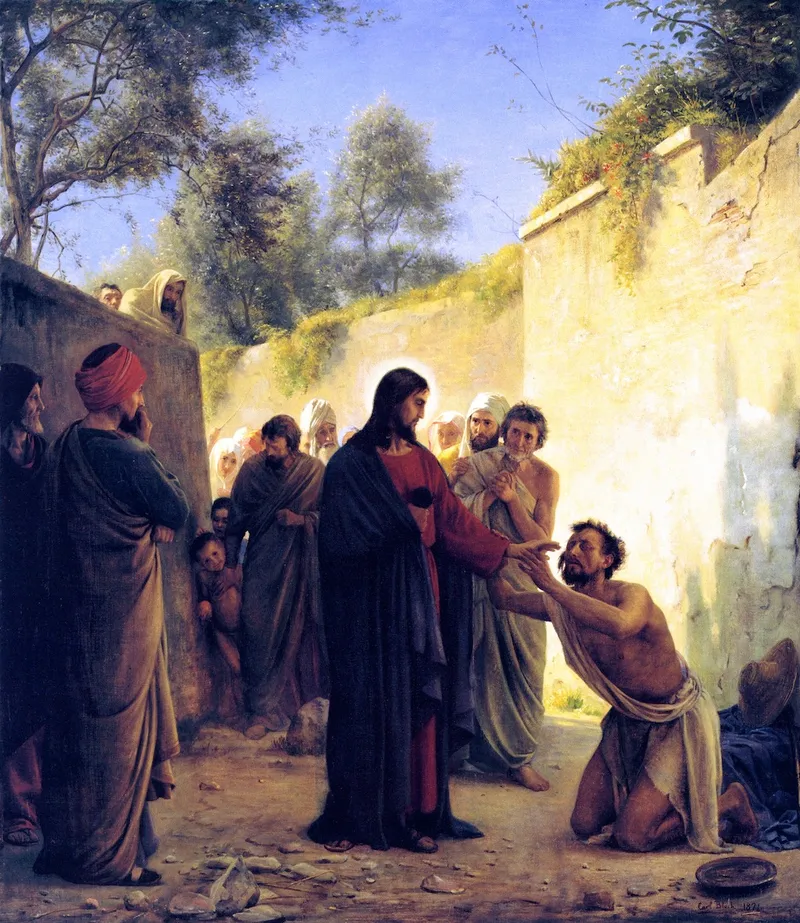
Revelation 1:1-8I Am Alpha and Omega
1The Revelation of Jesus Christ, which God gave unto him, to shew unto his servants things which must shortly come to pass; and he sent and signified it by his angel unto his servant John: 2Who bare record of the word of God, and of the testimony of Jesus Christ, and of all things that he saw. 3Blessed is he that readeth, and they that hear the words of this prophecy, and keep those things which are written therein: for the time is at hand. 4John to the seven churches which are in Asia: Grace be unto you, and peace, from him which is, and which was, and which is to come; and from the seven Spirits which are before his throne; 5And from Jesus Christ, who is the faithful witness, and the first begotten of the dead, and the prince of the kings of the earth. Unto him that loved us, and washed us from our sins in his own blood, 6And hath made us kings and priests unto God and his Father; to him be glory and dominion for ever and ever. Amen. 7Behold, he cometh with clouds; and every eye shall see him, and they also which pierced him: and all kindreds of the earth shall wail because of him. Even so, Amen. 8I am Alpha and Omega, the beginning and the ending, saith the Lord, which is, and which was, and which is to come, the Almighty.
The book begins by telling us what kind of book it is and where it came from. The Revelation of Jesus Christ, which God gave unto him, to shew unto his servants things which must shortly come to pass (v. 1). The opening word is the book's own title for itself - an unveiling - and the genitive cuts two ways at once: this is the unveiling that belongs to Jesus Christ and the unveiling that is of Him, given Him by the Father to show His servants.
A chain of giving is traced: from the Father, to the Son, by His angel, to John, who bare record… of all things that he saw (v. 2). John is not the author of these things; he is a witness to them, writing down what he was shown. Then comes a blessing found nowhere else at the head of a biblical book: Blessed is he that readeth, and they that hear the words of this prophecy, and keep those things which are written therein (v. 3).
The grammar pictures the early churches at worship - one reader, many hearers - and the blessing rests on both, but only as it issues in keeping. This is not a book to decode and set aside; it is a word to hear and hold. For the time is at hand - the urgency is built into the first breath.1
The greeting names the One it comes from before it says anything else, and the name is unusual: grace and peace from him which is, and which was, and which is to come (v. 4). It is a name made of all three tenses of being - present, past, and future bound together - a way of saying the everlasting God who was, is, and ever shall be. Beside Him are named the seven Spirits which are before his throne, the sevenfold fullness of the Spirit of God; and then Jesus Christ, set out in a threefold title that will govern the whole book.
He is the faithful witness - the One whose testimony to the truth was sealed in His death; the first begotten of the dead - the foremost of those raised, the firstborn out of the grave; and the prince of the kings of the earth (v. 5) - the ruler to whom every earthly throne, Caesar's included, must finally answer. To churches living under an empire that claimed ultimate allegiance, this last title was not abstract. It told them where real sovereignty lay.
No sooner is Christ named than praise erupts, and it fastens not on His power but on His love: Unto him that loved us, and washed us from our sins in his own blood, and hath made us kings and priests unto God and his Father; to him be glory and dominion for ever and ever. Amen (vv. 5-6). Notice the order of the verbs. He loved - the love comes first, before anything we did.
He washed - and the cost is named without flinching, in his own blood; the cleansing of His people was paid for at the price of His life. And He hath made us kings and priests - lifting the redeemed into a dignity that echoes the ancient promise to Israel at Sinai, a kingdom of priests, now spoken over all who are washed. The glorious figure the chapter is about to unveil is first confessed as the One who loved and bled for the very people now reading.
The doxology lands where it must: to him be glory and dominion for ever and ever. The blood-bought response to such a Savior is worship.
The greeting then lifts its eyes from what Christ has done to what He will do: Behold, he cometh with clouds; and every eye shall see him, and they also which pierced him: and all kindreds of the earth shall wail because of him. Even so, Amen (v. 7). Two of the oldest prophetic visions are woven into a single line. He cometh with clouds reaches back to Daniel, who saw one like the Son of man come with the clouds of heaven to receive an everlasting kingdom; they also which pierced him reaches back to Zechariah, where the LORD says His people shall look upon me whom they have pierced and mourn.2 John lays both on Jesus and adds the universal note: every eye shall see him. This coming is not a private revelation for the few; it is open, public, unmissable.
The marks of the cross are still on Him - the same Jesus who was pierced is the One who returns - and His appearing brings the world to reckoning. The text does not lay out a calendar or a sequence here; it simply fixes the certainty: He cometh, and all will see.
Revelation 1:9-16One Like Unto the Son of Man
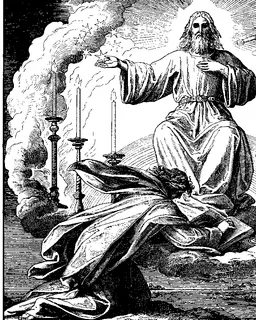
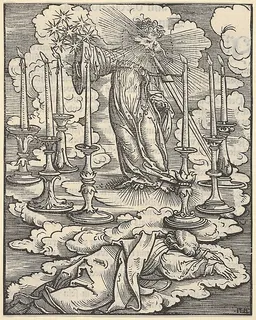
9I John, who also am your brother, and companion in tribulation, and in the kingdom and patience of Jesus Christ, was in the isle that is called Patmos, for the word of God, and for the testimony of Jesus Christ. 10I was in the Spirit on the Lord’s day, and heard behind me a great voice, as of a trumpet, 11Saying, I am Alpha and Omega, the first and the last: and, What thou seest, write in a book, and send it unto the seven churches which are in Asia; unto Ephesus, and unto Smyrna, and unto Pergamos, and unto Thyatira, and unto Sardis, and unto Philadelphia, and unto Laodicea. 12And I turned to see the voice that spake with me. And being turned, I saw seven golden candlesticks; 13And in the midst of the seven candlesticks one like unto the Son of man, clothed with a garment down to the foot, and girt about the paps with a golden girdle. 14His head and his hairs were white like wool, as white as snow; and his eyes were as a flame of fire; 15And his feet like unto fine brass, as if they burned in a furnace; and his voice as the sound of many waters. 16And he had in his right hand seven stars: and out of his mouth went a sharp twoedged sword: and his countenance was as the sun shineth in his strength.
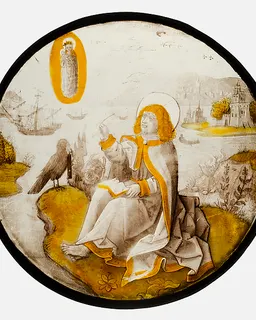
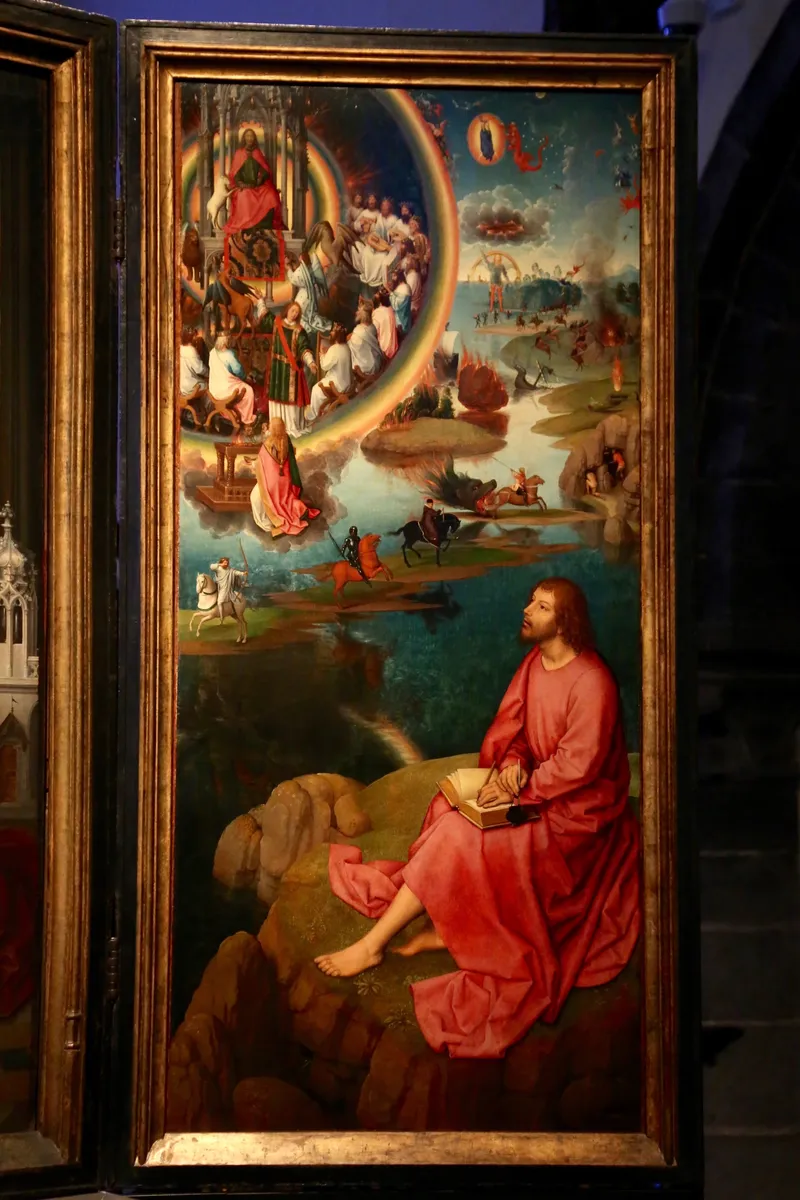
John grounds the vision in a real place and a real man before he reports a single wonder: I John, who also am your brother, and companion in tribulation, and in the kingdom and patience of Jesus Christ, was in the isle that is called Patmos, for the word of God, and for the testimony of Jesus Christ (v. 9). He claims no rank over his readers - he is their brother and fellow-sufferer, sharing the same tribulation, the same kingdom, and the same patience, that steady endurance the whole book will call for.
Patmos was a small, rocky island, and John is there for the word of God - that is, on account of it, an exile for his testimony. It matters that the grandest vision in Scripture comes to a man in banishment. The unveiling does not wait for ease or safety; it breaks in upon a prisoner. I was in the Spirit on the Lord's day (v. 10): caught up, carried beyond ordinary sight, on the day the churches gathered to remember the resurrection.
And the first thing he meets is sound, not sight - a great voice, as of a trumpet behind him, the kind of blast that summoned Israel to assemble and to attend. Before he sees anything, he is commanded to listen.
The voice gives its own name and its commission: I am Alpha and Omega, the first and the last: and, What thou seest, write in a book, and send it unto the seven churches (v. 11), and then names them one by one - Ephesus, Smyrna, Pergamos, Thyatira, Sardis, Philadelphia, Laodicea. Seven real congregations on a real mail route through Asia; yet seven is the number of fullness, so that in writing to these the book speaks to the whole church.
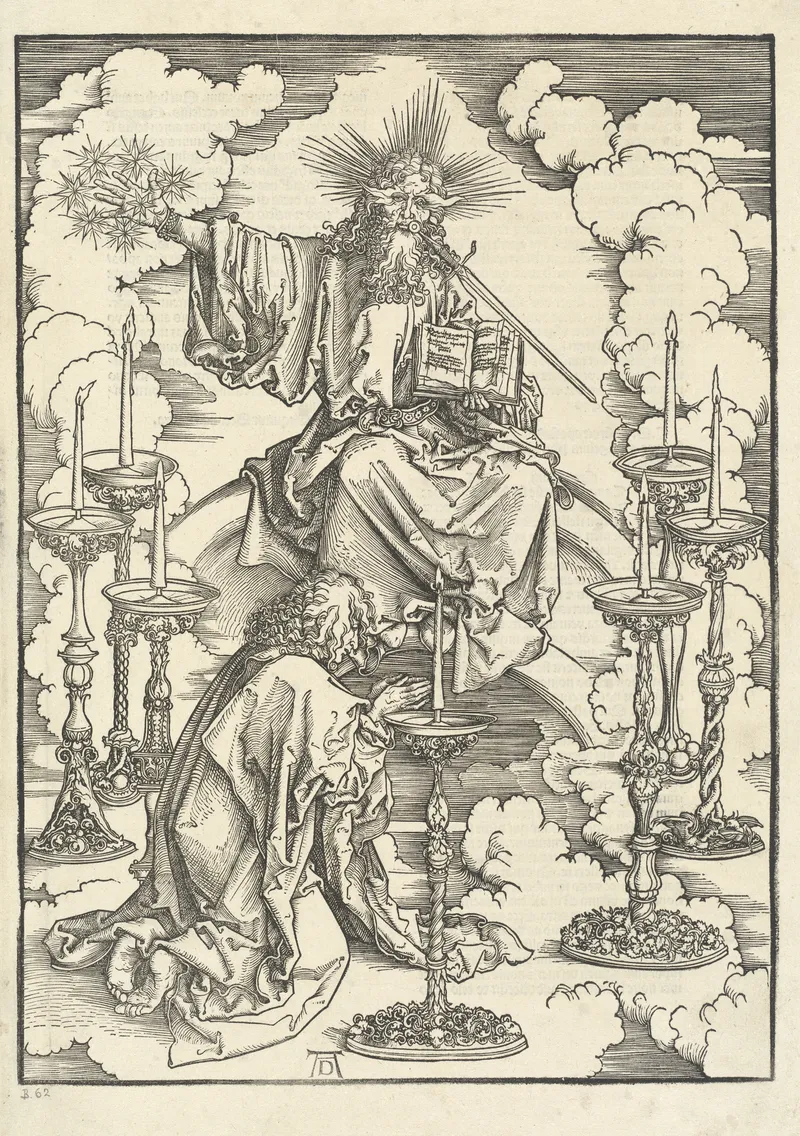
John turns to see the voice that spake - a striking phrase, as though the voice itself could be seen - and what he sees first is seven golden candlesticks (v. 12). The image would have been unmistakable to anyone who knew the tabernacle and temple, where the golden lampstand burned continually before the LORD. Now there are seven of them, and verse 20 will tell us plainly what they are: the seven churches. The people of God are lampstands - not the light themselves, but vessels made to bear it, set up to shine in a dark world.
And in their very midst, not far off, stands the One John turns to see.
In the midst of the lampstands John sees one like unto the Son of man, clothed with a garment down to the foot, and girt about the paps with a golden girdle (v. 13). The long robe and the golden sash worn high across the chest are the dress of high office - the robe of a priest, the girding of a king - marking the figure as one who serves before God and reigns over His people at once.
Then the description rises, feature by feature, into pure glory. His head and his hairs were white like wool, as white as snow (v. 14): the very image Daniel used for the Ancient of days, the eternal God enthroned, now seen on the Son of man.2 His eyes were as a flame of fire - a gaze that sees through everything, that nothing hidden can escape. His feet like unto fine brass, as if they burned in a furnace (v. 15) - feet of glowing, refined metal, strong and pure, that tread down all opposition.
His voice as the sound of many waters - not a thin whisper but the thunder of a cataract, the same overwhelming sound by which Ezekiel heard the glory of God approach. Every line is borrowed from the Old Testament's pictures of God Himself, gathered now into one figure standing among the candlesticks.
Two more features complete the vision, and each carries weight. He had in his right hand seven stars (v. 16) - the place of honor and of power, the strong hand, and in it the seven stars that verse 20 will name as the angels of the seven churches. The churches are not adrift; they are held. Out of his mouth went a sharp twoedged sword - not a blade in His hand but a sword that is His word, the utterance that divides truth from falsehood, that judges and that saves, quick, and powerful, and sharper than any twoedged sword (Heb. 4:12).
When this Christ speaks, His word itself is the weapon. And his countenance was as the sun shineth in his strength - His face like the noonday sun at full blaze, too bright to look upon. It is the same face the inner circle glimpsed for a moment on the mountain, when his face did shine as the sun (Matt. 17:2); only now the veil of His earthly lowliness is gone, and the glory blazes unhidden.
Small wonder that the next verse opens with John face-down on the ground.
Revelation 1:17-20I Am He That Liveth, and Was Dead
17And when I saw him, I fell at his feet as dead. And he laid his right hand upon me, saying unto me, Fear not; I am the first and the last: 18I am he that liveth, and was dead; and, behold, I am alive for evermore, Amen; and have the keys of hell and of death. 19Write the things which thou hast seen, and the things which are, and the things which shall be hereafter; 20The mystery of the seven stars which thou sawest in my right hand, and the seven golden candlesticks. The seven stars are the angels of the seven churches: and the seven candlesticks which thou sawest are the seven churches.
The vision's glory is more than a man can bear: And when I saw him, I fell at his feet as dead (v. 17). This is the only fitting response to such a sight, and John joins a long line of those who could not stand in the presence of God's glory - Ezekiel, Daniel, Isaiah, all undone before it. He drops as though life had left him. And then comes the gesture that changes everything: he laid his right hand upon me. The same right hand that held the seven stars reaches down to touch the fallen man.
The hand of overwhelming majesty is also the hand of gentleness. And the first word from that blazing figure is not a rebuke, not a command, but reassurance: Fear not. It is the word God's messengers speak again and again to trembling people, the word the angels brought the shepherds, the word Jesus spoke to storm-tossed disciples. Here the glorified Lord Himself speaks it, and then gives the ground of it: I am the first and the last - the very title He claimed as Alpha and Omega in verse 8.
The One before whom John rightly fell is the One who tells him not to be afraid.
Then Christ says the thing that turns dread into hope: I am he that liveth, and was dead; and, behold, I am alive for evermore, Amen; and have the keys of hell and of death (v. 18). Read the sequence slowly. He liveth - He is the living One, life in Himself. He was dead - the blazing figure in the vision is the same Jesus who truly died, who hung on a cross and was laid in a tomb; the marks of that death stand behind every line.
And He is alive for evermore - death was not the end of Him but a door He passed through and out of, never to die again. Because of that, He now hath the keys of hell and of death. Keys are the sign of authority; the one who holds the keys controls who comes and goes. Death and the grave - the realm of the dead - once held everyone, and let no one out. Now their keys hang on the belt of the One who went into death and came out alive.
For churches facing the threat of execution, no word could matter more. The worst the empire could do was kill them; and the keys to death itself are in the hand of their risen Lord. Death cannot hold what He has unlocked.
The chapter ends with a commission and an explanation. Write the things which thou hast seen, and the things which are, and the things which shall be hereafter (v. 19) - a simple outline of the whole book, gathering past vision, present reality, and what is yet to come into John's charge to write. Then Christ unlocks the two symbols that have stood unexplained: The seven stars are the angels of the seven churches: and the seven candlesticks which thou sawest are the seven churches (v. 20).
Here the vision turns its gaze, at the last, back to the church. The lampstands are the congregations; the stars are their angels - their messengers, their guardian representatives, however precisely understood - held in the Lord's right hand. And the whole picture now resolves into one quiet, staggering truth: the glorified Christ of this vision is not far away in some distant heaven. He stands in the midst of the candlesticks (v. 13). He walks among His churches.
The eyes of fire and the voice of many waters and the keys of death belong to the One who is present, right now, with His people in their trial - seeing them, holding their leaders, never having left.
Research trail
Sources & further study
These references support the historical, linguistic, manuscript, and contextual notes in this chapter. Scripture remains the primary text; external sources are provided so readers can inspect the research directly.
- Revelation 1 - Translators' NotesThe NET Bible's detailed footnotes on Revelation 1 - the blessing on reader and hearers in verse 3, the threefold name in verses 4 and 8, the difficult grammar of him which is, and which was, and which is to come, and the Old Testament imagery gathered into the vision of verses 13-16.
- Revelation 1 ↔ Daniel 7 · Ezekiel 1 & 43 · Zechariah 12Traces the older Scriptures woven through the vision - one like unto the Son of man (v. 13) and the coming with clouds (v. 7) from Daniel 7:13; the white hair from Daniel 7:9; the eyes of fire, burning feet, and voice of many waters (vv. 14-15) from Ezekiel 1 and 43:2; and they also which pierced him (v. 7) from Zechariah 12:10.
- Revelation 1 · Greek interlinearThe Greek text of Revelation 1 word by word, with parsing and Strong's links - useful for apokalypsis (v. 1, “revelation,” an unveiling), for Alpha kai Ωmega (v. 8, the first and last letters of the Greek alphabet), and for ho pantokrator (v. 8, “the Almighty,” the ruler over all).
Where this echoes in Scripture
I Am Alpha and Omega
- Daniel 7:13one like the Son of man came with the clouds of heaven, and came to the Ancient of days.The coming with clouds of verse 7 - Daniel's vision of the Son of man given dominion.
- Zechariah 12:10they shall look upon me whom they have pierced, and they shall mourn.The pierced One of verse 7 - the prophecy John lays on the returning Christ.
- Isaiah 44:6I am the first, and I am the last; and beside me there is no God.The name behind verse 8 - the title of the everlasting God, spoken now by the risen Christ.
- Exodus 19:6ye shall be unto me a kingdom of priests, and an holy nation.The dignity of verse 6 - the ancient promise to Israel, now made over the redeemed.
- 1 Corinthians 15:20now is Christ risen from the dead, and become the firstfruits of them that slept.The first begotten of the dead (v. 5) - His rising as the firstfruits of ours.
One Like Unto the Son of Man
- Daniel 7:9the Ancient of days did sit, whose garment was white as snow, and the hair of his head like the pure wool.The white hair of verse 14 - Daniel's image of the eternal God, now seen on the Son of man.
- Daniel 10:5-6his eyes as lamps of fire, and his arms and his feet like in colour to polished brass... the voice of his words like the voice of a multitude.The eyes of fire and feet of brass of verses 14-15 - the shining one of Daniel's later vision.
- Ezekiel 43:2his voice was like a noise of many waters: and the earth shined with his glory.The voice as many waters of verse 15 - the sound of the glory of God returning.
- Matthew 17:2his face did shine as the sun, and his raiment was white as the light.The countenance as the sun of verse 16 - the glory glimpsed on the mountain, now unveiled.
- Hebrews 4:12the word of God is quick, and powerful, and sharper than any twoedged sword.The sword from His mouth in verse 16 - the word of Christ that divides and judges.
I Am He That Liveth, and Was Dead
- Romans 6:9Christ being raised from the dead dieth no more; death hath no more dominion over him.The living One who was dead (v. 18) - risen never to die again, death's dominion broken.
- John 11:25I am the resurrection, and the life: he that believeth in me, though he were dead, yet shall he live.The keys of death (v. 18) in person - the One who is Himself resurrection and life.
- Hebrews 2:14-15that through death he might destroy him that had the power of death... and deliver them who... were all their lifetime subject to bondage.How the keys were won (v. 18) - by passing through death to break death's power.
- Isaiah 41:10Fear thou not; for I am with thee: be not dismayed; for I am thy God.The Fear not of verse 17 - the word God speaks again and again to His trembling people.
- Matthew 28:20lo, I am with you alway, even unto the end of the world.Christ in the midst of the candlesticks (vv. 13, 20) - His promised presence with His church.