Isaiah 6
People in this chapter
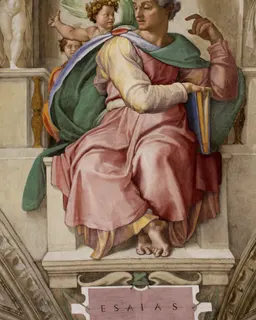
Isaiah's great vision is dated to a hinge moment: In the year that king Uzziah died (v. 1). Uzziah had reigned in Judah for more than fifty years; he was the throne the nation had grown used to, the long stability everyone assumed would hold. In the year that earthly throne fell empty, Isaiah is shown the throne that never empties. He sees the Lord sitting upon a throne, high and lifted up, and his train filled the temple. The hem of the robe alone is enough to fill the sanctuary - a way of saying that the One seated there overflows every space made to contain Him.1
Tap any highlighted phrase to jump to the commentary that unpacks it.
Isaiah 6:1-4Holy, Holy, Holy
1In the year that king Uzziah died I saw also the LORD sitting upon a throne, high and lifted up, and his train filled the temple. 2Above it stood the seraphims: each one had six wings; with twain he covered his face, and with twain he covered his feet, and with twain he did fly. 3And one cried unto another, and said, Holy, holy, holy, is the LORD of hosts: the whole earth is full of his glory. 4And the posts of the door moved at the voice of him that cried, and the house was filled with smoke.
Everything in the vision begins from a date: In the year that king Uzziah died (v. 1). It is not decoration. Uzziah had ruled Judah for fifty-two years; for almost everyone alive, his reign was simply the way the world had always been, and his death left the nation looking at an empty throne and an uncertain future. Precisely there, Isaiah is shown a throne that is not empty and never will be: I saw also the Lord sitting upon a throne, high and lifted up, and his train filled the temple. The contrast is the whole point.
One king has just come down; the King is still seated, high and lifted up. And the detail about the train - the long hem of His robe - is staggering precisely because it is only the hem: the edge of His garment alone is enough to fill the entire sanctuary. The mind is pushed to ask what fills heaven if a robe's hem fills the temple. This is not a small or manageable God, a deity tucked safely into a building.
It is the living God overflowing every space, seated and sovereign in the very season His people felt most exposed.1
Around the throne stand the seraphims - the burning ones - and the way they hold their wings is itself a sermon: each one had six wings; with twain he covered his face, and with twain he covered his feet, and with twain he did fly (v. 2). Four of the six wings are spent not on motion but on covering. These are beings of fire who do nothing but worship, and yet even they veil their faces before the One on the throne; even they cover their feet in reverence.
Only one pair of wings is for flight. The creatures nearest the glory are the most careful in His presence, not the most casual. If the burning ones hide their faces, the vision is already telling Isaiah - and us - what kind of holiness this is. He is so wholly other, so blazing in purity, that the highest creatures in heaven shield themselves before Him. The posture of the seraphim is the first warning of what Isaiah is about to feel about himself.
Then comes the cry, and it is the heart of the chapter: And one cried unto another, and said, Holy, holy, holy, is the LORD of hosts: the whole earth is full of his glory (v. 3). Hebrew has no comparative or superlative endings the way English does; to say a thing is the utmost, you repeat it. To say it twice is emphatic; to say it three times is to lift the word as high as language can reach.
So when the seraphim say holy not once but three times, they are confessing a holiness beyond degree, belonging to a class entirely its own. And notice where the song lands: not on God's power or His wrath but on His glory, and not glory shut up in heaven but glory spilling out - the whole earth is full of his glory. The same world Isaiah lives in, the world that has just lost its king and feels so ordinary and unstable, is in fact brimming with the glory of the One on the throne.
The seraphim see what Isaiah has not yet learned to see: that there is no neutral ground, no God-empty corner of creation. The whole earth is full of Him.
The vision is not silent or still; the very architecture answers the song. And the posts of the door moved at the voice of him that cried, and the house was filled with smoke (v. 4). The doorposts - the most fixed, foundational parts of the structure - shake at the mere voice of the worshippers. His attendants are singing, and even their cry is enough to move the foundations. And the house fills with smoke, the same cloud that filled the tabernacle and the temple when the glory of God descended, the cloud that both reveals His presence and veils it from eyes that could not bear the full sight.
Worship in this room is not a quiet, tidy thing. It rattles what seemed immovable and hides the holy place in cloud. The reader is meant to feel the ground shift. If the song of the seraphim shakes the temple, what will it do to the man standing inside it? Isaiah is about to find out.
Isaiah 6:5-7Woe Is Me; The Live Coal
5Then said I, Woe is me! for I am undone; because I am a man of unclean lips, and I dwell in the midst of a people of unclean lips: for mine eyes have seen the King, the LORD of hosts. 6Then flew one of the seraphims unto me, having a live coal in his hand, which he had taken with the tongs from off the altar: 7And he laid it upon my mouth, and said, Lo, this hath touched thy lips; and thine iniquity is taken away, and thy sin purged.
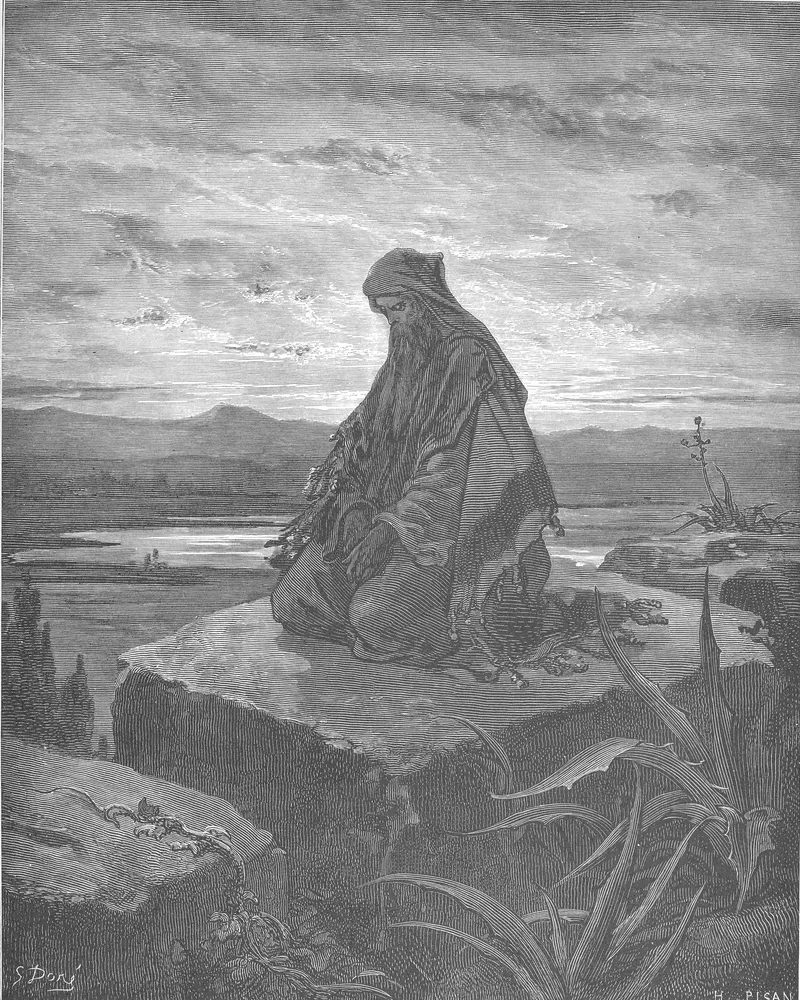
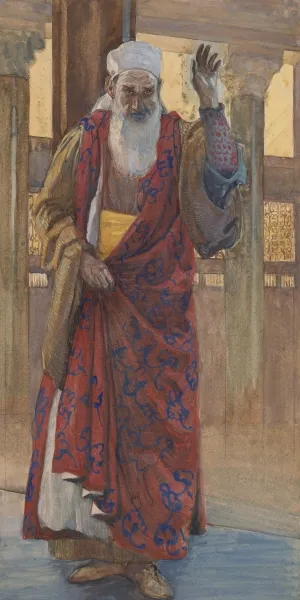
Isaiah's response to the glory is not what we might expect. He does not feel honoured to be in the room, or thrilled by the spectacle. He feels destroyed: Woe is me! for I am undone; because I am a man of unclean lips, and I dwell in the midst of a people of unclean lips: for mine eyes have seen the King, the LORD of hosts (v. 5). The word undone carries the sense of being cut off, ruined, coming apart at the seams.
Standing in the light of perfect holiness, Isaiah sees himself truly for the first time - and the very part of him most exposed is his lips. This is no accident in a prophet, whose whole calling is to speak: the instrument he most relies on is the thing he now knows to be unclean. And he does not isolate himself in his guilt; he names that he belongs to a people of unclean lips. He is one of them.
This is what the vision of God does. It shows him the truth. The nearer the holiness, the deeper the exposure - and yet, as the next verse shows, the exposure is not the end God has in view.
What answers Isaiah's despair is an act of cleansing, and it comes from a pointed place: Then flew one of the seraphims unto me, having a live coal in his hand, which he had taken with the tongs from off the altar: and he laid it upon my mouth (vv. 6-7). The coal is taken from off the altar - the place where sacrifice burns, where atonement is made, where sin is dealt with by blood and fire.
Cleansing does not float down from nowhere; it is carried from the altar to the man. And it is applied to the exact point of his confessed uncleanness: he said his lips were unclean, and it is his mouth the coal touches. God meets the specific wound. A live coal would burn, but its burning is purifying - the fire that cleans rather than consumes. The fire that the sinner feared would consume him becomes, when it comes from the altar, the very means of his healing.
The same holiness that undid Isaiah in verse 5 now cleanses him in verse 7; what changed was not the fire but the altar from which it came.
Isaiah 6:8Here Am I; Send Me
8Also I heard the voice of the Lord, saying, Whom shall I send, and who will go for us? Then said I, Here am I; send me.
Now the vision turns to its purpose. Also I heard the voice of the Lord, saying, Whom shall I send, and who will go for us? Then said I, Here am I; send me (v. 8). The question is striking on its own: the King of all the earth, attended by burning hosts, asks for a volunteer. He does not seize Isaiah or conscript him; He raises a question into the room and waits. And the timing is everything - this call comes only after the coal, only after the cleansing.
The man who a moment ago cried woe is me is the same man who now says send me; what stands between the two cries is the altar. A person undone by his own uncleanness has nothing to offer; a person cleansed by God is free to give himself away. Isaiah's answer is immediate and total. He does not ask where he is being sent, or to whom, or for how long, or what it will cost - all of which, as the next verses show, he might well have wanted to know.
He simply makes himself available: Here am I; send me. The cleansed heart does not bargain with God about the terms of obedience. It offers itself first and learns the assignment after.
Isaiah 6:9-13The Hard Commission and the Holy Seed
9And he said, Go, and tell this people, Hear ye indeed, but understand not; and see ye indeed, but perceive not. 10Make the heart of this people fat, and make their ears heavy, and shut their eyes; lest they see with their eyes, and hear with their ears, and understand with their heart, and convert, and be healed. 11Then said I, Lord, how long? And he answered, Until the cities be wasted without inhabitant, and the houses without man, and the land be utterly desolate, 12And the LORD have removed men far away, and there be a great forsaking in the midst of the land. 13But yet in it shall be a tenth, and it shall return, and shall be eaten: as a teil tree, and as an oak, whose substance is in them, when they cast their leaves: so the holy seed shall be the substance thereof.
The assignment Isaiah receives is one of the hardest in all of Scripture. Go, and tell this people, Hear ye indeed, but understand not; and see ye indeed, but perceive not (v. 9). He has said send me - and what he is sent to do is to preach to a people who will hear without understanding and look without perceiving. His faithful speaking will not, on the whole, soften them; it will meet a settled refusal.
This is the reverse of every preacher's natural hope. He is told in advance that the word will largely bounce off hardened hearts. It is worth pausing on what this asks of him. He must keep speaking truth that will not be received, year after year, measuring his faithfulness by whether he keeps saying what God gave him to say. The call to go is a charge to be faithful with a message, and to leave the response where it belongs - with the hearers and with God.
The next words are heavier still: Make the heart of this people fat, and make their ears heavy, and shut their eyes; lest they see with their eyes, and hear with their ears, and understand with their heart, and convert, and be healed (v. 10). Read flatly, it can sound as though God wants to keep people from turning and being healed. But the Scripture itself shows the truer shape of it. This is the verse the Lord Jesus quotes over crowds who had every chance to believe and would not, and there it describes a people who have closed their own eyes (Matt. 13:14-15); the prophet's word, faithfully delivered, becomes the very thing a hard heart hardens against.
The longer truth is resisted, the heavier the ears grow and the more tightly the eyes shut - because it has been refused so long. There is a sober warning here that the chapter does not soften: that a person can train himself not to see what he does not wish to see, until the capacity to see is nearly gone. Yet even this is held inside the mercy of the whole vision. The same prophet sent to a hardening people is the prophet whose own eyes were opened and whose own sin was purged; the word that hardens the resistant is the word that would have healed them, had they not shut their eyes.1
Isaiah does not receive this charge unmoved. He asks the question of every faithful servant set to a long, unrewarded task: Then said I, Lord, how long? (v. 11). It is the cry of a man who can see how costly the road will be and longs to know its end. The answer is unsparing: Until the cities be wasted without inhabitant, and the houses without man, and the land be utterly desolate, and the LORD have removed men far away, and there be a great forsaking in the midst of the land (vv. 11-12).
The hardening will run its full course, all the way to emptied cities, abandoned houses, a land stripped and forsaken, and a people carried far away into exile. There is no quick reprieve promised, no early softening. Isaiah is being told that his ministry will span the very judgment he preaches - that he will speak into the long unraveling of his nation. It is an honest and crushing answer. And yet it is not God's last word.
Even in the sentence of desolation, the door is not finally shut; the next verse leaves something standing in the ruin.
The chapter that opened in glory ends in a felled forest - and in the stump, life. But yet in it shall be a tenth, and it shall return, and shall be eaten: as a teil tree, and as an oak, whose substance is in them, when they cast their leaves: so the holy seed shall be the substance thereof (v. 13). The picture is of great trees cut down, the land reduced to stumps; even the surviving tenth is itself burned over again.
By every appearance, nothing is left. But Isaiah is shown what is hidden in the stump. When a teil tree or an oak drops its leaves and stands bare, or even when it is cut to the ground, the life is still in the root; the substance is in them, ready to send up new growth. So it is with the people: judgment will fell them, but it will not finally kill them, because a holy seed remains in the stump - a set-apart remnant, a living core through whom the covenant promise will go on.
This is how the vision ends: not with the comfort of an untouched nation, but with the deeper comfort of a seed that survives the fire. The same God whose holiness undid Isaiah, whose glory fills the earth, keeps a living seed in the charred ground - and from such a stump, Isaiah will later say, a Branch will grow.
Research trail
Sources & further study
These references support the historical, linguistic, manuscript, and contextual notes in this chapter. Scripture remains the primary text; external sources are provided so readers can inspect the research directly.
- Isaiah 6 - Translators' NotesThe NET Bible's detailed footnotes on Isaiah 6 - the throne and the train that fills the temple (v. 1), the six wings of the seraphim (v. 2), the grammar of the commission to dull the people's hearts (vv. 9-10), and the textual puzzles of the surviving stump and holy seed in verse 13.
- Isaiah 6 · Hebrew + classical Jewish commentaryThe Hebrew text of Isaiah 6 with Rashi, Ibn Ezra, and other classical commentators side by side - useful for qadosh (v. 3, the threefold “holy”), for seraphim (v. 2, the “burning ones”), and for the difficult final image of the teil tree and the holy seed in verse 13.
- Isaiah 6 ↔ John 12 · Revelation 4 · Matthew 13 · Acts 28Traces the threads tying Isaiah 6 to the rest of Scripture - the throne vision read as the glory of Christ (John 12:41), the thrice-holy taken up by the living creatures around the throne (Rev. 4:8), and the hardening word of verses 9-10 quoted by Jesus over the crowds (Matt. 13:14-15) and by Paul at the close of Acts (Acts 28:26-27).
Where this echoes in Scripture
Holy, Holy, Holy
- Revelation 4:8they rest not day and night, saying, Holy, holy, holy, Lord God Almighty, which was, and is, and is to come.The same thrice-holy cry as verse 3, sung by the living creatures around the throne in heaven - the song Isaiah overheard has never ceased.
- John 12:41These things said Esaias, when he saw his glory, and spake of him.The apostle identifies the glory Isaiah saw in verses 1-5 as the glory of Christ - it was Him Isaiah beheld.
- Exodus 40:34-35a cloud covered the tent of the congregation, and the glory of the LORD filled the tabernacle.The cloud of glory that filled the house in verse 4 - the same presence descending where God meets His people.
- Ezekiel 1:26-28the likeness of a throne... and upon the likeness of the throne was the likeness as the appearance of a man above upon it.Another prophet caught up to see the throne and the glory - the same overwhelming sight Isaiah describes.
- Psalm 99:1-3The LORD reigneth... he sitteth between the cherubims... let them praise thy great and terrible name; for it is holy.The enthroned and holy LORD of verses 1-3 - reigning above the cherubim, His name confessed holy.
Woe Is Me; The Live Coal
- John 1:29Behold the Lamb of God, which taketh away the sin of the world.The iniquity taken away in verse 7 - now lifted off the whole world by the Lamb at the true altar.
- Luke 5:8Depart from me; for I am a sinful man, O Lord.Peter's words at the catch of fish - the same undoing as verse 5 when a sinner glimpses the holiness of the Lord.
- Isaiah 53:5he was wounded for our transgressions... and with his stripes we are healed.The cleansing of verse 7 carried to its source - the sin purged by the wounds of the Servant.
- Hebrews 9:13-14how much more shall the blood of Christ... purge your conscience from dead works to serve the living God?The purging of verse 7 fulfilled - conscience cleansed by Christ for service, just as Isaiah was cleansed and then sent.
- 1 John 1:9If we confess our sins, he is faithful and just to forgive us our sins, and to cleanse us from all unrighteousness.The pattern of verses 5-7 held open to all - honest confession met by faithful cleansing.
Here Am I; Send Me
- John 20:21as my Father hath sent me, even so send I you.Isaiah's sending in verse 8 handed on - the risen Christ commissioning His own with the same pattern.
- Genesis 1:26And God said, Let us make man in our image, after our likeness.The divine plural heard again - the same “us” that speaks in verse 8, received as the text gives it.
- Exodus 3:10-11Come now therefore, and I will send thee... And Moses said... Who am I, that I should go?Another prophet called and sent - though Moses hesitates where Isaiah, freshly cleansed, says “send me.”
- Matthew 28:18-20Go ye therefore, and teach all nations... and, lo, I am with you alway.The sending of verse 8 widened to all nations - the cleansed sent out by the risen King.
- Romans 10:14-15how shall they hear without a preacher? and how shall they preach, except they be sent?The necessity behind verse 8 - the gospel reaches the lost only through those who answer “send me.”
The Hard Commission and the Holy Seed
- Matthew 13:14-15By hearing ye shall hear, and shall not understand... for this people's heart is waxed gross... their eyes they have closed.The Lord Jesus quotes verses 9-10 over the crowds - and names the hardening as a people closing their own eyes.
- Acts 28:26-27Go unto this people, and say, Hearing ye shall hear, and shall not understand... lest they should... be converted, and I should heal them.Paul ends his ministry quoting verses 9-10 - the same hard word still meeting the same resistance.
- Isaiah 11:1And there shall come forth a rod out of the stem of Jesse, and a Branch shall grow out of his roots.The holy seed of verse 13 followed to a Person - the Branch growing from the cut-down royal stump.
- Galatians 3:16He saith not, And to seeds, as of many; but as of one... which is Christ.The one holy Seed of verse 13 named - the single Seed in whom the whole promise stood.
- John 12:24Except a corn of wheat fall into the ground and die, it abideth alone: but if it die, it bringeth forth much fruit.The seed surviving through death (v. 13) on the lips of Christ Himself - life brought out of what looked like an end.