Isaiah 11
People in this chapter
The chapter before this one ended with a forest being cut down. The LORD lifts an axe against the towering pride of Assyria, and the high ones of stature shall be hewn down… and Lebanon shall fall by a mighty one (Isa. 10:33-34). Now chapter 11 opens on a tree as well - a single stump left for dead, sending up new growth: And there shall come forth a rod out of the stem of Jesse, and a Branch shall grow out of his roots (v. 1).
The stem is a trunk cut down to the ground; the stock of Jesse, David's father, stands for the royal house brought low. To every eye the line looks finished. And out of that dead-looking stump a living shoot springs up - the language of life from what seemed done, of a King coming from a family the world had written off.1
Tap any highlighted phrase to jump to the commentary that unpacks it.
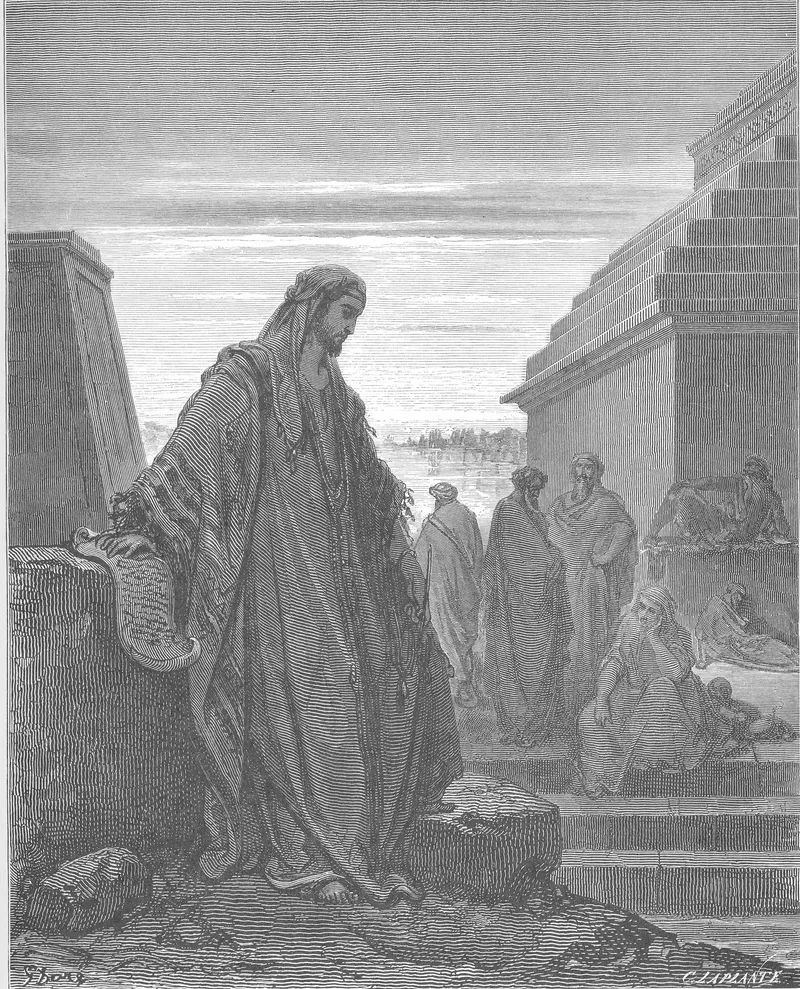
Isaiah 11:1-5A Rod Out of the Stem of Jesse
1And there shall come forth a rod out of the stem of Jesse, and a Branch shall grow out of his roots: 2And the spirit of the LORD shall rest upon him, the spirit of wisdom and understanding, the spirit of counsel and might, the spirit of knowledge and of the fear of the LORD; 3And shall make him of quick understanding in the fear of the LORD: and he shall not judge after the sight of his eyes, neither reprove after the hearing of his ears: 4But with righteousness shall he judge the poor, and reprove with equity for the meek of the earth: and he shall smite the earth with the rod of his mouth, and with the breath of his lips shall he slay the wicked. 5And righteousness shall be the girdle of his loins, and faithfulness the girdle of his reins.
To feel the force of the opening image, read it against the verses just before it. Chapter 10 ends with the LORD swinging an axe through a forest of arrogance: the proud nations are hewn down, the tall trees brought low, Lebanon shall fall by a mighty one (Isa. 10:33-34). Then chapter 11 begins with one more tree - but this one is already a stump. And there shall come forth a rod out of the stem of Jesse, and a Branch shall grow out of his roots (v. 1).
The word rendered stem means a trunk cut off at the ground, and naming Jesse - David's father - rather than David himself is deliberate: it reaches back behind the line of kings to the humble root from which the dynasty first sprang, a country family from Bethlehem. The royal house, in other words, is pictured as felled, reduced to a stub. And from that stub, against every expectation, a green shoot rises. It is the language of resurrection - life coming up out of what looked dead and done.
Where the empires of the earth are great trees cut down for their pride, the kingdom of God begins again as a tender shoot from a stump the world had written off.1
The first and deepest thing said about this Branch is what rests on Him: And the spirit of the LORD shall rest upon him, the spirit of wisdom and understanding, the spirit of counsel and might, the spirit of knowledge and of the fear of the LORD (v. 2). The Spirit is named in a sevenfold fullness - the Spirit of the LORD, and then three pairs unfolding what that Spirit supplies. Wisdom and understanding are the gifts of perception: to see what is truly so and to grasp how it fits together.
Counsel and might are the gifts of action: to form the right plan and to have the strength to carry it through - insight without power is helpless, and power without insight is dangerous, but here they are joined. Knowledge and the fear of the LORD are the gifts of relationship to God: to know Him truly, and to hold Him in the reverence that knowledge rightly brings. This is wisdom, strength, and reverence woven into one anointing - everything a King could need to reign in perfect righteousness.
And the resting Spirit answers the felled stump of verse 1: the shoot looks weak, but the fullness of God's own Spirit comes down upon it.2
From that anointing flows a way of judging unlike any earthly court. And shall make him of quick understanding in the fear of the LORD: and he shall not judge after the sight of his eyes, neither reprove after the hearing of his ears (v. 3). Human judges are bound to surfaces - they decide by what they can see and by what they are told, and so they are forever misled by appearances, by a confident face, by rumor, by the testimony of the powerful against the poor.
This King is not. He sees past the surface to the truth of a matter, beneath the impression the eyes report and the hearsay the ears carry. And the result is a justice that runs in a startling direction: with righteousness shall he judge the poor, and reprove with equity for the meek of the earth (v. 4). The poor and the meek - those who fare worst in the courts of men, who cannot buy a favorable hearing - receive from Him exactly what is right.
His judgment is righteousness and equity, what is genuinely true and genuinely fair. But it is not soft on evil either: he shall smite the earth with the rod of his mouth, and with the breath of his lips shall he slay the wicked. His word alone is enough - no army needed, only the breath of His lips - to put down wickedness. The same mouth that defends the poor undoes the oppressor.
The portrait of the King closes with the clothing He wears: And righteousness shall be the girdle of his loins, and faithfulness the girdle of his reins (v. 5). The girdle, or belt, was what a man cinched tight before he worked or fought - it gathered the loose robe in and braced the body for action. To say that righteousness and faithfulness are this King's girdle is to say they are the very thing that holds Him together and readies Him for His task.
Righteousness is what He is as He goes about His reign; faithfulness - steady, covenant-keeping reliability - is wrapped around Him at the core. Set this beside the kings of Isaiah's own day, who girded themselves with treaties and armies and were forever shifting their trust. This King needs no such belt. What braces Him is His own unfailing rightness and His unbreakable faithfulness to God and to His people. He will never be caught unready, never be found false.
The One on whom the Spirit rests is, down to the belt at His waist, righteous and faithful through and through.
Isaiah 11:6-9The Wolf Also Shall Dwell With the Lamb
6The wolf also shall dwell with the lamb, and the leopard shall lie down with the kid; and the calf and the young lion and the fatling together; and a little child shall lead them. 7And the cow and the bear shall feed; their young ones shall lie down together: and the lion shall eat straw like the ox. 8And the sucking child shall play on the hole of the asp, and the weaned child shall put his hand on the cockatrice’ den. 9They shall not hurt nor destroy in all my holy mountain: for the earth shall be full of the knowledge of the LORD, as the waters cover the sea.
From the King's court the vision now opens onto the whole of creation, and one of the most beautiful pictures in all of Scripture unfolds. The wolf also shall dwell with the lamb, and the leopard shall lie down with the kid; and the calf and the young lion and the fatling together; and a little child shall lead them (v. 6). Each pairing is the oldest enmity in the natural world - wolf and lamb, leopard and young goat, lion and fatted calf - predator set beside the prey it was made to hunt.
And in this kingdom they are at peace. The picture deepens through the next verses: the cow and the bear graze side by side, their young lying down together; the lion, the very emblem of the carnivore, shall eat straw like the ox (v. 7), its whole nature turned from killing. Then the danger is drawn right up to the most vulnerable human life of all: the sucking child shall play on the hole of the asp, and the weaned child shall put his hand on the cockatrice' den (v. 8).
A nursing baby plays at the cobra's hole; a toddler reaches into the viper's den - and is not harmed. This is the long war of fang and venom called off entirely. And it is a little child who leads the once-wild beasts - for in that kingdom no force is needed to keep the peace. The peace goes all the way down.
The vision gathers into a single, sweeping summary and then names its cause: They shall not hurt nor destroy in all my holy mountain: for the earth shall be full of the knowledge of the LORD, as the waters cover the sea (v. 9). Hurt and destroy - the two verbs that describe the whole sorry history of a fallen world, creature against creature and man against man - simply end, throughout the LORD's holy mountain, His realm of rule and worship now spread to cover the earth.
And the prophet gives the reason, which is the hinge of the entire chapter: this peace comes for - because - the earth shall be full of the knowledge of the LORD. The healing of creation is the fruit of the knowledge of God filling the world. Where God is truly known, the hurting and destroying stop. The image for that fullness is vast and quiet: as the waters cover the sea. The sea is water through and through, full to the depths.
So the knowledge of the LORD will saturate the earth completely, leaving no dry place where ignorance of God can breed harm. The Branch's reign reaches its end here: a creation no longer at war, because at last it is full of the knowledge of its Maker.1
Isaiah 11:10-16A Root of Jesse: To It Shall the Gentiles Seek
10And in that day there shall be a root of Jesse, which shall stand for an ensign of the people; to it shall the Gentiles seek: and his rest shall be glorious. 11And it shall come to pass in that day, that the Lord shall set his hand again the second time to recover the remnant of his people, which shall be left, from Assyria, and from Egypt, and from Pathros, and from Cush, and from Elam, and from Shinar, and from Hamath, and from the islands of the sea. 12And he shall set up an ensign for the nations, and shall assemble the outcasts of Israel, and gather together the dispersed of Judah from the four corners of the earth. 13The envy also of Ephraim shall depart, and the adversaries of Judah shall be cut off: Ephraim shall not envy Judah, and Judah shall not vex Ephraim. 14But they shall fly upon the shoulders of the Philistines toward the west; they shall spoil them of the east together: they shall lay their hand upon Edom and Moab; and the children of Ammon shall obey them. 15And the LORD shall utterly destroy the tongue of the Egyptian sea; and with his mighty wind shall he shake his hand over the river, and shall smite it in the seven streams, and make men go over dryshod. 16And there shall be an highway for the remnant of his people, which shall be left, from Assyria; like as it was to Israel in the day that he came up out of the land of Egypt.
The chapter now lifts its gaze from the healed creation to the gathered nations, and the Branch of verse 1 is named again with a fuller title: And in that day there shall be a root of Jesse, which shall stand for an ensign of the people; to it shall the Gentiles seek: and his rest shall be glorious (v. 10). He is called both the shoot from the stump and the root itself - the source from which the whole tree draws life.
And He becomes an ensign: a standard, a banner raised on a high pole that an army or a scattered people rally to from far off. The striking turn is who comes. Not Israel only, but the Gentiles - the nations, the outsiders - shall seek Him. The King who rose from a forgotten family in Bethlehem is lifted up where the whole world can see, and peoples who never knew the God of Israel come looking.
And His resting place - his rest shall be glorious - is no obscure corner but a place of glory, drawing the nations to it. Here the promise made long before to Abraham, that in his seed all families of the earth would be blessed, begins to find its banner: the root of Jesse stands up as a signal for the world.2
The lifting of the ensign sets a great homecoming in motion. The Lord shall set his hand again the second time to recover the remnant of his people, which shall be left (v. 11). The phrase the second time looks back to the exodus from Egypt as the first great act of recovery; now the LORD reaches out His hand once more, and this time from everywhere. The nations are named like points on a compass - Assyria… Egypt… Pathros… Cush… Elam… Shinar… Hamath, and… the islands of the sea - the whole arc of the known world, north and south, east and the far coastlands.
And He shall set up an ensign for the nations, and shall assemble the outcasts of Israel, and gather together the dispersed of Judah from the four corners of the earth (v. 12). The outcasts and the dispersed - those driven away and scattered by exile, the broken pieces of a shattered people - are gathered back. And with the gathering comes a healing of the people's own oldest wound: the long jealousy that split the kingdom in two is undone.
Ephraim shall not envy Judah, and Judah shall not vex Ephraim (v. 13). North and south, the tribes that tore apart and warred for generations, are made one again. The King who gathers the nations also reconciles His own divided household, so that the rivalry which broke them is finally laid to rest.
The chapter ends by casting the whole homecoming in the language of the exodus, the founding rescue of Israel's story. The gathered people are pictured prevailing over the old enemies that had hemmed them in - Philistines to the west, the peoples of the east, Edom and Moab and Ammon (v. 14) - no longer scattered and afraid but secure. Then the great exodus images return outright. The LORD shall utterly destroy the tongue of the Egyptian sea; and with his mighty wind shall he shake his hand over the river, and shall smite it in the seven streams, and make men go over dryshod (v. 15).
As the Red Sea once parted and Israel crossed on dry ground, so the LORD will again open a way through the waters that block the road home; even the great River will be split into fordable streams. And the result is a road: there shall be an highway for the remnant of his people, which shall be left, from Assyria; like as it was to Israel in the day that he came up out of the land of Egypt (v. 16).
A highway - a raised, cleared road - is opened for the returning remnant, just as God once made a path out of Egypt. The chapter that began with a shoot from a dead stump thus ends with a highway home through a parted sea: the same God who brings life from the felled tree clears the road for His scattered people to come back. Both are acts of the same redeeming hand.1
Research trail
Sources & further study
These references support the historical, linguistic, manuscript, and contextual notes in this chapter. Scripture remains the primary text; external sources are provided so readers can inspect the research directly.
- Isaiah 11 - Translators' NotesThe NET Bible's detailed footnotes on Isaiah 11 - the stump-and-shoot imagery of verse 1, the sevenfold description of the Spirit in verse 2, the “rod of his mouth” and judgment of the wicked (v. 4), the peaceable-kingdom oracle (vv. 6-9), and the gathering of the remnant from the named nations in verses 11-16.
- Isaiah 11 ↔ Matthew 3 · Romans 15 · Revelation 1 & 5Traces the threads tying Isaiah 11 to the rest of Scripture - the Spirit resting on the Branch (v. 2) read alongside the Spirit that abode upon Jesus at His baptism (John 1:32; Matt. 3:16), the root of Jesse the Gentiles seek (v. 10) read beside in him shall the Gentiles trust (Rom. 15:12), and the sevenfold Spirit heard again as the seven Spirits before the throne (Rev. 1:4).
- Isaiah 11 · Hebrew + classical Jewish commentaryThe Hebrew text of Isaiah 11 with Rashi, Ibn Ezra, and other classical commentators side by side - useful for netzer (v. 1, the “Branch” that grows from the roots), for the verb nuach (v. 2, the Spirit that comes to “rest”), and for the sevenfold naming of the Spirit that follows.
Where this echoes in Scripture
A Rod Out of the Stem of Jesse
- Jeremiah 23:5I will raise unto David a righteous Branch, and a King shall reign and prosper, and shall execute judgment and justice in the earth.The same Branch from David's line as verse 1 - a righteous King raised up to reign in justice.
- Matthew 3:16-17he saw the Spirit of God descending like a dove, and lighting upon him... This is my beloved Son, in whom I am well pleased.The Spirit resting on the Branch (v. 2) seen at the Jordan - descending and remaining on the beloved Son.
- Luke 4:18The Spirit of the Lord is upon me, because he hath anointed me to preach the gospel to the poor.Jesus claims the anointing of verse 2 - the Spirit upon Him, sent to the poor He judges with righteousness (v. 4).
- Revelation 1:4Grace be unto you, and peace... and from the seven Spirits which are before his throne.The sevenfold Spirit of verse 2 sounded again - the fullness of the one Spirit before the throne.
- Isaiah 42:1Behold my servant... I have put my spirit upon him: he shall bring forth judgment to the Gentiles.The Servant on whom the Spirit rests (v. 2), bringing forth the righteous judgment of verse 4 to the nations.
The Wolf Also Shall Dwell With the Lamb
- Isaiah 65:25The wolf and the lamb shall feed together, and the lion shall eat straw like the bullock... They shall not hurt nor destroy in all my holy mountain.Isaiah returns to this very vision near the book's end - the same peaceable kingdom of verses 6-9 set in the new heavens and new earth.
- Romans 8:19-21the creature itself also shall be delivered from the bondage of corruption into the glorious liberty of the children of God.Creation's longing for the healing of verses 6-9 - the whole created order awaiting release from its bondage.
- Habakkuk 2:14For the earth shall be filled with the knowledge of the glory of the LORD, as the waters cover the sea.The promise of verse 9 sounded again - the knowledge of the LORD covering the earth like the sea.
- Isaiah 9:6-7his name shall be called... The Prince of Peace. Of the increase of his government and peace there shall be no end.The King whose peace fills this kingdom - the Prince of Peace named a chapter before, whose reign knows no end.
- Revelation 21:4there shall be no more death, neither sorrow, nor crying, neither shall there be any more pain.The consummation of verses 6-9 - a creation where nothing hurts or destroys any longer.
A Root of Jesse: To It Shall the Gentiles Seek
- Romans 15:12There shall be a root of Jesse, and he that shall rise to reign over the Gentiles; in him shall the Gentiles trust.Paul quotes verse 10 by name - the root of Jesse fulfilled in the risen Christ, the hope of the nations.
- Revelation 22:16I am the root and the offspring of David, and the bright and morning star.The risen Jesus claims the double image of this chapter - both the root (v. 10) and the Branch (v. 1) of David's line.
- John 12:32And I, if I be lifted up from the earth, will draw all men unto me.The ensign lifted for the nations (vv. 10, 12) - the Son lifted up to draw all peoples to Himself.
- John 11:51-52that Jesus should die for that nation; And not for that nation only, but that also he should gather together in one the children of God that were scattered abroad.The gathering of the scattered remnant of verses 11-12 - the dispersed children of God made one.
- Genesis 12:3in thee shall all families of the earth be blessed.The promise behind the Gentiles seeking the root of Jesse (v. 10) - all the families of the earth blessed in Abraham's seed.