Isaiah 7
People in this chapter
It is a moment of national panic. Two kings - Rezin of Syria to the northeast and Pekah of Israel to the north - have formed an alliance and are marching on Jerusalem, meaning to tear down the house of David and set a puppet of their own on the throne. When word reaches King Ahaz, the dynasty trembles: his heart was moved, and the heart of his people, as the trees of the wood are moved with the wind (v. 2).
Into that fear the LORD sends Isaiah, and with him a son named Shearjashub - a name that means “a remnant shall return.” The prophet's word to the shaking king is a call to be still and trust: Take heed, and be quiet; fear not (v. 4). The two dreaded kings are no more than two tails of these smoking firebrands (v. 4) - burnt-out stubs of wood, all smoke and no fire. Their plot, the LORD says plainly, shall not stand, neither shall it come to pass (v. 7).1
Tap any highlighted phrase to jump to the commentary that unpacks it.
Isaiah 7:1-9If Ye Will Not Believe, Ye Shall Not Be Established
1And it came to pass in the days of Ahaz the son of Jotham, the son of Uzziah, king of Judah, that Rezin the king of Syria, and Pekah the son of Remaliah, king of Israel, went up toward Jerusalem to war against it, but could not prevail against it. 2And it was told the house of David, saying, Syria is confederate with Ephraim. And his heart was moved, and the heart of his people, as the trees of the wood are moved with the wind. 3Then said the LORD unto Isaiah, Go forth now to meet Ahaz, thou, and Shearjashub thy son, at the end of the conduit of the upper pool in the highway of the fuller’s field; 4And say unto him, Take heed, and be quiet; fear not, neither be fainthearted for the two tails of these smoking firebrands, for the fierce anger of Rezin with Syria, and of the son of Remaliah. 5Because Syria, Ephraim, and the son of Remaliah, have taken evil counsel against thee, saying, 6Let us go up against Judah, and vex it, and let us make a breach therein for us, and set a king in the midst of it, even the son of Tabeal: 7Thus saith the Lord GOD, It shall not stand, neither shall it come to pass. 8For the head of Syria is Damascus, and the head of Damascus is Rezin; and within threescore and five years shall Ephraim be broken, that it be not a people. 9And the head of Ephraim is Samaria, and the head of Samaria is Remaliah’s son. If ye will not believe, surely ye shall not be established.
The chapter opens in a real and dangerous hour. Rezin the king of Syria, and Pekah the son of Remaliah, king of Israel, went up toward Jerusalem to war against it (v. 1). Two kingdoms to the north have made common cause against little Judah, and their aim, the next verses reveal, is nothing less than to pull down the house of David and seat a man of their own choosing on the throne. When the news arrives, the effect on the royal house is vivid and physical: his heart was moved, and the heart of his people, as the trees of the wood are moved with the wind (v. 2).
It is a perfect picture of panic - a whole forest thrashing in a gale, every tree bending the same way at once. Ahaz and his people are not weighing the danger calmly; they are swept by it. And it is precisely into this storm of fear that the LORD chooses to speak. Notice that He does not wait for the threat to pass or for the king to compose himself. The word comes while the trees are still shaking - God meeting people in the thick of the fear, before it has settled.1
The LORD sends Isaiah to meet the king with his son beside him, and the boy's very name is part of the message: Shearjashub means “a remnant shall return” - a quiet pledge of survival walking at the prophet's side. The word Isaiah carries is short and steadying: Take heed, and be quiet; fear not, neither be fainthearted for the two tails of these smoking firebrands (v. 4). The counsel is to be quiet - to grow still, to stop being driven by dread.
And the LORD reframes the terror itself. The two kings who loom so large in Ahaz's mind He calls two tails of these smoking firebrands - the charred, smoldering ends of sticks pulled from a fire, all smoke and no flame, about to go out. To the king they are an overwhelming army; from heaven's vantage they are burnt-out stubs. Their plot is named and dismissed in a single sentence: It shall not stand, neither shall it come to pass (v. 7).
The threat is real, but its outcome is already decided. What looks like a fire consuming Judah is, in truth, two embers guttering out.
The LORD does more than dismiss the plot; He measures the plotters and gives their future. Each hostile kingdom, He says, is only as strong as its mortal head: the head of Syria is Damascus, and the head of Damascus is Rezin (v. 8); the head of Ephraim is Samaria, and the head of Samaria is Remaliah's son (v. 9). The cadence is deliberately deflating. Rezin and Pekah imagine themselves makers of kings, able to set the son of Tabeal on David's throne (v. 6); the LORD reminds them they are merely men ruling capitals that will not last.
To the northern kingdom He attaches a hard deadline: within threescore and five years shall Ephraim be broken, that it be not a people (v. 8). Within sixty-five years the very nation now threatening Judah will be shattered and scattered - and history bore this out as Assyria swept the northern tribes away. The lesson runs underneath the geopolitics: kingdoms that trust in their own heads rise and fall on those heads, and every such head is mortal.
Only one throne in this story is meant to endure, and it endures by faith in the One who spoke the promise to David.
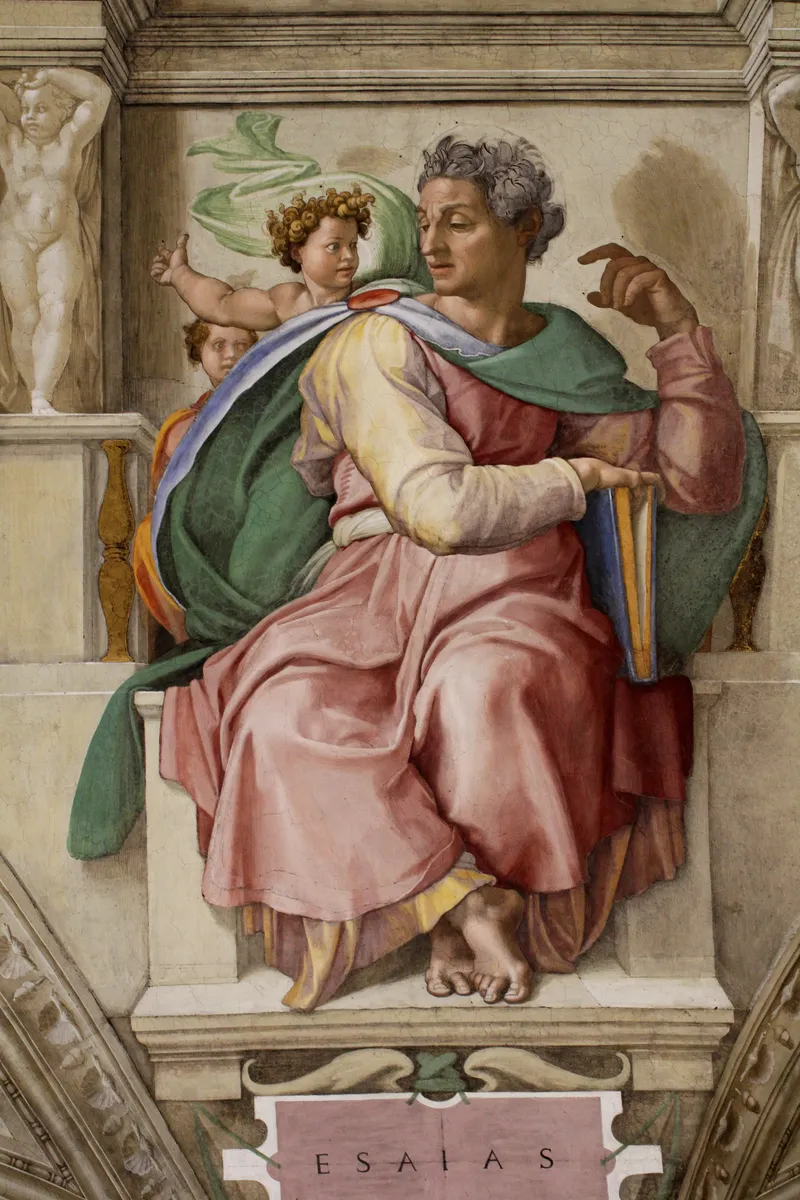
Isaiah 7:10-17Behold, a Virgin Shall Conceive
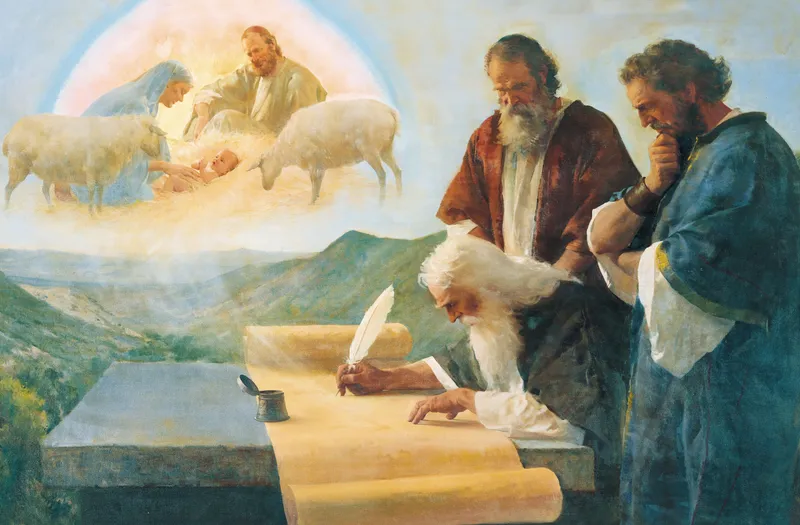
10Moreover the LORD spake again unto Ahaz, saying, 11Ask thee a sign of the LORD thy God; ask it either in the depth, or in the height above. 12But Ahaz said, I will not ask, neither will I tempt the LORD. 13And he said, Hear ye now, O house of David; Is it a small thing for you to weary men, but will ye weary my God also? 14Therefore the Lord himself shall give you a sign; Behold, a virgin shall conceive, and bear a son, and shall call his name Immanuel. 15Butter and honey shall he eat, that he may know to refuse the evil, and choose the good. 16For before the child shall know to refuse the evil, and choose the good, the land that thou abhorrest shall be forsaken of both her kings. 17The LORD shall bring upon thee, and upon thy people, and upon thy father’s house, days that have not come, from the day that Ephraim departed from Judah; even the king of Assyria.
The LORD now does something extraordinarily gracious: He offers the doubting king proof. Ask thee a sign of the LORD thy God; ask it either in the depth, or in the height above (v. 11). The offer is almost without limit - let Ahaz name anything, from the depths of the grave to the heights of heaven, and the LORD will do it to steady his faith. This is grace meeting unbelief halfway, God stooping to give a wavering man something to hold.
But Ahaz refuses, and the way he refuses is telling: I will not ask, neither will I tempt the LORD (v. 12). On its face the answer sounds devout - there is a true command not to put God to the test (Deut. 6:16), and Ahaz wraps himself in it. But it is a false piety. The LORD has just told him to ask; to refuse a sign God commands is not reverence, it is disobedience dressed as reverence.
The truth is that Ahaz does not want a sign, because a sign would leave him no excuse to keep trusting what he has already chosen to trust - his own diplomacy, the gathering power of Assyria. There is a kind of religious-sounding language that is really a hiding place for a heart that has already decided against God. Ahaz speaks it fluently.
Isaiah's reply cuts straight through the pretense, and the shift in pronoun is worth pausing over: Hear ye now, O house of David; Is it a small thing for you to weary men, but will ye weary my God also? (v. 13). The prophet addresses not just Ahaz but the whole house of David - this is a dynasty's crisis, not one man's. And he names the king's false modesty for the affront it is.
To exhaust the patience of men - prophets, counselors - is bad enough; but Ahaz's studied refusal is wearying God. Notice, too, that Isaiah says my God, not your God. Twice the LORD had been called thy God in the offer (v. 11); now, in the face of Ahaz's rejection, the prophet quietly withdraws the possessive from the king and keeps it for himself. The covenant God is still Isaiah's; whether He is truly Ahaz's is now in question.
It is a sobering moment: a king can stand inside the house of David, speak the language of piety, and yet have so refused to trust that the prophet will no longer say “your God” to his face.
Because Ahaz will not ask, the Lord gives a sign unbidden - the Lord himself shall give you a sign (v. 14) - and then sets it within a measured span of time. The child of the sign becomes a kind of clock. Butter and honey shall he eat, that he may know to refuse the evil, and choose the good (v. 15); and before the child shall know to refuse the evil, and choose the good, the land that thou abhorrest shall be forsaken of both her kings (v. 16).
Before the boy is old enough to tell right from wrong - a span of only a few years - the two kings whose alliance has Ahaz trembling, Rezin and Pekah, will both be gone, their lands abandoned. So the immediate crisis carries its own short deadline: the threat that feels world-ending will not outlast a toddler's first few years. And yet the relief comes wrapped in warning, for Ahaz chose Assyria over the LORD, and Assyria will not stay a friend.
The LORD shall bring upon thee… days that have not come… even the king of Assyria (v. 17). The very power Ahaz leaned on in place of God becomes the rod that will fall on Judah. Deliverance from the two firebrands is real; but the king who would not trust has invited a far larger fire.
Isaiah 7:18-25In That Day: A Hired Razor and a Land of Thorns
18And it shall come to pass in that day, that the LORD shall hiss for the fly that is in the uttermost part of the rivers of Egypt, and for the bee that is in the land of Assyria. 19And they shall come, and shall rest all of them in the desolate valleys, and in the holes of the rocks, and upon all thorns, and upon all bushes. 20In the same day shall the Lord shave with a razor that is hired, namely, by them beyond the river, by the king of Assyria, the head, and the hair of the feet: and it shall also consume the beard. 21And it shall come to pass in that day, that a man shall nourish a young cow, and two sheep; 22And it shall come to pass, for the abundance of milk that they shall give he shall eat butter: for butter and honey shall every one eat that is left in the land. 23And it shall come to pass in that day, that every place shall be, where there were a thousand vines at a thousand silverlings, it shall even be for briers and thorns. 24With arrows and with bows shall men come thither; because all the land shall become briers and thorns. 25And on all hills that shall be digged with the mattock, there shall not come thither the fear of briers and thorns: but it shall be for the sending forth of oxen, and for the treading of lesser cattle.
A refrain now begins to toll through the rest of the chapter - in that day - and it marks out the shape of the days Ahaz has bought by his unbelief. The LORD pictures Himself summoning the great powers as easily as a beekeeper calls his swarm: the LORD shall hiss for the fly that is in the uttermost part of the rivers of Egypt, and for the bee that is in the land of Assyria (v. 18).
The fly from Egypt's far rivers and the bee from Assyria are the two superpowers between which little Judah is caught; and the LORD does not strain to bring them - He merely whistles, and they come. It is a striking reversal of how the world looks from Ahaz's palace. To the king, Assyria is the strong friend whose favor must be won and whose armies decide the fate of nations. To the LORD, Assyria is an insect He calls with a hiss.
And these swarms will settle everywhere: in the desolate valleys, and in the holes of the rocks, and upon all thorns, and upon all bushes (v. 19) - covering the land so thoroughly there is no corner they do not reach. The empires Ahaz feared and courted are, in the end, instruments in a hand far higher than theirs.
The next image is sharp and humiliating: In the same day shall the Lord shave with a razor that is hired, namely, by them beyond the river, by the king of Assyria, the head, and the hair of the feet: and it shall also consume the beard (v. 20). Assyria, the very power Ahaz hired to save him, becomes in God's hand a razor, and a razor strips. To be shaved bare from head to foot, beard and all, was in that world a mark of deep shame and degradation, the look of a captive or a mourner.
There is a bitter irony built into the picture. Ahaz paid Assyria to be his rescuer; the LORD says Assyria is the blade He has hired to shave Judah clean. The king thought he was the one doing the hiring; in truth a greater King was hiring the same instrument for a very different purpose. This is the hard underside of the whole chapter. The help that unbelief reaches for so often becomes the very thing that wounds.
What Ahaz grasped in place of God scraped him bare.
The chapter ends among briers and thorns, and the phrase is repeated until it cannot be missed (vv. 23, 24, 25). The picture is of a land emptied and gone wild. Where once a thousand vines grew, worth a thousand silverlings - prime, cultivated vineyards, the very image of settled prosperity - there will be only thorns (v. 23). Fields a man used to farm will be so overrun that one goes there only with arrows and with bows, to hunt wild game where crops once stood (v. 24).
And there is a quiet echo to catch: the survivors will eat butter and honey (v. 22) - the very food named of the Immanuel child back in verse 15. But here it is what is left when the farms are gone and only wild pasture and forage remain, a remnant's fare in a depopulated land. The chapter that opened with a sign of hope thus closes with a vision of loss, because a king refused to trust the promise.
Yet even here the door is not shut. Isaiah's son still bears the name a remnant shall return; butter and honey still feeds someone that is left in the land. Judgment is real, but a remnant survives - and out of that surviving remnant, in the fullness of time, Immanuel will come.
Research trail
Sources & further study
These references support the historical, linguistic, manuscript, and contextual notes in this chapter. Scripture remains the primary text; external sources are provided so readers can inspect the research directly.
- Isaiah 7 - Translators' NotesThe NET Bible's detailed footnotes on Isaiah 7 - the historical setting of the Syro-Ephraimite crisis (vv. 1-2), the “smoking firebrands” insult (v. 4), the much-discussed wordplay of verse 9, the meaning of almah in verse 14, and the “butter and honey” that frames both the sign and the ruin (vv. 15, 22).
- Isaiah 7 · Hebrew + classical Jewish commentaryThe Hebrew text of Isaiah 7 with Rashi, Ibn Ezra, and other classical commentators side by side - useful for the wordplay of verse 9 on aman (“believe” / “be established”), for almah in verse 14 (the “virgin” / young woman of the sign), and for the name Immanuel, “God with us.”
- Isaiah 7 ↔ Matthew 1 · Isaiah 8 & 9 · John 1Traces the threads tying Isaiah 7 to the rest of Scripture - the Immanuel sign of verse 14 read alongside they shall call his name Emmanuel, which being interpreted is, God with us (Matt. 1:23) and the Word made flesh who dwelt among us (John 1:14), and the unbelief of Ahaz (v. 9) set beside the sure stone in whom believers shall not be confounded (Isa. 28:16; 1 Pet. 2:6).
Where this echoes in Scripture
If Ye Will Not Believe, Ye Shall Not Be Established
- 2 Chronicles 28:1-5Ahaz... walked in the ways of the kings of Israel... wherefore the LORD his God delivered him into the hand of the king of Syria.The same Ahaz and the same war from the chronicler's side - a king whose fear (v. 2) flowed from a heart already turned from the LORD.
- Isaiah 28:16Behold, I lay in Zion for a foundation a stone... a sure foundation: he that believeth shall not make haste.Isaiah names the sure footing that Ahaz would not take - the foundation on which belief is established (v. 9).
- 2 Chronicles 20:20Believe in the LORD your God, so shall ye be established; believe his prophets, so shall ye prosper.The very wordplay of verse 9 turned to promise - belief and being established bound together.
- Psalm 46:1-2God is our refuge and strength, a very present help in trouble. Therefore will not we fear.The steadiness the shaking house of David was offered (v. 2) - an unmoved trust in the midst of upheaval.
- John 14:27Peace I leave with you... Let not your heart be troubled, neither let it be afraid.The fear not of verse 4 carried by the One in whom every promise is Amen.
Behold, a Virgin Shall Conceive
- Matthew 1:22-23Behold, a virgin shall be with child... and they shall call his name Emmanuel, which being interpreted is, God with us.The Gospel quotes verse 14 directly and finds its fullness in the virgin birth of Jesus - the final Immanuel.
- Luke 1:31-35thou shalt conceive in thy womb, and bring forth a son... that holy thing which shall be born of thee shall be called the Son of God.The conception by the Spirit that answers the sign of verse 14 - a son born of a virgin.
- John 1:14And the Word was made flesh, and dwelt among us, (and we beheld his glory...) full of grace and truth.“God with us” (v. 14) made literal - God dwelling among His people in the flesh.
- Isaiah 8:8he shall pass through Judah... and the stretching out of his wings shall fill the breadth of thy land, O Immanuel.The name of verse 14 sounded again over the land itself - the sign carried forward into the next chapter.
- Deuteronomy 6:16Ye shall not tempt the LORD your God, as ye tempted him in Massah.The command Ahaz hid behind in verse 12 - true in itself, but misused to refuse a sign God had commanded.
In That Day: A Hired Razor and a Land of Thorns
- Isaiah 8:7-8the Lord bringeth up upon them the waters of the river, strong and many, even the king of Assyria... he shall pass through Judah.The flood of Assyria that verses 17-20 announce - the hired razor become an overflowing river.
- 2 Kings 16:7-9So Ahaz sent messengers to Tiglathpileser king of Assyria, saying... come up, and save me.Ahaz hiring the very power God names a razor (v. 20) - the unbelief of verse 12 worked out in policy.
- Isaiah 11:1there shall come forth a rod out of the stem of Jesse, and a Branch shall grow out of his roots.The remnant that survives the thorns (v. 3) narrowed to the Branch - the line from which Immanuel comes.
- Isaiah 10:20-22the remnant of Israel... shall stay upon the LORD, the Holy One of Israel, in truth... a remnant shall return.The meaning of Shearjashub's name (v. 3) spelled out - a remnant kept, and turned back to the LORD.
- 2 Timothy 2:13If we believe not, yet he abideth faithful: he cannot deny himself.Why the sign outlasts the ruin - Ahaz's unbelief could not cancel the promise God had given.