Painter of the Bible
Martin Schongauer
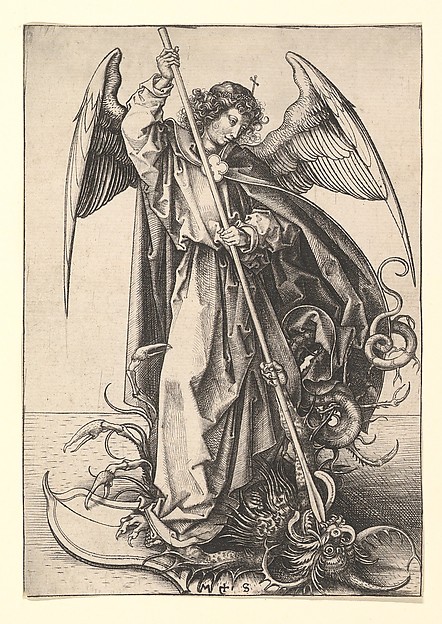
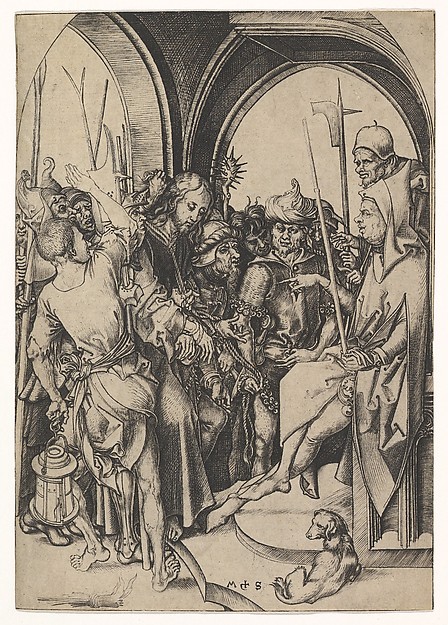
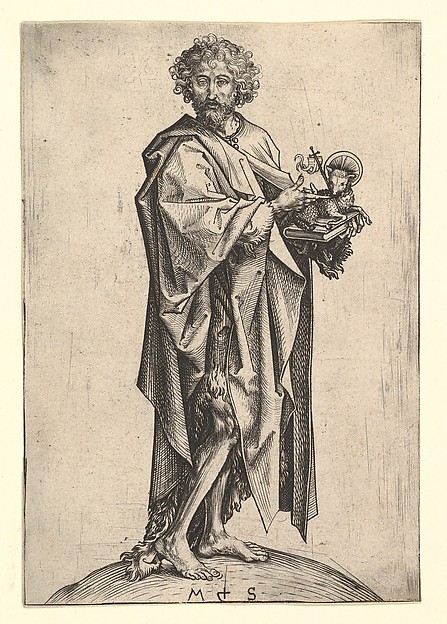
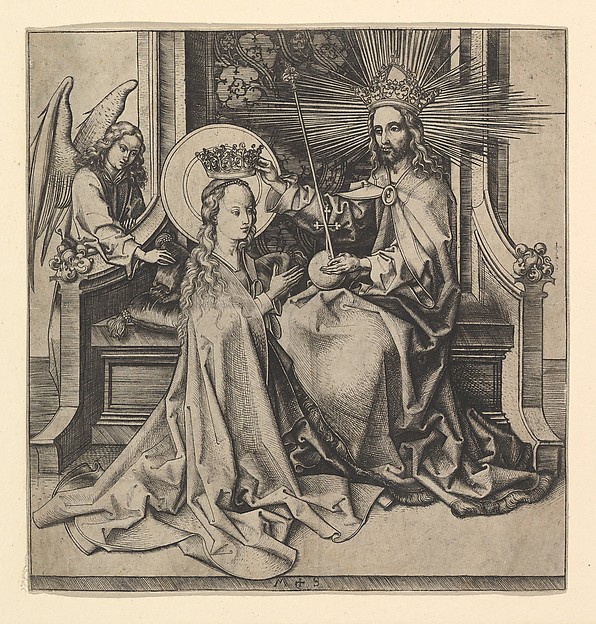
Martin Schongauer was the greatest Northern engraver of the generation immediately before Albrecht Dürer, and the artist who made copperplate engraving a fully expressive medium for Christian narrative and devotional imagery.
.jpg%3Fwidth%3D600&w=2048&q=75)
Their faith
Why Martin Schongauer painted Christ
Martin Schongauer, born into a goldsmith family in Colmar around 1435, dedicated his life to creating exquisite Christian art that reflected his deep faith. Trained in painting and influenced by the Northern Renaissance, Schongauer's artistry was not merely a profession but a profound expression of his devotion to God. His engravings and paintings reveal a man who was committed to depicting biblical narratives and the lives of saints with reverence and skill. The meticulous craftsmanship he honed in his father's workshop, combined with his spiritual dedication, allowed him to elevate copperplate engraving into a powerful medium for conveying Christian themes. Schongauer's faith was evident in his choice of subjects, which consistently revolved around the central tenets of Christianity, illustrating the Passion of Christ and the Virgin Mary with deep emotional resonance.
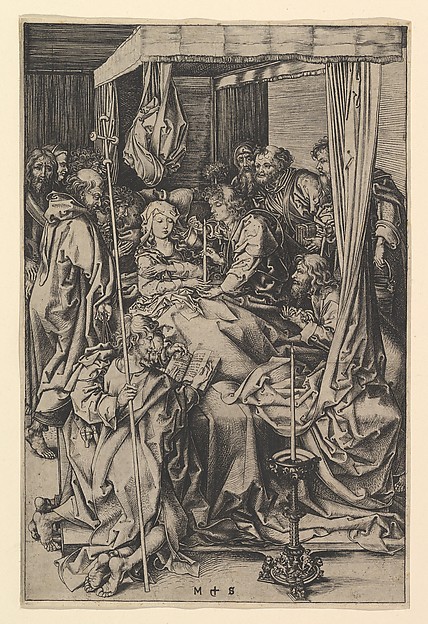
Schongauer's engravings, such as the complete Passion of Christ and the Death of the Virgin, showcase his ability to blend technical precision with spiritual depth. His painted altarpiece, the Madonna of the Rose Garden, completed in 1473, is a stunning example of his devotion, featuring a red-mantled Virgin surrounded by angels in a lush flower garden. This work not only highlights his artistic skill but also reflects his understanding of the divine beauty found in the sacred. Schongauer's art continues to inspire viewers today, inviting them to contemplate the beauty of faith and the profound narratives of Christianity that he so lovingly depicted. Through his engravings and paintings, Schongauer's devotion to Christ remains a vibrant testament to the power of sacred art in connecting believers with their faith.
Life & work
Martin Schongauer was the greatest Northern engraver of the generation immediately before Albrecht Dürer, and the artist who made copperplate engraving a fully expressive medium for Christian narrative and devotional imagery. Born in Colmar in Alsace around 1435 to a goldsmith family — the metalworking trade that taught him the burin in his father's shop — and trained in painting with a circle that absorbed Rogier van der Weyden's Netherlandish refinement, he was a professional painter and engraver in Colmar and later Breisach for the rest of his life. He died in Breisach in 1491, almost certainly of plague, while at work on a Last Judgment fresco for the Saint Stephen Minster.
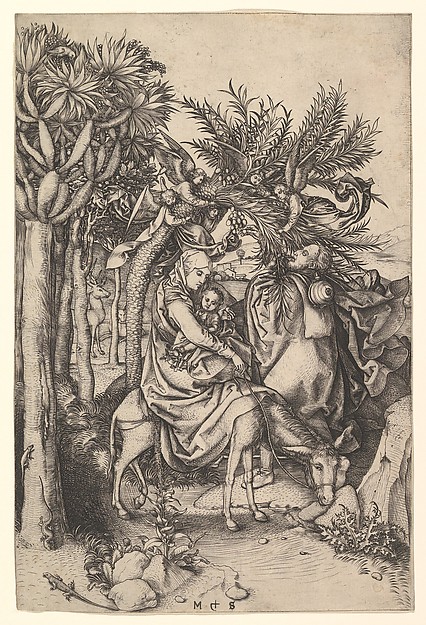
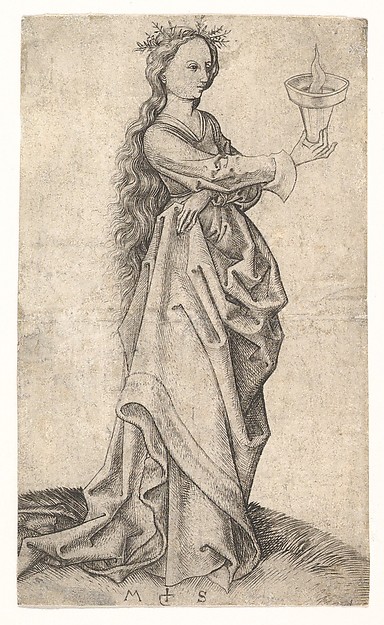
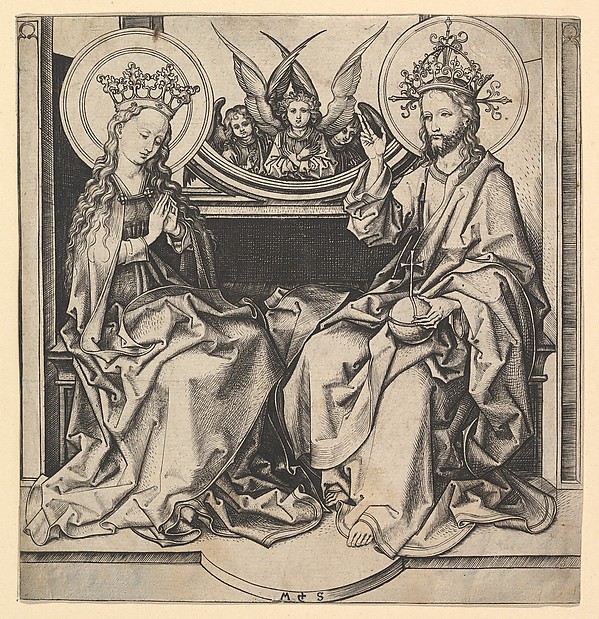
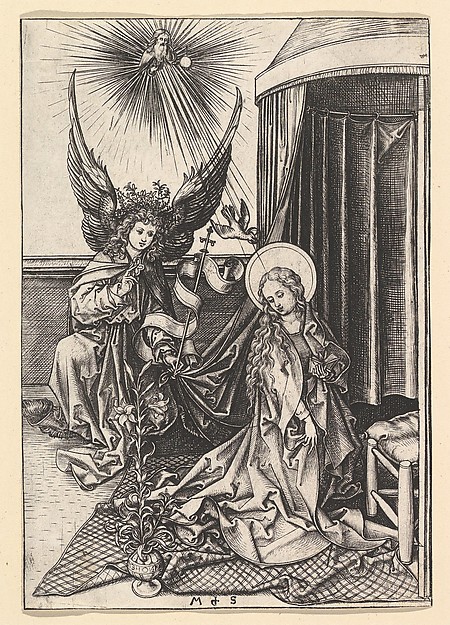
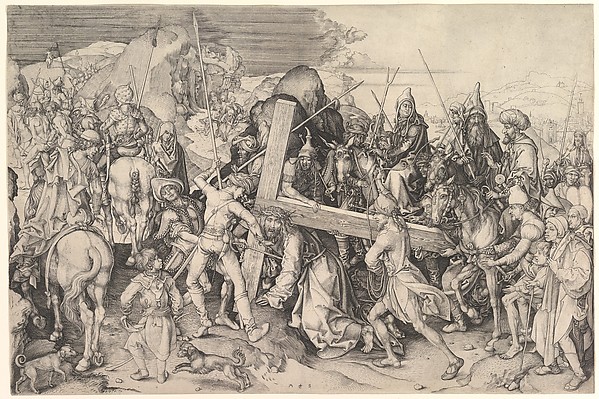
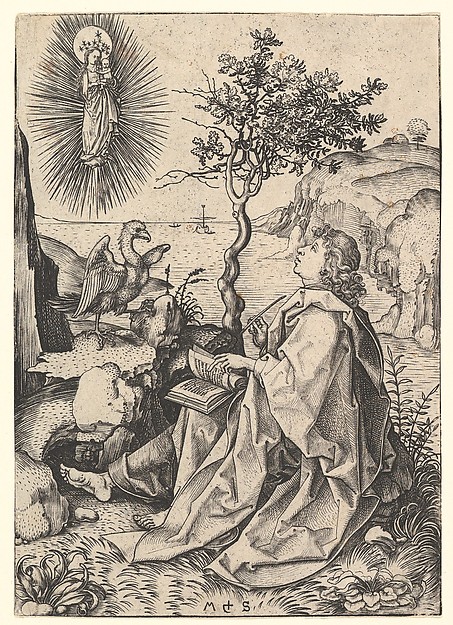
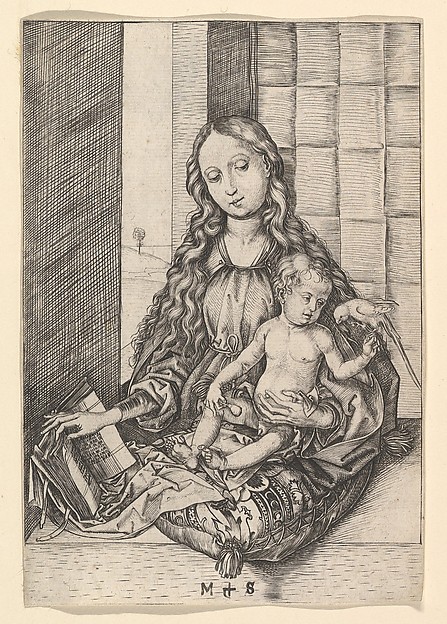
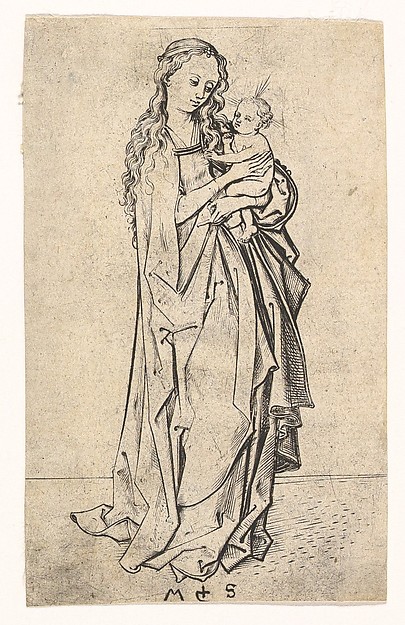
His surviving engraved oeuvre runs to about 116 plates, almost all on Christian subjects: a complete Passion of Christ, a wide series of Virgin and Child compositions, scenes from the lives of the Virgin and the saints, an enormous Temptation of Saint Anthony (the print Vasari said the young Michelangelo had copied as a teenage exercise), Censers and Tabernacles, and the great Death of the Virgin (c. 1470–1475). The work is technically immaculate — closely cross-hatched, plastically modeled, with fine atmospheric grays — and emotionally restrained, the Northern late-Gothic sensibility raised to its highest finish.
His painted altarpiece of the Madonna of the Rose Garden, completed in 1473 for the Dominican church of Saint Martin in Colmar (now in the Église des Dominicains), is one of the great surviving German panels of the late fifteenth century — a red-mantled Virgin enthroned in a flower garden under crowning angels — and the principal anchor for his small surviving painted corpus.
Schongauer's prints traveled across Europe in editions and copies throughout his lifetime and after his death; the young Dürer made the journey to Colmar in 1492 hoping to meet him, only to find him just dead. Dürer's own engraved Passion bears Schongauer's fingerprints on every plate.
Notable works in detail
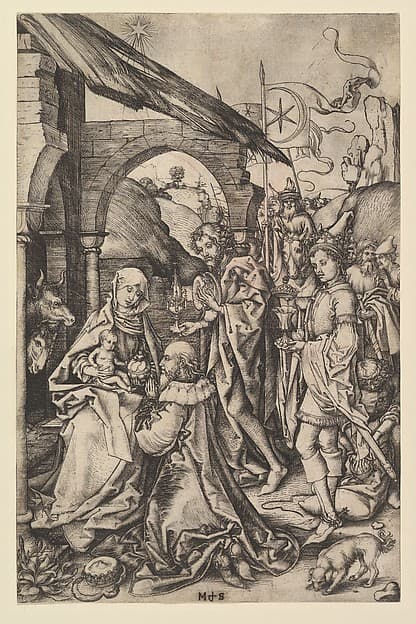
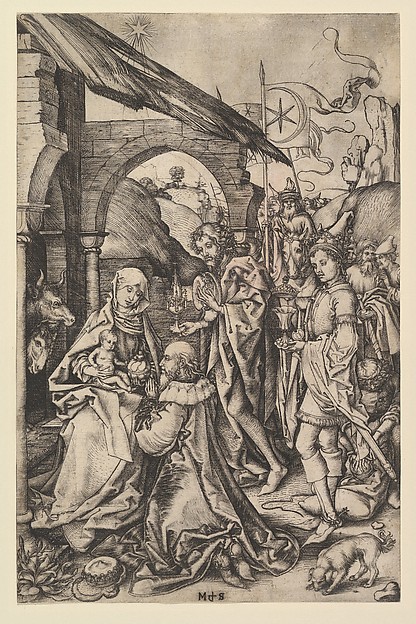
The Adoration of the Magi, engraved by Martin Schongauer around 1465 in his Colmar workshop and one of the technical landmarks of early Northern European engraving, illustrates the visit of the three kings to the infant Christ in the small dwelling at Bethlehem. Schongauer composes the scene in a tight horizontal grouping: the seated Virgin with the Christ Child on her lap on the right, the eldest king kneeling in profile in the foreground offering his gift, the second king standing behind with his crown removed, the third king arriving from the left with a small attending retinue. The technical accomplishment of the engraved line — patiently cross-hatched, plastically modeled, with fine atmospheric grays in the architectural background — marked the print as one of the foundational documents of the Northern late-medieval engraving tradition that Albrecht Dürer would inherit and transform a generation later.
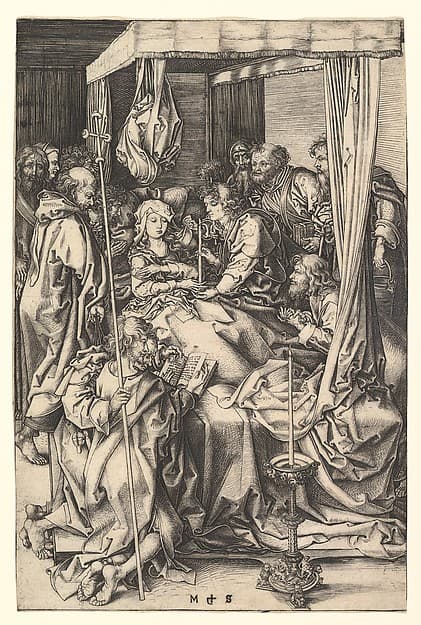
Death of the Virgin, engraved by Martin Schongauer around 1470 in his Colmar workshop, depicts the moment from the apocryphal Marian narrative in which the Virgin Mary, dying in her old age, is attended on her deathbed by the assembled apostles. Schongauer composes the scene in a small interior chamber: the Virgin lies in the bed at the lower center, the apostles gather around her in dense devotional postures of grief and prayer; Peter (identified by the pyx of the Eucharist in his hand) leans in over the bed, John (the youngest apostle) kneels at the head, and the others fill the background space. The print is among the most reproduced of Schongauer's surviving engraved compositions and a defining statement of the late-Gothic Northern devotional sensibility his Colmar workshop translated into the new engraved format.
met-338743
Noli me Tangere, engraved by Martin Schongauer around 1465 in his Colmar workshop, illustrates the moment from John 20 in which the risen Christ appears to Mary Magdalene in the garden outside the empty tomb on the morning of the Resurrection — the moment immediately before he addresses her with the Latin words Noli me tangere (Touch me not) that have given the iconographic subject its conventional name. Schongauer stages the encounter in a small landscape with the Magdalene kneeling in profile on the left and the half-naked risen Christ standing on the right with one hand raised in a gesture of withholding; a small Northern garden with low trees, a fence, and a distant hill fills the background. The print is one of the principal Schongauer treatments of an Easter subject and a defining statement of his ability to translate intimate Gospel encounters into the engraved devotional format.
met-367001
Christ as the Man of Sorrows with the Virgin and Saint John, engraved by Martin Schongauer around 1469 in his Colmar workshop, depicts one of the standard late-medieval Northern devotional subjects: the dead-but-still-standing Christ flanked by the mourning Virgin and John the Evangelist in a vertical compositional format suitable for personal contemplation. Christ stands in the center with his hands crossed at his waist showing the wounds of the Crucifixion; the Virgin on the left holds her hands folded against her cheek in grief; John on the right looks up at Christ with an expression of inward sorrow. The Man of Sorrows iconographic type, derived from the late-medieval mystical tradition of meditation on the Passion, was one of Schongauer's most-reproduced compositions; the technical accomplishment of the print and its emotional restraint together made it one of the founding documents of Northern engraved devotional imagery.
Bible scenes Martin Schongauer painted
Matthew
Luke
Mark
Revelation
Acts
John