Mark 15
People in this chapter
Mark has been building to this from his first sentence - The beginning of the gospel of Jesus Christ, the Son of God (1:1) - and now the hour has come. In the early morning the chief priests, elders, scribes, and the whole council bind Jesus and deliver Him to Pilate, the Roman governor. Pilate's question goes to the heart of it: Art thou the King of the Jews? Jesus answers, Thou sayest it (v. 2) - owning the title, but not on the terms Pilate has in mind.
Then, under a storm of accusation, He says nothing at all, so that Pilate marvelled (v. 5). A custom of the feast gives Pilate an opening to release Him; instead the chief priests stir the crowd to demand Barabbas - a man imprisoned for murder - and to cry, Crucify him. Pilate's own question, Why, what evil hath he done? (v. 14), goes unanswered, and to content the people he scourges Jesus and hands Him over to be crucified.1
Tap any highlighted phrase to jump to the commentary that unpacks it.
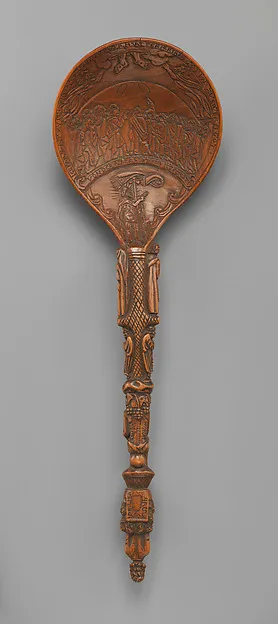
Mark 15:1-5Art Thou the King of the Jews?
1And straightway in the morning the chief priests held a consultation with the elders and scribes and the whole council, and bound Jesus, and carried him away, and delivered him to Pilate. 2And Pilate asked him, Art thou the King of the Jews? And he answering said unto him, Thou sayest it. 3And the chief priests accused him of many things: but he answered nothing. 4And Pilate asked him again, saying, Answerest thou nothing? behold how many things they witness against thee. 5But Jesus yet answered nothing; so that Pilate marvelled.
The chapter opens in the grey of early morning with a transfer of custody: the chief priests held a consultation with the elders and scribes and the whole council, and bound Jesus, and carried him away, and delivered him to Pilate (v. 1). The verb delivered - handed over - will sound again and again in this chapter, like a bell tolling. Jesus is handed by the council to Pilate; Pilate will hand Him to the crowd's demand; and at last he will hand Him over to be crucified.
The religious authorities have no power to execute under Roman rule, so the matter must come before the governor, and the charge is shrewdly recast for Roman ears. Before the council the question had been blasphemy; before Pilate it becomes a political one - a rival king, a threat to Caesar. Mark gives no speeches, no drawn-out scene. The bound Jesus is simply moved from one set of hands to the next, and the machinery of the day grinds forward.
The reader who has followed Mark this far knows what the rulers do not: that no one is taking this life from Him against His will, and that the One being handed over is the One the whole book has called the Son of God (1:1).1
Pilate cuts to the charge that concerns Rome: Art thou the King of the Jews? (v. 2). Jesus answers in three words - Thou sayest it - and the answer is deliberately weighted. It is not a denial; He does not say I am not. Nor is it the kind of claim Pilate is fishing for - a rebel staking out a throne against Caesar. It owns the title and at the same time hands it back: you are the one saying it. He is indeed the King of the Jews, but not in any sense Pilate's court can prosecute, for His kingdom does not rise by the sword or contend for Caesar's seat.
The irony runs all through this chapter and Pilate never catches it: the title he means as an accusation is simply true. The man standing bound before him, accused, about to be condemned, is the King - and the throne to which He is going is a cross. Everything that follows - the purple robe, the crown of thorns, the mocking salute, the charge nailed over His head - will keep saying the true thing in the form of a jest.
Then comes the silence. The chief priests accuse Him of many things, and Pilate, plainly unsettled, presses Him twice: Answerest thou nothing? behold how many things they witness against thee. And Mark records the astonishing reply, which is no reply at all: But Jesus yet answered nothing; so that Pilate marvelled (vv. 3-5). A governor used to men pleading, bargaining, and protesting their innocence meets a prisoner who will do none of it. The silence is not sullenness, and it is not defeat; it is the quiet of one who has already set His face to this hour and will not turn aside from it.
It is exactly the bearing the prophet had foretold of the suffering servant: he was oppressed, and he was afflicted, yet he opened not his mouth: he is brought as a lamb to the slaughter, and as a sheep before her shearers is dumb, so he openeth not his mouth (Isa. 53:7)2. Pilate marvelled - and well he might. He is in the presence of something his categories cannot hold: a condemned man wholly in command of Himself, going to His death not as a victim caught in a trap but as one who knows precisely what He is doing.
Mark 15:6-15Barabbas Released, the Innocent Condemned
6Now at that feast he released unto them one prisoner, whomsoever they desired. 7And there was one named Barabbas, which lay bound with them that had made insurrection with him, who had committed murder in the insurrection. 8And the multitude crying aloud began to desire him to do as he had ever done unto them. 9But Pilate answered them, saying, Will ye that I release unto you the King of the Jews? 10For he knew that the chief priests had delivered him for envy. 11But the chief priests moved the people, that he should rather release Barabbas unto them. 12And Pilate answered and said again unto them, What will ye then that I shall do unto him whom ye call the King of the Jews? 13And they cried out again, Crucify him. 14Then Pilate said unto them, Why, what evil hath he done? And they cried out the more exceedingly, Crucify him. 15And so Pilate, willing to content the people, released Barabbas unto them, and delivered Jesus, when he had scourged him, to be crucified.
A custom of the feast gives Pilate a way out he is eager to take: at that feast he released unto them one prisoner, whomsoever they desired (v. 6). Pilate sees through the whole proceeding - Mark tells us plainly, he knew that the chief priests had delivered him for envy (v. 10) - and so he tries to maneuver the crowd into freeing Jesus: Will ye that I release unto you the King of the Jews? (v. 9).
It is a calculated move by a man who wants the problem to go away without the cost of standing for justice himself. He has named the true motive: envy. The rulers do not hand Jesus over because He is dangerous to Rome; they hand Him over because His goodness and His authority expose them, and they cannot abide it. There is a terrible old pattern here, as old as Cain and Abel and Joseph and his brothers - the impulse to destroy the very goodness that shows up our own poverty rather than be changed by it.
Pilate sees the envy clearly enough. What he lacks is the courage to act on what he sees.
Watch closely who stands on each side of the exchange, because Mark has arranged it with care. There was one named Barabbas, which lay bound with them that had made insurrection with him, who had committed murder in the insurrection (v. 7). Barabbas is exactly what Jesus is falsely accused of being - a genuine insurrectionist, a man of violence against Rome, guilty of the very blood-crime for which the cross was reserved. And the chief priests moved the people, that he should rather release Barabbas unto them (v. 11).
So the choice is set, and it could hardly be starker: a guilty man who took life, and an innocent man who gave it. The crowd, stirred and steered, chooses the murderer. There is a detail in the name almost too pointed to be accidental: Barabbas means son of the father. A false son of the father goes free; the true Son, the One who has just confessed before Pilate, is led away to die in his place.
Mark does not pause to underline it. He lets the bare facts of the swap carry their own weight: the guilty walks out the door, and the innocent takes the guilty man's cross.
Pilate pushes back once more, and his words become the unanswered question at the heart of the chapter: What will ye then that I shall do unto him whom ye call the King of the Jews? They cry, Crucify him. He tries again: Why, what evil hath he done? (vv. 12-14). It is the right question, and it has no answer - for there is none to give. No evil has been done. No crime is named because no crime exists; the only innocent person in the whole affair is the one being condemned.
And the crowd's response is not an argument but a louder shout: they cried out the more exceedingly, Crucify him. This is what a mob does when reason has run out - it raises its voice in place of its case. Pilate's question hangs in the air, never met: what evil? The silence where an answer should be is the loudest testimony in the scene to the innocence of the Accused. He is condemned not because He has done wrong, but precisely because He has done none - and that is the strange shape this whole chapter is taking.
And so the bell tolls its last and heaviest stroke: And so Pilate, willing to content the people, released Barabbas unto them, and delivered Jesus, when he had scourged him, to be crucified (v. 15). The whole tragedy is in the phrase willing to content the people. Pilate knew the motive was envy; he knew the charge was empty; he asked the right question and got no answer. And then he did the unjust thing anyway, because it was easier than the cost of doing right.
His was not the hot malice of the chief priests but the cold cowardice of a man who weighed justice against his own convenience and let justice go. The scourging itself was a brutal Roman flogging that often left the condemned barely able to walk to the cross. With these few clauses Mark moves the story to its terrible center: Barabbas, the guilty, is loosed; Jesus, the innocent, is scourged and handed over to be crucified.
The trade is complete. The reader is meant to feel the full wrongness of it - and then, slowly, to see that this very wrongness is the door through which mercy is going to come.
Mark 15:16-20The Soldiers' Mockery
16And the soldiers led him away into the hall, called Praetorium; and they call together the whole band. 17And they clothed him with purple, and platted a crown of thorns, and put it about his head, 18And began to salute him, Hail, King of the Jews! 19And they smote him on the head with a reed, and did spit upon him, and bowing their knees worshipped him. 20And when they had mocked him, they took off the purple from him, and put his own clothes on him, and led him out to crucify him.
The soldiers turn the condemnation into sport, and the cruelty has a shape worth naming: it is a coronation in reverse. They gather the whole band for the entertainment and stage a mock enthronement. They clothed him with purple (v. 17) - purple being the color of royalty, the robe of kings and emperors - and platted a crown of thorns, and put it about his head. Every element parodies the trappings of a king: the royal robe, the crown, the acclamation, the homage.
But each one is a wound. The purple is a borrowed rag thrown over a flayed back; the crown is woven of thorns and pressed into the scalp; the scepter, in a moment, will be a reed used to strike Him. The soldiers think they are humiliating a pretender to a throne. They have no idea what they are actually doing - for the crown of thorns is the truest crown ever placed on a human head.
Since Eden, thorns have been the very emblem of the curse, of a ground that fights back, of a world gone wrong (Gen. 3:18). And here is the King wearing the curse itself upon His brow, taking the thorns of a broken creation onto His own head. The mockery, like Pilate's question, keeps accidentally telling the truth.
Then the homage, every gesture of it a lie that is somehow true: And began to salute him, Hail, King of the Jews! And they smote him on the head with a reed, and did spit upon him, and bowing their knees worshipped him (vv. 18-19). Hail, King of the Jews is a deliberate echo of the cry Hail, Caesar - the soldiers are making a joke of imperial loyalty by lavishing it on a beaten provincial.
They bow the knee in a parody of worship; they bend before Him as before a sovereign - and then strike His head and spit in His face. It is the contempt of the strong for the helpless, and Mark records it without softening any of it: the spitting, the blows, the kneeling that is really a sneer. And yet the reader cannot help seeing through the jest. They bow the knee to mock; but Scripture says that at the name of Jesus every knee should bow… and that every tongue should confess that Jesus Christ is Lord (Phil. 2:10-11).
They hail Him king to humiliate Him; but He is the King. The soldiers stage a false worship, and in doing so they rehearse, without knowing it, the true worship that all creation will one day render to this very Man.
Mark 15:21-32The Crucifixion at Golgotha
21And they compel one Simon a Cyrenian, who passed by, coming out of the country, the father of Alexander and Rufus, to bear his cross. 22And they bring him unto the place Golgotha, which is, being interpreted, The place of a skull. 23And they gave him to drink wine mingled with myrrh: but he received it not. 24And when they had crucified him, they parted his garments, casting lots upon them, what every man should take. 25And it was the third hour, and they crucified him. 26And the superscription of his accusation was written over, THE KING OF THE JEWS. 27And with him they crucify two thieves; the one on his right hand, and the other on his left. 28And the scripture was fulfilled, which saith, And he was numbered with the transgressors. 29And they that passed by railed on him, wagging their heads, and saying, Ah, thou that destroyest the temple, and buildest it in three days, 30Save thyself, and come down from the cross. 31Likewise also the chief priests mocking said among themselves with the scribes, He saved others; himself he cannot save. 32Let Christ the King of Israel descend now from the cross, that we may see and believe. And they that were crucified with him reviled him.
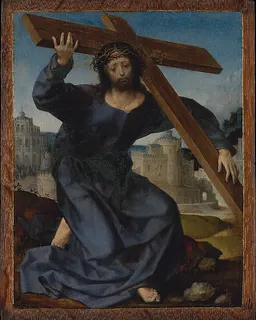
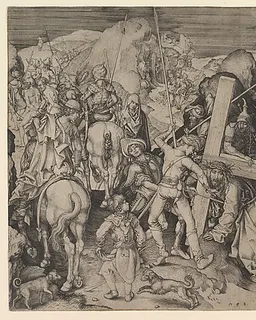
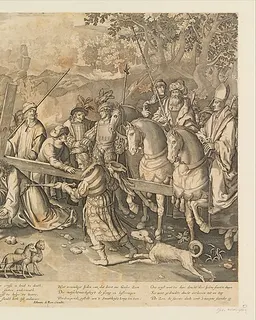
Before the dying, one small human detail Mark will not leave out: they compel one Simon a Cyrenian, who passed by, coming out of the country, the father of Alexander and Rufus, to bear his cross (v. 21). Jesus, broken by the scourging, can no longer carry the crossbeam, and the soldiers seize a bystander to carry it for Him. Simon is from Cyrene, in North Africa, a pilgrim in for the feast who wanted nothing more than to pass through - and is pressed, against his will, into the most honored burden in human history.
Mark names his sons, Alexander and Rufus, almost certainly because they were known to the church he wrote for; the man dragged in off the road that day became a name remembered among believers. There is something quietly telling in it. Simon did not volunteer; the cross was laid on him. And yet he is the first person literally to do what Jesus had told every would-be follower to do - let him take up his cross, and follow me (Mark 8:34).
The forced burden of a stranger becomes, in Mark's hands, a living picture of discipleship: walking the road behind Jesus with His cross on your shoulders.
They reach the place of execution, and Mark gives it its raw name: Golgotha, which is, being interpreted, The place of a skull (v. 22) - a grim hill outside the city wall, named perhaps for its shape or for what was done there. They gave him to drink wine mingled with myrrh: but he received it not (v. 23). The drugged wine was a small mercy customarily offered to the condemned, a sedative to dull the agony of crucifixion.
Jesus refuses it. He will not meet this hour numbed; He will drink it to the bottom, fully awake. There is a deliberateness in the refusal that runs all through the chapter - the same will that kept silent before Pilate now declines the cup that would blunt the pain. And it was the third hour, and they crucified him (v. 25). Mark states the unspeakable in four words, with no description of the nails, no lingering over the wounds.
The Gospel writers never dwell on the physical horror; they assume their readers know exactly what crucifixion was - the slowest, most shameful death the ancient world had devised. Mark simply marks the hour and lets the fact stand: they crucified him.
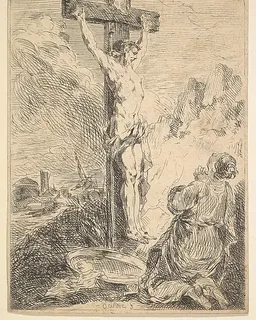
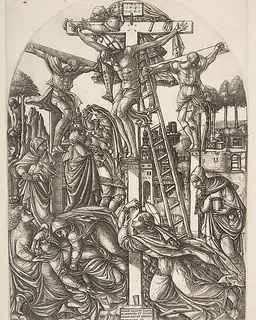
Two details frame the cross, and both are heavy with meaning. First the charge: the superscription of his accusation was written over, THE KING OF THE JEWS (v. 26). It was Roman custom to post the crime above the condemned; this was the official reason for His execution. And so the title that has run through the whole chapter - spoken by Pilate, shouted by soldiers - is now nailed over His head for all to read.
Rome means it as the statement of a crime; it is in fact the statement of a fact. The King of the Jews is reigning from precisely the place the sign is fixed. Second, His company: with him they crucify two thieves; the one on his right hand, and the other on his left (v. 27), and the scripture was fulfilled, which saith, And he was numbered with the transgressors (v. 28). The placement is not incidental.
He is set in the very midst of criminals, counted as one of them, sharing their sentence and their shame - exactly as Isaiah had said of the suffering servant, that he was numbered with the transgressors; and he bare the sin of many (Isa. 53:12)2. The King reigns between two thieves; the Holy One dies in the place reserved for the guilty.
Now comes the chorus of scorn, and Mark lets us hear it from three directions. The passers-by: And they that passed by railed on him, wagging their heads, and saying, Ah, thou that destroyest the temple, and buildest it in three days, save thyself, and come down from the cross (vv. 29-30). The chief priests and scribes: He saved others; himself he cannot save. Let Christ the King of Israel descend now from the cross, that we may see and believe (vv. 31-32).
And even the two crucified beside Him join in: they that were crucified with him reviled him. From every side the demand is the same - come down, save yourself, prove it. And the cruelest words are the truest: He saved others; himself he cannot save. The mockers mean it as a sneer; it is in fact the very logic of redemption. He cannot save others and save Himself at the same time; He has chosen to save them, and that choice costs Him everything.
The mockers think His staying on the cross proves His weakness. It proves His love. Had He come down, He would have saved Himself and lost the world; by staying, He loses Himself and saves the world. They cry, that we may see and believe - but faith is born at the foot of a cross where He stays.
Mark 15:33-47Truly This Man Was the Son of God
33And when the sixth hour was come, there was darkness over the whole land until the ninth hour. 34And at the ninth hour Jesus cried with a loud voice, saying, Eloi, Eloi, lama sabachthani? which is, being interpreted, My God, my God, why hast thou forsaken me? 35And some of them that stood by, when they heard it, said, Behold, he calleth Elias. 36And one ran and filled a spunge full of vinegar, and put it on a reed, and gave him to drink, saying, Let alone; let us see whether Elias will come to take him down. 37And Jesus cried with a loud voice, and gave up the ghost. 38And the veil of the temple was rent in twain from the top to the bottom. 39And when the centurion, which stood over against him, saw that he so cried out, and gave up the ghost, he said, Truly this man was the Son of God. 40There were also women looking on afar off: among whom was Mary Magdalene, and Mary the mother of James the less and of Joses, and Salome; 41(Who also, when he was in Galilee, followed him, and ministered unto him;) and many other women which came up with him unto Jerusalem. 42And now when the even was come, because it was the preparation, that is, the day before the sabbath, 43Joseph of Arimathaea, an honourable counsellor, which also waited for the kingdom of God, came, and went in boldly unto Pilate, and craved the body of Jesus. 44And Pilate marvelled if he were already dead: and calling unto him the centurion, he asked him whether he had been any while dead. 45And when he knew it of the centurion, he gave the body to Joseph. 46And he bought fine linen, and took him down, and wrapped him in the linen, and laid him in a sepulchre which was hewn out of a rock, and rolled a stone unto the door of the sepulchre. 47And Mary Magdalene and Mary the mother of Joses beheld where he was laid.
At noon, when the sun should be at its height, the light fails: when the sixth hour was come, there was darkness over the whole land until the ninth hour (v. 33). For three hours - from noon to three in the afternoon - an unnatural dark covers the land while the Son of God hangs dying. Mark offers no explanation, and the restraint is right; the darkness is not a thing to be explained but a thing to be felt.
Through the Scriptures, darkness at midday is a sign of judgment and of the nearness of God in His most awful dealings - the prophet Amos had spoken of a day when God would cause the sun to go down at noon, and… darken the earth in the clear day (Amos 8:9). Creation itself seems to recoil; the heavens go black over the place of the skull. Whatever else is happening on that cross in those hours, it is happening in a hush and a gloom that mark it as the hinge of the world.
The mockery has fallen silent. The crowd that shouted crucify him has nothing more to say. There is only the dark, and the dying, and the weight of something taking place that no eye can fully see.
Out of the darkness comes the loudest cry in the Gospel: at the ninth hour Jesus cried with a loud voice, saying, Eloi, Eloi, lama sabachthani? which is, being interpreted, My God, my God, why hast thou forsaken me? (v. 34). These are the opening words of Psalm 22, and Jesus prays them as His own - not a cry of despair that has lost its faith, for it still says my God, my God, holding fast even in the dark, but a cry from the very floor of human anguish.
We must let it be as deep as it is. This is real God-forsakenness, the genuine bottom of suffering, the cup He refused to numb now drunk to its dregs. He who had lived in unbroken nearness to the Father enters here into the experience of abandonment, bearing what sin brings - and He does not pretend it away or soften it for the onlookers. He cries it out loud. We are not asked to chart what passes between the Father and the Son in that hour; the text does not chart it, and reverence will not rush past its silence.
What it gives us is the cry itself, and its source - Psalm 22, a psalm that begins exactly here, in forsakenness, and travels through it to vindication and the praise of all the nations: For he hath not despised nor abhorred the affliction of the afflicted… All the ends of the world shall remember and turn unto the LORD (Ps. 22:24, 27). By taking the psalm's first line, Jesus sets His suffering inside the whole of it - the deepest darkness, named honestly, and yet held within a song that ends in triumph.
The bystanders, hearing Eloi, mishear it as a call for Elias (Elijah) and wait, half-mocking, to see if the prophet will come. They are listening, and they do not understand what they hear.
The end comes not as a collapse but as an act: And one ran and filled a spunge full of vinegar, and put it on a reed, and gave him to drink… And Jesus cried with a loud voice, and gave up the ghost (vv. 36-37). A dying man, after hours on a cross, has no breath left to shout; crucifixion kills slowly by suffocation, and its victims fade into silence. But Jesus cried with a loud voice at the very end - one last great cry, full of strength - and then yielded His life.
The wording matters. Mark does not say merely that He died; he says He gave up the ghost, He breathed out His spirit, as one who lays something down rather than has it torn away. It is the same sovereignty that has marked Him all chapter long: silent before Pilate by His own will, refusing the drugged wine by His own will, and now surrendering His life by His own will, in His own time, with a loud cry.
No one finally takes this life from Him. He lays it down - I lay down my life… No man taketh it from me, but I lay it down of myself (John 10:17-18). The loud cry is not the sound of a man overcome. It is the sound of a King completing what He came to do.3
In the same moment, miles away inside the temple, something tears: And the veil of the temple was rent in twain from the top to the bottom (v. 38). The veil was the great curtain that screened the Most Holy Place, the inner room where the presence of God dwelt, into which only the high priest could go, and that only once a year, and never without blood. It was the standing sign that the way to God was closed, that sinful people could not simply walk into His presence.
And at the instant of Jesus' death it is torn open - and torn from the top to the bottom, which is to say, from God's side down, by no human hand. This is God Himself opening the way. What Jesus' death accomplishes is here made visible in cloth and architecture: the barrier between God and humanity is removed, the closed room thrown open, the long exclusion ended. The letter to the Hebrews reads the torn veil exactly so - that we now have boldness to enter into the holiest by the blood of Jesus, by a new and living way, which he hath consecrated for us, through the veil, that is to say, his flesh (Heb. 10:19-20).
The cry of forsakenness and the rent veil belong together: He was shut out into the darkness so that we might be brought in; the door He found closed, He opened for us with His own death.
And now the confession the whole Gospel has been waiting for - and the mouth it comes from is the last one we would expect: And when the centurion, which stood over against him, saw that he so cried out, and gave up the ghost, he said, Truly this man was the Son of God (v. 39). A Roman centurion, the officer in charge of the execution, a Gentile and an outsider to Israel's covenant, a man whose trade is killing - he is the one who says it plainly.
Throughout Mark, no human being has confessed Jesus this clearly. Demons named Him; Peter half-grasped it and then stumbled; the disciples kept asking who He was. The full human confession of the truth of the whole book is reserved for this Gentile soldier, standing at the foot of the cross, having watched a man die. And mark what moved him: not a miracle, not the dazzling display the mockers demanded, but the way Jesus died - the loud cry, the manner of His giving up the spirit, the strange majesty of it.
He saw that he so cried out, and gave up the ghost - and in the death itself he saw God's Son. There is a deep mercy in this for everyone outside the fold. The first to confess Christ crucified is not a priest or a scholar or a disciple, but a foreigner with blood on his hands - the kind of person the gospel was always going to reach.
The chapter closes quietly, with the faithful few who stayed. First the women: There were also women looking on afar off: among whom was Mary Magdalene, and Mary the mother of James the less and of Joses, and Salome (v. 40), who had followed Him from Galilee and ministered to Him. The men have fled; the women remain, watching from a distance, and they will matter enormously in three days' time - for they are the ones who see where He is laid, and they will be the first witnesses of the empty tomb.
Then a man steps out of the shadows at great risk: Joseph of Arimathaea, an honourable counsellor, which also waited for the kingdom of God, came, and went in boldly unto Pilate, and craved the body of Jesus (v. 43). He is a member of the very council that condemned Jesus, and to ask Rome for the body of an executed man is to declare his own allegiance openly, when all the chosen disciples have scattered.
His courage is the more striking for its timing - he comes forward at the hour when there seems nothing left to gain. Pilate, surprised that death has come so quickly, summons the centurion to confirm it - Pilate marvelled if he were already dead… and when he knew it of the centurion, he gave the body to Joseph (vv. 44-45) - so that the death is certified by the very officer who watched Him die, and there is no doubt left that He was truly dead.
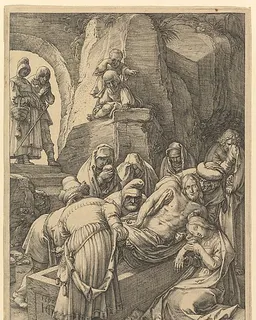
He bought fine linen, and took him down, and wrapped him in the linen, and laid him in a sepulchre which was hewn out of a rock, and rolled a stone unto the door of the sepulchre (v. 46). The King is given an honorable burial, wrapped with care, laid in a tomb cut from solid rock. And the women keep watch to the end: Mary Magdalene and Mary the mother of Joses beheld where he was laid (v. 47).
Research trail
Sources & further study
These references support the historical, linguistic, manuscript, and contextual notes in this chapter. Scripture remains the primary text; external sources are provided so readers can inspect the research directly.
- Mark 15 - Translators' NotesThe NET Bible's detailed footnotes on Mark 15 - the legal proceeding before Pilate (vv. 1-5), the release of Barabbas and the scourging (vv. 6-15), the hours of the crucifixion, and the rending of the temple veil and the centurion's confession in verses 38-39.
- Mark 15 ↔ Psalm 22 · Isaiah 53Traces the threads tying Mark 15 to the rest of Scripture - the parting of the garments and the wagging heads (vv. 24, 29) read against Psalm 22:18, 7; the cry of verse 34 against Psalm 22:1; and the silent sufferer of verse 5 against the lamb led to the slaughter in Isaiah 53:7.
- Mark 15 · Greek interlinear with lexiconThe Greek text of Mark 15 word by word, each word parsed and linked to its lexicon entry - useful for the verb behind “gave up the ghost” in verse 37 (ekpneō, to breathe out one's last), for the soldiers' mock-acclamation in verse 18, and for the centurion's words in verse 39.
Where this echoes in Scripture
Art Thou the King of the Jews?
- Isaiah 53:7he was oppressed, and he was afflicted, yet he opened not his mouth: he is brought as a lamb to the slaughter.The silence of verse 5 foretold - the servant who does not defend himself, led like a lamb.
- John 18:36My kingdom is not of this world: if my kingdom were of this world, then would my servants fight.How the King of verse 2 is King - a kingdom that does not rise by the sword or rival Caesar.
- 1 Timothy 6:13Christ Jesus, who before Pontius Pilate witnessed a good confession.The hearing of verses 1-5 named - the good confession Jesus made standing before Pilate.
- 1 Peter 2:23who, when he was reviled, reviled not again; when he suffered, he threatened not; but committed himself to him that judgeth righteously.The bearing of verse 5 - answering nothing, entrusting the verdict to God.
- Psalm 2:6Yet have I set my king upon my holy hill of Zion.The truth behind Pilate's question (v. 2) - the King God Himself has set in place.
Barabbas Released, the Innocent Condemned
- 2 Corinthians 5:21For he hath made him to be sin for us, who knew no sin; that we might be made the righteousness of God in him.The exchange of verse 15 stated plainly - the innocent put in the place of the guilty.
- 1 Peter 3:18For Christ also hath once suffered for sins, the just for the unjust, that he might bring us to God.What the swap of Barabbas and Jesus pictures - the just suffering for the unjust.
- Isaiah 53:5But he was wounded for our transgressions, he was bruised for our iniquities: the chastisement of our peace was upon him.The scourging of verse 15 foretold - the punishment that was ours laid on Him.
- Acts 3:14But ye denied the Holy One and the Just, and desired a murderer to be granted unto you.The choice of verses 11-15 named - the Just One refused and the murderer set free.
- Romans 5:8But God commendeth his love toward us, in that, while we were yet sinners, Christ died for us.Why the innocent was condemned (v. 15) - love that dies for the guilty.
The Soldiers' Mockery
- Philippians 2:8-11he humbled himself, and became obedient unto death... that at the name of Jesus every knee should bow.The mock homage of verses 18-19 answered - the knee that bows in scorn will one day bow in truth.
- Isaiah 50:6I gave my back to the smiters... I hid not my face from shame and spitting.The smiting and spitting of verse 19 foretold - the servant who gives himself to be struck.
- Genesis 3:18Thorns also and thistles shall it bring forth to thee.The thorns of verse 17 - the curse of the ground now pressed upon the King's own head.
- Revelation 19:16And he hath on his vesture and on his thigh a name written, KING OF KINGS, AND LORD OF LORDS.The true crown behind the mock one (v. 17) - the King the soldiers jeered, revealed in glory.
- Hebrews 2:9we see Jesus, who was made a little lower than the angels for the suffering of death, crowned with glory and honour.The deeper truth of the crowning (vv. 17-19) - through suffering, crowned with glory.
The Crucifixion at Golgotha
- Psalm 22:16-18they pierced my hands and my feet... They part my garments among them, and cast lots upon my vesture.The crucifixion and the parted garments of verse 24 foretold to the letter centuries before.
- Isaiah 53:12he hath poured out his soul unto death: and he was numbered with the transgressors.The two thieves of verses 27-28 - the Holy One counted among the guilty, as Scripture said.
- Mark 8:34Whosoever will come after me, let him deny himself, and take up his cross, and follow me.What Simon does in verse 21 - the first to literally carry a cross behind Jesus.
- Hebrews 12:2who for the joy that was set before him endured the cross, despising the shame.Why He would not come down (vv. 30-31) - enduring the cross for the joy of saving others.
- Luke 23:34Then said Jesus, Father, forgive them; for they know not what they do.His heart toward the mockers of verses 29-32 - railed at, and praying for the railers.
Truly This Man Was the Son of God
- Psalm 22:1My God, my God, why hast thou forsaken me? why art thou so far from helping me?The very words of verse 34 - the psalm Jesus prays from the cross, which moves from anguish to vindication.
- Hebrews 10:19-20boldness to enter into the holiest by the blood of Jesus, by a new and living way... through the veil, that is to say, his flesh.The torn veil of verse 38 explained - the way into God's presence opened by His death.
- Isaiah 53:4-6Surely he hath borne our griefs... the LORD hath laid on him the iniquity of us all.What He bore in the darkness (v. 34) - our griefs and our iniquity laid upon Him.
- John 10:17-18I lay down my life... No man taketh it from me, but I lay it down of myself.The loud cry and the breathing-out of verse 37 - a life willingly laid down.
- Mark 1:1The beginning of the gospel of Jesus Christ, the Son of God.The bookend the centurion closes (v. 39) - the truth Mark announced at the start, confessed at the cross.