


![Christ on the way to Emmaus [Mark 16:12] by Maerten de Vos](https://uqcgieillyvefzmohzpn.supabase.co/storage/v1/object/public/art-thumbs/met-365054/256.webp)


Mark 16
People in this chapter
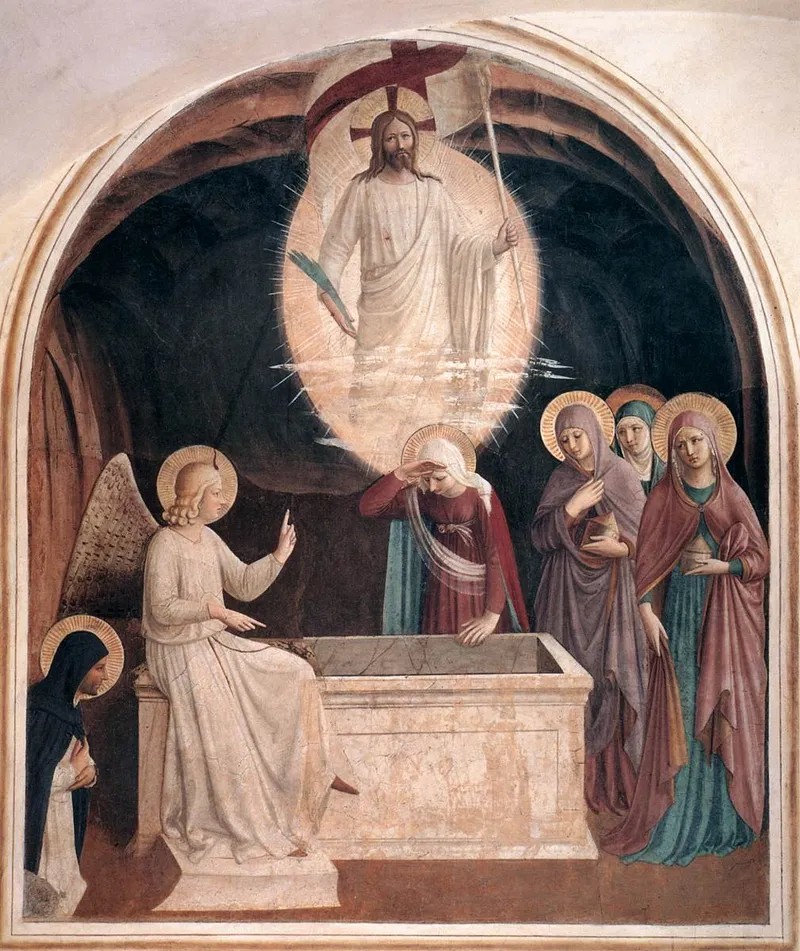
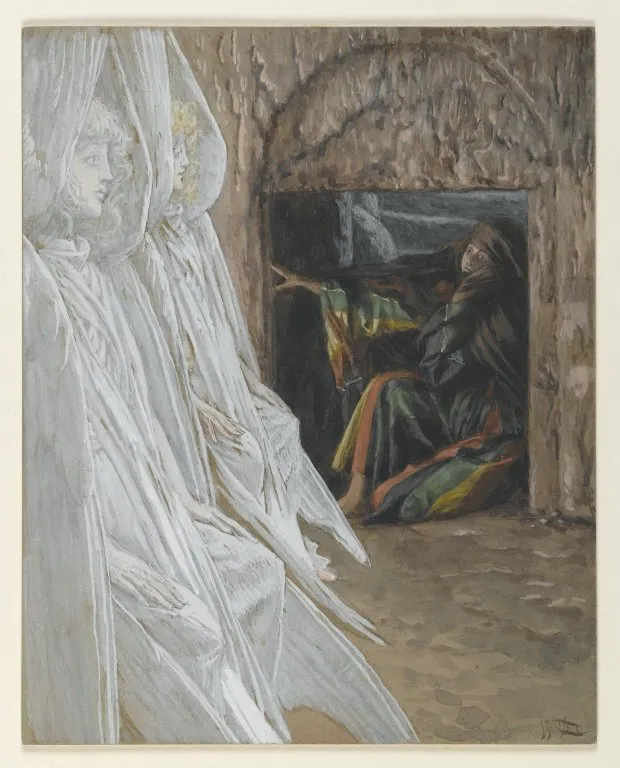
Mark closes where every Gospel must: at the tomb, and then beyond it. The Sabbath past, three women - Mary Magdalene, Mary the mother of James, and Salome - buy sweet spices and come very early in the morning the first day of the week… at the rising of the sun (v. 2) to anoint the body of Jesus. Their only question is who will move the stone, for it was very great (v. 4). They find it already rolled away, and inside the tomb a young man in a long white garment, who steadies their fear with the announcement the whole book has been straining toward: Be not affrighted: Ye seek Jesus of Nazareth, which was crucified: he is risen; he is not here: behold the place where they laid him (v. 6).1
Tap any highlighted phrase to jump to the commentary that unpacks it.
Mark 16:1-8He Is Risen
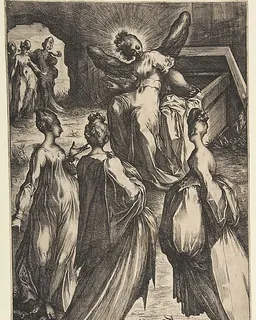
1And when the sabbath was past, Mary Magdalene, and Mary the mother of James, and Salome, had bought sweet spices, that they might come and anoint him. 2And very early in the morning the first day of the week, they came unto the sepulchre at the rising of the sun. 3And they said among themselves, Who shall roll us away the stone from the door of the sepulchre? 4And when they looked, they saw that the stone was rolled away: for it was very great. 5And entering into the sepulchre, they saw a young man sitting on the right side, clothed in a long white garment; and they were affrighted.
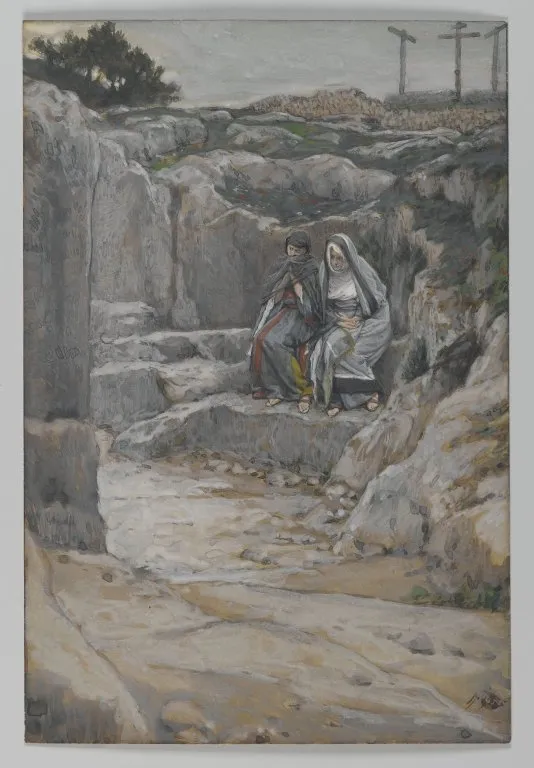
The chapter opens on a small, human, heartbreaking errand. When the sabbath was past - the law had kept them home through the holy day - the three women buy sweet spices, that they might come and anoint him (v. 1), and they set out very early in the morning the first day of the week… at the rising of the sun (v. 2). This is the work of love after a death: to tend the body, to anoint it, to do the last decent thing for someone you cannot stop loving.
They are not on their way to a miracle. They expect to find a corpse three days dead. And their one worry, voiced on the road, is purely practical: Who shall roll us away the stone from the door of the sepulchre? (v. 3). The stone is too great for them; they have no plan for moving it. It is worth sitting with how ordinary their grief is - how unprepared they are for what they are about to meet.
The faith that will fill the church was not, on that first morning, even hoping for resurrection. It was carrying spices and wondering about a stone.1
Then they look up. And when they looked, they saw that the stone was rolled away: for it was very great (v. 4). Mark lingers on the size of it almost as an aside - the very thing they feared was unmovable is already moved. The barrier between the living and the dead, the seal of the grave, the great stone that the previous chapter watched being rolled to the door (15:46), has been rolled back.
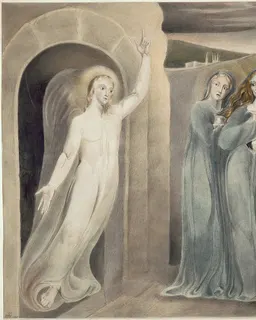
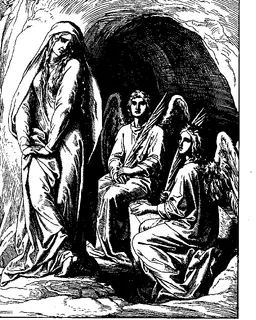
They enter, and they saw a young man sitting on the right side, clothed in a long white garment; and they were affrighted (v. 5). The white garment marks a messenger of heaven; the calm posture - sitting, at rest, on the right side - is itself a kind of announcement, for there is nothing left to do here. The fear of the women is the right reaction to standing where the power of God has just broken in.
What unsettles them is not that something terrible has happened, but that something has happened far beyond anything they came prepared to handle.
6And he saith unto them, Be not affrighted: Ye seek Jesus of Nazareth, which was crucified: he is risen; he is not here: behold the place where they laid him. 7But go your way, tell his disciples and Peter that he goeth before you into Galilee: there shall ye see him, as he said unto you. 8And they went out quickly, and fled from the sepulchre; for they trembled and were amazed: neither said they any thing to any man; for they were afraid.
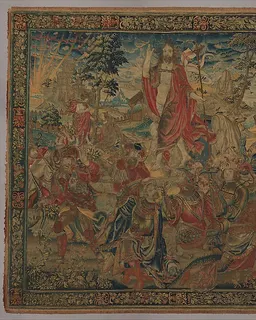
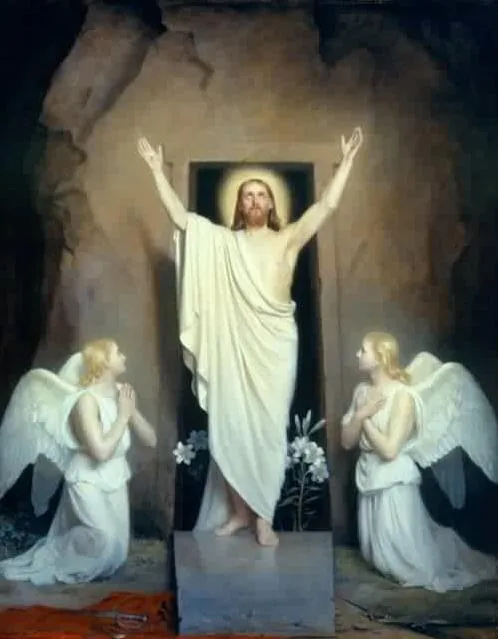
The messenger steadies them before he stuns them: Be not affrighted: Ye seek Jesus of Nazareth, which was crucified: he is risen; he is not here: behold the place where they laid him (v. 6). Notice how the sentence is built. He names the very Jesus they are looking for - the man of Nazareth, the one which was crucified, no other - and then turns the world inside out: he is risen; he is not here. And he points to evidence anyone can check: behold the place where they laid him. The slab is empty.
The body that was wrapped and laid there two evenings before is gone. Then comes the commission, and with it the trembling exit: they went out quickly, and fled from the sepulchre; for they trembled and were amazed: neither said they any thing to any man; for they were afraid (v. 8). It is a strikingly honest ending. The first witnesses of the resurrection do not stride out in triumph; they run, shaking, struck speechless.
The good news is so large it frightens them before it gladdens them - which is its own quiet testimony that they did not invent it. No one fabricating a tale of victory writes the heroes fleeing in terror.
Mark 16:9-14He Appeared First to Mary Magdalene
9Now when Jesus was risen early the first day of the week, he appeared first to Mary Magdalene, out of whom he had cast seven devils. 10And she went and told them that had been with him, as they mourned and wept. 11And they, when they had heard that he was alive, and had been seen of her, believed not.
The risen Lord's first appearance is itself a sermon on grace. Now when Jesus was risen early the first day of the week, he appeared first to Mary Magdalene, out of whom he had cast seven devils (v. 9). Of all the people He might have come to first - the eleven, the inner three, His own mother - the living Christ shows Himself first to a woman He had once delivered from sevenfold torment. The detail is not incidental; Mark keeps it on the page.
The depth of her former bondage is the measure of His former mercy, and now she is the first eyes to see Him alive. She does the only natural thing: she went and told them that had been with him, as they mourned and wept (v. 10). The disciples are not waiting in hope; they are grieving as men whose cause has died with their master. And their response to the first resurrection report is the response that will repeat through this whole section: they, when they had heard that he was alive, and had been seen of her, believed not (v. 11).
The news is simply too good, and the grief too settled, for them to take it in.
12After that he appeared in another form unto two of them, as they walked, and went into the country. 13And they went and told it unto the residue: neither believed they them. 14Afterward he appeared unto the eleven as they sat at meat, and upbraided them with their unbelief and hardness of heart, because they believed not them which had seen him after he was risen.
The pattern holds and deepens. After that he appeared in another form unto two of them, as they walked, and went into the country (v. 12) - the brief notice of the longer road-to-Emmaus scene told elsewhere - and again, when these two carry the report back, neither believed they them (v. 13). Three waves of witness now, and three refusals. So at last he appeared unto the eleven as they sat at meat, and upbraided them with their unbelief and hardness of heart, because they believed not them which had seen him after he was risen (v. 14).
The word upbraided is strong; the risen Lord does not paper over their failure. But weigh what this honesty tells us. Mark, writing the church's own founding story, records that its first leaders were stubborn doubters who had to be rebuked into belief - not visionaries primed to see what they wanted. Faith was forced on them by a fact they kept resisting. And weigh, too, the mercy underneath the rebuke: He corrects them, but He does not replace them.
The same eleven who would not believe are the eleven He is about to send into all the world. He reproves their hardness and then entrusts them with everything.
Mark 16:15-20Go Ye Into All the World
15And he said unto them, Go ye into all the world, and preach the gospel to every creature. 16He that believeth and is baptized shall be saved; but he that believeth not shall be damned.
Out of the rebuke comes the sending, and the scope of it is breathtaking: Go ye into all the world, and preach the gospel to every creature (v. 15). Every word stretches the horizon wider. Not stay but go; not to one city or one people but into all the world; not to a chosen few but to every creature. The good news that began with one carpenter calling fishermen by a Galilean lake is now to be carried to the whole human race without exception.
This is the same trajectory the whole Bible has been on - the promise to Abraham that in him all families of the earth would be blessed, the vision of the nations streaming in - now made an explicit marching order. The risen Lord does not gather His own into a safe and private circle; He flings the doors open and sends them out. The church does not exist for itself. It exists to go, and to keep going until every creature has heard.
The terms of the message are laid out with great plainness: He that believeth and is baptized shall be saved; but he that believeth not shall be damned (v. 16). Read the sentence carefully, because its two halves are not mirror images. The way of salvation is described fully - believeth and is baptized - faith owned and faith confessed, the inward turning and its outward sign together. But when the verse names what brings condemnation, it does not say “he that is not baptized”; it says he that believeth not. The weight of the warning falls squarely on unbelief.
What shuts a person out is the refusal of the good news itself - the turning away from Christ - not the mere absence of a rite. This matches how the rest of the New Testament speaks: he that believeth not is condemned already, because he hath not believed (John 3:18). The stakes the verse sets before every hearer are real and ultimate, and that is precisely why the commission is so urgent: people are genuinely lost or genuinely saved, and the message the church carries is the difference.
To preach the gospel to every creature is not optional pageantry; it is rescue.
17And these signs shall follow them that believe; In my name shall they cast out devils; they shall speak with new tongues; 18They shall take up serpents; and if they drink any deadly thing, it shall not hurt them; they shall lay hands on the sick, and they shall recover. 19So then after the Lord had spoken unto them, he was received up into heaven, and sat on the right hand of God. 20And they went forth, and preached every where, the Lord working with them, and confirming the word with signs following. Amen.
The Lord then names signs that will accompany the message as it goes out: In my name shall they cast out devils; they shall speak with new tongues; They shall take up serpents; and if they drink any deadly thing, it shall not hurt them; they shall lay hands on the sick, and they shall recover (vv. 17-18). These are best understood for what the closing verse says they are - the way God confirmed the word in the founding age of the church, His own attestation that the gospel the apostles preached was true.
The book of Acts shows them coming to pass: the disciples speak in other tongues, cast out evil spirits, and heal the sick in Jesus' name; Paul is unharmed when a viper fastens on his hand. The point of the signs is never the sign itself, and certainly never a dare - nothing here commands a believer to seek out serpents or poison to prove anything; the scene is one of unexpected protection, not engineered risk.
The signs are God's signature on the message, exactly as Scripture elsewhere says: the great salvation was confirmed unto us by them that heard him; God also bearing them witness, both with signs and wonders, and with divers miracles (Heb. 2:3-4). The accent falls on the One being preached, not on the wonders that point to Him.
And then the Gospel ends - not at a grave, but at a throne. So then after the Lord had spoken unto them, he was received up into heaven, and sat on the right hand of God (v. 19). The story that opened with Jesus stepping out of the Galilean crowd to be baptized in the Jordan closes with Him received up out of the sight of His own into heaven itself. Received up is a passive again, like the empty tomb's “he is risen”: the Father raised Him from the dead and the Father takes Him up on high.
And He does not merely depart - He sat, He took His seat on the right hand of God. To sit at the right hand is to be enthroned, to hold the place of highest honour and authority. The final picture Mark leaves us is not of an absent teacher but of a reigning King. Then the disciples obey: they went forth, and preached every where, the Lord working with them, and confirming the word with signs following (v. 20).
The book ends mid-stride, with the gospel already on the move - and the risen, enthroned Lord not watching from a distance but working with them. The mission is His before it is theirs, and He never leaves the field.
Research trail
Sources & further study
These references support the historical, linguistic, manuscript, and contextual notes in this chapter. Scripture remains the primary text; external sources are provided so readers can inspect the research directly.
- Mark 16 - Translators' NotesThe NET Bible's detailed footnotes on Mark 16 - the women's arrival at the sepulchre and the announcement of the rising (vv. 1-8), the appearances of the risen Lord (vv. 9-14), and the commission, the signs, and the ascension that close the Gospel (vv. 15-20).
- Mark 16 · Greek interlinear with lexiconThe Greek text of Mark 16 word by word, each word parsed and linked to its lexicon entry - useful for the passive verb behind “he is risen” in verse 6 (ēgerthē, “he has been raised”), for the command to “preach the gospel” in verse 15 (kēryssō + euangelion), and for the phrase “received up” in verse 19.
- Mark 16 ↔ Psalm 110 · 1 Corinthians 15 · Acts 1Traces the threads tying Mark 16 to the rest of Scripture - the empty tomb and the third-day rising (v. 6) read against 1 Corinthians 15:3-4, 20; the session at God's right hand (v. 19) against Psalm 110:1; and the ascension against the eyewitness account of Acts 1:9-11.
Where this echoes in Scripture
He Is Risen
- 1 Corinthians 15:3-4Christ died for our sins according to the scriptures; and that he was buried, and that he rose again the third day according to the scriptures.The empty tomb of verse 6 named by the apostle as the ground the gospel stands upon.
- 1 Corinthians 15:20But now is Christ risen from the dead, and become the firstfruits of them that slept.The rising of verse 6 as the first sheaf of a whole harvest - resurrection promised to all who are His.
- Mark 8:31The Son of man... shall be killed, and after three days rise again.Jesus' own prediction, now announced as accomplished fact: he is risen (v. 6).
- Mark 14:72And the second time the cock crew... and when he thought thereon, he wept.Why the message is sent “and Peter” (v. 7) - the denier named so he would know he was not cut off.
- Isaiah 25:8He will swallow up death in victory; and the Lord GOD will wipe away tears from off all faces.The promise the empty tomb begins to fulfill - death itself answered and undone.
He Appeared First to Mary Magdalene
- Luke 24:13-16And, behold, two of them went that same day to a village called Emmaus... But their eyes were holden that they should not know him.The fuller account of the “two of them” walking into the country in verse 12.
- John 20:14-16Jesus saith unto her, Mary. She turned herself, and saith unto him... Master.The appearance to Mary Magdalene (v. 9) told from the inside - the risen Lord calling her by name.
- Mark 2:17They that are whole have no need of the physician, but they that are sick: I came not to call the righteous, but sinners to repentance.The heart that appears first to the freed and patiently to the doubting (vv. 9-14) - the seeker of the sick.
- Luke 24:38-43Why are ye troubled?... Behold my hands and my feet... And he took it, and did eat before them.The risen Lord answering the unbelief of verse 14 with the plain evidence of a real, eating body.
- John 20:27Then saith he to Thomas... be not faithless, but believing.The same patience with doubt as verse 14 - Christ meeting the unbelieving disciple where he is.
Go Ye Into All the World
- Psalm 110:1The LORD said unto my Lord, Sit thou at my right hand, until I make thine enemies thy footstool.The throne Jesus takes in verse 19 - the enthronement David foresaw a thousand years before.
- Acts 1:9-11While they beheld, he was taken up; and a cloud received him out of their sight... this same Jesus... shall so come in like manner.The ascension of verse 19 told by eyewitnesses - received up into heaven, with the promise of His return.
- Matthew 28:18-20All power is given unto me in heaven and in earth. Go ye therefore, and teach all nations... and, lo, I am with you alway.The same Great Commission as verses 15-16 - the risen Lord sending His own to all the world.
- Hebrews 2:3-4God also bearing them witness, both with signs and wonders, and with divers miracles... What the signs of verses 17-18 were for - God confirming the apostles' word in the founding age.
- Genesis 12:3And in thee shall all families of the earth be blessed.The ancient promise the commission of verse 15 throws open - the gospel for every family of the earth.