Matthew 2
People in this chapter
The first chapter of Matthew named who Jesus is - the son of David, the son of Abraham, Immanuel, God with us. The second chapter shows the world's first response to Him, and it is a study in opposites. When Jesus was born in Bethlehem of Judaea in the days of Herod the king, behold, there came wise men from the east to Jerusalem (v. 1). They are Gentiles, strangers to the covenant, and yet they have read a sign in the heavens and crossed a great distance to find a King who is not their own.
Their question rings through the city: Where is he that is born King of the Jews? for we have seen his star in the east, and are come to worship him (v. 2). It is the right question, asked by the wrong people - and that is precisely Matthew's point.1
Tap any highlighted phrase to jump to the commentary that unpacks it.
Matthew 2:1-8Where Is He That Is Born King of the Jews?
1Now when Jesus was born in Bethlehem of Judaea in the days of Herod the king, behold, there came wise men from the east to Jerusalem, 2Saying, Where is he that is born King of the Jews? for we have seen his star in the east, and are come to worship him. 3When Herod the king had heard these things, he was troubled, and all Jerusalem with him. 4And when he had gathered all the chief priests and scribes of the people together, he demanded of them where Christ should be born. 5And they said unto him, In Bethlehem of Judaea: for thus it is written by the prophet, 6And thou Bethlehem, in the land of Juda, art not the least among the princes of Juda: for out of thee shall come a Governor, that shall rule my people Israel. 7Then Herod, when he had privily called the wise men, enquired of them diligently what time the star appeared. 8And he sent them to Bethlehem, and said, Go and search diligently for the young child; and when ye have found him, bring me word again, that I may come and worship him also.
The chapter opens with two facts set side by side, and the contrast between them is the whole story in miniature: Jesus is born in Bethlehem of Judaea in the days of Herod the king, and at once there came wise men from the east to Jerusalem (v. 1). On one side, the reigning king in his palace; on the other, strangers from a far country who have come looking for a different king entirely.
These wise men - the Greek calls them magoi - were a learned class from the lands east of the Jordan, students of the heavens, readers of signs.2 They are outsiders in every sense: not sons of Abraham, not heirs of the covenant, not raised on the prophets. They have no Scripture to guide them, only a light in the sky. And yet they are the ones who come. Matthew, writing to a people who prized their covenant heritage, opens his account of Jesus' life with foreigners arriving to worship - a quiet announcement, before a single miracle, that this King belongs to more than one nation.
Their question is direct and astonishing: Where is he that is born King of the Jews? for we have seen his star in the east, and are come to worship him (v. 2). They do not ask whether such a king has been born; they take it as settled and ask only where. And they name their purpose without embarrassment: they have come to worship him. What moved them was a star - whether a conjunction of planets, a comet, or something stranger still, the text does not say and does not need to.
What matters is that God met these seekers where they already were, in the discipline they already practised, and used the night sky they had spent their lives studying to draw them toward His Son. The light in the heavens that has guided sailors and shepherds becomes, for these men, a summons. They followed what light they had - and it led them to the King. The chapter quietly suggests that no honest search for truth is wasted, and that God is able to call seekers from the most unlikely distances.
The arrival of the magi sends a tremor through the city: When Herod the king had heard these things, he was troubled, and all Jerusalem with him (v. 3). The reaction is telling. The birth that brought the wise men joy brings Herod trouble - the very same news, received in opposite ways. Herod was a king by Rome's permission, suspicious to the point of paranoia, a man who had put even members of his own household to death to protect his throne.
To him, a child born King of the Jews is not good news but a rival, a threat to be removed. And notice that all Jerusalem is troubled with him - the city has learned to fear what its king fears. Here is one of the deep truths Matthew is pressing: the coming of the true King does not leave the world neutral. To a heart set on its own throne, the arrival of Christ feels like an invasion.
The same light that draws the seeker can unsettle the one who has something to protect.
Herod does the shrewd thing: he gathers all the chief priests and scribes of the people and demands to know where Christ should be born (v. 4). Their answer comes instantly, for they know the text by heart: In Bethlehem of Judaea, and they quote the prophet - And thou Bethlehem, in the land of Juda, art not the least among the princes of Juda: for out of thee shall come a Governor, that shall rule my people Israel (vv. 5-6).
This is the prophecy of Micah, who foretold that out of small, overlooked Bethlehem - David's own town - would come a ruler for Israel.1 The detail Matthew wants the reader to feel is the gap between knowledge and response. The scribes have the right answer; they can name the town, cite chapter and verse. And they do nothing. They do not walk the few miles south to see. The wise men, who had only a star, travel on to worship; the scribes, who have the whole prophecy, stay in Jerusalem.
To know where the King is and never go to Him is its own kind of tragedy - and it is the religious experts, not the foreigners, who fall into it here.
Herod now turns from public alarm to private scheming: Then Herod, when he had privily called the wise men, enquired of them diligently what time the star appeared (v. 7). The word privily - secretly - exposes him. He pulls the magi aside, away from the court, and presses them for the exact timing of the star, information he will later use to calculate the ages of the children he means to destroy. Then he masks the whole plot in the language of piety: Go and search diligently for the young child; and when ye have found him, bring me word again, that I may come and worship him also (v. 8).
It is a lie wrapped in the very word the magi used in earnest. They have come to worship; Herod says he will worship him also - and means to murder Him. Matthew lets the irony stand without comment. Here are the two ways the human heart can answer the King: open-handed worship that travels across the world, and a counterfeit worship that hides a knife. The same words can come from both; only what they conceal tells them apart.
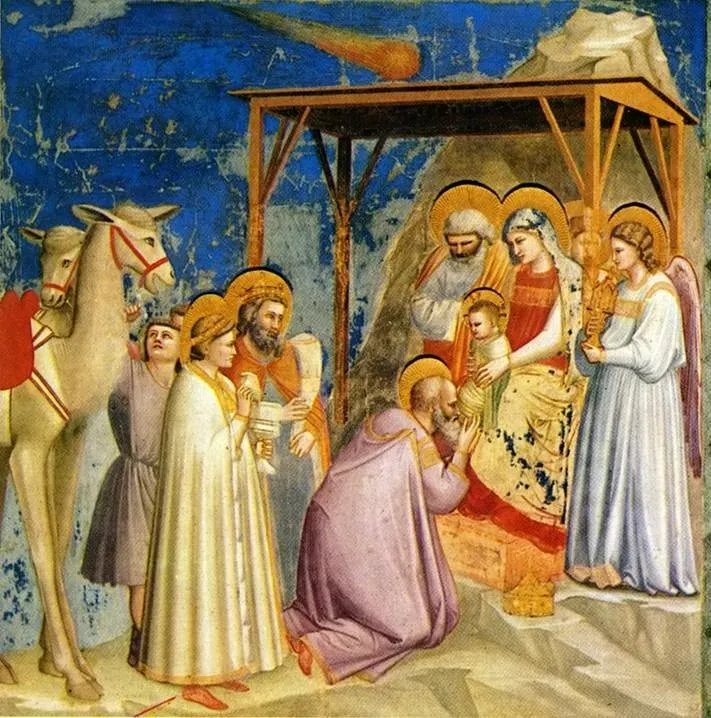
Matthew 2:9-12The Star Stood Over the Young Child
9When they had heard the king, they departed; and, lo, the star, which they saw in the east, went before them, till it came and stood over where the young child was. 10When they saw the star, they rejoiced with exceeding great joy. 11And when they were come into the house, they saw the young child with Mary his mother, and fell down, and worshipped him: and when they had opened their treasures, they presented unto him gifts; gold, and frankincense, and myrrh. 12And being warned of God in a dream that they should not return to Herod, they departed into their own country another way.
Leaving Herod behind, the magi set out for Bethlehem, and the star meets them again: lo, the star, which they saw in the east, went before them, till it came and stood over where the young child was (v. 9). The same light that first stirred them now leads them the last stretch of the way and comes to rest over the precise place. There is a tender economy in the way God guides here.
The star did not spell out an address; it drew them first to the land, and then, after the prophecy had pointed them to the town, it went before them to the very house. Light and Scripture work together - the sign in the heavens and the word of Micah leading to the same door. And the destination is humble past expectation. The star, which has crossed a sky, stops not over a palace in Jerusalem but over an ordinary house in a small town, where a child rests with His mother.
The God who hung the star chose to be found in the lowliest of settings - and the seekers who followed the light were not turned away by the smallness of the place.
Matthew pauses on their reaction with a string of words almost too full for the sentence to hold: When they saw the star, they rejoiced with exceeding great joy (v. 10). It is hard to translate the force of it - they rejoiced a great joy, exceedingly. After the long road, after the unsettling audience with a suspicious king, after following a light on nothing but faith that it meant something, the star stops, and their hearts overflow.
This is the joy of the seeker who finds, the traveller who arrives, the one who staked everything on a sign and is now proven right. It is worth setting this gladness against Herod's trouble at that same news. The identical event - the King has come - produces dread in the man guarding his own throne and exceeding great joy in those who have come to bow. How a person responds to the nearness of Christ reveals what that person most loves.
To the magi, finding the King is the best thing that has ever happened. Their joy is the truest worship of all, before a gift is ever unwrapped.
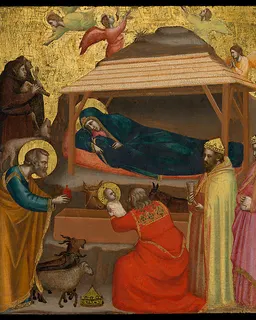
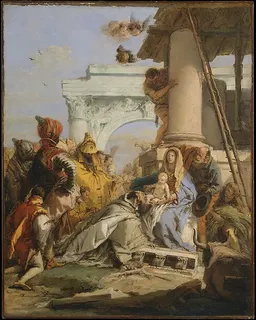
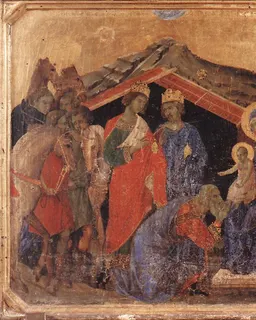
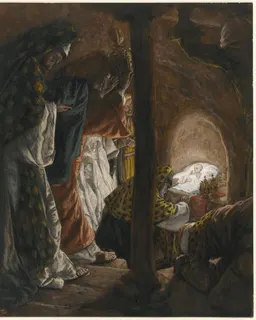
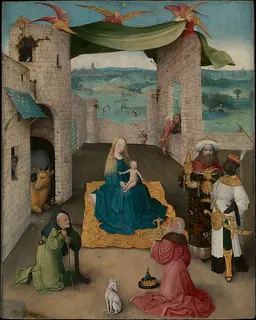
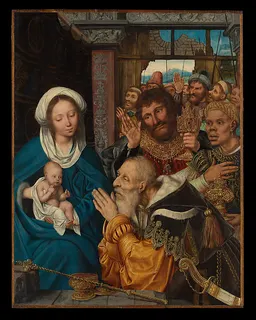
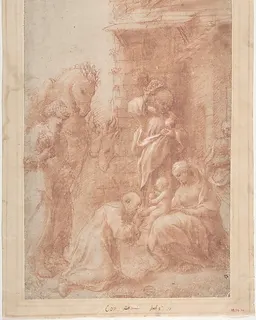
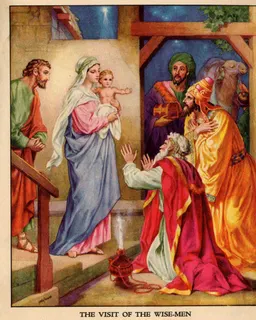
They enter, and the long journey comes to its knees: when they were come into the house, they saw the young child with Mary his mother, and fell down, and worshipped him (v. 11). The bodily act says everything - learned, travelled, wealthy men, stretched out on the floor before a child. Then they had opened their treasures and presented unto him gifts; gold, and frankincense, and myrrh. These are not random valuables but royal tribute, the kind of costly things one carries to a king.
Gold, the metal of crowns and thrones. Frankincense, the fragrant resin burned in worship, rising like prayer. Myrrh, a precious spice - used to perfume, and used to anoint the dead for burial. The early readers of this Gospel saw in the three gifts a quiet portrait of the child Himself: a King to be crowned, a presence worthy of worship, and a life that would end in a tomb. The magi may not have grasped all they were saying with their offerings.
But Matthew, who will end his Gospel at a borrowed grave wrapped in spices, surely meant the reader to. Worship that holds nothing back - treasures opened, the best given - is the response the King draws from those who truly find Him.
A dream closes the scene and protects the child: being warned of God in a dream that they should not return to Herod, they departed into their own country another way (v. 12). The wise men, who had promised Herod nothing, are spared the trap; God turns them home by another road, and the murderer's plan is quietly undone before he knows it. This is the first of the dreams that thread through the chapter - God guiding the obedient and outmanoeuvring the violent through the simplest of means, a word in the night.
And there is something fitting in the phrase another way. No one who truly meets the King goes back the way he came. The magi return to their own country changed, carrying what they have seen. Having found the child and worshipped, they cannot simply retrace their steps into the old life as if nothing had happened. The encounter reroutes them - in the plain sense, away from Herod, and in a deeper sense, onto a different path home.
Matthew 2:13-23Out of Egypt Have I Called My Son
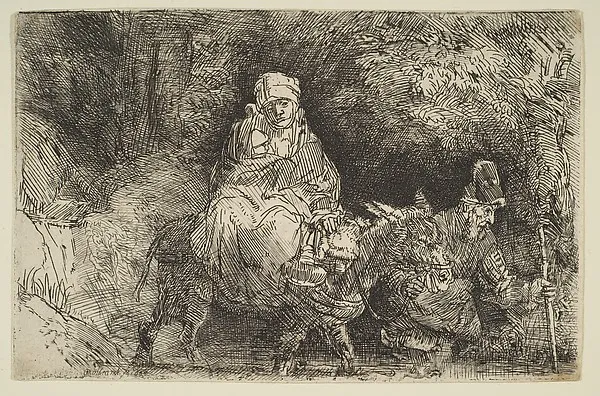
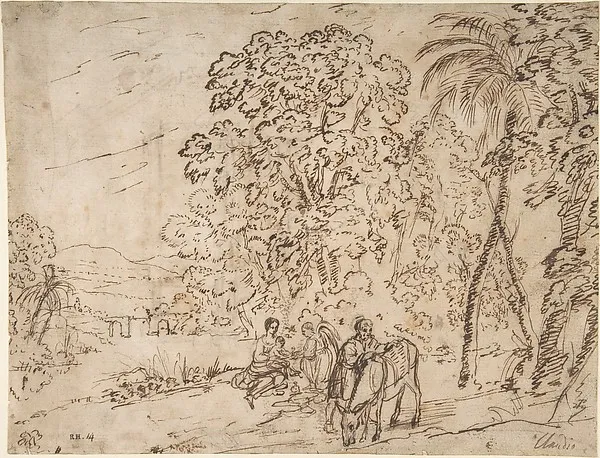
13And when they were departed, behold, the angel of the Lord appeareth to Joseph in a dream, saying, Arise, and take the young child and his mother, and flee into Egypt, and be thou there until I bring thee word: for Herod will seek the young child to destroy him. 14When he arose, he took the young child and his mother by night, and departed into Egypt: 15And was there until the death of Herod: that it might be fulfilled which was spoken of the Lord by the prophet, saying, Out of Egypt have I called my son. 16Then Herod, when he saw that he was mocked of the wise men, was exceeding wroth, and sent forth, and slew all the children that were in Bethlehem, and in all the coasts thereof, from two years old and under, according to the time which he had diligently enquired of the wise men. 17Then was fulfilled that which was spoken by Jeremy the prophet, saying, 18In Rama was there a voice heard, lamentation, and weeping, and great mourning, Rachel weeping for her children, and would not be comforted, because they are not. 19But when Herod was dead, behold, an angel of the Lord appeareth in a dream to Joseph in Egypt, 20Saying, Arise, and take the young child and his mother, and go into the land of Israel: for they are dead which sought the young child’s life. 21And he arose, and took the young child and his mother, and came into the land of Israel. 22But when he heard that Archelaus did reign in Judaea in the room of his father Herod, he was afraid to go thither: notwithstanding, being warned of God in a dream, he turned aside into the parts of Galilee: 23And he came and dwelt in a city called Nazareth: that it might be fulfilled which was spoken by the prophets, He shall be called a Nazarene.
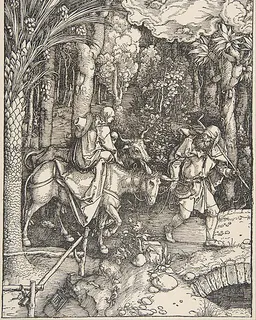
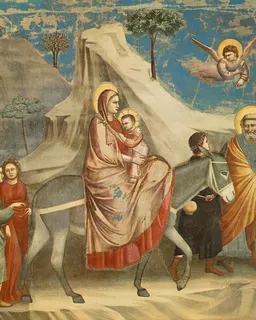
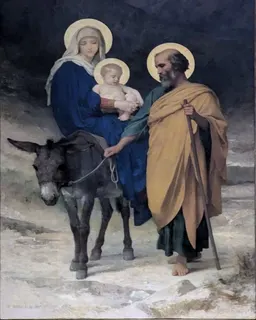
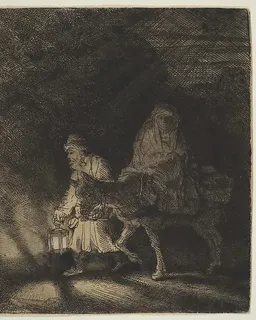
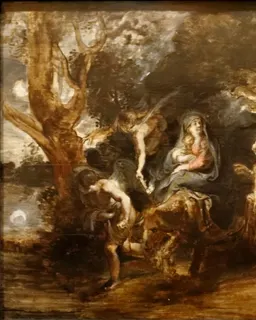
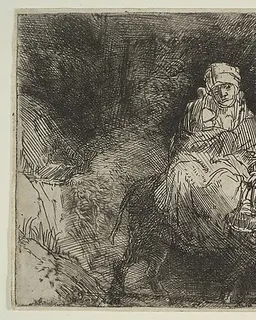
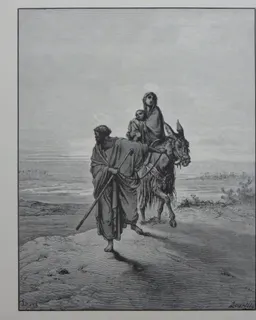
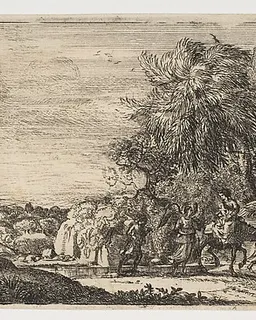
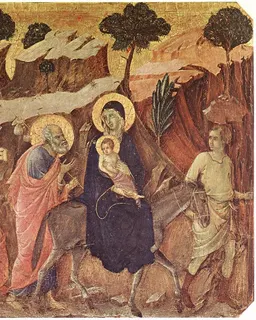
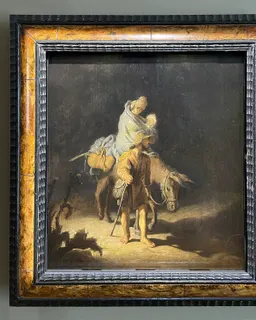
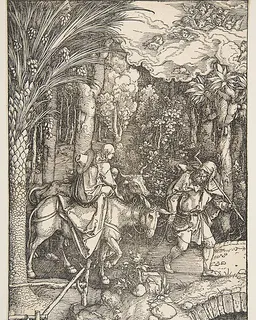
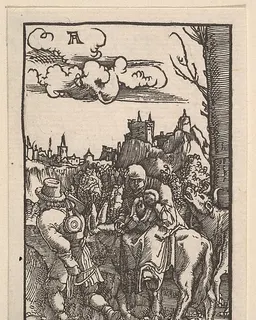
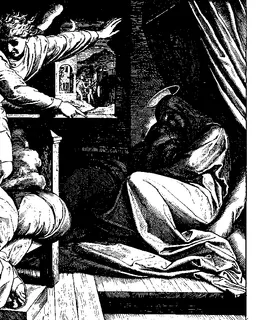
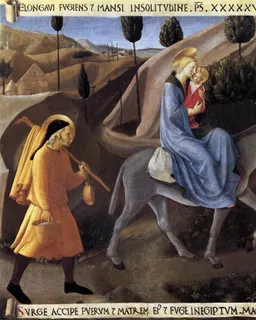
No sooner have the magi gone than danger closes in, and a second dream sets the family running: the angel of the Lord appeareth to Joseph in a dream, saying, Arise, and take the young child and his mother, and flee into Egypt… for Herod will seek the young child to destroy him (v. 13). Joseph obeys without a word recorded, and the urgency is in the detail: he took the young child and his mother by night (v. 14).
They leave in darkness, at once, carrying almost nothing, fleeing a king's soldiers across a border. This is the King of the prophets' promise - and His first journey is the journey of a refugee, a child whisked away in the night to a foreign land to escape a man who wants Him dead. Matthew does not hide the lowliness of it. The Saviour who will one day still storms and raise the dead must first be carried out of His own country by a frightened father under cover of night.
The deliverer comes into the world needing, Himself, to be delivered. From the start He shares the lot of the hunted, the displaced, the family that must run to survive - and God meets that family in a dream and goes before them.
The destination carries the weight of the whole Old Testament. Of all places, the child is taken to Egypt (vv. 14-15) - the ancient house of bondage, the land from which the LORD once drew out His people Israel with a mighty hand. Now the true Son of Israel goes down into Egypt for refuge, and is called up out of it again, and Matthew sees the old pattern repeating on a deeper level: that it might be fulfilled which was spoken of the Lord by the prophet, saying, Out of Egypt have I called my son. The words are Hosea's, spoken first of the nation God brought out at the exodus.3 Matthew hears them fulfilled again in Jesus, who relives Israel's story in His own life - carried into Egypt, called back out, walking the road His people walked.
But where Israel, brought out of Egypt, fell again and again in the wilderness, this Son will not fail. He retraces the nation's path and redeems it, succeeding where Israel stumbled. The exodus that founded a people becomes, in Him, the pattern of a deliverance for the world. He is the true Israel, the faithful Son, called out of Egypt to do at last what the first son could not.
Then comes the chapter's darkest hour, and it must not be hurried past. Herod, when he saw that he was mocked of the wise men, was exceeding wroth, and sent forth, and slew all the children that were in Bethlehem, and in all the coasts thereof, from two years old and under (v. 16). Cheated of his secret informants, the king vents his fury on the helpless. Small children - infants and toddlers, every boy under two in a whole region - are killed because one man cannot bear the thought of a rival.
There is no softening this. It is an atrocity, the murder of the innocent by a power that fears for itself, and the grief of it is real and immense. The mothers of Bethlehem are not a footnote to the nativity; their loss is named and mourned in the very text. What Matthew refuses to do is pretend the world Jesus entered was anything other than this - a world where a Herod sits on a throne and the weak pay for his fear.
The light has come, and the darkness rages against it. And yet, in the midst of the horror, the child for whom it was all unleashed is already safe in Egypt - not because His life mattered more than the children who died, but because the purpose He carried for them, and for the whole grieving world, could not be allowed to perish. The cross already throws its shadow over the cradle: this King is born into suffering, and will not be spared it in the end.
To carry the weight of that grief, Matthew reaches for the prophet Jeremiah: In Rama was there a voice heard, lamentation, and weeping, and great mourning, Rachel weeping for her children, and would not be comforted, because they are not (vv. 17-18). Rachel was Jacob's beloved wife, a mother of Israel, buried - the tradition held - near Bethlehem itself. Jeremiah had pictured her rising from her grave to weep over her descendants as they were carried away into exile, refusing all comfort because her children were gone.1 Matthew hears her weeping again, now over the children of Bethlehem.
The quotation does something important: it gives the tragedy a voice, and it does not silence that voice with an easy answer. She would not be comforted. Scripture lets the lament stand. It does not rush to explain the suffering away or to tidy it into a lesson. And yet there is a thread of hope hidden in the choice of text, for the very passage in Jeremiah where Rachel weeps goes on to promise that the children shall come again from the land of the enemy, that there is hope in thine end. Matthew does not quote that part, but he knew it was there.
The grief is real and is given room; and beyond it, not cancelling it but answering it, lies the promise of a God who gathers the lost and wipes away tears.
At last the long exile ends. When Herod was dead, a third dream calls Joseph home: Arise, and take the young child and his mother, and go into the land of Israel: for they are dead which sought the young child's life (vv. 19-20). The tyrant who tried to kill the King is gone; the King lives. Joseph obeys, as he has each time, and brings the family back into the land. But the danger is not wholly past: hearing that Herod's son Archelaus - a ruler who proved as brutal as his father - now reigns in Judaea, Joseph was afraid to go thither, and a fourth warning in a dream turns him aside into the parts of Galilee (vv. 21-22).
Through dream after dream, God has been quietly steering this family - into Egypt, back out of it, away from Judaea, north to Galilee - guarding the child at every turn. The drama of the chapter is loud with a raging king; but underneath it runs this steady, unspectacular providence, a Father directing the steps of the obedient through the simplest means until His Son is safely where He must be. Herod schemed in secret and failed; God spoke in dreams and prevailed.
The journey ends in the unlikeliest of homes: he came and dwelt in a city called Nazareth: that it might be fulfilled which was spoken by the prophets, He shall be called a Nazarene (v. 23). Nazareth was a small, obscure village in the hills of Galilee, so unregarded that a man would later sneer, Can there any good thing come out of Nazareth? (John 1:46). To be called a Nazarene was to be marked as a nobody from nowhere, a provincial from a despised town.
And this is where the King of the prophets' promise grows up - not in Jerusalem, the city of the temple and the throne, but in a place men looked down on.1 Matthew gathers this, too, into the pattern of prophecy: the Messiah would be despised, lowly, overlooked - He shall be called a Nazarene. The whole chapter has been building this portrait. The King worshipped by strangers and hunted by his own; the Son called out of Egypt; the child preserved through slaughter; and now the Saviour given the lowliest of origins, hidden away in a town that was a byword for insignificance.
From Bethlehem the magi sought Him; in Nazareth He is hidden. The greatness of God's kingdom, Matthew is teaching from the first pages, does not look the way the world expects. It comes wrapped in smallness, in exile, in a despised name - and it is no less the kingdom for that.
Research trail
Sources & further study
These references support the historical, linguistic, manuscript, and contextual notes in this chapter. Scripture remains the primary text; external sources are provided so readers can inspect the research directly.
- Matthew 2 - Translators' NotesThe NET Bible's detailed footnotes on Matthew 2 - the identity and journey of the magi (v. 1), the form of the Micah citation (v. 6), the meaning of Herod being “mocked” (v. 16), and the much-discussed source of “He shall be called a Nazarene” (v. 23).
- Matthew 2 · Greek interlinear + lexiconThe Greek text of Matthew 2 word by word, with parsing and lexical links - useful for proskuneō (vv. 2, 8, 11, “to worship,” literally to fall down and do homage), for paidion (the “young child” named again and again through the chapter), and for magoi (v. 1, the wise men of the east).
- Matthew 2 ↔ Micah 5 · Hosea 11 · Jeremiah 31 · Isaiah 60Traces the Old Testament threads Matthew weaves into the nativity - the ruler from Bethlehem (Micah 5:2), the Son called out of Egypt (Hosea 11:1), Rachel weeping in Ramah (Jer. 31:15), and the nations streaming to the light (Isa. 60:3) - each quoted or echoed across these twenty-three verses.
Where this echoes in Scripture
Where Is He That Is Born King of the Jews?
- Micah 5:2But thou, Bethlehem Ephratah, though thou be little among the thousands of Judah, yet out of thee shall he come forth unto me that is to be ruler in Israel.The prophecy the scribes quote in verse 6 - the ruler of Israel born in little Bethlehem.
- Isaiah 60:3And the Gentiles shall come to thy light, and kings to the brightness of thy rising.The nations drawn to Israel's light - foretelling the magi following the star in verses 1-2.
- Numbers 24:17there shall come a Star out of Jacob, and a Sceptre shall rise out of Israel.An ancient promise of a star and a king - read by many alongside the star of verse 2.
- Psalm 72:10-11The kings of Tarshish and of the isles shall bring presents... yea, all kings shall fall down before him.Kings from afar bowing and bringing gifts to the king - the pattern the magi begin in verses 1-11.
- Matthew 28:19Go ye therefore, and teach all nations, baptizing them in the name of the Father, and of the Son, and of the Holy Ghost.Where Matthew's Gospel ends - the nations sought out, as the magi sought Christ at its beginning.
The Star Stood Over the Young Child
- Isaiah 60:6all they from Sheba shall come: they shall bring gold and incense; and they shall shew forth the praises of the LORD.Gold and incense carried to the LORD by people from afar - foretelling the gifts of verse 11.
- Psalm 72:10-11The kings of Sheba and Seba shall offer gifts. Yea, all kings shall fall down before him.Kings bringing gifts and bowing before the king - the magi's worship in verses 10-11.
- John 19:39And there came also Nicodemus... and brought a mixture of myrrh and aloes, about an hundred pound weight.The myrrh of verse 11 returning at the end - the spice of His burial brought to His grave.
- Philippians 2:10That at the name of Jesus every knee should bow, of things in heaven, and things in earth, and things under the earth.Every knee bowing - the worship the magi begin when they fall down in verse 11.
- Revelation 5:12Worthy is the Lamb that was slain to receive power, and riches, and wisdom... and honour, and glory, and blessing.The Lamb worthy of riches and honour - the worship and treasures of verse 11 made complete.
Out of Egypt Have I Called My Son
- Hosea 11:1When Israel was a child, then I loved him, and called my son out of Egypt.The prophecy Matthew quotes in verse 15 - the son called out of Egypt, fulfilled in Jesus.
- Jeremiah 31:15A voice was heard in Ramah, lamentation, and bitter weeping; Rahel weeping for her children refused to be comforted... because they were not.Rachel's lament Matthew hears again in verse 18 - from a chapter that ends in hope and return.
- Exodus 4:19Go, return into Egypt: for all the men are dead which sought thy life.The words to Moses echoed almost exactly in verse 20 - Jesus reliving the exodus story.
- John 1:46And Nathanael said unto him, Can there any good thing come out of Nazareth? Philip saith unto him, Come and see.The contempt for Nazareth behind verse 23 - the despised town where the King grew up.
- Isaiah 53:3He is despised and rejected of men; a man of sorrows, and acquainted with grief... and we esteemed him not.The despised, lowly Messiah foreshadowed in the Nazarene of verse 23 - and in the shadow over the cradle.