
Acts 9
People in this chapter
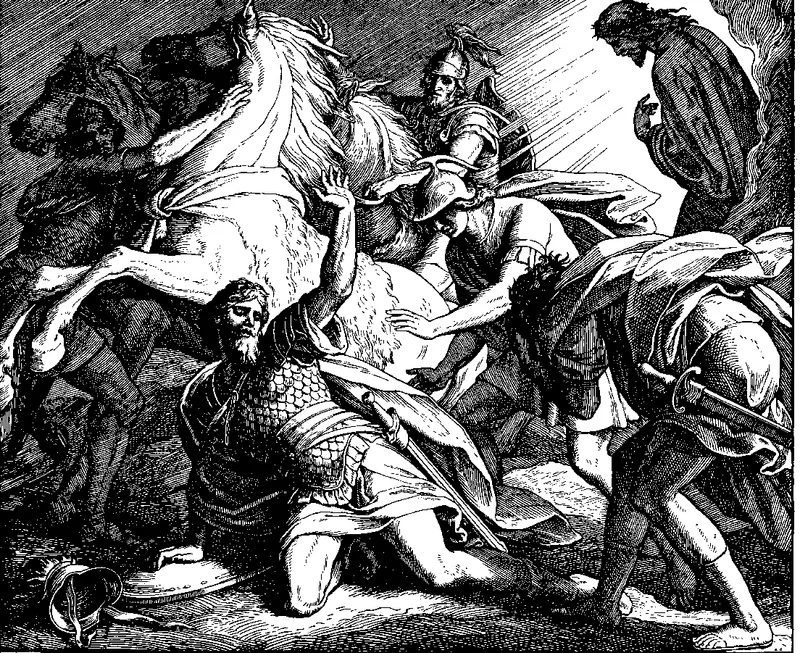
Saul is hunting Christians with the high priest's blessing, carrying letters that let him bind any believer he finds and haul them to Jerusalem. Then the road to Damascus1 cuts him down. A light brighter than the sun. A voice with his name in it. "Saul, Saul, why persecutest thou me?" The one he has been fighting turns out to be alive, turns out to be Lord. The persecutor's whole world inverts in a sentence.
Tap any highlighted phrase to jump to the commentary that unpacks it.
Acts 9:1-2Breathing Out Threats
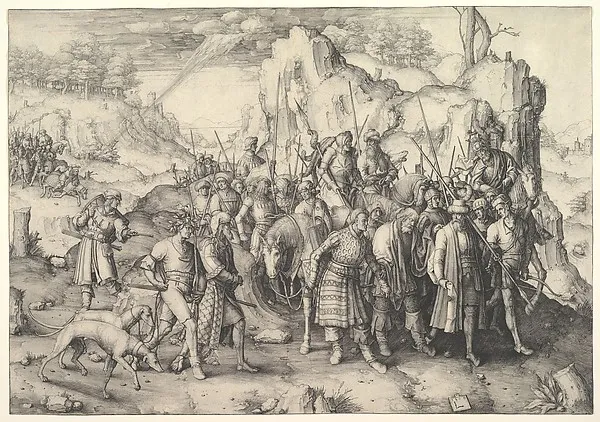
1And Saul, yet breathing out threatenings and slaughter against the disciples of the Lord, went unto the high priest, 2And desired of him letters to Damascus to the synagogues, that if he found any of this way, whether they were men or women, he might bring them bound unto Jerusalem.
The image is visceral. Saul is not just angry - he is breathing out threats, exhaling them with every breath. He is consumed. The disciples of Jesus are not merely wrong to him; they are contagious, dangerous, a threat to the faith of Israel itself. His mission is to bind them, to chain them, to bring them to trial. What Saul does not know is that his very next breath will be interrupted by the One he is fighting against.
The verb "bring them bound" comes from Greek dioxō, meaning to pursue, to chase, to hunt. Saul is hunting. He is pursuing believers from city to city, intent on their destruction. His mission is active, aggressive, relentless.
Acts 9:3-5Why Persecutest Thou Me?
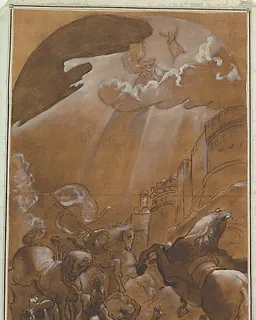
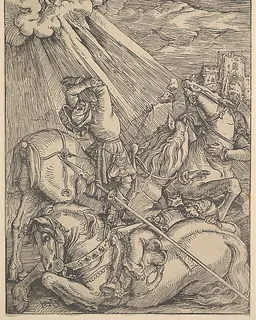
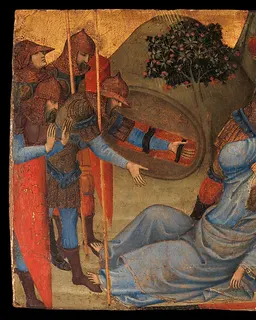
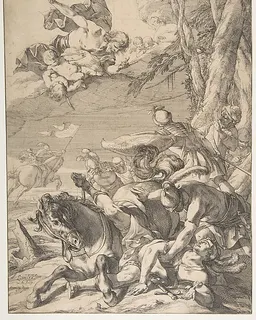
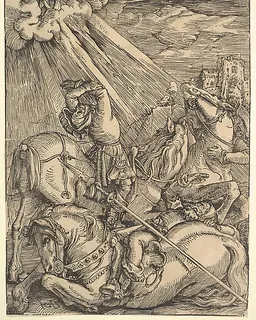
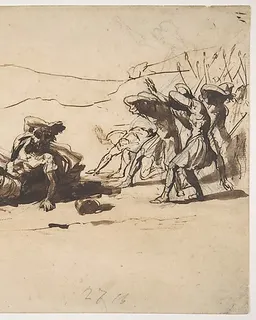
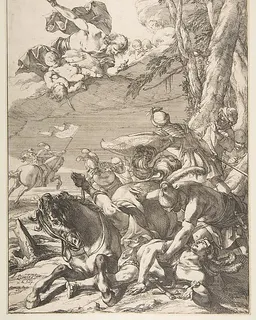
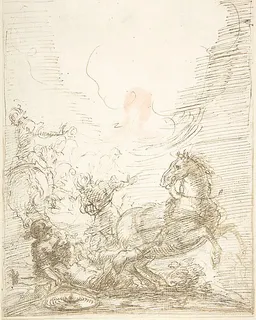
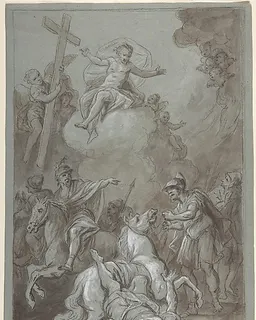
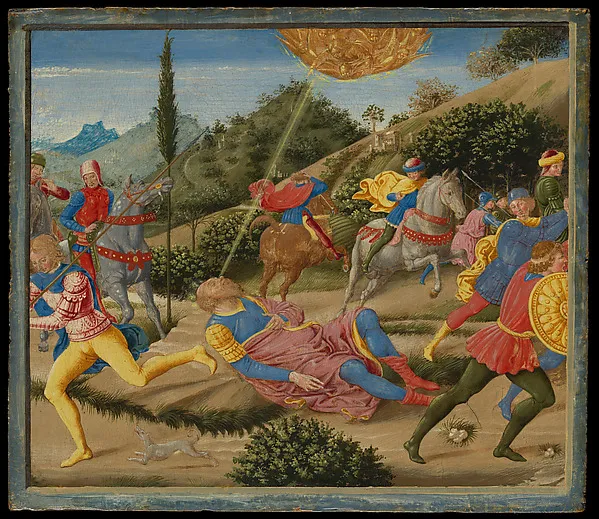
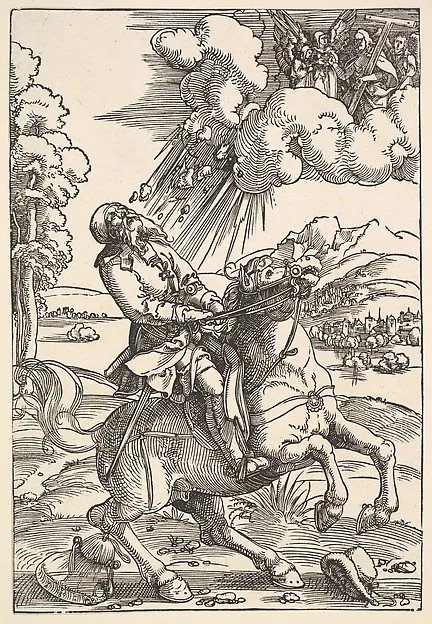
3And as he journeyed, he came near Damascus: and suddenly there shined round about him a light from heaven: 4And he fell to the earth, and heard a voice saying unto him, Saul, Saul, why persecutest thou me? 5And he said, Who art thou, Lord? And the Lord said, I am Jesus whom thou persecutest: it is hard for thee to kick against the pricks.
The light is described as "more bright than the sun." It is not a gentle appearing. It is violent, undeniable, overwhelming. Saul is knocked to the ground. His companions are bewildered - they hear a voice, see a light, but cannot make sense of what they are witnessing. The presence of God does not negotiate. It does not explain itself. It appears. The encounter takes place on the road to Damascus1, a city that had been home to Jewish culture for centuries.
The question is staggering in its implication. Not "why do you oppose my followers" but "why do you persecute me?" The risen Jesus identifies Himself with His body on earth - the disciples Saul has been hunting. To touch them is to touch Him. To harm them is to harm Him. Saul's entire campaign against the church collapses into a single reality: he has been fighting against the one person whose power is absolute.
Acts 9:6-9Three Days Without Sight
6And he trembling and astonished said, Lord, what wilt thou have me to do? And the Lord said unto him, Arise, and go into the city, and it shall be told thee what thou must do. 7And the men which journeyed with him stood speechless, hearing a voice, but seeing no man. 8And Saul arose from the earth; and when his eyes were opened, he saw no man: but they led him by the hand, and brought him into Damascus. 9And he was three days without sight, and neither did eat nor drink.
Acts 9:10-12Behold, I Am Here, Lord
10And there was a certain disciple at Damascus, named Ananias; and to him said the Lord in a vision, Ananias. And he said, Behold, I am here, Lord. 11And the Lord said unto him, Arise, and go into the street which is called Straight, and enquire in the house of Judas for one called Saul, of Tarsus: for, behold, he prayeth, 12And hath seen in a vision a man named Ananias coming in, and putting his hand on him, that he might receive his sight.
Ananias is a minor figure in the Acts story. He appears here and will not appear again. And yet the entire transformation of Saul depends on his willingness to obey. He is told to go to the house of his enemy. He is told to place his hands on the persecutor. He is told to call Saul "brother." Ananias moves obedience without any guarantee of his own safety. His obedience takes place on the Straight Street2, one of the main routes through Damascus, where God has already prepared Saul through prayer.
Acts 9:13-16A Chosen Vessel
13Then Ananias answered, Lord, I have heard by many of this man, how much evil he hath done to thy saints at Jerusalem: 14And here he hath authority from the chief priests to bind all that call on thy name. 15But the Lord said unto him, Go thy way: for he is a chosen vessel unto me, to bear my name before the Gentiles, and kings, and the children of Israel: 16For I will shew him how great things he must suffer for my name’s sake.
Ananias's objection is reasonable. He has heard what Saul has done. He knows the authority Saul carries. This is not caution - it is self-preservation. How can he be sure this is not a trap? How can he trust that the persecutor will not turn on him the moment he enters the house? The Lord does not answer his fear. He answers it with a word: "Go thy way."
Acts 9:17-19Scales Fall; Baptism Comes
17And Ananias went his way, and entered into the house; and putting his hands on him said, Brother Saul, the Lord, even Jesus, that appeared unto thee in the way as thou camest, hath sent me, that thou mightest receive thy sight, and be filled with the Holy Ghost. 18And immediately there fell from his eyes as it had been scales: and he received sight forthwith, and arose, and was baptized. 19And when he had received meat, he was strengthened. Then was Saul certain days with the disciples which were at Damascus.
Notice the gentleness of Ananias's touch. After three days of darkness and prayer, after his entire world has fallen apart, Saul receives hands laid on him in mercy. Ananias calls him "Brother." The laying on of hands is a pattern throughout Acts - Peter and John confirming the Samaritans, Paul confirming the Ephesian disciples. It is the way the Spirit comes: through human touch, through obedience, through one believer reaching toward another.
The "scales" falling from Saul's eyes are a powerful image of spiritual blindness being removed. For three days he could not see. Now, the moment Ananias speaks the word, his physical sight is restored. But the deeper opening is spiritual: Saul now sees Jesus as He is: the Lord. His entire understanding of God, of faith, of his own mission, has been inverted.
Acts 9:19b-22Straightway He Preached Christ
20And straightway he preached Christ in the synagogues, that he is the Son of God. 21But all that heard him were amazed, and said; Is not this he that destroyed them which called on this name in Jerusalem, and came hither for that intent, that he might bring them bound unto the chief priests? 22But Saul increased the more in strength, and confounded the Jews which dwelt at Damascus, proving that this is very Christ.
The transformation is instant and complete. The moment Saul receives his sight, he begins to preach. He goes into the synagogues - the same places where he came as a persecutor - and declares that Jesus is the Son of God. There is no gradual settling into faith. There is no private period of learning. His conversion is immediately public and undeniable. This radical reversal marks one of the most significant transformations in church history: Saul of Tarsus3, once the church's most dangerous adversary, becomes its most prolific missionary.
The people best positioned to expose Saul are the ones left stammering. They know exactly who walked into Damascus, and they say so out loud: is this not the man who came to destroy us? His reputation had arrived before he did. Now the synagogue that expected an inquisitor hears a preacher, and the case against the disciples turns into a case for the Son of God. There is no quiet version of this conversion. The whole city watches the hunter switch sides.
Acts 9:23-25From Persecutor to Persecuted
23And after that many days were fulfilled, the Jews took counsel to kill him: 24But their laying await was known of Saul. And they watched the gates day and night to kill him. 25Then the disciples took him by night, and let him down by the wall in a basket.
Before long, the tables are turned. The hunter becomes the hunted. The Jews who once supported his mission now seek his death. He must be smuggled out of the city at night, lowered over the wall in a basket like a fugitive. The man who came to Damascus with authority and letters now flees as an escaped prisoner. His new life is already marked by persecution - exactly as the Lord promised: "I will shew him how great things he must suffer for my name's sake."
A basket. Not a chariot, not a horse, not a dignified departure. Saul is lowered from the city wall in a wicker basket like contraband, escaping under cover of darkness. The humiliation is total. Yet this very moment - this undignified flight - marks the beginning of a ministry that will transform the ancient world. The power of God often works through our most vulnerable, most helpless moments.
Acts 9:26-28Barnabas Believes
26And when Saul was come to Jerusalem, he assayed to join himself to the disciples: but they were all afraid of him, and believed not that he was a disciple. 27But Barnabas took him, and brought him to the apostles, and declared unto them how he had seen the Lord in the way, and that he had spoken to him, and how he had preached boldly at Damascus in the name of Jesus. 28And he was with them coming in and going out at Jerusalem.
Even after his conversion, even after his time in Damascus, the disciples in Jerusalem are afraid of Saul. His reputation is so dark that his conversion is not immediately believed. He comes asking to join them, and they are silent. They cannot trust him. They have heard too much about what he has done. His own need to be accepted is refused.
Barnabas appears here as an advocate. The name itself means "son of consolation" or "son of encouragement." When everyone else doubts, Barnabas believes. He brings Saul to the apostles and tells them the whole story - the vision, the word, the boldness in Damascus. Barnabas's willingness to vouch for the persecutor makes it possible for the apostles to receive him. One person's faith in another person's transformation can open doors that nothing else can.
Acts 9:29-31Then Had the Churches Rest
29And he spake boldly in the name of the Lord Jesus, and disputed against the Grecians: but they went about to slay him. 30Which when the brethren knew, they brought him down to Caesarea, and sent him forth to Tarsus. 31Then had the churches rest throughout all Judaea and Galilee and Samaria, and were edified; and walking in the fear of the Lord, and in the comfort of the Holy Ghost, were multiplied.
Acts 9:32-35Aeneas Rises
32And it came to pass, as Peter passed throughout all quarters, he came down also to the saints which dwelt at Lydda. 33And there he found a certain man named Aeneas, which had kept his bed eight years, and was sick of the palsy. 34And Peter said unto him, Aeneas, Jesus Christ maketh thee whole: arise, and make thy bed. And he arose immediately. 35And all that dwelt at Lydda and Saron saw him, and turned to the Lord.
Aeneas is paralyzed. For eight years he has lain on a bed. Eight years of helplessness, of depending on others for every need, of watching life happen to him from a prone position. The condition is not temporary. It is not improving. He is not recovering. This is his life: the bed.
Notice that Peter claims nothing for himself. He names the healer - "Jesus Christ maketh thee whole" - and then dares to add a small, ordinary instruction: make thy bed. No ritual, no laying on of hands as Ananias gave Saul. Just a name and a command. And the same power that walked out of a tomb reaches an eight-year bed and lifts the man off it. Aeneas arises. He folds the mat he has lain on for eight years. If you have been waiting for God to move in some grand way, watch how plainly He does it here.
The healing is not private. It happens in view of the city. Everyone in Lydda and the surrounding region sees a man they have known his whole life as paralyzed, now walking. As a result, they turn to the Lord. The gospel is a visible reality. It mends what is broken. It raises what is fallen. The people of Lydda cannot argue with that.
Acts 9:36-39Full of Good Works and Almsdeeds
36Now there was at Joppa a certain disciple named Tabitha, which by interpretation is called Dorcas: this woman was full of good works and almsdeeds which she did. 37And it came to pass in those days, that she was sick, and died: whom when they had washed, they laid her in an upper chamber. 38And forasmuch as Lydda was nigh to Joppa, and the disciples had heard that Peter was there, they sent unto him two men, desiring him that he would not delay to come to them. 39Then Peter arose and went with them. When he was come, they brought him into the upper chamber: and all the widows stood by him weeping, and shewing the coats and garments which Dorcas made, while she was with them.
Tabitha is an Aramaic name meaning "gazelle." The Greek equivalent is Dorcas. But the text is not just translating her name - it is honoring it. This woman is both. She is known to the disciples as Tabitha. To the Greek-speaking world, she is Dorcas. She bridges both worlds, belonging to both communities.
Luke remembers Tabitha for her hands. She made coats and garments for the widows of Joppa, and the word for it here is the plain doing of good - faith you could wear. When she dies, no one stands up to praise her doctrine. The widows simply hold up the clothes she sewed and weep. That is the whole eulogy, and it is enough. Her ministry takes place in Joppa4, a coastal Mediterranean port city 5 that served as a gateway for the gospel to move outward from Jerusalem.
The widows bring out the garments Tabitha made - garments still in the widows' possession, still being worn, still keeping them warm. Her works follow her. They are present in the room. They testify to her love. When Peter arrives, he is met not with theological argument but with the evidence of a life spent in service.
Acts 9:40-42Tabitha, Rise
40But Peter put them all forth, and kneeled down, and prayed; and turning him to the body said, Tabitha, arise. And she opened her eyes: and when she saw Peter, she sat up. 41And he gave her his hand, and lifted her up, and when he had called the saints and widows, presented her alive. 42And it was known throughout all Joppa; and many believed in the Lord.
Peter enters the upper chamber. He clears the room. He kneels and prays - connecting his will to the will of the Father, making this moment a vessel for God's power working through him. Then he turns to her and speaks her name: "Tabitha, arise." The word is the same word Jesus used when He raised Jairus' daughter. The power is the same. The authority is the same. The result is the same: she opens her eyes, she sits up, she is given her life back.
Acts 9The Gospel Spreads
Acts 9 closes with the church at peace. Saul, the hunted one, has been sent to Tarsus - out of danger, allowed to breathe. But the story is far from over. In years to come, Barnabas will come looking for Saul again, bringing him to Antioch, where the disciples are first called "Christians." Together, they will reshape the entire Mediterranean world. The man who came to Damascus as a persecutor will become the apostle to the Gentiles, writing the letters that will echo through centuries of Christian faith.
But for now, the chapter closes quietly: the church has rest. The gospel spreads. Believers are multiplied.
This chapter shows resurrection power in three forms. First, Saul encounters it as judgment - a light that blinds him, a voice that confounds him, a reversal that unmakes everything he has believed 6. Second, Saul receives it as grace - through Ananias' hands, he is restored, baptized, filled with the Spirit. Third, the power flows through Peter: through his word, Aeneas walks; through his prayer, Tabitha breathes 7. The risen Jesus is present, active, remaking the world through the obedience of His servants.
Research trail
Sources & further study
These references support the historical, linguistic, manuscript, and contextual notes in this chapter. Scripture remains the primary text; external sources are provided so readers can inspect the research directly.
- DamascusOpen-access SBL entry on ancient Damascus - architecture, archaeology, and its role as a major center of early Christian persecution.
- JoppaOpen-access SBL entry on Joppa - coastal port city, archaeological findings, and its significance as a gateway for early Christian witness.
- Dorcas (Tabitha)Open-access SBL entry on Dorcas - early female disciple, her ministry of works, and her role in Peter's healing account.
- TarsusOpen-access SBL entry on Tarsus - Saul's birthplace, cosmopolitan center of learning, and cultural context for his early formation.
- Lydda and Joppa Archaeological SurveyArchaeological survey data and findings from Lydda and Joppa, providing material culture context for Acts 9's coastal witness.
- Saul's Conversion and TransformationScholarly analysis of Paul's Damascus road experience, psychological transformation, and theological implications for apostolic identity.
- Apostolic Healing and RestorationStudy of healing practices in early Christian ministry, comparing Peter's acts of restoration to Jewish and Greco-Roman healing traditions.
Where this echoes in Scripture
Breathing Out Threats
- 1 Timothy 1:13-16I was before a blasphemer, and a persecutor… that in me first Jesus Christ might shew forth all longsuffering.Paul tells his Damascus story as the showcase of mercy.
- Galatians 1:13-16It pleased God… to reveal his Son in me.Paul’s own account of the Damascus road, decades later.
- Philippians 3:6-9Touching the righteousness which is in the law, blameless. But what things were gain to me, those I counted loss for Christ.The career he abandoned on the road.
Three Days Without Sight
- 1 Corinthians 12:26And whether one member suffer, all the members suffer with it; or one member be honoured, all the members rejoice with it.The body that Christ feels with on the road becomes Paul's lifelong picture of the church.
- 1 Corinthians 15:8-9And last of all he was seen of me also, as of one born out of due time. For I am the least of the apostles, that am not meet to be called an apostle, because I persecuted the church of God.Paul dates his apostleship to this very encounter, and never forgets who he was when it happened.
- Matthew 25:40Inasmuch as ye have done it unto one of the least of these my brethren, ye have done it unto me.Jesus had already said it: what you do to His own, you do to Him.
- Zechariah 2:8He that toucheth you toucheth the apple of his eye.The God of Israel had long bound His honour to His people's safety.
Then Had the Churches Rest
- John 14:16And I will pray the Father, and he shall give you another Comforter, that he may abide with you for ever.Jesus names the Spirit with the same word - one who stands beside us and speaks for us, as Barnabas does here.
- Hebrews 10:24And let us consider one another to provoke unto love and to good works.The Barnabas instinct, written as a command to the whole church.
- Acts 4:36-37And Joses, who by the apostles was surnamed Barnabas, (which is, being interpreted, The son of consolation,)... having land, sold it.Luke introduced Barnabas as a giver before he became a voucher; the name fits the man.
- Acts 11:25-26Then departed Barnabas to Tarsus, for to seek Saul: and when he had found him, he brought him unto Antioch.Barnabas goes looking for Saul again - the second chance was not a one-time favour.