Painter of the Bible
Hans Schäufelein
Hans Schäufelein was a German Renaissance painter and prolific woodcut designer, best known today as one of Albrecht Dürer's most productive collaborators and as the principal illustrator of several of the great printed books of the early sixteenth century.
%2520-%2520Self-Portrait%2520-%2520595%2520-%2520Gem%25C3%25A4ldegalerie.jpg%3Fwidth%3D600&w=2048&q=75)
Their faith
Why Hans Schäufelein painted Christ
Hans Schäufelein was deeply rooted in the Christian faith, which profoundly influenced his artistic journey. Trained in the workshop of Albrecht Dürer, a prominent figure of the Northern Renaissance, Schäufelein's early works were imbued with a sense of reverence for scripture and the life of Christ. His contributions to Dürer's projects, particularly the 'Speculum passionis Christi,' highlight his commitment to portraying the passion of Christ with sincerity and depth. As he settled in Nördlingen, a town that embraced Lutheranism during the Reformation, Schäufelein continued to create art that resonated with the spiritual needs of his community, producing works that reflected a shift towards more personal and intimate expressions of faith.
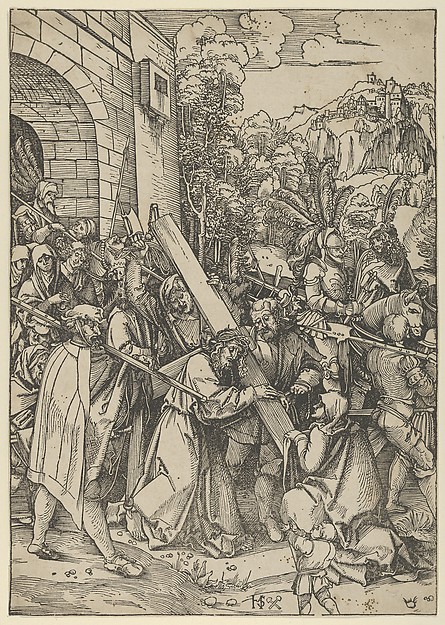
This devotion is vividly expressed in his altarpieces, such as 'Christ Carrying the Cross' and the 'Heroldsberg Altarpiece.' These works exhibit a unique blend of late Gothic and early Renaissance styles, characterized by elongated figures and clear narratives that draw viewers into the sacred stories they depict. Schäufelein's woodcut illustrations, widely circulated throughout German-speaking lands, served as a significant visual voice for pre-Reformation Lutheranism, making biblical stories accessible to the faithful. His ability to convey profound spiritual truths through art invites viewers to connect with Christ in a deeply personal way, reminding us that true devotion can be experienced through the beauty of sacred art. Schäufelein's legacy continues to inspire, as his works still resonate with those seeking to deepen their faith and understanding of the divine.
Life & work
Hans Schäufelein was a German Renaissance painter and prolific woodcut designer, best known today as one of Albrecht Dürer's most productive collaborators and as the principal illustrator of several of the great printed books of the early sixteenth century. Born around 1480, probably in Nuremberg, trained in Dürer's workshop in the first decade of the 1500s, and active subsequently in Augsburg under Hans Holbein the Elder before settling in Nördlingen in 1515 — where he served as town painter for the rest of his career — he died in Nördlingen around 1540.
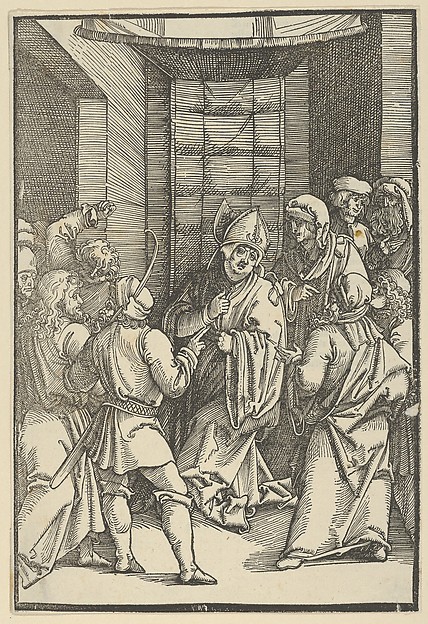
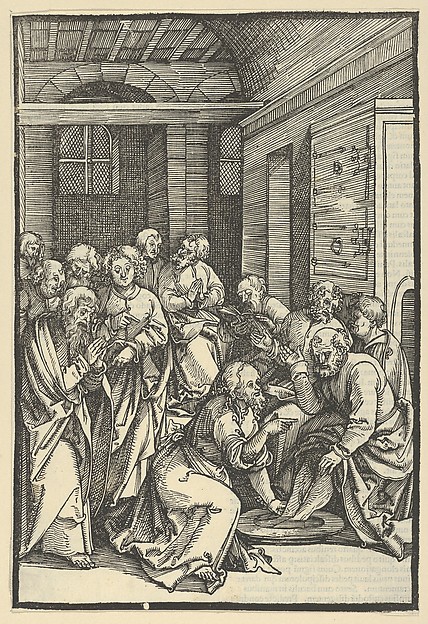
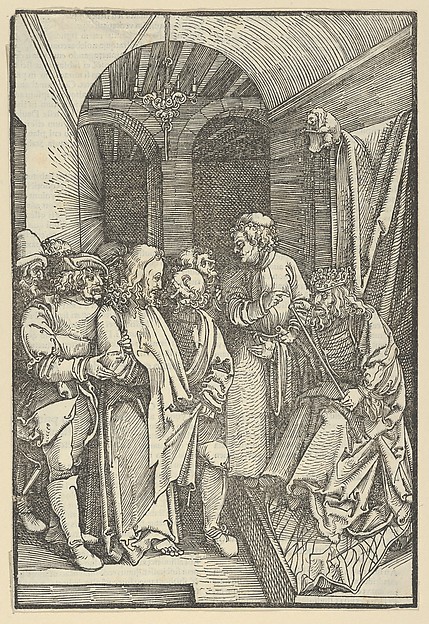
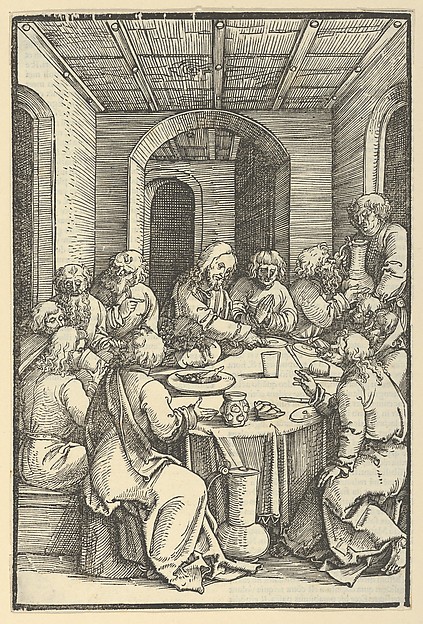
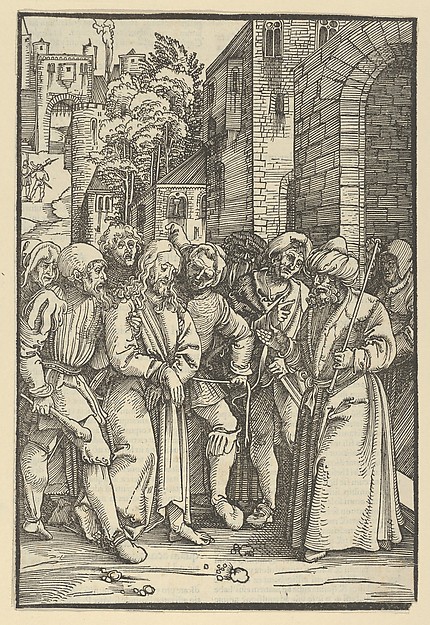
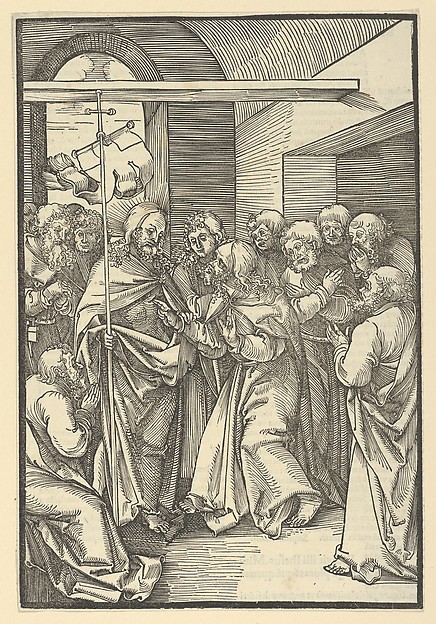
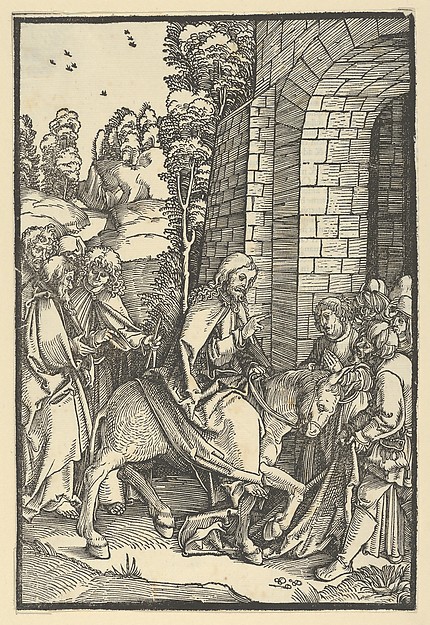
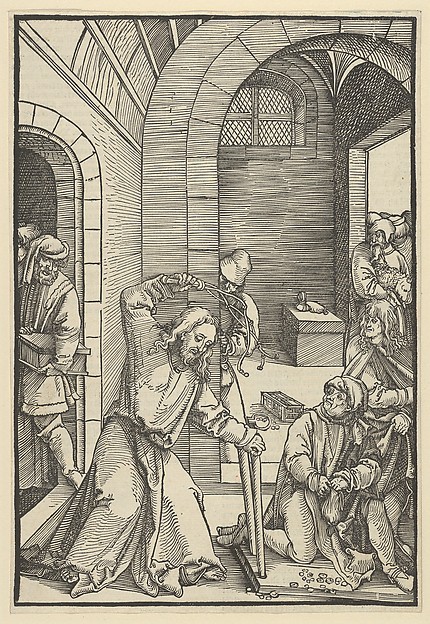
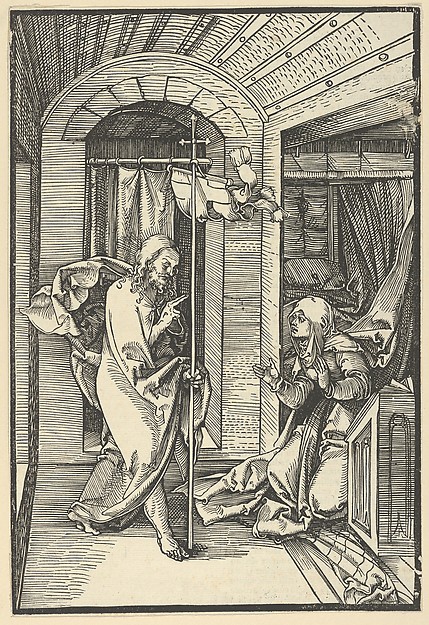
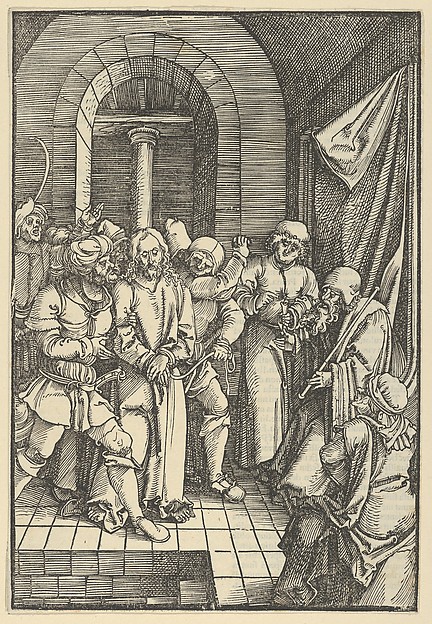
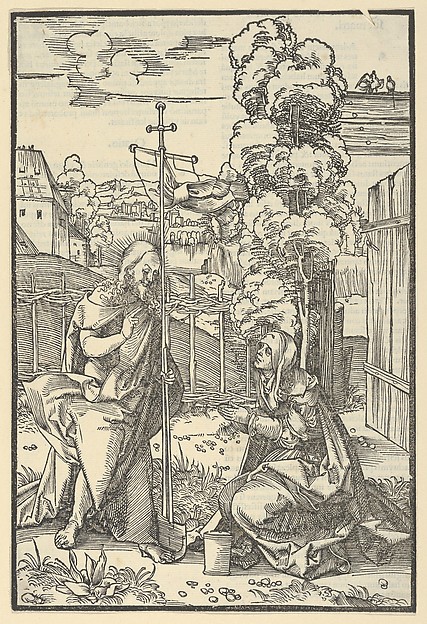
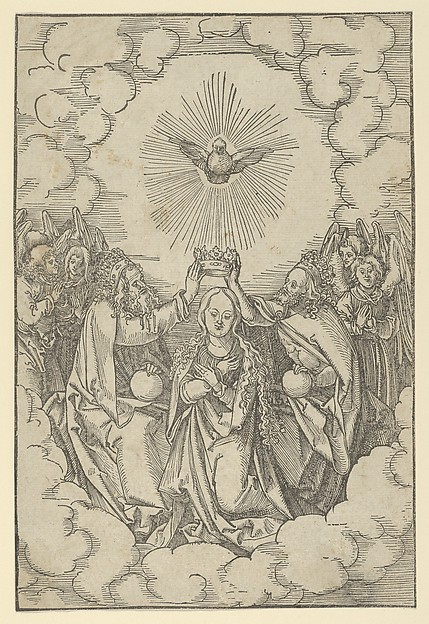
His religious work falls into three groups. First, his contributions to Dürer's projects in the Nuremberg years: the Speculum passionis Christi (Nuremberg, 1507), to which Schäufelein supplied most of the woodcut illustrations under Dürer's general direction, is the principal surviving monument of his apprenticeship. Second, his independent painted altarpieces — the Christ Carrying the Cross, the Heroldsberg Altarpiece (1521), and panel paintings of the Crucifixion now scattered across German museums — show a sober, late-Gothic-into-Renaissance manner with elongated figures and clear narrative organization. Third, and most extensively, his woodcut book illustration of the 1510s and 1520s: Hieronymus Schaufelin's small Passion (1507), the Theuerdank chivalric romance commissioned by the Emperor Maximilian I (Nuremberg, 1517), and dozens of single-leaf devotional woodcuts.
Schäufelein's woodcuts circulated throughout the German-speaking lands and made him, alongside Hans Burgkmair and Hans Baldung, one of the standard visual voices of pre-Reformation Lutheran Germany. His characteristic monogram — H S with a small shovel ("schäufelein" means "little shovel" in southern German) — appears on most of his prints.
He weathered the Reformation in Nördlingen, which adopted Lutheranism in 1525, and his late religious work reflects the move away from the great traditional altarpiece toward smaller, more intimate Lutheran-friendly devotional images. The town still preserves a number of his murals.
Notable works in detail
met-666121
The Crucifixion, from Der beschlossen gart des rosenkranz Marie (The Closed Garden of Mary's Rosary), woodcut designed by Hans Schäufelein around 1505 for the Nuremberg printer Hans Beck, illustrates the moment of Christ's death on the cross with his customary careful Northern late-Gothic narrative density. The composition shows the body of Christ on the cross at the upper center against a darkening sky, with the swooning Virgin in the arms of John on the left, the Magdalene kneeling at the foot of the cross, the centurion on horseback recognizing the divinity of the dying Christ, and the two thieves still alive on their crosses to either side. The print belonged to the great illustrated rosary devotional book of 1505 — a Catholic spiritual handbook structured around the meditations of the rosary cycle — that Schäufelein illustrated almost in its entirety. The book is one of the principal pre-Reformation German illustrated devotional volumes.
met-666029
The Last Judgment, from Speculum passionis domini nostri Jesu Christi (The Mirror of the Passion of Our Lord Jesus Christ), woodcut designed by Hans Schäufelein in 1507 for the Nuremberg printer Ulrich Pinder, depicts the eschatological subject of the Second Coming and the final judgment. Schäufelein stages the scene with characteristic Nuremberg-Augsburg compositional density: Christ enthroned in glory at the upper center within a great mandorla, the apostles ranged around him, the resurrected dead emerging from open graves below, the elect being led toward heaven on the left, and the damned tumbling into a Bosch-influenced flaming hell on the right. The Speculum passionis was one of the principal illustrated devotional books of the early sixteenth century, and Schäufelein's woodcuts for it remain among the most accomplished works of his early career under Albrecht Dürer's general direction in the Nuremberg workshop.
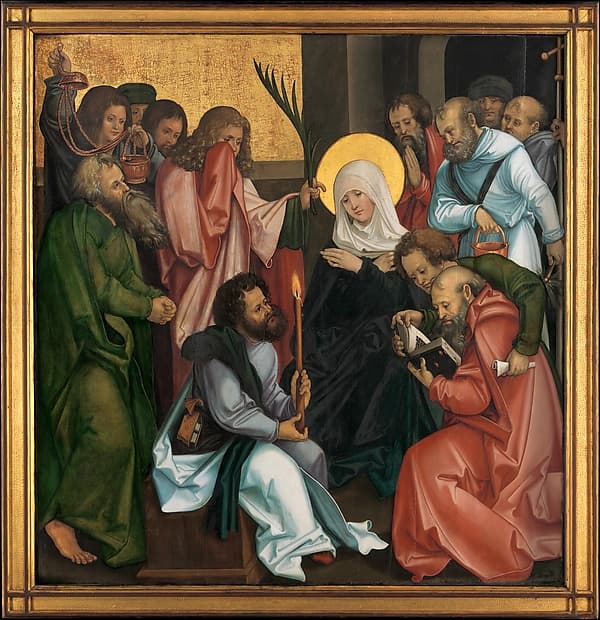
The Dormition of the Virgin; (reverse) Christ Carrying the Cross
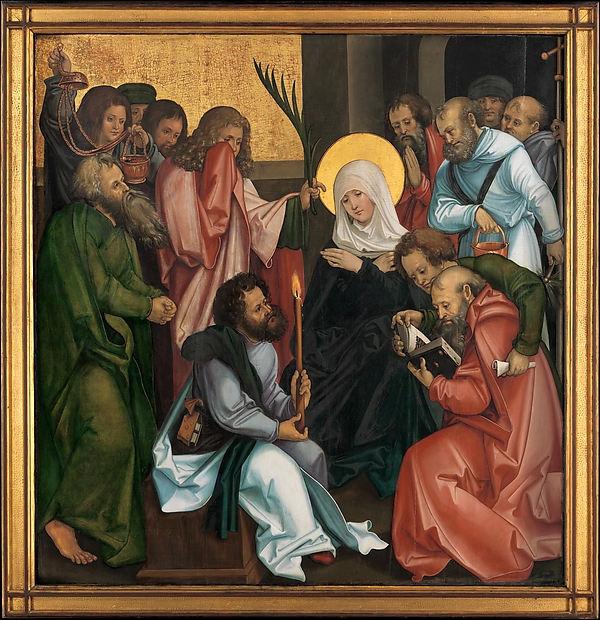
The Dormition of the Virgin (with the Carrying of the Cross on the reverse), woodcut designed by Hans Schäufelein around 1505 in his Nuremberg years and now in the Metropolitan Museum of Art in New York, depicts the moment from the apocryphal Marian narrative in which the Virgin Mary, dying in her old age, is attended on her deathbed by the assembled apostles. Schäufelein composes the scene in a small interior chamber: the Virgin lies in the bed at the lower center, the apostles gather around her in dense devotional postures of grief and prayer, with Peter (identified by the pyx of the Eucharist in his hand) at the foot of the bed and John (the youngest apostle) kneeling at the head. The reverse of the woodblock — Christ Carrying the Cross — was printed on the back of the same sheet, an unusual two-sided format that suggests a specifically devotional rather than commercial use.