Matthew 21
People in this chapter
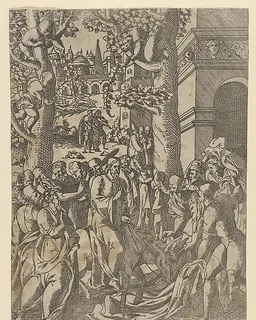
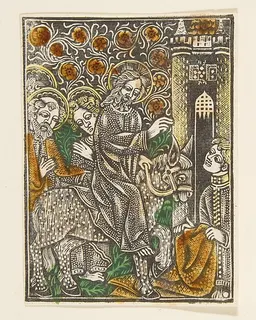
The last week of Jesus' life begins here, and from the first verse it is staged with intention. As He nears Jerusalem He sends two disciples ahead for a colt, telling them exactly what they will find and exactly what to say: The Lord hath need of them (v. 3). Matthew tells us why it matters: All this was done, that it might be fulfilled which was spoken by the prophet (v. 4) - Tell ye the daughter of Sion, Behold, thy King cometh unto thee, meek, and sitting upon an ass, and a colt the foal of an ass (v. 5).
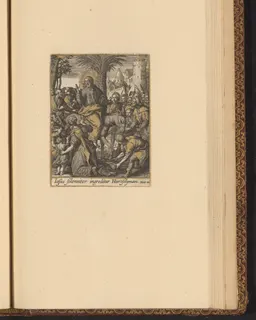
The crowds answer with a coronation. They spread their garments in the road, cut branches from the trees, and cry, Hosanna to the Son of David: Blessed is he that cometh in the name of the Lord; Hosanna in the highest (v. 9). The whole city is shaken, asking Who is this?1
Tap any highlighted phrase to jump to the commentary that unpacks it.
Matthew 21:1-11Behold, Thy King Cometh
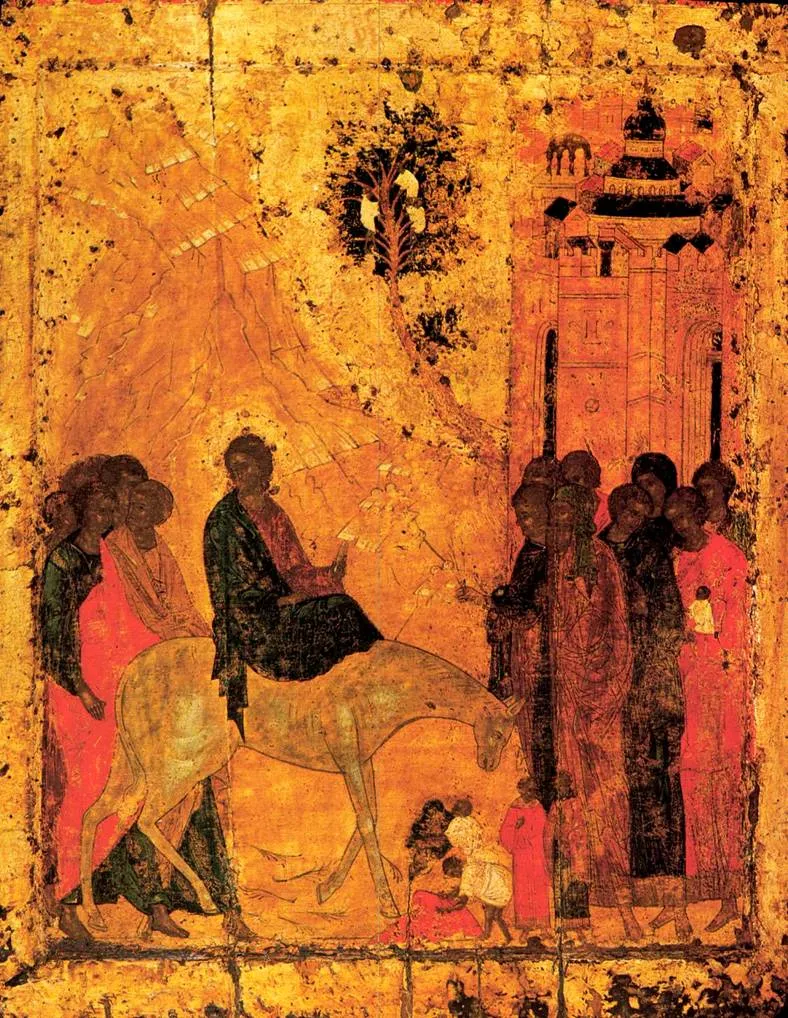
1And when they drew nigh unto Jerusalem, and were come to Bethphage, unto the mount of Olives, then sent Jesus two disciples, 2Saying unto them, Go into the village over against you, and straightway ye shall find an ass tied, and a colt with her: loose them, and bring them unto me. 3And if any man say ought unto you, ye shall say, The Lord hath need of them; and straightway he will send them. 4All this was done, that it might be fulfilled which was spoken by the prophet, saying, 5Tell ye the daughter of Sion, Behold, thy King cometh unto thee, meek, and sitting upon an ass, and a colt the foal of an ass. 6And the disciples went, and did as Jesus commanded them, 7And brought the ass, and the colt, and put on them their clothes, and they set him thereon. 8And a very great multitude spread their garments in the way; others cut down branches from the trees, and strawed them in the way. 9And the multitudes that went before, and that followed, cried, saying, Hosanna to the son of David: Blessed is he that cometh in the name of the Lord; Hosanna in the highest. 10And when he was come into Jerusalem, all the city was moved, saying, Who is this? 11And the multitude said, This is Jesus the prophet of Nazareth of Galilee.
Everything about the entry is deliberate. Jesus has avoided open acclaim through much of His ministry, hushing those who would proclaim Him - but now, at the threshold of the city and the week of His suffering, He arranges a public, prophetic act. He sends two disciples to a nearby village with precise instructions: they will find an ass tied, and a colt with her; they are to loose them and bring them; and if anyone questions, the answer is settled in advance - The Lord hath need of them (vv. 2-3).
There is a quiet sovereignty in the scene. He knows what is there before they arrive, and He knows the owner will release the animals at a word. This is not a king commandeering by force; it is the rightful King calling for what is His, and finding it ready. The disciples go and find it exactly as He said. From the first verses of the chapter, Matthew is showing a Jesus who moves toward Jerusalem with full knowledge and full intent - not swept along by events, but setting them in motion.1
Matthew pauses the action to tell the reader what is happening beneath it: All this was done, that it might be fulfilled which was spoken by the prophet (v. 4). Then he quotes it - Tell ye the daughter of Sion, Behold, thy King cometh unto thee, meek, and sitting upon an ass, and a colt the foal of an ass (v. 5). The words reach back to Zechariah, who had promised a King who would come to Zion in just this way: lowly, riding not a warhorse but a young donkey.
The mount that a conqueror chooses says everything about the kind of reign he brings. A general rides to war on a stallion; a king coming in peace rides a donkey. Jesus chooses the colt on purpose, announcing in the very manner of His coming that His is a kingdom of peace, not of the sword. He is a King - the prophecy says so plainly - but a King who is meek. The crowd that lines the road is right to hail Him as royalty; what they have yet to grasp is the nature of the throne He is riding toward, and that it will look, before the week is out, like a cross.2
The crowd responds with the gestures of a coronation. They spread their garments in the way - laying their own cloaks on the road as a carpet for a king, as Israel once did for Jehu - and cut down branches from the trees to strew before Him (v. 8). And they cry out words taken straight from the Psalms: Hosanna to the Son of David: Blessed is he that cometh in the name of the Lord; Hosanna in the highest (v. 9).
Every phrase is loaded. Son of David is a frank confession that this is the promised heir of David's throne, the Messiah. Blessed is he that cometh in the name of the Lord is the pilgrim blessing of Psalm 118, the song sung as worshipers approached the temple. And Hosanna - once a plea, “save now” - has become a shout of welcome and praise. The whole city is stirred by the commotion: all the city was moved, saying, Who is this? (v. 10).
The answer the crowd gives is true but incomplete: This is Jesus the prophet of Nazareth of Galilee (v. 11). He is a prophet; He is from Nazareth; but He is more than the crowd's words can hold. The question Who is this? hangs over the rest of the chapter, and every scene that follows presses it harder.
Matthew 21:12-17My House Shall Be Called the House of Prayer
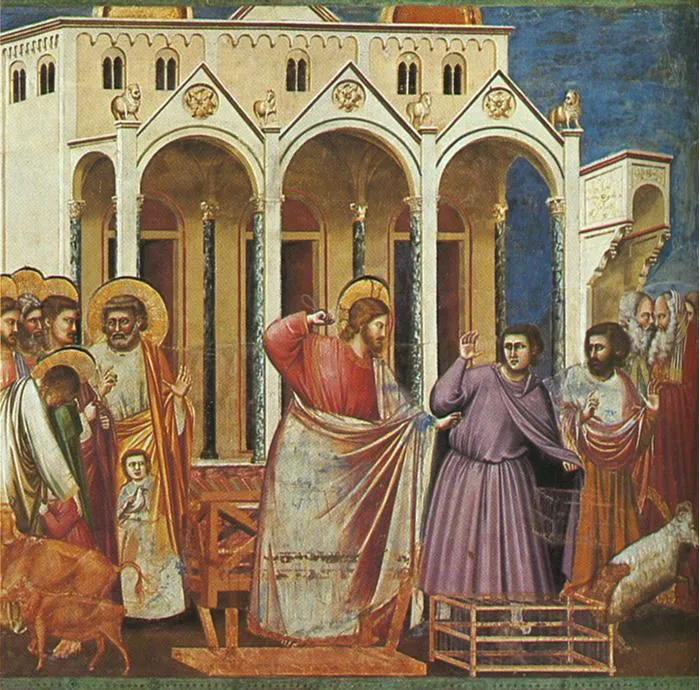
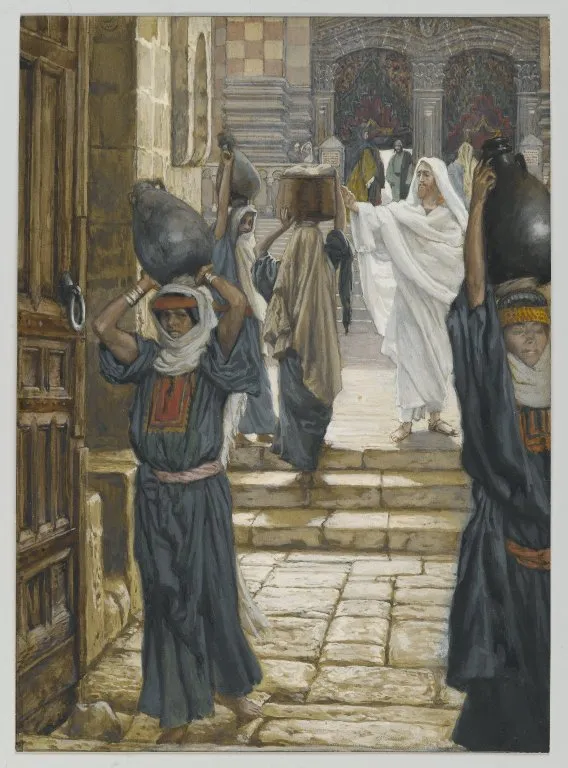
12And Jesus went into the temple of God, and cast out all them that sold and bought in the temple, and overthrew the tables of the moneychangers, and the seats of them that sold doves, 13And said unto them, It is written, My house shall be called the house of prayer; but ye have made it a den of thieves. 14And the blind and the lame came to him in the temple; and he healed them. 15And when the chief priests and scribes saw the wonderful things that he did, and the children crying in the temple, and saying, Hosanna to the son of David; they were sore displeased, 16And said unto him, Hearest thou what these say? And Jesus saith unto them, Yea; have ye never read, Out of the mouth of babes and sucklings thou hast perfected praise? 17And he left them, and went out of the city into Bethany; and he lodged there.
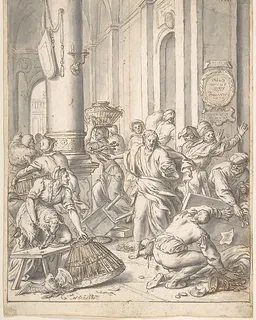
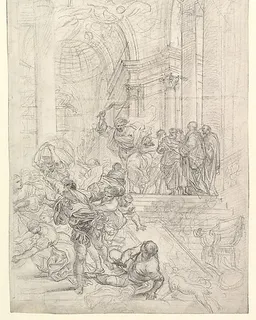
His first act on entering the city is to enter the temple - and to clear it. Jesus went into the temple of God, and cast out all them that sold and bought… and overthrew the tables of the moneychangers, and the seats of them that sold doves (v. 12). The trade itself had a respectable cover. Pilgrims came from far away and needed animals to sacrifice; foreign coin had to be changed into the currency the temple accepted.
But the commerce had crept into the temple's own courts and grown into a system of profit at the worshiper's expense - inflated exchange rates, marked-up doves sold to the poor who could afford no larger offering. The place set apart for meeting God had been turned into a place for turning a profit off those who came to meet Him. Jesus does not lodge a complaint or request a reform; He acts, overturning tables and driving out the trade with the directness of one who has every right to do so.
This is His Father's house, and He clears it the way a son clears what does not belong in his father's home.
He gives the reason in the words of the prophets: It is written, My house shall be called the house of prayer; but ye have made it a den of thieves (v. 13). The first half is from Isaiah, where the LORD declares that His house shall be a house of prayer for all people - a place where anyone, near or far, could come to seek Him. The second half is from Jeremiah, who rebuked those who treated the temple as a hideout, a place to shelter while their lives ran on unchanged.
Put together, the two charges are devastating. The temple was meant to be the open door between God and people, and instead it had become a den of thieves - both a marketplace where the poor were fleeced and a refuge where the corrupt felt safe. Jesus' zeal here is not anger for its own sake; it is the jealousy of true worship for its rightful place. What God set apart for prayer must be for prayer.
The outrage is that access to God had been turned into a transaction, and the very people charged with guarding the house had let it happen.
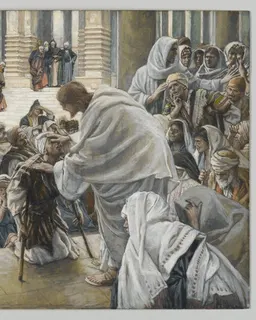
Then the scene fills with the opposite of commerce. The blind and the lame came to him in the temple; and he healed them (v. 14). The house emptied of profiteers becomes, in the same breath, a house of mercy - the very people who had nothing to sell and little to give are welcomed and made whole. And the children take up the cry of the road: the children crying in the temple, and saying, Hosanna to the Son of David (v. 15).
This is too much for the chief priests and scribes, who are sore displeased and challenge Him: Hearest thou what these say? - as if to say, will you not silence this? But Jesus owns the praise and answers from Scripture: Yea; have ye never read, Out of the mouth of babes and sucklings thou hast perfected praise? (v. 16). The line is from Psalm 8, where the praise of infants is set against the LORD's enemies.
There is gentle irony in His reply. The trained guardians of the temple are offended by the worship; the children, who have no learning and no agenda, see clearly and praise rightly. God is content to receive perfect praise from the smallest and least, and to let it stand as a rebuke to those who should have known better. Then He withdraws for the night to Bethany (v. 17).
Matthew 21:18-32By What Authority · The Two Sons
18Now in the morning as he returned into the city, he hungered. 19And when he saw a fig tree in the way, he came to it, and found nothing thereon, but leaves only, and said unto it, Let no fruit grow on thee henceforward for ever. And presently the fig tree withered away. 20And when the disciples saw it, they marvelled, saying, How soon is the fig tree withered away! 21Jesus answered and said unto them, Verily I say unto you, If ye have faith, and doubt not, ye shall not only do this which is done to the fig tree, but also if ye shall say unto this mountain, Be thou removed, and be thou cast into the sea; it shall be done. 22And all things, whatsoever ye shall ask in prayer, believing, ye shall receive.
On the way back into the city the next morning, hungry, Jesus comes to a fig tree and found nothing thereon, but leaves only, and says, Let no fruit grow on thee henceforward for ever - and the tree withers at once (vv. 18-19). The act can seem severe until its point is seen. The tree was covered in leaves, the very sign that ought to promise figs, yet it bore none. It was all advertisement and no substance - the appearance of fruitfulness without the reality.
Coming as it does between the cleansing of the temple and the parables of judgment, the withered tree is a living parable set in the same key as everything around it. It pictures exactly the danger Jesus is confronting all week: a religion full of leaves - the forms, the ceremonies, the impressive show - with no fruit underneath. The barrenness is not hidden by the foliage; it is exposed by it, because the leaves made a promise the tree could not keep.
What God looks for is fruit, not display, and where He finds only leaves, the show itself becomes the indictment.
The disciples marvel at how quickly the tree died, and Jesus turns their wonder toward faith: If ye have faith, and doubt not, ye shall not only do this which is done to the fig tree, but also if ye shall say unto this mountain, Be thou removed, and be thou cast into the sea; it shall be done. And all things, whatsoever ye shall ask in prayer, believing, ye shall receive (vv. 21-22).
Two things hold this promise in place so it is not misread. First, its heart is faith, and doubt not - trust in God so settled it does not waver, the kind that takes Him at His word. The mountain cast into the sea is a vivid picture of what such trust opens up: nothing is too hard when a person is truly leaning on God's power rather than their own. Second, the promise lives in the soil of prayer - whatsoever ye shall ask in prayer, believing. This is not a technique for bending the world to private wishes; it is confidence in asking God, who hears and answers His praying people.
Set beside the barren fig tree, the lesson sharpens: do not be a tree of leaves only. Real faith in God bears real fruit, and it lays hold of what God can do through honest, believing prayer.
23And when he was come into the temple, the chief priests and the elders of the people came unto him as he was teaching, and said, By what authority doest thou these things? and who gave thee this authority? 24And Jesus answered and said unto them, I also will ask you one thing, which if ye tell me, I in like wise will tell you by what authority I do these things. 25The baptism of John, whence was it? from heaven, or of men? And they reasoned with themselves, saying, If we shall say, From heaven; he will say unto us, Why did ye not then believe him? 26But if we shall say, Of men; we fear the people; for all hold John as a prophet. 27And they answered Jesus, and said, We cannot tell. And he said unto them, Neither tell I you by what authority I do these things.
The question is exact, because John had borne witness to Jesus; to settle where John's authority came from is to settle where Jesus' comes from. And it catches the rulers in their own calculation. They reason it out among themselves with naked self-interest: say from heaven, and He will ask why they did not believe John; say of men, and they fear the crowd, for all hold John as a prophet (vv. 25-26).
Notice what is missing from their deliberation - any concern for what is actually true. They weigh only what is safe. So they retreat into We cannot tell (v. 27), which is not honesty but cowardice; they could tell, and would not. And Jesus, having shown that they will not face the truth even when they know it, declines to give them more: Neither tell I you by what authority I do these things. Men unwilling to acknowledge the light they have already been given are not owed more.1
28But what think ye? A certain man had two sons; and he came to the first, and said, Son, go work to day in my vineyard. 29He answered and said, I will not: but afterward he repented, and went. 30And he came to the second, and said likewise. And he answered and said, I go, sir: and went not. 31Whether of them twain did the will of his father? They say unto him, The first. Jesus saith unto them, Verily I say unto you, That the publicans and the harlots go into the kingdom of God before you. 32For John came unto you in the way of righteousness, and ye believed him not: but the publicans and the harlots believed him: and ye, when ye had seen it, repented not afterward, that ye might believe him.
Then comes the first of two parables, brief and pointed. A man has two sons. He tells the first to go work in the vineyard; the son says flatly, I will not, but afterward repented, and went. He tells the second the same; that son says, I go, sir - all courtesy and compliance - and went not (vv. 28-30). Then Jesus asks the rulers to render the verdict themselves: Whether of them twain did the will of his father? They answer correctly - The first - and in answering, they condemn themselves.
The point is plain and searching: it is not the saying but the doing that finally counts. A clean refusal followed by obedience pleases the father; a polite yes that never moves does not. Words cost nothing; the vineyard is worked by those who actually go. The second son is the more dangerous of the two precisely because he sounds right - his I go, sir would satisfy any listener - while nothing follows. Jesus is holding a mirror up to men whose religion is rich in the language of obedience and empty of its substance: leaves again, and no figs.
Jesus drives the parable home with words that must have landed like a blow: Verily I say unto you, That the publicans and the harlots go into the kingdom of God before you (v. 31). The tax collectors and prostitutes - the openly disreputable, the ones everyone agreed were far from God - are the first son. They said no to God with their lives for years, and then, when John came in the way of righteousness, they believed him, turned, and went (v. 32).
The religious leaders are the second son. They said all the right things, professed the right devotion, and yet believed him not; and even after seeing the change in those they despised, they repented not afterward, that ye might believe him. Here is the heart of it, and it must be heard rightly: the door of the kingdom is not shut to anyone who repents and goes - it stands wide open to the worst of sinners who turn.
What shuts a person out is not the depth of their past but the refusal to repent, the polite yes that never becomes a yielded life. The warning falls on settled fruitlessness; the welcome runs to all who will bear the fruit of repentance, however late and however far they have come from.
Matthew 21:33-46The Stone Which the Builders Rejected
33Hear another parable: There was a certain householder, which planted a vineyard, and hedged it round about, and digged a winepress in it, and built a tower, and let it out to husbandmen, and went into a far country: 34And when the time of the fruit drew near, he sent his servants to the husbandmen, that they might receive the fruits of it. 35And the husbandmen took his servants, and beat one, and killed another, and stoned another. 36Again, he sent other servants more than the first: and they did unto them likewise. 37But last of all he sent unto them his son, saying, They will reverence my son. 38But when the husbandmen saw the son, they said among themselves, This is the heir; come, let us kill him, and let us seize on his inheritance. 39And they caught him, and cast him out of the vineyard, and slew him. 40When the lord therefore of the vineyard cometh, what will he do unto those husbandmen? 41They say unto him, He will miserably destroy those wicked men, and will let out his vineyard unto other husbandmen, which shall render him the fruits in their seasons.
The second parable opens on a scene every hearer would recognize. A householder plants a vineyard, sees to everything it needs - hedged it round about, and digged a winepress in it, and built a tower - then lets it out to tenant farmers and goes away (v. 33). The picture deliberately echoes Isaiah's song of the vineyard, where the LORD plants Israel with every care and looks for good grapes. When harvest comes, the owner sends servants to collect his share of the fruit, and the tenants turn violent: they beat one, and killed another, and stoned another (v. 35).
He sends more, and they are treated the same (v. 36). The servants stand for the long line of prophets God sent to His people across the centuries, messengers calling for the fruit of faithfulness and meeting rejection, abuse, and death. The parable is telling the story of a long patience repeatedly spurned - an owner with every right to his fruit, sending again and again, and tenants who answer each appeal by silencing the one who brings it.
The vineyard is not the problem; the vineyard is good and well-tended. The problem is the men who hold it and will not render what they owe.2
The owner makes one last appeal, and it costs him everything: last of all he sent unto them his son, saying, They will reverence my son (v. 37). It is the gesture of a patience almost past belief - after every servant beaten and killed, he sends the one most precious to him, trusting that surely the son will be honored. But the tenants see in the heir only opportunity: This is the heir; come, let us kill him, and let us seize on his inheritance (v. 38).
They imagine that by removing the son they can possess the vineyard outright. So they caught him, and cast him out of the vineyard, and slew him (v. 39). The detail is striking and pointed - cast out of the vineyard and then killed, as Jesus would shortly be led outside the city and crucified. Then Jesus turns the verdict back on His hearers: When the lord therefore of the vineyard cometh, what will he do unto those husbandmen? (v. 40).
And they pronounce their own sentence: He will miserably destroy those wicked men, and will let out his vineyard unto other husbandmen, which shall render him the fruits in their seasons (v. 41). Without realizing it, they have named what fruitlessness and the murder of the son deserve, and what God will do - entrust the vineyard to those who will bring forth its fruit.
42Jesus saith unto them, Did ye never read in the scriptures, The stone which the builders rejected, the same is become the head of the corner: this is the Lord’s doing, and it is marvellous in our eyes? 43Therefore say I unto you, The kingdom of God shall be taken from you, and given to a nation bringing forth the fruits thereof. 44And whosoever shall fall on this stone shall be broken: but on whomsoever it shall fall, it will grind him to powder. 45And when the chief priests and Pharisees had heard his parables, they perceived that he spake of them. 46But when they sought to lay hands on him, they feared the multitude, because they took him for a prophet.
Having let them condemn themselves, Jesus draws the parable up into a single line of Scripture: Did ye never read in the scriptures, The stone which the builders rejected, the same is become the head of the corner: this is the Lord's doing, and it is marvellous in our eyes? (v. 42). The words are from Psalm 118 - the very psalm the crowd had sung at the gate - and they turn the whole story inside out.
The slain son is the rejected stone; the tenants and the builders are the same men, those entrusted with God's house who throw away the one piece on which everything depends. But rejection is not the end of the stone. What the builders cast aside, God sets at the head of the corner, the chief and load-bearing stone of the whole structure. The reversal is God's own doing, marvellous in our eyes - the very act of rejection becomes the means of exaltation.
The murdered son and the discarded stone are one figure, and in both the same astonishing pattern holds: man rejects, God exalts; the stone thrown down becomes the stone everything is built upon.
From the stone Jesus states the consequence plainly: The kingdom of God shall be taken from you, and given to a nation bringing forth the fruits thereof (v. 43). Read it as the parable gives it. Throughout, the issue has been fruit - the owner came seeking the fruits of it (v. 34), and the tenants' sin is that they would not render it and killed those who asked. So the kingdom is taken from a stewardship that bore no fruit and given to those who will.
The word you points squarely at the men in front of Him - the chief priests and elders confronting Him in the temple, the builders rejecting the stone - not at a people as such; verse 45 confirms it: they perceived that he spake of them. And the standard set is fruitfulness, the thing God has required all along. The kingdom belongs to those, of whatever background, who bring forth its fruit. Then comes the sober word about the stone itself: whosoever shall fall on this stone shall be broken: but on whomsoever it shall fall, it will grind him to powder (v. 44).
The cornerstone cannot be ignored; one either comes to it and is broken - humbled, remade - or is broken by it. There is no third way past the stone. And the chapter ends in irony: the rulers grasp that He has described them exactly, and want to seize Him - thus moving to do the very thing the parable foretold - but hold back, for they feared the multitude, because they took him for a prophet (v. 46).
Research trail
Sources & further study
These references support the historical, linguistic, manuscript, and contextual notes in this chapter. Scripture remains the primary text; external sources are provided so readers can inspect the research directly.
- Matthew 21 - Translators' NotesThe NET Bible's detailed footnotes on Matthew 21 - the colt and the prophecy it fulfills (vv. 2-5), the meaning of the temple commerce Jesus confronts (vv. 12-13), the riddle of John's baptism (vv. 24-27), and the much-discussed cornerstone saying and its sequel (vv. 42-44).
- Matthew 21 ↔ Zechariah 9 · Psalm 118 · Psalm 8 · Isaiah 5Traces the Old Testament threads woven through the chapter - the King on the colt (v. 5) drawn from Zech. 9:9, the crowd's Hosanna… Blessed is he that cometh (v. 9) and the rejected-stone saying (v. 42) both from Ps. 118, the children's praise (v. 16) from Ps. 8:2, and the vineyard parable (vv. 33-41) growing out of the song of the vineyard in Isa. 5.
- Matthew 21 · Greek interlinear + lexiconThe Greek text of Matthew 21 word by word, with parsing and lexical links - useful for hosanna (vv. 9, 15, the cry “save now” carried over from Ps. 118:25), for praus (v. 5, the “meek” King), and for the building image in kephalen gonias (v. 42, “the head of the corner”).
Where this echoes in Scripture
Behold, Thy King Cometh
- Zechariah 9:9behold, thy King cometh unto thee: he is just, and having salvation; lowly, and riding upon an ass.The prophecy Matthew names in verse 5 - the peaceable King coming to Zion on a donkey.
- Psalm 118:25-26Save now, I beseech thee, O LORD... Blessed be he that cometh in the name of the LORD.The source of the crowd's cry in verse 9 - the festival shout of “Hosanna” and the pilgrim blessing.
- John 12:14-16And Jesus, when he had found a young ass, sat thereon; as it is written... These things understood not his disciples at the first.John's account of the same entry - the disciples grasped the fulfillment only later.
- Zephaniah 3:14-15the king of Israel, even the LORD, is in the midst of thee... be not afraid.The promise behind “daughter of Sion” (v. 5) - the King come to dwell among His people.
- Luke 19:37-40if these should hold their peace, the stones would immediately cry out.The same acclamation - Jesus refusing to silence the praise the crowd offers Him.
My House Shall Be Called the House of Prayer
- Isaiah 56:7mine house shall be called an house of prayer for all people.The first half of Jesus' quotation in verse 13 - the temple meant as an open door to God for everyone.
- Jeremiah 7:11Is this house, which is called by my name, become a den of robbers in your eyes?The second half of verse 13 - the rebuke against treating God's house as a hideout for the corrupt.
- Psalm 8:2Out of the mouth of babes and sucklings hast thou ordained strength because of thine enemies.The Scripture Jesus cites in verse 16 - God receiving perfect praise from the smallest and least.
- John 2:16-17make not my Father's house an house of merchandise... The zeal of thine house hath eaten me up.The heart behind the cleansing (vv. 12-13) - zeal for the rightful use of His Father's house.
- Malachi 3:1the Lord, whom ye seek, shall suddenly come to his temple... but who may abide the day of his coming?The promise fulfilled in verse 12 - the Lord coming suddenly to His temple, and finding it must be purified.
By What Authority · The Two Sons
- Mark 11:22-24Have faith in God... believe that ye receive them, and ye shall have them.The same lesson on faith and prayer drawn from the fig tree (vv. 21-22).
- Matthew 7:21Not every one that saith unto me, Lord, Lord, shall enter into the kingdom of heaven; but he that doeth the will of my Father.The point of the two sons (vv. 29-31) - doing, not merely saying, is what counts.
- Luke 18:13-14God be merciful to me a sinner. I tell you, this man went down to his house justified.The publican who turned (v. 31) - the disreputable entering the kingdom through repentance.
- Luke 7:29-30the publicans, justified God, being baptized... But the Pharisees and lawyers rejected the counsel of God against themselves.The division of verse 32 - the outcasts believing John, the leaders refusing him.
- James 2:17Even so faith, if it hath not works, is dead, being alone.The fig tree and the second son together (vv. 19, 30) - profession without fruit is empty.
The Stone Which the Builders Rejected
- Isaiah 5:1-7My wellbeloved hath a vineyard... he looked that it should bring forth grapes, and it brought forth wild grapes.The song of the vineyard behind the parable (vv. 33-41) - God's care, and His search for fruit.
- Psalm 118:22-23The stone which the builders refused is become the head stone of the corner. This is the LORD's doing.The Scripture Jesus quotes in verse 42 - the rejected stone made chief by God.
- Acts 4:11-12This is the stone which was set at nought of you builders... Neither is there salvation in any other.Peter pressing the saying of verse 42 on the same rulers - the rejected Christ as the only foundation.
- 1 Peter 2:6-8a chief corner stone, elect, precious... a stone of stumbling, and a rock of offence.The two responses to the cornerstone (vv. 42, 44) - precious to those who believe, a stumbling-stone to those who do not.
- Hebrews 13:12Jesus also, that he might sanctify the people with his own blood, suffered without the gate.The son cast out of the vineyard and slain (v. 39) - Christ led outside the city to die.