Mark 11
People in this chapter
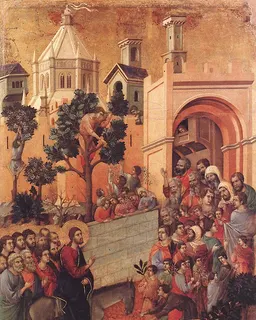
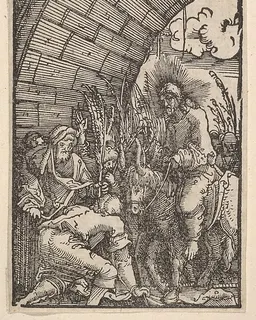
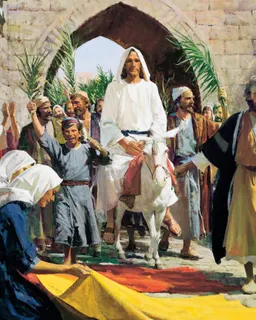
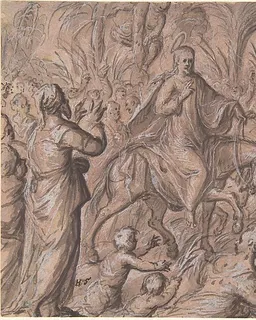
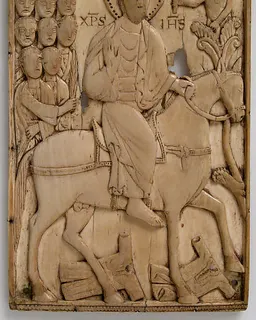
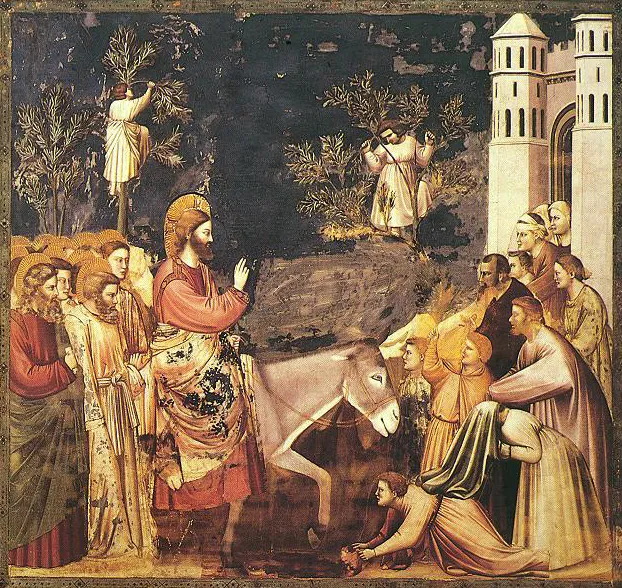
Mark 11 opens with the entry into Jerusalem, and Mark tells it with his usual eye for the telling detail. Jesus sends two disciples ahead for a colt whereon never man sat - an animal never broken to a rider, fit for a sacred purpose - and they find it exactly as He said. He rides into the city while the crowds spread their garments in the way and cut down branches, crying, Hosanna; Blessed is he that cometh in the name of the Lord: Blessed be the kingdom of our father David… Hosanna in the highest (vv. 9-10).
The words are lifted straight from Psalm 118, the pilgrim's welcome to the one who comes in the LORD's name. Yet the entry overturns every expectation of a conquering king. He comes lowly, on a beast of burden, and the first thing He does upon arriving is not seize a throne but go to the temple and look round about upon all things (v. 11), like an owner inspecting his house.1
Tap any highlighted phrase to jump to the commentary that unpacks it.
Mark 11:1-11Blessed Is He That Cometh in the Name of the Lord
1And when they came nigh to Jerusalem, unto Bethphage and Bethany, at the mount of Olives, he sendeth forth two of his disciples, 2And saith unto them, Go your way into the village over against you: and as soon as ye be entered into it, ye shall find a colt tied, whereon never man sat; loose him, and bring him. 3And if any man say unto you, Why do ye this? say ye that the Lord hath need of him; and straightway he will send him hither. 4And they went their way, and found the colt tied by the door without in a place where two ways met; and they loose him. 5And certain of them that stood there said unto them, What do ye, loosing the colt? 6And they said unto them even as Jesus had commanded: and they let them go. 7And they brought the colt to Jesus, and cast their garments on him; and he sat upon him. 8And many spread their garments in the way: and others cut down branches off the trees, and strawed them in the way. 9And they that went before, and they that followed, cried, saying, Hosanna; Blessed is he that cometh in the name of the Lord: 10Blessed be the kingdom of our father David, that cometh in the name of the Lord: Hosanna in the highest. 11And Jesus entered into Jerusalem, and into the temple: and when he had looked round about upon all things, and now the eventide was come, he went out unto Bethany with the twelve.
Mark begins the scene with a strange, vivid errand. As they near Jerusalem at the mount of Olives, Jesus sends two disciples ahead with precise instructions: ye shall find a colt tied, whereon never man sat; loose him, and bring him (v. 2). Two details carry weight. First, the colt is one whereon never man sat - an animal never yet broken to a rider. Throughout Scripture, what is set apart for a sacred use is what has never been put to common service; an unridden colt is fit for a holy purpose.
Second, Jesus knows exactly where it stands and what its owners will say: if any man say unto you, Why do ye this? say ye that the Lord hath need of him (v. 3). The disciples go, find everything precisely as He said, answer the bystanders even as Jesus had commanded, and the owners let them go (vv. 4-6). The quiet point is that the King who is about to enter His city is no passive figure swept along by a crowd.
He arranges the whole entry. He chooses the animal, foresees the objection, and provides the word that disarms it. The triumphal entry does not happen to Jesus; He stages it.1
When the colt is brought, the disciples cast their garments on him; and he sat upon him, and the crowd takes up the act: many spread their garments in the way: and others cut down branches off the trees, and strawed them in the way (vv. 7-8). This is the welcome of a king. Spreading garments under the feet of one who approaches was an ancient act of royal homage; when Jehu was proclaimed king, the people put their garments under him on the bare steps.
The branches and the road carpeted with cloaks turn the dusty descent of the mount of Olives into a coronation route. And yet everything about the manner of it is humble. The King is not borne on a litter or mounted on a war-horse; He sits on a young donkey, surrounded not by an army but by pilgrims and disciples. Two things are true at once, and Mark holds them together without comment: this is unmistakably the entry of a king, and it is unmistakably the entry of a lowly one.
The crowd supplies the royal honors; the donkey supplies the warning that this kingdom will not look like the kingdoms they have known.
The cry that goes up is not improvised; it is Scripture. Hosanna; Blessed is he that cometh in the name of the Lord: Blessed be the kingdom of our father David… Hosanna in the highest (vv. 9-10). The words come from Psalm 118, the last of the psalms sung at the great feasts, the pilgrim's song of approach to the temple: Save now, I beseech thee, O LORD… Blessed be he that cometh in the name of the LORD (Ps. 118:25-26)2.
The crowd is welcoming Jesus with the very liturgy of the festival, hailing Him as the one who comes in the name of the Lord and binding His arrival to the hope of David's restored kingdom. There is real faith in the shout, and real misunderstanding folded inside it. They are right that the King has come, right that David's kingdom is at hand, right to cry Hosanna - save now. But the salvation they expect is rescue from Rome, and the throne they picture is a national one.
The chapter, and the days that follow, will show them a King who saves in a way they did not ask for, by a road they would never have chosen.
Mark ends the entry on a note the other Gospels do not stress, and it is easy to read past: Jesus entered into Jerusalem, and into the temple: and when he had looked round about upon all things, and now the eventide was come, he went out unto Bethany with the twelve (v. 11). After all the shouting, the day closes not with a seizure of power but with a long, silent look. The King reaches His city and goes straight to His house - the temple - and surveys it, round about upon all things, the way an owner inspects a property or a master examines a household before he acts.
Mark does not tell us what Jesus thought as He looked; he simply lets the inspection stand, and then sends Him out to Bethany for the night. But the very next day He will return to that temple and act on what He has seen. The looking is not idle. It frames everything that follows: the cursing of the tree and the cleansing of the temple are not bursts of temper but the considered response of One who has already weighed what He found.
The King has come home and examined His house - and found it wanting.
Mark 11:12-19A House of Prayer, a Den of Thieves
12And on the morrow, when they were come from Bethany, he was hungry: 13And seeing a fig tree afar off having leaves, he came, if haply he might find any thing thereon: and when he came to it, he found nothing but leaves; for the time of figs was not yet. 14And Jesus answered and said unto it, No man eat fruit of thee hereafter for ever. And his disciples heard it. 15And they come to Jerusalem: and Jesus went into the temple, and began to cast out them that sold and bought in the temple, and overthrew the tables of the moneychangers, and the seats of them that sold doves; 16And would not suffer that any man should carry any vessel through the temple. 17And he taught, saying unto them, Is it not written, My house shall be called of all nations the house of prayer? but ye have made it a den of thieves. 18And the scribes and chief priests heard it, and sought how they might destroy him: for they feared him, because all the people was astonished at his doctrine. 19And when even was come, he went out of the city.
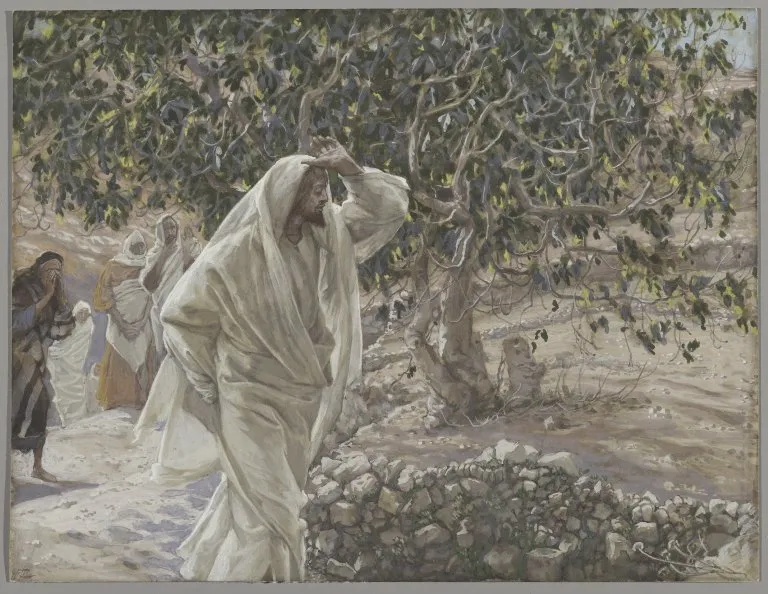
The morning after the entry, Jesus is hungry, and seeing a fig tree afar off having leaves, He comes to it expecting fruit and finds nothing but leaves; for the time of figs was not yet (vv. 12-13). That last clause - for the time of figs was not yet - has puzzled many readers: why curse a tree for being fruitless out of season? But the puzzle is the point, and it turns on how fig trees grow.
A fig tree in full leaf is making a promise: the early figs come with the leaves, so a tree advertising abundant foliage is advertising fruit. This tree had taken on the whole appearance of fruitfulness ahead of the season - it looked, from afar off, like the one tree that might satisfy - and it had nothing. The offense is not barrenness as such; it is the gap between show and substance. The tree displayed every sign of life and bore none of its reality.
Mark frames it deliberately, placing it on the way to the temple, because he wants the reader to carry the image straight through the temple gates. What Jesus finds in the tree, He is about to find in the house of God: leaves in abundance, fruit nowhere.1
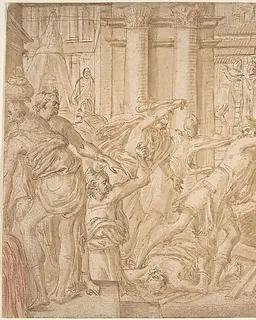
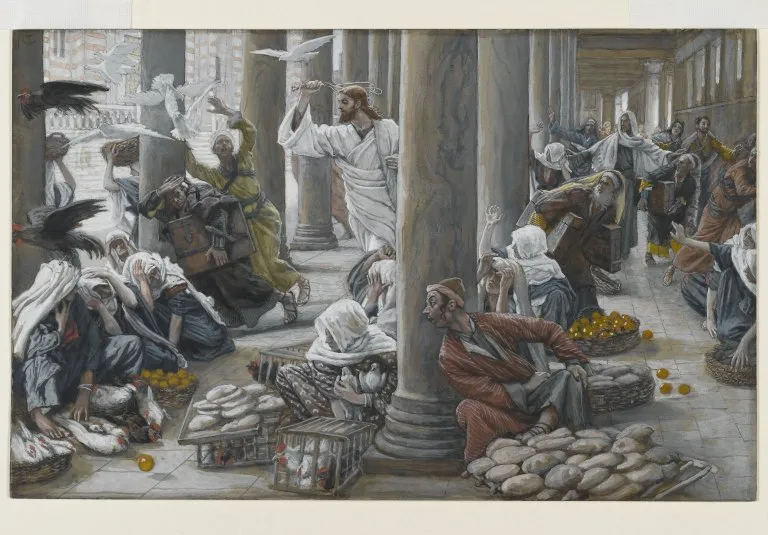
Inside the temple, the King acts on what He saw the evening before. He began to cast out them that sold and bought in the temple, and overthrew the tables of the moneychangers, and the seats of them that sold doves; and would not suffer that any man should carry any vessel through the temple (vv. 15-16). The trade itself had grown up around real needs: pilgrims travelling far could not herd animals across the country, and the temple tax had to be paid in approved coin, so sellers of sacrificial doves and changers of money set up shop.
But the commerce had crept into the temple courts and crowded out their purpose. Mark notes a detail the others omit - Jesus would not suffer that any man should carry any vessel through the temple, stopping people from using the sacred precincts as a shortcut for hauling goods. The whole place had been demoted from a house of worship to a thoroughfare and a marketplace. The cleansing is not a riot; it is a reclamation.
The owner who looked round about upon all things now sets His house back to its purpose, driving out what does not belong and halting the traffic that has profaned it.
Jesus interprets His own act with Scripture, joining two prophets in a single sentence: Is it not written, My house shall be called of all nations the house of prayer? but ye have made it a den of thieves (v. 17). The first half is Isaiah 56:7, where the LORD promises that His house will be a house of prayer for all people, gathering even the foreigner and the outcast2.
The second half is Jeremiah 7:11, where the LORD asks whether His house has become a den of robbers in the people's eyes - a phrase from a sermon warning that ritual without righteousness will not save them. The pairing is devastating. A den of thieves is not where robbers commit their crimes; it is where they retreat to feel safe afterward. Jeremiah's charge was that people were treating the temple as a hideout - trusting the building to shelter them while their lives went unchanged.
Jesus levels the same charge, and adds Isaiah's vision to sharpen it: the house was meant to draw all nations to prayer, and instead it had become a closed market that served those already inside. The leaves were everywhere; the fruit of true worship was gone.
The response of the temple leadership lays bare the conflict driving the rest of the Gospel: And the scribes and chief priests heard it, and sought how they might destroy him: for they feared him, because all the people was astonished at his doctrine (v. 18). Notice what does not happen. They do not examine His charge. They do not ask whether the house has in fact become a den of thieves, whether the trade has in fact crowded out prayer.
They move at once from hearing to plotting His death. And Mark names the reason without flinching: for they feared him. They fear Him because the crowds are astonished at his doctrine - because His authority is drawing the people and exposing their own. This is the precise reverse of faith. Where the chapter will soon call for trust in God, here are men who meet the word of God with calculation, asking not is this true? but how do we be rid of him? The fig tree and the temple have set the terms; now the leaders react exactly as the barren tree would if it could - defending the appearance, refusing the reckoning, and turning on the One who came looking for fruit.
Mark 11:20-26Have Faith in God
20And in the morning, as they passed by, they saw the fig tree dried up from the roots. 21And Peter calling to remembrance saith unto him, Master, behold, the fig tree which thou cursedst is withered away. 22And Jesus answering saith unto them, Have faith in God. 23For verily I say unto you, That whosoever shall say unto this mountain, Be thou removed, and be thou cast into the sea; and shall not doubt in his heart, but shall believe that those things which he saith shall come to pass; he shall have whatsoever he saith. 24Therefore I say unto you, What things soever ye desire, when ye pray, believe that ye receive them, and ye shall have them. 25And when ye stand praying, forgive, if ye have ought against any: that your Father also which is in heaven may forgive you your trespasses. 26But if ye do not forgive, neither will your Father which is in heaven forgive your trespasses.
Mark closes his sandwich. On the third morning the disciples pass the same tree and find it dried up from the roots, and Peter, remembering, exclaims, Master, behold, the fig tree which thou cursedst is withered away (vv. 20-21). The detail from the roots matters: this is no slow seasonal wilting but a death that has gone all the way down, swift and total, in answer to a word. Peter is astonished - his focus is on the sheer power of it, the tree struck dead overnight by a sentence.
But Jesus does not let the lesson stop at the spectacle. The withered tree is the visible proof of two things the chapter has been pressing. First, it confirms the judgment on fruitlessness: the leaves that promised and did not deliver are now exposed for what they were, dead to the roots. Second, and this is where Jesus turns, it confirms the power of a word spoken in faith to God. The same authority that found the temple wanting and the tree barren is the authority Jesus now invites His disciples to trust - not to wield as a weapon, but to lean on as children leaning on a Father.
From the dead tree He pivots, surprisingly, to prayer.
Jesus answers Peter's amazement with an invitation rather than an explanation: Have faith in God. For verily I say unto you, That whosoever shall say unto this mountain, Be thou removed, and be thou cast into the sea; and shall not doubt in his heart, but shall believe that those things which he saith shall come to pass; he shall have whatsoever he saith (vv. 22-23). The mountain in view may well be the temple mount rising before them, and to speak of it cast into the sea is deliberately vast - the language of the impossible.
But notice carefully where Jesus locates the power. It is not in the force of the words, not in the intensity of the wanting, not in a technique for making things happen. It is in faith in God - trust directed at a Person. The contrast He draws is between doubting in his heart and believing; the issue is whether the heart truly rests in God or is divided against itself. This is not a promise that confident demands bend reality to our wishes.
It is a call to a settled, undivided trust in the God who is able - the kind of trust the barren fig tree and the calculating priests so conspicuously lacked. The point is the object of the faith, not the volume of it. Faith is only ever as good as the God it leans on, and Jesus says: lean on God.
Then Jesus does something that guards the whole teaching from being twisted into a formula for getting what we want. He binds believing prayer to a forgiving heart: When ye stand praying, forgive, if ye have ought against any: that your Father also which is in heaven may forgive you your trespasses. But if ye do not forgive, neither will your Father which is in heaven forgive your trespasses (vv. 25-26). This is the rail that keeps the promise from running off into mere wish-fulfillment.
The prayer Jesus commends is not a tool for bending the world to our desires; it is the trusting approach of a child to a Father - and the child who comes to the Father for mercy cannot at the same time withhold mercy from a brother. Notice too the shift in address: He calls God your Father which is in heaven, naming the relationship that makes prayer what it is. The whole teaching turns out to be deeply personal and deeply moral.
To pray believing is to come to a Father you trust, with a heart cleared of the grudges that would make your own forgiveness a contradiction. Faith that moves mountains and a heart that forgives are joined in a single breath; you cannot have the one while refusing the other.
Mark 11:27-33By What Authority Doest Thou These Things?
27And they come again to Jerusalem: and as he was walking in the temple, there come to him the chief priests, and the scribes, and the elders, 28And say unto him, By what authority doest thou these things? and who gave thee this authority to do these things? 29And Jesus answered and said unto them, I will also ask of you one question, and answer me, and I will tell you by what authority I do these things. 30The baptism of John, was it from heaven, or of men? answer me. 31And they reasoned with themselves, saying, If we shall say, From heaven; he will say, Why then did ye not believe him? 32But if we shall say, Of men; they feared the people: for all men counted John, that he was a prophet indeed. 33And they answered and said unto Jesus, We cannot tell. And Jesus answering saith unto them, Neither do I tell you by what authority I do these things.
It is a fair question on its face: a man has disrupted the temple and is teaching the crowds, and the officials responsible for the temple ask him to produce his credentials. But it is also a trap, and a revealing one. They do not ask whether what He did was right; they ask who authorized it. Their whole world runs on delegated authority - the priest ordained, the scribe trained, the elder appointed - and they assume that to discredit Jesus they need only show that no recognized body stands behind Him.
What they cannot imagine is an authority that does not come up through their channels because it comes down from above them. They are asking the right words to the right Person and missing the answer standing in front of them.
Jesus does not dodge the question; He answers it with a question that goes to the same root: I will also ask of you one question… The baptism of John, was it from heaven, or of men? answer me (vv. 29-30). It is the most direct possible reply, because John's ministry and Jesus' authority spring from the same source. John was the one sent to prepare the way, who pointed to Jesus and baptized Him; to settle where John's authority came from is to settle where Jesus' comes from.
So Jesus puts to them the very test they put to Him. Was it from heaven, or of men? - the same alternative they were pressing: divine commission or human invention. If they can discern the source of John, they have their answer about Jesus. The brilliance of it is that the question is not a riddle; it is a mirror. It asks the rulers to do the one thing they have refused to do throughout - to deal honestly with a work of God when honesty would cost them something.
Their fitness to receive the answer about Jesus is exactly what the question exposes.1
What follows is one of the most quietly damning scenes in the Gospel, because Mark lets us listen in on their reasoning: And they reasoned with themselves, saying, If we shall say, From heaven; he will say, Why then did ye not believe him? But if we shall say, Of men; they feared the people: for all men counted John, that he was a prophet indeed (vv. 31-32). Watch what governs their deliberation. The one question never asked is the only one that matters - was John in fact from heaven? They are not weighing truth at all; they are calculating consequences.
To answer from heaven would convict them of unbelief, for they did not receive John. To answer of men would enrage a crowd convinced John was a prophet. So the safe answer - claiming ignorance - replaces any honest reckoning with what is actually true. We cannot tell (v. 33) is calculated retreat, dressed as ignorance. These are the official discerners of Israel, the men whose office is to recognize a word from God, declaring themselves unable to tell whether the greatest prophet of their generation came from heaven or not.
The fig tree had leaves and no fruit; here is the office of spiritual authority with all its standing and no power to do the one thing it exists to do.
Research trail
Sources & further study
These references support the historical, linguistic, manuscript, and contextual notes in this chapter. Scripture remains the primary text; external sources are provided so readers can inspect the research directly.
- Mark 11 - Translators' NotesThe NET Bible's detailed footnotes on Mark 11 - the colt whereon never man sat and the staging of the entry (vv. 1-7), the note that the time of figs was not yet (v. 13), the force of the temple sayings (v. 17), and the structure of Jesus' counter-question about John's baptism (vv. 29-33).
- Mark 11 ↔ Psalm 118 · Zechariah 9 · Isaiah 56 · Jeremiah 7Traces the Old Testament threads woven through the chapter - the entry shout drawn from Save now… Blessed be he that cometh in the name of the LORD (Ps. 118:25-26) and the lowly king of Zech. 9:9, and the temple word combining mine house shall be called an house of prayer for all people (Isa. 56:7) with a den of robbers (Jer. 7:11).
- Mark 11 · Greek interlinear + lexiconThe Greek text of Mark 11 word by word, with parsing and lexicon links - useful for hosanna (vv. 9-10, the transliterated Hebrew cry “save now”), for echete pistin theou (v. 22, “have faith in God”), and for exousia (v. 28, the “authority” the rulers demand to trace).
Where this echoes in Scripture
Blessed Is He That Cometh in the Name of the Lord
- Zechariah 9:9behold, thy King cometh unto thee: he is just, and having salvation; lowly, and riding upon an ass, and upon a colt the foal of an ass.The promise the entry fulfills - the lowly King on a colt, foreseen centuries before verses 7-9.
- Psalm 118:25-26Save now, I beseech thee, O LORD... Blessed be he that cometh in the name of the LORD.The exact words the crowd shouts in verses 9-10 - the pilgrim psalm of welcome to the awaited one.
- 2 Kings 9:13Then they hasted, and took every man his garment, and put it under him on the top of the stairs... saying, Jehu is king.The royal homage of verses 7-8 - garments spread under a newly proclaimed king.
- Numbers 19:2a red heifer without spot, wherein is no blemish, and upon which never came yoke.The principle behind the colt “whereon never man sat” (v. 2) - what is set apart for sacred use has never borne common service.
- Malachi 3:1the Lord, whom ye seek, shall suddenly come to his temple... behold, he shall come, saith the LORD of hosts.The Lord coming to His temple - the inspection of verse 11 read against the prophet's word.
A House of Prayer, a Den of Thieves
- Isaiah 56:7mine house shall be called an house of prayer for all people.The promise Jesus quotes in verse 17 - the temple meant to gather all nations to prayer.
- Jeremiah 7:11Is this house, which is called by my name, become a den of robbers in your eyes? Behold, even I have seen it, saith the LORD.The charge behind “den of thieves” (v. 17) - the house treated as a hideout for lives left unchanged.
- Luke 13:6-9A certain man had a fig tree planted in his vineyard; and he came and sought fruit thereon, and found none.The parable behind the cursed tree of verses 13-14 - fruit sought, and none found.
- Matthew 7:19-20every tree that bringeth not forth good fruit is hewn down... by their fruits ye shall know them.The principle the fig tree enacts (vv. 13-14) - the tree is known and judged by its fruit.
- John 2:16-17make not my Father's house an house of merchandise. ... The zeal of thine house hath eaten me up.The same zeal for the Father's house as verses 15-17 - the merchandise driven out.
Have Faith in God
- Matthew 6:9-12Thy will be done... And forgive us our debts, as we forgive our debtors.The same two notes as verses 24-25 - prayer that seeks the Father's will, joined to a forgiving heart.
- 1 John 5:14if we ask any thing according to his will, he heareth us.The confidence of verse 24 placed where Jesus places it - in asking according to the will of God.
- James 1:6But let him ask in faith, nothing wavering. For he that wavereth is like a wave of the sea driven with the wind.The undivided heart of verse 23 - asking in faith, not doubting.
- Matthew 6:14-15For if ye forgive men their trespasses, your heavenly Father will also forgive you.The same condition as verses 25-26 - the Father's forgiveness joined to our forgiving.
- Mark 14:36Abba, Father, all things are possible unto thee; take away this cup from me: nevertheless not what I will, but what thou wilt.Jesus living verses 22-24 - bold faith in the Father, laid down inside the Father's will.
By What Authority Doest Thou These Things?
- Mark 1:22they were astonished at his doctrine: for he taught them as one that had authority, and not as the scribes.The authority the rulers demand to trace in verse 28 - recognized by the crowds from the very start.
- Matthew 28:18All power is given unto me in heaven and in earth.The plain answer to verse 28 - the authority that is the Son's own, given Him by the Father.
- John 3:35The Father loveth the Son, and hath given all things into his hand.Where Jesus' authority comes from - not the council of verse 27, but the Father.
- John 5:19The Son can do nothing of himself, but what he seeth the Father do.The source of the authority questioned in verse 28 - the Son acting with the Father.
- Luke 7:29-30all the people... justified God, being baptized with the baptism of John. But the Pharisees and lawyers rejected the counsel of God against themselves, being not baptized of him.The unbelief exposed by the question of verse 30 - the leaders who refused John's baptism.