Matthew 10
People in this chapter
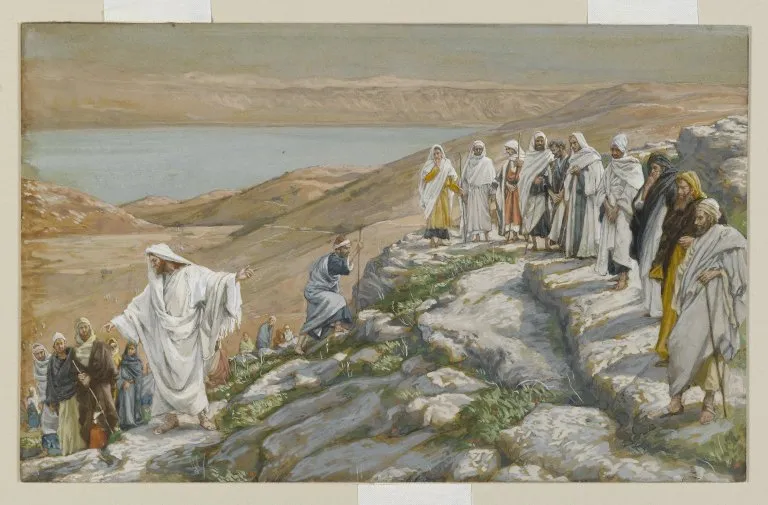
After chapters of teaching and healing, Jesus now multiplies His ministry through others. He called unto him his twelve disciples and gave them power against unclean spirits, to cast them out, and to heal all manner of sickness and all manner of disease (v. 1). Then He names them - Peter and Andrew, James and John, on through to Judas Iscariot - and sends them out, first to the lost sheep of the house of Israel (v. 6), with the same message He Himself preaches: The kingdom of heaven is at hand (v. 7).
The instructions are concrete and striking: heal, cleanse, raise, cast out, and do it all without charge - freely ye have received, freely give (v. 8). They go without purse or pack, depending on the Father and on the welcome of worthy households.1
Tap any highlighted phrase to jump to the commentary that unpacks it.
Matthew 10:1-15Freely Ye Have Received, Freely Give
1And when he had called unto him his twelve disciples, he gave them power against unclean spirits, to cast them out, and to heal all manner of sickness and all manner of disease. 2Now the names of the twelve apostles are these; The first, Simon, who is called Peter, and Andrew his brother; James the son of Zebedee, and John his brother; 3Philip, and Bartholomew; Thomas, and Matthew the publican; James the son of Alphaeus, and Lebbaeus, whose surname was Thaddaeus; 4Simon the Canaanite, and Judas Iscariot, who also betrayed him. 5These twelve Jesus sent forth, and commanded them, saying, Go not into the way of the Gentiles, and into any city of the Samaritans enter ye not: 6But go rather to the lost sheep of the house of Israel. 7And as ye go, preach, saying, The kingdom of heaven is at hand. 8Heal the sick, cleanse the lepers, raise the dead, cast out devils: freely ye have received, freely give. 9Provide neither gold, nor silver, nor brass in your purses, 10Nor scrip for your journey, neither two coats, neither shoes, nor yet staves: for the workman is worthy of his meat. 11And into whatsoever city or town ye shall enter, enquire who in it is worthy; and there abide till ye go thence. 12And when ye come into an house, salute it. 13And if the house be worthy, let your peace come upon it: but if it be not worthy, let your peace return to you. 14And whosoever shall not receive you, nor hear your words, when ye depart out of that house or city, shake off the dust of your feet. 15Verily I say unto you, It shall be more tolerable for the land of Sodom and Gomorrha in the day of judgment, than for that city.
The chapter opens with an act of sharing that is almost startling: And when he had called unto him his twelve disciples, he gave them power against unclean spirits, to cast them out, and to heal all manner of sickness and all manner of disease (v. 1). Up to now in Matthew, this power has been Jesus' own - He has cleansed lepers, stilled storms, cast out demons, raised the dead. Now He hands that very authority to twelve ordinary men.
And the Gospel pauses to name them, one by one (vv. 2-4). The list is worth lingering over, because it is not a roll of the impressive. There are fishermen; there is Matthew the publican, a tax-collector despised by his own people; there is Simon the Canaanite, a zealot from the opposite political pole; and the list ends, unflinchingly, with Judas Iscariot, who also betrayed him. Jesus does not build His mission out of the credentialed and the safe.
He calls the unlikely and the mixed, names them, and entrusts His own power to them. The authority they carry is not generated in themselves; it is given. They are apostles - sent ones - and everything they will do flows from the One who sent them.2
The message they are sent to carry is not their own invention; it is the very word Jesus has been preaching: And as ye go, preach, saying, The kingdom of heaven is at hand (v. 7). This is the same announcement that opened His own ministry and the same the Baptist cried before Him - the reign of God is drawing near, breaking in, demanding a response. The disciples add nothing to it and subtract nothing from it; they echo their Master.
And the works that go with the word are the works He has been doing: Heal the sick, cleanse the lepers, raise the dead, cast out devils (v. 8). These are not random wonders but signs of the kingdom itself - the in-breaking reign of God pushing back sickness, uncleanness, death, and the powers of darkness. Where the King's rule arrives, these things give way. The mission, in other words, is a continuation of Jesus' own - His message on their lips, His power in their hands.
The first thing to see in this chapter is that the twelve are not launching a new program. They are extending His.
Then comes the line that gives this whole section its heart: freely ye have received, freely give (v. 8). It governs everything that follows about money and provision. The disciples did not earn the power to heal and cast out; it was placed in their hands as a pure gift. Therefore they are forbidden to make merchandise of it. What was received without price is to be given without price. And the instructions that follow drive the point home from the other side: Provide neither gold, nor silver, nor brass in your purses, nor scrip for your journey, neither two coats, neither shoes, nor yet staves (vv. 9-10).
They are to travel light to the point of vulnerability - no money, no spare clothing, no traveler's bag - for the workman is worthy of his meat. This is not poverty for its own sake; it is a deliberate dependence. Stripped of the usual securities, they must rely wholly on the Father who sent them and on the hospitality of those who receive the message. A gift held with open hands cannot be hoarded; a messenger with empty pockets cannot be accused of preaching for gain.
Grace freely received stays grace only when it is freely passed on.1
The closing instructions turn to how the messengers are to be received, and the language is quietly weighty: And into whatsoever city or town ye shall enter, enquire who in it is worthy… And if the house be worthy, let your peace come upon it: but if it be not worthy, let your peace return to you (vv. 11-13). The disciples carry a real peace - a blessing that genuinely rests on a household that welcomes the message, and genuinely withdraws where it is refused.
And where there is outright rejection, the instruction is sober: whosoever shall not receive you, nor hear your words, when ye depart out of that house or city, shake off the dust of your feet (v. 14). To shake the dust off was a deliberate, visible act - a sign that the responsibility had been delivered and now lay with the hearers, not the messengers. Jesus does not tell them to argue, to force, or to linger trying to compel a welcome.
They offer the peace; the household decides; the messengers move on. But He adds a warning that should make any hearer go still: It shall be more tolerable for the land of Sodom and Gomorrha in the day of judgment, than for that city (v. 15). To turn away the King's own envoys, carrying the King's own word, is no small thing. The offer is free; the refusal is not without weight.
Matthew 10:16-23Sheep in the Midst of Wolves
16Behold, I send you forth as sheep in the midst of wolves: be ye therefore wise as serpents, and harmless as doves. 17But beware of men: for they will deliver you up to the councils, and they will scourge you in their synagogues; 18And ye shall be brought before governors and kings for my sake, for a testimony against them and the Gentiles. 19But when they deliver you up, take no thought how or what ye shall speak: for it shall be given you in that same hour what ye shall speak. 20For it is not ye that speak, but the Spirit of your Father which speaketh in you. 21And the brother shall deliver up the brother to death, and the father the child: and the children shall rise up against their parents, and cause them to be put to death. 22And ye shall be hated of all men for my name’s sake: but he that endureth to the end shall be saved. 23But when they persecute you in this city, flee ye into another: for verily I say unto you, Ye shall not have gone over the cities of Israel, till the Son of man be come.
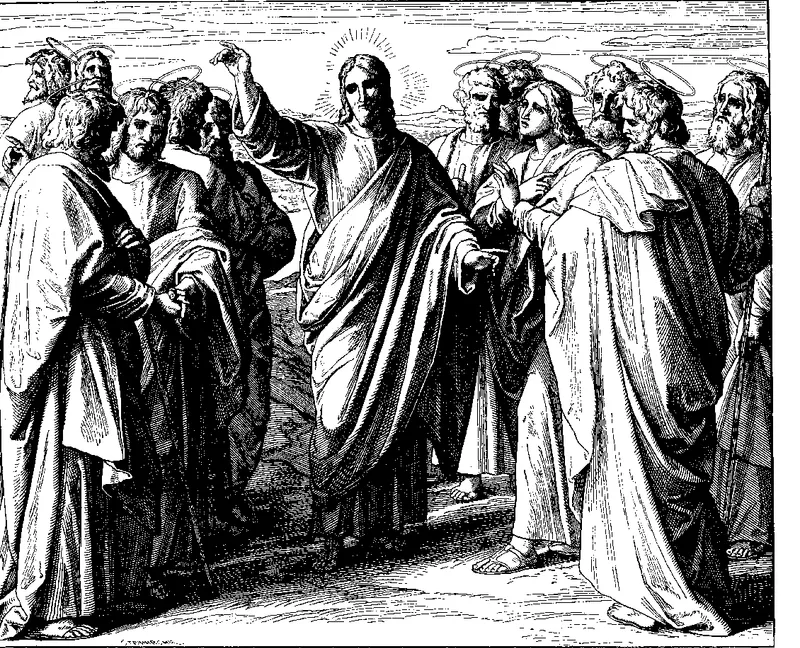
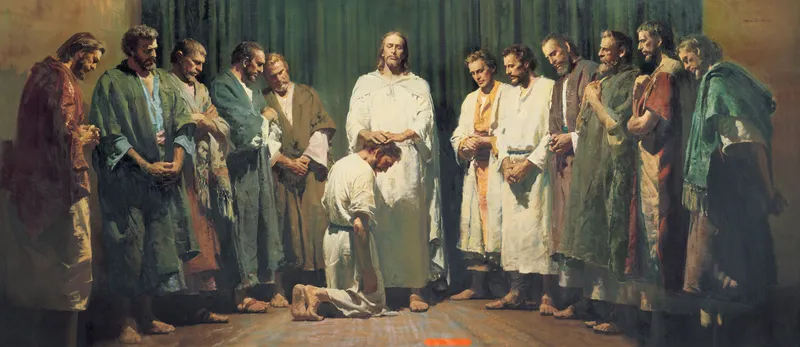
With the mission launched, the tone turns grave, and Jesus is unsparingly honest about what awaits: Behold, I send you forth as sheep in the midst of wolves: be ye therefore wise as serpents, and harmless as doves (v. 16). He does not soften the picture. The messengers go out defenseless - sheep, not armed men - into the presence of predators. There is no promise that the welcome will be warm. And yet His instruction is not to grow fangs of their own.
They are to be wise as serpents - alert, shrewd, not naive about danger - and at the same time harmless as doves - innocent, without malice, doing no injury. It is a striking pairing, because we usually assume we must choose between being clever and being good, between protecting ourselves and staying pure. Jesus refuses the choice. His messengers are to keep their wits and their innocence together: shrewd enough to read a hostile situation, gentle enough never to become wolves themselves.
The danger is real, but the calling is not to win by the wolves' methods. It is to remain sheep - and to trust the Shepherd who sent them out.1
Jesus now names the trouble concretely, so that none of it will take them by surprise: they will deliver you up to the councils, and they will scourge you in their synagogues; And ye shall be brought before governors and kings for my sake (vv. 17-18). The opposition will come from every level - local religious courts, public floggings, and the highest civil powers, governors and kings. And it will come for my sake; the hostility is not because the disciples have done wrong but because they belong to Him.
Yet even this dark prospect Jesus reframes as opportunity: it will be for a testimony. The very trials meant to silence the messengers become platforms for the message; dragged before rulers, they will bear witness before rulers. This is the strange logic that runs through the chapter - what looks like defeat is turned to the service of the gospel. The disciples are not promised escape from the courtroom or the whip. They are promised that none of it will be wasted: every hostile tribunal becomes a place where Christ is testified.
Into the prospect of standing accused, Jesus sets a specific and tender promise: when they deliver you up, take no thought how or what ye shall speak: for it shall be given you in that same hour what ye shall speak. For it is not ye that speak, but the Spirit of your Father which speaketh in you (vv. 19-20). They are not to lie awake rehearsing a defense, gripped by anxiety over their own inadequacy.
In the very hour of trial - not before, but exactly when it is needed - the words will be given. And the giver is named: the Spirit of your Father. This is the same help Jesus promises elsewhere: the Holy Ghost shall teach you in the same hour what ye ought to say (Luke 12:11-12). The messenger is not left to muster eloquence on his own; the Father's own Spirit will speak in him.
There is enormous relief in this. The weight is lifted off the disciple's shoulders and placed where it belongs - on God. Faithfulness is required; brilliance is not. The same Spirit who sends them will supply them, in the moment, with what to say.
The hardest word in this section is the one about families: the brother shall deliver up the brother to death, and the father the child… And ye shall be hated of all men for my name's sake (vv. 21-22). The division Jesus foresees cuts through the closest bonds; even kin may turn against kin over allegiance to Him. The hatred will feel total - of all men - and it lands, again, for my name's sake; this is the cost of belonging to Christ in a world set against Him.
But the verse does not end in despair. It ends with a promise that has steadied the persecuted ever since: he that endureth to the end shall be saved. The word translated endureth means to remain under a weight, to bear up and not give way, to hold the ground to the finish. Salvation here is held out not to the one who never feels the pressure but to the one who, under real pressure, does not let go.
And Jesus adds a practical mercy: when they persecute you in this city, flee ye into another (v. 23). Endurance is not the same as recklessness; there is no shame in moving on to keep preaching elsewhere. The promise is for the long haul - not a single brave moment, but a faithfulness that lasts to the end.
Matthew 10:24-31Ye Are of More Value Than Many Sparrows
24The disciple is not above his master, nor the servant above his lord. 25It is enough for the disciple that he be as his master, and the servant as his lord. If they have called the master of the house Beelzebub, how much more shall they call them of his household? 26Fear them not therefore: for there is nothing covered, that shall not be revealed; and hid, that shall not be known. 27What I tell you in darkness, that speak ye in light: and what ye hear in the ear, that preach ye upon the housetops. 28And fear not them which kill the body, but are not able to kill the soul: but rather fear him which is able to destroy both soul and body in hell. 29Are not two sparrows sold for a farthing? and one of them shall not fall on the ground without your Father. 30But the very hairs of your head are all numbered. 31Fear ye not therefore, ye are of more value than many sparrows.
Jesus now grounds the disciples' suffering in His own, with a principle that is both sobering and strangely comforting: The disciple is not above his master, nor the servant above his lord. It is enough for the disciple that he be as his master (vv. 24-25). They should not expect a smoother road than the one their Lord walks. If He is opposed, they will be opposed; the servant cannot reasonably ask for better treatment than the Master receives.
And He presses it with a stinging example: If they have called the master of the house Beelzebub, how much more shall they call them of his household? His enemies have slandered Him as being in league with the prince of demons; His followers can expect the same kind of contempt. But there is comfort hidden inside the hard saying. To be treated as Jesus was treated is not a sign that something has gone wrong - it is a sign that the disciple genuinely belongs to His household.
The hostility, painful as it is, marks them as His. It is enough, Jesus says, to share the Master's lot. The servant who is hated as the Lord was hated is exactly where a servant of that Lord should expect to be.
On the heels of that, the first of three commands to fear not arrives, and it rests on a promise about the future: Fear them not therefore: for there is nothing covered, that shall not be revealed; and hid, that shall not be known (v. 26). The point is that the present is not the final word. For now, the messengers may be slandered, their motives twisted, their message suppressed; truth may seem buried under hostility and lies.
But a day is coming when everything hidden is brought to light - when the true and the false are each exposed for what they are. That coming clarity is reason not to be governed by fear now. Far from going quiet under pressure, the disciples are told the opposite: What I tell you in darkness, that speak ye in light: and what ye hear in the ear, that preach ye upon the housetops (v. 27).
What Jesus has taught them privately is meant for the rooftops - proclaimed openly, boldly, for all to hear. Fear tempts the messenger to whisper, to hedge, to keep the dangerous truth muffled. Jesus says: since all will be revealed in the end anyway, do not let fear shrink your voice now. Speak it in the light.
The center of this section is its most piercing command, and it must be heard exactly as Jesus gives it: fear not them which kill the body, but are not able to kill the soul: but rather fear him which is able to destroy both soul and body in hell (v. 28). The reasoning is stark and clarifying. Human enemies can reach only so far - they can harm the body, even take its life, but there they stop; the soul lies beyond their grasp.
So the fear of what people can do, however real the threat, is finally a small fear. There is a greater. The fear that is fitting is reserved for God alone, before whom the whole person stands, body and soul together, and whose judgment reaches where no human power can. Jesus does not elaborate on the nature of that final judgment or systematize it; He states it plainly and lets it land with its full weight.
The reverent fear of God is the one fear that puts every other fear in its place. And then - remarkably - the very God to be feared is shown, in the next breath, to be the Father of intimate tenderness: Are not two sparrows sold for a farthing? and one of them shall not fall on the ground without your Father. But the very hairs of your head are all numbered (vv. 29-30). Sparrows were the cheapest thing sold in the market, and not one drops unnoticed by the Father.
The hairs of your head - uncounted even by you - are numbered by Him. So the command comes a third time, now wrapped entirely in comfort: Fear ye not therefore, ye are of more value than many sparrows (v. 31). The same God whose judgment is to be feared above all is the Father whose care for you is more attentive than you could ever be to yourself.
Matthew 10:32-42Confess Me Before Men · Take Up the Cross
32Whosoever therefore shall confess me before men, him will I confess also before my Father which is in heaven. 33But whosoever shall deny me before men, him will I also deny before my Father which is in heaven. 34Think not that I am come to send peace on earth: I came not to send peace, but a sword. 35For I am come to set a man at variance against his father, and the daughter against her mother, and the daughter in law against her mother in law. 36And a man’s foes shall be they of his own household. 37He that loveth father or mother more than me is not worthy of me: and he that loveth son or daughter more than me is not worthy of me. 38And he that taketh not his cross, and followeth after me, is not worthy of me. 39He that findeth his life shall lose it: and he that loseth his life for my sake shall find it. 40He that receiveth you receiveth me, and he that receiveth me receiveth him that sent me. 41He that receiveth a prophet in the name of a prophet shall receive a prophet’s reward; and he that receiveth a righteous man in the name of a righteous man shall receive a righteous man’s reward. 42And whosoever shall give to drink unto one of these little ones a cup of cold water only in the name of a disciple, verily I say unto you, he shall in no wise lose his reward.
The final movement opens with a word that raises the whole chapter to its highest stakes: Whosoever therefore shall confess me before men, him will I confess also before my Father which is in heaven. But whosoever shall deny me before men, him will I also deny before my Father (vv. 32-33). After all the talk of councils and kings and hatred, here is what hangs on it. To confess Christ before men is to own Him openly, to acknowledge that one belongs to Him, especially where it is costly to do so.
And the promise attached is overwhelming: the one who owns Christ before others will be owned by Christ before the Father. There is a deliberate symmetry - what the disciple does before men, Christ does for the disciple before God. The reverse is equally plain and equally sobering: to deny Him before men is to be denied before the Father. This is not a threat hurled at the timid so much as a statement of how things truly stand.
Faith in Christ is not a private possession sealed away in the heart; by its nature it comes to the surface, it acknowledges Him, it is willing to be known. The hour of pressure that the chapter has been describing is precisely the hour in which confession and denial become real. And Jesus tells His messengers, before they ever reach that hour, exactly how much it matters.
Then comes one of the most misread sentences in the Gospels, and it must be read with care: Think not that I am come to send peace on earth: I came not to send peace, but a sword (v. 34). This is not a call to take up arms, and nothing in the chapter arms the disciples - they go out as defenseless sheep. The sword here is the sword of division, and Jesus immediately defines it in terms of households: I am come to set a man at variance against his father… and a man's foes shall be they of his own household (vv. 35-36).
The meaning is sober but clear. Allegiance to Christ forces a decision so fundamental that it can cut through the closest human ties; where some in a family follow Him and others refuse, the division is real, and it can be bitter. Jesus is not commending strife, nor is He against the family - He upheld father and mother, He blessed children, He wept over a city. He is telling the truth in advance: because He requires an ultimate loyalty, His coming will not always leave the peace of the household intact.
Some will turn against their own kin for following Him; some households will fracture along the line of who will own Him and who will not. The “sword” is the unavoidable edge of a choice that cannot be split down the middle. One cannot be neutral about Him, and where a family is divided over Him, the division goes deep.1
What the “sword” implies, Jesus now states directly - and it is among the most demanding things He ever says: He that loveth father or mother more than me is not worthy of me: and he that loveth son or daughter more than me is not worthy of me (v. 37). It is essential to hear what this does and does not say. It does not say to love father, mother, son, or daughter little, or to treat family with contempt; elsewhere Jesus sharply rebukes those who neglect their parents, and commands honor to father and mother.
The word is comparative: not to love them more than Him. Christ claims the first place - the supreme allegiance, the highest love - and when any other love, even the most natural and good, sets itself above love for Him, it has taken a place that is not its own. This is not the demand of a rival who hates the family; it is the claim of the One who made the family and to whom even the dearest human bonds rightly yield.
To put Christ first is not to love parents and children less in any cruel sense; it is to love them in their proper order, under a love for Him that is higher still. The hardest part of the saying is its honesty: there are moments when the two loves genuinely compete, and in those moments the disciple who is worthy of Christ is the one for whom He, and not even the dearest person on earth, comes first.
The demand reaches its summit in the image of the cross and the paradox of the lost and found life: And he that taketh not his cross, and followeth after me, is not worthy of me. He that findeth his life shall lose it: and he that loseth his life for my sake shall find it (vv. 38-39). To take up the cross in that world was unmistakable - the cross was the instrument of death, carried by the condemned to the place of execution.
To take it up and follow is to set out after Christ on a road that does not flinch from death itself, a road shaped like His own. It is the willingness to lay down everything, including life, for His sake. And then the paradox that overturns all ordinary calculation: He that findeth his life shall lose it. The one who grasps and guards his life as the thing to be preserved at all costs will, in the end, lose the very thing he clutched.
But he that loseth his life for my sake shall find it - the one who lets it go for Christ discovers that he has not lost it at all but found it, fuller and truer than before. This is the deepest logic of discipleship, and it follows the One who walked it first. The path Jesus calls His messengers to is cross-shaped because He Himself will take up a cross; to follow Him is to follow the crucified Lord, and to find, on the far side of surrender, the life that cannot be lost.
Research trail
Sources & further study
These references support the historical, linguistic, manuscript, and contextual notes in this chapter. Scripture remains the primary text; external sources are provided so readers can inspect the research directly.
- Matthew 10 - Translators' NotesThe NET Bible's detailed footnotes on Matthew 10 - the travel instructions of verses 9-10, the meaning of shaking off the dust (v. 14), the much-discussed “sword” of verse 34, and the cup of cold water in verse 42.
- Matthew 10 · Greek interlinear + lexiconThe Greek text of Matthew 10 word by word with parsing and lexicon links - useful for dorean (v. 8, “freely”), for homologeo (v. 32, “confess”), and for the verbs of being sent (apostello, v. 5) and of enduring (hupomeno, v. 22).
- Matthew 10 ↔ Luke 12 · John 20 · Micah 7Traces the threads tying Matthew 10 to the rest of Scripture - the sending (v. 5) read beside as my Father hath sent me, even so send I you (John 20:21), the promised help in the hour of trial (v. 20) beside Luke 12:11-12, and the household divided (vv. 35-36) beside Micah 7:6.
Where this echoes in Scripture
Freely Ye Have Received, Freely Give
- John 20:21as my Father hath sent me, even so send I you.The pattern behind verse 5 - the Sent One sending His own as He Himself was sent.
- Luke 10:1-9the Lord appointed other seventy also, and sent them two and two... into every city... saying unto them, The kingdom of God is come nigh unto you.The same sending and the same message as verses 5-9 - envoys carrying the kingdom.
- Romans 3:24Being justified freely by his grace through the redemption that is in Christ Jesus.The same word freely (dorean) as verse 8 - grace as a gift, not wages earned.
- Acts 13:51But they shook off the dust of their feet against them, and came unto Iconium.The instruction of verse 14 carried out - the messengers leave responsibility with those who refuse.
- 2 Corinthians 5:20Now then we are ambassadors for Christ, as though God did beseech you by us.What being sent (v. 5) means - standing in for the Sender, pleading His message in His name.
Sheep in the Midst of Wolves
- Luke 12:11-12take ye no thought how or what thing ye shall answer... for the Holy Ghost shall teach you in the same hour what ye ought to say.The promise of verses 19-20 in nearly the same words - the Spirit's help in the hour of trial.
- John 14:26the Comforter, which is the Holy Ghost, whom the Father will send in my name, he shall teach you all things.The Spirit who speaks in the disciples (v. 20) named as the Father's gift in the Son's name.
- Acts 4:8-13Then Peter, filled with the Holy Ghost, said unto them... they marvelled; and they took knowledge of them, that they had been with Jesus.The promise of verses 18-20 lived out - unlearned men given words before the council.
- Micah 7:6the son dishonoureth the father, the daughter riseth up against her mother... a man's enemies are the men of his own house.The household division Jesus foresees in verse 21 - drawn from the prophet's words.
- James 1:12Blessed is the man that endureth temptation: for when he is tried, he shall receive the crown of life.The promise of verse 22 - the one who endures to the end is the one who is saved.
Ye Are of More Value Than Many Sparrows
- Luke 12:4-7be not afraid of them that kill the body... Fear him... But even the very hairs of your head are all numbered.The same teaching as verses 28-31 - the fear of God and the Father's intimate care held together.
- John 15:20The servant is not greater than his lord. If they have persecuted me, they will also persecute you.The principle of verses 24-25 - the disciple shares the Master's treatment.
- Proverbs 29:25The fear of man bringeth a snare: but whoso putteth his trust in the LORD shall be safe.The contrast at the heart of verse 28 - the fear of man dethroned by trust in God.
- Isaiah 8:12-13neither fear ye their fear... Sanctify the LORD of hosts himself; and let him be your fear.The reordering of fear in verses 28-31 - God alone given the fear that is His due.
- Psalm 56:3-4What time I am afraid, I will trust in thee... I will not fear what flesh can do unto me.The settled answer to the threefold “fear not” (vv. 26, 28, 31) - trust that outweighs the fear of flesh.
Confess Me Before Men · Take Up the Cross
- Romans 10:9-10if thou shalt confess with thy mouth the Lord Jesus... with the mouth confession is made unto salvation.The confessing of verse 32 - faith owned aloud, the same verb (homologeo) at work.
- Luke 9:23If any man will come after me, let him deny himself, and take up his cross daily, and follow me.The cross of verse 38 - the daily, cross-shaped path of following the crucified Lord.
- Matthew 16:25whosoever will save his life shall lose it: and whosoever will lose his life for my sake shall find it.The paradox of verse 39 repeated - the life grasped is lost, the life surrendered is found.
- Matthew 25:40Inasmuch as ye have done it unto one of the least of these my brethren, ye have done it unto me.The identification of verses 40-42 - Christ so bound to His own that kindness to them is kindness to Him.
- John 13:20He that receiveth whomsoever I send receiveth me; and he that receiveth me receiveth him that sent me.Verse 40 in almost identical words - the sent ones carrying the Sender, and the Father behind Him.