Acts 5
People in this chapter
A husband and wife sell their land, keep back part of the price, and lay the rest at the apostles' feet as if it were the whole. They want the honor of total sacrifice without the cost. Peter names it: a lie to the Holy Ghost, not merely to men. Both fall dead within hours of each other. Great fear comes on the church. The Spirit who fell at Pentecost is a Presence, and He cannot be deceived.
Tap any highlighted phrase to jump to the commentary that unpacks it.
Acts 5:1-11The Severity of Pretense
1But a certain man named Ananias, with Sapphira his wife, sold a possession, 2And kept back part of the price, his wife also being privy to it, and brought a certain part, and laid it at the apostles’ feet. 3But Peter said, Ananias, why hath Satan filled thine heart to lie to the Holy Ghost, and to keep back part of the price of the land?
Peter makes clear what Ananias and Sapphira may have misunderstood: the sale was not required. “Whiles it remained, was it not thine own? and after it was sold, was it not in thine own power?” (5:4). No one was forcing sacrifice. No law demanded it. The sin is not the withholding of money - it is the lie. They have seen the honor given to those who gave freely, and they have agreed together to pretend they gave all while keeping part back. They want the appearance of radical faith without its cost.
Peter's accusation cuts straight to the heart: they have not lied to men; they have lied to the Holy Ghost1. The attempt is to deceive the one who knows all hearts. “Thou hast not lied unto men, but unto God” (5:4). In the presence of the Spirit, pretense is the deepest foolishness.
4Whiles it remained, was it not thine own? and after it was sold, was it not in thine own power? why hast thou conceived this thing in thine heart? thou hast not lied unto men, but unto God. 5And Ananias hearing these words fell down, and gave up the ghost: and great fear came on all them that heard these things. 6And the young men arose, wound him up, and carried him out, and buried him.
Ananias falls dead. No trial, no argument, no second chance. Within hours, Sapphira - not knowing what has happened - comes in and lies the same lie. She too falls dead. The judgment is stunning, and it seems harsh 2. But the apostles knew what was at stake. In the presence of the Holy Ghost, the integrity of the community matters absolutely. A lie that goes unnamed and unchallenged will spread. Truth-telling is foundational to the church's life.
Acts 5:12-16Many Signs and Wonders; The Shadow of Peter
12And by the hands of the apostles were many signs and wonders wrought among the people; (and they were all with one accord in Solomon’s porch. 13And of the rest durst no man join himself to them: but the people magnified them. 14And believers were the more added to the Lord, multitudes both of men and women.)
The severity of Ananias and Sapphira's judgment does not cause the apostles to hide or retreat. They continue in Solomon's Porch - the same place where they have been teaching openly. The signs and wonders multiply 3. The sick are brought out into the streets. Multitudes are added to the Lord. But there is a notable line: “of the rest durst no man join himself to them.” Some fear has entered. Not all of Jerusalem is rushing forward. But those who do believe are increasing, and they are serious.
15Insomuch that they brought forth the sick into the streets, and laid them on beds and couches, that at the least the shadow of Peter passing by might overshadow some of them. 16There came also a multitude out of the cities round about unto Jerusalem, bringing sick folks, and them which were vexed with unclean spirits: and they were healed every one.
Notice what they reach for. Not Peter's hand. Not even his prayer. His shadow - the part of a man that touches nothing. Healing has grown so abundant that it spills off him onto the ground he has not yet reached. And there is an older echo here: in the Psalms, the shadow of God is shelter itself, the secret place where the trusting soul hides (Ps. 91:1). The sick of Jerusalem crowd to stand in the apostles' shadow the way the faithful once sheltered under the shadow of the Almighty.
The power was never in Peter. It only passed through him.
Acts 5:17-25The Council Jealous; Arrested and Freed
17Then the high priest rose up, and all they that were with him, (which is the sect of the Sadducees,) and were filled with indignation, 18And laid their hands on the apostles, and put them in the common prison. 19But the angel of the Lord by night opened the prison doors, and brought them forth, and said, 20Go, stand and speak in the temple to the people all the words of this life.
Luke is careful to name the motive, and it is not theology. The word he uses is closer to envy than outrage. The crowds were pressing toward the apostles and away from the men who held the temple, and that was unbearable. Warnings had already failed in chapter 4. So the Sadducees reach for the one tool power always reaches for when persuasion fails - the lockup. The apostles are filed away in the common prison, the holding cell for ordinary criminals, as if the matter were settled.
In the night, an angel opens the prison doors4. The apostles are not told to escape or hide. They are given a charge: “Go, stand and speak in the temple to the people all the words of this life.” The rescue is a calling back to their post. The apostles are told to return - to the very place, at the very time, when they will face the council again.
21And when they heard that, they entered into the temple early in the morning, and taught. But the high priest came, and they that were with him, and called the council together, and all the senate of the children of Israel, and sent to the prison to have them brought. 22But when the officers came, and found them not in the prison, they returned, and told, 23Saying, The prison truly found we shut with all safety, and the keepers standing without before the doors: but when we had opened, we found no man within.
The apostles obey immediately. They return to the temple at dawn - the place of their arrest, in the sight of the Sanhedrin. This is obedience to a calling. When told to wait inside, they go outside. When imprisoned, they teach in the temple. The power at work in them is calling-driven. They go because they have been told to go.
Acts 5:26-32Before the Council: Obedience to God
26Then went the captain with the officers, and brought them without violence: for they feared the people, lest they should have been stoned. 27And when they had brought them, they set them before the council: and the high priest asked them, 28Saying, Did not we straitly command you that ye should not teach in this name? and, behold, ye have filled Jerusalem with your doctrine, and intend to bring this man’s blood upon us.
The authorities cannot arrest the apostles with force. The people are on their side. So the apostles are brought without violence. And now the high priest5 poses the question that has been at the center since Acts began: the ban on teaching in the name of Jesus. The apostles have disobeyed a direct command. The high priest is right. And Peter's answer is simple and absolute.
29Then Peter and the other apostles answered and said, We ought to obey God rather than men. 30The God of our fathers raised up Jesus, whom ye slew and hanged on a tree. 31Him hath God exalted with his right hand to be a Prince and a Saviour, for to give repentance to Israel, and forgiveness of sins. 32And we are his witnesses of these things; and so is also the Holy Ghost, whom God hath given to them that obey him.
Eleven words, and no argument attached. Peter does not debate jurisdiction or plead conscience or ask for an exception. He states an order of loyalties and stops. When a human command and the will of God point in opposite directions, the believer is not torn between two authorities of equal weight; one simply outranks the other. This is not defiance for its own sake. The apostles are the most law-abiding men in the room - they are obeying the highest law there is. A loyalty that goes all the way up cannot be overruled from below.
Peter's summary is stark: You killed Him. God raised Him. He is exalted at God's right hand as Prince and Saviour. He offers repentance and forgiveness. The apostles are His witnesses. And the Holy Ghost testifies to all of this - in the power of signs, in the boldness of the apostles, in the conviction that grips those who hear. The apostles are caught up in a work of God that moves through them.
Acts 5:33-39Gamaliel's Counsel: A Word of Caution
33When they heard that, they were cut to the heart, and took counsel to slay them. 34Then stood there up one in the council, a Pharisee, named Gamaliel, a doctor of the law, had in reputation among all the people, and commanded to put the apostles forth a little space; 35And said unto them, Ye men of Israel, take heed to yourselves what ye intend to do as touching these men.
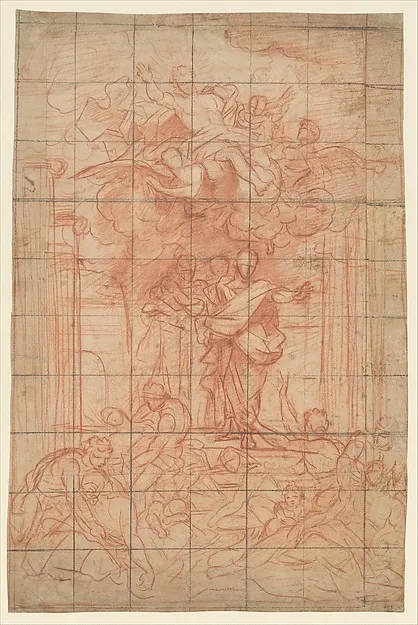
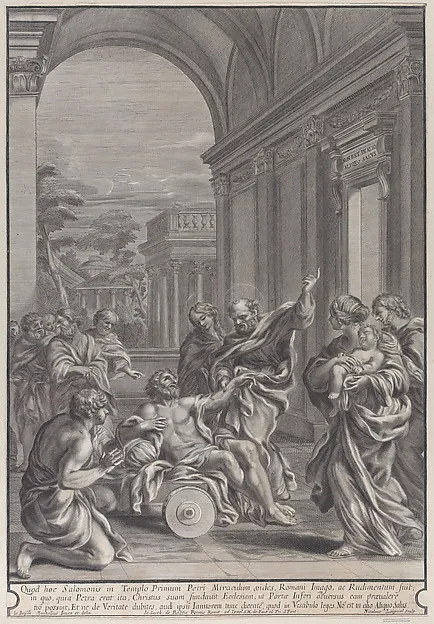
Ananias and Sapphira fall dead for lying to the Holy Spirit; fear grips the whole church. From deception comes judgment; from judgment comes holiness.
36For before these days rose up Theudas, boasting himself to be somebody; to whom a number of men, about four hundred, joined themselves: who was slain; and all, as many as obeyed him, were scattered, and brought to nought. 37After this man rose up Judas of Galilee in the days of the taxing, and drew away much people after him: he also perished; and all, even as many as obeyed him, were dispersed. 38And now I say unto you, Refrain from these men, and let them alone: for if this counsel or this work be of men, it will come to nought: 39But if it be of God, ye cannot overthrow it; lest haply ye be found even to fight against God.
The council is cut to the heart, enraged by the apostles' defiance. They want to put them to death. But then Gamaliel rises6. He is a Pharisee, not a Sadducee. He is a doctor of the law, respected by all the people. And he speaks a word that, for all his unbelief, is profoundly wise: “Refrain from these men, and let them alone.” If their work is merely human, it will fail of its own accord.
History is full of movements that flared and died. Theudas rose up with four hundred followers; he was slain, and his movement scattered. Judas of Galilee drew multitudes; he perished, and they scattered too. The test, Gamaliel says, is time. Some movements are of men; some are of God. You cannot always tell immediately. But you can watch.
Acts 5:40-42Beaten and Rejoicing
40And to him they agreed: and when they had called the apostles, and beaten them, they commanded that they should not speak in the name of Jesus, and let them go. 41And they departed from the presence of the council, rejoicing that they were counted worthy to suffer shame for his name. 42And daily in the temple, and in every house, they ceased not to teach and preach Jesus Christ.
Gamaliel's wisdom prevails. The apostles are not killed. But they are beaten - publicly, officially beaten by the Sanhedrin. This is not a gentle correction. Beatings in the Jewish context of the day were brutal and humiliating. Yet the apostles do not emerge from this with anger, bitterness, or shame. They emerge rejoicing.
Read the reaction slowly, because it does not behave the way pain should. Men who have just been flogged walk out glad, glad because of the shame. They were “counted worthy”: the beating registered to them as an honor handed down, a mark that they now belonged to Jesus closely enough to share His treatment. This is what happens when faith stops being a bargain - do this, receive that - and becomes a person you love. Love will take a blow for the one it loves and call the bruise a gift.
And they “ceased not to teach and preach Jesus Christ.” The command to be silent has not worked. The imprisonment has not worked. The beating has not worked. The apostles simply continue. Daily in the temple, from house to house, they teach and preach. The authority of the Sanhedrin has been thoroughly undermined. The real power lies elsewhere.
Research trail
Sources & further study
These references support the historical, linguistic, manuscript, and contextual notes in this chapter. Scripture remains the primary text; external sources are provided so readers can inspect the research directly.
- Deception and LyingSBL entry on deception in Scripture, covering Ananias and Sapphira and the gravity of lying to the Holy Spirit.
- Judgment and Divine ConsequenceTorah and rabbinic texts exploring divine judgment and consequences for sin against God and the community.
- Apostolic Signs and WondersScholarly exploration of the signs and wonders performed by the apostles, their theological significance, and impact on early witness.
- Prison and Miraculous DeliveranceBiblical imprisonment and angelic intervention - the apostles freed from the common prison in Jerusalem.
- The SanhedrinThe Jewish council before which the apostles stood - its structure, authority, and role in Acts.
- Rabbinic Sanhedrin TraditionMishnaic and Talmudic texts on the Sanhedrin, providing context for Gamaliel and apostolic judgment.
Where this echoes in Scripture
The Severity of Pretense
- Joshua 7:11-12Israel hath sinned... for they have even taken of the accursed thing, and have also stolen, and dissembled also.Achan's hidden plunder is the pattern behind nosphizo - a private theft from a corporate act of devotion.
- Matthew 15:18-19those things which proceed out of the mouth come forth from the heart; and they defile the man.The lie was conceived in the heart long before it reached the apostles' feet.
- John 16:13when he, the Spirit of truth, is come, he will guide you into all truth.The very Spirit they lied to is the Spirit of truth - which is why the deception could not stand.
- Hebrews 4:13all things are naked and opened unto the eyes of him with whom we have to do.No possession, and no motive, stays hidden in His presence.
Many Signs and Wonders; The Shadow of Peter
- Psalm 91:1He that dwelleth in the secret place of the most High shall abide under the shadow of the Almighty.The shadow that shelters in the Psalms is the shadow the sick now seek in the streets.
- Mark 5:27-28When she had heard of Jesus, came in the press behind, and touched his garment.Power flowing from the edge of a person - the hem of a robe, the shadow of an apostle - traces back to Jesus.
- Acts 19:11-12from his body were brought unto the sick handkerchiefs or aprons, and the diseases departed.Paul's ministry repeats the pattern: the Spirit's power reaching beyond direct touch.
The Council Jealous; Arrested and Freed
- Acts 12:7the angel of the Lord came upon him, and a light shined in the prison... and his chains fell off.The angel who frees the apostles here returns for Peter alone in chapter 12.
- Acts 16:26suddenly there was a great earthquake... and immediately all the doors were opened.Paul and Silas, like the apostles here, are freed not to flee but to keep preaching.
- John 7:14Now about the midst of the feast Jesus went up into the temple, and taught.The freed apostles head straight back to the temple to teach, as their Lord did under threat.
Before the Council: Obedience to God
- Acts 4:19Whether it be right in the sight of God to hearken unto you more than unto God, judge ye.Peter said the same thing one chapter earlier; the second beating only sharpened the answer.
- Daniel 3:18be it known unto thee, O king, that we will not serve thy gods, nor worship the golden image.Three men before a furnace draw the same line the apostles draw before the council.
- Acts 5:30-31The God of our fathers raised up Jesus... Him hath God exalted with his right hand to be a Prince and a Saviour.The whole defense rests on the resurrection - the council killed Him; God raised and exalted Him.
Gamaliel's Counsel: A Word of Caution
- John 18:36My kingdom is not of this world: if my kingdom were of this world, then would my servants fight.The kingdom Gamaliel cannot stop is one that never depended on force to begin with.
- Proverbs 21:30There is no wisdom nor understanding nor counsel against the LORD.Gamaliel's warning - that fighting this may mean fighting God - is older than Gamaliel.
- Matthew 16:18upon this rock I will build my church; and the gates of hell shall not prevail against it.Jesus promised what Gamaliel only suspects: this work cannot finally be overthrown.
Beaten and Rejoicing
- John 15:18If the world hate you, ye know that it hated me before it hated you.Jesus told them the hatred would come; here it arrives, and they recognize it.
- Matthew 5:11-12Blessed are ye, when men shall revile you... Rejoice, and be exceeding glad.The command to rejoice under persecution is the very thing the apostles now do.
- Philippians 1:29unto you it is given in the behalf of Christ... also to suffer for his sake.Suffering for Christ is framed as a gift given to the believer.
- 1 Peter 4:13rejoice, inasmuch as ye are partakers of Christ's sufferings.Peter, beaten here, later writes the theology of the joy he felt that day.