Acts 12
People in this chapter
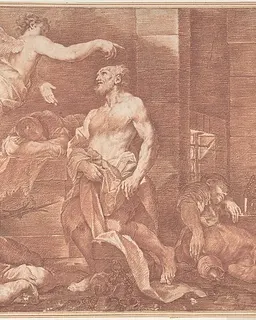
Herod the king stretches out his hand and kills James with the sword. It pleases the crowd, so he reaches for Peter next1. The most powerful man in Jerusalem is hunting the church apostle by apostle, and there is nothing to be done about it. Nothing except pray. So they pray, all night, the night before the execution. And while sixteen soldiers stand guard over a man bound with two chains, an angel walks in.
Tap any highlighted phrase to jump to the commentary that unpacks it.
Acts 12:1-3Herod Rises Up; James the First Martyr
1Now about that time Herod the king stretched forth his hands to vex certain of the church. 2And he killed James the brother of John with the sword. 3And because he saw it pleased the Jews, he proceeded further to take Peter also. (Then were the days of unleavened bread.)
To vex is to mistreat, to harass, to afflict. This is not tolerance running thin; it is a campaign. And it works as politics: the killing of an apostle “pleased the Jews,” or rather pleased those in power who saw the church as a threat. A king learns quickly what buys favor. The answer is blood, and Herod is willing to pay it.
James is the first of the Twelve to die for the faith. He is killed by the sword, for his name, after years of following. The Gospels remember him as one of the “sons of thunder” (Mark 3:17), the brother who once wanted to call fire down on a village. His zeal has finally cost him everything. Luke spends a single verse on it. There is no speech, no miracle, no rescue - just a man who loved Jesus and was killed for it. His death does not silence the church. It deepens the courage that follows.
Acts 12:4-6Peter Arrested at Passover; Guards and Chains
4And when he had apprehended him, he put him in prison, and delivered him to four quaternions of soldiers to keep him; intending after Easter to bring him forth to the people. 5Peter therefore was kept in prison: but prayer was made without ceasing of the church unto God for him. 6And when Herod would have brought him forth, the same night Peter was sleeping between two soldiers, bound with two chains: and the keepers before the door kept the prison.
Peter is arrested during the days of unleavened bread - Passover2. This is not accidental. The festival commemorates Israel's deliverance from Egypt, when the angel of the Lord passed over the homes of the faithful. Now, in a locked prison, at the very festival that celebrates liberation, another deliverance is about to unfold. The timing is the first hint of what God is about to do.
Herod is taking no chances with Peter. Four quaternions of soldiers - sixteen men total - guard him. Peter is bound with two chains. But Herod has forgotten something: he can bind a man, but he cannot bind prayer. He can post guards, but he cannot guard against God.
The church does not panic. It does not run. It does not compromise. It prays. The same prayer that answered at Pentecost, that turned Saul into Paul, that healed the lame beggar at the temple gate - that prayer is now made for Peter. And the body of Christ is united in one request: Lord, deliver our brother.
Acts 12:7-10The Angel Comes; Chains Fall; Peter Walks Out
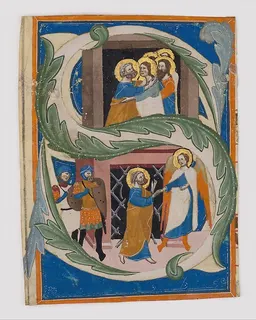
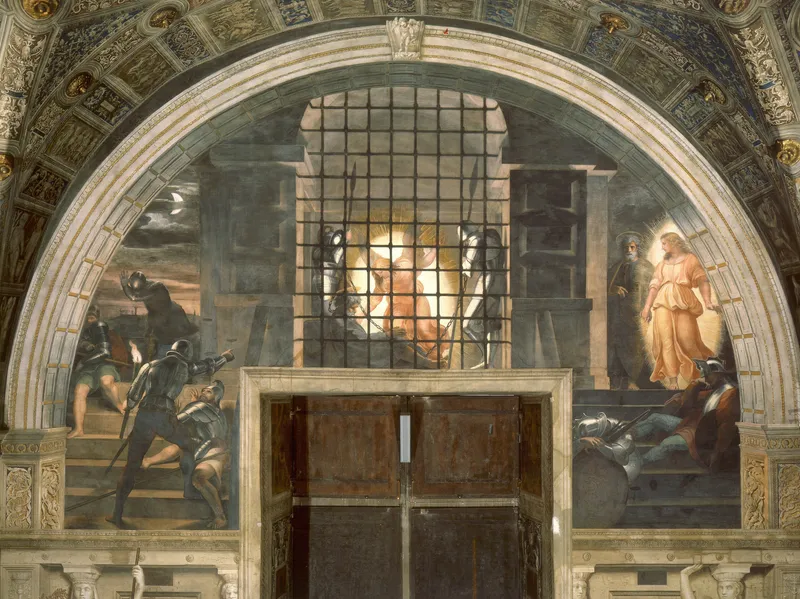
7And, behold, the angel of the Lord came upon him, and a light shined in the prison: and he smote Peter on the side, and raised him up, saying, Arise up quickly. And his chains fell off from his hands. 8And the angel said unto him, Gird thyself, and bind on thy sandals. And so he did. And he saith unto him, Cast thy garment about thee, and follow me. 9And he went out, and followed him; and wist not that it was true which was done by the angel; but thought he saw a vision. 10When they were past the first and the second ward, they came unto the iron gate that leadeth unto the city; which opened to them of his own accord: and they went out, and passed on through one street; and forthwith the angel departed from him.
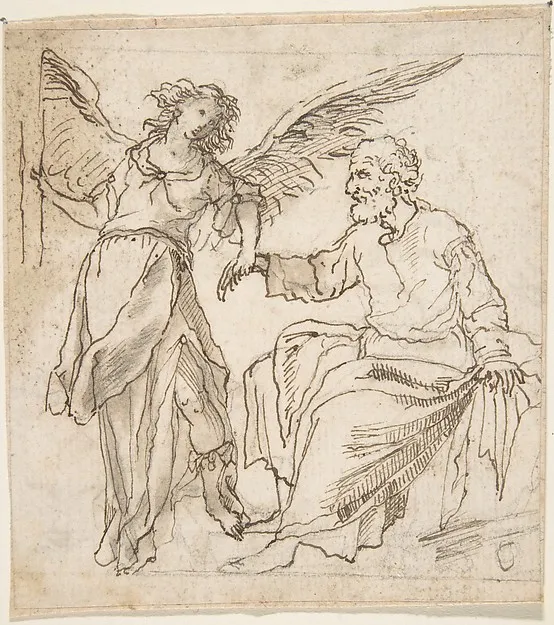
A light fills the cell, and an angel is standing there. Notice how ordinary the danger looks against it: Peter is asleep, chained at both wrists to soldiers who do not stir. The angel strikes him on the side - not to hurt, but to wake - and the chains simply fall off his hands. Sixteen guards, two chains, a locked prison. None of it can hold a man God has decided to free.
The escape is not chaotic or miraculous in the sense of being magical. Peter dresses. He follows. They walk past the first guard, past the second. They come to the iron gate - the outer barrier of the prison. It opens of its own accord. Then the angel leaves him. Peter is on his own now, free in the city, but unsure if what has happened is real or a vision.
Acts 12:11-12“I Know of a Surety”
11And when Peter was come to himself, he said, Now I know of a surety, that the LORD hath sent his angel, and hath delivered me out of the hand of Herod, and from all the expectation of the people of the Jews. 12And when he had considered the thing, he came to the house of Mary the mother of John, whose surname was Mark; where many were gathered together praying.
Out in the pre-dawn street, the dream finally breaks and Peter comes to himself. He had thought he was seeing a vision; now he knows. God has acted. A messenger really was sent, and the chains really did fall, and the hand of Herod really has been emptied. The thing Peter had prayed for, and half-doubted, turns out to have been happening to him the whole time.
He goes to the house of Mary, mother of John Mark - the young man who will one day write the Gospel we call Mark. The church is packed inside, praying without ceasing for the very man now standing in the dark on the doorstep. They are mid-prayer when the answer knocks. They just do not know it is the answer.
Acts 12:13-16Rhoda at the Door
13And as Peter knocked at the door of the gate, a damsel came to hearken, named Rhoda. 14And when she knew Peter’s voice, she opened not the gate for gladness, but ran in, and told how Peter stood before the gate. 15And they said unto her, Thou art mad. But she constantly affirmed that it was even so. Then said they, It is his angel. 16But Peter continued knocking: and when they had opened the door, and saw him, they were astonished.
A servant girl named Rhoda hears Peter's voice at the gate. She is so glad - so filled with joy - that she forgets to open the gate. Instead, she runs inside to tell the others. For joy, she leaves Peter outside. It is a perfect picture of the human tendency to let emotion override sense. But it is also the picture of spontaneous, unreasoning joy. Rhoda does not calculate or verify. She hears Peter's voice and her heart knows: he is alive, he is free, he is here.
The church does not believe her. “Thou art mad,” they say. Even as they are praying for Peter's release, they cannot believe that he has been released. Even as they cry out for deliverance, they assume it will not come. Their disbelief measures how impossible Peter's situation seemed. The only thing Herod can do with Peter is execute him. Yet here he is, knocking at the door, alive.
Acts 12:17“Tell These Things unto James”
17But he, beckoning unto them with the hand to hold their peace, declared unto them how the Lord had brought him out of the prison. And he said, Go shew these things unto James, and to the brethren. And he departed, and went into another place.
Peter's first act after his release is to tell the church what has happened. And his first instruction is to tell James. But which James? Not the James who was killed by Herod's sword - that James is already dead. This is James, the brother of Jesus, who has become a leader of the Jerusalem church and will preside over the church council in chapter 15. Peter is saying: Tell the leaders. Tell the mother church. Let Jerusalem know that what Herod meant for death, God has turned into deliverance.
Peter then “departed, and went into another place.” With Herod actively hunting the apostles, Peter leaves Jerusalem in a deliberate, strategic withdrawal to protect both himself and the church. His departure allows the Jerusalem church to continue without being a target. Sometimes following Jesus means staying. Sometimes it means going. Peter knows the difference.
Acts 12:18-19Herod's Rage; The Soldiers Executed
18Now as soon as it was day, there was no small stir among the soldiers, what was become of Peter. 19And when Herod had sought for him, and found him not, he examined the keepers, and commanded that they should be put to death. And he went down from Judaea to Caesarea, and there abode.
When morning comes and Peter is found missing, Herod is enraged. He does not accept responsibility. He does not reconsider his persecution. Instead, he executes the soldiers who guarded Peter. Sixteen men paid with their lives for what a miracle accomplished. This is the face of power that does not yield to God: it simply crushes anyone in its path. Herod cannot punish God, so he punishes men.
After this display of rage, Herod leaves Jerusalem for Caesarea. He does not abandon his throne or his position. He simply moves. But his moving to Caesarea is the last journey he will make. What he does not know is that his judgment is about to begin.
Acts 12:20-23Herod's Pride; Eaten of Worms; God's Judgment
20And Herod was highly displeased with them of Tyre and Sidon: but they came with one accord to him, and, having made Blastus the king’s chamberlain their friend, desired peace; because their country was nourished by the king’s country. 21And upon a set day Herod, arrayed in royal apparel, sat upon his throne, and made an oration unto them. 22And the people gave a shout, saying, It is the voice of a god, and not of a man. 23And immediately the angel of the Lord smote him, because he gave not God the glory: and he was eaten of worms, and gave up the ghost.
Robed on his throne, mid-speech to the delegates of Tyre and Sidon, Herod hears the crowd hand him the one thing no man may keep: “the voice of a god, and not of a man.” It would have cost him a sentence to deflect it3. Years earlier, in another Caesarea, an apostle named Peter had pulled a worshipper to his feet and said, “Stand up; I myself also am a man.” Herod says nothing.
He lets the praise meant for God settle over his own shoulders like a second robe. And the judgment comes in the same breath.
An angel of the Lord smites him. The same word used of the angel who woke Peter and raised him up (verse 7) is used here of the angel who strikes Herod down. Both are acts of divine power: one deliverance, one judgment. Herod is eaten by worms, his own flesh decaying while he is still alive1. Peter's chains fall; Herod's flesh eats itself.
Acts 12:24-25The Word Grows and Multiplies; The Gospel Advances
24But the word of God grew and multiplied. 25And Barnabas and Saul returned from Jerusalem, when they had fulfilled their ministry, and took with them John, whose surname was Mark.
The chapter opens with Herod stretching forth his hand to vex the church. It closes with the word of God growing and multiplying. It is a single sentence that holds the whole narrative together. James has been killed. Peter has been imprisoned. Herod has murdered innocent soldiers in his rage. And yet, in the midst of all this opposition, the gospel advances. The word cannot be contained.
Research trail
Sources & further study
These references support the historical, linguistic, manuscript, and contextual notes in this chapter. Scripture remains the primary text; external sources are provided so readers can inspect the research directly.
- Josephus on Herod Agrippa IOpen-access entry on Herod Agrippa I from Josephus Antiquities 19, the primary ancient source documenting his reign and death.
- Exodus and Passover DeliveranceExodus 12 and rabbinic commentary on the Passover narrative, echoed in Peter's miraculous prison release during the Passover season.
- Herod's Pride and Divine JudgmentStudy of Herod Agrippa I's actions, pride, and sudden death as divine judgment in early Christian witness.
- Passover Deliverance PatternsCross-references showing how Peter's angel-led release from chains echoes exodus and resurrection liberation themes.
Where this echoes in Scripture
Herod Rises Up; James the First Martyr
- Mark 10:38-39Ye shall indeed drink of the cup that I drink of... but to sit on my right hand... is not mine to give.Jesus told James he would share the cup of suffering. Here it comes true.
- Matthew 5:11-12Blessed are ye, when men shall revile you, and persecute you... for great is your reward in heaven.The blessing Jesus pronounced over the persecuted, now resting on the first apostle to die.
- Revelation 6:9-11I saw under the altar the souls of them that were slain for the word of God.Where the martyred faithful are kept and answered, even when no rescue came on earth.
Peter Arrested at Passover; Guards and Chains
- Luke 18:1men ought always to pray, and not to faint.The posture the church takes here: praying without ceasing instead of giving up.
- James 5:16The effectual fervent prayer of a righteous man availeth much.Why a praying church is not helpless before a king with sixteen soldiers.
- Matthew 18:19-20if two of you shall agree on earth as touching any thing that they shall ask... where two or three are gathered together in my name, there am I.The gathered, agreeing prayer that fills Mary's house in this chapter.
The Angel Comes; Chains Fall; Peter Walks Out
- Acts 5:19But the angel of the Lord by night opened the prison doors, and brought them forth.An earlier night, an earlier prison, the same Lord opening doors for His apostles.
- Psalm 107:13-14he saved them out of their distresses. He brought them out of darkness... and brake their bands in sunder.The Lord who breaks prisoners' chains, sung long before Peter wore any.
- Isaiah 61:1to proclaim liberty to the captives, and the opening of the prison to them that are bound.The mission Jesus claimed as His own - liberty acted out on Peter that night.
Rhoda at the Door
- Mark 16:11And they, when they had heard that he was alive... believed not.The first witnesses to the empty tomb were disbelieved too - exactly like Rhoda.
- Genesis 18:14Is any thing too hard for the LORD?The question hanging over a praying church that cannot believe its own prayer was heard.
- Ephesians 3:20able to do exceeding abundantly above all that we ask or think.God answering past the limit of what the prayer meeting dared to expect.
“Tell These Things unto James”
- 1 Corinthians 15:7After that, he was seen of James; then of all the apostles.The personal resurrection appearance that turned the unbelieving brother into a leader.
- Galatians 2:9James, Cephas, and John, who seemed to be pillars.James now a pillar of the church Peter sends word to here.
- Acts 4:20we cannot but speak the things which we have seen and heard.Why Peter's first instinct on being freed is to send the news, not hide.
Herod's Rage; The Soldiers Executed
- Proverbs 28:1The wicked flee when no man pursueth: but the righteous are bold as a lion.Herod chasing a prisoner who is already gone, and killing his own guards in the panic.
- Esther 7:9-10So they hanged Haman on the gallows that he had prepared for Mordecai.The proud man's machinery turning on the men beneath him - a pattern Herod repeats.
- Psalm 7:15-16his mischief shall return upon his own head.Violence circling back on the one who deals it, as Herod is about to learn.
Herod's Pride; Eaten of Worms; God's Judgment
- Isaiah 42:8I am the LORD: that is my name: and my glory will I not give to another.The glory Herod pockets is the one thing God refuses to share.
- Acts 10:25-26Peter took him up, saying, Stand up; I myself also am a man.The apostle's answer to worship, set against the king's silence.
- Daniel 4:30-33Is not this great Babylon, that I have built... While the word was in the king's mouth... he was driven from men.Another king struck mid-boast for claiming what was God's.
- Proverbs 16:18Pride goeth before destruction, and an haughty spirit before a fall.The whole arc of Herod's last day in one line.
The Word Grows and Multiplies; The Gospel Advances
- Mark 16:15Go ye into all the world, and preach the gospel to every creature.The commission no king or prison in this chapter can revoke.
- Romans 1:16I am not ashamed of the gospel of Christ: for it is the power of God unto salvation.Why the word keeps growing - it carries God's own power.
- Isaiah 55:11so shall my word be... it shall not return unto me void.The promise standing behind “the word of God grew and multiplied.”
- 2 Timothy 2:9I suffer trouble, as an evil doer, even unto bonds; but the word of God is not bound.Paul in chains saying exactly what Acts 12 shows: the messenger can be bound, but the message cannot.