












Luke 15
People in this chapter
The chapter opens with a scene that had become familiar and scandalous. Then drew near unto him all the publicans and sinners for to hear him (v. 1) - the tax-collectors and the openly disreputable, the people respectable religion kept at arm's length, crowding in to listen to Jesus. And the religious leaders are appalled: And the Pharisees and scribes murmured, saying, This man receiveth sinners, and eateth with them (v. 2). In their world, to share a table was to share a life; eating with sinners meant accepting them.
The whole of Luke 15 - all three parables - is Jesus' answer to that murmur. He takes the charge and explains it, by telling three stories about the joy of finding what was lost.1
Tap any highlighted phrase to jump to the commentary that unpacks it.
Luke 15:1-7Go After That Which Is Lost, Until He Find It
1Then drew near unto him all the publicans and sinners for to hear him. 2And the Pharisees and scribes murmured, saying, This man receiveth sinners, and eateth with them. 3And he spake this parable unto them, saying, 4What man of you, having an hundred sheep, if he lose one of them, doth not leave the ninety and nine in the wilderness, and go after that which is lost, until he find it? 5And when he hath found it, he layeth it on his shoulders, rejoicing. 6And when he cometh home, he calleth together his friends and neighbours, saying unto them, Rejoice with me; for I have found my sheep which was lost. 7I say unto you, that likewise joy shall be in heaven over one sinner that repenteth, more than over ninety and nine just persons, which need no repentance.
The three parables of this chapter cannot be understood apart from the complaint that triggers them. Then drew near unto him all the publicans and sinners for to hear him. And the Pharisees and scribes murmured, saying, This man receiveth sinners, and eateth with them (vv. 1-2). The publicans were tax-collectors, despised as traitors and extortioners; the sinners were those whose lives openly broke the law. These were the people drawing near to Jesus - and that is exactly what scandalized the religious leaders.
To eat with someone in that culture was no small thing; the table was a place of acceptance and shared life. To receive sinners at his table was, in the eyes of the scribes, to endorse their sin. Their word for it is precise: they murmured - the same grumbling Israel did in the wilderness. And here is the quiet beauty of what follows: Jesus does not argue with the charge. He tells three stories that take the accusation - this man receiveth sinners - and turns it into the very heart of the gospel.
The thing they meant as an insult He will show to be the joy of heaven.1
The first parable opens with a question that assumes its own answer: What man of you, having an hundred sheep, if he lose one of them, doth not leave the ninety and nine in the wilderness, and go after that which is lost, until he find it? (v. 4). Of course he goes. No shepherd shrugs off a lost sheep as an acceptable loss. But notice what the parable refuses to say. It does not say the shepherd weighs the math - ninety-nine safe is surely enough.
It does not say he waits at home hoping the sheep wanders back. He leaves the ninety-nine and goes after the one, and the seeking has a fixed end written into it: until he find it. Not until he gives up, not until dark, not until it becomes inconvenient - until he find it. A sheep, unlike the coin or the son to come, is helpless once lost; it cannot retrace its steps, and left alone it dies.
So the whole burden falls on the shepherd, and he carries it. The picture is not of a man protecting an investment. It is of a love that counts the one as worth the search.
And when he finds it, watch what he does: when he hath found it, he layeth it on his shoulders, rejoicing (v. 5). He does not drive the sheep home with a rod, or scold it the whole way back for wandering. He lifts it - the full dead weight of it - onto his own shoulders and carries it, and he does so rejoicing. The lost sheep contributes nothing to its own rescue; it is found, lifted, and carried.
Then the joy spills outward into a celebration: when he cometh home, he calleth together his friends and neighbours, saying unto them, Rejoice with me; for I have found my sheep which was lost (v. 6). The finding is not a private relief to be kept quiet. It demands company; it wants the whole village in on the gladness. This is the first appearance of a refrain that will sound through all three stories - Rejoice with me - and it is the very thing the murmuring scribes could not do.
They could not rejoice that the lost were being found. The shepherd's joy exposes the poverty of theirs.
Then Jesus draws the meaning out into the open: I say unto you, that likewise joy shall be in heaven over one sinner that repenteth, more than over ninety and nine just persons, which need no repentance (v. 7). The earthly party becomes a window into heaven. There is gladness in the presence of God - real, specific, celebratory joy - over one sinner who turns and comes home. And Jesus says that joy is more than the steady satisfaction over the ninety-nine who never strayed.
This is not a slight against the faithful; it is the way love works. The mother who has one sick child gives that child her attention without loving the others less; the lost one, recovered, draws a particular cry of joy precisely because it had been lost. The phrase which need no repentance carries a gentle edge for the listening scribes, who counted themselves among the righteous who needed nothing. The whole chapter quietly asks: are you so sure you are not the one who is lost?
And: when a sinner repents, does your heart break into heaven's joy - or into murmuring?
Luke 15:8-10Light a Candle, and Seek Diligently Till She Find It
8Either what woman having ten pieces of silver, if she lose one piece, doth not light a candle, and sweep the house, and seek diligently till she find it? 9And when she hath found it, she calleth her friends and her neighbours together, saying, Rejoice with me; for I have found the piece which I had lost. 10Likewise, I say unto you, there is joy in the presence of the angels of God over one sinner that repenteth.
The second parable matches the first beat for beat, but shifts the picture to a humbler scene. Either what woman having ten pieces of silver, if she lose one piece, doth not light a candle, and sweep the house, and seek diligently till she find it? (v. 8). The setting is a small village house, dim and windowless, its floor of packed earth where a coin could vanish into the cracks. So she does three things in earnest: she lights a candle to push back the dark, she sweeps the house to turn up what is hidden, and she seek[s] diligently - carefully, persistently - till she find it. The same phrase governs her search as governed the shepherd's: she does not stop until the lost thing is in her hand.
Ten coins may have been her savings, perhaps even a treasured headdress; the one that is missing is not a trifle to her, and she will not rest while the set is broken. Note how the two parables widen the picture together. The shepherd is a man, out in the wild after a sheep; the woman is at home, on her knees on the floor with a lamp. Heaven's seeking love is shown in both the field and the house, in the man's labour and the woman's - reaching into every corner where the lost might be.
And the ending repeats, deliberately, the refrain of the first parable: when she hath found it, she calleth her friends and her neighbours together, saying, Rejoice with me; for I have found the piece which I had lost (v. 9). Again the joy cannot be kept private; again it gathers a circle to share in it; again the cry is Rejoice with me. Jesus is hammering the point home by repetition, so that the murmuring scribes cannot miss it: this is how the recovery of the lost is met: with summoned, communal joy.
Then He lifts the curtain on heaven once more: Likewise, I say unto you, there is joy in the presence of the angels of God over one sinner that repenteth (v. 10). The phrasing is worth weighing. There is joy in the presence of the angels - the courts of heaven ring with it when one sinner turns home. The coin could no more find itself than the sheep could; both wait on a diligent seeker.
And both, once found, become the cause of a celebration that reaches all the way up. One repenting sinner sets heaven rejoicing. That is the worth Jesus places on the one the scribes had written off.
Luke 15:11-32This My Son Was Dead, and Is Alive Again
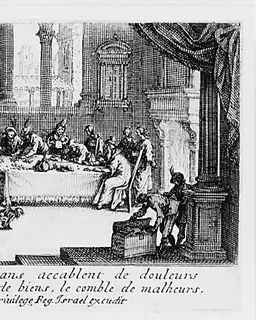
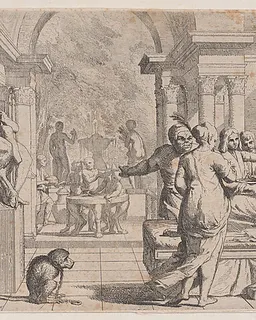
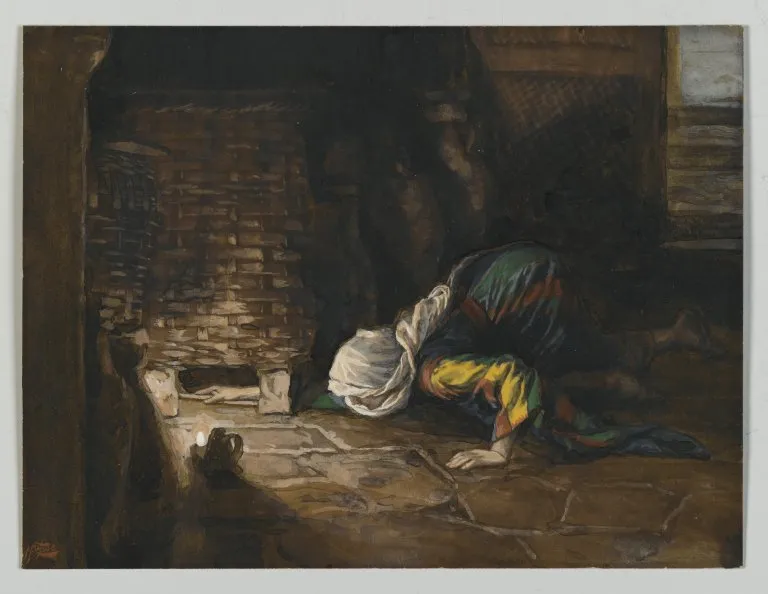
11And he said, A certain man had two sons: 12And the younger of them said to his father, Father, give me the portion of goods that falleth to me. And he divided unto them his living. 13And not many days after the younger son gathered all together, and took his journey into a far country, and there wasted his substance with riotous living. 14And when he had spent all, there arose a mighty famine in that land; and he began to be in want. 15And he went and joined himself to a citizen of that country; and he sent him into his fields to feed swine. 16And he would fain have filled his belly with the husks that the swine did eat: and no man gave unto him. 17And when he came to himself, he said, How many hired servants of my father’s have bread enough and to spare, and I perish with hunger! 18I will arise and go to my father, and will say unto him, Father, I have sinned against heaven, and before thee, 19And am no more worthy to be called thy son: make me as one of thy hired servants.
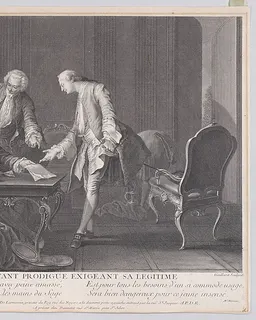
The longest parable begins with a quiet outrage that its first hearers would have felt at once: the younger of them said to his father, Father, give me the portion of goods that falleth to me (v. 12). A son's inheritance came at his father's death; to demand it early was, in effect, to say I wish you were already dead - give me my share now and let me be done with you. It is a stunning insult, a severing of the relationship at its root.
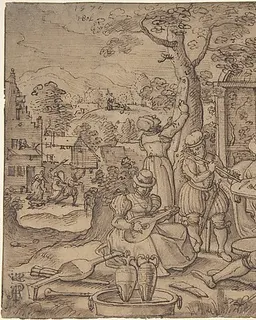
And the father's response is just as stunning: he divided unto them his living. He does not refuse, does not lecture, does not compel the boy to stay. He lets him go - lets him take the freedom he demands, even knowing what it will cost. The son loses no time: not many days after he gathered all together, turned the estate into cash, and took his journey into a far country (v. 13). The phrase far country is doing more than geography; it names a deliberate distance, a getting as far from the father as the money will carry him.
And there he wasted his substance with riotous living - the word wasted means scattered, thrown away, poured out on nothing. He had received everything and kept none of it.
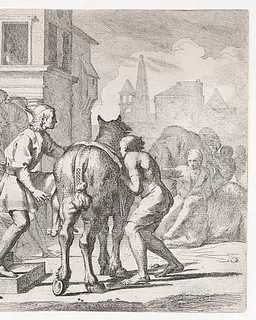
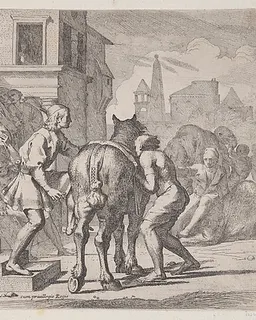
The collapse, when it comes, is total. When he had spent all, there arose a mighty famine in that land; and he began to be in want (v. 14). The timing is merciless: the money runs out, and then the famine hits, so that even survival becomes hard. With nothing left to spend, he has nothing left to fall back on. And he went and joined himself to a citizen of that country; and he sent him into his fields to feed swine (v. 15).
For a son of Israel this is the bottom: hired out to a stranger to tend swine, the unclean animal he had been raised never to touch - a picture of a man who has not only lost his wealth but lost himself, sunk into a degradation his whole upbringing called defiling. And it gets lower still: he would fain have filled his belly with the husks that the swine did eat: and no man gave unto him (v. 16).
He is so hungry he envies the pigs their pods, and not one person in the far country lifts a hand to help him. This is what the freedom he demanded has come to. The far country always promised more and delivered this - emptiness, hunger, and a loneliness in which no man gave unto him.
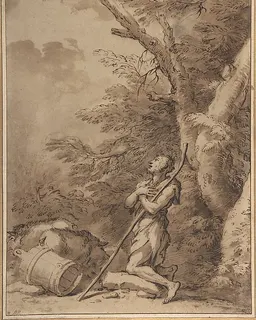
Then the hinge of the whole parable, in four words: And when he came to himself (v. 17). The phrase is exactly right. Sin had been a kind of madness, a being-beside-himself; now, in the pigpen, he wakes up - he comes to himself, sees his situation clearly for the first time. And clear sight produces a clear thought: How many hired servants of my father's have bread enough and to spare, and I perish with hunger! (v. 17).
Even his father's hired hands eat better than this. So he resolves to act: I will arise and go to my father, and will say unto him, Father, I have sinned against heaven, and before thee, and am no more worthy to be called thy son: make me as one of thy hired servants (vv. 18-19). Three things are folded into his speech, and each one matters. There is honest confession - I have sinned, against heaven and against his father both.
There is the surrender of any claim - no more worthy to be called thy son. And there is a resolve to arise and actually go, not merely to feel sorry where he sits. He does not yet know how he will be received; he hopes only for a servant's place. But the turning is real: he sees the truth, owns it, and sets his face toward home.
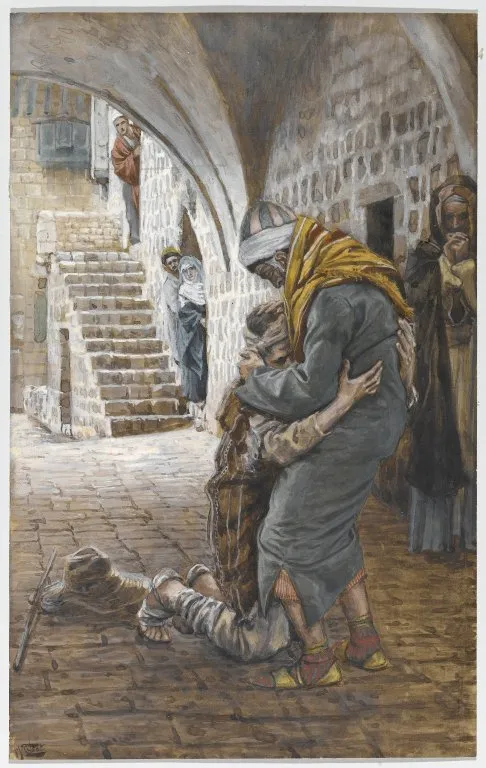
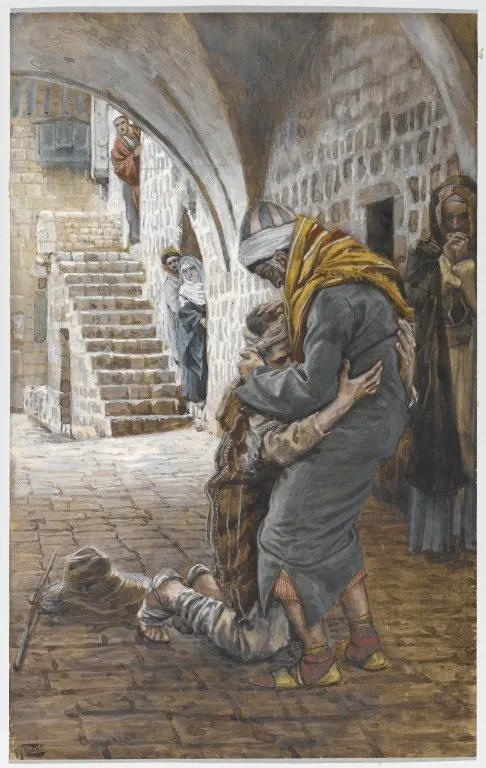
20And he arose, and came to his father. But when he was yet a great way off, his father saw him, and had compassion, and ran, and fell on his neck, and kissed him. 21And the son said unto him, Father, I have sinned against heaven, and in thy sight, and am no more worthy to be called thy son. 22But the father said to his servants, Bring forth the best robe, and put it on him; and put a ring on his hand, and shoes on his feet: 23And bring hither the fatted calf, and kill it; and let us eat, and be merry: 24For this my son was dead, and is alive again; he was lost, and is found. And they began to be merry.
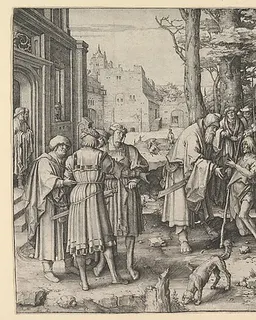
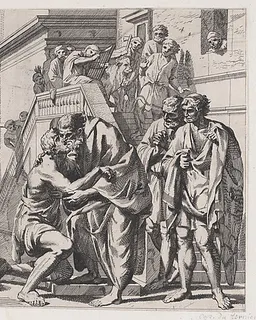
Now comes the moment the whole chapter has been moving toward, and it overturns everything the son expected. And he arose, and came to his father. But when he was yet a great way off, his father saw him (v. 20). Yet a great way off - which means the father was watching, scanning the road, his eyes turned toward the horizon long before the son appeared. He sees him first, before a word can be spoken.
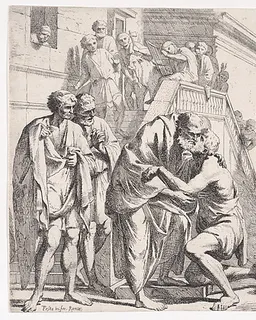
And then the father does the unthinkable: he had compassion, and ran. An older man of standing did not run; to run he would have to gather up his robe and bare his legs, exposing himself to the laughter of the village - and he does it anyway, sprinting down the road toward the ragged, pig-smelling wreck of a boy. He fell on his neck, and kissed him before the son can say anything. The son begins his rehearsed speech: Father, I have sinned against heaven, and in thy sight, and am no more worthy to be called thy son (v. 21) - but he never reaches the last line he had planned, the request to be made a hired servant.
The father cuts him off with an embrace. Grace has run to meet him and reached him before he could finish confessing.
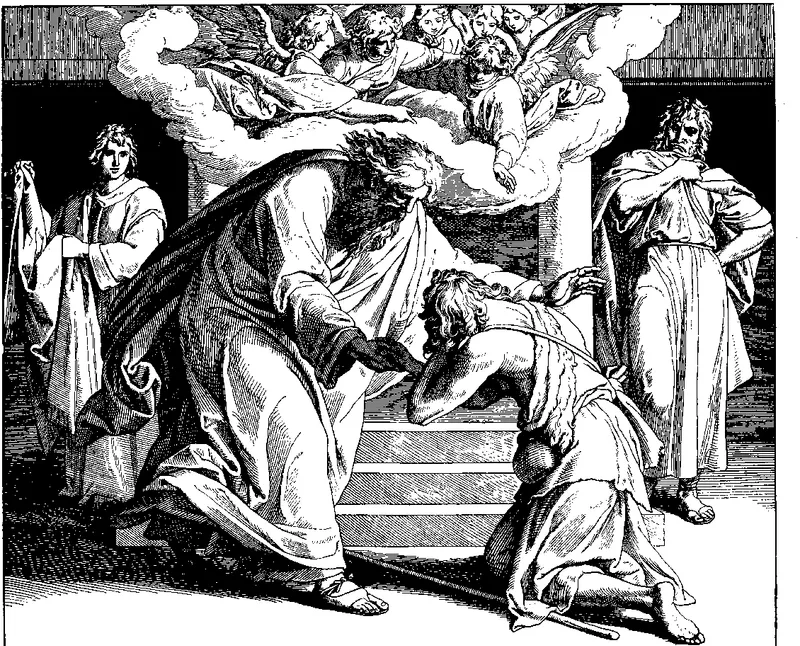
What the father calls for, passing over the servant's place the son had hoped to bargain for, is full restoration to sonship. Bring forth the best robe, and put it on him; and put a ring on his hand, and shoes on his feet (v. 22). Each item undoes his degradation and reinstates him as a son. The best robe - the father's own finest - covers the rags; the ring is a signet, a mark of authority and belonging in the household; the shoes mark him as a son in full standing.
He is dressed as if he had never left. Then the feast: bring hither the fatted calf, and kill it; and let us eat, and be merry (v. 23). The fatted calf was kept for the greatest of occasions, enough to feed the whole village - the celebration must be as large as the joy. And the father gives the reason, the line at the heart of the chapter: For this my son was dead, and is alive again; he was lost, and is found. And they began to be merry (v. 24).
Dead and alive again; lost and found. The far country was a kind of death; the homecoming is a resurrection. And so the third parable arrives at the same place as the first two: music, feasting, and unrestrained joy over the one who was lost.
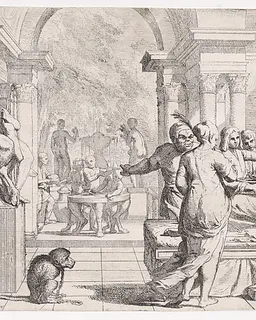
25Now his elder son was in the field: and as he came and drew nigh to the house, he heard musick and dancing. 26And he called one of the servants, and asked what these things meant. 27And he said unto him, Thy brother is come; and thy father hath killed the fatted calf, because he hath received him safe and sound. 28And he was angry, and would not go in: therefore came his father out, and intreated him. 29And he answering said to his father, Lo, these many years do I serve thee, neither transgressed I at any time thy commandment: and yet thou never gavest me a kid, that I might make merry with my friends: 30But as soon as this thy son was come, which hath devoured thy living with harlots, thou hast killed for him the fatted calf. 31And he said unto him, Son, thou art ever with me, and all that I have is thine. 32It was meet that we should make merry, and be glad: for this thy brother was dead, and is alive again; and was lost, and is found.
The parable does not end with the feast. There is a second son, and the story turns to him. Now his elder son was in the field: and as he came and drew nigh to the house, he heard musick and dancing (v. 25). He has been working, dutiful as ever, and comes home to the sound of a celebration he knew nothing about. He asks a servant what it means, and hears that his brother is back and the fatted calf is killed.
And then: he was angry, and would not go in: therefore came his father out, and intreated him (v. 28). Notice the symmetry - the father who ran out to the younger son now comes out to the elder one. He goes out to both. He intreated the angry son - pleaded with him, urged him to come in. The elder brother's grievance pours out: these many years do I serve thee, neither transgressed I at any time thy commandment: and yet thou never gavest me a kid… But as soon as this thy son was come, which hath devoured thy living with harlots, thou hast killed for him the fatted calf (vv. 29-30).
The bitterness is revealing. He speaks of serving, not of sonship - of years put in like a hired hand earning wages. He will not even call the prodigal his brother; he says this thy son. He has stood in the father's house the whole time, with full access to everything, and has felt none of its love as gift - only obligation, and now resentment that grace was spent on someone who had not earned it.
The father's answer to the elder son is as tender as his welcome of the younger. Son, thou art ever with me, and all that I have is thine (v. 31). There is no anger in it, no scolding for the outburst; only a reminder of what the elder son has always had and never seen. Thou art ever with me - the nearness the elder son treated as servitude was sonship all along. All that I have is thine - he had never been a hired hand earning a wage; the whole estate was already his.
Then the father presses, gently, the one thing the elder son cannot bring himself to do: It was meet that we should make merry, and be glad: for this thy brother was dead, and is alive again; and was lost, and is found (v. 32). The father will not lower the joy to soothe the resentment. The celebration is right - it was meet, it was fitting - because a dead son is alive, a lost son found; nothing less than joy will do.
And in calling him thy brother, the father gently overrules the elder son's cold this thy son. He is your brother. Come in. And there the parable stops, with the door open and the father pleading and the elder son standing outside in the dark, his answer unrecorded - because the scribes and Pharisees who first heard it were the elder brother, and the question of whether they would come in to the joy was theirs to answer.
Research trail
Sources & further study
These references support the historical, linguistic, manuscript, and contextual notes in this chapter. Scripture remains the primary text; external sources are provided so readers can inspect the research directly.
- Luke 15 - Translators' NotesThe NET Bible's detailed footnotes on Luke 15 - the table-fellowship that provokes the parables (vv. 1-2), the cultural force of a son demanding his inheritance and a father running (vv. 12, 20), and the open-ended close where the elder brother is still being entreated (vv. 28-32).
- Luke 15 · Greek interlinear + lexiconThe Greek text of Luke 15 word by word, with parsing and lexicon links - useful for apollumi (the “lost” sheep, coin, and son, vv. 4, 8, 24), for splanchnizomai (the father “had compassion,” v. 20), and for metanoeo (the “repenteth” over which heaven rejoices, vv. 7, 10).
- Luke 15 ↔ Ezekiel 34 · John 10 · Luke 19Traces the threads tying Luke 15 to the rest of Scripture - the seeking shepherd (vv. 4-6) read alongside I will seek that which was lost (Ezek. 34:16) and I am the good shepherd (John 10:11), and the joy over one repenting sinner (vv. 7, 10) beside the Son of man come to seek and to save that which was lost (Luke 19:10).
Where this echoes in Scripture
Go After That Which Is Lost, Until He Find It
- Ezekiel 34:11-16I will both search my sheep, and seek them out... I will seek that which was lost, and bring again that which was driven away.The promise the shepherd of verses 4-6 fulfils - the LORD Himself seeking out His scattered flock.
- Luke 19:10For the Son of man is come to seek and to save that which was lost.The mission stated plainly - the same seeking and saving the shepherd acts out in verse 4.
- John 10:11I am the good shepherd: the good shepherd giveth his life for the sheep.The shepherd of the parable named in person - and the cost of the search spelled out.
- Isaiah 53:6All we like sheep have gone astray; we have turned every one to his own way.The straying that makes verse 4 necessary - the sheep that cannot find its own way back.
- 1 Peter 2:25For ye were as sheep going astray; but are now returned unto the Shepherd and Bishop of your souls.The found sheep of verses 5-6 - the wanderers carried home to their Shepherd.
Light a Candle, and Seek Diligently Till She Find It
- Luke 13:34how often would I have gathered thy children together, as a hen gathereth her brood under her wings, and ye would not!The same seeking heart as verse 8 - the longing of God to gather the lost in.
- Micah 7:18he retaineth not his anger for ever, because he delighteth in mercy.The God whose joy verse 10 reveals - One who delights in mercy, not in condemnation.
- Ezekiel 33:11I have no pleasure in the death of the wicked; but that the wicked turn from his way and live.The heart behind the joy of verse 10 - God's desire that the lost turn and live.
- Zephaniah 3:17he will rejoice over thee with joy; he will rest in his love, he will joy over thee with singing.The joy of heaven in verse 10 - God Himself singing over the recovered.
- Luke 19:41And when he was come near, he beheld the city, and wept over it.The reverse of verse 10 - the same love that rejoices over the found grieving over the lost who will not come.
This My Son Was Dead, and Is Alive Again
- Luke 5:31-32They that are whole need not a physician; but they that are sick. I came not to call the righteous, but sinners to repentance.The answer to the murmur of verse 2 - why the Physician sits at the sinners' table.
- John 6:37all that the Father giveth me shall come to me; and him that cometh to me I will in no wise cast out.The running welcome of verse 20 promised plainly - the one who comes is never turned away.
- Ephesians 2:4-5God, who is rich in mercy... even when we were dead in sins, hath quickened us together with Christ.The “dead, and is alive again” of verse 24 - the death-to-life at the heart of the gospel.
- 2 Corinthians 5:18-19God, who hath reconciled us to himself by Jesus Christ... not imputing their trespasses unto them.The restoration of verses 22-24 - the sinner received back, the trespass not counted.
- Jonah 4:1-11But it displeased Jonah exceedingly, and he was very angry... Doest thou well to be angry?The elder brother's spirit in verses 28-30 - the servant of God angry that mercy reached the undeserving.