Luke 21
People in this chapter
The chapter opens quietly, in the temple court, with Jesus watching. And he looked up, and saw the rich men casting their gifts into the treasury. And he saw also a certain poor widow casting in thither two mites (vv. 1-2). The two mites were the smallest coins in circulation, together worth almost nothing - and yet they are what arrests Him. Of a truth I say unto you, that this poor widow hath cast in more than they all: for all these have of their abundance cast in unto the offerings of God: but she of her penury hath cast in all the living that she had (vv. 3-4).
Before a single word about the end of the age, Luke shows us the kind of eyes the Lord has - eyes that see past the size of the gift to the cost of it, and that honour the unnoticed.1
Tap any highlighted phrase to jump to the commentary that unpacks it.
Luke 21:1-4This Poor Widow Hath Cast In More Than They All
1And he looked up, and saw the rich men casting their gifts into the treasury. 2And he saw also a certain poor widow casting in thither two mites. 3And he said, Of a truth I say unto you, that this poor widow hath cast in more than they all: 4For all these have of their abundance cast in unto the offerings of God: but she of her penury hath cast in all the living that she had.
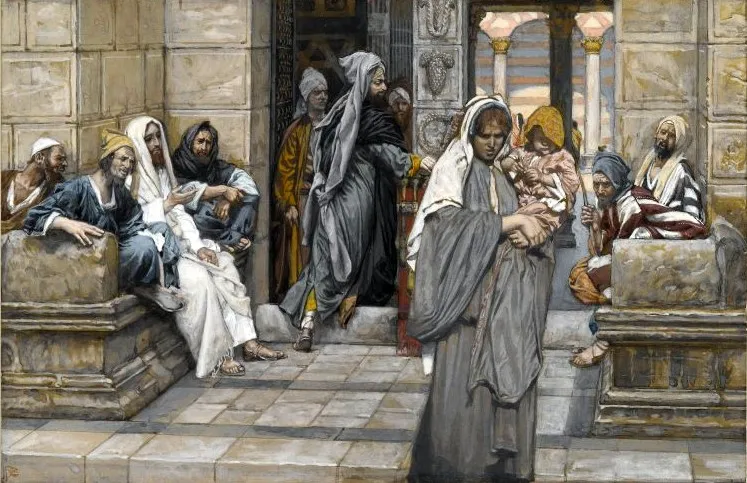
The whole long chapter about the end of the age begins, surprisingly, with a small and tender scene. And he looked up, and saw the rich men casting their gifts into the treasury. And he saw also a certain poor widow casting in thither two mites (vv. 1-2). Picture the temple court at the hour of offering: the treasury chests where gifts were dropped, the steady stream of givers, the larger sums of the wealthy making their visible deposit.
And there, almost lost in the traffic, a widow - the very emblem of the poor and unprotected in that world - quietly lets fall two mites, the smallest coins there were, together worth a fraction of a day's bread. No one in that crowd would have given her a second look. But the Lord looked up, and saw. The phrase is worth dwelling on. Of all the gifts going in that day, the one He singles out is the one the world was built to overlook.
Before He says anything about wars or signs or the shaking of the heavens, Luke shows us the kind of eyes Jesus has: eyes that find the unnoticed person in the crowd and stop on her.1
Then comes the startling verdict: Of a truth I say unto you, that this poor widow hath cast in more than they all (v. 3). More than all the rich men together. By every visible measure that is simply false - her two mites would not register beside their heaped gifts. So Jesus explains the arithmetic of heaven, which is not the arithmetic of the treasury chest: For all these have of their abundance cast in unto the offerings of God: but she of her penury hath cast in all the living that she had (v. 4).
There is the whole difference. The rich gave of their abundance - out of the overflow, the part they would never feel the loss of. The widow gave of her penury - out of her poverty, the part she could not spare - and not a portion of it but all the living that she had, everything she had to live on. God does not weigh a gift by its size on the way into the box; He weighs it by what is left in the hand on the way out.
The measure is not the amount given but the cost to the giver. By that measure the poorest person in the court gave the most, and the Lord saw it, and said so.
Luke 21:5-19It Shall Turn to You for a Testimony
5And as some spake of the temple, how it was adorned with goodly stones and gifts, he said, 6As for these things which ye behold, the days will come, in the which there shall not be left one stone upon another, that shall not be thrown down. 7And they asked him, saying, Master, but when shall these things be? and what sign will there be when these things shall come to pass? 8And he said, Take heed that ye be not deceived: for many shall come in my name, saying, I am Christ; and the time draweth near: go ye not therefore after them. 9But when ye shall hear of wars and commotions, be not terrified: for these things must first come to pass; but the end is not by and by. 10Then said he unto them, Nation shall rise against nation, and kingdom against kingdom: 11And great earthquakes shall be in divers places, and famines, and pestilences; and fearful sights and great signs shall there be from heaven. 12But before all these, they shall lay their hands on you, and persecute you, delivering you up to the synagogues, and into prisons, being brought before kings and rulers for my name’s sake. 13And it shall turn to you for a testimony. 14Settle it therefore in your hearts, not to meditate before what ye shall answer: 15For I will give you a mouth and wisdom, which all your adversaries shall not be able to gainsay nor resist. 16And ye shall be betrayed both by parents, and brethren, and kinsfolks, and friends; and some of you shall they cause to be put to death. 17And ye shall be hated of all men for my name’s sake. 18But there shall not an hair of your head perish. 19In your patience possess ye your souls.
The scene shifts from the treasury to the great building itself. Some spake of the temple, how it was adorned with goodly stones and gifts (v. 5) - and they had reason to marvel. Herod's temple was one of the wonders of that world, its courts faced with massive white stones, its façade gleaming with gold, the pride and centre of the nation's life. To the disciples it must have looked like the one thing too solid ever to fall.
Jesus answers their wonder with a word that would have struck them as almost unthinkable: the days will come, in the which there shall not be left one stone upon another, that shall not be thrown down (v. 6). The most permanent-seeming thing they knew was, in fact, already under sentence. It is the same lesson the widow's scene taught, lifted to a national scale: what the eye counts as great and lasting - heaped gifts, goodly stones - is not what endures.
The disciples respond with the two questions that set the whole discourse in motion: Master, but when shall these things be? and what sign will there be when these things shall come to pass? (v. 7). They want a date and a signal. Jesus gives them something else.
Notice what Jesus does not do with the disciples' question. They ask when and they ask for a sign; He does not hand them a timetable. His very first words are a warning against the eagerness that wants one: Take heed that ye be not deceived: for many shall come in my name, saying, I am Christ; and the time draweth near: go ye not therefore after them (v. 8). The first danger in thinking about the end is not the catastrophes themselves but deception - voices that claim His name, announce that the hour has arrived, and draw people after them.
His counsel is to refuse them. Then comes the steadying word about the catastrophes: when ye shall hear of wars and commotions, be not terrified… but the end is not by and by (v. 9). Wars, upheavals, nation… against nation, great earthquakes… famines, and pestilences (vv. 10-11) - these will come, but they are precisely not to be read as the signal that the end has arrived. The end is not by and by - not immediately.
Jesus deliberately loosens the link between alarming events and the timing of His coming. The disciple who hears of disaster is told the same two things twice: do not be deceived, and do not be terrified.
Then Jesus turns from the wide world to the disciples themselves, and the tone becomes intensely personal: But before all these, they shall lay their hands on you, and persecute you, delivering you up to the synagogues, and into prisons, being brought before kings and rulers for my name's sake (v. 12). Before the cosmic things, the costly thing - arrest, trial, prison, hatred - will fall on His own. And here He says something that transforms it: And it shall turn to you for a testimony (v. 13).
The very dock where they are dragged to be condemned becomes the platform from which they bear witness. The hostile court, the king, the ruler - these become the audience for the gospel. So they are told not to rehearse a defence in advance: Settle it therefore in your hearts, not to meditate before what ye shall answer: for I will give you a mouth and wisdom, which all your adversaries shall not be able to gainsay nor resist (vv. 14-15).
The words will be given in the hour of need. The cost is named plainly - betrayal by parents, and brethren, and kinsfolks, and friends, even death for some, hatred from all men for my name's sake (vv. 16-17). And yet, in the same breath, an astonishing promise of safekeeping: But there shall not an hair of your head perish (v. 18). Some will be put to death, He has just said - and not a hair of their head will perish.
The two are not a contradiction; they hold together only if the life He guards is deeper than the body the sword can reach.
The section comes to rest on a single, weighty sentence: In your patience possess ye your souls (v. 19). It is the disciple's marching order for the whole long stretch between the warnings and the end. The word rendered patience is the steady endurance that holds its ground under pressure and does not give way - the bearing-up that outlasts the trial, far from any passive resignation. And what such patience secures is nothing less than the soul. Possess ye your souls - gain, keep, hold fast your very selves.
The picture is of a person who, in the middle of betrayal and hatred and even the threat of death, does not lose his grip on who he is and whose he is. Everything else in this section - the wars not to terrify, the deceivers not to follow, the testimony in the dock, the hair that will not perish - gathers into this one quiet command. The disciple is not promised an easy road or an early rescue.
He is promised that if he endures, holding fast, he will keep his soul through all of it. Patience is how the soul is possessed.
Luke 21:20-24Until the Times of the Gentiles Be Fulfilled
20And when ye shall see Jerusalem compassed with armies, then know that the desolation thereof is nigh. 21Then let them which are in Judaea flee to the mountains; and let them which are in the midst of it depart out; and let not them that are in the countries enter thereinto. 22For these be the days of vengeance, that all things which are written may be fulfilled. 23But woe unto them that are with child, and to them that give suck, in those days! for there shall be great distress in the land, and wrath upon this people. 24And they shall fall by the edge of the sword, and shall be led away captive into all nations: and Jerusalem shall be trodden down of the Gentiles, until the times of the Gentiles be fulfilled.
Here the discourse comes down to a particular city and a particular sorrow. And when ye shall see Jerusalem compassed with armies, then know that the desolation thereof is nigh (v. 20). Earlier the disciples had asked for a sign; now one is given them, and it is concrete and grievous - the holy city ringed by an army, the prelude to its desolation. And the counsel that follows is not theological but urgently practical: let them which are in Judaea flee to the mountains; and let them which are in the midst of it depart out; and let not them that are in the countries enter thereinto (v. 21).
This is the voice of a shepherd telling his people exactly what to do to survive a coming catastrophe - flee, get out, do not go back in. There is real history pressing through these words: within that generation Jerusalem and its temple would indeed be encompassed and thrown down, just as verse 6 foretold, and the not-one-stone-upon-another would become a thing the eye could see. Jesus weeps over this city elsewhere in Luke for exactly this reason; here He warns it.
The grandeur of verse 5 and the ruin of verse 20 are the two halves of one truth: the goodly stones did fall.
The language grows solemn and heavy: For these be the days of vengeance, that all things which are written may be fulfilled. But woe unto them that are with child, and to them that give suck, in those days! for there shall be great distress in the land, and wrath upon this people (vv. 22-23). The phrase days of vengeance reaches back into the prophets, who long spoke of a day when accounts would be settled and what was written would come to pass; Jesus places this coming desolation within that long prophetic stream - that all things which are written may be fulfilled. And then, characteristically, His eye falls on the most vulnerable in the disaster: the pregnant and the nursing, those who cannot flee quickly, those for whom those days would be hardest.
There is no relish here, no satisfaction in calamity - only a woe that grieves. The great distress in the land is named soberly, not gloated over. This is judgment spoken by One who, in the same Gospel, looked on this very city and wept that it had not known the things that belonged to its peace. The reader is meant to feel the weight of it, not to decode it.
The section ends on a sentence that has been pondered long and read in more than one way: And they shall fall by the edge of the sword, and shall be led away captive into all nations: and Jerusalem shall be trodden down of the Gentiles, until the times of the Gentiles be fulfilled (v. 24). The first half is plain and terrible - sword and captivity and scattering into all nations. It is the last clause that opens a horizon: Jerusalem will be trodden down of the Gentiles - but only until. That little word holds a limit and a hope.
The treading-down is given a term; it is not the final word. What the times of the Gentiles are, and when they reach their fullness, the text does not spell out, and faithful readers have understood the phrase differently. The wiser path is to hear what the sentence plainly says: the desolation has a boundary set by God, the present trampling is not endless, and history is moving under His hand toward a fulfilment He has appointed.
The verse hands us a horizon and a hope, not a calendar - and the discourse is about to lift its eyes to that horizon.1
Luke 21:25-38Look Up; For Your Redemption Draweth Nigh
25And there shall be signs in the sun, and in the moon, and in the stars; and upon the earth distress of nations, with perplexity; the sea and the waves roaring; 26Men’s hearts failing them for fear, and for looking after those things which are coming on the earth: for the powers of heaven shall be shaken. 27And then shall they see the Son of man coming in a cloud with power and great glory. 28And when these things begin to come to pass, then look up, and lift up your heads; for your redemption draweth nigh. 29And he spake to them a parable; Behold the fig tree, and all the trees; 30When they now shoot forth, ye see and know of your own selves that summer is now nigh at hand. 31So likewise ye, when ye see these things come to pass, know ye that the kingdom of God is nigh at hand. 32Verily I say unto you, This generation shall not pass away, till all be fulfilled. 33Heaven and earth shall pass away: but my words shall not pass away. 34And take heed to yourselves, lest at any time your hearts be overcharged with surfeiting, and drunkenness, and cares of this life, and so that day come upon you unawares. 35For as a snare shall it come on all them that dwell on the face of the whole earth. 36Watch ye therefore, and pray always, that ye may be accounted worthy to escape all these things that shall come to pass, and to stand before the Son of man. 37And in the day time he was teaching in the temple; and at night he went out, and abode in the mount that is called the mount of Olives. 38And all the people came early in the morning to him in the temple, for to hear him.
Now the discourse lifts its eyes from the city to the cosmos, and the imagery becomes vast: And there shall be signs in the sun, and in the moon, and in the stars; and upon the earth distress of nations, with perplexity; the sea and the waves roaring; men's hearts failing them for fear, and for looking after those things which are coming on the earth: for the powers of heaven shall be shaken (vv. 25-26).
This is the language the prophets used for the great day of the Lord - the heavens disturbed, the sea in tumult, the nations in anguish. Notice the picture of the human heart in it: men's hearts failing them for fear, undone by dread of those things which are coming. When the very powers of heaven - the great fixed lights people steer their lives by - are shaken, the natural response is terror. The world looks up and faints.
Luke draws the contrast deliberately, because he is about to show the disciple looking up at the very same sky and doing the opposite. The same heavens, the same shaking - and two entirely different responses, depending on whose coming it is that the signs announce.
At the centre of all the upheaval stands the one fixed thing: And then shall they see the Son of man coming in a cloud with power and great glory (v. 27). After the wars and the desolations and the shaking, this is what the whole discourse has been moving toward: the visible coming of the Son of man, robed in the cloud of God's presence, in power and great glory. And then the turn that changes everything for His own: And when these things begin to come to pass, then look up, and lift up your heads; for your redemption draweth nigh (v. 28).
The world's heart fails and its face falls; the disciple is told to look up and lift up his head. Why? Because the very signs that spell terror to those who do not know Him spell rescue to those who do. Your redemption draweth nigh. The thing approaching in the shaken heavens is not, for the believer, doom but deliverance - the long-awaited setting-free, drawing near at last. It is one of the great reversals of the Gospel: the moment the world dreads most is the moment the disciple has been waiting for.
The posture says it all. Everyone else looks down in fear. The believer looks up in hope.
Jesus presses the point home with a homely picture: Behold the fig tree, and all the trees; when they now shoot forth, ye see and know of your own selves that summer is now nigh at hand. So likewise ye, when ye see these things come to pass, know ye that the kingdom of God is nigh at hand (vv. 29-31). It is the plainest of observations - when the buds break and the leaves come, you do not need a calendar to tell you summer is coming; the tree itself tells you.
Just so, He says, when you see these things, know… that the kingdom of God is nigh. The lesson is not a method for calculating dates; it is a posture of recognition - read the season rightly, and do not be caught unaware. Then He adds two solemn assurances. This generation shall not pass away, till all be fulfilled (v. 32) - a word that has been weighed carefully, for the discourse has spoken both of things near at hand within that generation and of things on the furthest horizon; the sentence binds the hearer to the certainty of fulfilment without yielding a timetable.
And then the rock under it all: Heaven and earth shall pass away: but my words shall not pass away (v. 33). The very sun and moon and stars may be shaken from their places, but what He has spoken will stand. The most permanent things in the universe are less durable than His word.
The discourse ends not with information but with a command, and it lands on how to live. First a warning against being dulled: take heed to yourselves, lest at any time your hearts be overcharged with surfeiting, and drunkenness, and cares of this life, and so that day come upon you unawares. For as a snare shall it come on all them that dwell on the face of the whole earth (vv. 34-35). The danger named is heaviness, not chiefly wickedness: a heart weighed down with indulgence, with drink, with the ordinary anxious clutter of this life, until it is too sluggish to be ready, and the day springs shut like a snare. Against that drowsiness comes the chapter's great closing charge: Watch ye therefore, and pray always, that ye may be accounted worthy to escape all these things that shall come to pass, and to stand before the Son of man (v. 36).
To watch is to stay awake and alert; to pray always is what keeps the watch from flagging. The goal is not anxious calculation but readiness - to be found awake, praying, on one's feet, able to stand before the Son of man. Luke closes the scene with a quiet picture of Jesus living out exactly this rhythm: in the day time he was teaching in the temple; and at night he went out, and abode in the mount… of Olives (v. 37) - days given to the work, nights to the mountain and to prayer - while all the people came early in the morning to him in the temple, for to hear him (v. 38).
Research trail
Sources & further study
These references support the historical, linguistic, manuscript, and contextual notes in this chapter. Scripture remains the primary text; external sources are provided so readers can inspect the research directly.
- Luke 21 - Translators' NotesThe NET Bible's detailed footnotes on Luke 21 - the value of the widow's mites against the temple offerings (vv. 1-4), the layered language of the discourse, the much-discussed phrase the times of the Gentiles (v. 24), and the cosmic imagery of verses 25-27.
- Luke 21 · Greek interlinear + lexiconThe Greek text of Luke 21 word by word, with parsing and lexical entries - useful for the widow's two mites and her penury (vv. 2, 4), for apolutrosis (“redemption,” v. 28), and for agrupneo (“watch,” v. 36, literally to keep oneself awake).
- Luke 21 ↔ Daniel 7 · Matthew 24 · Mark 13Traces the threads tying Luke 21 to the rest of Scripture - the Son of man coming in a cloud (v. 27) read alongside Daniel's one like the Son of man who comes with the clouds of heaven (Dan. 7:13-14), and the discourse set beside its companions in Matthew 24 and Mark 13.
Where this echoes in Scripture
This Poor Widow Hath Cast In More Than They All
- 1 Samuel 16:7man looketh on the outward appearance, but the LORD looketh on the heart.The eyes that single out the widow in verses 1-3 - the Lord who sees past the visible gift to the heart.
- Mark 12:41-44this poor widow hath cast more in, than all they which have cast into the treasury... even all her living.The same scene told in Mark - the two mites that make a farthing, and the verdict of verses 3-4.
- 2 Corinthians 8:9though he was rich, yet for your sakes he became poor, that ye through his poverty might be rich.The deeper pattern behind the widow's whole-hearted gift (v. 4) - the One who held nothing back.
- 2 Corinthians 9:7Every man according as he purposeth in his heart, so let him give... for God loveth a cheerful giver.The heart-measure of giving that verses 3-4 reveal - God weighs the giver, not only the sum.
- 1 Kings 17:12-15I have not a cake, but an handful of meal... and, behold, I am gathering two sticks, that I may... eat it, and die.Another widow giving the last of her living (v. 4) - and finding the Lord provided.
It Shall Turn to You for a Testimony
- Acts 4:13they marvelled; and they took knowledge of them, that they had been with Jesus.The promise of verses 13-15 kept - the dock turned into a testimony, the words given in the hour.
- Acts 6:10And they were not able to resist the wisdom and the spirit by which he spake.Verse 15 fulfilled in Stephen - adversaries unable to gainsay nor resist the given word.
- John 11:25I am the resurrection, and the life: he that believeth in me, though he were dead, yet shall he live.How the hair that shall not perish (v. 18) holds with the death of some (v. 16) - a life beyond the sword.
- Romans 8:35-37Who shall separate us from the love of Christ? shall tribulation... or peril, or sword?The patience that possesses the soul (v. 19) - endurance that nothing in the list of verse 16 can finally undo.
- Matthew 24:1-14see ye not all these things?... There shall not be left here one stone upon another... but the end is not yet.The companion discourse to verses 5-19 - the temple's fall, the wars, and the warning against reading them as the end.
Until the Times of the Gentiles Be Fulfilled
- Luke 19:41-44And when he was come near, he beheld the city, and wept over it... thine enemies shall cast a trench about thee, and compass thee round.The same coming desolation of verses 20-24 - foretold here with tears, by the King who longed to save the city.
- Luke 13:34-35how often would I have gathered thy children together... and ye would not! Behold, your house is left unto you desolate.The grief behind verse 23 - desolation spoken by One who longed to gather, not to destroy.
- Daniel 9:26the people of the prince that shall come shall destroy the city and the sanctuary; and the end thereof shall be with a flood.The things which are written (v. 22) - the prophets' long word of the city and sanctuary brought low.
- Romans 11:25-26blindness in part is happened to Israel, until the fulness of the Gentiles be come in. And so all Israel shall be saved.The until of verse 24 read elsewhere - a bounded season, a fulness appointed, a hope held open.
- Zechariah 12:3in that day will I make Jerusalem a burdensome stone for all people... though all the people of the earth be gathered together against it.The long prophetic horizon over Jerusalem behind verses 20-24 - the city at the centre of the nations' story.
Look Up; For Your Redemption Draweth Nigh
- Daniel 7:13-14one like the Son of man came with the clouds of heaven... and there was given him dominion, and glory, and a kingdom.The vision behind verse 27 - the Son of man coming with the clouds to receive an everlasting kingdom.
- Romans 8:22-23ourselves also... groan within ourselves, waiting for the adoption, to wit, the redemption of our body.The redemption drawing nigh in verse 28 - the believer's long-awaited setting-free at His coming.
- Matthew 24:42Watch therefore: for ye know not what hour your Lord doth come.The charge of verse 36 in its companion form - stay awake, for the hour is not given to you.
- 1 Thessalonians 5:2-6the day of the Lord so cometh as a thief in the night... let us not sleep, as do others; but let us watch and be sober.The snare-and-watchfulness of verses 34-36 - the day that surprises the sleeping, and the call to stay awake.
- Isaiah 40:8The grass withereth, the flower fadeth: but the word of our God shall stand for ever.The promise of verse 33 - all things pass away, but His word endures.