Exodus 2
People in this chapter
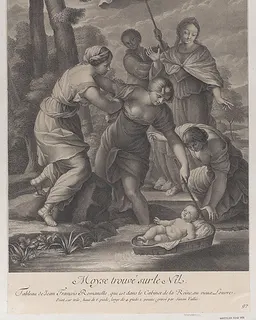
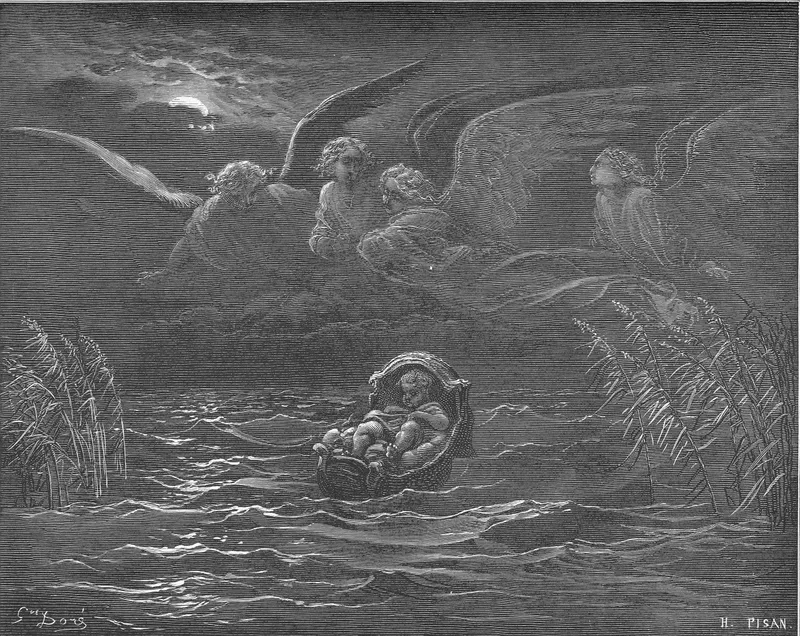
Exodus 1 closed in suffocation: a king who feared the Hebrews enslaved them, embittered their lives, and finally commanded that every son born to them be cast into the river. Exodus 2 answers that decree, and it answers it in the smallest possible terms - a baby. And there went a man of the house of Levi, and took to wife a daughter of Levi (v. 1). The woman bears a son, hides him three months, and then, when she can hide him no longer, sets him in an ark of bulrushes daubed with slime and pitch and lays it in the reeds at the river's edge.
The river ordered to be his grave becomes the cradle that carries him to safety. God's rescue of a nation begins with a mother's faith and a child still breathing.1
Tap any highlighted phrase to jump to the commentary that unpacks it.
Exodus 2:1-4An Ark of Bulrushes
1And there went a man of the house of Levi, and took to wife a daughter of Levi. 2And the woman conceived, and bare a son: and when she saw him that he was a goodly child, she hid him three months. 3And when she could not longer hide him, she took for him an ark of bulrushes, and daubed it with slime and with pitch, and put the child therein; and she laid it in the flags by the river’s brink. 4And his sister stood afar off, to wit what would be done to him.
The opening is almost startlingly plain: And there went a man of the house of Levi, and took to wife a daughter of Levi (v. 1). No names yet, no fanfare - just a marriage in a tribe under a death sentence. Into that marriage a son is born. And the mother's response is given in a single charged line: when she saw him that he was a goodly child, she hid him three months (v. 2).
The Hebrew behind goodly is the same word God speaks over creation in Genesis - she saw that he was good. It is a deliberate echo: a mother looking at her newborn the way the Maker looked at His world. But this is no sentimental scene. The king has commanded that every Hebrew son be cast into the river (Ex. 1:22), so to hide this child is to defy the throne on pain of death.
For three months she does exactly that. Before the boy has a name, before anyone knows who he is, the first thing standing between him and the river is a mother's faith - and the New Testament names it precisely that: By faith Moses, when he was born, was hid three months of his parents… and they were not afraid of the king's commandment (Heb. 11:23).2
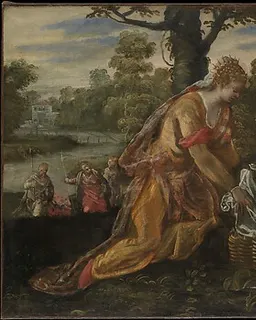
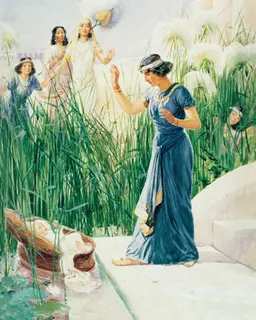
When concealment fails, the mother does something that looks like surrender and is actually strategy: she took for him an ark of bulrushes, and daubed it with slime and with pitch, and put the child therein; and she laid it in the flags by the river's brink (v. 3). Read it slowly and the daring of it shows. The king said the sons must go into the river - so she puts her son into the river, on her own terms, sealed inside a tiny waterproofed vessel and lodged among the reeds where the current cannot carry him off.
She does not throw him in; she commits him, and the act is full of quiet calculation. The reeds (flags) would hold the basket near the bank. The place is one where the daughter of Pharaoh evidently comes to bathe. And his sister is posted nearby to wit what would be done to him (v. 4) - to watch and, when the moment comes, to act. This is faith, but it is faith with its eyes open: a mother doing every wise thing within her power and then entrusting the outcome to God.
The very instrument of death - the river - is turned, by her courage and God's hand, into the road to the child's rescue.
Exodus 2:5-6This Is One of the Hebrews' Children
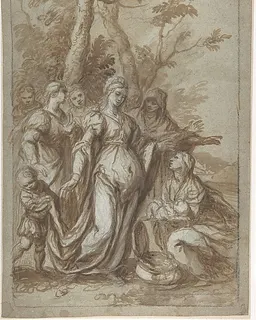
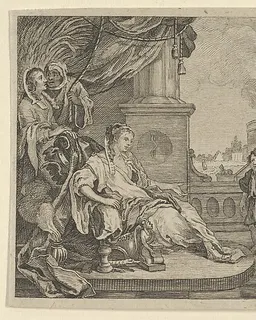
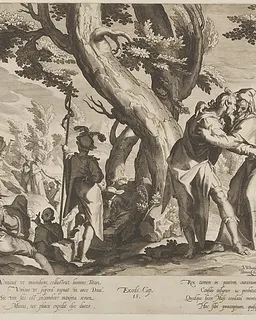
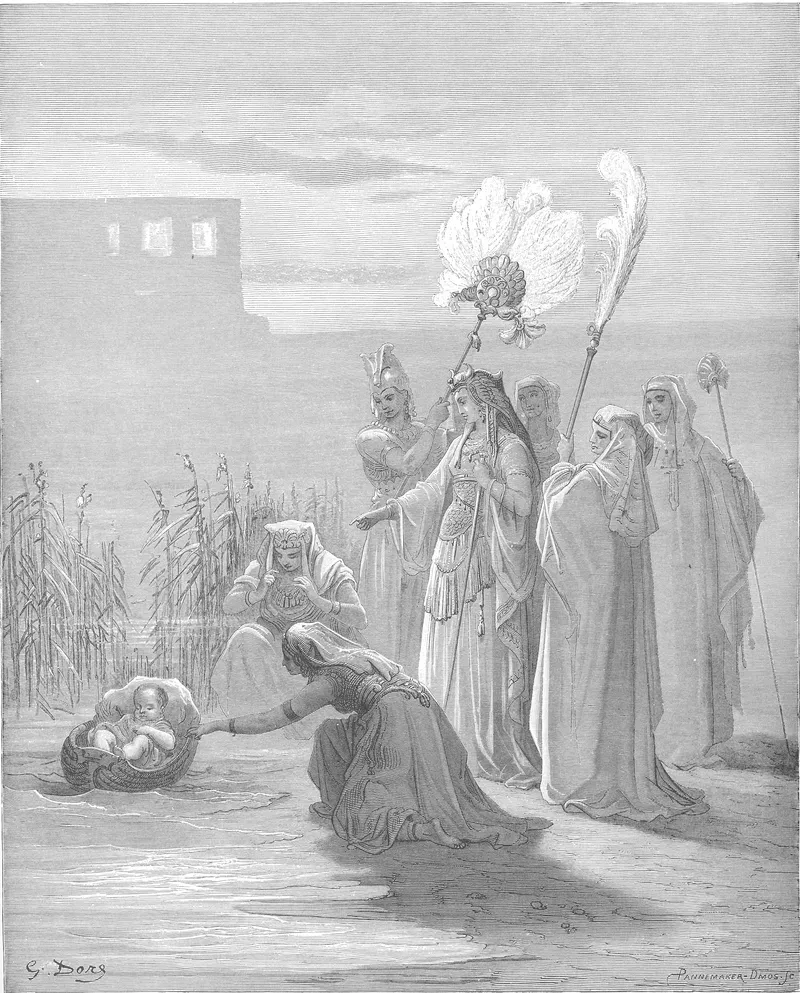
5And the daughter of Pharaoh came down to wash herself at the river; and her maidens walked along by the river’s side; and when she saw the ark among the flags, she sent her maid to fetch it. 6And when she had opened it, she saw the child: and, behold, the babe wept. And she had compassion on him, and said, This is one of the Hebrews’ children.
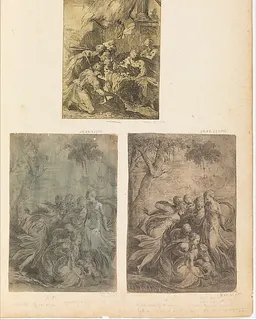
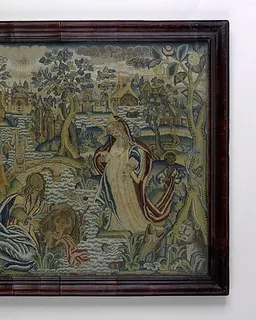
Now the whole scene turns on a single woman with the one thing the situation needs - power - and the one thing it does not expect from her - mercy. The daughter of Pharaoh came down to wash herself at the river… and when she saw the ark among the flags, she sent her maid to fetch it. And when she had opened it, she saw the child: and, behold, the babe wept. And she had compassion on him, and said, This is one of the Hebrews' children (vv. 5-6).
The one person in Egypt with both the authority to spare a Hebrew boy and the standing to defy her own father's decree is the daughter of the very man who issued it. She knows exactly what she is looking at - one of the Hebrews' children, a baby her father has ordered drowned - and she keeps him anyway. The baby's cry undoes her; compassion overrides the edict. Nothing here is presented as chance.
The right woman comes to the right place at the right hour, and her heart bends toward the child rather than against him. A king built a machine to destroy these sons; it is undone, in the end, by the tears of an infant and the pity of a woman in the king's own house.
Exodus 2:7-10I Drew Him Out of the Water
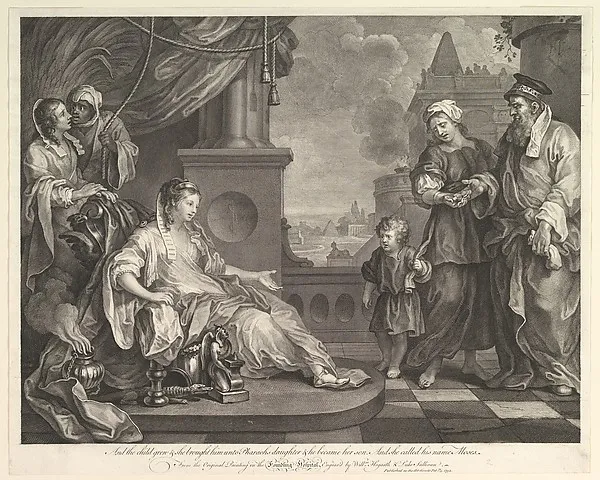
7Then said his sister to Pharaoh’s daughter, Shall I go and call to thee a nurse of the Hebrew women, that she may nurse the child for thee? 8And Pharaoh’s daughter said to her, Go. And the maid went and called the child’s mother. 9And Pharaoh’s daughter said unto her, Take this child away, and nurse it for me, and I will give thee thy wages. And the woman took the child, and nursed it. 10And the child grew, and she brought him unto Pharaoh’s daughter, and he became her son. And she called his name Moses: and she said, Because I drew him out of the water.
The sister, who has watched all of this from a distance, now steps in with a single brilliant sentence: Shall I go and call to thee a nurse of the Hebrew women, that she may nurse the child for thee? (v. 7). It is exactly the right thing to say at exactly the right moment, and it accomplishes far more than it seems to ask. Pharaoh's daughter says Go - and the maid called the child's mother (v. 8).
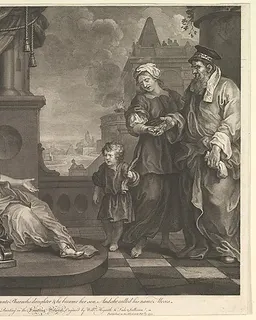
So the boy is restored to his own mother to be raised, in his earliest and most formative years, among his own people, learning whose he is - and Pharaoh's daughter pays her wages to do it (v. 9). Take the measure of the reversal. The empire decreed the death of the Hebrew sons; now the empire is funding the upbringing of the one who will lead the Hebrews out. A slave woman is paid royal wages to nurse her own rescued son.
The chapter has quietly assembled a chain of women - the mother, the sister, the princess, the nurse (who is the mother again) - and through their courage and wit a deliverer is preserved. None of them can see the end of the story; each simply does the next faithful thing.
Exodus 2:11-15Who Made Thee a Prince and a Judge?
11And it came to pass in those days, when Moses was grown, that he went out unto his brethren, and looked on their burdens: and he spied an Egyptian smiting an Hebrew, one of his brethren. 12And he looked this way and that way, and when he saw that there was no man, he slew the Egyptian, and hid him in the sand. 13And when he went out the second day, behold, two men of the Hebrews strove together: and he said to him that did the wrong, Wherefore smitest thou thy fellow? 14And he said, Who made thee a prince and a judge over us? intendest thou to kill me, as thou killedst the Egyptian? And Moses feared, and said, Surely this thing is known. 15Now when Pharaoh heard this thing, he sought to slay Moses. But Moses fled from the face of Pharaoh, and dwelt in the land of Midian: and he sat down by a well.
The narrative leaps across decades in a phrase - when Moses was grown - and the man who emerges is caught between two worlds. Raised in Pharaoh's house, he is by upbringing an Egyptian prince; by blood and by his nursing mother's teaching, he knows he is a Hebrew. And in verse 11 that knowledge moves him: he went out unto his brethren, and looked on their burdens. The word brethren is the key. He does not go out to inspect laborers; he goes out to his own people, and what he sees breaks something open in him - their burdens, the crushing weight of their slavery.
Hebrews reads the heart of it: By faith Moses, when he was come to years, refused to be called the son of Pharaoh's daughter; choosing rather to suffer affliction with the people of God, than to enjoy the pleasures of sin for a season (Heb. 11:24-25). The impulse is right and even noble: he will not stay comfortable in the palace while his people groan. He throws his lot in with the oppressed.
The instinct to identify with the suffering, to refuse the comfort that looks away, is genuinely the beginning of a deliverer. What he does next, however, shows that a right instinct can still go badly wrong when a man acts on it in his own strength and on his own clock.
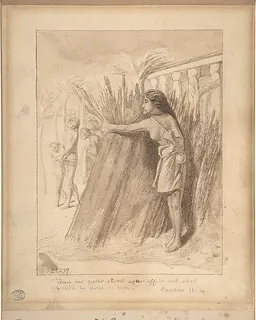
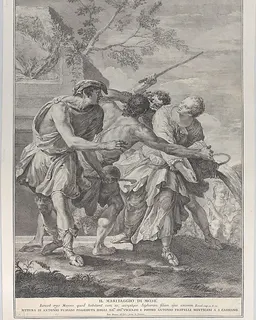
What Moses does is told without flinching: he looked this way and that way, and when he saw that there was no man, he slew the Egyptian, and hid him in the sand (v. 12). The detail is unsparing - he checks for witnesses first, then strikes, then conceals the body. This is the action of a man taking deliverance into his own hands, by his own violence, in secret. Scripture does not hold it up as a model.
Stephen, retelling the story centuries later, frames it as a deliverance attempted before its time: Moses supposed his brethren would have understood how that God by his hand would deliver them: but they understood not (Acts 7:25). He had, it seems, some sense of his calling - that God meant to free Israel through him - but he reached for it prematurely, on his own terms, with the only kind of power he had learned in Egypt: the power to dominate and to kill.
The man who will one day deliver Israel God's way - by a word, a staff, a stretched-out hand at the sea, and the people standing still to see the LORD do it - here tries to do it by his own hand in the sand. The would-be deliverer is not ready, and the manner of the deed proves it. There is a long road between this hidden killing and the man who will say to a terrified nation, Stand still, and see the salvation of the LORD.
The next day exposes how little ground Moses actually stands on. He comes upon two men of the Hebrews - his own people - striving together, and tries to play peacemaker: Wherefore smitest thou thy fellow? (v. 13). But the man in the wrong turns on him with a question that lands like a verdict: Who made thee a prince and a judge over us? intendest thou to kill me, as thou killedst the Egyptian? (v. 14).
Every word cuts. His secret is known. His own people do not receive him as a rescuer; they see only a man who killed and now presumes to judge. The question - who made thee a prince and a judge? - is the rejection of his self-appointed leadership in a single line. And the answer it implicitly demands is one Moses cannot yet give: no one has made him so - not yet. He has taken the role rather than received it.
And Moses feared: the prince of Egypt, who looked both ways before he struck, is suddenly a frightened man with a secret out and no people at his back. The would-be deliverer is rejected by the very ones he meant to deliver, and there is nowhere left to stand.
The collapse is complete in verse 15: Now when Pharaoh heard this thing, he sought to slay Moses. But Moses fled from the face of Pharaoh, and dwelt in the land of Midian: and he sat down by a well. He loses everything in a single move. His standing in Pharaoh's house is gone; the throne now wants him dead. His place among his own people is gone; they have refused him. So the prince of Egypt becomes a fugitive, running across the desert to a land not his own, and the scene shrinks down to a man sitting by a well - nameless to those around him, stripped of rank, with no future he can see.
He does not know that this emptiness will last decades, or that God is not absent from it. The text simply leaves him there, at the lowest point of the chapter: a deliverer who tried to deliver and failed, sitting alone in exile. It is worth marking that God's great servants are often hidden here for a long while - in obscurity, in apparent failure, far from the place of power - before they are ever sent.
The well in Midian is not the end of Moses. But from where he sits, it surely looks like it.
Exodus 2:16-19An Egyptian Delivered Us
16Now the priest of Midian had seven daughters: and they came and drew water, and filled the troughs to water their father’s flock. 17And the shepherds came and drove them away: but Moses stood up and helped them, and watered their flock. 18And when they came to Reuel their father, he said, How is it that ye are come so soon to day? 19And they said, An Egyptian delivered us out of the hand of the shepherds, and also drew water enough for us, and watered the flock.
At the well in Midian a small scene quietly tells us Moses is becoming a different man. The priest of Midian had seven daughters, and when they come to water their father's flock, the shepherds came and drove them away: but Moses stood up and helped them, and watered their flock (vv. 16-17). Set this beside what came before. In Egypt, Moses' strength came out as killing; here, the same strength comes out as protection of the weak against bullies, and then as service - he not only drives off the shepherds, he draws the water and waters the flock himself.
The change of register is the point. He is learning what power looks like when it shelters and serves. There is a deeper echo too: this is the third time in the chapter water and rescue come together - the baby drawn out of the river, the well where the daughters are helped, and (still to come) a whole sea opened for a nation. And notice how the daughters describe their helper to their father: An Egyptian delivered us out of the hand of the shepherds (v. 19).
They call him an Egyptian - by dress and manner he still looks the part - and they use the word delivered. The man who failed to deliver his own people, and fled, has just delivered seven strangers at a well. The instinct is right even when the audience is small; God is rehearsing in private the thing He will one day do in public.
Exodus 2:20-22A Stranger in a Strange Land
20And he said unto his daughters, And where is he? why is it that ye have left the man? call him, that he may eat bread. 21And Moses was content to dwell with the man: and he gave Moses Zipporah his daughter. 22And she bare him a son, and he called his name Gershom: for he said, I have been a stranger in a strange land.
The daughters' report brings a gentle rebuke from their father and an open door for Moses: And where is he? why is it that ye have left the man? call him, that he may eat bread (v. 20). Reuel - called Jethro elsewhere - will not let a kindness go unanswered; he calls the stranger in to share his table. And the next verse is quietly weighty: And Moses was content to dwell with the man (v. 21).
Content. The fugitive who lost everything finds a place to rest. After the violence and the flight and the well, Moses settles - he is given Zipporah, the priest's daughter, to wife, and a home in Midian. It is a smaller life than the palace by every worldly measure: a shepherd's household at the edge of the wilderness instead of the courts of Egypt. But it is real, and it is his, and it is not wasted.
For forty years (as the wider story tells us) Moses will keep this flock in this wilderness - the very wilderness, as it turns out, where God will one day meet him at a burning bush and where he will later lead a whole nation. The man being prepared to shepherd Israel is, in Midian, simply learning to shepherd sheep. The hidden years are doing their slow work.
A son is born, and the name Moses gives him is a window straight into his heart: she bare him a son, and he called his name Gershom: for he said, I have been a stranger in a strange land (v. 22). Even in a season of settling - a wife, a home, a child - Moses names his firstborn for displacement. He is, by his own confession, a stranger. And the word is layered. He is a Hebrew living among Midianites, an outsider in a foreign land; but the name also confesses something truer than geography.
Moses belongs fully nowhere. He is not an Egyptian, though he was raised one; not at home in Midian, though he is content there; and cut off, for now, from his own people in Egypt. The naming is honest grief carried into a moment of joy. Yet there is something fitting in it for the man he is becoming. A deliverer who has himself known what it is to be a stranger - displaced, rejected, far from home - is being shaped to lead a whole nation of strangers and slaves out toward a home they have never seen.
The displacement is the very experience that will let him understand the people he is sent to save.
Exodus 2:23-25God Heard, God Remembered
23And it came to pass in process of time, that the king of Egypt died: and the children of Israel sighed by reason of the bondage, and they cried, and their cry came up unto God by reason of the bondage. 24And God heard their groaning, and God remembered his covenant with Abraham, with Isaac, and with Jacob. 25And God looked upon the children of Israel, and God had respect unto them.
The scene pulls back from Moses in Midian to all Israel in Egypt, and the years are compressed into a phrase: in process of time, the king of Egypt died. A new reign begins - and nothing changes. The bondage grinds on, and at last the weight of it forces a sound out of the people: the children of Israel sighed by reason of the bondage, and they cried, and their cry came up unto God by reason of the bondage (v. 23).
The piling up of words is deliberate - they sighed, they cried, and the chapter twice names the cause: by reason of the bondage… by reason of the bondage. This is not refined prayer; it is the raw groan of people at the end of their strength. And it is significant that the cry comes only now, when the death of a king has dashed any hope that relief might come from the throne. Sometimes a people must reach the bottom - must run out of every other rescue - before the cry finally breaks loose.
What matters is the direction it takes: their cry came up unto God. They may not have known how to pray well; they only knew their misery and turned it upward. And that turning, that honest groan sent toward heaven, is the hinge on which the whole book now swings.
Verse 24 answers the cry with four of the most important words in Exodus, and the first is the simplest: And God heard their groaning. He heard. The God who can seem silent through long years of suffering - through Moses' hiding, his growing up, his failure, his decades in Midian, Israel's endless labor - is not deaf and was never absent. He has heard all along; now the text says so plainly. And then the second word, deeper still: God remembered his covenant with Abraham, with Isaac, and with Jacob. Here is the true ground of everything that will follow.
Israel's rescue does not finally rest on their crying, nor on Moses being ready, nor on the dying of one Pharaoh and the rising of another. It rests on a promise - the covenant God swore to Abraham generations before, that his seed would be a great nation and would come out of bondage and into a land. God hears the cry, yes; but what He acts on is His own ancient word. The deliverance about to unfold is a covenant He keeps.
When God remembers, He is not recalling something forgotten - He is turning to do what He long ago bound Himself to do.
The chapter closes on God's gaze: And God looked upon the children of Israel, and God had respect unto them (v. 25). After all the verbs of Israel's misery, the chapter closes on verbs of God's attention - He heard, He remembered, He looked, He had respect. To have respect unto them is to regard them, to take notice with concern, to fix His care upon them and not look away. Notice what the chapter does not do: it does not rush to the rescue.
There is no fire from heaven yet, no Red Sea, no plagues. It ends in the charged pause just before everything changes - the deliverer hidden and ready in Midian, the people crying and ready in Egypt, and God having heard, remembered, looked, and turned toward them. Everything is now set. The whole of the deliverance that fills the rest of the book flows out of these three quiet verses, where it becomes clear that the real actor in Exodus was never Pharaoh, and never even Moses, but the God who heard a groan and remembered a promise.
The next chapter will show what He does.
Research trail
Sources & further study
These references support the historical, linguistic, manuscript, and contextual notes in this chapter. Scripture remains the primary text; external sources are provided so readers can inspect the research directly.
- Exodus 2 - Translators' NotesThe NET Bible's detailed footnotes on Exodus 2 - the “ark of bulrushes” and its echo of Noah's ark (v. 3), the play on Moses' name and the Hebrew verb “to draw out” (v. 10), the meaning of Gershom (v. 22), and the verbs heard / remembered / looked / had respect that close the chapter (vv. 23-25).
- Exodus 2 · Hebrew + classical Jewish commentaryThe Hebrew text of Exodus 2 with Rashi, Ibn Ezra, and other classical commentators side by side - useful for the verb mashah (v. 10, the wordplay behind the name Moshe, “drawn out”), for tevah (v. 3, the “ark” that is also Noah's ark), and for zakar (v. 24, “God remembered”).
- Exodus 2 ↔ Matthew 2 · Acts 7 · Hebrews 11 · Luke 1Traces the threads tying Exodus 2 to the rest of Scripture - the infant deliverer preserved from a murderous king (vv. 1-10) read alongside Herod's slaughter and the flight to Egypt (Matt. 2:13-16), the rejected-then-sent deliverer (vv. 11-15) read beside Stephen's sermon (Acts 7:23-35) and Hebrews' reading of Moses by faith (Heb. 11:23-27), and God remembering His covenant (v. 24) read beside he hath visited and redeemed his people (Luke 1:68).
Where this echoes in Scripture
I Drew Him Out of the Water
- Genesis 6:14Make thee an ark of gopher wood... and shalt pitch it within and without with pitch.The other ark sealed with pitch - the same word as verse 3, a vessel carrying a deliverer safely through deadly waters.
- Hebrews 11:23By faith Moses, when he was born, was hid three months of his parents... and they were not afraid of the king's commandment.The hiding of verses 2-3 named for what it was - faith that defied the king's decree.
- Matthew 2:13-16Herod will seek the young child to destroy him... and slew all the children that were in Bethlehem.The pattern of verses 1-10 returning - an infant deliverer preserved from a king's slaughter of the sons.
- Exodus 1:22Every son that is born ye shall cast into the river, and every daughter ye shall save alive.The decree this whole scene answers - the river meant to drown him becomes the road to his rescue.
- Isaiah 63:11Then he remembered the days of old, Moses, and his people, saying, Where is he that brought them up out of the sea?The name of verse 10 lived out - the one drawn out of the water who drew a nation up out of the sea.
Who Made Thee a Prince and a Judge?
- Acts 7:23-35This Moses whom they refused... the same did God send to be a ruler and a deliverer.Stephen's reading of verses 11-15 - the deliverer rejected by his own, then sent by God to save them.
- Hebrews 11:24-27By faith Moses... refused to be called the son of Pharaoh's daughter; choosing rather to suffer affliction with the people of God.The heart behind verse 11 - Moses casting his lot with his suffering people rather than the palace.
- John 1:11He came unto his own, and his own received him not.The deeper pattern beneath verse 14 - the Deliverer refused by the very people He came to save.
- Acts 5:31Him hath God exalted with his right hand to be a Prince and a Saviour, for to give repentance to Israel.The reversal Stephen draws out - the rejected one made, by God, the Prince and deliverer.
- Exodus 14:13Stand still, and see the salvation of the LORD, which he will shew to you to day.The contrast to verse 12 - deliverance done God's way at last, by the LORD's own stretched-out hand.
A Stranger in a Strange Land
- Exodus 3:1Moses kept the flock of Jethro his father in law... and he came to the mountain of God, even to Horeb.Where the quiet years of verses 16-22 are heading - the shepherd in this wilderness meets God at the bush.
- Genesis 23:4I am a stranger and a sojourner with you.The same confession as verse 22 - the man of faith owning that he is, on earth, a stranger far from home.
- Hebrews 11:13-16They were strangers and pilgrims on the earth... they desire a better country.The deeper meaning of Gershom (v. 22) - the faithful as sojourners longing for a homeland.
- Matthew 8:20The Son of man hath not where to lay his head.The Deliverer who, like Moses, knew the life of a stranger with no settled place of His own.
- Deuteronomy 10:19Love ye therefore the stranger: for ye were strangers in the land of Egypt.The word Moses wrote into his son's name (v. 22) becoming a command - the exile's memory turned into mercy.
God Heard, God Remembered
- Exodus 3:7-8I have surely seen the affliction of my people... and I am come down to deliver them.The direct answer to verses 23-25 - the God who heard and looked now says He has come down to save.
- Genesis 15:13-14Thy seed shall be a stranger in a land that is not theirs... and afterward shall they come out with great substance.The covenant God remembered in verse 24 - the promise to Abraham that this very deliverance fulfills.
- Luke 1:68-73Blessed be the Lord God of Israel; for he hath visited and redeemed his people... to remember his holy covenant.The same mercy as verses 24-25 - God remembering His covenant and coming down to redeem.
- Genesis 8:1And God remembered Noah... and God made a wind to pass over the earth, and the waters asswaged.The same verb as verse 24 - when God “remembers,” He turns to act and to rescue.
- Psalm 105:8He hath remembered his covenant for ever, the word which he commanded to a thousand generations.The truth verse 24 turns on - God's covenant memory is the sure ground of His people's deliverance.