Exodus 1
People in this chapter
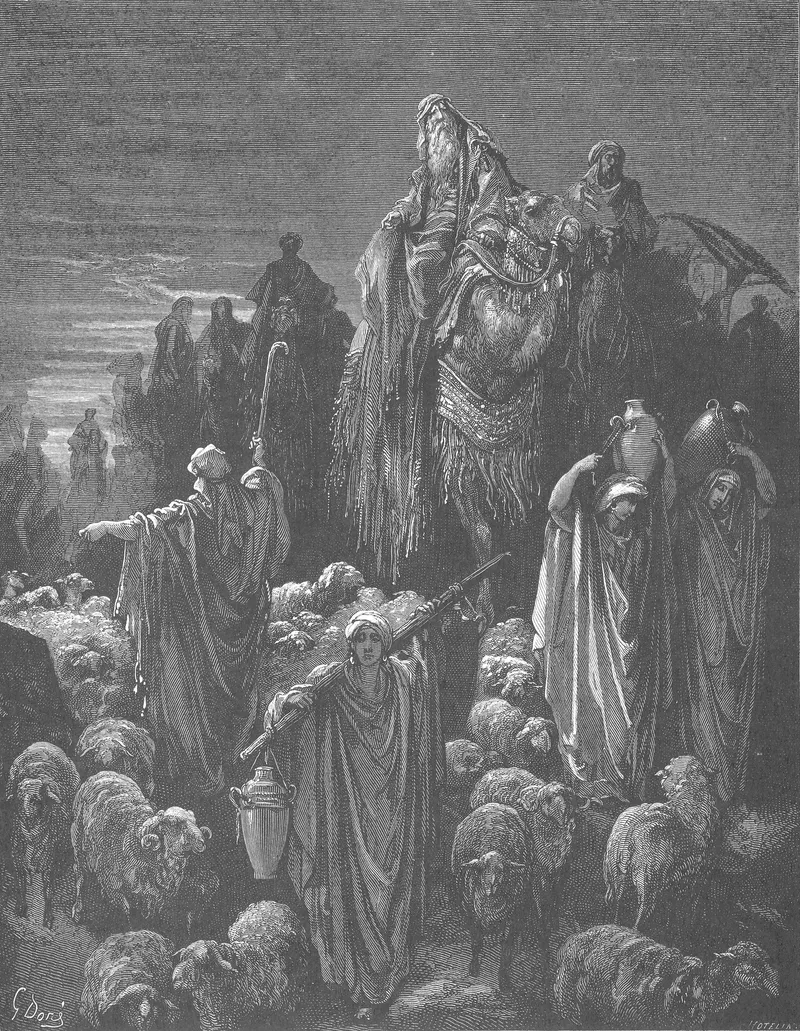
Genesis ended with Joseph settling his father and brothers in Egypt as honoured guests, the family of Jacob safe and flourishing in the land of Goshen. Exodus opens by naming the sons who came down - Now these are the names of the children of Israel, which came into Egypt (v. 1) - and then turns the page on a whole era: And Joseph died, and all his brethren, and all that generation (v. 6). What does not die is the promise God made to Abraham.
In the same breath the silence holds, the text records an explosion of life: the children of Israel were fruitful, and increased abundantly, and multiplied, and waxed exceeding mighty; and the land was filled with them (v. 7). The seventy souls who went down to Egypt have become a multitude.1
Tap any highlighted phrase to jump to the commentary that unpacks it.
Exodus 1:1-4These Are the Names
1Now these are the names of the children of Israel, which came into Egypt; every man and his household came with Jacob. 2Reuben, Simeon, Levi, and Judah, 3Issachar, Zebulun, and Benjamin, 4Dan, and Naphtali, Gad, and Asher.
The book opens by reaching back and joining hands with the one that came before it: Now these are the names of the children of Israel, which came into Egypt (v. 1). The very first word in the Hebrew is a conjunction - literally and these are the names - so that Exodus begins as the continuation of a story already in motion. The list of Jacob's sons that follows is almost word for word the list that opened the account of the descent into Egypt in Genesis.
By naming them again, the text quietly insists on continuity: these slaves who are about to be afflicted are the same covenant family God bound Himself to, the same twelve names that will become the twelve tribes. Egypt did not stumble upon a random people to oppress. It laid its hand on the household of Abraham, Isaac, and Jacob - the people of the promise. And the phrase every man and his household came with Jacob reminds us how small and how personal the beginning was: not a nation marching in, but a handful of families following their father down into a strange land to survive a famine.1
Exodus 1:5-7Fruitful and Multiplied
5And all the souls that came out of the loins of Jacob were seventy souls: for Joseph was in Egypt already. 6And Joseph died, and all his brethren, and all that generation. 7And the children of Israel were fruitful, and increased abundantly, and multiplied, and waxed exceeding mighty; and the land was filled with them.
The whole company is summed in a single round number: And all the souls that came out of the loins of Jacob were seventy souls: for Joseph was in Egypt already (v. 5). Seventy is a number of fullness and completeness in Scripture - the seventy nations of the earth, the seventy elders, the seventy sent out by Jesus - and here it gathers the whole infant nation into one small, countable family. Seventy souls: few enough to fit in a cluster of tents, to be fed at one man's table, to be known by name.
The note for Joseph was in Egypt already recalls the strange providence that put a son of Jacob on the steps of Pharaoh's throne before the famine ever drove the family south. The God who would later multiply this people beyond counting began with a number a person could hold in mind. It is worth marking the contrast the chapter is about to draw: seventy souls go down; a great and mighty multitude will be standing here within a few short verses.
The smallness of the beginning is the point against which the explosion of life will be measured.2
Between verse 6 and verse 7 the centuries turn on a single, sober sentence: And Joseph died, and all his brethren, and all that generation (v. 6). The whole world of Genesis - Joseph the ruler, the brothers who wronged him and were forgiven, the father reunited with his lost son - passes away in nine words. With Joseph dies the living memory of his service, the gratitude of the throne, the favour that had made Israel welcome.
The text does not linger; it simply lets the generation that knew the promises firsthand fall silent, and a new generation rise that knew them only as old family stories. This is how the world so often forgets: by the quiet passing of those who remembered, generation by generation. Yet the verse is doing more than marking time. It is setting the stage for the question the whole book will answer - when the people who knew Joseph are gone, and the favour is gone, and only a forgotten promise remains, is God still keeping covenant?
The next verse answers before the question is even asked.
Exodus 1:8-10A King Which Knew Not Joseph
8Now there arose up a new king over Egypt, which knew not Joseph. 9And he said unto his people, Behold, the people of the children of Israel are more and mightier than we: 10Come on, let us deal wisely with them; lest they multiply, and it come to pass, that, when there falleth out any war, they join also unto our enemies, and fight against us, and so get them up out of the land.
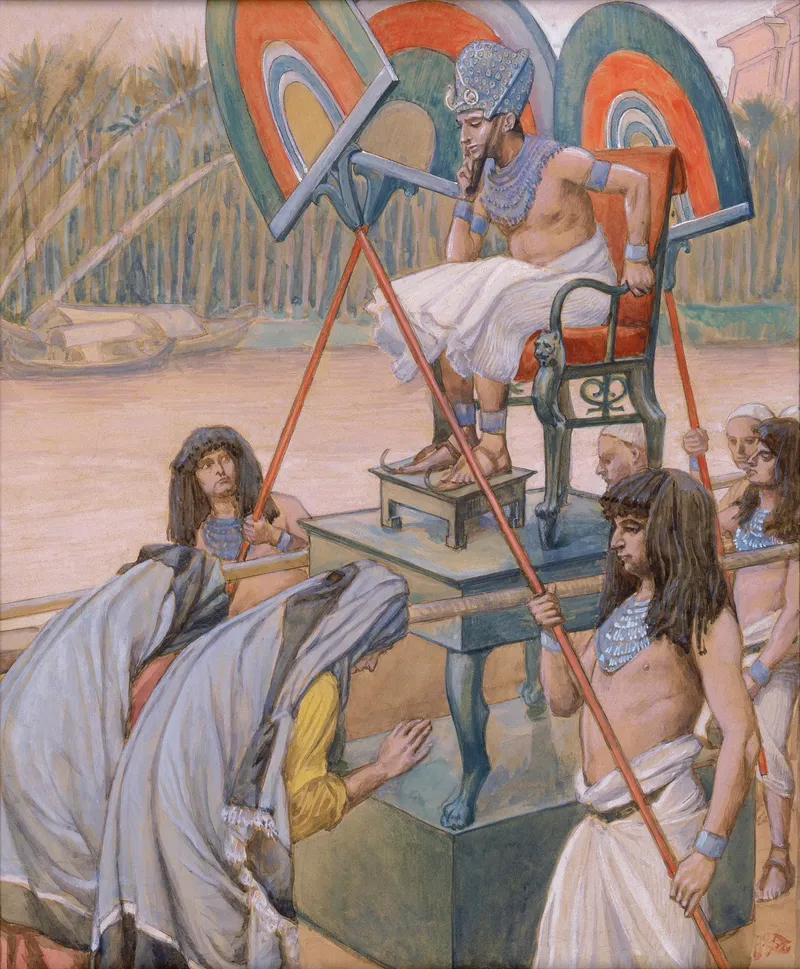
The turn of the whole book hangs on six words: Now there arose up a new king over Egypt, which knew not Joseph (v. 8). The Hebrew says he did not know Joseph - and in Scripture knowing carries the weight of relationship, acknowledgment, covenant memory. This king has no living tie to the man who once saved Egypt from famine, no gratitude for the wisdom that filled the storehouses, no sense of obligation to Joseph's people.
The man who in his own day was second only to Pharaoh has been wiped clean from the throne's memory. And the forgetting of one generation becomes the cruelty of the next. Where the old Pharaoh had said of Joseph, there is none so discreet and wise as thou art, this one looks at Joseph's descendants and sees only a problem. It is a quiet and terrible thing the verse records: how quickly a people's welcome can curdle into suspicion once the memory that secured it dies.
The ingratitude is not merely personal; it is the soil in which oppression grows. A ruler who acknowledges no debt to the past will feel free to do anything to those he no longer remembers why he should protect.
Hear how the new king frames the Hebrews to his people: Behold, the people of the children of Israel are more and mightier than we (v. 9). This is fear doing arithmetic. Pharaoh has looked at the growing Hebrew population and counted it as danger - more in number, mightier in strength than the Egyptians themselves. The very fruitfulness that the previous verses celebrated as the blessing of God, Pharaoh reads as a threat to be neutralized.
It is a revealing inversion: what God calls blessing, the fearful tyrant calls problem. And notice the irony buried in his own words. He says the Hebrews are mightier than we - an Egyptian king, master of the greatest empire of the age, confessing that he is outmatched by a band of foreign shepherds. His fear has magnified them beyond all proportion, as fear always does. The man with all the armies and all the storehouses trembles before a people whose only strength is the life God keeps multiplying in them.
Pharaoh sees the numbers; he cannot see the God behind the numbers. And so he sets out to fight the very thing that, by its nature, only grows the more it is fought.
Pharaoh's strategy comes cloaked in the language of prudence: Come on, let us deal wisely with them; lest they multiply (v. 10). The word he uses for his plan sounds like wisdom - careful, shrewd, statesmanlike - but it is fear dressed up as policy. There is a kind of cleverness that serves cruelty, a calculating shrewdness that figures out the most efficient way to do harm, and that is exactly what is on display here.
Pharaoh reasons through the worst case: if the Hebrews keep multiplying, then in some future war they might side with Egypt's enemies and get them up out of the land. So he resolves to manage the threat before it can materialize. There is something almost self-defeating in his logic that the chapter will expose: he fears the Hebrews will leave the land, and so he chains them to it with slavery - yet the whole story of Exodus is precisely God bringing them up out of the land. Pharaoh's “wise dealing” sets in motion the very deliverance he is trying to prevent.
This is what happens when human cunning sets itself against the purpose of God: the cleverer the scheme, the more surely it serves the end it meant to stop.
Exodus 1:11-14The More They Afflicted Them
11Therefore they did set over them taskmasters to afflict them with their burdens. And they built for Pharaoh treasure cities, Pithom and Raamses. 12But the more they afflicted them, the more they multiplied and grew. And they were grieved because of the children of Israel. 13And the Egyptians made the children of Israel to serve with rigour: 14And they made their lives bitter with hard bondage, in morter, and in brick, and in all manner of service in the field: all their service, wherein they made them serve, was with rigour.
The policy takes concrete, brutal shape: Therefore they did set over them taskmasters to afflict them with their burdens. And they built for Pharaoh treasure cities, Pithom and Raamses (v. 11). Oppression now has a structure - overseers, quotas, forced labour, monuments. The Hebrews are put to work building treasure cities, storehouses for the wealth and supplies of the empire, raised on the broken backs of slaves. There is a bitter symbolism in it: God's covenant people, the heirs of Abraham, reduced to constructing warehouses for a king's riches.
Pharaoh imagines that exhaustion will accomplish what he wants - that if the Hebrews are worked hard enough, their growth will slow, their spirit will break, their numbers will fall. He treats human beings as instruments of production, measuring them only by what they can build for him. But the text has already told us the one thing his whole machinery cannot touch. Fruitfulness, in this chapter, does not depend on conditions. It is the work of God, going on in the brickyards as surely as it went on in Goshen.
Even as the Hebrews raise monuments to Pharaoh's power, the real monument is rising invisibly all around him - the life he cannot squeeze out of them.
Exodus 1:15-22The Midwives Feared God
15And the king of Egypt spake to the Hebrew midwives, of which the name of the one was Shiphrah, and the name of the other Puah: 16And he said, When ye do the office of a midwife to the Hebrew women, and see them upon the stools; if it be a son, then ye shall kill him: but if it be a daughter, then she shall live. 17But the midwives feared God, and did not as the king of Egypt commanded them, but saved the men children alive. 18And the king of Egypt called for the midwives, and said unto them, Why have ye done this thing, and have saved the men children alive? 19And the midwives said unto Pharaoh, Because the Hebrew women are not as the Egyptian women; for they are lively, and are delivered ere the midwives come in unto them.
When slavery fails to check the Hebrews' growth, Pharaoh turns from bondage to murder - and the text marks the shift by suddenly naming names: And the king of Egypt spake to the Hebrew midwives, of which the name of the one was Shiphrah, and the name of the other Puah (v. 15). The detail is striking. Through the opening verses Pharaoh, the most powerful man on earth, is never named - he is only ever the king of Egypt - while two midwives, the lowliest of figures in the imperial order, are named and remembered.
Scripture has its own way of weighing greatness, and it is not the world's way. The king who commands armies fades into a title; the women who deliver babies are written into the book forever. There is a quiet sermon in that contrast all on its own. Pharaoh summons them because his plan now requires accomplices: the very women whose whole vocation is to bring life safely into the world are to be turned into agents of death.
He chooses them precisely because they are positioned at the moment of birth, the one place where a newborn is most vulnerable and a quiet killing might go unseen. The trap is laid. Two ordinary women are about to be asked to betray the very thing they exist to do.
Pharaoh's command is cold, clinical, and total: When ye do the office of a midwife to the Hebrew women, and see them upon the stools; if it be a son, then ye shall kill him: but if it be a daughter, then she shall live (v. 16). He gives no reason beyond the fear already voiced, no justification beyond the cold logic of control. The targeting of the sons is calculated - the daughters may live, for daughters can be absorbed, married off, assimilated; it is the sons who would carry the name, bear arms, perpetuate the people as a people.
Strike the sons, Pharaoh reasons, and Israel withers in a generation. There is something especially dark in the method: the killing is to happen at the very instant of birth, by the hands of those whose calling is to safeguard that instant, so that the threshold of life becomes the place of death. The midwives are positioned as the instruments of a quiet genocide. And so the choice falls on them with full weight, and there is no middle ground in it.
They can obey the king who holds their lives in his hand, or they can obey God. The whole machinery of the empire bears down on two women at a birthing stool - and the next verse records what they did.
Pharaoh hauls the midwives back to account for their defiance: Why have ye done this thing, and have saved the men children alive? (v. 18). This is the moment a lesser courage would crack - standing before the king himself, called to explain a disobedience that could cost them everything. But Shiphrah and Puah have already settled the deeper question; their answer to Pharaoh flows from a choice already made before God. The Hebrew women are not as the Egyptian women; for they are lively, and are delivered ere the midwives come in unto them (v. 19), they say - the Hebrew women are so vigorous that they give birth before the midwife can even arrive.
And there is a sharp irony in their reply that lands right on Pharaoh's deepest fear: the very fruitfulness he is desperate to stop, the robust, life-bringing strength of this people, is the thing they hold up to his face as their explanation. The thing he most dreads becomes their cover. The text does not pause to dissect their words or turn them into a lesson on speech; it simply lets the women's reverence for God stand as the thing it has already commended (v. 17) and moves on to record what God did in response.
What the narrator wants us to see is not a clever tongue but a holy fear that would not let them kill - and a God who honoured it.
20Therefore God dealt well with the midwives: and the people multiplied, and waxed very mighty. 21And it came to pass, because the midwives feared God, that he made them houses. 22And Pharaoh charged all his people, saying, Every son that is born ye shall cast into the river, and every daughter ye shall save alive.
The narrator states God's response plainly and ties it to one cause: Therefore God dealt well with the midwives: and the people multiplied, and waxed very mighty. And it came to pass, because the midwives feared God, that he made them houses (vv. 20-21). Twice in two verses the reason is given: because the midwives feared God. Their reverence is the hinge on which the blessing turns. And alongside their reward the great theme of the chapter sounds once more - the people multiplied, and waxed very mighty - as if to say that the midwives' faithfulness and the nation's flourishing are bound together: where God is feared, His purposes go forward.
Pharaoh has now tried two strategies, bondage and infanticide, and both have run aground on the same rock. The life he means to stop keeps growing, and the women he meant to use against it are blessed for refusing. Everything he touches to crush the Hebrews instead advances them. This is the quiet comedy underneath the chapter's darkness: the mightiest man in the world cannot win against the smallest acts of those who fear God more than they fear him.
The specific shape of the reward is worth pausing over: he made them houses (v. 21). Houses, in the Hebrew sense of households: families, descendants, a lasting line, a place and a future among the people. There is a fitting justice in it. The women who risked everything to protect the households of others, who would not let the sons of Israel be cut off, are given households of their own. They guarded the family lines of a whole nation; God secures theirs.
And the gift answers their exposure directly: they had put themselves in mortal danger by defying the king, and God responds not by promising they would never face danger again, but by rooting them deep - giving them the very thing Pharaoh was trying to deny Israel, namely a future that continues. The reward is quiet, like the courage that earned it. There is no public vindication, no downfall of Pharaoh in their lifetime that they get to witness.
But the God who sees in secret deals well with them in secret, and writes their names where the king's memory could not reach. What they did when it cost them is met by what God gives when no one is watching.
Research trail
Sources & further study
These references support the historical, linguistic, manuscript, and contextual notes in this chapter. Scripture remains the primary text; external sources are provided so readers can inspect the research directly.
- Exodus 1 · Hebrew + classical Jewish commentaryThe Hebrew text of Exodus 1 with Rashi, Ibn Ezra, and other classical commentators side by side - useful for the cluster of increase-verbs in verse 7 (parah, “be fruitful,” and rabah, “multiply”), for perek (vv. 13-14, the “rigour” of the bondage), and for the much-discussed phrase yare elohim (v. 17, “feared God”).
- Exodus 1 - Translators' NotesThe NET Bible's detailed footnotes on Exodus 1 - the seventy souls of verse 5, the piled-up verbs of increase in verse 7, the new king who “knew not Joseph” (v. 8), the meaning of the harsh service in verses 13-14, and the grammar of the midwives' fear of God in verses 17 and 21.
- Exodus 1 ↔ Genesis 1 & 15 · Matthew 2 · Acts 5 & 7Traces the threads tying Exodus 1 to the rest of Scripture - the multiplying people of verse 7 read against the creation-blessing to be fruitful, and multiply (Gen. 1:28) and the promise to Abraham (Gen. 15:13-14); Pharaoh's slaughter of the sons (v. 22) read beside Herod's slaughter of the infants (Matt. 2:16); the midwives' refusal (v. 17) read beside We ought to obey God rather than men (Acts 5:29).
Where this echoes in Scripture
Fruitful and Multiplied
- Genesis 1:28Be fruitful, and multiply, and replenish the earth.The creation blessing whose very verbs are echoed in verse 7 - the fruitfulness Pharaoh cannot reverse.
- Genesis 15:13-14thy seed shall be a stranger in a land that is not theirs, and shall serve them; and they shall afflict them four hundred years... afterward shall they come out with great substance.God foretold both the affliction beginning here and the deliverance to come - the bondage was no surprise to Him.
- Genesis 46:26-27All the souls that came with Jacob into Egypt... were threescore and six... all the souls of the house of Jacob, which came into Egypt, were threescore and ten.The same seventy souls of verse 5 - the small beginning the chapter measures the multitude against.
- John 12:24Except a corn of wheat fall into the ground and die, it abideth alone: but if it die, it bringeth forth much fruit.The deep pattern of verse 7 - the life of God multiplies precisely where it seems to be buried.
- Acts 7:17when the time of the promise drew nigh, which God had sworn to Abraham, the people grew and multiplied in Egypt.Stephen reads the multiplying of verse 7 exactly as the chapter does - the promise of God drawing near.
The More They Afflicted Them
- Acts 7:18-19Till another king arose, which knew not Joseph. The same dealt subtilly with our kindred, and evil entreated our fathers, so that they cast out their young children.Stephen retells verses 8-10 - the forgetful king whose “wise dealing” was the beginning of the affliction.
- Acts 12:24But the word of God grew and multiplied.The pattern of verse 12 in the early church - the more it was pressed, the more it spread.
- Psalm 105:24-25And he increased his people greatly; and made them stronger than their enemies. He turned their heart to hate his people.The psalmist's summary of these verses - God increasing His people even as Egypt's hatred rose.
- Leviticus 25:43Thou shalt not rule over him with rigour; but shalt fear thy God.The very word for Egypt's cruelty in verses 13-14 (perek) - later forbidden to the redeemed people.
- Exodus 3:7I have surely seen the affliction of my people which are in Egypt, and have heard their cry by reason of their taskmasters; for I know their sorrows.The bondage of verses 11-14 was not unseen - God names the very taskmasters and knows the sorrow.
The Midwives Feared God
- Acts 5:29We ought to obey God rather than men.The same conviction as verse 17 - the apostles refusing a ruler's command for the sake of God.
- Matthew 2:16Herod... slew all the children that were in Bethlehem... from two years old and under.Pharaoh's decree of verse 22 echoed - another frightened king slaughtering the sons to destroy a deliverer.
- 1 Corinthians 1:27God hath chosen the weak things of the world to confound the things which are mighty.The way of God in verses 17-21 - two lowly women confounding the mightiest king on earth.
- Proverbs 29:25The fear of man bringeth a snare: but whoso putteth his trust in the LORD shall be safe.The two fears of this chapter - Pharaoh ensnared by the fear of man, the midwives safe in the fear of God.
- Exodus 2:3-5she took for him an ark of bulrushes... and laid it in the flags by the river’s brink... the daughter of Pharaoh came down to wash herself at the river.The river of death in verse 22 becomes the cradle of the deliverer - God overturning the decree in the very next chapter.