Genesis 23
People in this chapter
Genesis 231 opens with an absence. And Sarah was an hundred and seven and twenty years old… and Sarah died. She is the only woman in the Bible whose age at death is recorded, and the verse lingers on it the way grief lingers: these were the years of the life of Sarah. She had waited a lifetime for the son of the promise; she laughed when she heard he was coming and laughed again when he was born; and now her long story is over, and Abraham must bury her.
Abraham came to mourn for Sarah, and to weep for her. The chapter does not rush him past it. Before there is any negotiation, any arrangement, any faith-lesson, there is a husband of more than sixty years standing over the body of his wife, and weeping.
Tap any highlighted phrase to jump to the commentary that unpacks it.
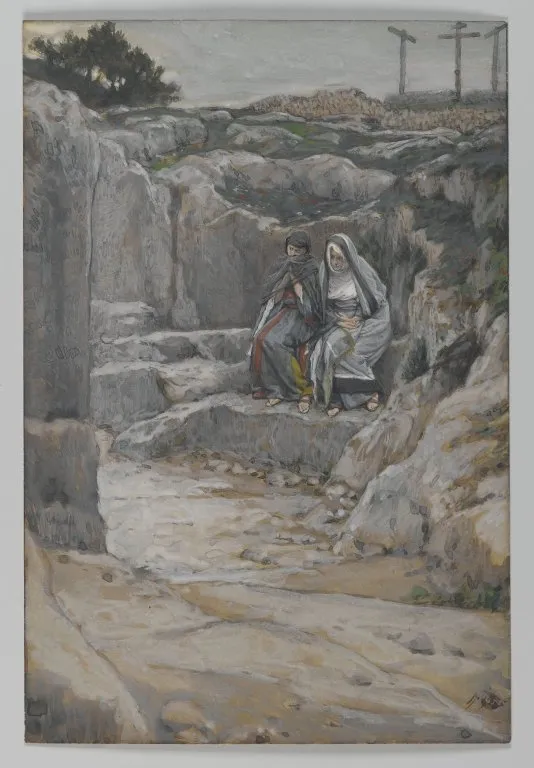
Genesis 23:1-2Sarah Dies; Abraham Mourns
1And Sarah was an hundred and seven and twenty years old: these were the years of the life of Sarah. 2And Sarah died in Kirjatharba; the same is Hebron in the land of Canaan: and Abraham came to mourn for Sarah, and to weep for her.
Sarah dies in Kirjath-arba - “the city of Arba” - which the text immediately glosses for its readers: the same is Hebron in the land of Canaan. The double-naming is doing quiet work. Hebron sits in the hill country of Judah, and it is no random place to die. It is near Mamre, where Abraham had built an altar and where the LORD had appeared to him (Gen. 13:18; 18:1); it will become the burial place of Abraham, Isaac, and Jacob, and of Sarah, Rebekah, and Leah; centuries later it will be the city where David is first anointed king over Judah.
The narrator's reminder that this is happening in the land of Canaan is not idle geography. It is the land of the promise - and Sarah dies inside it without owning a single foot of it. The chapter has set its irony in the very first sentence: the patriarch's wife dies in the promised land, and there is nowhere in it that is theirs to lay her.2
Before Abraham does anything else - before he negotiates, before he arranges, before he demonstrates any of the faith the chapter will be famous for - he grieves. Abraham came to mourn for Sarah, and to weep for her. Two verbs, and the text gives them their own moment. He mourns, the formal lament of the bereaved; and he weeps, the raw and private thing underneath the ritual. This is a man who has shared a lifetime with this woman - who left Ur with her, who failed her and was failed by her, who laughed with her over the impossible son they were finally given.
Notice what Scripture does not do here. It does not hurry Abraham toward composure, or imply that a man of faith should be past tears, or treat grief as a lapse in trust. It simply lets him weep. The deepest faith in this chapter does not skip over the sorrow; it walks straight through the middle of it. Grief and faith are not enemies. Abraham will spend the rest of the chapter acting on a promise that reaches beyond death - but first he sits in the loss of the wife he loved, and the Bible honors him for it.
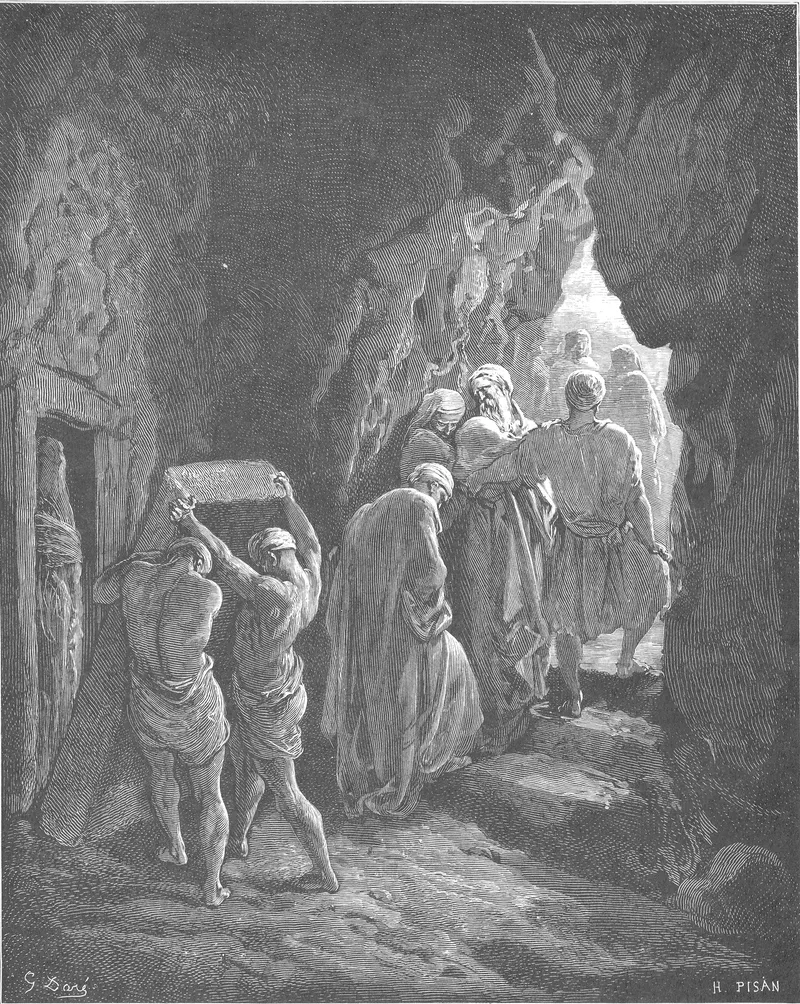
Genesis 23:3-16The Stranger Buys a Buryingplace
3And Abraham stood up from before his dead, and spake unto the sons of Heth, saying, 4I am a stranger and a sojourner with you: give me a possession of a buryingplace with you, that I may bury my dead out of my sight. 5And the children of Heth answered Abraham, saying unto him, 6Hear us, my lord: thou art a mighty prince among us: in the choice of our sepulchres bury thy dead; none of us shall withhold from thee his sepulchre, but that thou mayest bury thy dead. 7And Abraham stood up, and bowed himself to the people of the land, even to the children of Heth. 8And he communed with them, saying, If it be your mind that I should bury my dead out of my sight; hear me, and intreat for me to Ephron the son of Zohar, 9That he may give me the cave of Machpelah, which he hath, which is in the end of his field; for as much money as it is worth he shall give it me for a possession of a buryingplace amongst you.
Notice the precise thing Abraham asks for: a possession of a buryingplace - in Hebrew achuzzah, a holding, something firmly grasped and legally owned. It is the same word the Scriptures use for the land-inheritance God gives His people, and Abraham deliberately uses the language of ownership, the language of title and deed. This is the hinge of the whole chapter. A stranger could be lent a grave; Abraham wants to own one. Three times the chapter will repeat that he is securing a possession (vv. 4, 9, 20), and the repetition is the point: the man who confesses he owns nothing is, with great care, acquiring the one thing he will own.
And the irony deepens when you ask what he is buying. Of all the land God has promised him, the first and only parcel Abraham will ever legally hold is a tomb. He is buying a grave - and treating it as the first installment of an inheritance he believes God will one day pay in full.2
The Hittites answer Abraham with genuine, generous courtesy: thou art a mighty prince among us… in the choice of our sepulchres bury thy dead; none of us shall withhold from thee his sepulchre. They honor him; they offer him the pick of their finest tombs; they would, it seems, give him a resting place for Sarah at no cost. It is real kindness, and the chapter does not paint the children of Heth as villains.
But notice the mismatch beneath the warmth. They offer Abraham the use of a sepulchre - a place to lay his dead among their dead, as an honored guest. Abraham wants something they have not offered: a deed. To accept their generosity would be to remain exactly what he has called himself, a sojourner depending on the goodwill of others. And so, with answering courtesy - he stood up, and bowed himself to the people of the land - he gently declines the gift and presses toward a purchase.
His politeness is complete; his resolve is unbending. He will not bury Sarah on borrowed ground.
Abraham now names the exact piece of property he is after: the cave of Machpelah… which is in the end of Ephron's field. He asks the assembly to intreat for me to Ephron the son of Zohar - to act as witnesses and intermediaries in a formal transaction. This is how a binding land-sale was done in that world: publicly, at the city gate, before the assembled men of the town, who served as the living record of the deal.3 Abraham moves the matter into the most public, most legally weighty setting available, so that what he buys cannot later be disputed.
Every step he takes is the step of a man making a claim he means to hold - for himself, and for the descendants who will one day inherit far more than this single field.
The decisive phrase is small and easy to pass over: Abraham will take the cave only for as much money as it is worth. He insists on paying the full market price, in silver, in public. In the ancient Near East, gift and sale were two very different things: a gift left the giver with a claim of goodwill and the receiver under obligation, and could be revoked or disputed; a witnessed sale at full price transferred ownership cleanly and permanently.
Abraham insists on the second. He will not let the burial plot of the promise rest on anyone's charity, because charity can be withdrawn and a sojourner's favored status can change with the next generation. A grave he has bought is a grave that is his - and his children's - forever. The careful refusal of the free gift is faith being meticulous: staking a permanent, undeniable claim on the first piece of the land God has sworn to give.
10And Ephron dwelt among the children of Heth: and Ephron the Hittite answered Abraham in the audience of the children of Heth, even of all that went in at the gate of his city, saying, 11Nay, my lord, hear me: the field give I thee, and the cave that is therein, I give it thee; in the presence of the sons of my people give I it thee: bury thy dead. 12And Abraham bowed down himself before the people of the land. 13And he spake unto Ephron in the audience of the people of the land, saying, But if thou wilt give it, I pray thee, hear me: I will give thee money for the field; take it of me, and I will bury my dead there. 14And Ephron answered Abraham, saying unto him, 15My lord, hearken unto me: the land is worth four hundred shekels of silver; what is that betwixt me and thee? bury therefore thy dead. 16And Abraham hearkened unto Ephron; and Abraham weighed to Ephron the silver, which he had named in the audience of the sons of Heth, four hundred shekels of silver, current money with the merchant.
The chapter keeps insisting on where this happens: in the audience of the children of Heth, even of all that went in at the gate of his city. The city gate was the courthouse and the marketplace and the public square of the ancient town all at once - the place where elders sat, where contracts were sealed, where the whole community could see and remember. By transacting here, before all that went in at the gate, Abraham makes the purchase a matter of public record in the only way that world knew: living witnesses.
Generations later there would be no question, no rival claim, no quiet erasure of the foreigner's deed, because the entire town had watched the silver change hands. The repeated emphasis on the audience is the chapter showing us a man being deliberate, thorough, and unhurried in nailing down what God has begun to give.3
Ephron makes a grand public offer: the field give I thee, and the cave that is therein, I give it thee. Read in its setting, this is the expected opening move of the bargain - an effusive offer of a gift that both parties understand will resolve into a sale, with the “gift” language honoring the buyer while the real price waits just behind it. Abraham cuts straight through to the thing he came for: I will give thee money for the field; take it of me. He bows - the courtesy is sincere - but he will not be talked out of paying.
There is something quietly magnificent in his refusal to be given what he can buy. A lesser faith might have seized the free cave and called the windfall a providence. Abraham's faith is more patient and more exact: it wants the title clear, the price paid, the claim beyond dispute. He is securing not a convenience but an inheritance.
Ephron names his price with a show of indifference: the land is worth four hundred shekels of silver; what is that betwixt me and thee? - as if the sum were a trifle between friends. It was not a trifle. Four hundred shekels was a steep price for a field with a cave, and Abraham surely knew it. What he does next is the measure of the man: he does not haggle. He hearkened unto Ephron and paid the full amount, exactly as named.
He is willing to pay dearly for the smallest down-payment on the promised land - because to Abraham this transaction is an act of faith, and faith does not bargain God's promises down to a discount. He pays the price in full, weighs it out in public, and buries his wife in ground that is now, beyond all dispute, his own.
The narrator records the sum with almost legal precision: four hundred shekels of silver, current money with the merchant. “Current money with the merchant” means silver of the standard accepted weight, the going commercial rate that any trader anywhere would honor. The Bible is filing the receipt. And the carefulness of the record is itself a kind of sermon. The Holy Scriptures pause over the exact price, the public weighing, the named witnesses, because this small purchase carries enormous freight: it is the seed of the promise taking root in the actual soil of Canaan.
Everything God swore about the land - that it would belong to Abraham's offspring forever - now has a first, concrete, paid-for anchor in the ground. Faith here is silver weighed on a scale, a field surveyed to its borders, a deed witnessed at the gate. Abraham believes God's promise so concretely that he is willing to pay cash for its first installment.1
Genesis 23:17-20The Field Made Sure; Sarah Buried
17And the field of Ephron, which was in Machpelah, which was before Mamre, the field, and the cave which was therein, and all the trees that were in the field, that were in all the borders round about, were made sure 18Unto Abraham for a possession in the presence of the children of Heth, before all that went in at the gate of his city. 19And after this, Abraham buried Sarah his wife in the cave of the field of Machpelah before Mamre: the same is Hebron in the land of Canaan. 20And the field, and the cave that is therein, were made sure unto Abraham for a possession of a buryingplace by the sons of Heth.
Twice the chapter closes with the same legal verdict: the field and the cave were made sure unto Abraham for a possession (vv. 17-18, 20). The phrase has the ring of a sealed deed - the property is confirmed, established, transferred beyond dispute. And the inventory is exact: the field, the cave within it, and all the trees that were in the field, that were in all the borders round about. Every tree, every boundary, is named, because a thing fully bought is fully described.
The repetition is the narrator's way of pressing the point home one last time: this is real, this is permanent, this is theirs. A sojourner who owned nothing now holds a deed that all the men of the city have witnessed. It is a small holding - one field, one cave - but it is the first solid foothold of the promise in the land of Canaan, and the Scriptures want us to feel its weight.
The down-payment has been made. The first stake of the inheritance is driven into the ground, and it will never come out.1
Only now, the legal work finished and the ground secured, does Abraham do the thing he came to do: and after this, Abraham buried Sarah his wife in the cave of the field of Machpelah before Mamre. The verb to bury - qabar - has sounded through this chapter again and again; the whole long negotiation has been bent toward this single, tender act. And the place matters: before Mamre, near the very ground where the LORD had once appeared to Abraham and promised him a son (Gen. 18:1, 10).
He does not lay Sarah in a random field. He lays her in the soil of the promise, within sight of the place where God spoke. The chapter that opened with the bare fact of her death - and Sarah died - closes with the quiet dignity of her burial in ground her husband fought to make their own. The grief of the first verses and the faith of the rest meet here, at the mouth of a cave, as a husband lays his wife to rest in the land God swore to give.
Research trail
Sources & further study
These references support the historical, linguistic, manuscript, and contextual notes in this chapter. Scripture remains the primary text; external sources are provided so readers can inspect the research directly.
- Genesis 23 - Translators' NotesThe NET Bible's detailed footnotes on Genesis 23 - the courtesies and legal conventions of the bargaining with the Hittites, the meaning of weighing silver as “current money with the merchant” (v. 16), and why the careful record of the purchase matters as the patriarchs' first foothold in the land.
- Genesis 23 · Hebrew + classical Jewish commentaryThe Hebrew text of Genesis 23 with Rashi, Ibn Ezra, and other classical commentators side by side - useful for achuzzah (the secured “possession” of vv. 4, 9, 20), for qabar (“to bury,” the verb that tolls through the chapter), and for the phrase ger v'toshav, “a stranger and a sojourner” (v. 4).
- Anatolia and the Hittites · Heilbrunn Timeline of Art HistoryThe Met's survey of Hittite Anatolia and its neighbors - background for the “children of Heth” (vv. 3, 10) and the formal, witnessed land-transfer at the city gate, the kind of public legal transaction by which a resident-alien like Abraham could secure a permanent holding.
- Genesis 23 ↔ Hebrews 11 · 1 Corinthians 15Traces the threads tying Abraham's stranger and a sojourner (v. 4) to Hebrews 11's honor roll of those who confessed that they were strangers and pilgrims on the earth (Heb. 11:13), and the grave bought in hope at Machpelah to the resurrection of which Christ is the firstfruits (1 Cor. 15:20).
Where this echoes in Scripture
Sarah Dies; Abraham Mourns
- John 11:35Jesus wept.The Lord of resurrection weeping at a grave He is about to open - faith and grief in the same breath, as in Abraham.
- Genesis 13:18Then Abram removed his tent, and came and dwelt in the plain of Mamre, which is in Hebron, and built there an altar unto the LORD.Hebron and Mamre - where God had met Abraham years before - is the very ground where Sarah now dies.
- 1 Thessalonians 4:13That ye sorrow not, even as others which have no hope.Sorrow shaped by hope - the posture Abraham embodies at Sarah's grave.
The Stranger Buys a Buryingplace
- Hebrews 11:13These all died in faith, not having received the promises... and confessed that they were strangers and pilgrims on the earth.The New Testament reads Abraham's “stranger and sojourner” (v. 4) as the very shape of faith - hope set beyond this life.
- 1 Peter 2:11Dearly beloved, I beseech you as strangers and pilgrims, abstain from fleshly lusts.Believers still live as ger v'toshav - resident-aliens whose true citizenship is elsewhere.
- Acts 7:5And he gave him none inheritance in it, no, not so much as to set his foot on: yet he promised that he would give it to him for a possession.Stephen names the exact irony of Genesis 23 - Abraham owned no land, yet held the promise of all of it.
- Zechariah 11:12So they weighed for my price thirty pieces of silver.The same verb - silver weighed out as a price - that here buys a grave, and later shadows the price set on the Shepherd.
The Field Made Sure; Sarah Buried
- 1 Corinthians 15:20But now is Christ risen from the dead, and become the firstfruits of them that slept.The reason a grave can be bought in hope - the empty tomb guarantees the buried will be raised.
- John 11:25I am the resurrection, and the life: he that believeth in me, though he were dead, yet shall he live.Christ's word at another tomb - the hope already alive in Abraham's purchase at Machpelah.
- Genesis 49:29-32Bury me with my fathers in the cave that is in the field of Ephron the Hittite... There they buried Abraham and Sarah his wife.Machpelah becomes the family tomb - Jacob begs to be carried back to the ground of the promise.
- Hebrews 11:10For he looked for a city which hath foundations, whose builder and maker is God.The deeper inheritance Abraham's grave-purchase reaches toward - a city only God can give.