Genesis 8
Genesis 7 was all weight - the fountains of the deep broken up, the windows of heaven opened, the waters prevailing until all flesh died that moved upon the earth, and one ark floating on a shoreless sea. Genesis 8 opens with the single sentence the whole story has been moving toward: And God remembered Noah, and every living thing, and all the cattle that was with him in the ark (v. 1). It is the hinge of the flood, and it must be read with care, for it does not mean God had at any point forgotten. In Scripture, for God to remember is not to recall something that had slipped His mind; it is to turn toward His own and act on what He has promised. The judgment does not lift because the earth has become innocent. It lifts because God remembers His covenant. And the turning is gentle and unmistakable at once: and God made a wind to pass over the earth, and the waters asswaged (v. 1).3
What follows is the long, patient unmaking of the flood. The fountains and the windows are stopped, the rain is restrained, and the waters return from off the earth continually until, after a hundred and fifty days, the ark rested… upon the mountains of Ararat (v. 4). The mountaintops appear; the waters keep falling. Noah opens the window and begins to send out birds - first a raven, then a dove that finds no rest for the sole of her foot and returns to his hand; then, after seven days, a dove that comes back in the evening with an olive leaf pluckt off, the first green sign that the world is waking; then a dove that does not return at all. By the time the covering is removed, the face of the ground was dry (v. 13), and at last the earth dried (v. 14). The waters that had undone the world recede as patiently as they had risen.
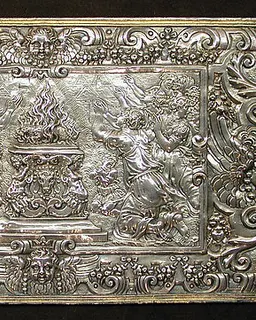
Then God speaks for the first time since He shut the door: Go forth of the ark (v. 16). Noah and his wife and his sons and their wives step out, and every living thing goes forth after them, to breed abundantly in the earth and fill it again. And the first thing Noah does on the washed earth is build an altar; he takes of every clean beast and clean fowl and offers them up. The LORD smelled a sweet savour (v. 21), and out of that moment comes one of the great promises of the Bible: He will not again curse the ground for man's sake, nor again smite every living thing as He has done. The reason He gives is startling - for the imagination of man's heart is evil from his youth - the very thing the flood had answered is now named as the reason for mercy. And the promise lands on the turning of the seasons themselves: While the earth remaineth, seedtime and harvest, and cold and heat, and summer and winter, and day and night shall not cease (v. 22).2
Tap any highlighted phrase to jump to the commentary that unpacks it.
Genesis 8:1-5And God Remembered Noah
1And God remembered Noah, and every living thing, and all the cattle that was with him in the ark: and God made a wind to pass over the earth, and the waters asswaged; 2The fountains also of the deep and the windows of heaven were stopped, and the rain from heaven was restrained; 3And the waters returned from off the earth continually: and after the end of the hundred and fifty days the waters were abated. 4And the ark rested in the seventh month, on the seventeenth day of the month, upon the mountains of Ararat. 5And the waters decreased continually until the tenth month: in the tenth month, on the first day of the month, were the tops of the mountains seen.
Everything in the flood narrative has been building toward the first words of this chapter, and they arrive with quiet force: And God remembered Noah, and every living thing, and all the cattle that was with him in the ark (v. 1). It is essential to hear what this does and does not mean. It does not mean that God had forgotten Noah and now, after a hundred and fifty days, suddenly recalled him. God does not lose track of His own. In the language of Scripture, for God to remember someone is not the recovery of a lost thought; it is the turning of His attention into action - the moment when His settled faithfulness moves to do what He has promised. To say God remembered Noah is to say that the time had come for Him to act on the covenant He had made, and that He did. And mark the breadth of it: He remembered not only Noah but every living thing, and all the cattle - the whole fragile cargo of breath inside the ark. Nothing aboard had fallen outside His care for a single day of the long flood. The judgment lifts not because the earth has become innocent - it has not - but because the God who shut the door has now turned, in faithfulness, to open the world again.3
The way God begins the turning is worth pausing over: and God made a wind to pass over the earth, and the waters asswaged (v. 1). To anyone who has read the opening page of Genesis, the picture is deliberate. In the beginning, when the earth was without form and void and darkness was upon the face of the deep, the Spirit of God moved upon the face of the waters; now, as the world is made habitable again, a wind - the same Hebrew word - passes over the waters once more, and they begin to fall. The flood had been creation run backward, the ordered world dissolving toward the deep; this is creation beginning again, the waters drawing back so dry land can reappear, just as it first did. Then the sources of the flood are sealed in reverse order from how they opened: the fountains also of the deep and the windows of heaven were stopped, and the rain from heaven was restrained (v. 2). The water that had come from above and below is shut off at both ends. And the falling is not sudden - the waters returned from off the earth continually (v. 3), steadily, over many days. Even the undoing of judgment keeps God's patient order. Mercy, here, is not a flash of relief but a slow and faithful work.
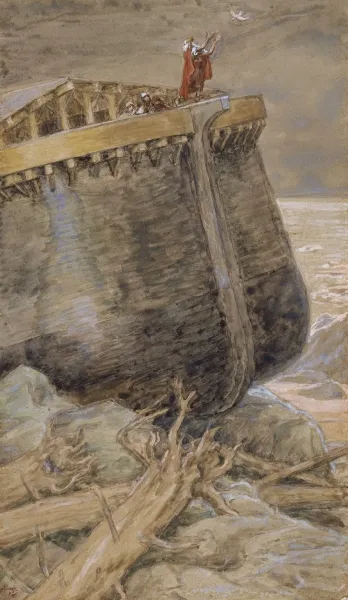
The first solid thing the chapter gives us is rest: And the ark rested in the seventh month, on the seventeenth day of the month, upon the mountains of Ararat (v. 4). After the long floating on a shoreless sea, the vessel touches ground - not driven there by Noah, who had no rudder or sail, but set down by the receding hand of God on the high ground of Ararat. The word rested is gentle and welcome after so much prevailing water; it is the first sign that the chaos has a floor again, that the world is settling back into a place where life can stand. But the resting of the ark is not yet the end of the waiting. The waters decreased continually until the tenth month, and only then were the tops of the mountains seen (v. 5). The dates are exact - the seventh month, the seventeenth day; the tenth month, the first day - because this is history kept on a calendar, not a vague tale. And the exactness teaches patience: even after the ark has come to rest, months pass before the mountaintops break the surface. Deliverance has begun, and it is real; but it unfolds slowly, and Noah must learn to trust the God who remembered him through the long interval between the first sign of rescue and its full arrival.
Genesis 8:6-14The Raven and the Dove
6And it came to pass at the end of forty days, that Noah opened the window of the ark which he had made: 7And he sent forth a raven, which went forth to and fro, until the waters were dried up from off the earth. 8Also he sent forth a dove from him, to see if the waters were abated from off the face of the ground; 9But the dove found no rest for the sole of her foot, and she returned unto him into the ark, for the waters were on the face of the whole earth: then he put forth his hand, and took her, and pulled her in unto him into the ark. 10And he stayed yet other seven days; and again he sent forth the dove out of the ark; 11And the dove came in to him in the evening; and, lo, in her mouth was an olive leaf pluckt off: so Noah knew that the waters were abated from off the earth. 12And he stayed yet other seven days; and sent forth the dove; which returned not again unto him any more. 13And it came to pass in the six hundredth and first year, in the first month, the first day of the month, the waters were dried up from off the earth: and Noah removed the covering of the ark, and looked, and, behold, the face of the ground was dry. 14And in the second month, on the seven and twentieth day of the month, was the earth dried.
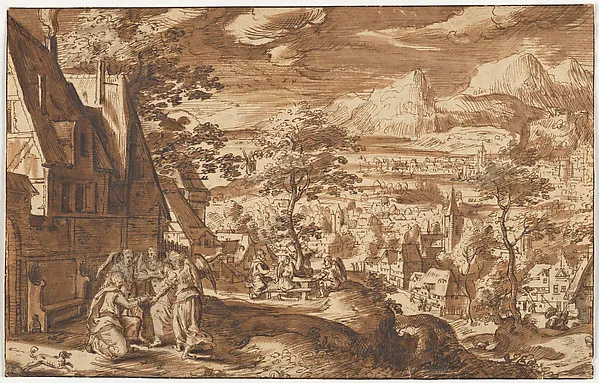
Now the chapter slows into one of its most memorable scenes - the patient sending of the birds. At the end of forty days… Noah opened the window of the ark (v. 6) and began to test the world. First he sent a raven, which went forth to and fro, until the waters were dried up (v. 7). A raven is a scavenger; it can feed on the carrion floating on the receding flood and find no need to come home, and so it gives Noah no clear answer. Then he sends a different bird: Also he sent forth a dove from him, to see if the waters were abated from off the face of the ground (v. 8). The contrast is quietly drawn. The raven could survive anywhere; the dove is a gentler creature, one that needs a clean place to settle, and so its behaviour will tell Noah something true. This is also the first dove in all of Scripture, and where the story takes it is worth watching, for the dove will return at the most important moments of the Bible - over the waters here, and again at the Jordan when the heavens open. Noah, for his part, does not throw open the door and rush out. He tests, he waits, he sends a small messenger ahead. Faith here is patient and watchful, willing to learn the right time rather than force it.
The dove's three journeys map the slow return of the world, and each one says more than the last. The first time, the dove found no rest for the sole of her foot, and she returned unto him into the ark (v. 9) - the waters still covered everything, there was nowhere to land, and Noah put forth his hand, and took her, and pulled her in, a small picture of tenderness in the middle of a vast desolation. He waited yet other seven days and sent her again, and the dove came in to him in the evening; and, lo, in her mouth was an olive leaf pluckt off (vv. 10-11). Not a whole branch - a single leaf, freshly plucked, the first green thing growing in the washed world. It is a small sign, and it is enough: so Noah knew that the waters were abated. Seven days more, and he sent her a third time, and she returned not again (v. 12) - she had found a home, and the world could hold life once more. Then the covering is removed and Noah sees with his own eyes what the dove had promised: the face of the ground was dry (v. 13), and at last the earth dried (v. 14). The pattern is gentle and unhurried - nothing at first, then a single leaf, then a settled home - the way God's restorations so often come.
Genesis 8:15-22Go Forth · The Sweet Savour
15And God spake unto Noah, saying, 16Go forth of the ark, thou, and thy wife, and thy sons, and thy sons' wives with thee. 17Bring forth with thee every living thing that is with thee, of all flesh, both of fowl, and of cattle, and of every creeping thing that creepeth upon the earth; that they may breed abundantly in the earth, and be fruitful, and multiply upon the earth. 18And Noah went forth, and his sons, and his wife, and his sons' wives with him: 19Every beast, every creeping thing, and every fowl, and whatsoever creepeth upon the earth, after their kinds, went forth out of the ark. 20And Noah builded an altar unto the LORD; and took of every clean beast, and of every clean fowl, and offered burnt offerings on the altar. 21And the LORD smelled a sweet savour; and the LORD said in his heart, I will not again curse the ground any more for man's sake; for the imagination of man's heart is evil from his youth; neither will I again smite any more every thing living, as I have done. 22While the earth remaineth, seedtime and harvest, and cold and heat, and summer and winter, and day and night shall not cease.
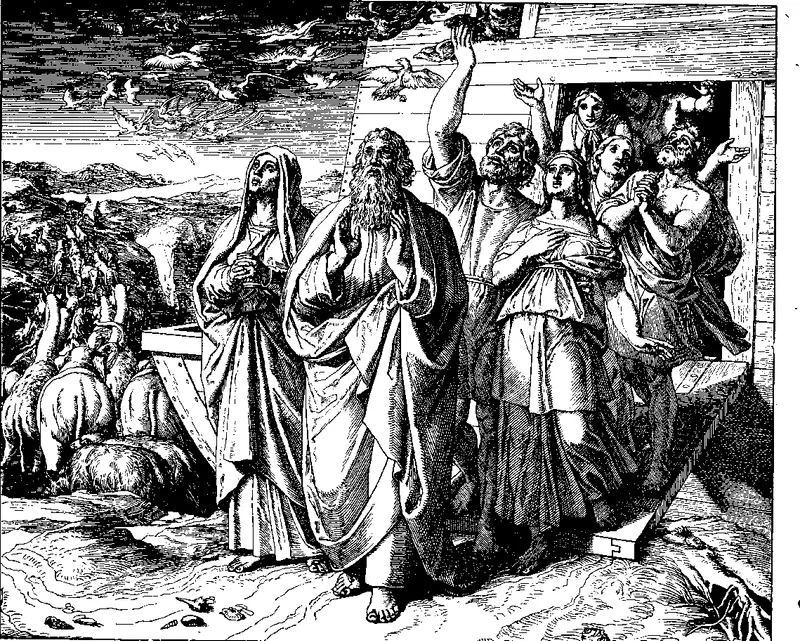
For the first time since He shut the door of the ark, God speaks - and His word is one of release: And God spake unto Noah, saying, Go forth of the ark, thou, and thy wife, and thy sons, and thy sons' wives with thee (vv. 15-16). Noah does not presume to leave on his own; he had waited for the word to enter, and he waits now for the word to come out. There is a quiet faithfulness in that restraint - the man who trusted God enough to go in trusts Him enough to wait for the call to come out. And the command is generous: bring forth every living thing… that they may breed abundantly in the earth, and be fruitful, and multiply upon the earth (v. 17). The very words spoken over creation in the beginning - be fruitful, multiply, fill the earth - are spoken again over this rescued remnant. What was sealed away for safety is now sent out to fill an empty world; the door that shut the danger out and the faithful in now opens onto a fresh and waiting earth. And Noah went forth… every beast, every creeping thing, and every fowl… after their kinds, went forth out of the ark (vv. 18-19). The creatures stream out in the ordered ranks of Genesis 1, the living world set loose to begin again. Confinement has done its work; now comes the going forth.
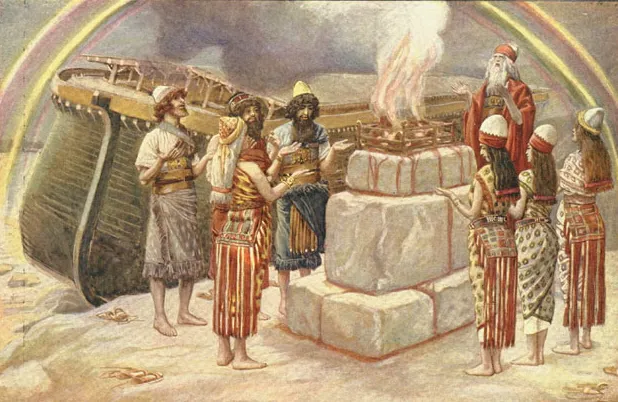
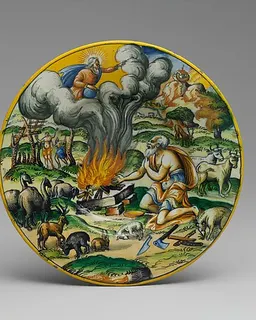
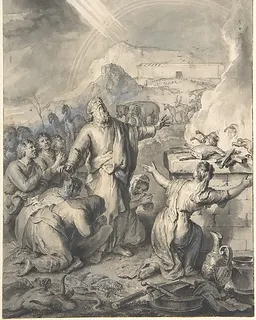
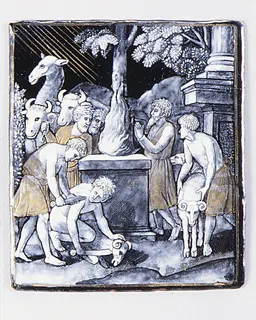
The first thing Noah does on the washed earth is the thing that tells us most about him: And Noah builded an altar unto the LORD; and took of every clean beast, and of every clean fowl, and offered burnt offerings on the altar (v. 20). Not a field, not a house, not a fence for the animals - an altar. The extra clean creatures, taken aboard by sevens, find their purpose here: some are given back to God in worship. The world has just been swept away, and Noah's answer is to give thanks. Then comes a turn that should stop the reader. The LORD smelled a sweet savour; and the LORD said in his heart, I will not again curse the ground any more for man's sake; for the imagination of man's heart is evil from his youth (v. 21). The reason God gives for His mercy is the very thing the flood had answered - that the human heart inclines toward evil from its earliest days. Before the flood, that evil moved God to judgment; now the same evil becomes the occasion of a promise of restraint. This does not pretend the evil is small or that humanity has reformed; the text states the hard truth plainly. But God resolves to deal with that fallen world no longer by sweeping it away, but by bearing with it in longsuffering - and, as the next chapter and the whole of Scripture will show, by working out a redemption rather than a destruction. The ground of His patience is not human goodness. It is the sweet savour rising from the altar and the heart of a God who has chosen mercy.
The promise lands on the most ordinary and dependable thing in the world - the turning of the seasons: While the earth remaineth, seedtime and harvest, and cold and heat, and summer and winter, and day and night shall not cease (v. 22). After a chapter consumed by the unmaking and remaking of the world, God pledges its steady rhythm. There will be no second flood unmaking the order of things; instead, the reliable cycle of planting and reaping, warmth and cold, light and dark, is set as a standing sign of His forbearance. Every farmer who has ever scattered seed in the spring and gathered grain in the autumn has leaned, knowingly or not, on this verse. The rising of the sun each morning, the return of summer after winter, the harvest that follows the sowing - these are not merely the machinery of nature; they are, the chapter says, the daily keeping of a promise God swore over an altar. There is deep comfort in this. The same God who once let the waters prevail now binds Himself to the constancy of the world for as long as it endures. The seasons are His covenant faithfulness made visible - a mercy so regular and so woven into daily life that it is easy to forget it was ever pledged at all. But it was. The dependable world is a promised world.
Further study
- The Hebrew text of Genesis 8 with Rashi, Ibn Ezra, and other classical commentators side by side - useful for zakar (v. 1, “remembered,” the covenant verb that turns to act), for ruach (v. 1, the “wind” God made to pass over the waters, the same word as “Spirit” in Gen. 1:2), and for reach hannichoach (v. 21, the “sweet savour” of the offering God smelled).
- Genesis 8 ↔ Luke 1 · Luke 23 · Matthew 3 · Ephesians 5Intertextual BibleTraces the threads tying Genesis 8 to the rest of Scripture - God remembering Noah (v. 1) read beside to remember his holy covenant (Luke 1:72) and Lord, remember me (Luke 23:42), the dove finding no rest and then resting (vv. 9-11) read beside the Spirit descending like a dove (Matt. 3:16), and the sweet savour that turned wrath to promise (v. 21) read beside Christ given for a sweetsmelling savour (Eph. 5:2).
- Genesis 8 - Translators' NotesNET BibleThe NET Bible's detailed footnotes on Genesis 8 - the force of “remembered” in verse 1, the calendar of the receding waters and the resting on Ararat (vv. 3-5), the sending of the raven and the dove (vv. 6-12), and the “sweet savour” and the divine oath of verses 21-22.
Where this echoes in Scripture
And God Remembered Noah
- Genesis 1:2And the earth was without form, and void... And the Spirit of God moved upon the face of the waters.The wind passing over the waters in verse 1 echoes the beginning - the world being made habitable again, creation starting over.
- Exodus 2:24And God heard their groaning, and God remembered his covenant with Abraham, with Isaac, and with Jacob.The same verb as verse 1 - God remembering not as recall but as the turning point where He moves to deliver His people.
- Luke 1:72To perform the mercy promised to our fathers, and to remember his holy covenant.God remembering Noah (v. 1) read in the same key as the coming of Christ - mercy that turns to act on a covenant.
- Luke 23:42-43Lord, remember me when thou comest into thy kingdom... To day shalt thou be with me in paradise.The plea of one at the edge of judgment - asking to be remembered as Noah was (v. 1), and answered with salvation.
The Raven and the Dove
- Matthew 3:16he saw the Spirit of God descending like a dove, and lighting upon him.The dove that found rest at last (v. 11) read beside the Spirit descending as a dove and resting on Christ.
- John 1:32I saw the Spirit descending from heaven like a dove, and it abode upon him.The dove that found no rest on the waters (v. 9) now resting and abiding - peace settling where there had been flood.
- Psalm 55:6Oh that I had wings like a dove! for then would I fly away, and be at rest.The dove’s longing for rest (v. 9) - the soul seeking a place to settle after the storm.
- Song of Solomon 2:11-12the winter is past, the rain is over and gone... the time of the singing of birds is come.The olive leaf of verse 11 - the first sign that the long flood is over and life is returning to the earth.
Go Forth · The Sweet Savour
- Ephesians 5:2Christ also hath loved us, and hath given himself for us an offering and a sacrifice to God for a sweetsmelling savour.The sweet savour of verse 21 named in person - the offering of Christ on the ground of which God deals in mercy.
- Genesis 9:11neither shall all flesh be cut off any more by the waters of a flood; neither shall there any more be a flood to destroy the earth.The oath of verse 21 made formal covenant in the next chapter - God binding Himself never again to flood the earth.
- Isaiah 54:9For this is as the waters of Noah unto me: for as I have sworn that the waters of Noah should no more go over the earth; so have I sworn that I would not be wroth with thee.God Himself pointing back to the promise of verses 21-22 - the flood-oath as the pattern of His sworn mercy.
- Romans 2:4the riches of his goodness and forbearance and longsuffering; not knowing that the goodness of God leadeth thee to repentance.The longsuffering of verse 21 - God bearing with a sinful world in patience, His goodness meant to lead to repentance.
- Acts 14:17he left not himself without witness, in that he did good, and gave us rain from heaven, and fruitful seasons.The covenant of the seasons in verse 22 - the dependable rhythm of seedtime and harvest as a standing witness to God’s faithfulness.