Proverbs 27
The collection of Solomon's proverbs continues, and chapter 27 begins by stripping away a confidence we wear without noticing: Boast not thyself of to morrow; for thou knowest not what a day may bring forth (v. 1). We speak of the future as though it were already in hand - our plans, our prospects, the version of tomorrow we assume into being. The proverb gently corrects the posture: no one holds tomorrow, and the boast about it is empty air. What follows is a call to hold plans loosely and live the day actually given.1
Tap any highlighted phrase to jump to the commentary that unpacks it.
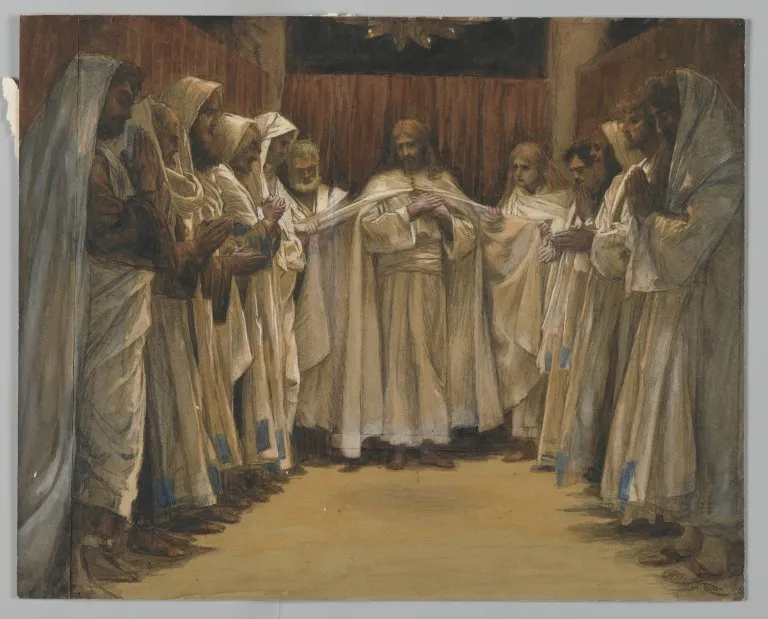
Proverbs 27:1-6Faithful Are the Wounds of a Friend
1Boast not thyself of to morrow; for thou knowest not what a day may bring forth. 2Let another man praise thee, and not thine own mouth; a stranger, and not thine own lips. 3A stone is heavy, and the sand weighty; but a fool’s wrath is heavier than them both. 4Wrath is cruel, and anger is outrageous; but who is able to stand before envy? 5Open rebuke is better than secret love. 6Faithful are the wounds of a friend; but the kisses of an enemy are deceitful.
The chapter opens by knocking away a confidence we carry without noticing: Boast not thyself of to morrow; for thou knowest not what a day may bring forth (v. 1). The proverb warns against the quiet arrogance of treating the future as a possession. We speak of next week and next year as though they were already ours to spend - what we will do, what we will become, how it will all turn out - when in truth not one of us holds the next day in his hand.
A single day can bring what no one foresaw, for good or ill. So the boast about tomorrow is empty air, a claim staked on ground we do not own. And notice how the warning sits beside the next verse: Let another man praise thee, and not thine own mouth (v. 2). Both verses target the same root - the inflated self that magnifies its own future and its own worth. The cure for both is humility: to hold plans loosely, to let praise come from another if it comes at all, and to live the one day actually given rather than the imagined day we have already spent in our minds.1
After weighing the crushing weight of a fool's wrath and the unanswerable force of envy (vv. 3-4), the chapter turns to its great theme with a line that cuts against instinct: Open rebuke is better than secret love (v. 5). We are inclined to think the kindest love is the quietest - that to care for someone is to keep our concerns to ourselves and never risk the relationship with a hard word. The proverb says the opposite.
A love that stays hidden, that watches a friend drift toward harm and says nothing, is a poorer thing than an honest rebuke spoken out loud. Silence may feel like tenderness, but it can be cowardice wearing tenderness's clothes - a refusal to spend ourselves on the friend's behalf. Open rebuke takes a risk; it exposes the love by acting on it. The verse does not commend harshness or fault-finding; the word that matters is love, of which the rebuke is the proof.
To care enough to say the difficult thing, plainly and to the person's face, is shown here to be the higher love - better than an affection so timid it never speaks.
Verse 6 states the principle in its sharpest, most memorable form: Faithful are the wounds of a friend; but the kisses of an enemy are deceitful. The contrast is deliberately jarring - wounds set against kisses, and the wounds called the trustworthy thing. A true friend will sometimes hurt us: the honest assessment we did not want, the correction that lands hard, the truth that stings precisely because it is true. The proverb names these faithful wounds - reliable, well-meant, the marks of someone who is genuinely for us.
They are inflicted not to harm but to heal, the way a physician's cut is meant to save. Against them stands the enemy's kiss: warm, affectionate, agreeable - and deceitful. The flatterer who never challenges us, who tells us only what we want to hear, may feel far pleasanter than the friend who wounds us; but the proverb warns that the pleasant feeling is exactly the danger. Flattery costs the flatterer nothing and gives us nothing true.
The test of a friend, then, is not how good they make us feel but whether they will risk our displeasure to tell us what is real. Faithful wounds outvalue deceitful kisses every time.
Proverbs 27:7-14A Neighbour That Is Near
7The full soul loatheth an honeycomb; but to the hungry soul every bitter thing is sweet. 8As a bird that wandereth from her nest, so is a man that wandereth from his place. 9Ointment and perfume rejoice the heart: so doth the sweetness of a man’s friend by hearty counsel. 10Thine own friend, and thy father’s friend, forsake not; neither go into thy brother’s house in the day of thy calamity: for better is a neighbour that is near than a brother far off.
These verses gather a cluster of homely observations into a meditation on appetite, belonging, and friendship. First, a truth about hunger: The full soul loatheth an honeycomb; but to the hungry soul every bitter thing is sweet (v. 7). The same honey that delights a hungry person turns the stomach of one already full - what we treasure depends entirely on our need, and abundance can dull us to the very sweetness scarcity would savor. Then a picture of the displaced: As a bird that wandereth from her nest, so is a man that wandereth from his place (v. 8) - the restless soul who abandons his proper station drifts like a bird far from the safety it was made for.
And at the center, a warm word about the gift of a friend: Ointment and perfume rejoice the heart: so doth the sweetness of a man's friend by hearty counsel (v. 9). In a world where fragrant oil was a real and rare pleasure, the proverb says a friend's hearty counsel - earnest, heartfelt advice from someone who knows and loves us - is a delight of the same order: it gladdens the heart the way a sweet scent gladdens the senses.
Good counsel from a true friend is not a burden to endure but a pleasure to receive, refreshing the one who hears it.
Verse 10 presses friendship's value to a surprising conclusion: Thine own friend, and thy father's friend, forsake not; neither go into thy brother's house in the day of thy calamity: for better is a neighbour that is near than a brother far off. Three counsels stand together here. First, do not abandon long friendship - not only your own friend but thy father's friend, the tested bond that has spanned a generation; such loyalty is a treasure not lightly thrown away.
Second, in the day of thy calamity, do not assume a distant relative is your first resort. And then the proverb's point: better is a neighbour that is near than a brother far off. This is not a slight against family; blood is honored everywhere in Proverbs. It is a sober observation about proximity in a crisis. A brother far away, however much he loves you, cannot reach you when the roof caves in; the neighbour at hand can be at your door in minutes.
Presence has a worth that affection at a distance cannot supply. The verse quietly commends the cultivating of nearby bonds - the steady, available friendships that are actually there when trouble comes - and warns against neglecting them in favor of ties that are warmer in name but absent in the hour of need.
11My son, be wise, and make my heart glad, that I may answer him that reproacheth me. 12A prudent man foreseeth the evil, and hideth himself; but the simple pass on, and are punished. 13Take his garment that is surety for a stranger, and take a pledge of him for a strange woman. 14He that blesseth his friend with a loud voice, rising early in the morning, it shall be counted a curse to him.
The teacher's voice breaks in personally: My son, be wise, and make my heart glad, that I may answer him that reproacheth me (v. 11). Here is a parent's tender stake in a child's wisdom - a son's good life is the father's vindication, the living answer to anyone who would mock his teaching. Then two practical sayings. A prudent man foreseeth the evil, and hideth himself; but the simple pass on, and are punished (v. 12) - foresight is the mark of prudence: the wise see trouble coming and take shelter, while the naive walk straight into harm they could have avoided.
And a warning, repeated from earlier in the book, about the danger of standing surety for a stranger's debt (v. 13). The section closes with a wry, almost humorous observation: He that blesseth his friend with a loud voice, rising early in the morning, it shall be counted a curse to him (v. 14). Praise can be overdone to the point of becoming an offense. The man who showers his friend with loud, early-morning flattery - effusive, public, badly timed - will find his “blessing” received as its opposite.
The proverb has a fine ear for the way excess curdles a good thing: even praise, when it is too loud, too eager, and too obviously angling for something, lands as a curse rather than a kindness. Sincerity, not volume, is what makes a blessing a blessing.
Proverbs 27:15-22Iron Sharpeneth Iron · Face Answereth to Face
15A continual dropping in a very rainy day and a contentious woman are alike. 16Whosoever hideth her hideth the wind, and the ointment of his right hand, which bewrayeth itself. 17Iron sharpeneth iron; so a man sharpeneth the countenance of his friend. 18Whoso keepeth the fig tree shall eat the fruit thereof: so he that waiteth on his master shall be honoured. 19As in water face answereth to face, so the heart of man to man.
After two verses on the wearing misery of constant strife - the contentious household likened to a roof that will not stop dripping in the rain (vv. 15-16) - the chapter arrives at its most quoted line: Iron sharpeneth iron; so a man sharpeneth the countenance of his friend (v. 17). The image is precise. To put an edge on a blade you need another piece of iron; the two are drawn hard against each other, and in the friction both are made keener.
No blade sharpens itself in isolation; it takes the resistance of something equally hard. So it is with people. A man sharpens the countenance - the face, and behind the face the whole bearing and character - of his friend. The sharpening is not always gentle. There is friction in it: honest disagreement, the push-back that tests an idea, the challenge that will not simply agree. But that very friction is what produces the edge. We are honed by the people close enough to grind against us, who sharpen our thinking by questioning it, our character by not flattering it, our resolve by holding us to it.
The proverb quietly tells us we cannot become our sharpest selves alone. We need the friend who is hard enough to push back - and we are meant to be that friend in turn.1
Two more sayings round out the movement, the second among the most searching in the book. First a word on faithful attention: Whoso keepeth the fig tree shall eat the fruit thereof: so he that waiteth on his master shall be honoured (v. 18) - patient, loyal service is not wasted; the one who tends the tree eats its fruit, and the one who faithfully serves is in time honored. Then the mirror verse: As in water face answereth to face, so the heart of man to man (v. 19).
The picture is of a person bending over still water and meeting their own reflection - face answering face. Just so, the proverb says, one human heart answers another. The line works in two directions at once, and Scripture leaves room for both. It means that we come to see ourselves through others, as if the people around us were water giving back our reflection - revealing in their response what we are really like. And it means that human hearts, for all their surface differences, answer to one another at the deep level: the longings, fears, hopes, and hungers in your heart correspond to those in mine, the way one face answers another.
To know your own heart is to gain a window into your neighbour's; to look honestly at another is to be shown something true about yourself. The verse is a quiet invitation to self-knowledge and to fellow-feeling at once.
20Hell and destruction are never full; so the eyes of man are never satisfied. 21As the fining pot for silver, and the furnace for gold; so is a man to his praise. 22Though thou shouldest bray a fool in a mortar among wheat with a pestle, yet will not his foolishness depart from him.
Three closing proverbs probe the appetites and the hardness of the human heart. Hell and destruction are never full; so the eyes of man are never satisfied (v. 20). The proverb names the realm of the dead and ruin - ever-receiving, never sated - and likens to it the restless craving of the human eye. There is a hunger in us that mere acquisition cannot fill: what we have only sharpens the appetite for more, and the eye that feeds on wanting is never finally full.
It is a sober diagnosis of the discontent that money and possessions can never cure. Then a telling image: As the fining pot for silver, and the furnace for gold; so is a man to his praise (v. 21). The refiner's crucible tests precious metal by fire, burning away the dross; just so, the proverb says, a person is tested by praise. How we handle being honored reveals what we are made of - whether applause makes us vain and unmoored or leaves us steady and humble.
Praise is a furnace that exposes the heart as surely as adversity does. And finally a blunt word on the limits of correction: Though thou shouldest bray a fool in a mortar among wheat with a pestle, yet will not his foolishness depart from him (v. 22). Some folly is so welded to a person that even being ground like grain under a pestle will not dislodge it. The proverb is not despairing but realistic: correction works only where there is willingness to receive it; against a heart determined to stay foolish, even the hardest pounding is wasted.
Proverbs 27:23-27Be Thou Diligent to Know the State of Thy Flocks
23Be thou diligent to know the state of thy flocks, and look well to thy herds. 24For riches are not for ever: and doth the crown endure to every generation? 25The hay appeareth, and the tender grass sheweth itself, and herbs of the mountains are gathered. 26The lambs are for thy clothing, and the goats are the price of the field. 27And thou shalt have goats’ milk enough for thy food, for the food of thy household, and for the maintenance for thy maidens.
The chapter ends, surprisingly, in a pasture, with a sustained call to patient and attentive care: Be thou diligent to know the state of thy flocks, and look well to thy herds (v. 23). After all the proverbs about friends and fools and the hungers of the heart, the closing word is about the unglamorous discipline of tending - of knowing, in detail and over time, the condition of what has been entrusted to you. The shepherd who would prosper must actually know his flock: which animals are strong, which are ailing, what the herd needs season by season.
And the reason given lifts the counsel above mere farming: For riches are not for ever: and doth the crown endure to every generation? (v. 24). Wealth is not a permanent possession; even a crown does not pass untouched down the generations. Money inherited or seized can vanish, but the flock faithfully tended renews itself - and so the proverb commends the steady labor that keeps producing over the windfall that merely arrives. The verses that follow trace the quiet rhythm of that provision: the hay appears, the grass shows itself, the mountain herbs are gathered (v. 25); the lambs clothe the household and the goats buy the field (v. 26); the goats' milk feeds the family and the servants (v. 27).
It is a picture of sufficiency flowing from diligence - a sustainable abundance that comes to those who attend faithfully, year upon year, to what is in their care.
Research trail
Sources & further study
These references support the historical, linguistic, manuscript, and contextual notes in this chapter. Scripture remains the primary text; external sources are provided so readers can inspect the research directly.
- Proverbs 27 - Translators' NotesThe NET Bible's detailed footnotes on Proverbs 27 - the warning against boasting of tomorrow (v. 1), the faithful wounds of a friend over an enemy's kisses (v. 6), the much-quoted image of iron sharpening iron (v. 17), and the closing call to know the state of one's flocks (vv. 23-27).
- Proverbs 27 · Hebrew + classical Jewish commentaryThe Hebrew text of Proverbs 27 with Rashi, Ibn Ezra, and other classical commentators side by side - useful for the verb chadad (v. 17, “sharpeneth,” to whet a blade to an edge) and for rea (the word for “friend” that runs through verses 6, 9, 10, 14, and 17).
- Proverbs 27 ↔ Luke 12 · James 4 · John 15 & 10Traces the chapter's threads into the rest of Scripture - the unknown tomorrow (v. 1) read beside the rich fool (Luke 12:20) and James' ye know not what shall be on the morrow (James 4:14), the faithful friend (v. 6) beside the One who calls His own friends (John 15:13-15), and the diligent shepherd (v. 23) beside the Good Shepherd who knows His sheep (John 10:14).
Where this echoes in Scripture
Faithful Are the Wounds of a Friend
- James 4:13-15ye know not what shall be on the morrow... ye ought to say, If the Lord will, we shall live, and do this, or that.The unknown tomorrow of verse 1 - James turns the same warning into a posture of holding plans under God.
- Luke 12:19-20Soul, thou hast much goods laid up for many years... But God said unto him, Thou fool, this night thy soul shall be required of thee.The boast about tomorrow (v. 1) lived out and judged - the man who counted on years he did not have.
- Psalm 141:5Let the righteous smite me; it shall be a kindness: and let him reprove me; it shall be an excellent oil.The faithful wounds of verses 5-6 received as a gift - rebuke welcomed as kindness.
- Luke 22:47-48Judas... drew near unto Jesus to kiss him. But Jesus said unto him, Judas, betrayest thou the Son of man with a kiss?The deceitful kiss of an enemy (v. 6) in its sharpest form - affection turned into betrayal.
- Galatians 4:16Am I therefore become your enemy, because I tell you the truth?The cost of open rebuke (v. 5) - the faithful friend risks being mistaken for an enemy by telling the truth.
A Neighbour That Is Near
- Proverbs 18:24A man that hath friends must shew himself friendly: and there is a friend that sticketh closer than a brother.The friend nearer than a far-off brother (v. 10) - a bond of presence that outdoes mere blood.
- Proverbs 17:17A friend loveth at all times, and a brother is born for adversity.The loyalty not to be forsaken (v. 10) - friendship measured by its constancy in trouble.
- Ecclesiastes 4:9-10Two are better than one... if they fall, the one will lift up his fellow: but woe to him that is alone when he falleth.Why a neighbour near at hand matters (v. 10) - the one close by can lift the one who falls.
- Luke 10:33-34But a certain Samaritan... had compassion on him, And went to him, and bound up his wounds.The neighbour who is truly near (v. 10) - nearness proven by showing up.
Iron Sharpeneth Iron · Face Answereth to Face
- Hebrews 10:24And let us consider one another to provoke unto love and to good works.Iron sharpening iron (v. 17) in the language of the New Testament - friends spurring each other to good.
- Ephesians 4:15-16speaking the truth in love, may grow up into him in all things... maketh increase of the body.The mutual sharpening of verse 17 - members growing one another up into Christ by truth in love.
- John 2:24-25he knew all men... for he knew what was in man.The heart laid open in verse 19 - the One who reads every heart without need of a mirror.
- Jeremiah 17:9-10The heart is deceitful above all things... I the LORD search the heart, I try the reins.The heart answering to heart (v. 19) - known fully only by the God who searches it.
- Ecclesiastes 5:10He that loveth silver shall not be satisfied with silver; nor he that loveth abundance with increase.The eye that is never satisfied (v. 20) - the hunger that more can never fill.
Be Thou Diligent to Know the State of Thy Flocks
- John 10:11-14I am the good shepherd: the good shepherd giveth his life for the sheep... and know my sheep, and am known of mine.The diligent knowing of the flock (v. 23) fulfilled - the Shepherd who knows His sheep and dies for them.
- John 21:15-17He saith unto him, Feed my sheep.The proverb's charge to look well to the flock (v. 23) handed forward to all who shepherd under Christ.
- Ezekiel 34:11-12I, even I, will both search my sheep, and seek them out... so will I seek out my sheep.God Himself as the shepherd who knows His flock's state (v. 23) - seeking out every scattered one.
- 1 Timothy 6:7For we brought nothing into this world, and it is certain we can carry nothing out.The truth behind verse 24 - riches do not last, so diligence belongs elsewhere.
- 1 Peter 5:2Feed the flock of God which is among you, taking the oversight thereof... of a ready mind.The shepherd's diligence of verse 23 carried into the care of God's people.