Who was Widow of Zarephath in the Bible?
The widow of Zarephath gave Elijah her last food during a famine, and the Lord kept her flour and oil from running out.
Host of Elijah
c. 860 BC
The widow of Zarephath gave Elijah her last food during a famine, and the Lord kept her flour and oil from running out.
Follow the reading trailBEYOND THE NAME
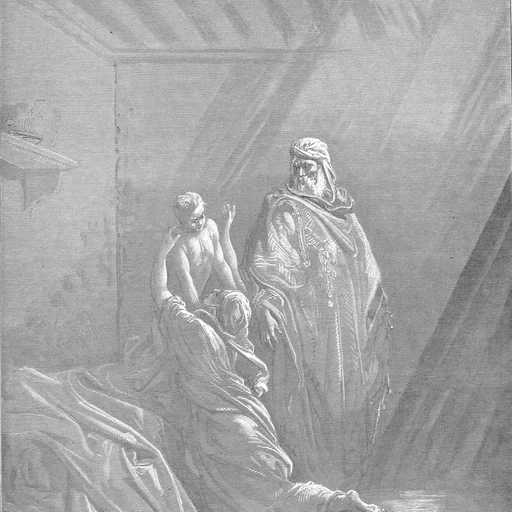
Living in Sidon during the drought, this poor widow was down to a final handful of flour when the prophet Elijah asked her to feed him first. Trusting his word, she shared what little she had, and her jar of flour and jug of oil did not fail throughout the famine. When her son later fell sick and stopped breathing, Elijah prayed and the Lord restored the boy's life, and she confessed that the word of the Lord in Elijah's mouth was truth.
Themes in the authored commentary
FOLLOW THE PASSAGES
These are chapter studies associated with this record. Their order follows the books and chapters, rather than a reconstructed timeline of the person’s life.
widow who sheltered Elijah during the drought and whose son he raised from death
A drought is declared, and the man who declares it has no army and no name anyone knows. Ahab has married a Sidonian princess and filled Israel with Baal, the storm-god who supposedly hands out rain. Into that court walks Elijah the Tishbite, and his first words shut the sky: there shall not be dew nor rain these years, but according to my word (v. 1). Then the LORD hides him. A brook feeds him. Ravens carry his bread. And the brook runs dry.
Chapter overview from the authored study guide.THE PEOPLE AROUND THE PERSON
Relationships follow the source graph. Some are interpretive or uncertain, and individual verse citations are not yet available for every connection.
STUDY & INTERPRETATION
The widow of Zarephath appears in 1 Kings 17, a Gentile woman in Jezebel's home region who becomes the unlikely refuge of God's prophet during the famine. Her story turns on raw trust: asked to give her last meal before she and her son die, she obeys, and the meager flour and oil are multiplied day by day, a quiet sign that the Lord provides where Baal could not. The raising of her son is one of the first resurrections in Scripture and points ahead to the God who has power over death itself. Centuries later Jesus singles her out, noting that in a time of famine Elijah was sent not to the many widows of Israel but to this woman of Sidon, a sign that God's mercy reaches beyond the borders of one nation. Her small act of faith opens a window onto the wideness of grace that the whole story of Scripture moves toward.
From the Learn of Christ person commentary. Read alongside the linked Scripture passages.KEEP SCRIPTURE CLOSE
1 authored chapter guide features this person. This is guide coverage, not an exhaustive count of biblical mentions.
ASK A BETTER QUESTION
Identity, story, early-life sources, family, and where to read.
The widow of Zarephath gave Elijah her last food during a famine, and the Lord kept her flour and oil from running out.
Living in Sidon during the drought, this poor widow was down to a final handful of flour when the prophet Elijah asked her to feed him first. Trusting his word, she shared what little she had, and her jar of flour and jug of oil did not fail throughout the famine. When her son later fell sick and stopped breathing, Elijah prayed and the Lord restored the boy's life, and she confessed that the word of the Lord in Elijah's mouth was truth.
Our authored studies connect Widow of Zarephath with 1 Kings. The linked chapters provide reading context, not proof that an unnamed or inferred identity is explicitly named there. A verified, identity-specific verse index is not yet available for this record, so these chapter tags should not be treated as an exhaustive list of mentions.
A separate childhood account for Widow of Zarephath is not provided in our current authored profile sources. Begin with 1 Kings 17 and the passages linked here for the evidence that is available. The first indexed reference to a name is not a birth record. This profile does not establish a birth date, schooling, or childhood events beyond what its sources state.
The current source graph does not list immediate family for Widow of Zarephath. That is a limit of this data, not evidence that Widow of Zarephath had no relatives. Read the cited passages for the details they actually give.
The widow of Zarephath appears in 1 Kings 17, a Gentile woman in Jezebel's home region who becomes the unlikely refuge of God's prophet during the famine. Her story turns on raw trust: asked to give her last meal before she and her son die, she obeys, and the meager flour and oil are multiplied day by day, a quiet sign that the Lord provides where Baal could not.
Answers draw on our existing authored biography and linked chapter studies. Where supplied, verse assignments come from the individualized STEP Bible index. Childhood answers distinguish documented events from gaps in the available sources.
YOUR OWN OBSERVATIONS
Notes, saved people, and study marks stay in this browser. They do not sync to your account.
KEEP EXPLORING
People featured in the same study guides. Sharing a chapter does not establish a family relationship.