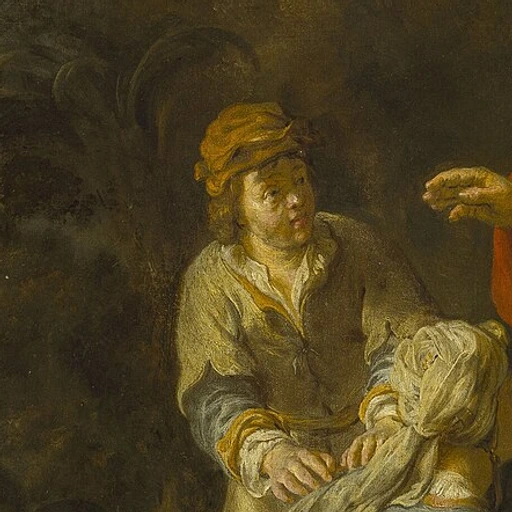
Who was Gehazi in the Bible?
Gehazi was Elisha’s servant who lied to take gifts from Naaman and was struck with leprosy as a result.
Servant of the Prophet Elisha
Divided Kingdom
Gehazi was Elisha’s servant who lied to take gifts from Naaman and was struck with leprosy as a result.
Follow the reading trailBEYOND THE NAME
Gehazi served as the attendant of the prophet Elisha, present through many of his master’s dealings, including the kindness shown to the Shunammite woman and her son. After Elisha refused payment from the healed Syrian commander Naaman, Gehazi ran after him, lied to obtain silver and garments, and hid them. Confronted by Elisha, who had perceived the deed in spirit, Gehazi was struck with the very leprosy that had left Naaman.
Themes in the authored commentary
FOLLOW THE PASSAGES
These are chapter studies associated with this record. Their order follows the books and chapters, rather than a reconstructed timeline of the person’s life.
Elisha's servant who assists in the raising of the Shunammite's son
The book of 2 Kings shows us Elisha stepping into Elijah’s mantle. Where Elijah was a prophet of judgment and fire, Elisha is a prophet of mercy and presence. He lives among the people, eating at their tables, sleeping in their chambers. And through these four miracles, we see God’s character written in action: a God who notices the widow in her need, who restores what is dead, who heals the poisoned pot, who feeds the hungry with abundance.
Chapter overview from the authored study guide.Elisha's servant who deceitfully takes gifts from Naaman and is struck with leprosy
Naaman has everything. He is captain of Syria’s army, great and honourable, a mighty man in valour. He also has leprosy, and no power he wields can touch it. The one who knows where help lives is the least powerful person in the house: a captured Israelite girl. She says there is a prophet in Samaria who could heal him. One sentence from a slave swings the whole story.
Chapter overview from the authored study guide.Elisha's servant present when the young man sees the army of chariots of fire
A borrowed axe-head sinks in the Jordan, and Elisha makes iron float. A Syrian army surrounds him at Dothan, and his terrified servant wakes to a hillside packed with horses and chariots of fire. They that be with us are more than they that be with them. The same prophet who recovers a workman’s lost tool can see the armies of heaven that no spy network will ever map.
Chapter overview from the authored study guide.recounts Elisha's mighty works to the king of Israel on the Shunammite's behalf
A widow comes home from seven years of famine to find her land taken, and goes to beg the king for it. She does not know that behind the palace door the king is asking Elisha’s old servant for the prophet’s great deeds - and that Gehazi has just reached the story of a dead boy raised to life. She walks in on that exact word. The boy is her son. The king restores it all.
Chapter overview from the authored study guide.THE PEOPLE AROUND THE PERSON
Relationships follow the source graph. Some are interpretive or uncertain, and individual verse citations are not yet available for every connection.
STUDY & INTERPRETATION
Gehazi’s account stands as a sober counterpoint to the grace shown to Naaman, for where a foreigner received healing freely, the prophet’s own servant grasped after gain and lost everything. His covetousness and deceit reveal how nearness to holy things does not guarantee a faithful heart. The judgment that fell on him underscores that the gifts of God are not for sale and cannot be seized by trickery. His story warns every reader who is close to sacred work that the danger of a divided heart is real, and that integrity, not mere proximity to God’s servants, is what the Lord requires.
From the Learn of Christ person commentary. Read alongside the linked Scripture passages.KEEP SCRIPTURE CLOSE
4 authored chapter guides feature this person. This is guide coverage, not an exhaustive count of biblical mentions.
ASK A BETTER QUESTION
Identity, story, early-life sources, family, and where to read.
Gehazi was Elisha’s servant who lied to take gifts from Naaman and was struck with leprosy as a result.
Gehazi served as the attendant of the prophet Elisha, present through many of his master’s dealings, including the kindness shown to the Shunammite woman and her son. After Elisha refused payment from the healed Syrian commander Naaman, Gehazi ran after him, lied to obtain silver and garments, and hid them. Confronted by Elisha, who had perceived the deed in spirit, Gehazi was struck with the very leprosy that had left Naaman.
The individualized passage index associates this Gehazi record with 2 Kings. There are 12 distinct indexed verse references in the 66-book Bible. Browse the book-by-book list below; it separates this identity from other people who share the name. Source assignments and textual identifications can require interpretation.
A separate childhood account for Gehazi is not provided in our current authored profile sources. Begin with 2 Kings 4:12 and the passages linked here for the evidence that is available. The first indexed reference to a name is not a birth record. This profile does not establish a birth date, schooling, or childhood events beyond what its sources state.
The current source graph does not list immediate family for Gehazi. That is a limit of this data, not evidence that Gehazi had no relatives. Read the cited passages for the details they actually give.
Gehazi’s account stands as a sober counterpoint to the grace shown to Naaman, for where a foreigner received healing freely, the prophet’s own servant grasped after gain and lost everything. His covetousness and deceit reveal how nearness to holy things does not guarantee a faithful heart.
Answers draw on our existing authored biography and linked chapter studies. Where supplied, verse assignments come from the individualized STEP Bible index. Childhood answers distinguish documented events from gaps in the available sources.
FIND THE PERSON IN THE TEXT
12 distinct verse references in the source’s 66-book index. These are indexed name assignments, rather than every indirect allusion to this person. A name may also refer to descendants, a tribe, or a nation; read each passage to distinguish that usage from the individual.
“And he said to Gehazi his servant, Call this Shunammite. And when he had called her, she stood before him.”
2 Kings 4:12 · King James Version
“Then he said to Gehazi, Gird up thy loins, and take my staff in thine hand, and go thy way: if thou meet any man, salute him not; and if any salute thee, answer him not again: and lay my staff upon the face of the child.”
2 Kings 4:29 · King James Version
“But Gehazi, the servant of Elisha the man of God, said, Behold, my master hath spared Naaman this Syrian, in not receiving at his hands that which he brought: but, as the LORD liveth, I will run after him, and take somewhat of him.”
2 Kings 5:20 · King James Version
“And it came to pass, as he was telling the king how he had restored a dead body to life, that, behold, the woman, whose son he had restored to life, cried to the king for her house and for her land. And Gehazi said, My lord, O king, this is the woman, and this is her son, whom Elisha restored to life.”
2 Kings 8:5 · King James Version
References are adapted from STEP Bible / Tyndale House TIPNR (CC BY 4.0). Deduplicated, matched to this identity, and checked against the bundled KJV’s verse bounds. Interpretive assignments and translation/versification differences may remain. This index is separate from evidence for individual family relationships.
YOUR OWN OBSERVATIONS
Notes, saved people, and study marks stay in this browser. They do not sync to your account.
KEEP EXPLORING
People featured in the same study guides. Sharing a chapter does not establish a family relationship.