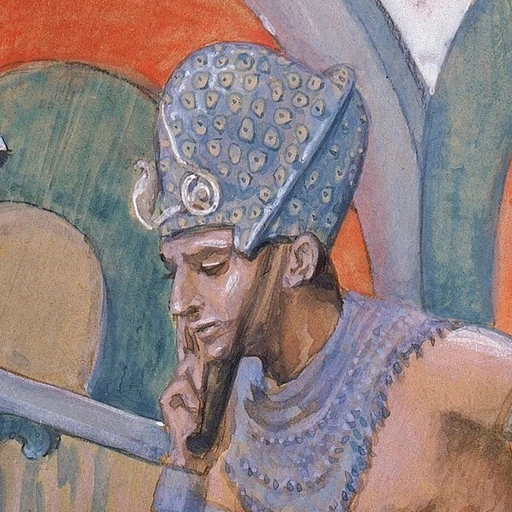
Who was Puah in the Bible?
Puah was a Hebrew midwife who, with Shiphrah, defied Pharaoh’s order and spared the baby boys.
Hebrew Midwife
c. 1500-1300 BC
Puah was a Hebrew midwife who, with Shiphrah, defied Pharaoh’s order and spared the baby boys.
Follow the reading trailBEYOND THE NAME
Puah was one of the two midwives ordered by Pharaoh to put to death every Hebrew son as he was born. Fearing God, she and Shiphrah refused to carry out the murderous command and let the children live. Confronted by the king, the midwives explained that the Hebrew women delivered before they could come, and God rewarded their faithfulness by giving them families of their own.
Themes in the authored commentary
These are other entries using this name. Compare their source passages before treating them as the same or different historical people.
These entries connect the study to the source’s recorded family context. Read their cautions when the family records or identifications differ.
FOLLOW THE PASSAGES
These are chapter studies associated with this record. Their order follows the books and chapters, rather than a reconstructed timeline of the person’s life.
Hebrew midwife who fears God and spares the infant boys alongside Shiphrah
Genesis ended with Joseph settling his father and brothers in Egypt as honoured guests, the family of Jacob safe and flourishing in the land of Goshen. Exodus opens by naming the sons who came down - Now these are the names of the children of Israel, which came into Egypt (v. 1) - and then turns the page on a whole era: And Joseph died, and all his brethren, and all that generation (v. 6). What does not die is the promise God made to Abraham.
Chapter overview from the authored study guide.THE PEOPLE AROUND THE PERSON
Relationships follow the source graph. Some are interpretive or uncertain, and individual verse citations are not yet available for every connection.
STUDY & INTERPRETATION
Puah appears beside Shiphrah at the start of Exodus 1, two named women set against an unnamed Pharaoh, and their reverence for God outweighs their fear of the throne. Their refusal to take innocent life is the first crack in Pharaoh’s campaign against Israel, and it keeps the door open for the deliverer yet to be born. Scripture’s care to record their names while leaving the king nameless quietly reverses the world’s order, lifting up the humble and faithful over the mighty. Their courage joins the witness of all who have chosen obedience to God over the commands of kings, foreshadowing the deeper deliverance God would work for His people.
From the Learn of Christ person commentary. Read alongside the linked Scripture passages.KEEP SCRIPTURE CLOSE
1 authored chapter guide features this person. This is guide coverage, not an exhaustive count of biblical mentions.
ASK A BETTER QUESTION
Identity, story, early-life sources, family, and where to read.
Puah was a Hebrew midwife who, with Shiphrah, defied Pharaoh’s order and spared the baby boys.
Puah was one of the two midwives ordered by Pharaoh to put to death every Hebrew son as he was born. Fearing God, she and Shiphrah refused to carry out the murderous command and let the children live. Confronted by the king, the midwives explained that the Hebrew women delivered before they could come, and God rewarded their faithfulness by giving them families of their own.
The individualized passage index associates this Puah record with Exodus. There is 1 distinct indexed verse reference in the 66-book Bible. Browse the book-by-book list below; it separates this identity from other people who share the name. Source assignments and textual identifications can require interpretation.
A separate childhood account for Puah is not provided in our current authored profile sources. Begin with Exodus 1:15 and the passages linked here for the evidence that is available. The first indexed reference to a name is not a birth record. This profile does not establish a birth date, schooling, or childhood events beyond what its sources state.
The current source graph does not list immediate family for Puah. That is a limit of this data, not evidence that Puah had no relatives. Read the cited passages for the details they actually give.
Puah appears beside Shiphrah at the start of Exodus 1, two named women set against an unnamed Pharaoh, and their reverence for God outweighs their fear of the throne. Their refusal to take innocent life is the first crack in Pharaoh’s campaign against Israel, and it keeps the door open for the deliverer yet to be born.
Answers draw on our existing authored biography and linked chapter studies. Where supplied, verse assignments come from the individualized STEP Bible index. Childhood answers distinguish documented events from gaps in the available sources.
FIND THE PERSON IN THE TEXT
1 distinct verse references in the source’s 66-book index. These are indexed name assignments, rather than every indirect allusion to this person. A name may also refer to descendants, a tribe, or a nation; read each passage to distinguish that usage from the individual.
“And the king of Egypt spake to the Hebrew midwives, of which the name of the one was Shiphrah, and the name of the other Puah:”
Exodus 1:15 · King James Version
References are adapted from STEP Bible / Tyndale House TIPNR (CC BY 4.0). Deduplicated, matched to this identity, and checked against the bundled KJV’s verse bounds. Interpretive assignments and translation/versification differences may remain. This index is separate from evidence for individual family relationships.
YOUR OWN OBSERVATIONS
Notes, saved people, and study marks stay in this browser. They do not sync to your account.
KEEP EXPLORING
People featured in the same study guides. Sharing a chapter does not establish a family relationship.