Who was Satan in the Bible?
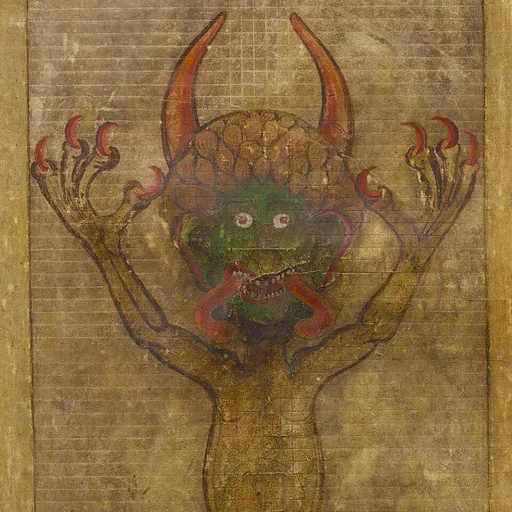
Satan is the adversary of God and His people, who tempts, accuses, and seeks to destroy.
The Adversary
Satan is the adversary of God and His people, who tempts, accuses, and seeks to destroy.
Follow the reading trailBEYOND THE NAME
Satan appears across Scripture as the adversary, the accuser who opposes God’s purposes and works against His people. He tests Job, tempts the faithful, and is described as a roaring lion prowling about, seeking someone to devour. Believers are called to resist him, standing firm in faith, knowing that his accusations and schemes do not have the final word.
Themes in the authored commentary
These are other entries using this name. Compare their source passages before treating them as the same or different historical people.
FOLLOW THE PASSAGES
These are chapter studies associated with this record. Their order follows the books and chapters, rather than a reconstructed timeline of the person’s life.
named as the one who hindered Paul from returning to Thessalonica
A riot had driven Paul out of Thessalonica before he could finish. Ever since, he had ached to know whether the young believers were surviving the pressure on them. Finally he could not stand the silence. He gave up his last companion, choosing to be left at Athens alone, and sent Timothy back to establish you, and to comfort you concerning your faith (vv. 1-2). His fear was raw and exact: lest by some means the tempter have tempted you, and our labour be in vain (v. 5).
Chapter overview from the authored study guide.the adversary prowling like a roaring lion seeking someone to devour
Peter closes his letter by speaking to the elders - the pastors and leaders of the church. Their calling is to shepherd the flock of God, but not through domineering control. They are under-shepherds. Christ is the Chief Shepherd. They feed, guide, protect, and serve because Christ commissioned them, not because they crave position or money.
Chapter overview from the authored study guide.the great red dragon who pursues the woman and her child and wages war in heaven and on earth
Revelation 12 brings the cosmic story full circle. In Genesis 3:15, God promised that the seed of the woman would crush the serpent’s head. Here, in apocalyptic vision, we see that promise carried out. A woman clothed with glory stands in heaven. A great red dragon waits to devour her child. The child is caught up to God’s throne. War breaks out in heaven. And Satan, that old serpent, is cast down to the earth, his time running short.
Chapter overview from the authored study guide.the dragon who gives authority to the beast from the sea
Revelation 13 is one of the most famous and most contested chapters in the Bible - the beast from the sea, the beast from the earth, and the number 666. For two thousand years, interpreters have tried to identify exactly who or what these beasts are. Nero. The papacy. A future world ruler. A political system. Spiritual forces. The text itself refuses to settle the question - John simply shows us the symbols.
Chapter overview from the authored study guide.the dragon whose mouth, along with the beast and false prophet, sends out demonic spirits at Armageddon
Revelation 16 opens with seven angels standing before the throne of God, each holding a vial filled with His wrath. One by one they pour them out upon the earth - and what follows is not random chaos but the mirror image of the plagues of Egypt, now poured out at cosmic scale. Sores break out on those who bore the mark of the beast. The sea becomes blood. Rivers turn red. The sun scorches. Darkness falls. The Euphrates dries up. And three unclean spirits - frogs - gather the kings of the earth for a final assembly at a place called Armageddon.
Chapter overview from the authored study guide.bound for a thousand years in the abyss, then released and finally cast into the lake of fire
The chapter opens with a descent and a seizure. I saw an angel come down from heaven, having the key of the bottomless pit and a great chain in his hand (v. 1) - the key to open and the chain to bind, both held in a single hand. And the angel laid hold on the dragon, that old serpent, which is the Devil, and Satan (v. 2), the enemy named four ways at once, the deceiver who has been at his work since the garden. He is bound a thousand years, cast into the bottomless pit, shut up, and sealed, that he should deceive the nations no more, till the thousand years should be fulfilled: and after that he must be loosed a little season (v. 3).
Chapter overview from the authored study guide.THE PEOPLE AROUND THE PERSON
Relationships follow the source graph. Some are interpretive or uncertain, and individual verse citations are not yet available for every connection.
STUDY & INTERPRETATION
Satan stands throughout Scripture as the great adversary, the accuser whose work runs counter to God from the garden onward, opposing, tempting, and seeking to devour. Peter warns the scattered church to be sober and watchful because this enemy prowls like a lion, yet the same letter grounds their hope in a God who restores, confirms, and strengthens those who suffer for a little while. The whole arc of Scripture moves toward the undoing of the adversary’s power, promised already in the word that the seed of the woman would crush the serpent’s head. In the suffering and triumph of Christ, that promise reaches its fulfillment, so that those who resist the adversary do so trusting in a victory already secured.
From the Learn of Christ person commentary. Read alongside the linked Scripture passages.KEEP SCRIPTURE CLOSE
6 authored chapter guides feature this person. This is guide coverage, not an exhaustive count of biblical mentions.
ASK A BETTER QUESTION
Identity, story, early-life sources, family, and where to read.
Satan is the adversary of God and His people, who tempts, accuses, and seeks to destroy.
Satan appears across Scripture as the adversary, the accuser who opposes God’s purposes and works against His people. He tests Job, tempts the faithful, and is described as a roaring lion prowling about, seeking someone to devour. Believers are called to resist him, standing firm in faith, knowing that his accusations and schemes do not have the final word.
Our authored studies connect Satan with 1 Thessalonians, 1 Peter, Revelation. The linked chapters provide reading context, not proof that an unnamed or inferred identity is explicitly named there. A verified, identity-specific verse index is not yet available for this record, so these chapter tags should not be treated as an exhaustive list of mentions.
The linked source context describes Satan within its biblical setting. Read their recorded role in context, and distinguish the narrative’s direct statements from theological interpretation or later traditions.
The current source graph does not list immediate family for Satan. That is a limit of this data, not evidence that Satan had no relatives. Read the cited passages for the details they actually give.
Satan stands throughout Scripture as the great adversary, the accuser whose work runs counter to God from the garden onward, opposing, tempting, and seeking to devour. Peter warns the scattered church to be sober and watchful because this enemy prowls like a lion, yet the same letter grounds their hope in a God who restores, confirms, and strengthens those who suffer for a little while.
Answers draw on our existing authored biography and linked chapter studies. Where supplied, verse assignments come from the individualized STEP Bible index. Childhood answers distinguish documented events from gaps in the available sources.
YOUR OWN OBSERVATIONS
Notes, saved people, and study marks stay in this browser. They do not sync to your account.
KEEP EXPLORING
People featured in the same study guides. Sharing a chapter does not establish a family relationship.