Who was Sennacherib in the Bible?
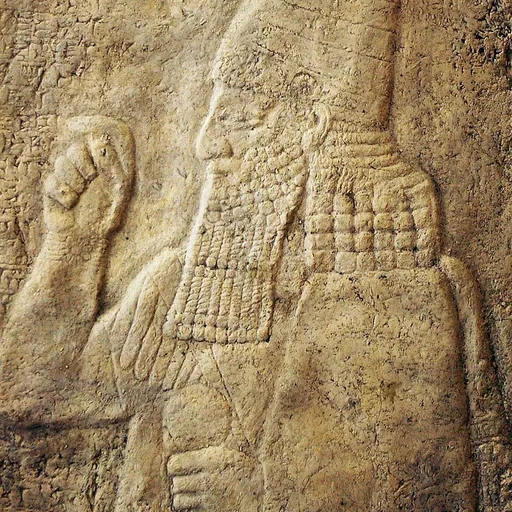
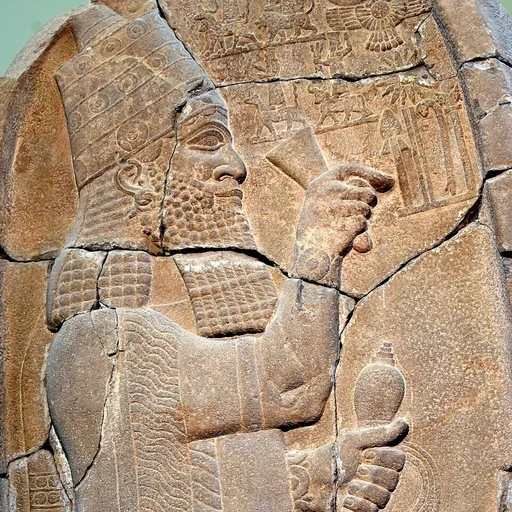
Sennacherib was the king of Assyria who invaded Judah and besieged Jerusalem in the days of King Hezekiah.
King of Assyria
Neo-Assyrian Empire
Sennacherib was the king of Assyria who invaded Judah and besieged Jerusalem in the days of King Hezekiah.
Follow the reading trailBEYOND THE NAME
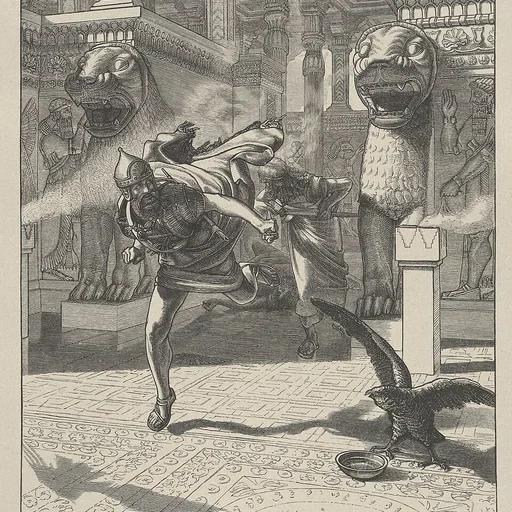
Sennacherib king of Assyria came up against the fortified cities of Judah and sent his officials to demand Jerusalem’s surrender, mocking Hezekiah’s trust in the Lord. Hezekiah spread the threatening letter before the Lord and prayed, and Isaiah brought God’s answer that Sennacherib would not enter the city or shoot an arrow there. The angel of the Lord struck the Assyrian camp, Sennacherib withdrew to Nineveh, and there he was killed by two of his own sons while worshiping in the temple of his god.
Themes in the authored commentary
FOLLOW THE PASSAGES
These are chapter studies associated with this record. Their order follows the books and chapters, rather than a reconstructed timeline of the person’s life.
Assyrian king who invades Judah, captures its cities, and demands Jerusalem's surrender
Hezekiah takes the throne at twenty-five and starts breaking things. The high places. The carved images. The Asherah poles. Then he reaches for the bronze serpent - the one Moses lifted in the wilderness, the one God once used to heal - and smashes it too, because Judah has started burning incense to it. He calls it Nehushtan. That brass thing. Here is a king who will shatter even a sacred relic the moment it creeps in between the people and God.
Chapter overview from the authored study guide.Assyrian king whose army is struck down by an angel and who is killed by his own sons
The Assyrian army has already swallowed the northern kingdom. Its cities are rubble; its people, scattered. Now Sennacherib’s forces ring Jerusalem, and his envoy stands at the wall mocking not just the king but his God. “Let not thy God in whom thou trustest deceive thee.” Every other nation trusted its gods. Every other nation fell. Why would Jerusalem be the exception?
Chapter overview from the authored study guide.Assyrian king who invades Judah, mocks God through letters and envoys, and is then slain in his own land
Sennacherib, the great king of Assyria, moves his armies toward Judah with the intention of conquest. He has already swallowed ten tribes of Israel. Now he comes for Judah and Jerusalem. But Hezekiah has spent his reign breaking down the high places, centralizing worship, repairing the temple, and seeking the Lord. When the crisis comes, he is ready because he has already made the choice to trust.
Chapter overview from the authored study guide.Assyrian king who sends his commander to demand Jerusalem's surrender
For thirty-five chapters Isaiah has spoken in oracles - visions of judgment and comfort, of Babylon and Egypt, of the highway in the wilderness and the desert in bloom. Now the book drops into plain narrative, and the threat that has loomed over the whole first half arrives in person. In the fourteenth year of king Hezekiah… Sennacherib king of Assyria came up against all the defenced cities of Judah, and took them (v. 1). The most powerful empire on earth has crushed Judah’s defenses one by one, and only Jerusalem is left.
Chapter overview from the authored study guide.Assyrian king whose blasphemous letter to Hezekiah provokes the king's prayer and whose army is destroyed by night
The blasphemy has been spoken. In the chapter before, the field-commander of Assyria stood at the wall of Jerusalem and shouted that no god of any nation had ever saved a city from his master’s hand - so why should the LORD save this one? Isaiah 37 is the answer. It opens with king Hezekiah hearing the taunt and tearing his clothes; but notice where he takes the grief. He went into the house of the LORD (v. 1), and he sent his officials, and the elders of the priests, to Isaiah the prophet with a single request: lift up thy prayer for the remnant that is left (v. 4). The man under siege does not turn first to his generals.
Chapter overview from the authored study guide.Assyrian king under whom Tobit buried the dead and from whom he had to flee for his life
What does faithfulness look like when everything that once held it up is gone? The book of Tobit begins by answering that question with a life. Its hero belongs to the tribe of Nephtali, carried off into Assyrian captivity, far from the land, the temple, and the worship of his fathers. Around him the northern tribes have already drifted into idolatry and compromise. And in that setting the story introduces a man who simply will not bend. He worships the God of Israel when no one is watching, keeps the law when keeping it is inconvenient, and gives away what he has to people poorer than himself.
Chapter overview from the authored study guide.THE PEOPLE AROUND THE PERSON
Recorded children
Relationships follow the source graph. Some are interpretive or uncertain, and individual verse citations are not yet available for every connection.
STUDY & INTERPRETATION
Sennacherib stands in Scripture as the embodiment of imperial pride, a king who counted the God of Israel as one more local deity unable to save. His envoy’s taunts deliberately set the living God on the level of the idols of conquered nations, and the chapters that follow answer that blasphemy directly. Hezekiah’s response, spreading the letter before the Lord and pleading that all the kingdoms of the earth may know that the Lord alone is God, frames the crisis as a contest over who truly reigns. The deliverance of Jerusalem without a battle, and Sennacherib’s death at the altar of a powerless idol, declare that the boasting of empires cannot overturn the purposes of the One who saves His people.
From the Learn of Christ person commentary. Read alongside the linked Scripture passages.KEEP SCRIPTURE CLOSE
6 authored chapter guides feature this person. This is guide coverage, not an exhaustive count of biblical mentions.
ASK A BETTER QUESTION
Identity, story, early-life sources, family, and where to read.
Names and spellings in the source: Sennacherib · Sargon
Sennacherib was the king of Assyria who invaded Judah and besieged Jerusalem in the days of King Hezekiah.
Sennacherib king of Assyria came up against the fortified cities of Judah and sent his officials to demand Jerusalem’s surrender, mocking Hezekiah’s trust in the Lord. Hezekiah spread the threatening letter before the Lord and prayed, and Isaiah brought God’s answer that Sennacherib would not enter the city or shoot an arrow there. The angel of the Lord struck the Assyrian camp, Sennacherib withdrew to Nineveh, and there he was killed by two of his own sons while worshiping in the temple of his god.
The individualized passage index associates this Sennacherib record with 2 Kings, 2 Chronicles, Isaiah. There are 14 distinct indexed verse references in the 66-book Bible. Browse the book-by-book list below; it separates this identity from other people who share the name. Source assignments and textual identifications can require interpretation.
A separate childhood account for Sennacherib is not provided in our current authored profile sources. Begin with 2 Kings 18:13 and the passages linked here for the evidence that is available. The first indexed reference to a name is not a birth record. This profile does not establish a birth date, schooling, or childhood events beyond what its sources state.
Sennacherib’s source record lists Adrammelech (child), Sharezer (child), Esarhaddon (child). These are source-graph relationships; legal family, uncertain identifications, and ancestral language require the cautions below. Individual verse evidence is not yet retained for every family edge.
Sennacherib stands in Scripture as the embodiment of imperial pride, a king who counted the God of Israel as one more local deity unable to save. His envoy’s taunts deliberately set the living God on the level of the idols of conquered nations, and the chapters that follow answer that blasphemy directly.
Answers draw on our existing authored biography and linked chapter studies. Where supplied, verse assignments come from the individualized STEP Bible index. Childhood answers distinguish documented events from gaps in the available sources.
FIND THE PERSON IN THE TEXT
14 distinct verse references in the source’s 66-book index. These are indexed name assignments, rather than every indirect allusion to this person. A name may also refer to descendants, a tribe, or a nation; read each passage to distinguish that usage from the individual.
“Now in the fourteenth year of king Hezekiah did Sennacherib king of Assyria come up against all the fenced cities of Judah, and took them.”
2 Kings 18:13 · King James Version
“After these things, and the establishment thereof, Sennacherib king of Assyria came, and entered into Judah, and encamped against the fenced cities, and thought to win them for himself.”
2 Chronicles 32:1 · King James Version
“In the year that Tartan came unto Ashdod, (when Sargon the king of Assyria sent him,) and fought against Ashdod, and took it;”
Isaiah 20:1 · King James Version
“So Sennacherib king of Assyria departed, and went and returned, and dwelt at Nineveh.”
Isaiah 37:37 · King James Version
References are adapted from STEP Bible / Tyndale House TIPNR (CC BY 4.0). Deduplicated, matched to this identity, and checked against the bundled KJV’s verse bounds. Interpretive assignments and translation/versification differences may remain. This index is separate from evidence for individual family relationships.
YOUR OWN OBSERVATIONS
Notes, saved people, and study marks stay in this browser. They do not sync to your account.
KEEP EXPLORING
People featured in the same study guides. Sharing a chapter does not establish a family relationship.