Tobit 1
People in this chapter
What does faithfulness look like when everything that once held it up is gone? The book of Tobit begins by answering that question with a life. Its hero belongs to the tribe of Nephtali, carried off into Assyrian captivity, far from the land, the temple, and the worship of his fathers. Around him the northern tribes have already drifted into idolatry and compromise. And in that setting the story introduces a man who simply will not bend.
He worships the God of Israel when no one is watching, keeps the law when keeping it is inconvenient, and gives away what he has to people poorer than himself. The chapter is a portrait, drawn with quiet admiration, of ordinary, costly faithfulness.
Tap any highlighted phrase to jump to the commentary that unpacks it.
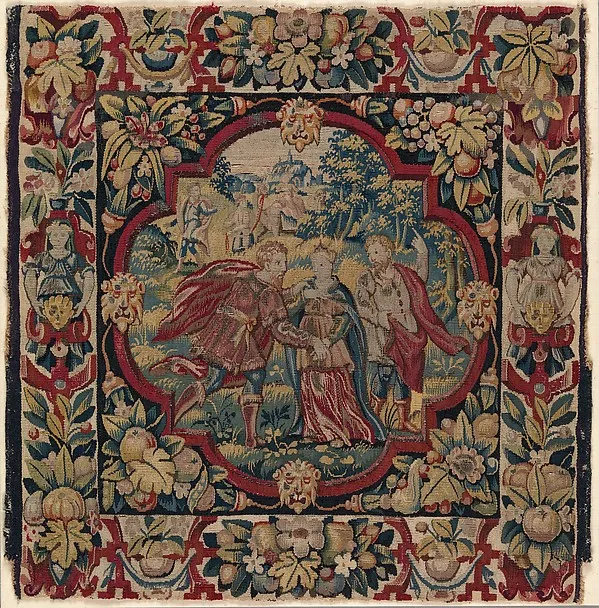
Tobit 1:1-5He Alone Fled the Company of All
2When he was made captive in the days of Salmanasar king of the Assyrians, even in his captivity, forsook not the way of truth, 3But every day gave all he could get to his brethren his fellow captives, that were of his kindred.
The story wastes no time telling us who this man is. He is a captive, hauled into exile under an Assyrian king, and the very first thing said about him is what the chains could not take: "even in his captivity" he "forsook not the way of truth." Captivity is the test, and he passes it. It would have been the easiest thing in the world to conclude that the God of Israel had failed, that the rules of home no longer applied in a foreign land.
He concludes the opposite. The loss of everything outward becomes the proving ground of everything inward.
Notice what his faithfulness looks like in practice. It is not first a matter of opinions or feelings; it is bread shared. "Every day" he gave what he could to his fellow captives. A man who has himself been stripped of home and country turns immediately to those worse off than himself. This is the book's opening signature, and it will return again and again: that to be mindful of God is to be generous with one's neighbor, and that the two cannot be pulled apart.
5Moreover when all went to the golden calves which Jeroboam king of Israel had made, he alone fled the company of all, 6And went to Jerusalem to the temple of the Lord, and there adored the Lord God of Israel, offering faithfully all his firstfruits, and his tithes,
Here is the image that gives the whole opening its weight. When the entire northern kingdom streamed toward the golden calves Jeroboam had set up, "he alone fled the company of all." One man, walking against a whole nation. The phrase is almost lonely. It does not say he argued the crowd down or led a reform; it simply says he would not go where they were going. Faithfulness sometimes means standing in a place where you can count the people beside you on no fingers at all, and going on anyway because the One you answer to has not changed His mind.
Rather than the convenient calves near at hand, he made the long journey to Jerusalem, to the temple, to worship the Lord God of Israel where worship belonged. And he came with his hands full: firstfruits and tithes, the first and best of what he had, given "faithfully." His devotion was not a private sentiment kept safely in the heart. It cost him travel, time, and a share of his goods. He put his treasure where his trust was, and that is what makes the worship real.
Tobit 1:8-13Undefiled in a Strange Land
10And from his infancy he taught him to fear God, and to abstain from all sin. 12(When all ate of the meats of the Gentiles) he kept his soul and never was defiled with their meats.
The chapter pauses to show faithfulness passed down. Having married and had a son, he taught the boy "from his infancy" to fear God and to abstain from all sin. The faithfulness that began as one man's lonely stand is now being handed to the next generation, planted early, before the world could plant anything else. A righteousness that ends with you is a candle that goes out; he was lighting another from his own flame. The deepest legacy a parent can leave is not property but a reverence for God that outlives them.
Surrounded by exiles who had relaxed their convictions and "ate of the meats of the Gentiles," he "kept his soul and never was defiled." This is more than a dietary footnote. In a culture designed to absorb him and erase his identity, his careful obedience in small daily matters was how he remembered who he was and whose he was. Compromise rarely arrives as one dramatic betrayal; it comes as a hundred small surrenders that seem reasonable at the time. He refused the first one, and so he kept the rest.
13And because he was mindful of the Lord with all his heart, God gave him favour in the sight of Salmanasar the king.
The narrator finally names the engine of it all: he was "mindful of the Lord with all his heart." Every refusal and every act of mercy traces back to this one inner reality, a heart that kept God constantly in view. And the chapter notes a result we should not rush past: God gave him favor in the eyes of the very king who held him captive. Faithfulness in a hostile place does not guarantee comfort, but Scripture often shows the faithful exile granted a strange grace in the halls of foreign power.
The same pattern marks Joseph in Egypt and Daniel in Babylon: God can open doors inside the house of the one who imprisoned His servant.
Tobit 1:14-20He Buried the Dead
15He therefore went to all that were in captivity, and gave them wholesome admonitions. 17And when amongst a great multitude of his kindred, he saw Gabelus in want, who was one of his tribe, taking a note of his hand he gave him the aforesaid sum of money.
His mercy was not only material. He went to the other captives with "wholesome admonitions," words meant to steady and strengthen souls that were tempted, like him, to give up in a strange land. He fed bodies and he fed faith. A man who had every reason to nurse his own discouragement spent himself encouraging others to keep holding on. True care for people reaches past their stomachs to their spirits, and he gave to both out of the same full heart.
When he found a kinsman named Gabelus in need, he gave him a large sum of silver, taking only a note in return. It is a small detail with a long reach, for this loan will quietly drive the plot of the whole book. But on its own it tells us something: his generosity was not reckless or naive. He kept a record, he acted wisely, and still he gave freely. Faithful generosity and ordinary prudence are not enemies. He could be both openhanded and careful in the same act.
19Tobias daily went among all his kindred, and comforted them, and distributed to every one as he was able, out of his goods: 20He fed the hungry, and gave clothes to the naked, and was careful to bury the dead, and they that were slain.
The chapter gathers his life into a single sweeping summary: daily he went among his people, comforting and distributing "to every one as he was able." That last phrase is gentle and exacting at once. He did not wait until he was wealthy or safe to be generous; he gave according to what he had, and he gave it every day. Faithfulness here is not a single grand gesture but a steady current, the unspectacular habit of doing good with whatever is in your hand right now.
And then the works of mercy climb toward the most dangerous one. He fed the hungry and clothed the naked, the very acts of compassion Scripture treasures most. But the list ends with the one that will undo him: he "was careful to bury the dead." When the king slew his countrymen and left their bodies exposed as a warning, this man went out and gave them burial, treating even the abandoned dead with dignity.
It was holy work, and it was treasonous in the king's eyes. The next verses will show what such mercy cost him. The chapter has been building to this, the moment where doing right and staying safe finally part ways.
Tobit 1:21-25Hunted, Then Restored
21And when king Sennacherib was come back, fleeing from Judea by reason of the slaughter that God had made about him for his blasphemy, and being angry slew many of the children of Israel, Tobias buried their bodies. 22But when it was told the king, he commanded him to be slain, and took away all his substance.
The blow lands. A defeated and furious king, humiliated in Judea, takes out his rage on the children of Israel and slaughters many. And once again Tobit goes out and buries the bodies. He knows by now exactly what this can cost. He does it anyway. The repetition is the point: this is not a single impulsive act of courage but a settled way of life, a man who will keep doing the merciful thing even after he has learned how dangerous it is.
Some convictions are tested not by whether we can do them once, but by whether we will do them again.
The reckoning is swift and total. The king orders his death and seizes everything he owns. In the space of a sentence the man who gave so freely to so many is left with nothing and marked to die. Here the chapter refuses any easy arithmetic that says goodness is always rewarded in coin. Sometimes, in this life, the faithful lose. The story does not flinch from that, and it does not pretend the loss is small. It simply keeps insisting, by the way it tells the tale, that the loss is not the final word.
23But Tobias fleeing naked away with his son and with his wife, lay concealed, for many loved him. 24But after forty-five days, the king was killed by his own sons. 25And Tobias returned to his house, and all his substance was restored to him.
Stripped of everything and hunted, he flees "naked" with his wife and son and hides. And in that desperate moment a quiet line shines: he "lay concealed, for many loved him." All those daily kindnesses, the bread and clothing and comfort he had handed out for years, now return to shelter him. The mercy he scattered had taken root in the hearts of the people he helped, and when his life hung in the balance, that love became his hiding place.
Goodness given away is never truly gone; it has a way of coming back for you when you need it most.
Then, after forty-five days, the tide turns without a single act of his own. The proud, blaspheming king is struck down by his own sons. The narrator has already told us the slaughter in Judea came "by reason of the slaughter that God had made about him for his blasphemy," and now the man who set himself against God and against mercy meets his end in his own household. The story lets us see, without preaching it, that the One who seemed silent while the righteous suffered was not absent after all.
Heaven keeps a longer accounting than we can read in a single day.
The chapter closes the circle: Tobit returns home, and "all his substance was restored to him." Everything the king took is given back. This is not the empty promise that the faithful never suffer, for he truly did suffer and lose. It is the deeper assurance that God is able to restore, that the account is not closed when the wicked seem to win, and that mercy quietly outlasts the powers that try to crush it.
The man who buried the dead in defiance of a king now stands in his own house again, his goods returned and his integrity intact. The story of Tobit has barely begun, but its first chapter has already taught its heart: keep faith, give mercy, and leave the outcome to God.
Where this echoes in Scripture
He Alone Fled the Company of All
- 1 Kings 12:28Whereupon the king took counsel, and made two calves of gold... and the people went to worship before the one, even unto Dan.The very idolatry Tobit fled, named at its source.
- Joshua 24:15Choose you this day whom ye will serve... but as for me and my house, we will serve the LORD.The lone stand against the crowd that Tobit embodies in exile.
- Matthew 6:3-4But when thou doest alms, let not thy left hand know what thy right hand doeth: That thine alms may be in secret.Jesus on the quiet, daily mercy that marks Tobit from the first verses.
Undefiled in a Strange Land
- Daniel 1:8But Daniel purposed in his heart that he would not defile himself with the portion of the king’s meat.The same resolve in another exile, refusing the king’s table to stay undefiled.
- Deuteronomy 6:6-7And these words... shall be in thine heart: And thou shalt teach them diligently unto thy children.The command to plant the fear of God in a child from infancy, which Tobit obeys.
- Genesis 39:21But the LORD was with Joseph... and gave him favour in the sight of the keeper of the prison.Favor granted to the faithful inside the house of their captor.
He Buried the Dead
- Matthew 25:35-36For I was an hungred, and ye gave me meat: I was thirsty, and ye gave me drink... naked, and ye clothed me.The works of mercy Tobit lives out, named by Christ as done unto Him.
- Isaiah 58:7Is it not to deal thy bread to the hungry, and that thou bring the poor that are cast out to thy house? when thou seest the naked, that thou cover him.The fast God chooses, mirrored exactly in Tobit’s daily mercy.
- Hebrews 11:35-38And others had trial of cruel mockings... of whom the world was not worthy.The faithful who suffered loss for their righteousness, Tobit’s company.
Hunted, Then Restored
- Galatians 6:9And let us not be weary in well doing: for in due season we shall reap, if we faint not.The promise that sustains Tobit’s repeated, costly mercy.
- Psalm 37:25I have been young, and now am old; yet have I not seen the righteous forsaken, nor his seed begging bread.The long view that frames Tobit’s loss and restoration.
- Luke 6:38Give, and it shall be given unto you; good measure, pressed down... shall men give into your bosom.The mercy Tobit scattered returning to shelter and restore him.