

Genesis 39
People in this chapter
Genesis 39 opens what looks at first like the lowest point of Joseph's life and turns out to be the doorway into everything God will do through him. Sold by his brothers and carried down to Egypt, he is bought by Potiphar, an officer of Pharaoh and captain of the guard. He is a slave in a foreign house. And yet the chapter is built around a single sentence that it repeats four times like a drumbeat - the LORD was with Joseph - and that sentence is the real subject of the whole chapter 1.
Joseph prospers; his master notices; he is set over the entire household, and the blessing of the LORD spills out onto everything Potiphar owns for Joseph's sake.
Tap any highlighted phrase to jump to the commentary that unpacks it.
Genesis 39:1-6The LORD Was With Joseph
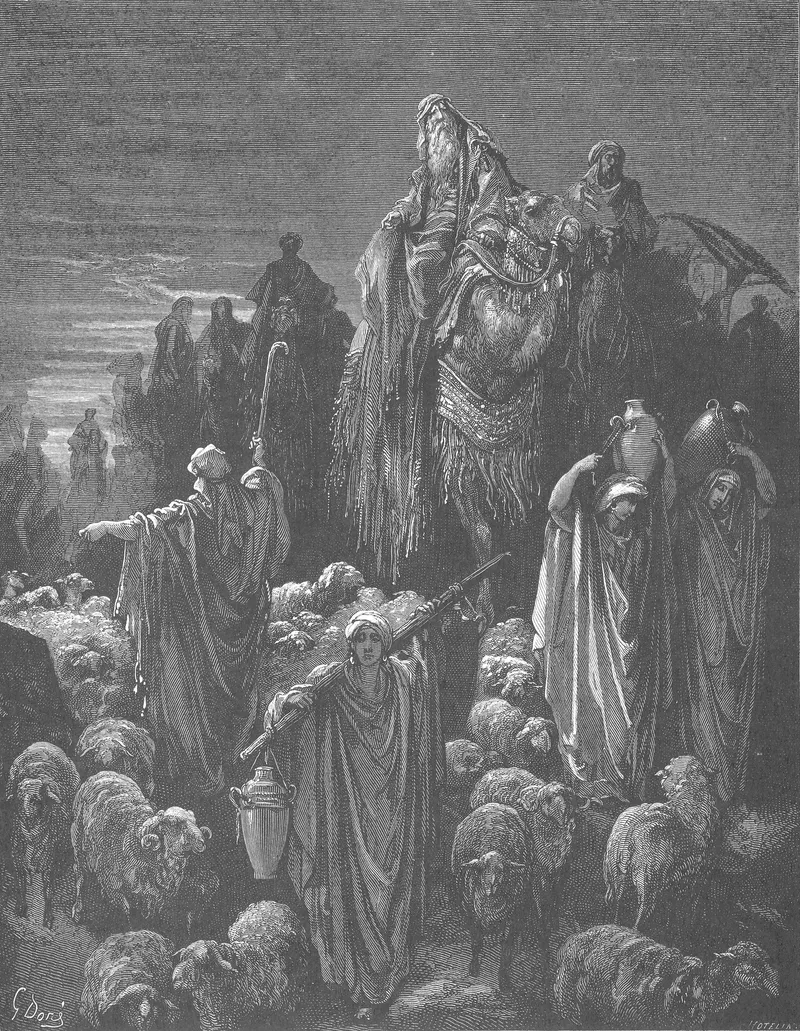
1And Joseph was brought down to Egypt; and Potiphar, an officer of Pharaoh, captain of the guard, an Egyptian, bought him of the hands of the Ishmeelites, which had brought him down thither. 2And the LORD was with Joseph, and he was a prosperous man; and he was in the house of his master the Egyptian. 3And his master saw that the LORD was with him, and that the LORD made all that he did to prosper in his hand. 4And Joseph found grace in his sight, and he served him: and he made him overseer over his house, and all that he had he put into his hand. 5And it came to pass from the time that he had made him overseer in his house, and over all that he had, that the LORD blessed the Egyptian’s house for Joseph’s sake; and the blessing of the LORD was upon all that he had in the house, and in the field. 6And he left all that he had in Joseph’s hand; and he knew not ought he had, save the bread which he did eat. And Joseph was a goodly person, and well favoured.
The chapter opens by setting Joseph at the very bottom of the world he has fallen into: And Joseph was brought down to Egypt… bought him of the hands of the Ishmeelites, which had brought him down thither (v. 1). Twice the text says brought down - he is carried down to Egypt and sold as a piece of property, the lowest a free man could fall. And yet the one who buys him is no minor figure.
Potiphar is an officer of Pharaoh, captain of the guard - a high official of the royal court, the chief of the king's guard, about as powerful a master as an enslaved man could end up serving 1. The detail matters because of what the next verses refuse to do with it. A storyteller could easily credit Joseph's rise to good fortune - sold, against all odds, into the right house. The text names the house, names the office, and then sets all of it aside to point somewhere else: the reason Joseph rises is the presence of his God.
Now comes the sentence that governs the whole chapter, and it is laid down with almost no fanfare: And the LORD was with Joseph, and he was a prosperous man; and he was in the house of his master the Egyptian (v. 2). Everything in the chapter hangs on the order of those clauses. First the LORD was with Joseph; then he was a prosperous man. The prosperity is not the cause of the presence; the presence is the cause of the prosperity.
And the location is pointedly named: Joseph is prosperous in the house of his master the Egyptian - that is, while still a slave. This is a striking thing for the text to claim. We are inclined to read God's nearness off our circumstances: things are going well, so God must be with me; things have fallen apart, so where is He? Genesis 39 cuts that reasoning off at the root. Joseph has been betrayed by his brothers and sold into bondage, and in that very condition the LORD was with him.
The presence of God is companionship inside the trouble - already at work long before anyone could see its fruit.
What was invisible to Joseph becomes visible to his master: And his master saw that the LORD was with him, and that the LORD made all that he did to prosper in his hand (v. 3). Potiphar does not share Joseph's faith, yet even he can read the evidence - this young man's work simply flourishes, and there is something behind it he cannot account for. So Joseph rises: he made him overseer over his house, and all that he had he put into his hand (v. 4).
The office of household overseer was real authority - the steward who managed the master's whole estate, accounts, servants, and lands. Potiphar hands all of it to an enslaved foreigner, which is a measure of how plainly the blessing showed. And then the blessing widens beyond Joseph himself: the LORD blessed the Egyptian's house for Joseph's sake; and the blessing of the LORD was upon all that he had in the house, and in the field (v. 5).
This is an old promise quietly coming true. The word to Abraham was that in him all families of the earth would be blessed; here, in miniature, an Egyptian household prospers for Joseph's sake. The presence of God in one faithful person becomes a blessing that overflows onto everyone around him.
The first movement ends on a note that is half praise and half warning: And he left all that he had in Joseph's hand; and he knew not ought he had, save the bread which he did eat. And Joseph was a goodly person, and well favoured (v. 6). Potiphar's trust is now total - he no longer keeps track of anything in his own house, leaving every concern to Joseph and troubling himself with nothing but the food on his table.
It is the picture of a man at the height of an enslaved person's possible standing: trusted, capable, indispensable. And then, almost in passing, the text adds the last detail: Joseph was a goodly person, and well favoured - handsome, fine in form and appearance. The same words were used of his mother Rachel. The notice is not flattery; it is the hinge of the chapter. Everything good about Joseph's situation - his beauty, his nearness to the household, the trust placed in him, the freedom of movement he has earned - is about to be turned into the occasion of his testing.
The very gifts that lifted him are about to become the ground on which his integrity is tried.
Genesis 39:7-12How Then Can I Do This Great Wickedness?
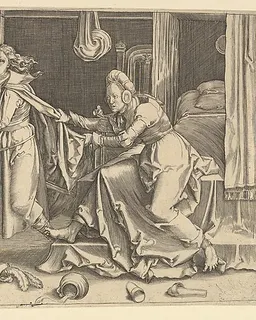
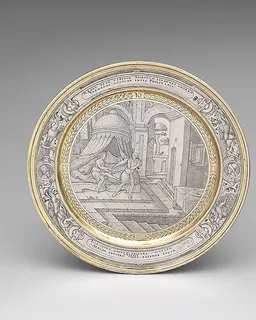
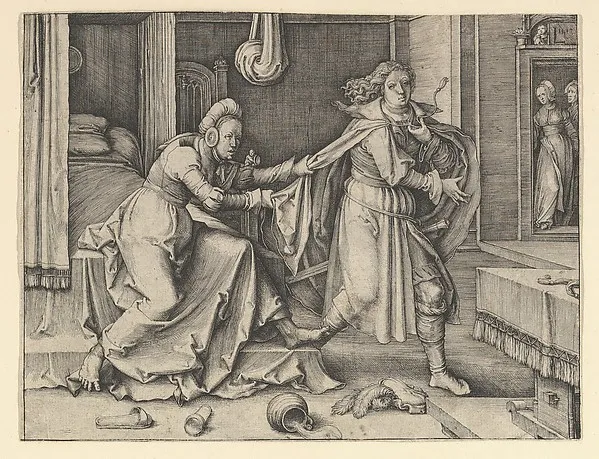
7And it came to pass after these things, that his master’s wife cast her eyes upon Joseph; and she said, Lie with me. 8But he refused, and said unto his master’s wife, Behold, my master wotteth not what is with me in the house, and he hath committed all that he hath to my hand; 9There is none greater in this house than I; neither hath he kept back any thing from me but thee, because thou art his wife: how then can I do this great wickedness, and sin against God? 10And it came to pass, as she spake to Joseph day by day, that he hearkened not unto her, to lie by her, or to be with her. 11And it came to pass about this time, that Joseph went into the house to do his business; and there was none of the men of the house there within. 12And she caught him by his garment, saying, Lie with me: and he left his garment in her hand, and fled, and got him out.
The trial arrives through the very gifts that lifted Joseph: And it came to pass after these things, that his master's wife cast her eyes upon Joseph; and she said, Lie with me (v. 7). The chapter has just told us Joseph was well favoured; now that beauty draws an unwanted gaze. There is nothing veiled or gradual about the approach. She cast her eyes upon him - the look that has already decided - and her words are not seduction but command: Lie with me. Two blunt words in the Hebrew.
The imbalance of power runs entirely against Joseph. He is enslaved; she is the mistress of the house. She can offer him advantage or threaten him with ruin, and a refusal carries obvious danger. Everything about the situation is built to make compliance look not only easy but safe - he is far from home, accountable to no one who knows him, and the person propositioning him holds his fate in her hands. The text sets the temptation at its full strength precisely so that the refusal, when it comes, will be seen for what it is: not the caution of a man with little to lose, but the conviction of a man who has weighed the real stakes and found them elsewhere.
Joseph's answer comes in two movements, and the first is gratitude turned into loyalty: But he refused… Behold, my master wotteth not what is with me in the house, and he hath committed all that he hath to my hand; there is none greater in this house than I; neither hath he kept back any thing from me but thee, because thou art his wife (vv. 8-9). Before he names God, Joseph names the trust he has been given.
Potiphar has held back nothing from him - nothing except this one person, his wife. To take her would be to betray the very trust that has been the making of him; it would turn a master's generosity into the occasion of his deepest injury. Joseph sees the act clearly for what it is: not a private pleasure but a treachery against the man who trusted him with everything. There is a moral clarity here that does not need a crisis to find it.
He reasons out, calmly and in order, exactly why the thing being asked of him is wrong - the kindness it would betray, the trust it would break - before he ever reaches the deepest reason of all. Faithfulness, for Joseph, is not a feeling that seizes him in the moment; it is a conclusion he has already drawn and can state plainly when the pressure comes.
Two details keep this from being a single dramatic moment of resistance and show it instead as a long, grinding discipline. First, the pressure is relentless: as she spake to Joseph day by day (v. 10). This was not one bold proposition to be refused once and forgotten. It was a daily wearing-down, the same demand returning morning after morning, the kind of pressure that erodes resolve precisely by never letting up. And Joseph's response is given in the same continuous key: he hearkened not unto her, to lie by her, or to be with her. He refuses not only the act but even her company - he will not so much as be alone with her, removing himself from the occasion entirely.
That is the wisdom of someone who knows that the time to win a temptation is before it has you cornered. Second, when the moment of seizure finally comes, the text is careful to note there was none of the men of the house there within (v. 11). The one circumstance most likely to make a man rationalize - no witnesses, no chance of being caught - is exactly the circumstance Joseph faces. And it changes nothing.
His no was never propped up by the fear of being seen. It rested on something that did not depend on who was watching.
The climax is not a clever speech but a pair of running feet: And she caught him by his garment, saying, Lie with me: and he left his garment in her hand, and fled, and got him out (v. 12). When persuasion fails she resorts to force, seizing him by his garment - and Joseph does the only wise thing left. He does not stay to argue, does not try to reason with a hand already on him, does not gamble on his own strength to hold the line in the moment.
He runs, and he runs at a cost: he leaves the garment behind in her grip rather than stay one second longer to retrieve it. There is something almost undignified about it - a grown man, the trusted steward of the house, bolting out the door and leaving his coat in a woman's hand. But that is exactly the point. Joseph would rather lose a garment than lose his integrity; rather look foolish and fleeing than stay and fall.
He grasps what we are slow to learn - that some temptations are not to be negotiated with but escaped from, that the heroic thing is sometimes simply to leave. And he could not know what we, reading, can see: that the very garment he sacrificed to keep his conscience clean would be picked up off the floor and turned into the lie that destroys him.
Genesis 39:13-20False Witness
13And it came to pass, when she saw that he had left his garment in her hand, and was fled forth, 14That she called unto the men of her house, and spake unto them, saying, See, he hath brought in an Hebrew unto us to mock us; he came in unto me to lie with me, and I cried with a loud voice: 15And it came to pass, when he heard that I lifted up my voice and cried, that he left his garment with me, and fled, and got him out. 16And she laid up his garment by her, until his lord came home. 17And she spake unto him according to these words, saying, The Hebrew servant, which thou hast brought unto us, came in unto me to mock me: 18And it came to pass, as I lifted up my voice and cried, that he left his garment with me, and fled out. 19And it came to pass, when his master heard the words of his wife, which she spake unto him, saying, After this manner did thy servant to me; that his wrath was kindled. 20And Joseph’s master took him, and put him into the prison, a place where the king’s prisoners were bound: and he was there in the prison.
With Joseph gone, the rejected demand curdles instantly into a lie, and the lie is built around the very garment Joseph sacrificed to stay clean: when she saw that he had left his garment in her hand, and was fled forth, that she called unto the men of her house (vv. 13-14). She acts at once, and she is shrewd. The proof of Joseph's innocence - the coat he left behind because he fled - she seizes as the proof of his guilt.
And notice the calculation in how she frames it. To the household servants she says, See, he hath brought in an Hebrew unto us to mock us, and to her husband, The Hebrew servant, which thou hast brought unto us (vv. 14, 17). The word Hebrew is doing deliberate work - she casts Joseph as the foreign outsider, the alien intruder, and even slips in a quiet rebuke of Potiphar himself: thou hast brought him among us.
She turns his very faithfulness inside out. The man who refused her becomes, in her telling, the man who assaulted her; his flight becomes flight from a crime; his cry-stifling departure becomes her own crying out for help. It is the oldest cruelty there is - the truth stood precisely on its head, and the innocent party's own integrity used as the instrument of his ruin.
The text recounts the lie a second time, now in her words to Potiphar, and lets the machinery of injustice run its course: she spake unto him according to these words… And it came to pass, when his master heard the words of his wife… that his wrath was kindled (vv. 17-19). Several things are quietly devastating here. Joseph is given no hearing. No one asks for his account; the garment laid up beside her (v. 16) and the wife's word are evidence enough, and in that household her word against a slave's was no contest at all.
And through the entire scene - the accusation to the servants, the accusation to her husband, the kindling of Potiphar's wrath, the sentence - the text records not one word from Joseph. He who reasoned so clearly with the wife in verses 8 and 9 is utterly silent now. Whether he was even permitted to speak, the narrator does not say; he simply lets the silence stand. The man who did the right thing has no voice in his own condemnation, and his very refusal to sin has become the charge that buries him.
This is the bitter edge of the chapter the easy telling leaves out: faithfulness is not always vindicated in its own moment. Sometimes it is the thing you get punished for.
And yet, even in the sentence, something restrains the worst: And Joseph's master took him, and put him into the prison, a place where the king's prisoners were bound (v. 20). Consider what Potiphar, captain of the guard, could lawfully have done. The accusation was attempted assault on his wife by a foreign slave; in the Egypt of that day, Joseph's life was forfeit, and a word from Potiphar would have ended it.
Instead Joseph is imprisoned - and not in just any dungeon, but in the place where the king's prisoners were bound, the royal prison connected to Pharaoh's own house 1. The narrator does not explain Potiphar's restraint. Perhaps a part of him doubted the story; perhaps the years of faithful service stayed his hand. The text simply records that the wrath which was kindled stopped short of execution. We are not meant to miss it: even in the chapter's darkest turn, a thread of mercy runs underneath, unannounced.
And the very prison Joseph is thrown into - the one that holds the king's prisoners - is the place where, before long, he will meet Pharaoh's own servants and be set on the road that leads, eventually, to a throne. The injustice is real. So is the hand that, even here, is quietly steering.
Genesis 39:21-23The LORD Was With Him in the Prison
21But the LORD was with Joseph, and shewed him mercy, and gave him favour in the sight of the keeper of the prison. 22And the keeper of the prison committed to Joseph’s hand all the prisoners that were in the prison; and whatsoever they did there, he was the doer of it. 23The keeper of the prison looked not to any thing that was under his hand; because the LORD was with him, and that which he did, the LORD made it to prosper.
The section opens on one of the most important words in the chapter: But. But the LORD was with Joseph, and shewed him mercy, and gave him favour in the sight of the keeper of the prison (v. 21). Everything before it has been descent - accusation, wrath, the prison door closing - and against all of it stands this single conjunction. The world has rendered its verdict; God renders His. And the verb the narrator chooses is tender: the LORD shewed him mercy - literally extended steadfast love toward him, the covenant kindness God shows His own.
This is God drawing near in love to a man the world has thrown away. And the practical shape it takes is exactly what we saw in Potiphar's house: Joseph finds favour in the sight of the keeper of the prison. The very dynamic of verses 3 and 4 repeats - an authority over Joseph comes to see something in him and to trust him. The setting could not be lower; the pattern is precisely the same.
Wherever Joseph is, the LORD is with him, and that presence makes itself known even to those who do not know its source.
The likeness to the opening section is so deliberate it cannot be missed: the keeper of the prison committed to Joseph's hand all the prisoners… The keeper of the prison looked not to any thing that was under his hand (vv. 22-23). Read those lines against verses 4 and 6 and they are almost word for word. In the house, Potiphar committed all that he hath to my hand and knew not ought he had. In the prison, the keeper committed to Joseph's hand all the prisoners and looked not to any thing. Joseph rises to the top of the prison exactly as he rose to the top of the household - entrusted with everything, the master's eye resting easy because the work is in such reliable hands.
The narrator is making a quiet but profound point through this mirroring: the change in Joseph's circumstances changed nothing essential about Joseph, or about God. He does not curl up in bitterness at the injustice; he simply goes on being faithful and capable in the new place, as he was in the old. The dungeon does not get a different Joseph than the house did. It gets the same man - and the same God with him.
The chapter closes by sounding its governing note one final time, and tying it explicitly to the reason behind everything: because the LORD was with him, and that which he did, the LORD made it to prosper (v. 23). It is the fourth and last of the great refrains, and it lands with full force in the unlikeliest possible setting: a prison cell. The whole chapter has now bracketed Joseph's fall between two identical statements: the LORD was with Joseph at the top (v. 2), the LORD was with him at the bottom (v. 23).
The word prosper deserves a careful eye. It does not mean Joseph escaped or that his fortunes were reversed; he is still, at the chapter's end, a prisoner falsely condemned. It means that even there, his work bore fruit, his hand was blessed, his life was not wasted. And the little word because names the cause plainly: because the LORD was with him. The chapter ends with a truth more durable than deliverance: that the presence of God is the one thing that does not change when everything else does, and that a life held by that presence is fruitful even in a cell.
The story will move on toward freedom and a throne. But it pauses here, in the prison, to make sure we have learned the lesson before the rescue comes.
Research trail
Sources & further study
These references support the historical, linguistic, manuscript, and contextual notes in this chapter. Scripture remains the primary text; external sources are provided so readers can inspect the research directly.
- Genesis 39 - Translators' NotesThe NET Bible's detailed footnotes on Genesis 39 - the title and office of Potiphar in verse 1, the force of the repeated “the LORD was with Joseph,” the idiom of the wife's demand in verse 7, and the kind of royal prison Joseph is committed to in verse 20.
- Genesis 39 · Hebrew + classical Jewish commentaryThe Hebrew text of Genesis 39 with Rashi, Ibn Ezra, and other classical commentators side by side - useful for the refrain YHWH et-Yosef (vv. 2, 3, 21, 23, “the LORD was with Joseph”), for the verb behind hearkened not unto her (v. 10), and for the repeated beged (“garment,” vv. 12-18) that Joseph leaves behind and the wife turns into false evidence.
- Genesis 39 ↔ Psalm 51 · 1 Corinthians 6 · 1 Peter 2 · Isaiah 53Traces the threads tying Genesis 39 to the rest of Scripture - Joseph's reckoning that sin is first against God (v. 9) read alongside against thee… have I sinned (Ps. 51:4) and flee fornication (1 Cor. 6:18), and the righteous man falsely accused and silent (vv. 14-20) read beside the One who did no sin and openeth not his mouth (1 Pet. 2:22; Isa. 53:7).
Where this echoes in Scripture
The LORD Was With Joseph
- Genesis 12:2-3I will bless thee... and in thee shall all families of the earth be blessed.The promise quietly at work in verse 5 - an Egyptian house blessed for the sake of Abraham's descendant.
- Acts 7:9-10sold Joseph into Egypt: but God was with him, And delivered him out of all his afflictions.Stephen's own summary of this chapter - the refrain of verses 2-3 read as the key to Joseph's whole story.
- Matthew 1:23they shall call his name Emmanuel, which being interpreted is, God with us.The refrain “the LORD was with Joseph” gathered up and made personal - God dwelling with His people.
- Psalm 1:3whatsoever he doeth shall prosper.The truth of verses 2-4 - the LORD making the work of the faithful prosper in his hand.
- Daniel 6:3-4this Daniel was preferred... because an excellent spirit was in him... they could find none occasion.Another exile lifted to oversight in a foreign court because God was with him - the pattern of verses 3-6.
How Then Can I Do This Great Wickedness?
- Psalm 51:4Against thee, thee only, have I sinned, and done this evil in thy sight.The same reckoning as verse 9 - the wrong measured first and last as an offense against God.
- 1 Corinthians 6:18Flee fornication... he that committeth fornication sinneth against his own body.The apostolic word for what Joseph does in verse 12 - fleeing the temptation rather than standing to argue with it.
- 2 Timothy 2:22Flee also youthful lusts: but follow righteousness, faith, charity, peace.The instinct of verse 12 made a command - flight as the path of the young and faithful.
- Hebrews 4:15was in all points tempted like as we are, yet without sin.Joseph's tested purity (vv. 7-12) read toward the One tempted in every way yet wholly without sin.
- James 4:7Resist the devil, and he will flee from you.The dynamic of verses 10-12 - the daily refusal and the decisive flight that breaks temptation's grip.
False Witness
- Isaiah 53:7he was oppressed, and he was afflicted, yet he opened not his mouth... as a sheep before her shearers is dumb.The silence of the suffering righteous - Joseph wordless before his accusers (vv. 14-20), and the Servant before His.
- Mark 14:56-61many bare false witness against him... But he held his peace, and answered nothing.The innocent condemned on false witness and silent - the pattern of verses 14-20 carried to its depth.
- 1 Peter 2:22-23who did no sin... when he suffered, he threatened not; but committed himself to him that judgeth righteously.The righteous sufferer, falsely charged, entrusting the verdict to God - Joseph's silence (v. 20) read forward.
- Psalm 105:17-19whose feet they hurt with fetters: he was laid in iron: Until the time that his word came.The psalmist's own meditation on this imprisonment (v. 20) - the binding that was, all along, part of God's timing.
- 1 Peter 3:17it is better, if the will of God be so, that ye suffer for well doing, than for evil doing.The hard truth of verses 19-20 - that the faithful are sometimes made to suffer for the very good they did.
The LORD Was With Him in the Prison
- Matthew 28:20lo, I am with you alway, even unto the end of the world.The promise that gathers up the chapter's refrain - presence to the end, in the prison as in the palace.
- Genesis 50:20ye thought evil against me; but God meant it unto good... to save much people alive.Joseph's own later reading of this whole descent - the injustice of verse 20 woven, all along, into God's good purpose.
- Romans 8:28all things work together for good to them that love God, to them who are the called according to his purpose.The truth underneath verses 21-23 - God at work for good even in the cell, even in what looks like defeat.
- Psalm 105:17-22he sent a man before them, even Joseph... Until the time that his word came: the word of the LORD tried him.The psalmist's summary of Joseph's prison years - the LORD with him, the testing serving the larger plan.
- Acts 7:9-10God was with him, And delivered him out of all his afflictions, and gave him favour and wisdom.Stephen's echo of this very section - God with Joseph, granting favour, through every affliction.