Genesis 40
People in this chapter
Joseph's story has been a long fall. Favoured son, then sold by his brothers; trusted steward in Potiphar's house, then falsely accused and thrown into prison. Genesis 40 opens with him still there - but, as ever, finding favour and being given charge. Two of Pharaoh's most senior servants, his chief butler and chief baker, offend their lord and are cast into the very prison where Joseph is bound, and the captain of the guard sets Joseph over them to serve them.
One morning Joseph notices their faces are troubled, and he asks why. They have each dreamed a dream and there is no one to interpret it - and Joseph answers with the question that names the whole chapter: Do not interpretations belong to God? tell me them, I pray you (v. 8).1
Tap any highlighted phrase to jump to the commentary that unpacks it.
Genesis 40:1-8Do Not Interpretations Belong to God?
1And it came to pass after these things, that the butler of the king of Egypt and his baker had offended their lord the king of Egypt. 2And Pharaoh was wroth against two of his officers, against the chief of the butlers, and against the chief of the bakers. 3And he put them in ward in the house of the captain of the guard, into the prison, the place where Joseph was bound. 4And the captain of the guard charged Joseph with them, and he served them: and they continued a season in ward. 5And they dreamed a dream both of them, each man his dream in one night, each man according to the interpretation of his dream, the butler and the baker of the king of Egypt, which were bound in the prison. 6And Joseph came in unto them in the morning, and looked upon them, and, behold, they were sad. 7And he asked Pharaoh’s officers that were with him in the ward of his lord’s house, saying, Wherefore look ye so sadly to day? 8And they said unto him, We have dreamed a dream, and there is no interpreter of it. And Joseph said unto them, Do not interpretations belong to God? tell me them, I pray you.
The chapter opens with two great men brought low. The butler - the chief cupbearer - and the baker were not kitchen hands but high officers of the court, trusted with the king's food and drink, and so with the king's very life; in a world of plots and poisonings, these were positions of intimate access and confidence. Now they have offended their lord, and Pharaoh is wroth against both. The text does not tell us what they did, and that silence is part of its art: their fall is what matters here.
Men who stood closest to the throne are suddenly stripped of everything and shut up into the prison, the place where Joseph was bound (v. 3). The phrase is quietly pointed. The dungeon that held a Hebrew slave now holds the cream of Egypt's court, and the God who is nowhere named in these opening verses is already arranging the meeting that will, in time, lift Joseph from the pit to the palace.1
Notice what Joseph is doing in this prison: the captain of the guard charged Joseph with them, and he served them (v. 4). The man who was once his father's favourite, then a trusted steward over Potiphar's whole house, is now a servant to servants - and he serves them faithfully. There is no hint of bitterness, no withdrawal into self-pity, no demand that men of rank wait on themselves. Wherever Joseph is put, however far he falls, he keeps showing up to do the work in front of him with care.
This is the same pattern Genesis has shown twice already: the LORD was with Joseph in Potiphar's house, and was with him in the prison, and what he was given he tended well. Faithfulness in obscurity is rarely noticed, yet it is the soil in which everything that follows grows. The man trusted with two royal prisoners in a dungeon is being prepared, though he cannot see it, for the day he will be trusted with a kingdom.
One morning Joseph comes in and looked upon them, and, behold, they were sad (v. 6). It is a small line that says a great deal about him. A man drowning in his own troubles - and Joseph had every reason to be - rarely notices anyone else's. But Joseph sees their faces: two human beings who are downcast this morning, and he asks the plainest, kindest question: Wherefore look ye so sadly to day? (v. 7).
The palace and its politics are very far away now; here, in the ward, are only people and their burdens. This is the texture of real faithfulness: an attentiveness that turns outward even from inside one's own pain. The interpreter God will use to read the future first proves himself by simply caring enough to ask what is wrong.
The two men name their trouble: We have dreamed a dream, and there is no interpreter of it (v. 8). In Egypt, dream-reading was a learned profession, a guild of trained specialists - and in this dungeon there is none. Joseph's reply is the hinge of the whole chapter, and the most important thing he says: Do not interpretations belong to God? He turns their eyes away from himself entirely and toward God, as if to say, you need the One to whom the meaning of every dream already belongs. And only then does he add, tell me them, I pray you - offering himself as the servant through whom God might speak.
This is the disposition that runs through Joseph's whole life and reaches its summit before Pharaoh in the next chapter: It is not in me: God shall give Pharaoh an answer of peace. The gift is real, but it is never his own; it is borrowed, and he keeps the credit where it belongs.
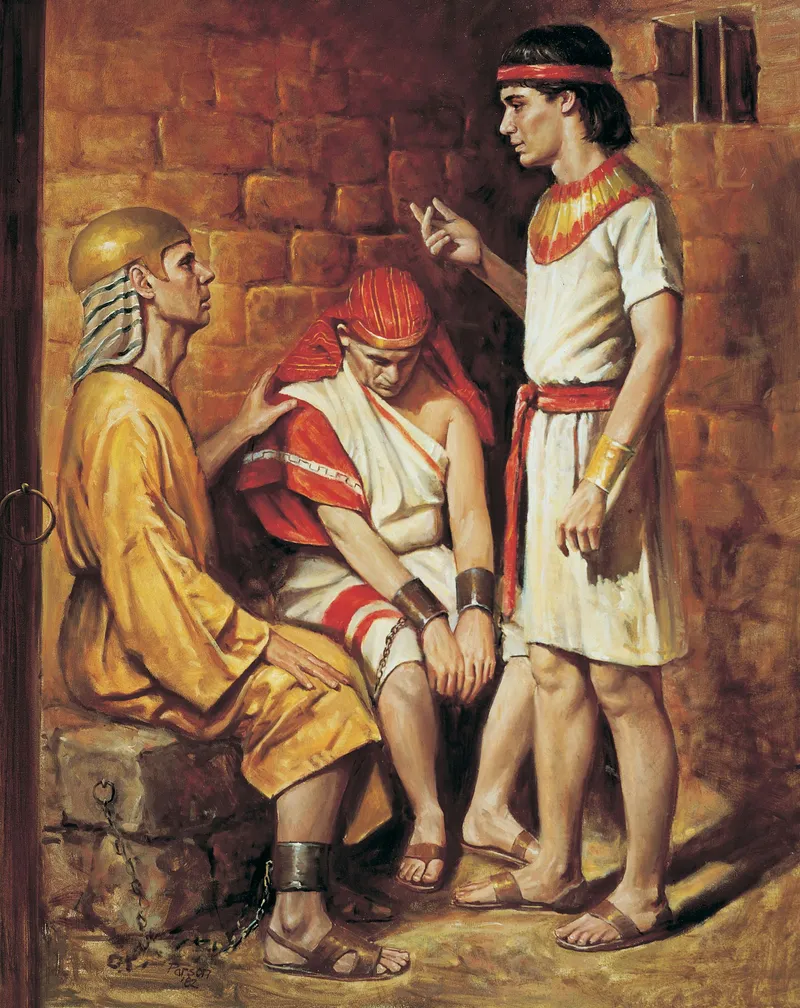
Genesis 40:9-19Lift Up Thine Head · Think on Me
9And the chief butler told his dream to Joseph, and said to him, In my dream, behold, a vine was before me; 10And in the vine were three branches: and it was as though it budded, and her blossoms shot forth; and the clusters thereof brought forth ripe grapes: 11And Pharaoh’s cup was in my hand: and I took the grapes, and pressed them into Pharaoh’s cup, and I gave the cup into Pharaoh’s hand. 12And Joseph said unto him, This is the interpretation of it: The three branches are three days: 13Yet within three days shall Pharaoh lift up thine head, and restore thee unto thy place: and thou shalt deliver Pharaoh’s cup into his hand, after the former manner when thou wast his butler. 14But think on me when it shall be well with thee, and shew kindness, I pray thee, unto me, and make mention of me unto Pharaoh, and bring me out of this house: 15For indeed I was stolen away out of the land of the Hebrews: and here also have I done nothing that they should put me into the dungeon. 16When the chief baker saw that the interpretation was good, he said unto Joseph, I also was in my dream, and, behold, I had three white baskets on my head: 17And in the uppermost basket there was of all manner of bakemeats for Pharaoh; and the birds did eat them out of the basket upon my head. 18And Joseph answered and said, This is the interpretation thereof: The three baskets are three days: 19Yet within three days shall Pharaoh lift up thy head from off thee, and shall hang thee on a tree; and the birds shall eat thy flesh from off thee.
The butler's dream is full of life and motion: a vine… three branches… it budded, and her blossoms shot forth; and the clusters thereof brought forth ripe grapes, and then the cup pressed and placed again into Pharaoh's hand (vv. 9-11). The whole picture runs toward restoration - budding, ripening, serving, the old role resumed. Joseph reads it without hesitation: The three branches are three days… within three days shall Pharaoh lift up thine head, and restore thee unto thy place (vv. 12-13).
The vine itself is an image woven all through Scripture with blessing and fruitfulness, and the butler's dream is, at heart, a dream of homecoming - the cup back in his hand, the office given again, after the former manner when thou wast his butler. Joseph does not flatter and he does not hedge; he simply unfolds what God has placed in the dream. The number is a measure of mercy here: three short days, and the disgrace will be reversed.
Yet the same three days, Joseph will say to the next man, can measure something altogether different.
Into this good word Joseph folds the only request he makes in the whole chapter: But think on me when it shall be well with thee… make mention of me unto Pharaoh, and bring me out of this house (v. 14). It is striking how restrained it is. He does not bargain or demand; he does not make the interpretation conditional on a favour returned. He simply asks to be remembered - to have his name spoken in the palace by someone who will soon stand near the throne.
And he tells his story in the barest terms: I was stolen away out of the land of the Hebrews: and here also have I done nothing that they should put me into the dungeon (v. 15). No accusation of his brothers by name, no naming of Potiphar's wife, no bitterness - only the quiet insistence that he is innocent and longs to be free. It is the cry of every person who has done no wrong and yet sits in the consequences of someone else's sin.
Think on me. It is among the simplest and the hardest prayers there is - the plea of one who has been forgotten to be remembered at last.
The baker, heartened that the interpretation was good, offers his own dream - and at first it sounds parallel: three white baskets on my head, the topmost full of all manner of bakemeats for Pharaoh (vv. 16-17). The same threes, the same service to the king. But the difference is everything. In the butler's dream the work moved toward Pharaoh - the cup pressed and placed in his hand; in the baker's, the work never reaches him, for the birds did eat them out of the basket upon my head. The food meant for the king is devoured by scavengers before it is ever served, and the baker can only carry it and watch.
Joseph reads the inversion plainly: The three baskets are three days… within three days shall Pharaoh lift up thy head from off thee, and shall hang thee on a tree; and the birds shall eat thy flesh from off thee (vv. 18-19). The same birds that ate the bread will feed on the man. Joseph does not soften the sentence or look away from it; he speaks the hard word as faithfully as he spoke the glad one.
A true interpreter tells people the truth.
Genesis 40:20-23The Third Day · Yet Did Not the Butler Remember
20And it came to pass the third day, which was Pharaoh’s birthday, that he made a feast unto all his servants: and he lifted up the head of the chief butler and of the chief baker among his servants. 21And he restored the chief butler unto his butlership again; and he gave the cup into Pharaoh’s hand: 22But he hanged the chief baker: as Joseph had interpreted to them. 23Yet did not the chief butler remember Joseph, but forgat him.
The reversal comes the third day, which was Pharaoh's birthday (v. 20) - the one mention of a birthday in all the books of Moses. A king's birthday was an occasion of amnesty and judgment together: the day his own life was counted and celebrated became the day he counted up the fortunes of those beneath him. And so Pharaoh lifted up the head of both officers at the feast - the very idiom Joseph had used - calling each to account in one sweep, one to honour and one to the gallows.
There is a sober echo here that Scripture will sound again: another ruler's birthday feast, in the days of Herod, will likewise turn from celebration to a severed head (Mark 6:21-28). The day of a great man's rejoicing is, in these stories, no safe day for those whose lives lie in his hands. But over the whole occasion, unnamed and unseen, stands the God to whom interpretations belong, bringing every word Joseph spoke to pass on the very day he named.
Everything happens exactly as Joseph had said: he restored the chief butler unto his butlership again; and he gave the cup into Pharaoh's hand: but he hanged the chief baker: as Joseph had interpreted to them (vv. 21-22). The cup is back in the butler's hand, just as in his dream; the baker hangs, just as Joseph had warned. The little phrase as Joseph had interpreted is the chapter's seal of authentication.
Joseph did not guess, did not read the odds, did not offer two safe vague forecasts hoping one would land. He spoke a word, and the word came true to the letter, because the interpretation truly belonged to God. This is the quiet proof that the God who is never named in the action of the chapter has been present and sovereign over all of it - over the offending officers, the shared prison, the dreams in one night, the meanings unfolded, and now the outcomes fulfilled on the appointed day.
The text is teaching the reader to trust Joseph's word precisely so that, when it comes due two years later before Pharaoh, we already know: what this man says from God, comes to pass.
And then the chapter ends on the loneliest line in Joseph's story so far: Yet did not the chief butler remember Joseph, but forgat him (v. 23). The Hebrew says it twice over, like a door closing and then locked - did not remember… but forgat. It is no innocent slip; it is the ingratitude of a man whose own fortunes have been restored and who has no further use for the prisoner who served and read his dream.
Joseph had asked one thing - think on me - and the butler walks out into his old life and lets the prisoner sink from mind. The next chapter opens with the words and it came to pass at the end of two full years (Gen. 41:1): two more years in the dungeon before the butler's memory stirs. Genesis lets the silence stand. There is no angel, no sudden release, no reward for accuracy or faithfulness - only an innocent man left waiting in the dark by the very person who owed him most.
If you have ever done right and gone unrewarded, trusted someone with your need and watched them move on, the chapter does not rush past your grief; it sits in it. And yet beneath the butler's forgetting, the God who does not forget was working the whole of it, in the long silence, toward a deliverance Joseph could not yet see.
Research trail
Sources & further study
These references support the historical, linguistic, manuscript, and contextual notes in this chapter. Scripture remains the primary text; external sources are provided so readers can inspect the research directly.
- Genesis 40 - Translators' NotesThe NET Bible's detailed footnotes on Genesis 40 - the court titles of the butler and baker (vv. 1-2), the wordplay in the doubled phrase “lift up the head” that means honour for one man and execution for the other (vv. 13, 19), and the force of the closing verbs “remember” and “forgat” in verse 23.
- Genesis 40 · Hebrew + classical Jewish commentaryThe Hebrew text of Genesis 40 with Rashi, Ibn Ezra, and other classical commentators side by side - useful for pitron / pitronim (vv. 5, 8, 12, 16, “interpretation”), for the loaded idiom nasa rosh (vv. 13, 19, 20, “lift up the head”) read both ways, and for the doubled verbs of remembering and forgetting in verse 23.
- Genesis 40 ↔ Luke 23 · 1 Corinthians 15 · Daniel 2Traces the threads tying Genesis 40 to the rest of Scripture - the righteous sufferer between two condemned men (vv. 13, 19) read alongside the One lifted up between two malefactors (Luke 23:32-43), the third-day reversal (v. 20) beside the resurrection the third day according to the scriptures (1 Cor. 15:4), and Joseph's interpretations belong to God (v. 8) beside Daniel's there is a God in heaven that revealeth secrets (Dan. 2:28).
Where this echoes in Scripture
Do Not Interpretations Belong to God?
- Genesis 41:16It is not in me: God shall give Pharaoh an answer of peace.Joseph's confession of verse 8 carried to its summit before Pharaoh - the gift is real, but it is never his own.
- Daniel 2:27-28there is a God in heaven that revealeth secrets, and maketh known to the king Nebuchadnezzar what shall be.The same confession before another pagan king - the meaning of dreams belongs to God alone.
- Genesis 39:21-23But the LORD was with Joseph, and shewed him mercy... and that which he did, the LORD made it to prosper.Why a prisoner is set over prisoners (v. 4) - the LORD with Joseph in the very place of his disgrace.
- John 7:16My doctrine is not mine, but his that sent me.The disposition of verse 8 - the deliverer who points always past himself to the One who sends him.
- James 1:5If any of you lack wisdom, let him ask of God, that giveth to all men liberally... and it shall be given him.The carry of verse 8 - the meaning we lack is to be sought from God, who gives it freely.
Lift Up Thine Head · Think on Me
- Luke 23:42-43Lord, remember me when thou comest into thy kingdom. And Jesus said unto him... To day shalt thou be with me in paradise.Joseph's plea of verse 14 answered at the cross - the dying man's “remember me” heard at once.
- Luke 23:32-33And there were also two other, malefactors, led with him to be put to death... there they crucified him, and the malefactors, one on the right hand, and the other on the left.The pattern of verses 13 and 19 - the righteous one lifted up between two, one to life and one to death.
- Isaiah 49:15Can a woman forget her sucking child... yea, they may forget, yet will I not forget thee.The sure answer to verse 14 - men forget, but God does not forget the one who pleads to be remembered.
- Galatians 3:13Christ hath redeemed us from the curse of the law... for it is written, Cursed is every one that hangeth on a tree.The “tree” of verse 19 carried forward - the curse of hanging borne to lift the condemned to life.
- Psalm 105:17-19He sent a man before them, even Joseph, who was sold for a servant... until the time that his word came: the word of the LORD tried him.The frame around this whole scene - Joseph's waiting was God's sending, and the word he spoke was being tried.
The Third Day · Yet Did Not the Butler Remember
- 1 Corinthians 15:4And that he was buried, and that he rose again the third day according to the scriptures.The fullness of the third-day reversal of verse 20 - the head lifted up and life restored, brought to its height in the resurrection.
- Genesis 50:20But as for you, ye thought evil against me; but God meant it unto good, to bring to pass, as it is this day, to save much people alive.Joseph's own reading of the forgotten years of verse 23 - the neglect was real, but God meant it unto good.
- Hosea 6:2After two days will he revive us: in the third day he will raise us up, and we shall live in his sight.The third-day pattern of verse 20 - the day of reviving and restoration after waiting in the dark.
- Hebrews 6:10For God is not unrighteous to forget your work and labour of love.The comfort over verse 23 - men may forget the faithful, but God does not.
- Psalm 105:18-20Whose feet they hurt with fetters... The king sent and loosed him; even the ruler of the people, and let him go free.The release that lies beyond verse 23 - the forgotten prisoner remembered and freed in God's time.