Tobit 2
People in this chapter
A man throws a feast and wants to share it. That is how Tobit 2 begins. Tobit, an Israelite carried into exile in Nineveh, sits down to a festival meal and sends his son to find some poor brother to bring to the table. The instinct is everything you need to know about him. His joy is not complete until it is shared. But the answer that comes back is not a guest. It is news that one of his own people has been killed and thrown into the street.
Tobit does not finish his dinner. He rises, leaves the food where it sits, and goes to do the dangerous, thankless work of burying the dead while his neighbours look on and shake their heads.
Tap any highlighted phrase to jump to the commentary that unpacks it.
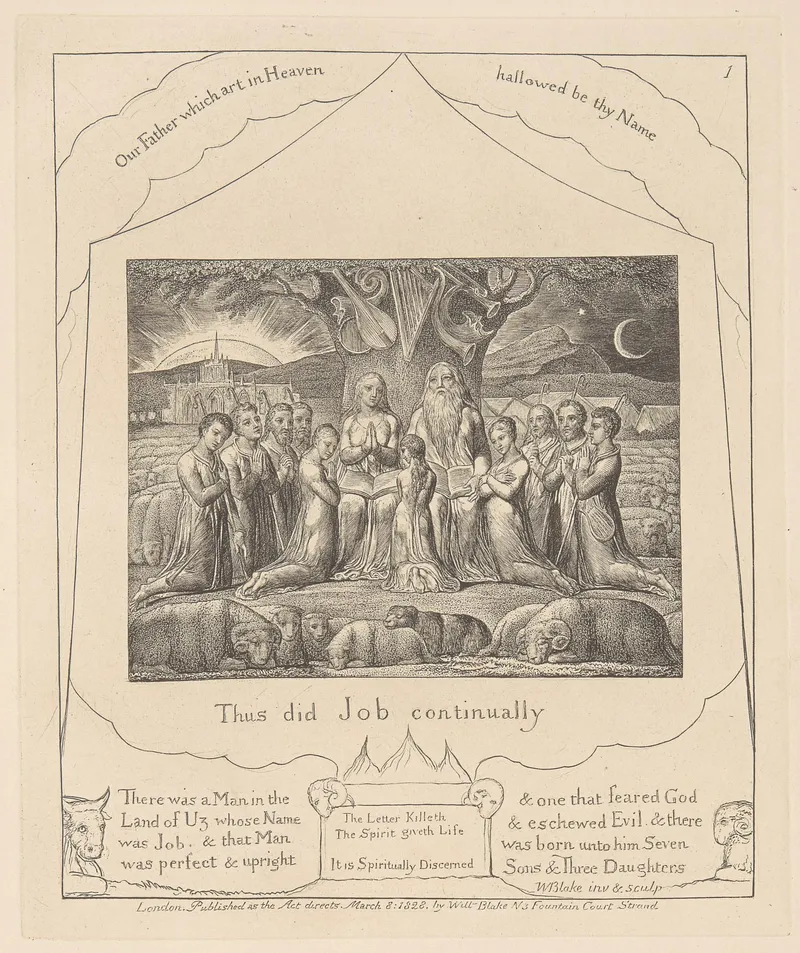
Tobit 2:1-5He Rose from the Table and Came Fasting to the Dead
1But after this, when there was a festival of the Lord, and a good dinner was prepared in Tobias’s house, 2He said to his son: Go, and bring some of our tribe that fear God, to feast with us.
The chapter opens on a feast, and the very first thing Tobit does with his abundance is try to share it. He does not send his son to invite the prosperous or the well-connected. He asks for some of his own people who fear God, the kind of guests who could never repay him. This is the quiet center of the man's character. A festival of the Lord is, for him, an occasion to widen the table, not to close ranks around it.
Long before the chapter tests his faith with suffering, it shows us the shape of his heart in a season of plenty.
3And when he had gone, returning he told him, that one of the children of Israel lay slain in the street. And he forthwith leaped up from his place at the table, and left his dinner, and came fasting to the body: 4And taking it up carried it privately to his house, that after the sun was down, he might bury him cautiously.
The contrast is sharp and deliberate. A son sent to find a guest comes back with a corpse, and a celebration collapses into mourning in a single sentence. Notice how Tobit responds. He does not finish the meal first, or send a servant, or wait for a convenient hour. He "leaped up" and left his dinner untouched, coming to the body "fasting." His own appetite simply stops mattering when a brother lies dishonored in the street.
To leave a feast for a funeral is to let the need of another outweigh your own comfort, and Tobit does it without a moment's calculation.
The detail that he acts "cautiously," carrying the body "privately" and waiting until after sundown, tells us this is dangerous work. As the next verses make plain, the king had forbidden it, and Tobit has already nearly died for the same offense once before. Burying the dead was, for Israel, a sacred duty of mercy owed even to a stranger, a way of honoring a person made in God's image when the world had thrown them away like refuse.
Tobit will not let the threat of the king cancel a duty he owes to God and to his people. So he does it in secret, under cover of dark, and accepts the risk.
5And when he had hid the body, he ate bread with mourning and fear,
When Tobit finally eats, it is "with mourning and fear." The festival meal he began the day expecting is gone. He grieves the murdered man, and he fears the danger he has taken on himself by burying him. There is no pretense here that righteousness feels triumphant. Doing the right thing has cost him his celebration and put his life at risk, and the text lets us feel the weight of that. Faithfulness, in this chapter, is not a glowing reward. It is bread eaten in sorrow by a man who did what was right anyway.
Tobit 2:6-9He Feared God More Than the King
6Remembering the word which the Lord spoke by Amos the prophet: Your festival days shall be turned into lamentation and mourning. 7So when the sun was down, he went and buried him.
In the middle of his grief Tobit remembers Scripture, and the verse that surfaces is a hard one: the prophet Amos had warned that Israel's feasts would be turned into mourning. Tobit is living it. His own festival has collapsed into a funeral, and he reads his experience through the word of God rather than apart from it. This is the habit of a soul soaked in Scripture. When sorrow comes, it does not catch him without language for it.
The prophets had told Israel that unfaithfulness would turn joy to lament, and even now Tobit hears that word and lets it interpret his day.
8Now all his neighbours blamed him, saying: Once already commandment was given for thee to be slain because of this matter, and thou didst scarce escape the sentence of death, and dost thou again bury the dead? 9But Tobias fearing God more than the king, carried off the bodies of them that were slain, and hid them in his house, and at midnight buried them.
His neighbours are not cruel so much as baffled. They remind him that he nearly died for this once already and ask why on earth he would risk it again. It is the voice of ordinary prudence, and it sounds reasonable. The narrator answers it in a single phrase that defines the whole man: Tobit feared God more than the king. He weighs an earthly threat against a heavenly duty and decides the duty wins.
So he keeps gathering the slain, hiding them by day, burying them at midnight. When the command of a king collides with the command of God, Tobit has already settled which one he will obey, whatever it costs him.
Tobit 2:10-14Blinded, and Set Beside Holy Job
10Now it happened one day, that being wearied with burying, he came to his house, and cast himself down by the wall and slept, 11And as he was sleeping, hot dung out of a swallow’s nest fell upon his eyes, and he was made blind.
The blow falls with a terrible ordinariness. Tobit is not struck down in some dramatic confrontation. He is simply exhausted from his works of mercy, lying against a wall, asleep, when droppings from a bird's nest fall into his open eyes and he loses his sight. There is no grandeur in it, only the smallness of how suffering often arrives, in the gap between one good deed and the next. The man who buried others now cannot see, and the reader is left holding the same hard question the rest of the chapter will face squarely: why does this happen to a man so devoted to doing right?
12Now this trial the Lord therefore permitted to happen to him, that an example might be given to posterity of his patience, as also of holy Job. 13For whereas he had always feared God from his infancy, and kept his commandments, he repined not against God because the evil of blindness had befallen him, 14But continued immoveable in the fear of God, giving thanks to God all the days of his life.
The narrator names what is happening and ties Tobit's story to the oldest meditation on innocent suffering in all of Scripture. This trial, he says, was permitted so that later generations would have an example of patience, like holy Job. The comparison is the key that unlocks the chapter. Job was a blameless man who lost everything and was told by his friends that his suffering must be punishment. Tobit walks the same road: a righteous man, struck by affliction, taunted by those near him.
The text does not claim Tobit earned this through sin. It sets him among the suffering righteous, and asks us to watch how such a man holds onto God.
Here is the heart of it. Tobit "repined not against God," he did not turn bitter or accuse Heaven of injustice, but "continued immoveable in the fear of God, giving thanks." This is not the calm of a man who feels nothing. The chapter has already shown his mourning and fear. It is the steadiness of a man whose trust in God is older and deeper than any single sorrow. He had feared God from infancy, and that lifelong reverence holds when his sight does not.
To give thanks while blind is a hard and quiet kind of faith, the kind that does not demand an explanation before it will keep loving God.
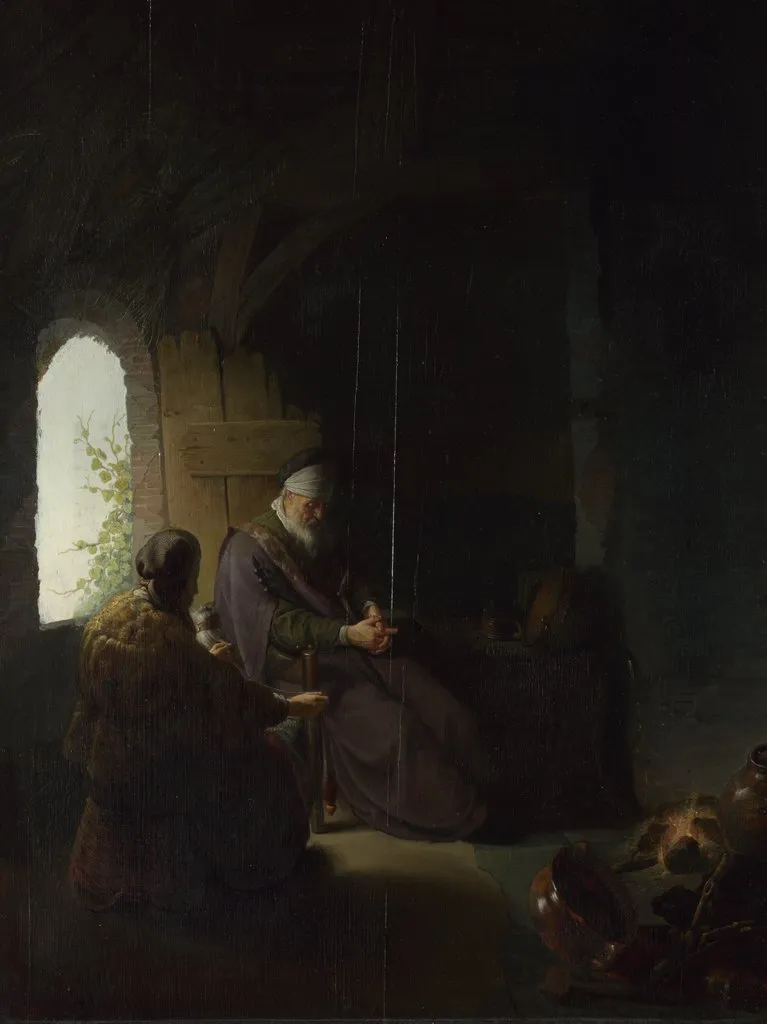
Tobit 2:15-18Where Is Thy Hope? The Answer of a Faithful Man
15For as the kings insulted over holy Job: so his relations and kinsmen mocked at his life, saying: 16Where is thy hope, for which thou gavest alms, and buriedst the dead?
The mockery is aimed straight at the wound. Where is your hope now, they ask, the hope for which you gave alms and buried the dead? The taunt assumes that goodness is a transaction: be righteous, and you should prosper, so a righteous man left blind and poor must have been hoping in nothing. It is the same accusation Job's friends pressed on him, dressed as concern. Behind it lies a question every sufferer eventually meets.
If doing right has brought you only loss, was your hope ever real? The chapter does not dodge the question. It lets it be asked in its sharpest form, and then it lets Tobit answer.
17But Tobias rebuked them, saying: Speak not so: 18For we are the children of the saints, and look for that life which God will give to those that never change their faith from him.
Tobit's answer reframes everything. His hope was never a wager on a comfortable life. "We are the children of the saints," he says, heirs of the faithful who went before, "and look for that life which God will give to those that never change their faith from him." His hope reaches past his present darkness to the life God promises those who hold fast to the end. The mockers measured hope by what they could see; Tobit anchors it in what God has pledged.
This is the answer of the suffering righteous in every age: a hope that does not collapse when the visible rewards vanish, because it was never resting on them in the first place.
Tobit 2:19-23A Stray Kid and a Wife's Bitter Word
19Now Anna his wife went daily to weaving work, and she brought home what she could get for their living by the labour of her hands. 20Whereby it came to pass, that she received a young kid, and brought it home: 21And when her husband heard it bleating, he said: Take heed, lest perhaps it be stolen: restore ye it to its owners, for it is not lawful for us either to eat or to touch any thing that cometh by theft.
The blindness has changed everything. Tobit, once the host of feasts, can no longer provide, and so his wife Anna goes out daily to weaving work, supporting the household by the labor of her hands. The dignity and the strain of it both sit in that line. She is doing what must be done. When she is given a young goat as part of her wages and brings it home, it is a small mercy in a hard season, a bit of unexpected provision after long days of work.
Tobit hears the kid bleating and his first instinct, even now, even blind and dependent, is scrupulous honesty. Make sure it was not stolen, he says; return it if it has an owner, for we may not eat or even touch what comes by theft. His conscience has not loosened one notch under hardship. To a wife who has worked herself to exhaustion to feed them, the suspicion must have landed hard, as if her honest labor were being questioned.
Yet the moment reveals how deep Tobit's integrity goes. He would rather lose a needed meal than keep what might not be rightfully theirs.
22At these words his wife being angry answered: It is evident thy hope is come to nothing, and thy alms now appear. 23And with these, and other such like words she upbraided him.
Anna's words are the cruelest in the chapter, and they come not from an enemy but from the wife who has been carrying him. Your hope has come to nothing, she says; look what your alms have gotten you. It is the same taunt the kinsmen threw, now spoken across the marriage by a woman worn thin by grief and labor. The chapter does not condemn her so much as let us feel the pressure that wrung the words out of her.
This is exactly where the Job comparison lands hardest, for Job's wife also urged him to give up on God. The deepest test of Tobit's hope is not the mockery of strangers. It is hearing his own household say that everything he believed has failed, and choosing still to hold on.
Where this echoes in Scripture
He Rose from the Table and Came Fasting to the Dead
- Matthew 25:35-36For I was an hungred, and ye gave me meat... Naked, and ye clothed me: I was sick, and ye visited me.Jesus measures love by mercy shown to those who cannot repay, the very life Tobit lives.
- Isaiah 58:7Is it not to deal thy bread to the hungry, and that thou bring the poor that are cast out to thy house?The fast God chooses is exactly Tobit's widened table and care for the outcast.
- Luke 14:13-14But when thou makest a feast, call the poor... and thou shalt be blessed; for they cannot recompense thee.Tobit invites the ones who could never repay him, just as Jesus commends.
He Feared God More Than the King
- Acts 5:29Then Peter and the other apostles answered and said, We ought to obey God rather than men.The apostles draw the same line Tobit drew: God's command outranks any earthly command.
- Daniel 3:17-18Our God whom we serve is able to deliver us... But if not... we will not serve thy gods.Three exiles in another foreign court also fear God above the king, whatever follows.
- Amos 8:10And I will turn your feasts into mourning, and all your songs into lamentation.The very prophecy Tobit remembers as his own feast becomes a funeral.
Blinded, and Set Beside Holy Job
- Job 1:21-22The LORD gave, and the LORD hath taken away... In all this Job sinned not, nor charged God foolishly.The very pattern the narrator invokes: a righteous sufferer who will not accuse God.
- Job 2:10Shall we receive good at the hand of God, and shall we not receive evil? In all this did not Job sin with his lips.Job answers his wife as Tobit answers his: receiving hardship without turning on God.
- James 5:11Ye have heard of the patience of Job, and have seen the end of the Lord; that the Lord is very pitiful, and of tender mercy.The New Testament holds up Job's patience just as Tobit 2 does, and points to the Lord's mercy at the end.
Where Is Thy Hope? The Answer of a Faithful Man
- John 11:25-26I am the resurrection, and the life: he that believeth in me, though he were dead, yet shall he live.The life Tobit looks for is the very promise Christ embodies and proves.
- 1 Peter 2:23Who, when he was reviled, reviled not again; when he suffered, he threatened not; but committed himself to him that judgeth righteously.The suffering righteous One does what Tobit does: bears mockery and entrusts himself to God.
- Hebrews 11:13These all died in faith, not having received the promises, but having seen them afar off... and confessed that they were strangers and pilgrims.Tobit, "child of the saints," joins those who hope in a life beyond what they can yet see.
A Stray Kid and a Wife's Bitter Word
- Job 2:9Then said his wife unto him, Dost thou still retain thine integrity? curse God, and die.Job's wife voices the same despair Anna does, urging him to abandon his faith.
- Proverbs 13:11Wealth gotten by vanity shall be diminished: but he that gathereth by labour shall increase.Tobit's refusal to keep anything by theft reflects the integrity Scripture commends.
- Ephesians 4:28Let him that stole steal no more: but rather let him labour, working with his hands the thing which is good.Honest work over ill-gotten gain is exactly the line Tobit will not cross, even in need.