Daniel 1
People in this chapter
Jerusalem falls. The sacred vessels of the temple are carried into Shinar, into the treasure house of a foreign god, and with them go the finest of Judah's young men. Babylon does not merely conquer these four; it sets out to absorb them - new language, new learning, new names, the king's own rich table set before them daily. Every detail is engineered to remake Judah's brightest from the inside.1
Tap any highlighted phrase to jump to the commentary that unpacks it.
Daniel 1:1-2Jerusalem Falls, the Vessels Carried Away
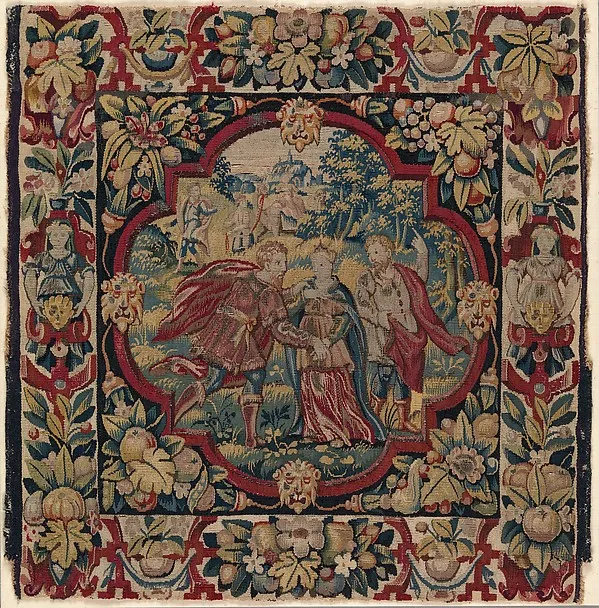
1In the third year of the reign of Jehoiakim king of Judah came Nebuchadnezzar king of Babylon unto Jerusalem, and besieged it. 2And the Lord gave Jehoiakim king of Judah into his hand, with part of the vessels of the house of God: which he carried into the land of Shinar to the house of his god; and he brought the vessels into the treasure house of his god.
The book opens in defeat, and the defeat is told with a careful eye. The siege is real, the city falls - and then one small verb reframes the whole disaster: the Lord gave Jehoiakim … into his hand (v. 2). Babylon did not simply overpower Jerusalem; the Lord gave the city over. From the first sentence the book quietly insists that even in catastrophe God has not lost control - the hand that seems to belong to Nebuchadnezzar is, underneath, being moved by another.
And the first casualty named is the temple: part of the vessels of the house of God are carried into the land of Shinar, into the treasure house of his god. Shinar is the old name from Genesis, the place of Babel, the land of human pride that built a tower to heaven. To set the holy vessels in a pagan god's treasury was to make a public boast - as if Babylon's god had defeated the God of Israel.
The boast will prove hollow; the same vessels reappear at the very end of the empire (Dan. 5), and the God who let them be taken will outlast every shrine they were stored in. But for now the scene is one of loss: the things of God in the house of an idol, and the people of God on the road to exile.1
Daniel 1:3-5Chosen for the King's Court
3And the king spake unto Ashpenaz the master of his eunuchs, that he should bring certain of the children of Israel, and of the king’s seed, and of the princes; 4Children in whom was no blemish, but well favoured, and skilful in all wisdom, and cunning in knowledge, and understanding science, and such as had ability in them to stand in the king’s palace, and whom they might teach the learning and the tongue of the Chaldeans. 5And the king appointed them a daily provision of the king’s meat, and of the wine which he drank: so nourishing them three years, that at the end thereof they might stand before the king.
Babylon's strategy is not crude. It does not merely deport Judah; it selects and cultivates the best of her. The king commands his chief official to bring certain of the children of Israel, and of the king's seed, and of the princes (v. 3) - royal and noble youths - and the qualifications are exacting: Children in whom was no blemish, but well favoured, and skilful in all wisdom, and cunning in knowledge, and understanding science, and such as had ability in them to stand in the king's palace (v. 4).
These are Judah's most promising young men: handsome, intelligent, capable, the kind who would have served in Jerusalem's own court. And they are to be retrained - taught the learning and the tongue of the Chaldeans. The aim is total: to control these youths, to reshape them, to pour Babylon's language, literature, and worldview into the most impressionable and gifted minds of the conquered nation. It is conquest by absorption. The empire understood what every empire understands - that you do not finally master a people by force alone, but by capturing their imagination, by teaching their children to think and dream in your terms.
The pressure on these four was therefore the gentlest and most dangerous kind: the offer of belonging, with a life of comfort designed to make them forget who they are.
Daniel 1:6-7New Names for the King's Court
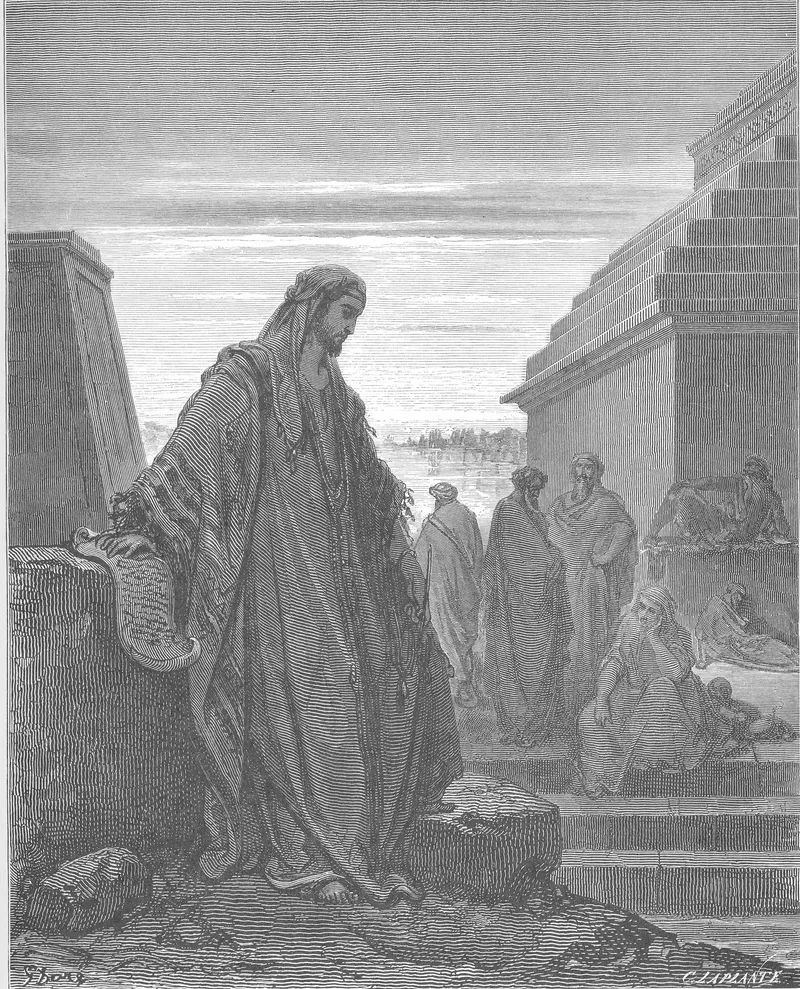
6Now among these were of the children of Judah, Daniel, Hananiah, Mishael, and Azariah: 7Unto whom the prince of the eunuchs gave names: for he gave unto Daniel the name of Belteshazzar; and to Hananiah, of Shadrach; and to Mishael, of Meshach; and to Azariah, of Abednego.
The remaking reaches even to their names (v. 7), and the change is pointed. Their Hebrew names were small confessions of faith. Daniel means God is my judge; Hananiah, the LORD is gracious; Mishael, who is what God is; Azariah, the LORD has helped. Each one carried the name of the God of Israel woven into it. The new names fold that God out and Babylon's gods in - Belteshazzar, Shadrach, Meshach, Abednego - names that nod toward Bel and the deities of the empire.
To rename someone is to claim authority over who they are; it is what a master does to a servant, what a conqueror does to a province. Babylon could compel the new names, and Scripture even uses them through the rest of the book. But a name imposed from outside cannot, by itself, change a heart settled within. The empire could write Belteshazzar over the door; it could not erase the Daniel underneath. The next verses will show that what a person is called and what a person is are not the same thing - and that the second is decided somewhere the conqueror cannot reach.2
Daniel 1:8-9Daniel Purposed in His Heart
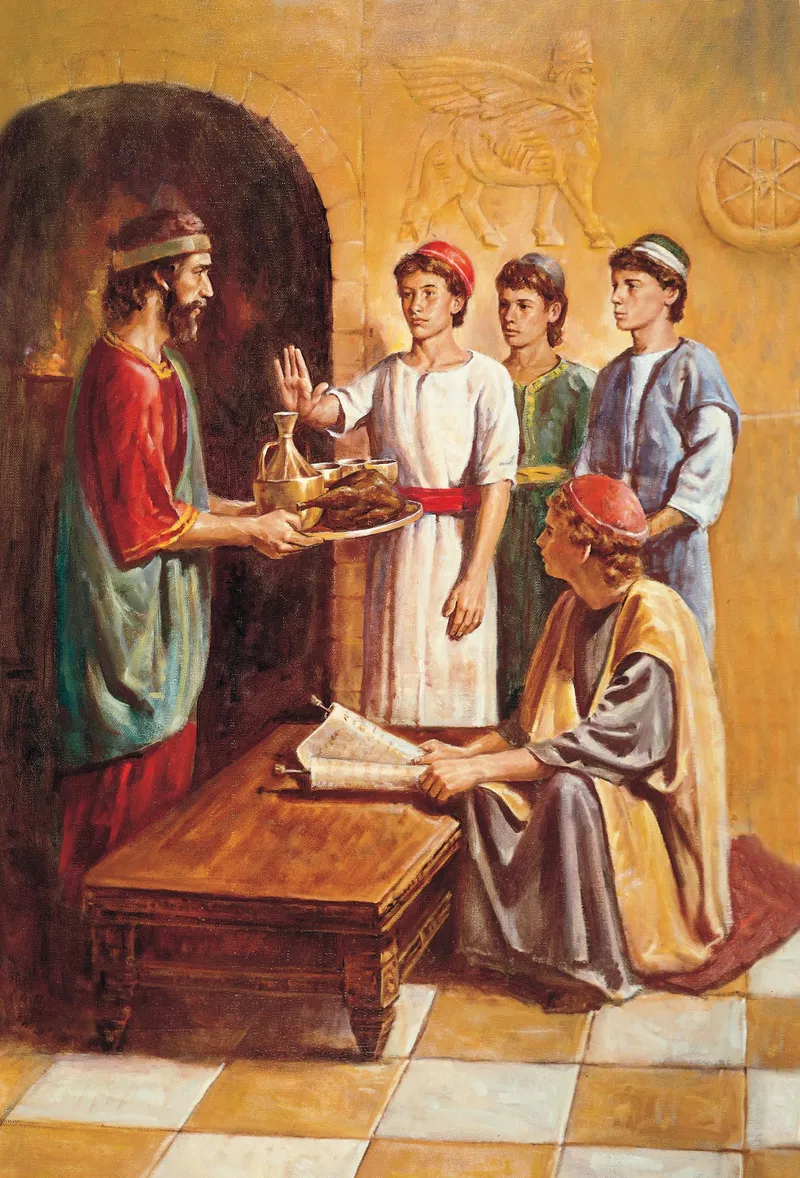
8But Daniel purposed in his heart that he would not defile himself with the portion of the king’s meat, nor with the wine which he drank: therefore he requested of the prince of the eunuchs that he might not defile himself. 9Now God had brought Daniel into favour and tender love with the prince of the eunuchs.
Here is the verse on which the whole book turns, and everything in it hangs on three words: in his heart (v. 8). The decision was made inside, in the place no conqueror could reach, and it was made beforehand - settled as a fixed resolve before the meal was ever set before him, before any threat was spoken, before the moment of pressure came. This is the great lesson of the chapter, and it is easy to miss.
Daniel did not wait until the food was on the table and then agonize over what to do. He had already decided who he was and to whom he belonged, so that when the test arrived there was nothing left to decide; the verdict had been reached in private long before. That is how faithfulness usually works, and it is worth letting it land on you personally. If you wait until the pressure is on to settle the question, you will almost always bend; if you have settled it in the heart beforehand, you stand.
And notice what Daniel refuses and what he does not. He does not refuse to learn Chaldean, or to serve in the court, or to bear a Babylonian name - he yields on everything that is merely cultural. He draws his line at the one place where serving Babylon would mean unfaithfulness to God: the king's table, with all it implied. The wisdom is in knowing exactly where the line is, and in having drawn it already, in the heart, before it was tested.2
The next move is as important as the resolve itself: therefore he requested of the prince of the eunuchs that he might not defile himself (v. 8). Daniel does not announce his refusal, denounce the king, or stage a confrontation. He requests. He asks permission, courteously, of the man set over him. There is a kind of zeal that mistakes rudeness for conviction, that thinks faithfulness must always come with a raised voice. Daniel shows another way.
His resolve is unbendable, but his manner is gracious and humble - firm in conscience, gentle in approach. And the verse that follows tells us why the request had any hope at all: Now God had brought Daniel into favour and tender love with the prince of the eunuchs (v. 9). The official's goodwill toward Daniel was not luck, and it was not merely Daniel's charm; it was God's doing. Behind the human kindness was a divine hand - the same hand that gave Jerusalem over in verse 2 now opening a door of favour in the heart of a Babylonian officer.
This is one of Scripture's quiet patterns: God working through the disposition of people in power, turning the heart of an official toward His servant. Daniel does his part - he resolves, he asks respectfully - and God does what only God can do, which is to move the heart of the man holding the decision. Faithfulness and favour run side by side: Daniel is responsible for his resolve and his manner; God is at work in the outcome.
Daniel 1:10-13Prove Thy Servants Ten Days
10And the prince of the eunuchs said unto Daniel, I fear my lord the king, who hath appointed your meat and your drink: for why should he see your faces worse liking than the children which are of your sort? then shall ye make me endanger my head to the king. 11Then said Daniel to Melzar, whom the prince of the eunuchs had set over Daniel, Hananiah, Mishael, and Azariah, 12Prove thy servants, I beseech thee, ten days; and let them give us pulse to eat, and water to drink. 13Then let our countenances be looked upon before thee, and the countenance of the children that eat of the portion of the king’s meat: and as thou seest, deal with thy servants.
Daniel 1:14-16Fairer and Fatter Than Them All
14So he consented to them in this matter, and proved them ten days. 15And at the end of ten days their countenances appeared fairer and fatter in flesh than all the children which did eat the portion of the king’s meat. 16Thus Melzar took away the portion of their meat, and the wine that they should drink; and gave them pulse.
The official is sympathetic but afraid: I fear my lord the king … why should he see your faces worse liking than the children which are of your sort? then shall ye make me endanger my head to the king (v. 10). His worry is real - if these four come out looking sickly, his own neck is on the line. So Daniel does something both humble and bold: he proposes a test. To Melzar, the steward, he says, Prove thy servants, I beseech thee, ten days; and let them give us pulse to eat, and water to drink (v. 12), and then judge by what you see.
It is faith expressed as a proposal. Daniel does not demand that the official simply trust him; he offers a short, low-risk trial and stakes the result on God. He gives God room to vindicate the choice - and asks for only ten days to do it. The outcome is decisive: at the end of ten days their countenances appeared fairer and fatter in flesh than all the children which did eat the portion of the king's meat (v. 15).
On a diet of vegetables and water, the four look healthier than the rest on the royal menu. The point is not that pulse is a better diet than meat; ten days is far too short for nutrition alone to show such a difference. The point is that God honored the faithfulness. He who fed Israel in the wilderness sustained these four in Babylon, so that the steward quietly took away the portion of their meat … and gave them pulse (v. 16).
Faithfulness, it turns out, lost them nothing; God saw to that.
Daniel 1:17-21Ten Times Better
17As for these four children, God gave them knowledge and skill in all learning and wisdom: and Daniel had understanding in all visions and dreams. 18Now at the end of the days that the king had said he should bring them in, then the prince of the eunuchs brought them in before Nebuchadnezzar. 19And the king communed with them; and among them all was found none like Daniel, Hananiah, Mishael, and Azariah: therefore stood they before the king. 20And in all matters of wisdom and understanding, that the king enquired of them, he found them ten times better than all the magicians and astrologers that were in all his realm. 21And Daniel continued even unto the first year of king Cyrus.
The faithfulness at the table is rewarded with a gift far larger than health, and the source of it is named first and plainly: God gave (v. 17). Their excellence is not credited to Babylon's schooling or to their own native brilliance, but to the hand of God - the same hand that gave the city over, opened the official's heart, and sustained them on pulse. They did the work of three years' training, and God made the work fruitful.
And the gift is comprehensive: all learning and wisdom, the full curriculum of the Chaldeans, mastered. To Daniel is added something more specialized still - understanding in all visions and dreams - a gift that will define the rest of the book and lift him far above the king's diviners. When the three years end and the youths are brought before Nebuchadnezzar himself, the verdict is unanimous and lopsided: among them all was found none like Daniel, Hananiah, Mishael, and Azariah (v. 19), and in every matter the king tested, he found them ten times better than all the magicians and astrologers that were in all his realm (v. 20).
The number is not a measurement but a way of saying incomparably better - a different class altogether from Babylon's wise men. The young men who would not eat the king's food now stand at the head of the king's court, and the reason is no secret: God gave.
A small phrase repeats through this chapter and quietly carries its meaning: to stand before the king. It was named as the goal of the whole program in verse 5 - the youths were trained that … they might stand before the king - and now it arrives as the reward of their faithfulness: therefore stood they before the king (v. 19). To stand before a king was to be admitted to his presence, to serve in his court, to hold a place of trust and access at the very center of power.
And there is an echo in the words worth hearing. The same language is used in Scripture of those who stand before the LORD - the priests and ministers who serve in His presence. These four faithful youths, set down in a pagan palace, end up standing before earthly power precisely because they had first settled who they served before the throne of heaven. They serve the king, and serve him well; but they are not owned by him, and they do not bow their conscience to his gods.
That is the paradox the chapter has been building toward: it is the ones who would not compromise - who drew a clear line at the king's table - who end up most useful, most trusted, standing closest to the throne. Faithfulness in the hidden thing, the quiet refusal that no one would have noticed, became the doorway into the public calling. The closing verse seals it with a note of endurance: Daniel continued even unto the first year of king Cyrus (v. 21) - outlasting the very empire that carried him off, faithful from the fall of Jerusalem to the dawn of the return home.
Research trail
Sources & further study
These references support the historical, linguistic, manuscript, and contextual notes in this chapter. Scripture remains the primary text; external sources are provided so readers can inspect the research directly.
- Daniel 1 - Translators' NotesThe NET Bible's detailed footnotes on Daniel 1 - the dating in verse 1, the carrying of the temple vessels to Shinar (v. 2), the meaning and sense of the youths' defilement and the king's provision (vv. 5, 8), and the unusual term rendered “pulse” in verses 12 and 16.
- Daniel 1 · Hebrew + classical Jewish commentaryThe Hebrew text of Daniel 1 with Rashi, Ibn Ezra, and other classical commentators side by side - useful for the phrase vayasem … al libo (v. 8, “purposed in his heart,” literally “set upon his heart”), for zeroim (vv. 12, 16, the “pulse” of the test), and for the new names given the four youths in verse 7.
- Daniel 1 ↔ Psalm 119 · Matthew 4 · John 17 · James 1Traces the threads tying Daniel 1 to the rest of Scripture - the heart settled before the test (v. 8) read beside thy word have I hid in mine heart (Ps. 119:11), the refusal of the easy provision read beside man shall not live by bread alone (Matt. 4:4), and the wisdom God grants the four (v. 17) read beside if any of you lack wisdom, let him ask of God (Jas. 1:5).
Where this echoes in Scripture
New Names for the King's Court
- 2 Kings 24:1In his days Nebuchadnezzar king of Babylon came up, and Jehoiakim became his servant three years.The siege of verse 1 told from the history of the kings - the fall that set the exile in motion.
- Genesis 11:2as they journeyed from the east... they found a plain in the land of Shinar; and they dwelt there.The land where the vessels were taken (v. 2) - Shinar, the old place of Babel and human pride.
- Matthew 4:3-4command that these stones be made bread... Man shall not live by bread alone.The deepest answer to the king's table (v. 5) - the Son who would not be fed at the tempter's word.
- John 6:35I am the bread of life: he that cometh to me shall never hunger.Beyond the king's provision (v. 5) - the One who is Himself the bread that fills the deeper hunger.
- Daniel 5:2-4Belshazzar... commanded to bring the golden and silver vessels which his father Nebuchadnezzar had taken out of the temple.The same vessels of verse 2 reappear - and Babylon's boast against the God of Israel comes to nothing.
- Romans 12:2be not conformed to this world: but be ye transformed by the renewing of your mind.The pressure of verses 4-5 named - the world's patient effort to conform the mind, and the call to resist it.
Fairer and Fatter Than Them All
- Psalm 119:11Thy word have I hid in mine heart, that I might not sin against thee.The secret of verse 8 - the heart prepared beforehand, so the resolve is settled before the test.
- Psalm 57:7My heart is fixed, O God, my heart is fixed: I will sing and give praise.The fixed heart of verse 8 - settled and steady before the pressure, not scrambling within it.
- Proverbs 21:1The king’s heart is in the hand of the LORD... he turneth it whithersoever he will.The favour of verse 9 explained - God moving the heart of the official toward His servant.
- John 17:15-16I pray not that thou shouldest take them out of the world, but that thou shouldest keep them from the evil.Daniel's posture in verse 8 - faithful in the foreign court, in the world but not of it.
- Genesis 39:21the LORD was with Joseph... and gave him favour in the sight of the keeper of the prison.The same pattern as verse 9 - God granting His servant favour in a foreign place of captivity.
Ten Times Better
- James 1:5If any of you lack wisdom, let him ask of God, that giveth to all men liberally... and it shall be given him.The source of verse 17 named - wisdom given freely by God to all who ask Him for it.
- Proverbs 2:6For the LORD giveth wisdom: out of his mouth cometh knowledge and understanding.The truth behind verse 17 - that true wisdom and knowledge are God's gift, not human achievement.
- 1 Corinthians 1:24Christ the power of God, and the wisdom of God.The wisdom God gave (v. 17) named in full - the wisdom of God who is Himself a Person.
- 1 Corinthians 1:30Christ Jesus, who of God is made unto us wisdom, and righteousness, and sanctification.The gift of verse 17 traced to its source - the wisdom that God makes ours in a Person.
- Colossians 2:3In whom are hid all the treasures of wisdom and knowledge.Where the wisdom of verse 17 finally lives - every treasure of it stored up in Christ.
- Luke 16:10He that is faithful in that which is least is faithful also in much.The pattern of verses 8 and 19 - the hidden, small faithfulness that opens the door to the large calling.
- Daniel 6:28So this Daniel prospered in the reign of Darius, and in the reign of Cyrus the Persian.The endurance of verse 21 confirmed - Daniel faithful and prospering across the whole span of the exile.