
Who was Terah in the Bible?
Terah was the father of Abraham who set out from Ur with his family and settled in the city of Haran.
Father of Abraham
Patriarchal age
Terah was the father of Abraham who set out from Ur with his family and settled in the city of Haran.
Follow the reading trailBEYOND THE NAME
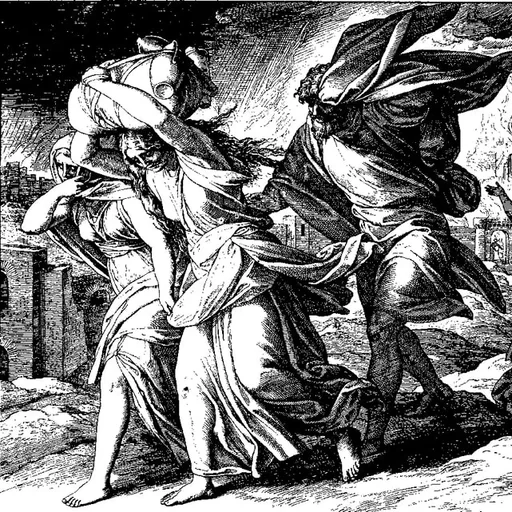
Terah was a descendant of Shem and the father of Abram, Nahor, and Haran. After the death of his son Haran, he gathered Abram, his daughter-in-law Sarai, and his grandson Lot, and left Ur of the Chaldeans to go toward Canaan. They came as far as the city of Haran and settled there, and it was in that place that Terah died.
Themes in the authored commentary
FOLLOW THE PASSAGES
These are chapter studies associated with this record. Their order follows the books and chapters, rather than a reconstructed timeline of the person’s life.
father of Abram, Nahor, and Haran; led part of the household from Ur toward Canaan
People build a city and tower in Shinar. The chapter then traces Shem’s family down to Terah and Abram. It ends with Terah’s household travelling from Ur toward Canaan.
Chapter overview from the authored study guide.THE PEOPLE AROUND THE PERSON
Recorded parents
Recorded children
Relationships follow the source graph. Some are interpretive or uncertain, and individual verse citations are not yet available for every connection.
STUDY & INTERPRETATION
Terah marks the transition from the wider table of nations to the single family through whom God would work His purpose of blessing. His journey out of Ur began the movement toward the land of promise, though it was his son Abram who would be called to complete it and to receive the covenant. Terah’s incomplete journey reminds the reader that God’s promises unfold across generations, carried forward by those who answer His call. From this family line, set in motion in Terah’s day, would come the nation of Israel and at last the One in whom all nations are blessed.
From the Learn of Christ person commentary. Read alongside the linked Scripture passages.KEEP SCRIPTURE CLOSE
1 authored chapter guide features this person. This is guide coverage, not an exhaustive count of biblical mentions.
ASK A BETTER QUESTION
Identity, story, early-life sources, family, and where to read.
Names and spellings in the source: Terah · Thara
Terah was the father of Abraham who set out from Ur with his family and settled in the city of Haran.
Terah was a descendant of Shem and the father of Abram, Nahor, and Haran. After the death of his son Haran, he gathered Abram, his daughter-in-law Sarai, and his grandson Lot, and left Ur of the Chaldeans to go toward Canaan. They came as far as the city of Haran and settled there, and it was in that place that Terah died.
The individualized passage index associates this Terah record with Genesis, Joshua, 1 Chronicles, Luke. There are 10 distinct indexed verse references in the 66-book Bible. Browse the book-by-book list below; it separates this identity from other people who share the name. Source assignments and textual identifications can require interpretation.
A separate childhood account for Terah is not provided in our current authored profile sources. Begin with Genesis 11:24 and the passages linked here for the evidence that is available. The first indexed reference to a name is not a birth record. This profile does not establish a birth date, schooling, or childhood events beyond what its sources state.
Terah’s source record lists Nahor (father of Terah) (father), Abraham (child), Nahor (child), Haran (son of Terah) (child), Sarah (child). These are source-graph relationships; legal family, uncertain identifications, and ancestral language require the cautions below. Individual verse evidence is not yet retained for every family edge.
Terah marks the transition from the wider table of nations to the single family through whom God would work His purpose of blessing. His journey out of Ur began the movement toward the land of promise, though it was his son Abram who would be called to complete it and to receive the covenant.
Answers draw on our existing authored biography and linked chapter studies. Where supplied, verse assignments come from the individualized STEP Bible index. Childhood answers distinguish documented events from gaps in the available sources.
FIND THE PERSON IN THE TEXT
10 distinct verse references in the source’s 66-book index. These are indexed name assignments, rather than every indirect allusion to this person. A name may also refer to descendants, a tribe, or a nation; read each passage to distinguish that usage from the individual.
“And Nahor lived nine and twenty years, and begat Terah:”
Genesis 11:24 · King James Version
“Now these are the generations of Terah: Terah begat Abram, Nahor, and Haran; and Haran begat Lot.”
Genesis 11:27 · King James Version
“And the days of Terah were two hundred and five years: and Terah died in Haran.”
Genesis 11:32 · King James Version
“Which was the son of Jacob, which was the son of Isaac, which was the son of Abraham, which was the son of Thara, which was the son of Nachor,”
Luke 3:34 · King James Version
References are adapted from STEP Bible / Tyndale House TIPNR (CC BY 4.0). Deduplicated, matched to this identity, and checked against the bundled KJV’s verse bounds. Interpretive assignments and translation/versification differences may remain. This index is separate from evidence for individual family relationships.
YOUR OWN OBSERVATIONS
Notes, saved people, and study marks stay in this browser. They do not sync to your account.
KEEP EXPLORING
People featured in the same study guides. Sharing a chapter does not establish a family relationship.