1 Samuel 26
People in this chapter
Once before, David had Saul in his power. Saul was sleeping, unarmed, at David's mercy. And David refused to raise his hand. He said then: "The Lord forbid that I should stretch forth mine hand against the Lord's anointed." Now, for the second time, the same scene repeats. The Ziphites have betrayed David's hiding place. Saul has come with 3,000 men. David and Abishai slip into the camp at night. Saul lies sleeping. The spear is within reach.
Tap any highlighted phrase to jump to the commentary that unpacks it.
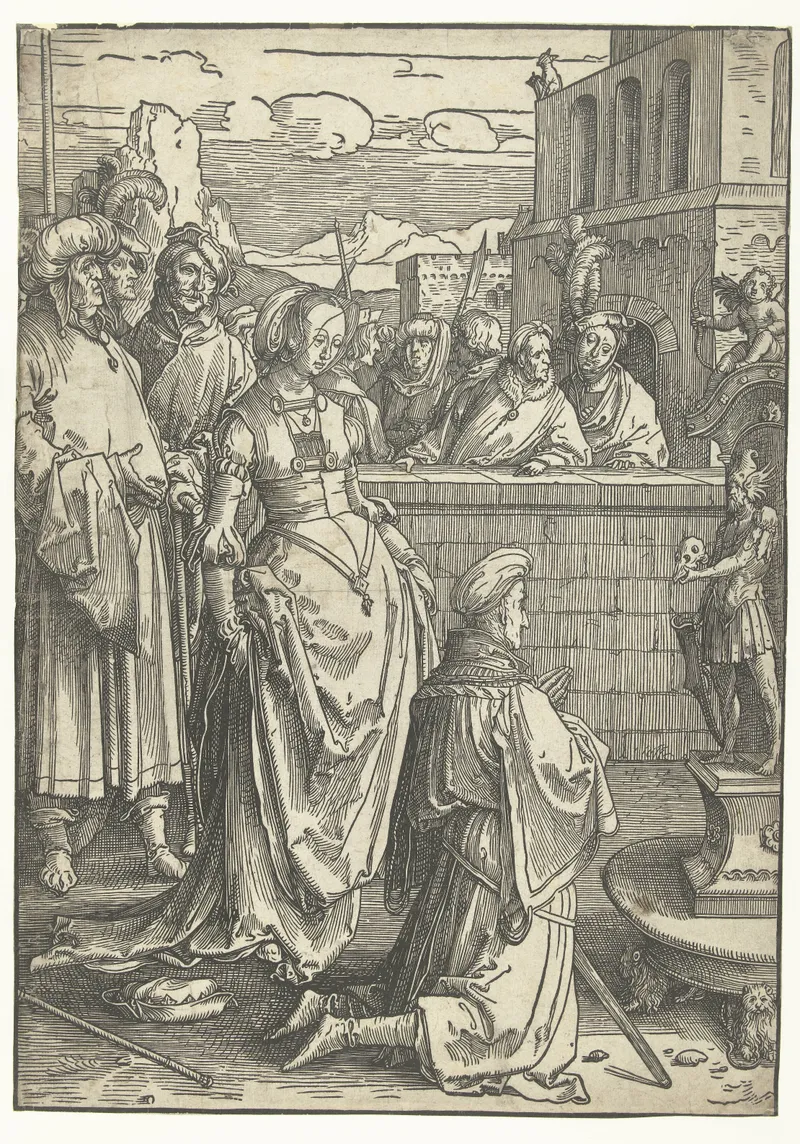
1 Samuel 26:1-5Saul Pursues David Again
1And the Ziphites came unto Saul to Gibeah, saying, Doth not David hide himself in the hill of Hachilah, which is before Jeshimon? 2Then Saul arose, and went down to the wilderness of Ziph, having three thousand chosen men of Israel with him, to seek David in the wilderness of Ziph. 3And Saul pitched in the hill of Hachilah, which is before Jeshimon, by the way. But David abode in the wilderness, and he saw that Saul came after him into the wilderness. 4David therefore sent out spies, and understood that Saul was come in very deed. 5And David arose, and came to the place where Saul had pitched: and David beheld the place where Saul lay, and Abner the son of Ner, the captain of his host: and Saul lay in the trench, and the people pitched round about him.
The Ziphites have betrayed David twice now. Hachilah means "the dark" or "the smooth" - a hill on the borderlands of Jeshimon, the wilderness. David is always fleeing toward the margins, the high places, the lands that belong to no kingdom yet. This is where hunted men hide.123
David does not simply wait. He sends out spies to confirm what the Ziphites have told Saul. David is shrewd. He verifies rather than relying on rumor. And when the spies return with proof, David moves toward the danger rather than away from it, with purpose rather than panic.
1 Samuel 26:6-12The Spear and the Cruse Taken
6Then answered David and said to Ahimelech the Hittite, and to Abishai the son of Zeruiah, brother to Joab, saying, Who will go down with me to Saul to the camp? And Abishai said, I will go down with thee.
Ahimelech the Hittite is a foreigner, a non-Israelite, yet he is in David's camp. Later he is mentioned only this once. His presence shows David's force was a mixed band - refugees, exiles, the desperate and the brave, drawn to a man they believed in.
Abishai is the son of Zeruiah, brother to Joab - the same Joab who will later be David's fierce and sometimes merciless commander. Abishai responds at once: "I will go down with thee." He is loyal. He is eager. He will prove to be eager in ways that test David's restraint.
7So David and Abishai came to the people by night: and, behold, Saul lay sleeping within the trench, and his spear stuck in the ground at his bolster: but Abner and the people lay round about him. 8Then said Abishai to David, God hath delivered thine enemy into thine hand this day: now therefore let me smite him, I pray thee, with the spear even to the earth at once, and I will not smite him the second time.
"God hath delivered thine enemy into thine hand this day." It is a reasonable inference from the circumstance. The man who hunts David is asleep. His army sleeps around him. A deep sleep has fallen - and Abishai reads it as divine gift. The opportunity looks like providence. Sometimes the most dangerous moment is when circumstances seem to align perfectly with our desires.
Abishai does not hesitate. "Let me smite him…with the spear even to the earth at once, and I will not smite him the second time." He is offering to end this. One stroke. One certainty. No second blow necessary. The logic is compelling. Why not?
9And David said to Abishai, Destroy him not: for who can stretch forth his hand against the LORD’s anointed, and be guiltless? 10David said furthermore, As the LORD liveth, the LORD shall smite him; or his day shall come to die; or he shall descend into battle, and perish. 11The LORD forbid that I should stretch forth mine hand against the LORD’s anointed: but, I pray thee, take thou now the spear that is at his bolster, and the cruse of water, and let us go.
David refuses, with firmness. "Destroy him not." He speaks as if he has the authority - which he does, in this moment. He uses it to forbid violence, and his reason is theological: to strike the anointed is to strike against God.
David trusts in God's judgment. Saul will die - all men do. But not by David's hand. Either the Lord will smite him, or his day will come, or he will fall in battle. The ways are God's to choose. David's part is to refuse to be judge and executioner.
Notice what David does not take: the spear, the cruse. Wait - he does take them, but as proof. He will need them later to show Saul, and all Israel, that he had the power to kill but chose not to. The proof lies in the king's life, still intact, carried as evidence in the objects left unbloodied.
12So David took the spear and the cruse of water from Saul’s bolster; and they gat them away, and no man saw it, nor knew it, neither awaked: for they were all asleep; because a deep sleep from the LORD was fallen upon them.
The text repeats: "a deep sleep from the Lord was fallen upon them." This is the hand of God in the narrative, a moment made possible by divine providence, not by fortune. He provides the opening. And David, having the moment, uses it to take proof of his restraint rather than to take the king's life.
1 Samuel 26:13-16David Calls Across the Valley
13Then David went over to the other side, and stood on the top of an hill afar off; a great space being between them: 14And David cried to the people, and to Abner the son of Ner, saying, Answerest thou not, Abner? Then Abner answered and said, Who art thou that criest to the king?
David moves to a place of safety - a great space between him and the camp. He is no longer a man who infiltrated the camp. He is a man calling from the hills. He is declaring his actions to the world, not hiding them.
15And David said to Abner, Art not thou a valiant man? and who is like to thee in Israel? wherefore then hast thou not kept thy lord the king? for there came one of the people in to destroy the king thy lord. 16This thing is not good that thou hast done. As the LORD liveth, ye are worthy to die, because ye have not kept your master, the LORD’s anointed. And now see where the king’s spear is, and the cruse of water that was at his bolster.
David shames Abner across the valley. He calls him valiant, then asks: why did you not keep the king safe? Someone came into the camp to destroy him, and you did not wake. "Ye are worthy to die," David says. And then he shows the evidence: here is the spear. Here is the cruse. I was in your camp. I stood over your king. I could have killed him. And I did not. This display is a public declaration of David's character and Saul's danger.
1 Samuel 26:17-20Saul Recognizes David
17And Saul knew David’s voice, and said, Is this thy voice, my son David? And David said, It is my voice, my lord, O king.
Saul recognizes David's voice. There is something intimate in this - a man knows his enemy's voice as he knows few other things. And he calls David "my son." The title is ambiguous. It could be affection. It could be condescension. In Saul's mouth, these days, it might be both.
18And he said, Wherefore doth my lord thus pursue after his servant? for what have I done? or what evil is in mine hand? 19Now therefore, I pray thee, let my lord the king hear the words of his servant. If the LORD have stirred thee up against me, let him accept an offering: but if they be the children of men, cursed be they before the LORD; for they have driven me out this day from abiding in the inheritance of the LORD, saying, Go, serve other gods. 20Now therefore, let not my blood fall to the earth before the face of the LORD: for the king of Israel is come out to seek a flea, as when one doth hunt a partridge in the mountains.
David makes an extraordinary offer. If God Himself has stirred Saul up against him, then let him make an offering - let him turn back to the Lord. But if it is men, human jealousy and fear, then "cursed be they before the Lord." David is saying: I accept God's judgment. I do not accept man's hatred.
David appeals to the inheritance - the land given to Israel by the Lord. Saul is pursuing David "from abiding in the inheritance of the Lord." To be hunted from the promised land is, for David, a form of exile - a wound that reaches all the way to his standing before God.
And then: the most devastating line. "The king of Israel is come out to seek a flea, as when one doth hunt a partridge in the mountains." David is calling himself a flea. A partridge hunted in the mountains - a game so small that hunting it makes no sense except as sport or spite. David is saying: I am nothing. The effort you spend pursuing me is utterly disproportionate. It is ridiculous. And yet you come with 3,000 men. This is obsession dressed up as justice.
1 Samuel 26:21-25Saul Confesses His Folly
21Then said Saul, I have sinned: return, my son David: for I will no more do thee harm, because my soul was precious in thine eyes this day: behold, I have played the fool, and have erred exceedingly.
Saul confesses. "I have sinned. I have played the fool. I have erred exceedingly." These are the words of a man seeing himself clearly, if only for a moment. He recognizes that David has spared him when he could have killed him. And in that moment of clarity, Saul knows: he has been wrong. The rage, the pursuit, the obsession - all of it folly.
22And David answered and said, Behold the king’s spear! and let one of the young men come over and fetch it. 23The LORD render to every man his righteousness and his faithfulness; for the LORD delivered thee into my hand to day, but I would not stretch forth mine hand against the LORD’s anointed. 24And, behold, as thy life was much set by this day in mine eyes, so let my life be much set by in the eyes of the LORD, and let him deliver me out of all tribulation.
David does not gloat. He does not demand anything. He simply returns the spear. And he speaks a blessing: "The Lord render to every man his righteousness and his faithfulness." He is calling down God's judgment on all. He is saying: what each of us has done, the Lord will see. He delivered Saul into my hand, but I refused to strike. Let the Lord see that. Let Him render righteousness on the basis of what we have actually done.
And then: "As thy life was much set by in mine eyes this day, so let my life be much set by in the eyes of the Lord." David is appealing to God with the same currency he has just spent on Saul. I valued your life. I valued your anointed status. Value me, then, in your eyes. Deliver me from tribulation. David has not asked Saul for anything. His plea is entirely to God.
25Then Saul said to David, Blessed be thou, my son David: thou shalt both do great things, and also shalt still prevail. So David went on his way, and Saul returned to his place.
Saul blesses David: "Thou shalt both do great things, and also shalt still prevail." It is a real blessing. A king's blessing, even if the king is broken and failing. And David does not stay. The chapter ends as it must: "David went on his way, and Saul returned to his place." They separate. The hunt is over - for now. But both men know the blessing is true. David will prevail.
Research trail
Sources & further study
These references support the historical, linguistic, manuscript, and contextual notes in this chapter. Scripture remains the primary text; external sources are provided so readers can inspect the research directly.