Exodus 23
Exodus 23 continues the laws that began in chapter 21. These verses do three things: they demand justice for the poor and mercy even for enemies; they establish the rhythm of rest that sustains both land and people; and they name three annual feasts that Israel will keep to remember who God is and what He has done.
Tap any highlighted phrase to jump to the commentary that unpacks it.
Exodus 23:1-3False Witness and the Poor
1Thou shalt not raise a false report: put not thine hand with the wicked to be an unrighteous witness. 2Thou shalt not follow a multitude to do evil; neither shalt thou speak in a cause to decline after many to wrest judgment: 3Neither shalt thou countenance a poor man in his cause.
A false report can destroy without ever being true. The command is not to put your hand with the wicked - not to be present when they do it, not to stay silent, not to lend your voice. Witness is a covenant word. To testify falsely is to break the covenant structure of the community itself12.
This may be the hardest law to keep in any age. Do not follow the many to do evil. Do not let the crowd pull your tongue in a direction justice doesn't go. The pressure of a multitude is almost irresistible, yet God asks for judgment that stands alone if it must3.
This command is subtle - it means do not favor the poor man in his lawsuit just because he is poor. Justice is not partiality in the other direction. The poor person deserves truth on his side, not a lie. God's mercy for the vulnerable is paired always with impartiality in judgment. You cannot give him justice by warping the truth.
Exodus 23:4-5The Enemy's Animal
4If thou meet thine enemy’s ox or his ass going astray, thou shalt surely bring it back to him again. 5If thou see the ass of him that hateth thee lying under his burden, and wouldest forbear to help him, thou shalt surely help with him.
The progression is deliberate. Verse 4: bring back his lost animal. Verse 5: if you see his animal collapsing under a load, help load it again. These are not laws for people who like each other. They are laws for people who have every reason not to, and who must do the right thing anyway. The law strips away sentiment and just commands the action.
Exodus 23:6-9Care for the Vulnerable
6Thou shalt not wrest the judgment of thy poor in his cause. 7Keep thee far from a false matter; and the innocent and righteous slay thou not: for I will not justify the wicked. 8And thou shalt take no gift: for the gift blindeth the wise, and perverteth the words of the righteous. 9Also thou shalt not oppress a stranger: for ye know the heart of a stranger, seeing ye were strangers in the land of Egypt.
Do not kill the innocent or the righteous for a bribe, for money, for politics, for safety. The law does not ask if you feel like doing justice. It commands it absolutely. And then God adds: I will not justify the wicked. God Himself will not stand with those who pervert judgment.
A gift in the context of judgment is a bribe, and God names what a bribe does: it blinds the wise and perverts the words of the righteous. You can be intelligent and still blind when money enters the picture. A gift has a way of rewriting what you thought you saw.
The sojourner - the foreigner, the temporary resident, the one without family or land - appears here as the repeated vulnerable person in Israel's law. And God gives a reason: you know what it feels like. You were in Egypt. You know hunger, displacement, powerlessness. That memory is supposed to make you merciful.
Exodus 23:10-13Sabbath for Land and People
10And six years thou shalt sow thy land, and shalt gather in the fruits thereof: 11But the seventh year thou shalt let it rest and lie still; that the poor of thy people may eat: and what they leave the beasts of the field shall eat. In like manner thou shalt deal with thy vineyard, and with thy oliveyard. 12Six days thou shalt do thy work, and on the seventh day thou shalt rest: that thine ox and thine ass may rest, and the son of thy handmaid, and the stranger, may be refreshed. 13And in all things that I have said unto you be circumspect: and make no mention of the name of other gods, neither let it be heard out of thy mouth.
Six years of labor. This is not a short sprint. It is a rhythm of sustained work. But it is not endless. The seventh year is already woven into the pattern. The farmer knows from the beginning that rest is coming.
The land itself rests, because rest is built into creation. The seventh year the field lies fallow, and its produce becomes common - the poor can eat, the animals can eat. The land produces without being forced. This is theology, reaching deeper than agriculture. A world that only takes is a world in rebellion.
The rest law and the gods' names law seem disconnected, but they are not. Both are about where you place your trust. Will you trust God enough to let the land rest? Will you trust God alone, or will you hedge your bets with other powers? The rhythm of trust and the purity of trust go together.
Exodus 23:14-17Three Annual Feasts
14Three times thou shalt keep a feast unto me in the year. 15Thou shalt keep the feast of unleavened bread: (thou shalt eat unleavened bread seven days, as I commanded thee, in the time appointed of the month Abib; for in it thou camest out from Egypt: and none shall appear before me empty:) 16And the feast of harvest, the firstfruits of thy labours, which thou hast sown in the field: and the feast of ingathering, which is in the end of the year, when thou hast gathered in thy labours out of the field. 17Three times in the year all thy males shall appear before the LORD God.
The Feast of Unleavened Bread marks the Exodus - the meal eaten in haste, without time for the dough to rise. It is a feast of memory, kept every year, so that the deliverance from Egypt is never forgotten. Leaven is used elsewhere in Scripture as a symbol of corruption; here the people eat the opposite - bread pure, uncorrupted, the bread of haste and freedom.
The Feast of Harvest - also called Pentecost - comes fifty days after Passover. It celebrates the first grain, the earliest fruit. It is the feast of gratitude for provision and of acknowledgment that God is the source of the harvest.
The Feast of Ingathering comes at the end of the year, when all the harvest is in. It is also called the Feast of Tabernacles or Booths, because Israel built temporary shelters and remembered the wilderness wandering. Abundance and memory together - the full harvest, and the remembrance that they once had nothing.
Exodus 23:18-19Offerings and Care for the Land
18Thou shalt not offer the blood of my sacrifice with leavened bread; neither shall the fat of my sacrifice remain until the morning. 19The first of the firstfruits of thy land thou shalt bring into the house of the LORD thy God. Thou shalt not seethe a kid in his mother’s milk.
Blood poured out is sacred. It must not be mingled with leavened bread - corruption and purity do not mix. The fat of the sacrifice is the best part, the richest part. It must not be left overnight; it is to be consumed fresh, in the immediacy of worship. These are details about reverence.
Exodus 23:20-23The Angel of the Lord
20Behold, I send an Angel before thee, to keep thee in the way, and to bring thee into the place which I have prepared. 21Beware of him, and obey his voice, provoke him not; for he will not pardon your transgressions: for my name is in him. 22But if thou shalt indeed obey his voice, and do all that I speak; then I will be an enemy unto thine enemies, and an adversary unto thine adversaries. 23For mine Angel shall go before thee, and bring thee in unto the Amorites, and the Hittites, and the Perizzites, and the Canaanites, the Hivites, and the Jebusites: and I will cut them off.
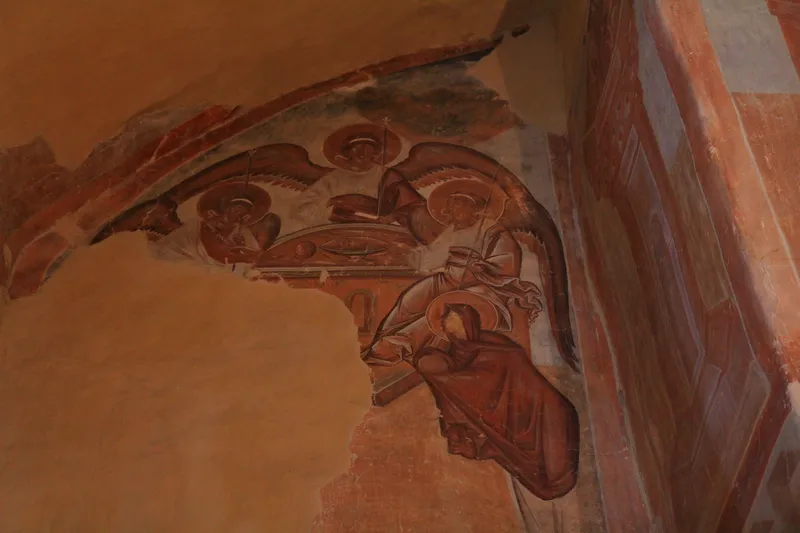
An Angel is sent before Israel. Not behind, not beside - before. The way ahead has a guide. The Israelites do not know what lies ahead, but the Angel does. He will keep them in the way and bring them to the place God has prepared.
Exodus 23:24-26Breaking Covenant with Gods
24Thou shalt not bow down to their gods, nor serve them, nor do after their works: but thou shalt utterly overthrow them, and quite break down their images. 25And ye shall serve the LORD your God, and he shall bless thy bread, and thy water; and I will take sickness away from the midst of thee. 26There shall nothing cast their young, nor be barren, in thy land: the number of thy days I will fulfil.
The gods of Canaan are not to be tolerated, negotiated with, or adopted halfway. They are to be overthrown and their images broken. This is not subtle. The covenant with Israel demands exclusive allegiance. You cannot serve the Lord and keep a side altar.
But obedience brings blessing. Not vague blessing - specific: bread, water, health, fertility, long life. These are promises grounded in the ordinary goods of a farmer's life. God knows what matters to his people and pledges Himself to it.
Exodus 23:27-33Victory and Gradual Possession
27I will send my fear before thee, and will destroy all the people to whom thou shalt come, and I will make all thine enemies turn their backs unto thee. 28And I will send hornets before thee, which shall drive out the Hivite, the Canaanite, and the Hittite, from before thee. 29I will not drive them out from before thee in one year; lest the land become desolate, and the beast of the field multiply against thee.
God promises to send His terror ahead of Israel, throwing their enemies into confusion and making them turn their backs in flight, and to send hornets before them to drive out the Hivite, Canaanite, and Hittite. He will not clear the land in a single year, lest it become desolate and the wild beasts multiply against them.
30By little and little I will drive them out from before thee, until thou be increased, and inherit the land. 31And I will set thy bounds from the Red sea even unto the sea of the Philistines, and from the desert unto the river: for I will deliver the inhabitants of the land into your hand; and thou shalt drive them out before thee. 32Thou shalt make no covenant with them, nor with their gods. 33They shall not dwell in thy land, lest they make thee sin against me: for if thou serve their gods, it will surely be a snare unto thee.
God sends His fear before Israel. The enemies will feel the terror of God's power and flee. Israel will not fight with brute strength alone; God Himself goes before them.
The conquest will be gradual. Not all at once. God gives a reason: if the land were emptied all at once, it would become desolate, and wild beasts would multiply. The pace of conquest must match Israel's capacity to inhabit and steward. God thinks ecologically, structurally, long-term.
And here, at the very end, is the warning repeated: make no covenant with them or their gods. This is a spiritual warning, cutting deeper than politics. Living alongside idolatry is living with a snare. The gods of Canaan will become seductive precisely because Israel will live near them, trade with them, intermarry with them. The command guards against that slow erosion.
Research trail
Sources & further study
These references support the historical, linguistic, manuscript, and contextual notes in this chapter. Scripture remains the primary text; external sources are provided so readers can inspect the research directly.