Exodus 32
People in this chapter
Exodus 32 opens with Moses on a mountain - forty days, receiving the law written by God's finger on tablets of stone. Below, the people are restless. They have been set free from Egypt, but freedom without a visible God feels too strange, too much. So they ask Aaron for gods they can see and touch. And Aaron, the high priest, gives them what they ask for.
Tap any highlighted phrase to jump to the commentary that unpacks it.
Exodus 32:1-3The People Demand Gods
1And when the people saw that Moses delayed to come down out of the mount, the people gathered themselves together unto Aaron, and said unto him, Up, make us gods, which shall go before us; for as for this Moses, the man that brought us up out of the land of Egypt, we wot not what is become of him. 2And Aaron said unto them, Break off the golden earrings, which are in the ears of your wives, of your sons, and of your daughters, and bring them unto me. 3And all the people brake off the golden earrings which were in their ears, and brought them unto Aaron.
Moses isn't late; he is simply not back yet. Forty days is what God said it would take, and God keeps His word. But the people interpret delay as abandonment. The moment a visible guide disappears, fear rushes in - and the first thing fear does is make something to replace what it lost. Notice the speed: without Moses, they don't wait, they don't pray, they demand. What fills the absence of faith is almost always noise and urgency1.
Exodus 32:4-6The Golden Calf Enthroned
4And he received them at their hand, and fashioned it with a graving tool, after he had made it a molten calf: and they said, These be thy gods, O Israel, which brought thee up out of the land of Egypt. 5And when Aaron saw it, he built an altar before it; and Aaron made proclamation, and said, To morrow is a feast to the LORD. 6And they rose up early on the morrow, and offered burnt offerings, and brought peace offerings; and the people sat down to eat and to drink, and rose up to play.
Aaron doesn't refuse. He collects the gold, fashions it, and makes a calf. Later he will tell Moses: “I cast it into the fire, and there came out this calf” (v. 24) - a stunning evasion. The calf just happened to come out; he had nothing to do with it. It is one of scripture's most graceful moments of observing blame-shifting without moralizing. The high priest, at the moment of Israel's first public sin, is already reaching for a story that makes him passive.
We do the same. Addictions just happen. Words we regret just slip out. The choices we make keep happening to us2.
Aaron doesn't try to stop them. He sees them worshiping the calf and simply builds an altar. Tomorrow, he announces, there will be a feast to the LORD - the same God Moses is on the mountain meeting with. Aaron is trying to have it both ways. The calf can coexist with true worship. The visible and the invisible can share a holy day. This is how idolatry usually arrives: presenting itself as a helper, an aid to faith. The first temptation of the Christian is adding something to God, something we can control, something that makes faith more concrete.
Exodus 32:7-14God's Wrath and Moses's Prayer
7And the LORD said unto Moses, Go, get thee down; for thy people, which thou broughtest out of the land of Egypt, have corrupted themselves: 8They have turned aside quickly out of the way which I commanded them: they have made them a molten calf, and have worshipped it, and have sacrificed thereunto, and said, These be thy gods, O Israel, which have brought thee up out of the land of Egypt. 9And the LORD said unto Moses, I have seen this people, and, behold, it is a stiffnecked people: 10Now therefore let me alone, that my wrath may wax hot against them, and that I may consume them: and I will make of thee a great nation.
God calls them thy people - the people Moses brought out; they are his charge. The moment they fell into idolatry, the legal relationship shifted. But notice what God is doing with this phrase. He is giving Moses something to hold onto. If they are Moses's people, then Moses has standing to intercede for them. God is, in a strange way, making room for compassion by placing the responsibility.
The Hebrew word describes a stubborn ox, refusing the yoke. It is God's diagnosis of Israel's problem: rebellion, a stiff neck of active resistance. And it makes what happens next even more stark: God says let me alone - step back, Moses. Let me do what a just God must do.
11And Moses besought the LORD his God, and said, LORD, why doth thy wrath wax hot against thy people, which thou hast brought forth out of the land of Egypt with great power, and with a mighty hand? 12Wherefore should the Egyptians speak, and say, For mischief did he bring them out, to slay them in the mountains, and to consume them from the face of the earth? Turn from thy fierce wrath, and repent of this evil against thy people. 13Remember Abraham, Isaac, and Israel, thy servants, to whom thou swarest by thine own self, and saidst unto them, I will multiply your seed as the stars of heaven, and all this land that I have spoken of will I give unto your seed, and they shall inherit it for ever. 14And the LORD repented of the evil which he thought to do unto his people.
Moses doesn't try to defend Israel. He doesn't argue that they didn't really worship the calf. He stands between God and the people and asks for mercy on the basis of God's own character and promises. Turn from thy fierce wrath, and repent of this evil. The word “repent” means to turn, to change course. Moses is asking God to change His course - which is a stunning thing to ask, and God honors it. He does turn. The wrath is averted. Not because Israel deserved it, but because someone stood in the gap.
Exodus 32:15-16The Tablets of Testimony
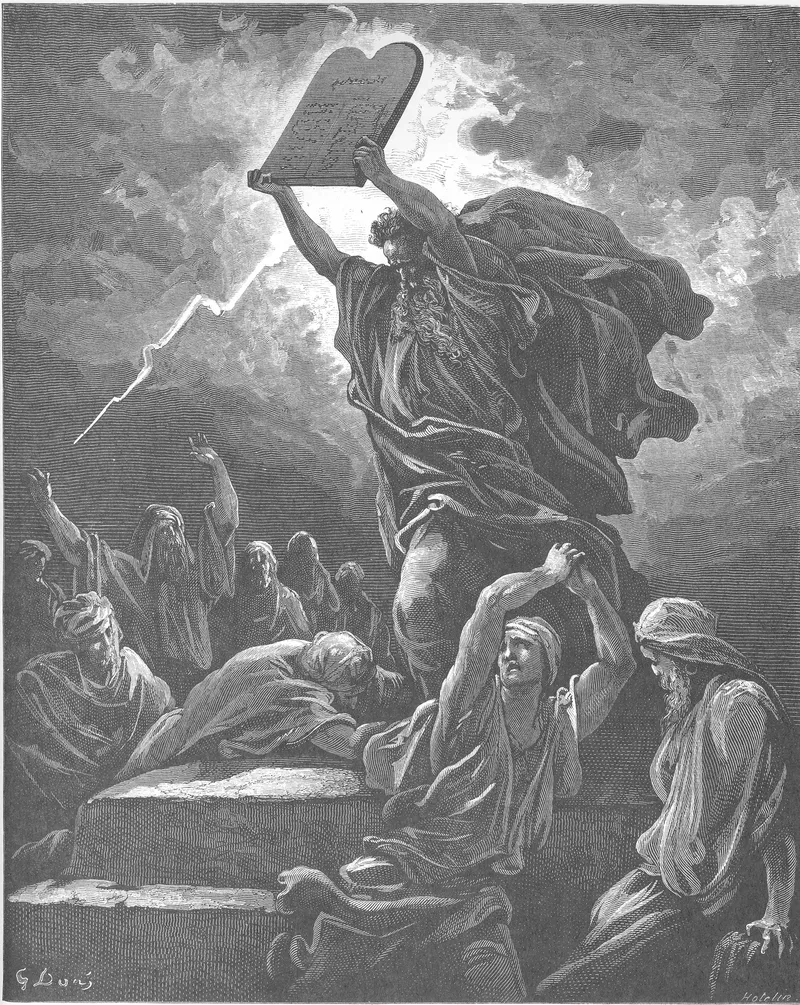
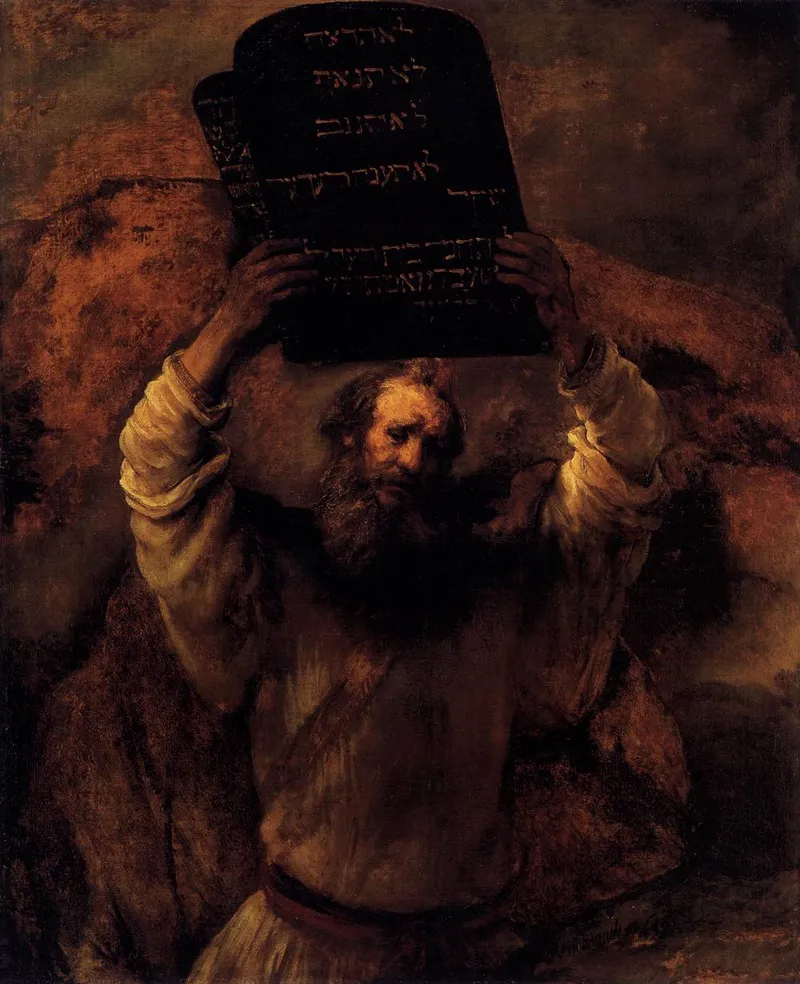
15And Moses turned, and went down from the mount, and the two tables of the testimony were in his hand: the tables were written on both their sides; on the one side and on the other were they written. 16And the tables were the work of God, and the writing was the writing of God, graven upon the tables.
The tablets are written on both sides - a detail suggesting completeness, fullness, the whole law. God has held nothing back. And now, coming down with the full revelation in his hands, Moses sees the people worshiping an image instead of receiving what God wrote for them.
Exodus 32:17-20The Tablets Broken
17And when Joshua heard the noise of the people as they shouted, he said unto Moses, There is a noise of war in the camp. 18And he said, It is not the voice of them that shout for mastery, neither is it the voice of them that cry for being overcome: but the noise of them that sing do I hear. 19And it came to pass, as soon as he came nigh unto the camp, that he saw the calf, and the dancing: and Moses’ anger waxed hot, and he cast the tables out of his hands, and brake them beneath the mount. 20And he took the calf which they had made, and burnt it in the fire, and ground it to powder, and strawed it upon the water, and made the children of Israel drink of it.
Moses's anger is kindled, and he breaks the tablets. It is not a loss of control - it is a prophetic act. The law, offered to a people in active rebellion, is broken. They have already broken the covenant in their hearts; Moses is making their condition visible. Breaking what is written on stone is a way of saying: you have already torn apart what this means.
The broken tablets foreshadow something deeper. Centuries later, Jeremiah will prophesy that God will write the law not on tablets of stone but on the hearts of His people - a covenant so different, so internal, that it cannot be broken by outward rebellion. And Jesus, the fulfillment of every word on those tablets, will have His body broken to establish that new covenant. The broken tablets are an Old Testament picture of the broken body of Christ - where one covenant ends, a better covenant begins, written in blood.
Exodus 32:21-29The Levites' Stand
21And Moses said unto Aaron, What did this people unto thee, that thou hast brought so great a sin upon them? 22And Aaron said, Let not the anger of my lord wax hot: thou knowest the people, that they are set on mischief. 23For they said unto me, Make us gods, which shall go before us: for as for this Moses, the man that brought us up out of the land of Egypt, we wot not what is become of him. 24And I said unto them, Whosoever hath any gold, let them break it off. So they gave it me: then I cast it into the fire, and there came out this calf.
Moses returns to the Lord and asks for the impossible - that God forgive, or blot Moses out of His book. Intercession at this scale is not eloquence; it is willingness to be removed for the sake of others.
25And when Moses saw that the people were naked; (for Aaron had made them naked unto their shame among their enemies:) 26Then Moses stood in the gate of the camp, and said, Who is on the LORD’s side? let him come unto me. And all the sons of Levi gathered themselves together unto him. 27And he said unto them, Thus saith the LORD God of Israel, Put every man his sword by his side, and go in and out from gate to gate throughout the camp, and slay every man his brother, and every man his companion, and every man his neighbour. 28And the children of Levi did according to the word of Moses: and there fell of the people that day about three thousand men. 29For Moses had said, Consecrate yourselves today to the LORD, even every man upon his son, and upon his brother; that he may bestow upon you a blessing this day.
Aaron's answer is one of the most graceful moments of blame-shifting in scripture. He doesn't deny what happened. But then I cast it into the fire, and there came out this calf - passive magic. The calf simply materialized. He fashioned it and built an altar to it, but in his telling, he was just an observer of his own choices. It is how shame works in all of us: we narrate ourselves as passive, as victims of our own decisions, as people to whom things happen.
Moses doesn't shame Aaron, doesn't mock him. But he also doesn't accept the story. The judgment that follows is God's response to the sin, not Moses's anger at Aaron.
The command to slay comes as a call to covenant loyalty. Who is on the LORD's side? The Levites choose God over family, friend, and neighbor. It is one of the Bible's harshest moments - three thousand people slain - and yet it establishes the Levites as the priestly tribe, set apart for God's service. The judgment is real and terrible. But it is also the beginning of their calling.
Exodus 32:30-32Moses Pleads for Israel
30And it came to pass on the morrow, that Moses said unto the people, Ye have sinned a great sin: and now I will go up unto the LORD; peradventure I shall make an atonement for your sin. 31And Moses returned unto the LORD, and said, Oh, this people have sinned a great sin, and have made them gods of gold. 32Yet now, if thou wilt forgive their sin--; and if not, blot me, I pray thee, out of thy book which thou hast written.
Moses offers himself as a substitute. Blot me out of thy book. He is not asking for forgiveness for himself; he is asking to be removed from the book of the living so that Israel might be spared. It is the Old Testament's clearest statement of substitutionary love. And God refuses it. The law is just: whosoever hath sinned against me, him will I blot out. Each person stands alone before God. Moses cannot die in Israel's place.
Exodus 32:33-35The Ransom Offered
33And the LORD said unto Moses, Whosoever hath sinned against me, him will I blot out of my book. 34Therefore now go, lead the people unto the place of which I have spoken unto thee: behold, mine Angel shall go before thee: nevertheless in the day when I visit I will visit their sin upon them. 35And the LORD plagued the people, because they made the calf, which Aaron made.
Research trail
Sources & further study
These references support the historical, linguistic, manuscript, and contextual notes in this chapter. Scripture remains the primary text; external sources are provided so readers can inspect the research directly.