Genesis 45
People in this chapter
For thirteen years Joseph has been working in Egypt - first as a slave in Potiphar's house, then imprisoned on a false charge, finally raised to power second only to Pharaoh 1. His brothers sold him when he was seventeen. They have never seen him since. Now they stand before him, not knowing who he is, and the moment Joseph has been waiting for breaks through all his restraint. He cannot contain it anymore.
Tap any highlighted phrase to jump to the commentary that unpacks it.
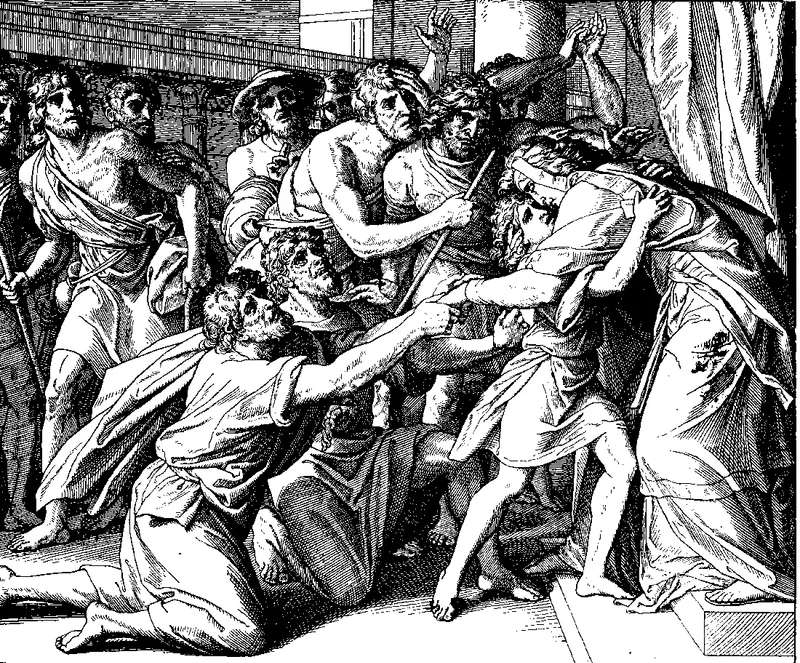
Genesis 45:1-4Joseph Cannot Contain Himself
1Then Joseph could not refrain himself before all them that stood by him; and he cried, Cause every man to go out from me. And there stood no man with him, while Joseph made himself known unto his brethren.
Joseph orders everyone out of the room. This moment is not for witnesses. The Egyptians cannot be present for what is about to happen - a governor of Egypt about to admit he is a Hebrew slave's son, that his brothers are not the criminals he has been treating them as, that the whole hidden architecture of his life is about to collapse and rebuild. This is family. This is private. This is where God moves.
2And he wept aloud: and the Egyptians and the house of Pharaoh heard.
The second-most-powerful man in Egypt is weeping so loudly that guards in the palace hear it. Not quietly. Not with restraint. Joseph is a man who has been holding something back for thirteen years - keeping his identity secret, managing the Egyptians' grain stores, watching his brothers face hunger without revealing who he was. All of it comes out at once. The text is not embarrassed about how big the moment is. Neither should we be.
3And Joseph said unto his brethren, I am Joseph; doth my father yet live? And his brethren could not answer him; for they were troubled at his presence. 4And Joseph said unto his brethren, Come near to me, I pray you. And they came near. And he said, I am Joseph your brother, whom ye sold into Egypt.
In his first words to his brothers, Joseph does not ask about their guilt or their lives. He asks about his father. Jacob is the person Joseph has been separated from, the person who could not protect him, the one who was left to mourn. All these years, this is the question Joseph has been carrying: Is my father still alive? The answer will determine everything Joseph does next.
The brothers are terrified. They are standing in front of the man they betrayed, and he has just revealed his face. In their minds, everything they have feared since that day in the pit is about to happen. The man they sold as a slave is about to have them enslaved or killed. The text captures their silence - they cannot even speak.
Joseph names the sin directly. He does not soften it or reframe it. "Whom ye sold into Egypt." He is not denying what happened or asking his brothers to forget. He is speaking the truth plainly. The forgiveness that comes next only works because the wound is named.
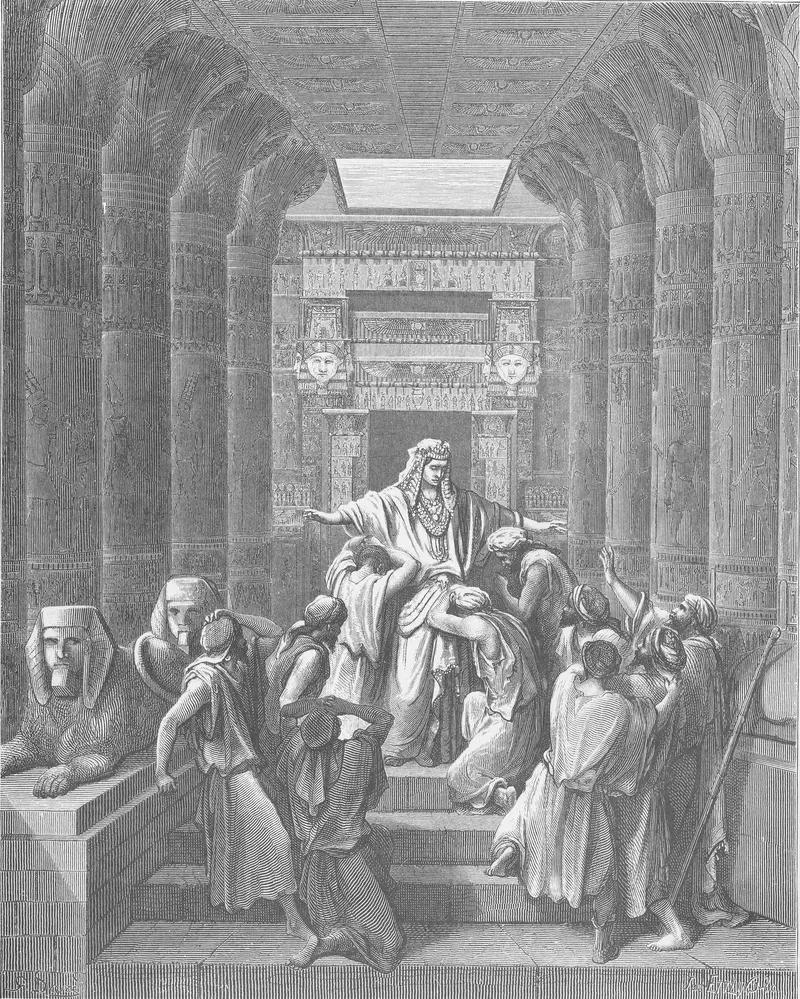
Genesis 45:5-8It Was Not You, But God
5Now therefore be not grieved, nor angry with yourselves, that ye sold me hither: for God did send me before you to preserve life.
Joseph's first move is to release his brothers from the guilt they are drowning in. "Be not grieved, nor angry with yourselves." He is not saying what they did was right. He is saying: I am not here to make you carry this anymore. I am releasing you from it. This is the shape of grace - the forgiver speaks first, and what he says is absolution.
6For these two years hath the famine been in the land: and yet there are five years, in the which there shall neither be earing nor harvest. 7And God sent me before you to preserve you a posterity in the earth, and to save your lives by a great deliverance. 8So now it was not you that sent me hither, but God: and he hath made me a father to Pharaoh, and lord of all his house, and a ruler throughout all the land of Egypt.
Joseph repeats this line three times in verses 5-8: "God did send me," "to make you a posterity," "it was not you that sent me hither, but God." He is theologically insistent. He is saying something difficult and true: they DID wrong him, AND God DID send him. Both things are true at the same time. The brothers' malice and God's providential purpose ran through the same event, without erasing each other. This is one of the most famous theological statements in the Old Testament.
Genesis 45:9-13Embracing Benjamin
9Haste ye, and go up to my father, and say unto him, Thus saith thy son Joseph, God hath made me lord of all Egypt: come down unto me, tarry not: 10And thou shalt dwell in the land of Goshen, and thou shalt be near unto me, thou, and thy children, and thy children’s children, and thy flocks, and thy herds, and all that thou hast: 11And there will I nourish thee; for yet there are five years of famine; lest thou, and thy household, and all that thou hast, come to poverty. 12And, behold, your eyes see, and the eyes of my brother Benjamin, that it is my mouth that speaketh unto you. 13And ye shall tell my father of all my glory in Egypt, and of all that ye have seen; and ye shall haste and bring down my father hither.
Joseph does not dwell on the past. Once he has named it and released his brothers from it, he turns entirely toward the future. He does not ask them to apologize or grovel. He makes a plan. He promises provision. He honors Benjamin by making his presence in the room a kind of proof - "your eyes see, and the eyes of my brother Benjamin, that it is my mouth that speaketh unto you." Benjamin can confirm it. The other brothers can trust him.
Genesis 45:14-15Weeping Upon His Neck
14And he fell upon his brother Benjamin’s neck, and wept; and Benjamin wept upon his neck. 15Moreover he kissed all his brethren, and wept upon them: and after that his brethren talked with him.
Joseph embraces Benjamin first - his full brother, the son of Rachel, the only other brother born to the same mother. Benjamin was born after Joseph was sold, so Joseph had never even met him. The tears come again. This time they are not alone. Benjamin weeps too. The brothers who were terrified are becoming part of the embrace.
Then Joseph embraces all of them. Each one. And weeps again. After the weeping, they finally talk. The brothers have gone from terror to trembling to tears to conversation. The distance has been closed. The wall has fallen.
The text uses a simple word here: "talked." After all the secrecy and testing and hidden identity, now they simply talk. This is what reconciliation looks like - from silence and terror to speech, from hiding to presence, from suspicion to embrace.
Genesis 45:16-20Pharaoh Provides
16And the fame thereof was heard in Pharaoh’s house, saying, Joseph’s brethren are come: and it pleased Pharaoh well, and his servants. 17And Pharaoh said unto Joseph, Say unto thy brethren, This do ye; lade your beasts, and go, get you unto the land of Canaan; 18And take your father and your households, and come unto me: and I will give you the good of the land of Egypt, and ye shall eat the fat of the land. 19Now thou art commanded, this do ye; take you wagons out of the land of Egypt for your little ones, and for your wives, and bring your father, and come. 20Also regard not your stuff; for the good of all the land of Egypt is yours.
Word of the reunion reaches Pharaoh, and it pleases him. The power structure has inverted from the beginning of Joseph's story: the slave has risen high enough that his family's arrival is the Pharaoh's own occasion for generosity. Pharaoh provides wagons, provides for the wives and children, insists the family leave immediately. Joseph did not need to ask for his family to be brought. His master offers it without being asked.
Genesis 45:21-24Gifts and Raiment
21And the children of Israel did so: and Joseph gave them wagons, according to the commandment of Pharaoh, and gave them provision for the way. 22To all of them he gave each man changes of raiment; but to Benjamin he gave three hundred pieces of silver, and five changes of raiment. 23And to his father he sent after this manner; ten asses laden with the good things of Egypt, and ten she asses laden with corn and bread and meat for his father by the way. 24So he sent his brethren away, and they departed: and he said unto them, See that ye fall not out by the way.
To Benjamin he gives three hundred pieces of silver and five changes of raiment - vastly more than the others. This is not favoritism disguised; it is a deliberate reversal of history. When Joseph was sold, the brothers received twenty pieces of silver (Genesis 37:28). Now Benjamin, Joseph's only full brother, the one who was not part of the betrayal, receives a gift of silver so large it cannot be anything but a symbol. The silver of betrayal has been answered by the silver of generosity. The reversal is complete.
Joseph's last words to his brothers are oddly practical: "See that ye fall not out by the way." Do not fight. Do not blame. Do not let the old wounds reopen on the road home. It is a gentle warning from someone who knows how fragile a reconciliation can be in the immediate aftermath.
Genesis 45:25-28Joseph Is Yet Alive
25And they went up out of Egypt, and came into the land of Canaan unto Jacob their father, 26And told him, saying, Joseph is yet alive, and he is governor over all the land of Egypt. And Jacob’s heart fainted, for he believed them not. 27And they told him all the words of Joseph, which he had said unto them: and when he saw the wagons which Joseph had sent to carry him, the spirit of Jacob their father revived: 28And Israel said, It is enough; Joseph my son is yet alive: I will go and see him before I die.
The brothers come home with impossible news. Joseph, whom Jacob has grieved as dead for twenty-two years, is alive. Is a governor. Has sent wagons. Jacob's heart faints. He does not believe them. The pain has been too long. The hope feels too big. Sometimes the hardest thing to do is believe good news about the person you have lost.
But then he sees the wagons. The practical, undeniable proof. Joseph did not just send a message. He sent a way to travel. He sent provision. The wagons are what finally convince Jacob. Not the words alone, but the evidence of Joseph's love made visible. "The spirit of Jacob their father revived." He comes back to life.
Research trail
Sources & further study
These references support the historical, linguistic, manuscript, and contextual notes in this chapter. Scripture remains the primary text; external sources are provided so readers can inspect the research directly.