Nehemiah 8
People in this chapter
The wall is complete. The enemies have scattered. The people of Jerusalem have accomplished the impossible - they have rebuilt the walls of their city in just fifty-two days, while hostile nations watched and opposed. But now something more important must happen. The wall protects the body of the city. What protects the soul? What binds the people together, not with mortar and stone, but with covenant?
Tap any highlighted phrase to jump to the commentary that unpacks it.
Nehemiah 8:1-2Gathered As One Man at the Water Gate
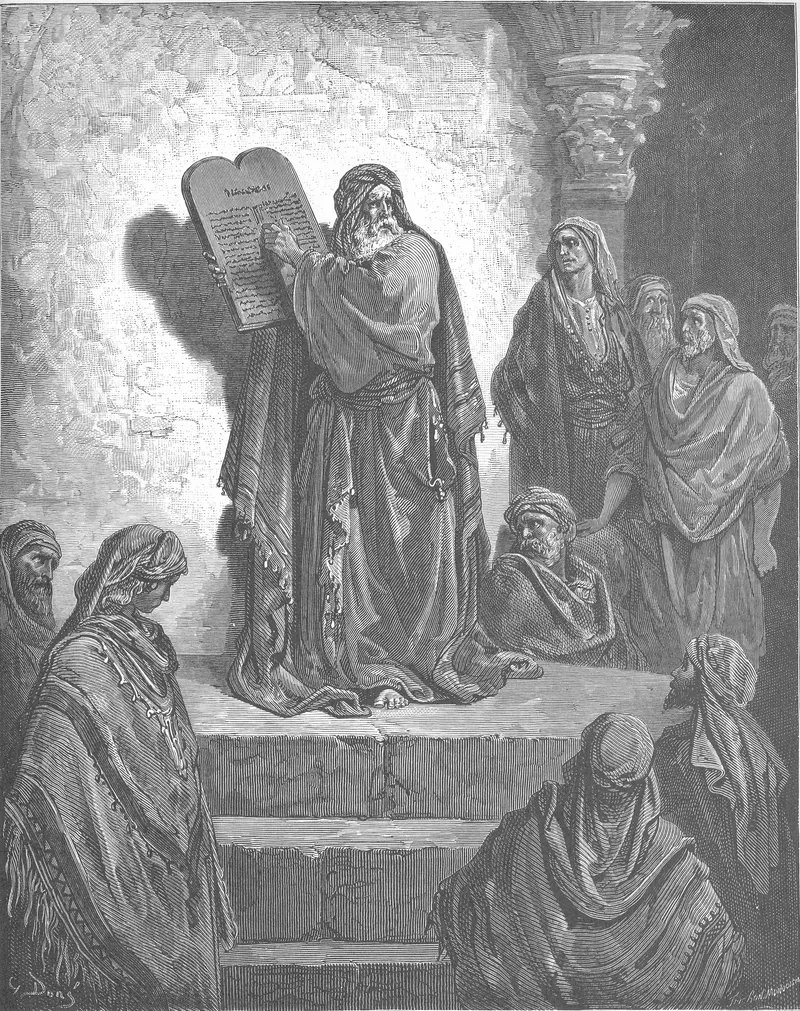
1And all the people gathered themselves together as one man into the street that was before the water gate; and they spake unto Ezra the scribe to bring the book of the law of Moses, which the LORD had commanded to Israel. 2And Ezra the priest brought the law before the congregation both of men and women, and all that could hear with understanding, upon the first day of the seventh month.
The phrase "as one man" echoes throughout Scripture - it signals unity, common purpose, and covenant solidarity. The people have recognized that they need something deeper: the word of God. They gather publicly, at the Water Gate, a place of gathering and purification. The request itself is remarkable - they ask Ezra to read to them. The people, not the leaders, initiate this act of spiritual renewal. 1
The Water Gate is mentioned specifically. In the ancient world, water gates were places of access, of entry, of life itself. Here, at the threshold of this gate, the people gather to receive the water of the word - the living word that will sustain them spiritually as the physical water sustained them physically2.
Nehemiah 8:3-8The People Stood as the Book Opened
3And he read therein before the street that was before the water gate from the morning until midday, before the men and the women, and those that could understand; and the ears of all the people were attentive unto the book of the law. 4And Ezra the scribe stood upon a pulpit of wood, which they had made for the purpose; and beside him stood Mattithiah, and Shema, and Anaiah, and Urijah, and Hilkiah, and Maaseiah, on his right hand; and on his left hand, Pedaiah, and Mishael, and Malchiah, and Hashum, and Hashbadana, Zechariah, and Meshullam. 5And Ezra opened the book in the sight of all the people; (for he was above all the people;) and when he opened it, all the people stood up: 6And Ezra blessed the LORD, the great God. And all the people answered, Amen, Amen, with lifting up their hands: and they bowed their heads, and worshipped the LORD with their faces to the ground. 7Also Jeshua, and Bani, and Sherebiah, Jamin, Akkub, Shabbethai, Hodijah, Maaseiah, Kelita, Azariah, Jozabad, Hanan, Pelaiah, and the Levites, caused the people to understand the law: and the people stood in their place. 8So they read in the book in the law of God distinctly, and gave the sense, and caused them to understand the reading.
The attention of the people is itself a form of worship. From morning until midday - hours of sustained listening. They do not drift. They do not interrupt. Their ears are attentive to the book of the law. This kind of attention to Scripture is rare and precious. It requires discipline, hunger, and reverence.
When Ezra opens the book, all the people stand. This is a gesture of reverence, of recognition that something sacred is about to be spoken. The act of standing acknowledges that God's word commands the full person - standing, fully present. The body participates in the reverence of the word.
Ezra blesses the Lord - and the people respond with their bodies, lifting their hands, bowing their heads, worshipping with their faces to the ground. This is embodied prayer. This is corporate response. The word of God is not received silently and privately; it is received with the full participation of the assembled body.
This verse is crucial for understanding biblical exposition: "Read in the book in the law of God distinctly, and gave the sense, and caused them to understand the reading." There are three parts: (1) read distinctly - with clarity and precision; (2) gave the sense - provided interpretation; (3) caused them to understand - ensured comprehension. The goal of public Scripture reading is understanding. The Levites are teachers, mediators between the text and the people.
Nehemiah 8:9-12The Joy of the Lord Is Your Strength
9And Nehemiah, which is the Tirshatha, and Ezra the priest the scribe, and the Levites that taught the people, said unto all the people, This day is holy unto the LORD your God; mourn not, nor weep. For all the people wept, when they heard the words of the law. 10Then he said unto them, Go your way, eat the fat, and drink the sweet, and send portions unto them for whom nothing is prepared: for this day is holy unto our LORD: neither be ye sorry; for the joy of the LORD is your strength.
The people have heard God's word, and they weep. This is natural - they recognize how far they have fallen, how much they have failed. But Nehemiah and Ezra call them beyond that sorrow. They are told not to mourn, not to weep. Why? Because this day is holy. A feast day has its own claim, a day of reunion with the word of God.
This is one of Scripture's most powerful promises: "The joy of the Lord is your strength." Not endurance, not discipline alone, but joy is what gives strength. The people are told to eat, to drink, to celebrate, to send portions to those who have nothing. This is the commanded celebration of a holy people who have been reunited with God's word. The feast is spiritual nourishment.
Notice the repetition: the people make great mirth "because they had understood the words that were declared unto them." The joy is rooted in comprehension, in the mind grasping truth. They understand. They recognize the word of God. And in that understanding, they find joy - and in that joy, strength.
Nehemiah 8:13-17Dwelling in Booths: The Feast Remembered
13And on the second day were gathered together the chief of the fathers of all the people, the priests, and the Levites, unto Ezra the scribe, even to understand the words of the law. 14And they found written in the law which the LORD had commanded by Moses, that the children of Israel should dwell in booths in the feast of the seventh month: 15And that they should publish and proclaim in all their cities, and in Jerusalem, saying, Go forth unto the mount, and fetch olive branches, and pine branches, and myrtle branches, and palm branches, and branches of thick trees, to make booths, as it is written. 16So the people went forth, and brought them, and made themselves booths, every one upon the roof of his house, and in their courts, and in the courts of the house of God, and in the street of the water gate, and in the street of the gate of Ephraim. 17And all the congregation of them that were come again out of the captivity made booths, and sat under the booths: for since the days of Jeshua the son of Nun unto that day had not the children of Israel done so. And there was very great gladness.
As the people continue to read the law, they encounter the command to dwell in booths during the feast of the seventh month - the Feast of Tabernacles (Sukkot). This feast commemorates the wilderness wandering, when the people of Israel lived in tents, dependent on God's provision and presence. The command is to build booths and dwell in them, to remember that time.
This detail is staggering. Since the days of Joshua, since the conquest of Canaan, the children of Israel had not kept the Feast of Tabernacles in this way. For over a thousand years, the feast had been neglected or kept only in token form. Now, in the aftermath of exile and restoration, the people rediscover the command, and they keep it - not in the temple alone, but in their homes, on their rooftops, in the streets. The whole city becomes a tent city, a reminder of the wilderness, of God's faithfulness.
And the response to this discovery is great gladness. The people have not been forced to keep this feast. They have read the law and discovered this command, and they respond with joy. The gladness comes from recognition - the recognition that their ancestors' journey through the wilderness was holy, that God sustained them then, and will sustain them now.
Nehemiah 8:18Day by Day, the Word Is Read
18Also day by day, from the first day unto the last day, he read in the book of the law of God. And they kept the feast seven days; and on the eighth day was a solemn assembly, according unto the manner.
The Feast of Tabernacles lasts seven days, and throughout those seven days, Ezra continues to read from the book of the law. This is not a one-time event; it is a sustained encounter with Scripture. Day after day, the people hear the word. They feast, they remember, they dwell in booths, and continuously, the word is read to them. By the eighth day, a solemn assembly concludes the feast - a time to rest, to reflect, to be solemnized by what has been heard and experienced.
Research trail
Sources & further study
These references support the historical, linguistic, manuscript, and contextual notes in this chapter. Scripture remains the primary text; external sources are provided so readers can inspect the research directly.